Potpourri 6/9/22

January 6, with us forever

After Mr. Pence was hustled to safety, Mark Meadows, the White House chief of staff, is reported to have told colleagues that Mr. Trump said that perhaps Mr. Pence should have been hanged.

Maggie Haberman, ‌Pence Staff Feared for His Safety Amid Trump’s Pressure Campaign Before Jan. 6.

That’s at least triple hearsay (someone says that Mark Meadows told colleagues that Trump said) plus a "perhaps," but with Trump, it seems sufficiently credible — and yes, I’ll plead guilty to confirmation bias if you can get an indictment.

The most astonishing part of this whole story is that Mike Pence finally said "no" to the Orange God. I thought he’d taken leave of his senses when he agreed to run with Trump, but it was only his principles that he was abandoning.

I’m assuming that the public "hearings" that begin this evening will be agitprop. I assume that it will be the kind of anti-Trump agitprop that I’m predisposed to believe. But the very fact that they brought in a storied documentary producer to help stage it counsels that I avoid it and rely on multiple secondary sources (probably WSJ, NYT and the Dispatch — which culpably leaves out stellar sources like Alex Jones, Breitbart Steve Bannon’s War Room "television show," Think Progress or other emetic productions).

Surely the gist will be something like this:

This was a violent assault on the United States Capitol, and it was provoked by a sitting president of the United States,” Cheney said. “He oversaw a multipart plan, [the] objective of which was for him to stay in power, to overturn the results of an election and stay in power. And I would say to people, as you’re listening to some of my colleagues and others who think that the way to respond to this investigation is with politics and partisanship—those people are not acting in a way that is healthy for the country.

Liz Cheney on the Dispatch Live

Defense/Defiance

Spend much time at gun shows or at gun shops, and you’ll quickly become familiar with something called the “tactical” or “black gun” lifestyle, where civilians intentionally equip themselves in gear designed for the “daily gunfight.” It’s often a form of elaborate special forces cosplay, except the weapons (and sometimes the body armor) are very real.

Something has changed in the streets as well. It’s now common to see men and women armed to the teeth, open-carrying during anti-lockdown protests and even outside public officials’ homes. This is when the gun is used to menace and intimidate. It’s displayed not as a matter of defense but rather as an open act of defiance. It’s meant to make people uncomfortable. It’s meant to make them feel unsafe.

David French,‌Against Gun Idolatry.

I’ve noticed increasingly that I "learn" things by reading other than what the author directly intended. In this case, French helped me put my finger on what I, an enthusiast neither for guns nor for gun bans, find obnoxious about open carry regimes: they enable performative assholery and political intimidation.

Knock-on celebrity

Some individuals reach the unfortunate but not entirely irrational conclusion that the best way to be remembered is by assassinating somebody whose long-lasting fame is guaranteed. There is something very modern about this approach. In the celebrity culture where we all live, nothing is worse to some people than the idea of dying unknown and staying that way. Shooting your way out of this box is a method of leeching off of someone else’s celebrity. In the celebrity culture, a negative reputation for all times is better than no reputation at all. John Wilkes Booth shot Abraham Lincoln because he (Booth) was a Southern partisan. John Hinckley shot Ronald Reagan because he wanted fame, like Travis Bickle in the movie Taxi Driver—or at least an opportunity to touch fame.

Michael E. Kinsley, Old Age

Social Media in the unreal world of celebrities

Somehow, this seems related to the preceding item:

[I]t is difficult for me not to have some level of sympathy for [Amber] Heard. She has not only been found by the jury to have testified falsely as to critical issues of fact—to have lied—but been so pilloried throughout the nation that she has become a public face of falsehood. We have had public figures at the highest level of national authority who have routinely lied about far more important matters and have never been subjected to anything like the level of opprobrium she is now enduring.”

The rage against her—and the worship of him—has been primal. And there was no escaping it. Over the course of the trial, it felt like the algorithms that drive social media were programmed to stoke hatred of Heard.

Famed attorney Floyd Abrams via Bari Weiss.

The delusion of quantification, mastery and management

You likely read or heard about Jonathan Haidt’s big April essay in the Atlantic, “After Babel: Why the Past 10 Years of American Life Have Been Uniquely Stupid.” The thesis is pretty straightforward: social media is ruining America. In the New Yorker, Gideon Lewis-Kraus takes an admirably fair and honest look at Haidt’s claims. Frankly, Lewis-Kraus is to be commended not only for his analysis but for the spirit in which it was presented. Basically, he found that it is difficult to support Haidt’s most dire claims with existing data.

Lewis-Kraus, and the scholars he consulted, are probably right. Haidt’s case is difficult to defend given existing research. Interestingly, however, they all seem to approach this in similar fashion: they grant that Haidt is right to be concerned, but they’re simply not sure if he is concerned about the right things and in the right measure. Lewis-Kraus is also to be commended for the running acknowledgement that it may be difficult to measure and quantify the kind of effects we’re looking for. I remain skeptical that we can rely merely on social scientific data to ground our action. That may very well be a symptom of the deeper (Babel-like!) delusion of mastery and management. But along those lines, this was a particularly interesting observation:

“Gentzkow told me that, for the period between 2016 and 2020, the direct effects of misinformation were difficult to discern. ‘But it might have had a much larger effect because we got so worried about it—a broader impact on trust,’ he said. ‘Even if not that many people were exposed, the narrative that the world is full of fake news, and you can’t trust anything, and other people are being misled about it—well, that might have had a bigger impact than the content itself.’”

Well, that’s kind of the point isn’t it? I mean, that consequence Gentzkow describes is a consequence of social media, which acts as a massive assortment of feedback loops from the social body to the collective consciousness, such that it generates all manner of distorted and disordered actions.

Finally, on this score, I’ll say that the allusion to the Babel narrative amounts to little more than window dressing (curiously, the Atlantic seems to have removed the reference from the title). When Haidt writes, with reference to the tower, that social media platforms “unwittingly dissolved the mortar of trust, belief in institutions, and shared stories that had held a large and diverse secular democracy together,” he seems to be overlooking the fact that in the Hebrew story the destruction of the tower was not something to be lamented. The destruction of the tower was an act of judgment on the hubris of the builders. I think there was an interesting direction in which to take that story, but I’m not sure this was it.

L.M. Sacasas, ‌Readings and Resources (emphasis added because I share his skepticism about our collective delusion).

Writers shouldn’t talk

Who in their right mind would want to talk, much less listen, to a person who has contrived to spend as much of her life as possible crouched over her computer in isolation, deleting unsatisfactory variants of a single sentence for upwards of an hour? Nothing in my daily practice has prepared me for the gauntlet of a tête-à-tête. Writing is an antidote to the immediacy and inexactitude of speech, and I resent any attempt to drag me back into the sludge of dialogue …

Books and essays are the product of long bouts of thinking, which makes writers fantastically ill-suited to summoning opinions instantaneously …

To be adept at honing sentences for weeks or months is no guarantee of any aptitude for improvisation. Nor does skill at fictionalizing life or theorizing about it correlate with any facility for entering into the thick of things.

Becca Rothfeld, Writers Shouldn’t Talk

From my subjective core, this is almost too obvious to say write. I’m myself in Rothfeld’s camp. I’ve labored way too long over relatively short speeches I was expected to give, and then delivered them as closely to the written text as I could manage while maintaining reasonable eye contact. I don’t trust my spontaneous utterances to be worth the attention of assembled auditors. Obviously, I’m less inhibited about the written word.

Celebrate the First Amendment

An Australian court on Monday ordered Google to pay $515,000 to former Australian politician John Barilaro for failing to take down from YouTube a campaign of “relentless, racist, vilificatory, abusive, and defamatory” videos attacking him, which the court ruled “drove Mr. Barilaro prematurely from his chosen service in public life and traumatized him significantly.”

TMD. I do not know the details behind this, so I won’t call Mr. Barilaro a snowflake, but I’m having trouble imagining any possible details that would support liability in U.S. Courts. And with due allowance for familiarity, I like it that way.

Dreherisms

Smart to have a dumb home?

The business rationale for the smart home is to bring the intimate patterns of life into the fold of the surveillance economy, which has a one-way mirror quality.

Matthew B. Crawford, Defying the Data Priests

Librarian cosplay

I’m tired of hearing about supposed book bannings in the U.S.

  • Deleting a book from a curriculum while leaving it in the school library is not a book banning.
  • Someone trying to get a book removed from a public library, which tells that someone to go take a hike, is not a book banning.

What’s going on, I think, is bored librarians (is there another kind?) engaging in ritual cosplay ("You can have To Kill a Mockingbird when you pry it from my cold, dead fingers!").

Wordplay

From the Economist:

Word of the Week: écoponts, “wildlife bridges” in French. France is building overpasses for animals to reduce roadkill and help them roam more freely. Read the full story.


You have to be educated into cant; it is a kind of stupidity that surpasses the capacity of unaided Nature to confer.

Anthony M. Esolen, Out of the Ashes (Kindle location 411)


You can read most of my more impromptu stuff here (cathartic venting) and here (the only social medium I frequent, because people there are quirky, pleasant and real). Both should work in your RSS aggregator, like Feedly or Reeder, should you want to make a habit of it.
Roe, Twitter and more

Roe

After the Politico leak of a draft SCOTUS opinion "overturning Roe":

Where the public stands is tricky to divine. Polls consistently show that a majority of Americans would object to the court overturning Roe. But others show that most people want limits on abortions that Roe does not permit.

The Economist, Why abortion rights are under threat in America.

Neither the people nor most of the press understands Roe, which (by the way) was substantially overruled in and replaced by Planned Parenthood v. Casey 30 years ago. The Economist is to be commended for at least contextualizing the myth of popular support for "Roe."

I was for a time an anti-abortion activist and third-string litigator. I still remain an anti-abortion voter (though the multiplication of supposedly pro-life politicians who are fundamentally jackasses has disabused me of single-issue voting) and a supporter of a local pregnancy resource center that provides women alternatives to abortion.

But I don’t expect to read the leaked draft opinion. Que sera sera.

Neither do I intend to try to explain yet again that "overturning Roe" is not the same as banning abortion.

Where to go when you have nowhere left to go

British author Paul Kingsnorth describes his becoming an Orthodox Christian from, most recently, Wicca (from The Symbolic World episode 158, starting at about the 17-minute mark, paraphrased by me except for quotations):

He definitely was led to Christianity, because he didn’t want it. He didn’t like Christianity or Christians and he didn’t want to be a Christian. He was an eco-Pagan.

Many environmentalists recognize that matters of the spirit are fundamental to the problem of environmental degradation, so they go looking for a spiritual path — of which there are almost none left in the western world.

He tried Zen starting about ten years ago, and there was a lot to like, but it was missing something (which turned out to be God). He tried other mythical paths, including Wicca, but it’s an ersatz assembly of old pieces that doesn’t quite work. Father Seraphim Rose is popular with Orthodox converts, perhaps, because he, too, tried all kinds of different things.

A lot of that wandering around and trying exotic things is from a feeling that "we have nowhere to go," which in turn is a result of the Western Church being for so long tied up with power, tied up with the institutions that were crushing people and destroying the earth, and from the Genesis command to " Be fruitful, and multiply, and replenish the earth, and subdue it" being interpreted as a command for domination. It’s just not attractive, especially since the 60s re-ordered what we value.

But he began having dreams, and visions. Christians started popping out of the woodwork left and right, emailing and talking about his books for no apparent reason. Finally couldn’t ignore it. And the more he read about Christianity, especially Eastern Christianity, the more he thought:

This isn’t the story I thought it was. I thought Christianity was a bunch or moral lessons. I thought it was a bunch of things you were supposed to do so you went to heaven instead of hell, and you have to be good and do certain things, and I thought "Well why would I need a guy from two thousand years ago to tell me that?" And I don’t believe it anyway.

But the more I realized what was actually going on, the more I realized that this is a mystical path. It’s a path to God. It’s a path of stripping back and renunciation. And the more I found Orthodoxy — I had a couple of friends who turned out to be Orthodox Christians, which I hadn’t really known before — and then I started reading the Desert Fathers and the Philokalia and I thought "Wow! This is really powerful stuff! This beats anything that the Buddhists have got to offer." Or at least it’s actually very similar in some ways in terms of the depth of the mystery.

And I thought "Yeah, this Church thing (that I thought I knew about) is not what I thought it was. And here’s a powerful path."

And then of course you start reading the Gospels and you think … there is nothing that’s more radical, actually, than the teaching of Christ.

And then once you start separating it out from the many hideous things people have done with it over the centuries, you think "Well this is just as relevant as it ever was … This is radical humility, and if we had practiced this, we wouldn’t be in this situation."

I would not disagree with any of his description, though I never wandered around in Zen, Wicca or other exotic territory and cannot affirm from personal experience that people detest Western Christianity for the reasons he gives, though those reasons ring true to me.

Brooks nails it

David Brooks offers Seven Lessons Democrats Need to Learn — Fast:

  • It is possible to overstimulate the economy
  • Law and order is not just a racist dog whistle
  • Don’t politicize everything
  • Border security is not just a Republican talking point
  • “People of color” is not a thing
  • Deficits do matter
  • The New Deal happened once

Such a simple idea, so well-executed.

Wise excerpts

  • Your growth as a conscious being is measured by the number of uncomfortable conversations you are willing to have.
  • Half the skill of being educated is learning what you can ignore.
  • 90% of everything is crap. If you think you don’t like opera, romance novels, TikTok, country music, vegan food, NFTs, keep trying to see if you can find the 10% that is not crap.
  • You cant reason someone out of a notion that they didn’t reason themselves into.
  • Dont believe everything you think you believe.

Kevin Kelly, 103 Bits of Advice I wish I’d known.

(I doubt that any NFTs are not crap.)

Social media

Are you virtuous enough for Twitter?

Twitter is the only social media platform I use, and I’ve long characterized my use of it as a devil’s bargain. The platform has benefitted me in certain ways, but this has come at a cost. The benefits and costs are what you would expect. I’ve made good connections through the platform, my writing has garnered a bit more of an audience, and I’ve encountered the good work of others. On the other hand, I’ve given it too much of my time and energy, and I’m pretty sure my thinking and my writing have, on the whole, suffered as a consequence. Assuming I’m right in my self-assessment, that’s too high of a price, is it not? The problem, as I’ve suggested before, is that the machine requires too much virtue to operate, and, frankly, I’m not always up to the task.

During the fidget spinner craze a few years back, a thought came to mind: “Social media are the fidget spinners of the soul.” Maybe this is one of the so-called darlings I’d do best to kill, but, I don’t know, I still think it works. It’s another way of capturing the relationship between social media and sloth or acedia. The self is in disarray, agitated, unsettled, directionless, and the best it can do is fidget with the platforms to keep the unease at bay.

L.M. Sacasas (emphasis added). All-in-all, a stimulating set of brief reflections injected into what has been a stultifying feeding frenzy of coverage and hand-wringing.

A truly social medium

Alan Jacobs posts a brief introduction to micro.blog for the benefit of the millions (just kidding) of refugees fleeing thence from Twitter since Elon’s invasion.

He concludes with the centralmost distinction:

On micro.blog, you have absolutely no incentive to flex, shitpost, self-promote, or troll. You’re there to post interesting things and/or chat with people. Nothing else makes sense.

And that’s why it’s great.

So if you’re coming over from Twitter, please try to leave your Twitter habits and reflexes behind. They won’t help you at micro.blog. ### Hall of Shame nominee:

The Biden Administration’s Orwellian new Disinformation Governance Board (DGB), whose mission, sensible people fear, will creep beyond its initial modest mandate of “countering misinformation related to homeland security, focused specifically on irregular migration and Russia.”

Epistemic status

One of the lessons I still need to learn in life, in my 74th year, is that warranted absolute certainty is vanishingly rare. I am reminded of that in many ways, but one of the nicest is when Scott Alexander starts a blog post with "Epistemic status" of what follows, as here.

Shorts

You have to be educated into cant; it is a kind of stupidity that surpasses the capacity of unaided Nature to confer.

Anthony Esolen, Out of the Ashes

The Washington Post put more effort into exposing @libsoftiktok’s name and address than they did investigating Hunter Biden’s laptop.

Greg Price, via Andrew Sullivan

People believe Twitter is the real world. They therefore believe that Elon Musk is buying the world.

Abe Greenwald at Commentary via The Morning Dispatch

“Disinformation” just means anything that the Left doesn’t want you to say out loud.

James Howard Kunstler

Wordplay

"Parochial cosmopolitan."

A Cosmopolitan who cannot imagine any reason for more conservative opinions. Used in a sentence: "You may believe that the Hungarian law went too far, but only a parochial cosmopolitan can believe that the only reason people wouldn’t want their children propagandized to embrace transgressive sexual and gender roles is plain bigotry." (Rod Dreher, DeSantis, Magyar Of The Sunshine State?)


You can read most of my more impromptu stuff here (cathartic venting) and here (the only social medium I frequent, because people there are quirky, pleasant and real). Both should work in your RSS aggregator, like Feedly or Reeder, should you want to make a habit of it.

Sunday Potpourri, 3/13/22

I’m publishing this a bit later than most Sundays because I don’t want you to lose my points in morning worship or, worse, lose morning worship because you’re agitated about something I said.

Russophobia

I may be living dangerously by saying or citing some of these things. I really don’t know because I don’t get some of what’s going on, but there are questions that need to be asked, challenges that need to be made.

"My favorite (Russian) things

[P]eople can be excused for reacting viscerally to a powerful nation attacking a smaller, weaker neighbor, with all the human misery that entails. Still, there’s something especially insipid about today’s social-media-led, H.R.-department-backed anti-Russian drive. Yesterday, it was anti-maskers and Black Lives Matter skeptics getting un-personed; today it’s anyone and anything associated with the Bad Country.

Sohrab Ahmari, These Are a Few of My Favorite (Russian) Things.

Note that title, and read the whole thing for a reminder of Russian contributions to our musical, literary, philosophical and cinematic cultures.

I’m increasingly convinced, however (as I jumped the gun on Ahmari’s advice to learn more about Russian culture), that Russia and the modern West are always going to be at least somewhat adversarial. There is a deep vein of Russian conservatism (in contrast to a shallow vein in the West) that spurns our commercialization and our other unacknowledged and unflattering novelty values. As Aleksandr Solzhenitsyn said in his epochal (I will not call it "notorious") Harvard Commencement address, "these worlds are not at all evolving toward each other and … neither one can be transformed into the other without violence. Besides, convergence inevitably means acceptance of the other side’s defects, too, and this can hardly suit anyone."

Russian teens

Ken Lima-Coelho is on the board of Canada’s Honens International Piano Competition, and he’s “proud” of the organization’s decision to ban Russian teenagers from the 2022 competition just for being Russian. Honens’s statement reads: “Honens abhors and condemns any form of violence and is deeply disturbed by the Russian government’s unprovoked attack on Ukraine. Such blatant acts of aggression and greed have no place in our world.” Are these bans of Russian artists motivated by principle or rather by anger at the fact that “aggression and greed” are inescapable parts of the world we live in, as Putin’s invasion shows, no matter how much we might like to deny it? I wonder.

Micah Mattix, Prufrock

Lima-Coelho explains and justifies nothing. I’m not sure he’s smart enough to suspect that acts of aggression and greed are inescapable, or whether he’s smart enough, but prefers that they remain concealed rather than "blatant."

Malicious and inconsistent, but the herd demands it

Boycott of all things Russian picks up pace: To paraphrase a joke, all the people who decried the lab leak theory as SO RACIST! are now doing something actually xenophobic: Boycotting anything and everything Russian they can find. They are boycotting Russian music and restaurants, never mind that these spots are often owned by Ukrainians, or that most of the musicians now banned from stage have decried the war. All Russians have to suffer for the sins of Putin. “Russian society is to blame” is an actual argument made quite often.

Some headlines for you:

Montreal Symphony Orchestra drops Russian piano prodigy from concerts amid backlash

Cardiff Philharmonic removes Tchaikovsky from programme in light of Russian invasion of Ukraine

War in Ukraine: Netflix shelves Tolstoy adaptation after criticism

Collective guilt is bad, un-American and it simply doesn’t help the cause of Ukraine to boycott Russian cats. Yes, the International Cat Federation actually did this.

Nellie Bowles

These are the signs that maybe, sometimes, "Democracy" needs to be unresponsive to the fickle and foolish will of the people.

Facebook’s supreme morality oligarch

Meanwhile, Facebook and Instagram have suspended their terms of service to allow calls for violence against Russian soldiers, though they claim this would not extend to prisoners of war. I’m no pacifist. I believe Ukrainian soldiers have a right to defend themselves violently. But I dislike this sort of elaborate tech puppetry. I dislike the implied presumption of control over which people groups we are allowed to hate. Since when did Mark Zuckerberg become our supreme morality oligarch? I missed that memo, just like I missed the memo that all things Russian have been suddenly and mysteriously tainted. Yet here we are, in a timeline where we will literally cancel Tchaikovsky before entertaining the possibility that perhaps all men are “tainted,” not just the ones who are part of the hated group du jour.

Bethel McGrew, Russians, who also links to (and quotes) a Wendell Berry poem from a time when writing sanely wouldn’t get you side-eyed by the neo-McCarthyites.

Declaring victory

Minute by minute the collapse of Russian capitalism is coming through in Telegram alerts. Apple leaves Russia, Netflix suspends operations, so has Louis Vuitton, brand after brand after brand pulling out until, even though my job is to analyse this stuff, I can barely make sense of the sanctions and capital controls that have cut Russia off from the world.

Ben Judah, ‌The Russia we have lost

This may sound cryptic, but it feels like an interesting hypothetical as I learn the Russian mind: With most of the American woke corporations pulling out of Russia, why doesn’t Putin could close the doors to their return, declare victory, withdraw from Ukraine, and win plaudits of tens of millions of a certain kind of Russian conservative?

(Don’t ask me the mechanics of how Putin could pull this off or even if he’d want to do it to his kleptocrat pals.)

If you want to get a taste of what I’m talking about, listen to this unusually riveting episode of the GetReligion podcast, where Terry Mattingly expatiates on ordinary Russians’ ambivalence about the West.

Conclusion

… canceling Russian culture only confirms Putin’s claim that the West despises not simply the Russian regime but Russia itself; targeted sanctions on Putin enablers could be more effective.

Gladden Pappin, ‌You Are Entering the American Sector

Other stuff

City Journal

The libertarian-leaning City Journal has lots of plaudits to its name, but its continued employment of Christopher Rufo, who wrote these brazen declarations of dishonest intent, made me skeptical:

I’m not a fan of cancel culture, but to my mind Rufo pissed away all credibility on CRT with those boasts, yet City Journal continues to publish his CRT stuff.

(Required disclaimer: I’ve got problems with what schools are doing with CRT-inspired concepts, probably overlapping with some of Rufo’s problems; misdirection only works if you’ve got a truthful core, after all.)

Now they published a hatchet-job on a New York Times deep dive into W.H. Auden’s poem ‌Musée des Beaux Arts.

It’s not that City Journal‘s Lee Siegel disagrees with New York Times‘ Elisa Gabbert about the poem; it’s that he blatantly misrepresents Gabbert’s wonderful (and wonderfully web-formatted) analysis.

In short, he lies, particularly when he makes claims like this:

Gabbert tells us that Auden’s poem is a straightforward exposure of people who let bad things happen …

I’ve given you the links should you want to check out my claim; just don’t be distracted by a few plausible but peripheral points Siegel makes toward the end.

Downsides

If I were still working, I think I’d love the opportunities for telecommuting that have been mainstreamed by Covidtide. But those opportunities can be used destructively:

North Georgia … was always something to behold. Small, narrow valleys defined by creeks and rich bottom land, low ridges rising a few hundred feet on either side. Old farms and barns dotting the tidy and loved landscape. …

The ridges filled in with outsized monstrosities for undersized households. Even then the farm valleys remained somehow inviolate, left in a hopeful time. Until inevitably, with land prices, property taxes, or death, and no ridges left to colonize, the valleys filled in with clusters of behemoths to accommodate the malignancy that is Atlanta.

… This economy at rising tide doesn’t lift communities; it washes over them, destroying countryside and culture in its wake. And when it ebbs, what remains is a fractured landscape instead of topsoil. A debris field of trash and eroded gullies where once flourished fields, crops, and a rural people.

The South Roane Agrarian, ‌Building on the Heights

"I know a guy …"

One of the problems with screaming “How could you be so stupid?” at people who behave stupidly is that we too often think of the question as rhetorical when it isn’t. Though vaccine hesitancy is often seen as purely political, that’s not necessarily the case. It also correlates to lack of health care, which means that when public-health officials urge the unvaccinated to consult their family doctors (on the assumption that they might be more persuasive than government agencies), they’re assuming facts not in evidence. If you can’t afford health insurance, you probably can’t afford a doctor either, and if this is how you’ve been living for the past decade, chances are good that surviving without sound medical advice has become part of your behavioral DNA. Your strategy will be much like my father’s: keep working, save what you can (not much) for the rainy day you know is coming, and hope for the best. Maybe you’ll get lucky and know a guy.

… He tells you where to go and what to do when you get there. He lets you in on the secret handshake. Knock three times. Tell them Jimmy sent you.

Richard Russo, ‌How I Found Sympathy for Covid Skeptics. Excellent, empathetic and humane.

Are we secularizing?

…if secularization is taken to refer to some kind of “decline of religion,” then we need to figure out what we mean by “religion.” “If one identifies this with the great historic faiths, or even with explicit belief in supernatural beings, then it seems to have declined. But if you include a wide range of spiritual and semi-spiritual beliefs; or if you cast your net even wider and think of someone’s religion as the shape of their ultimate concern, then indeed, one can make a case that religion is as present as ever”

James K.A. Smith, How (Not) to Be Secular

Material boy

What I needed was to touch the real world. I needed an antidote for the idiotic pixelated simulacrum we live in. We are not even materialists anymore. We are a post-materialistic society — whatever that means — where even materials are simulated and virtual. What I am going to do with this I do not know. What I do know is that it’s impossible for me to reenter the Machine.

Hephaestus. Ever wondered why a trade would have its own god? With blacksmithing I have come the closest to the Eye of Contemplation — or to what I think it is — I have ever been. Writing about it kills it, obviously. We, the Moderns and especially the Westerners write. We rationalize things by writing. We use words as sharp weapons that blind the Eye of Contemplation.

A friend of Rod Dreher, who lost his white collar job and took up apprenticeship with a blacksmith.

Algorithm failure

Readwise opined that "Based on your highlights, we think you’ll love this book recommendation …". Readwise is almost certainly wrong.

Heterodox Podcasts: the New NPR

William Deresiewicz apparently kept on listening to NPR long after I’d stopped, but ended up "hate-listening" to the new, cocksure and woke version. His ‌Escaping American tribalism tells the story, and how he discovered heterodox podcasts as an alternative to his unfaithful first love.

I was already listening to several of those podcasts; I’ll soon sample the others.

What I hadn’t done was to make the mental connection that podcasts like this were my unacknowledged substitute for an NPR that wasn’t yet even as bad as what Deresiewicz endured.

Wordplay

Ectopic: One kind of pregnancy the abortion of which would become a class A felony under a pending Bill in Missouri (see lines 14 & 15 on the first page).


Potlatch: a ceremonial feast of the American Indians of the northwest coast marked by the host’s lavish distribution of gifts or sometimes destruction of property to demonstrate wealth and generosity with the expectation of eventual reciprocation.

Use in a sentence: "Corporate cancellation culture has quickly become a type of potlatch." (Gladden Pappin)


Kinetic military action: The American-troops-over-Libya equivalent of Russian-troops-in-Ukraine’s "Special Military Operation."

Eternal stuff

Undue confidence

Only the Christian Church can offer any rational objection to a complete confidence in the rich. For she has maintained from the beginning that the danger was not in man’s environment, but in man.

G.K. Chesterton, Orthodoxy

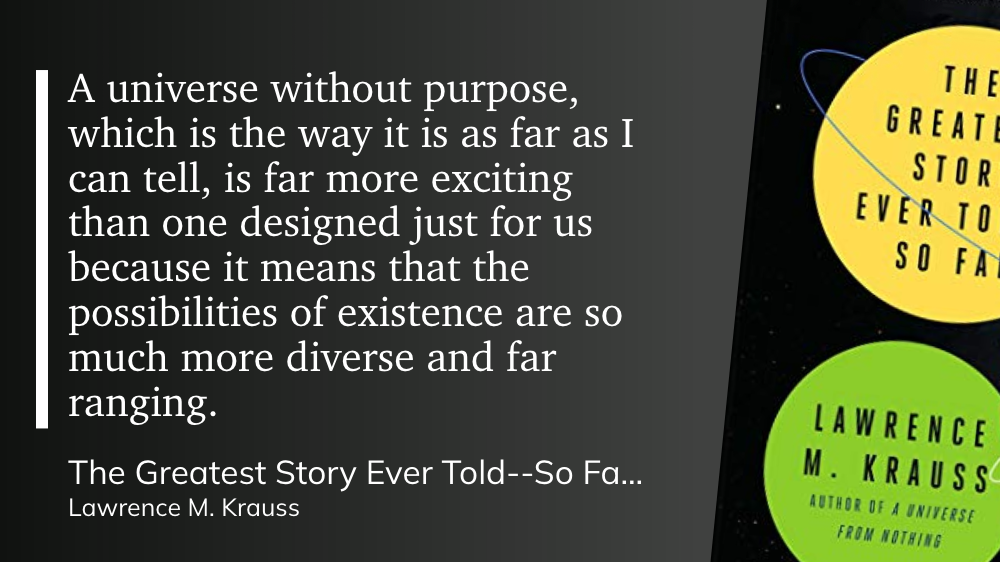
It also can rationally object to confidence in the "diverse and far-ranging possibilities" of denying teleology.

Wisdom

The future in its entirety cannot give you so much as a kernel of good, unless it borrows it from Me.

The One born of the Virgin, speaking in Prayers by the Lake LVII


You can read most of my more impromptu stuff here (cathartic venting) and here (the only social medium I frequent, because people there are quirky, pleasant and real). Both should work in your RSS aggregator, like Feedly or Reeder, should you want to make a habit of it.

Newsfasting

We Orthodox Christians have just started Lent yesterday, and I’m already irritable from not being able to stuff my face promiscuously! Or from something.

There are always dozens of reasons for irritation.

Res Ipsa Loquitur

Ukraine

I find that some news just kind of splashes up onto my pants legs even when I’m limiting news consumption. Believe me that I’m limiting news:

  • Reading the Economist World in Brief and The Morning Dispatch for top news, but rarely click through the Economist.
  • Entirely skipping the Wall Street Journal.
  • Limiting New York Times to obituaries, religion (almost never anything good or even new there), a glance at the Opinions page, and maybe sports and travel.
  • Investigative reporting is higher-quality than regular news, but I still can’t do anything about most of what I see in The Intercept, ProPublica, and bellingcat, so I skip them most of the time.
  • When someone I respect recommends analysis by someone else that I respect, I’ll usually click through if the topic is of interest.

This is still a work in process. I may, at the risk of irritability, cut back further.

Ukraine sues Russia

Last week the International Criminal Court, which prosecutes individuals, launched an investigation into war crimes in Ukraine. On Monday the International Court of Justice, which judges governments, hears allegations of genocide. But these are not accusations against Russia. Rather, Ukraine wants the court to rule that Russia’s own allegations of genocide against Ukraine in the breakaway regions of Donetsk and Luhansk are false and contrary to international law.

Russia accepts the authority of the ICJ (unlike that of the ICC). But Ukraine does not expect its neighbour to bow to the court’s verdict. Russia did not even turn up to the court on Monday (their defence was due on Tuesday). Instead, Ukraine hopes that a verdict in its favour would strip Vladimir Putin, Russia’s president, of any vestige of legal pretext for an invasion, which, he claims, was launched to stop the supposed genocide.

Economist World in Brief.

How interesting to ask a court to rule that your invader’s excuse for invasion is a lie — and the invader has no answer to your “put up or shut up” challenge.

How to Avoid Nuclear War With Russia

Ross Douthat, How to Avoid Nuclear War With Russia is a brilliant distillation of nuclear wisdom, it seems to me.

In short, our conventional forces are so vastly superior to those of Russia that if we directly engaged Russia over its invasion of Ukraine, we’d quickly put Putin’s back to the wall and he might, quite literally, go nuclear.

I guess not all problems are answerable with technology, huh? I’ll take a wise man over a technocrat (almost) any day.

Longfellow was right

A European war is unhelpful for Trump because it reminds voters that Longfellow was right: Life is real, life is earnest. Trump’s strut through presidential politics was made possible by an American reverie; war in Europe has reminded people that politics is serious.”

George Will via the Morning Dispatch

Private Sanctions and Cancel Culture

The Bulwark chronicles how private companies and other non-government actors are punishing Russia for the Ukraine invasion.

I am not entirely amused because this sort of private war is also being waged against Wrongthink in America. For instance, conservative commentator Michelle Malkin and her husband have been banned from AirBNB for associating with Nick Fuentes, of whom AirBNB (and almost everyone else, including me) does not approve.

It may come to the point that making “exercise of free association or free speech rights” protected classes will be a better choice than letting cancel culture commit a kind of economic terrorism.

Fourth Generation War

In Iraq, Afghanistan, and elsewhere, we face Fourth Generation war, not against state militaries similar to our own but non-state forces that fight very differently. While the next conservatism favors a strong defense, it should also question the hundreds of billions of dollars we pour annually into legacy forces and weapons suitable only for fighting other states. A strong defense requires military reform, not just heaps of money.

Andrew J. Bacevich, J. David Hoeveler, James Kurth, Dermot Quinn, Paul Weyrich and William S. Lind, et al., The Essence of Conservatism

Russia may be about to experience this in Ukraine if they seek to occupy.

(I’ll bet William Lind wrote this item. He’s always talking about Fourth Generation warfare.)

Gallows humor?

Olha Koba, a psychologist in Kyiv, said that “anger and hate in this situation is a normal reaction and important to validate.” But it is important to channel it into something useful, she said, such as making incendiary bombs out of empty bottles.

Maria Varenikova, ‌Hate for Putin’s Russia Consumes Ukraine, H/T Claire Berlinski via The Morning Dispatch

Patriotism in its purest, loveliest form

After more than 24 years away, Washington Post correspondent Isabelle Khurshudyan finally returned to Odessa, the city where she and her parents were born. “Now that I’m finally here, I wish I wasn’t,” she writes in her dispatch from the coastal city, where she’s been able to reconnect with her 81-year-old great aunt, Baba Zina, who refused to evacuate. “When I asked why that was, she scolded me, telling me to not get distracted from driving. Then she explained that she was born in this city. It’s her home. She visited the United States four times. Four of her siblings moved there, but she returned to Odessa each time. There’s something about this city—with its roots back in imperial Russia, its classic architecture, its appreciation for artists and its Black Sea beaches—that make people romantic about it. Peak Odessa: The opera and ballet theater is the most fortified building in town, surrounded by a wall of sandbags. ‘I visited the Vienna opera house just to see how it compared to ours. Ours is better,’ Zina said as we drove by the theater. ‘I went to the one in Paris, too. It was nice, of course. But ours is nicer.’”

via The Morning Dispatch

Three items from Protestants

Choosing a story

I haven’t quoted Jake Meador in a while because I stopped following him because I was too busy wallowing in “news.” because reasons.

The core problem facing the western church today is that virtually everyone, including many of us, believes that the most basic, elemental right a person has is the right to self-designate. This means that, as we are cast adrift in the world, trying to make sense of who we are, where we are, and what we ought to do, we mostly do not turn outward and allow the need of neighbor and nature to answer our questions. We do not look to culture for guidance or to family or to faith. In the words of Hauerwas, *“we have no story except the story we chose when we had no story.” And so to answer the question of who we are, we look inward toward our own ambition and aspiration, desire and need. We act according to that, with scant attention paid to the costs such action will have for the world or for our neighbors.

Jake Meador, touting his new book, What Are Christians For?: Life Together at the End of the World (emphasis added).

You could do much worse than Jake Meador on the internet.

Put on the whole snappy comebacks of God

[W]e’re not really after understanding, I [] think, but rather the maintenance of a certain way of life which is sustained not necessarily through ordering affections and desires toward good ends, but rather simply through a kind of automated acquiescence to authority figures.

One gets the idea from a fair bit of Christian worldview literature (especially when some conference or course is being advertised) that a worldview is almost like a set of categories you can download, and then march out into the world equipped with the right answers and knowing in advance how to refute the wrong answers. But this is not how people learn—not how they learn real meaningful knowledge and wisdom at any rate. This kind of pre-packaged knowledge turns out to be awfully flimsy and brittle when confronted with the complexities of the real world.

Jake Meador again (quoting Brad Littlejohn), but a different blog post.

I’ve been around smart Evangelicals who thought “Worldview camps” and such were really good and really cutting edge. I had figured out pretty early on that they were pretty much as Brad Littlejohn says. Plus you can’t overcome the effects of six daily hours of public school and three daily hours of television with a one- or two-week camp.

Grokking ‘Sin’

It wasn’t until college that I ever really thought about the Christian doctrine of sin. I had grown up in a Baptist church hearing about how Jesus *“died for our sins,” but it seemed that sin was the breaking of certain rules — drinking too much, sleeping around, lying, murder and stealing …

In college, through a string of failed relationships and theological questioning, I came to understand sin as something more fundamental than rule breaking, more subtle and *“under the hood” of my consciousness. It was the ways I would casually manipulate people to get my way. It was a hidden but obnoxious need for approval …

This is the slow dawning that I had about myself in college, and with it came liberation. Far from being a crushing blow of self-hatred, the realization of my actual, non-theoretical sinfulness came with something like a recognition of grace. I saw that I was worse than I’d thought I was, and that truth knocked me off the eternal treadmill of trying to be better and do better and get it all right. It allowed me to slowly (and continually) learn to receive love, atonement, forgiveness and mercy.

Tish Harrison Warren

Seeing sin as mere rule-breaking is, in my personal experience, the worst thing about Christian fundamentalist taboos (smoking, drinking, dancing, playing cards and secret societies) of the 50s and 60s, which my Evangelical boarding school aped. It certainly gave me a skewed view, which was harmful to me and others spiritually — even though 14-to-18 year-olds have no business smoking, drinking or joining oath-bound secret societies anyway.

Other stuff

SCOTUS Opposition failure

When Kevin Williamson, a bright guy, can do no better than this in opposing a Democrat SCOTUS nominee, you know you’ve got a pretty good nominee.

Summarizing:

  • She’s part of the meritocracy, the ruling class. (He’s convincing on that.)
  • Dick Durbin and his ilk insinuating that she’s got some hardscrabble backstory is bunk. (He’s got a point.)
  • She does not believe in the rule of law. (He doesn’t deliver one single iota of evidence for that. Not one. And that’s the only one he says should disqualify her.)

After watching one-after-another Republican-appointed justice disappoint, I’m done with making predictions about actual future performance of a nominee.

Truth in Journalism

The nonconformists over at The Postliberal Order set us straight on journalistic terminology:

  • Democracy and liberalism
  • The difference between American philanthropists and Russian Oligarchs
  • Fact-checks
  • The difference between military interventions and invasions
  • Propaganda in general

You’ll appreciate the next item even more if you read this one. It’s short.

This is not propaganda

The Emmett Till Antilynching Act

The Senate passed the Emmett Till Antilynching Act by unanimous consent on Monday. Once signed into law by President Biden, the legislation will amend the U.S. Criminal Code to designate lynching as a federal hate crime punishable by up to 30 years in prison.

The Morning Dispatch.

My immediate reaction was that lynching isn’t much of an issue today, and I think I was right, but there’s this so you can gauge the problem for yourself.

And if you think it’s enough that Ahmaud Arbery was “essentially” lynched, be advised that (a) you can’t prosecute for “essentially the same thing” and (b) his murderers got life without parole, which is longer than 30 years.

Buildings for nomads. This is how the late Sir Roger Scruton described “various financial district glass-pane shoeboxes—structures.” (H/T Anthony DiMauro). Some might consider that a commendation; I don’t.

Wordplay

United in diversity:

“The EU’s quite vapid motto.” (Ed West)

Ostpolitik

From the Economist:

Ostpolitik (noun): a decades-old strategy of dealing with Russia based in part on the hope that gas pipelines could promote mutual dependence and therefore peace. Read the full article.

Spelling bees

Congratulations to [Name], an [School] student, who is heading to the Scripps National Spelling Bee in Washington D.C., May 29 to June 3. [Name] won a 10-county regional bee Saturday at [Site] in [City]. His winning word: Archetype.

Spelling Bees aren’t what they used to be.

Simile of the day

One of the guests was a retired Hungarian art historian. She had the most delicate Old World accent. It was like listening to audible porcelain.

Rod Dreher

Mal mots

In a piece for National Review, John McCormack notes how Russia’s invasion of Ukraine has diminished America’s already fledgling neo-isolationist movement even further.

The Morning Dispatch (italics added).

Someone at the Dispatch misapprehends “fledgling.”

(And once again, I’m glad I don’t write for a living and to deadline.)

Servants of their servants

For all drunkards and gluttons I weep and sigh, for they have become servants of their servants.

St. Nicholai of Zicha, Prayers by the Lake XXIX, via Fr. Stephen Freeman (italics added)

How we think

Intellect confuses intuition.
Piet Mondrian

The Economist World in Brief


You can read most of my more impromptu stuff here (cathartic venting) and here (the only social medium I frequent, because people there are quirky, pleasant and real). Both should work in your RSS aggregator, like Feedly or Reeder, should you want to make a habit of it.