Traditional Vernal Equinox 2023

Some gaslighters are claiming that Spring began yesterday, but I distinctly remember that it starts March 21. That’s my story and I’m stickin’ to it.

Culture

The World Beyond Your Head

Matthew Crawford, who does not know me nor I him, nonetheless describes a very strong tendency in my life:

I can take a virtual tour of the Forbidden City in Beijing, or of the deepest underwater caverns, nearly as easily as I glance across the room. Every foreign wonder, hidden place, and obscure subculture is immediately available to my idle curiosity; they are lumped together into a uniform distancelessness that revolves around me. But where am I? There doesn’t seem to be any nonarbitrary basis on which I can draw a horizon around myself—a zone of relevance—by which I might take my bearings and get oriented. When the axis of closer-to-me and farther-from-me is collapsed, I can be anywhere, and find that I am rarely in any place in particular.

The World Beyond Your Head: On Becoming an Individual in an Age of Distraction

I suspect that this is why I like to travel: it forces on me that particularity of places.

My Man Mitch

Mitch Daniels, former Purdue president, didn’t hold back about the state of today’s athlete in his latest Washington Post column. The headline was about women’s sports, but Daniels really laid into what he considered “sports figures who embody self-absorption over collective commitment, who cultivate their personal ‘brands’ at the expense of collective success.” An example: “A top athlete can consort with criminals, brandish guns in public and litter the landscape with illegitimate children in whose lives he has no intention of playing a father’s role, seldom with career consequences.” Read the rest here: “In a me-first era, my appreciation of women’s sports just keeps growing.”

Dave Bangert

Shame on the Met

The Metropolitan Opera has been ordered by an arbitrator to pay the Russian soprano Anna Netrebko more than $200,000 for performances it canceled last year after she declined to denounce President Vladimir V. Putin of Russia following the invasion of Ukraine.

New York Times

I wish the Met had been hit harder than that, but as a private company, it has some latitude to indulge its oppressive impulses. (Netrebko lost claims for performances where she and the Met had not yet inked the deal.)

Colonialism

  • “We must find new lands from which we can easily obtain raw materials and at the same time exploit the cheap slave labour that is available from the natives of the colonies. The colonies would also provide a dumping ground for the surplus goods produced in our factories.” (Cecil Rhodes)
  • In general terms aid cannot be of use to the poor of the Third World for the critical reason that they necessarily depend on the local economy for their sustenance, and the local economy does not require the extensive highways, big dams, or for that matter hybrid seeds, fertilisers and pesticides of the Green Revolution, any more than it does the fleet of helicopters that the British government imposed on India. These are only of use to the global economy, which can only expand at the expense of the local economy, whose environment it degrades, whose communities it destroys and whose resources (land, forest, water and labour) it systematically appropriates for its own use.

Edward Goldsmith, Development As Colonialism

March Madness

[D]espite having NCAA eligibility remaining, the Ivy League hasn’t budged from its position to limit its athletes a four-year window to compete. It’s something that Princeton, as an institution, also believes in, according to coach Mitch Henderson.

"We have [two] other seniors that have eligibility. Each one of these guys has an extra year," Henderson said. "It doesn’t change anything for us. We’re very much about the four-year process.

"Princeton, we’re about the growth of the student-athlete over the four-year process. I hope that’s not saying we’re a stick in the mud. It’s very much who we are. We expect them after senior year to be able to kind of go out and make pretty serious contributions in their communities."

ESPN story on Princeton men making the Sweet 16.

Princeton just became my emotional favorite in the tournament. Much as I like college basketball, I love colleges and universities that are about education.

Academic theology (and apologetics)

It has been roughly 25 years since it dawned on me that a secular person can never do truly Christian theology, which is more than an academic pursuit.

There’s no one more dangerous than the man who knows the steps but hasn’t walked them.

Steven Christoforou, Why Christian Apologetics Miss the Mark

Despite that epigram, Christoforou was not writing about Ravi Zacharias. He wrote something better than that would have been.

The pornified campus

1-in-3 collegiate women report being choked during most recent sex.

Brad Wilcox on Twitter via Aaron Renn

My presumption — rebuttable but strong — is that their sexual partners learned this frightening twist on love-making from watching hardcore porn (of a sort I never encountered).

Men are not guarding their imaginations. Women, too, are setting themselves up for divorce, with all its ramifications:
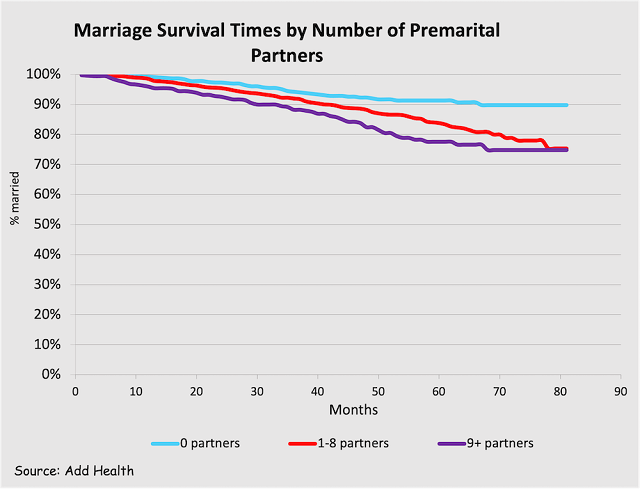
Calling a spade a spade

“Conversion therapy” bans pressure therapists to never help any patient try to feel comfortable in her body. That’s not some unintended consequence; it’s the essence of these bans. As Jack Turban has put it, it’s "unethical" to try to make a child "cisgender."

Leor Sapir on the 20 states and DC with such bans, via Andrew Sullivan

On Wokeness

Diversity and inclusion today

The thinking class, meanwhile, squanders its waking hours on a quixotic campaign to destroy every remnant of an American common culture and, by extension, a reviled Western civilization they blame for the failure to establish a heaven on earth of rainbows and unicorns. By the logic of the day, “inclusion” and “diversity” are achieved by forbidding the transmission of ideas, shutting down debate, and creating new racially segregated college dorms.

James Howard Kunstler, Living in the Long Emergency

The vice that dare not assume a name

Damon Linker again weighs in on wokeness:

The activists … appear deliberately to avoid giving their efforts a name, and they will likely object to anything that might be more descriptively accurate—like my preferred “antiliberal progressivism”—on the grounds that it carries negative connotations … I do think there’s a good reason to opt for “antiliberal progressivism” instead of “woke” or “wokeness”: doing so connects current trends to historical antecedents that, it’s now possible to see, were earlier chapters in a single, episodic story of intrafactional conflict on the left.

[T]here’s [a] reason [besides fearful capitulation] why liberals, especially over the last few years, have been so quick to fold in the face of antiliberal demands by militant progressives. It’s because liberals get caught in the either/or dynamics of polarized politics, thinking that any expression of criticism about their ostensible allies on the left invariably amounts to an in-kind contribution to advancing the political aims of their enemies on the right. This thinking runs something like this:

Yes, some of what the left-wing activists want is bad, defies liberal norms, and pushes pretty far into radical territory when it comes to race and gender. But the right is responding to this stuff by doing even worse things (including banning books, gutting academic freedom, and restricting free speech and other liberties). For that reason, it’s important we not criticize the left—because doing so empowers the right. Just look at what’s happened to Freddie deBoer this past week: He wrote a powerful Substack post criticizing the activists in the name of the left, and now he’s being quoted by right-wingers. We need to choose sides, and it’s not a hard call. We must stand with our somewhat wayward allies on the left for fear of empowering the fascism that’s making inroads all the time in the Republican Party.

I think the truth is pretty close to the opposite of this view: If the liberal center-left doesn’t stand up to antiliberal progressivism and refuse to capitulate to its demands within institutions, then those who disdain its influence will have nowhere to turn besides the right. That’s why liberals ought to do more to defend liberal ideals and norms where they hold power in civil society—because it will demonstrate that one needn’t embrace the right’s own antiliberalism in order to combat antiliberalism on the left.

I find this heartening, and I see Linker as an ally. I think “antiliberal progressivism” perfectly captures what is objectionable about wokeism. I reflexively recoil from progressive excesses, but have been unable to make peace with opportunistic and heavy-handed “conservative” responses — a sort of reverse mirror-image of what Linker is advocating for his side.

I can’t omit a bit more Linker, though:

Liberalism itself is more than capable of defending itself from opponents in either direction, as long as liberals summon the courage and rise to the challenge of doing so. It can do this most effectively by drawing crucial distinctions that comport more fully with the complex truth of things than the edifying homilies preferred by the right or the furious craving for moral purity that so often prevails on the left.

  • Yes, transgender adults should enjoy the same legal protections as other vulnerable minorities. But that doesn’t mean “gender-affirming care” (which can include radical pharmaceutical and surgical interventions) is the proper path forward for the rapidly growing numbers of teenagers who express discomfort with their sexuality and gender identity. Neither does it imply that the rest of us need to embrace the philosophically and biologically dubious assertions of many transgender activists about the thoroughgoing fluidity of sex and gender.

Linker is very much on the same wavelength as leftist philosopher Susan Neiman, (The true Left is not woke):

[T]he fact that politicians ranging from Ron DeSantis to Rishi Sunak deploy “woke” as a battle cry should not prevent us from examining its assumptions. For not only liberals, but many Leftists and socialists like me are increasingly uneasy with the form it has taken.

What concerns me most here are the ways in which contemporary voices considered to be progressive have abandoned the philosophical ideas that are central to any liberal or Left-wing standpoint: a commitment to universalism over tribalism, a firm distinction between justice and power, and a belief in the possibility of progress.

A preemptive barrier to productive disagreement

Before you can attempt to define what “wokeness” is, you should acknowledge this basic fact. Going further, you should acknowledge that as with cancel culture, critical race theory, and even structural racism, the contested nature of the term imposes a preemptive barrier to productive disagreement.

The constellation of social-justice concerns and discursive lenses that have powerfully influenced institutional decision making does work to sort individuals into abstract identity groups arranged on spectrums of privilege and marginalization. To paraphrase James Baldwin, it proceeds from the insistence that one’s categorization alone is real and cannot be transcended. The idea that patriarchy, white supremacy, transphobia, homophobia, Islamophobia, and other ills inexorably saturate our lived realities and that the highest good is to uncover and oppose them is, I think, a central component of “wokeness” as both its proponents and critics understand it.

[P]erhaps we can all agree, at bare minimum, to set ourselves the task of limiting our reliance on in-group shorthand, and embracing clear, honest, precise, and original thought and communication. If we want to persuade anyone not already convinced of what we believe, we are going to have to figure out how to say what we really mean.

Thomas Chatterton Williams

I try to avoid “you should have written about X instead of about Y” critiques, but how in heaven’s name could Williams note the wokesters’ obsessive use of “patriarchy, white supremacy, transphobia, homophobia, [and] Islamophobia” without commenting on how ill-defined those slurs are? His only hint at “both sides” is his last paragraph.

To the list of ill-defined or undefined put-downs of people not on the Left, I would certainly add “white Christian nationalism.”

A substitute religion?

[M]embership in houses of worship sank to 47% – below the 50% mark for the first time. In 1999, that number was 70%.

It’s possible, said [former Congressman Daniel] Lipinski, that many citizens are now searching for "for meaning, or a mission, or truth, somewhere else," which only raises the stakes in public life.

"Partisanship has become not just a social identity, but a primary identity considered to be more important than any other," he said. "We all identify ourselves as belonging to different groups – our families, our religions, our favorite sports teams, our professions. But more and more Americans are defining who they are by the political parties that they choose."

At this point, said Lipinksi, political dogmas have become so powerful that they now appear to be shaping the religious, class and sexual identities of many Americans – instead of the other way around. The teachings of competing politicos. preachers and pundits define the boundary lines in this war zone.

The bottom line: The "partisan virtue-signaling" that became so obvious in the Donald Trump era now dominates political discourse and news coverage about America’s most divisive religious and moral issues.

Politics

Reality candidates

In case you were wondering: He’s in.

I mean, of course, newly announced 2024 presidential contender Joseph Allen Maldonado, a.k.a. Joe Exotic, a.k.a. the Tiger King, a.k.a. the reality-television grotesque who actually had the No. 1 show in the nation, with truly unbelievable ratings: Tiger King had more than 34 million viewers in its first 10 days, nearly five times the average viewership of Celebrity Apprentice in its 2014-15 season. If ratings are what matters, then Joe Exotic is surely the best-qualified presidential candidate since Dwight Eisenhower: D-Day got great ratings.

No? Okay, then.

Why not Joe Exotic?

Isn’t being a reality-television star a presidential qualification? There are enough Americans who believe that to elect a president, are there not? Are we doing the democracy thing or aren’t we?

Let’s not be snobs about it. Sure, he looks like a guy you’d see walking south alongside the northbound lanes of I-35 just past the Lake Murray State Park exit in skull-print hoodie pushing a baby stroller with a missing wheel—but we are done, done, done with those fancy elites condescending to Real Americans™ from behind the safety of their Audi windshields as they speed down the road to the Harvard Club or Trader Joe’s or a job or wherever. If having a ridiculous mullet means you can’t be president, then the current guy is disqualified; if a ridiculous bleach-and-dye job means you can’t be president, then somebody explain the last guy.

(Really. Somebody explain the last guy. I tried my best.)

Kevin D. Williamson

Just can’t shake these DTs.

On the supposed impending arrest of Florida Man:

There are two things we know for certain about Donald Trump: The first is that he is the sort of irritating New York neurotic who believes that he ceases to exist when attention is not being paid to him, and the second is that he is constitutionally incapable of producing three consecutive sentences without a lie in one of them. A lie that brings him attention must be as irresistible as a well-seasoned hunk of porn-star jerky who pays him postcoital hush money rather than his usual arrangement, which goes the other way around. If you cannot see the hand of divine judgment at work in the prospect of this ailing republic being convulsed over an episode that, by the account of one of the intimately involved parties, had all of the impact of a Vienna sausage landing in a catcher’s mitt, then you have no religious imagination at all.

A federal prison is not the only kind of facility one can imagine Donald Trump locked up in. I don’t know whether he is mentally ill in a medical sense any more than I know whether Joe Biden is cognitively impaired in a medical sense, but I do know that, in the colloquial sense of the word crazy, he is as crazy as a sack of ferrets.

What is remarkable to me is that, all these years after the fact, the Trump admirers are still complaining that Hillary Rodham Clinton called them “deplorables.” The Clintons are awful and embarrassing and gross—Roger Stone has been known to plagiarize my line about the Clintons’ being “the penicillin-resistant syphilis of American politics”—but, if all this isn’t deplorable, what is?

Kevin D. Williamson. Williamson closes with delicious irony:

If you really want entitlement reform, don’t send an American conservative to do the job—what you want is a slightly rehabilitated French socialist.


For all its piety and fervor, today’s United States needs to be recognized for what it really is: not a Christian country, but a nation of heretics.

Ross Douthat, Bad Religion

You can read most of my more impromptu stuff here (cathartic venting) and here (the only social medium I frequent, because people there are quirky, pleasant and real). Both should work in your RSS aggregator, like Feedly or Reeder, should you want to make a habit of it.

Thursday, 9/29/22

Today marks the 24th anniversary of my father’s death and 40 days since the death of Metropolitan Kallistos Ware, a titan in Anglophone Eastern Orthodoxy.

I’m surprised at how much I’ve aggregated. It definitely was time to get it out of draft and onto the internet.

Rightward swings in the Western World

When Liberals Won’t Enforce Borders

Rapid mass migration, we now know, is arsenic to egalitarian social democracy.

But why turn to the former neo-Nazis? You won’t find an answer to that in woke-captured media either. The answer is similar to the reason Americans turned to Trump: for a very long time, no one in the mainstream parties or media would acknowledge the reality of the migrant crisis or do anything about it, except call those asking questions racists and fascists.

… In the immortal words of David Frum: if liberals won’t enforce borders, fascists will.

Andrew Sullivan on the roots of Sweden’s political swing to the hard right.

Italy’s rightward swing

We’re left with a picture of a country in which the center-left is supported mainly by the educated, secular, and professional classes, while the right appeals to a cross-section of the rest of the country—the working class as well as the middle and upper-middle classes, along with the religiously pious and the large numbers of Italians who treat religion as a symbol or identity-marker without actually believing in or practicing it.

If that sounds familiar, that’s because similar things have been happening in many places over the past decade. The precise political results of these shifts have varied from country to country as they’ve interacted with different electoral systems, but the underlying trends in public opinion can be seen to a greater or lesser extent in France, Great Britain, the U.S., and other countries. In each case, the center-left has gone into decline with the center-right and anti-liberal populist right rising to take its place.

Until the center-left figures out a way to win back the working- and middle-class, as well as the nominally religious, it will continue to lose precious political ground to the populist and nationalist right.

Damon Linker

I’m quite impressed with Linker’s still-newish Substack. He’s been writing almost daily, but I don’t recall any total duds yet, and that’s a bit of a rarity even with writers whose schedules are more relaxed.

Angry Incoherence from the 5th Circuit

“I think passing this law was so much fun for these [Texas] legislators, and I think they might have expected it would get struck down, so the theater was the point.” But she also believes that there is likely some lack of understanding among those responsible for the law about just how extreme the First Amendment is in practice. “Most people don’t realize how much horrible speech is legal,” she said, arguing that historically, the constitutional right has confounded logic on both the political left and right. “These legislators think that they’re opening the door to some stuff that might offend liberals. But I don’t know if they realize they are also opening the door to barely legal child porn or pro-anorexia content and beheading videos. I don’t think they’ve understood how bad the bad is.

Daphne Keller, director of the Program on Platform Regulation at Stanford’s Cyber Policy Center, via Charlie Warzel on NetChoice v. Paxton, a bizarre 5th Circuit opinion upholding a Texas law that, motivated by a perception of liberal bias in moderation, essentially forbade big internet platforms to moderate content — and forbade them from ceasing to do business in Texas to boot! Is This the Beginning of the End of the Internet?.

Domestic Politics

Proxy or Leader?

The flow-with-the-go model of politics is baked into representative democracy. Or, rather, representative democracy invariably is shaped by the tension between the conception of representative-as-proxy—“I’m just here to represent the Will of the People!”—and representative-as-leader, a  role in which a representative will, from time to time, be obliged to ignore or overrule popular sentiment in service to prudence and justice. This is Edmund Burke 101: “Your representative owes you not his industry only but his judgement; and he betrays you instead of serving you if he sacrifices it to your opinion.”

Kevin D. Williamson, Grift 2.0

Burke’s has been my view of representative democracy for longer than I can remember. And his examples of "Grift 2.0" ring true.

Comparative hate

I don’t know a statement more indicative of the character of our moment than this by J. D. Vance: “I think our people hate the right people.”

Alan Jacobs. Sadly, Vance is quite public about his Christian faith. That he should consider hate-promotion a feature, not a bug, is jarring.

Powered by Pure Spite

The cardinal virtue of modern conservative populism is spite. Whatever gambit a populist is pursuing, whatever agenda he or she might be advancing, the more it offends the enemy the more likely it is to be received by the right adoringly. Ron DeSantis’ Martha’s Vineyard stunt is an efficient example. It accomplished nothing meaningful yet observers on both sides agree that he helped his 2024 chances by pulling it off. He made the right people mad. That’s more important than thoughtful policy solutions.

Why spite has become so important to the right-wing populist ethic is hard to say, as it’s not symmetrical between the parties. The most prominent left-wing populist in Congress is probably Alexandria Ocasio-Cortez, a politician who, despite her many faults, doesn’t want for policy ideas. Ask AOC what her top priority as a legislator is and she might say the Green New Deal or Medicare For All. The most prominent right-wing populist in Congress is likely Marjorie Taylor Greene. Ask Greene what she wants to do with her power as a legislator and she’s apt to say, “Impeach Joe Biden.”

“Impeach Joe Biden for what?” you might ask, as if that matters. …

Spite doesn’t need a reason.

Nick Catoggio (f/k/a Allahpundit), The Wild Ones

True Movements or Mostly Hype?

It is perfectly clear that there is a movement in America of people who call themselves evangelicals but have no properly theological commitments at all. But what’s not clear, to me anyway, is how many of them there are. Donald Trump can draw some big crowds, and those crowds often have a quasi-religious focus on him or anyway on what they believe he stands for — but those crowds are not large in the context of the entire American population. They’re very visible, because both Left and Right have reasons for wanting them to be visible, but how demographically significant are they really?

I have similar questions about, for instance, the “national conservatism” movement. Is this actually a movement? Or is it just a few guys who follow one another on Twitter and subscribe to one another’s Substacks?

Alan Jacobs

Culture

I dread our being too much dreaded

I must fairly say I dread our own power, and our own ambition; I dread our being too much dreaded. . . . We may say that we shall not abuse this astonishing, and hitherto unheard-of power. But every other nation will think we shall abuse it. It is impossible but that, sooner or later, this state of things must produce a combination against us which may end in our ruin.

Edmund Burke via Michael Brendan Dougherty, defending himself and Christopher Hitchens against charges of being Putin apologists for long opposing our policies in Ukraine, almost none of which charges are made in good faith.

Dougherty continues:

To [Peter] Hitchens, whom I have admired greatly for some time, I say now is the time to apply realism to the trolls and demagogues and even to many of the think-tankers and mandarins on the other side. Our case is that they are mishandling grave matters, that they are hubristic and deluded about their own nations and about grand strategy. We think they are casting themselves, absurdly, as great statesmen like Churchill. You and I, having read just a little more history than can fit into a two-hour movie, don’t even belong to that cult in the same way they do. Why, then, should we ever have expected them to treat their powerless critics fairly?

Realism means admitting that our leadership is unworthy, deluded, and stupid. Really they are unprepared, or unfit for their roles. They have led us from one disaster to the next for over two decades. But we may avoid the worst calamity in spite of their failures. We may be saved the miscalculation of others. Or our salvation may be that the huge treasury of power and advantage bequeathed to our nations by previous generations cannot be wasted entirely, even by foolish heirs like these. Or it may be by pure dumb luck, or the grace of God.

White Liberals

I love WL’s [White Liberals], love ’em to death. They’re on our side. But WL’s think all the world’s problems can be fixed without any cost to themselves. We don’t believe that. There’s a lot to be said for sacrifice, remorse, even pity. It’s what separates us from roaches.

Paul Farmer via Alan Jacobs

Invisible infrastructure

Our immigration system is broken, and relies on the invisible infrastructure maintained by non-profits and religious groups.

Leah Libresco Sargeant (italics added).

I think everyone knows the system is broken, but I had not been award of the invisible infrastructure. Maybe Paul Farmer wasn’t completely right about white liberals.

Because I say so. That’s why.

Over two decades ago, when I was getting to know Eric [Metaxas], we had a friendly argument over something theological, as we walked around Manhattan. When I challenged something Eric said, he replied that God had told him it was the thing to do. “How do you know that?” I asked. Because he did. The argument went nowhere. I remember it so clearly because that was the first time I had ever had a conversation with someone who asserted that something was true not because God said it — all Christians must believe that, or throw out Scripture — but because God had said it to them personally.

Rod Dreher, What I Saw at the Jericho March (MAGA at prayer event a shocking display of apocalyptic faith and politics — and religious decadence)

Apple pulls back from China

Apple announced Monday it has already begun manufacturing its new iPhone 14 in India, just weeks after the updated product launched and months earlier than previously expected. Production of the company’s newest line of phones typically begins in Chinese factories because of existing supply-chain efficiencies, with some of it shifting to India after six to nine months. The move is likely indicative of Western companies’ newfound desire to limit reliance on China amid economic uncertainty and geopolitical tensions.

The Morning Dispatch for Tuesday, 9/27/22

Battling Amazon in France

France introduces a delivery charge for books: The “minimum charge of €3 will help small independent booksellers struggling to compete with Amazon and other giant online retailers.”

Micah Mattix

The New Economy

Financialization itself, at the grand scale, was a racket—substituting swindles and frauds for the old economy of industrial production.

James Howard Kunstler, Living in the Long Emergency

Journalism, traditional and new

Toxic News Swamp

[H]ow could MSNBC and CBS News have both purported to “independently confirm” a CNN bombshell that was completely false?

Glenn Greenwald, How Do Big Media Outlets So Often "Independently Confirm" Each Other’s Falsehoods?

Oases of Sanity

If you’re tired of tearing your hair out over political writing, Alan Jacobs has the cure: an array of sane writers who are not carrying water for anyone or any cause:

  • Leah Libresco Sargeant
  • Noah Millman
  • Damon Linker
  • Zeynep Tufecki
  • Yair Rosenberg
  • John McWhorter
  • Freddie deBoer
  • Jonathan Rauch
  • Jonathan Haidt
  • Jesse Singal
  • David French
  • Andrew Sullivan

Wordplay

Shameware

Software voluntarily installed on a smartphone to allow someone else to monitor, and challenge, one’s internet browsing. One group of Churches in particular is using it.

Similar to surveillance software like Bark or NetNanny, which is used to monitor children at home and school, “shameware” apps are lesser-known tools that are used to keep track of behaviors parents or religious organizations deem unhealthy or immoral. Fortify, for instance, was developed by the founder of an anti-pornography nonprofit called Fight the New Drug and tracks how often an individual masturbates in order to help them overcome “sexual compulsivity.” The app has been downloaded over 100,000 times and has thousands of reviews on the Google Play store.

Wired

My first reaction was “maybe some people really need this to straighten out.” But the security holes it creates are technically worrisome apart from spiritual or psychological concerns.

Mechanical Jacobins

Automobiles, in the lexicon of Russell Kirk

Fractally wrong

Techdirt founder Mike Masnick’s summary of the 5th Circuit U.S. Court of Appeals upholding Texas’ ban on big sites moderating content (see above). In greater detail…

made up of so many layers of wrongness that, in order to fully comprehend its significance, “you must understand the historical wrongness before the legal wrongness, before you can get to the technical wrongness.”

Via Charlie Warzel, Is This the Beginning of the End of the Internet?.


[S]ubordinating truth to politics is a game which tyrants and bullies always win.

Jonathan Rauch, The Constitution of Knowledge

The Orthodox "phronema" [roughly, mind-set] cannot be programmitized or reduced to shibboleths.

Fr. Jonathan Tobias

You can read most of my more impromptu stuff here (cathartic venting) and here (the only social medium I frequent, because people there are quirky, pleasant and real). Both should work in your RSS aggregator, like Feedly or Reeder, should you want to make a habit of it.

Friday, 7/22/22

France has a culture, and cares about it

The French, however, are more culturist than racist in any strict sense. They have accepted black Africans who speak perfect French in their legislature but they do not accept Muslim girls who wear headscarves in their schools. In 1990, 76 percent of the French public thought there were too many Arabs in France, 46 percent too many blacks, 40 percent too many Asians, and 24 percent too many Jews.

Samuel P. Huntington, The Clash of Civilizations and the Remaking of World Order.

I ignored this important book for maybe 20 years. Then it sat unread in my Kindle for years after I bought it.

Don’t be like me. Huntington’s theory explains a lot.

How Shakespeare transformed tragedy

In Shakespeare, tragedy is no longer the result of a fatal flaw or error: time and again it lies in a clash between two ways of being in the world or looking at the world, neither of which has to be mistaken. In Shakespeare tragedy is in fact the result of the coming together of opposites.

Iain McGilchrist, The Master and His Emissary, Kindle Location 9415.

I bought and read this book soon after hearing of it. McGilchrist writes well enough to sort out left brain versus right brain and to complicate the simplistic versions I’d heard. I guess it’s sort of brain science meets Jonathan Haidt.

Resolved:

If Joe Biden’s approval ratings weren’t in the tank, nobody would have jumped on Jill Biden for her anodyne-if-goofy tacos quip.

Students today

What I say to students is, you are not unhealthy people in a normal world, despite these statistics that show how anxious, lonely, and depressed young adults are. What you are is normal people in an unhealthy world. It’s not healthy to be anxious, lonely, and depressed, but it is a natural response to a world that is not asking you to become anything, and is not giving you confidence that you can overcome difficulty — one that’s dissociating the different parts of you, compelling you to spend a good part of your time with your body disengaged and your mind occupied. It’s totally understandable that our young people are experiencing such distress, because the world we’re asking them to live in — this world of easy everywhere — this world of superpowers, is not good for them. It would be very odd if, in this world, people were doing just fine. It’s not at all surprising that they’re struggling and feeling disconnected.

Andy Crouch via Alan Jacobs.

Professor Jacobs adds his postscript:

You can be almost certain that people who sneer with ready contempt at today’s college students don’t spend much time around them. Our young people have been given a raw deal, and most of them play it better than we have any right to expect. And the ones who don’t? They’re twenty years old. How put-together were you at age twenty?

They were wrong

The New York Times asked eight columnists to fess up and reflect on when and how they’d been wrong. (Yeah, yeah, yeah; some conservatives think the Times is all wrong, all the time. I get it.) I excerpt a few.

… about Capitalism

In the early 1990s, The [Wall Street] Journal sent me on many reporting trips to the U.S.S.R. and, later, Russia, and everything that was uncool in New York was cool in Moscow, so to be a right-wing editorial writer was to be cutting-edge and hip. I paid close attention to all the privatization plans that were floating around. If state property could be distributed to the masses, then a new capitalist Russia could be born.

I saw but did not see the enormous amount of corruption that was going on. I saw but did not see that property rights alone do not spontaneously make a decent society. The primary problem in all societies is order — moral, legal and social order. It took me a while to see that what Russia really needed was not privatization first, but law and order first.

By the time I came to this [New York Times] job, in 2003, I was having qualms about the free-market education I’d received — but not fast enough. It took me a while to see that the postindustrial capitalism machine — while innovative, dynamic and wonderful in many respects — had some fundamental flaws. The most educated Americans were amassing more and more wealth, dominating the best living areas, pouring advantages into their kids. A highly unequal caste system was forming. …

David Brooks, I Was Wrong About Capitalism

… about Mitt Romney

The campaign was extremely boring, and I really did have to stretch to find some fun ways to approach it …

The story about the dog on the roof came from a Boston Globe profile in which his son told a reporter about the time their pet pooped from his perch and messed up the car’s rear window.

Romney is now in the Senate, where he was the only Republican who voted to remove Trump from office during both of his impeachments and, recently, was the only Republican to vote against repealing Joe Biden’s mask mandate.

He also, of course, supports Mitch McConnell and his party’s agenda. If you don’t agree with that, it’s hard to get all that nostalgic about what might have been. But the one lesson I take away from my Seamus period is that there are some things that are way worse than boring.

Gail Collins, I Was Wrong About Mitt Romney (and His Dog)

… about Trump voters, 2016

What Trump’s supporters saw was a candidate whose entire being was a proudly raised middle finger at a self-satisfied elite that had produced a failing status quo.

I was blind to this … I belonged to a social class that my friend Peggy Noonan called “the protected.” My family lived in a safe and pleasant neighborhood. Our kids went to an excellent public school. I was well paid, fully insured, insulated against life’s harsh edges.

Trump’s appeal, according to Noonan, was largely to people she called “the unprotected.” Their neighborhoods weren’t so safe and pleasant. Their schools weren’t so excellent. Their livelihoods weren’t so secure. Their experience of America was often one of cultural and economic decline, sometimes felt in the most personal of ways.

It was an experience compounded by the insult of being treated as losers and racists —clinging, in Obama’s notorious 2008 phrase, to “guns or religion or antipathy toward people who aren’t like them.”

No wonder they were angry.

Bret Stephens, I Was Wrong About Trump Voters

Wordplay

  1. TQIA++ nutters — (From Andrew Sullivan)

This appears to refer to people who can’t seem to help noticing the differences between LGB and the ever-expanding suffix.

Katie Herzog tacitly recognizes the the reflex to conflate different, um, sexual minorities:

“I heard on NPR that monkeypox is disproportionately impacting the ‘LGBTQ community’ but I’m pretty sure the population of lesbians who frequent bathhouses is approximately zero. … just as we are for all STIs besides bed death,” – Katie Herzog.

I’d never heard of "bed death." Turns out she’s alluding to this:

  1. Lesbian Bed Death (or LBD) is altogether more pedestrian than it first seems. Originally coined by sexologists Pepper Schwartz and Phillip Blumstein in their 1983 book American Couples, it boils down to the idea that lesbians and queer womxn in monogamous, longterm relationships are basically friends without the benefits and are having less sex than any other type of couple.

Hannah Ewens, Daisy Jones, Lesbian Bed Death: What Is It and Does It Even Exist? (all idiosyncratic spellings in original)

  1. The reflex to conflate incommensurables as "the LGBTQ community" reminds me of my former Calvinist denomination, whose magazine referred to individuals who weren’t standard-issue Dutch or Dutch descendants as "multi-ethnic" even if they were, to use the trope, black as the ace of spades.

Inability to distinguish the easily-distinguishable is sad.

  1. As much as Paris stimulated him, he always dreaded his return to Berlin, that ‘dancing carnivalesque necropolis’.

Andrea Wulf, The Invention of Nature: Alexander von Humboldt’s New World (emphasis added)

  1. Word of the Week: post-quantum cryptography, new encryption mathematics that outpaces the capabilities even of quantum computers. Read the full article. (From the Economist)

If people have always said it, it is probably true; it is the distilled wisdom of the ages. If people have not always said it, but everybody is saying it now, it is probably a lie; it is the concentrated madness of the moment.

Anthony Esolen, Out of the Ashes

You can read most of my more impromptu stuff here (cathartic venting) and here (the only social medium I frequent, because people there are quirky, pleasant and real). Both should work in your RSS aggregator, like Feedly or Reeder, should you want to make a habit of it.

Midweek meanderings

Plain speaking

I commented the other day on Freddie deBoer not mincing words. Neither, here, does J Peters:

We’re Lesbians on the Autism Spectrum. Stop Telling Us to Become Men

I thought of her essay as I read Abigail Shrier’s latest, a take-down of Jen Psaki and the Biden Administration’s policies on supposedly transgender teens — maybe the wickedest and stupidest Biden policy yet.

But the wicked, stupid Biden policy fits a current brain-dead ideology. Andrew Sullivan goes after it at length, from his particular concern about what it does to homosexual kids. A taste:

[N]o one is LGBTQIA++. It’s literally impossible. And the difference between the gay and trans experience is vast, especially when it comes to biological sex.

Maybe the only unique contribution Sullivan makes on this is to embed some teacher training videos that give the lie to the establishment’s charge that concerns over subversive teaching is a made-up, astroturf matter.

Student Loan policy

In his latest Bloomberg column, Matthew Yglesias points out the inflationary effects of the Biden administration’s renewal of the student loan repayment moratorium—while noting it won’t even benefit that many people. “The economy no longer needs stimulus—in fact, it needs to restrain demand,” he writes, noting the non-collection of student loans has the “opposite” effect. “A majority of the public, meanwhile, has $0 in student debt. If you limit your analysis to people under 30, the median student loan balance is still $0. For African-Americans, it’s $0. Most people do not go to college and do not incur student loan debt, and those non-debtors have lower incomes on average than the people who do go to college and do have debt. Restarting student debt collections would restrain inflation at the expense of a disproportionately high-income minority of the population. Broad debt cancellation, by contrast, would boost inflation.”

The Morning Dispatch

(This topic is a pet peeve of mine.)

The spade and the keyboard

The spade and the keyboard are two very different tools, but one thing they have in common is their ability to break the human body.

… Both may give you sore arms, but there is a difference between a keyboard and a spade. A spade can still be made fairly simply. It doesn’t need constant energy to keep going. It can last a long time, if you treat it well, rather like your body. A keyboard and a spade are both products of an industrial economy, but not to the same extent, and they do not have the same purpose. One can exist independently, the other cannot. This might be a matter of degrees, but the degrees matter – and so does the intent.

There’s another point too, though, and perhaps it is a more important one: nobody ever got addicted to a spade ….

Paul Kingsnorth, Planting Trees in the Anthropocene

"News"

Every morning, there it is, waiting for me on my phone. The bullshit. It resembles, in its use of phrases such as “knowledgeable sources” and “experts differ,” what I used to think of as the news, but it isn’t the news and it hasn’t been for ages. It consists of its decomposed remains in a news-shaped coffin. It does impart information, strictly speaking, but not always information about our world. Or not good information, because it’s so often wrong, particularly on matters of great import and invariably to the advantage of the same interests, which suggests it should be presumed wrong as a rule.

I’m stipulating these points, I’m not debating them, so log off if you find them too extreme. Go read more bullshit. Immerse yourself in news of Russian plots to counterfeit presidential children’s laptops, viruses spawned in Wuhan market stalls, vast secret legions of domestic terrorists flashing one another the OK sign in shadowy parking lots behind Bass Pro Shops experiencing “temporary” inflation, and patriotic tech conglomerates purging the commons of untruths. Comfort yourself with the thoughts that the same fortunes engaged in the building of amusement parks, the production and distribution of TV comedies, and the provision of computing services to the defense and intelligence establishments, have allied to protect your family’s health, advance the causes of equity and justice, and safeguard our democratic institutions. Dismiss as cynical the notion that you, the reader, are not their client but their product. Your data for their bullshit, that’s the deal. And Build Back Better. That’s the sermon.

Pious bullshit, unceasing. But what to do?

One option, more popular each day, is to retreat to the anti-bullshit universe of alternative media sources. These are the podcasts, videos, Twitter threads, newsletters, and Facebook pages that regularly vanish from circulation for violating “community standards” and other ineffable codes of conduct, oft-times after failing “fact-checks” by the friendly people at Good Thoughtkeeping. Some of these rebel outfits are engrossing, some dull and churchy, many quite bizarre, and some, despite small staffs and tiny budgets, remarkably good and getting better. Some are Substack pages owned by writers who severed ties with established publications, drawing charges of being Russian agents, crypto-anarchists, or free-speech “absolutists.”

Walter Kirn, The Bullshit

Delights

New news models

This seems a good time for an uplifting word. Our local newspaper is pretty much what Kirn (preceding item) describes, but a recently-retired, not-yet-really-old, inkstained wretch has started a Substack that regular reports (5-6 days per week) local developments that actually matter. Like Purdue University planning 1200+ new dormitory beds because freshman enrollment topped 10,000 this year, and the total enrollment almost 50,000. There’s tons of off-campus housing, but maybe not enough, and President Mitch Daniels reports that students in dorms perform better than those off campus.

And he is recruiting some of his former colleagues as contributors. There’s high-class fairly unobtrusive advertisements, but that keeps the subscription cost a bit lower.

Now that is an Angel!

A cyber-friend of mine publishes a newsletter that introduced me to this wonderful painting and its author, Henry Osawa Tanner:

The subject (and title) is Annunciation. I much prefer that intense pillar of light to any anthropomorphic depiction of angels I’ve seen — if only because confronted by this, one might need to hear "fear not," while the anthropomorphic depictions elicit no fear at all.

Sundry observations

Attention is a limited resource, so pay attention to where you pay attention.

Michael Goldhaber, the Cassandra of the Internet Age


Cosmopolitans cannot escape the limits of Dunbar’s Number. Thus, cosmopolitanism is just a special case of parochialism — one with a curated, international parish.

And they’re not even nicer than the frankly parochial parochials; cosmopolitans microaggress parochials in flyover country nonstop from their high coastal thrones.

(H/T to Jonah Goldberg and Megan McArdle on Jonah’s The Remnant podcast.)


If we are wounded by an ugly idea, we must count it as part of the cost of freedom.

Kurt Vonnegut via the Economist Daily Briefing


If Christianity is the one, true religion, is it that much of a stretch to believe that there is one, true expression of Christianity?

Carlton, Clark, The Way, 1998 Edition

Disgraces

Tom Cotton

Ketanji Brown Jackson is confirmed, but we should remember who disgraced themselves in opposition:

To lambast [Supreme Court Justice] Jackson because she claimed that the accused terrorists she represented were ‘totally innocent’ — yes, even if she was simply copying and pasting objections — is to make a mockery of the rule of law. Perhaps aware of this, Cotton made sure to acknowledge that ‘it’s true that you shouldn’t judge a lawyer for being willing to take on an unpopular case.’ But that’s what he did, over and over and over again.

Charles C.W. Cooke, on lawyer Tom Cotton, via Andrew Sullivan

Groomer-talkers

I think if we call all of them groomers and pedophiles, we are no better than they are, and conservatives have a long-standing issue with the left using ‘racist’ for everything thereby devaluing what actual racism is. I don’t want the word ‘racism’ devalued and I don’t want to devalue what it means to actually groom a child for abuse.

Erick Erickson, via Andrew Sullivan

CRT Provocateurs

[C]onservative alarm wasn’t simply organic. Opportunistic activists like James Lindsay and Manhattan Institute senior fellow Christopher Rufo intentionally and explicitly redefined CRT. Here’s Rufo in a tweet thread with Lindsay:

We have successfully frozen their brand—“critical race theory—into the public conversation and are steadily driving up negative perceptions. We will eventually turn it toxic, as we put all of the various cultural insanities under that brand category. The goal is to have the public read something crazy in the newspaper and immediately think “critical race theory.” We have decodified the term and will recodify it to annex the entire range of cultural constructions that are unpopular with Americans.

He proceeded to be as good as his word, and now the right-wing conversation about CRT is all but useless.

David French. This was an uncommonly good post by French, responding to Astroturf alarmism over Critical Race Theory.

I would invite French to consider the possibility, however, that James Lindsay is not an opportunistic activist, but a critic of shoddy scholarship in several "critial theories".

Boston Athletic Association

Historical parallels often spring to mind when it comes to Russia’s invasion of Ukraine.

In the brutality and megalomania of Vladimir Putin, many are reminded of Adolf Hitler. In the soaring rhetoric and heroic defiance of Volodymyr Zelensky, others hear echoes of Winston Churchill. In the moral outrage but relatively cautious policies of Joe Biden, there’s a touch of George — Wouldn’t Be Prudent — H.W. Bush.

And in Wednesday’s decision by the Boston Athletic Association to prohibit runners from Russia and Belarus from competing in this year’s Boston Marathon, we recall the words of Otter, one of the frat house characters from “National Lampoon’s Animal House”: “I think this situation absolutely requires a really futile and stupid gesture be done on somebody’s part.”

Bret Stephens. Having reached that punchline, I didn’t finish the Op-Ed.

Menno Simons

Another Radical Reformation theologian set forth a Christology that said the Son of God became man not “of the womb” of Mary, but rather simply “in the womb” (Menno Simons), which means that Jesus’ humanity is a new creation, not an assumption of the humanity created in Adam. Mary becomes a kind of surrogate mother, and Jesus is not truly a member of our race. (See the painting of the Annunciation, above, too.)

Father Andrew Stephen Damick, Orthodoxy & Heterodoxy

I heard something like this on WMBI, the radio network of Evangelicalism’s Moody Bible Institute: a woman show host breathlessly sharing how Jesus came down to earth from heaven through Mary like water through a pipe. I’m inclined to think it was extemporaneous blather, but it was pernicious blather.

I’m not sure there is an agreed Evangelical account of Mary’s role in salvation history, but if there were, and if it were sound, they wouldn’t be giving her the short shrift they give her now.

Fundamentalists

The 1960s and early 1970s—the so-called Long Sixties—saw the election of the first Catholic president, the Supreme Court decision banning prayer and Bible reading in the schools, the civil rights movement, the protests against the Vietnam War, and the Roe v. Wade decision. Surprisingly, only the fundamentalists objected to all of them.

Frances FitzGerald, The Evangelicals

Close, but no banana. Few fundamentalists objected to Roe v. Wade initially. How they came to object, in my uninvestigated opinion (though I lived through those times), is bound up with the rise of the Religious Right and its need for wedge issues. (This does not imply that opposition was wrong. Of the crooked timber of humanity, nothing straight was ever made.)

Wordplay

We define ourselves now by what we are not. And what we are not is everything we used to be.

Paul Kingsnorth


The only time I ever feel ashamed of being gay is on Gay Pride Day.

Bruce Bawer via Jonathan Rausch


Le véritable voyage de découverte ne consiste pas à chercher de nouveaux paysages, mais à avoir de nouveaux yeux.
(The real journey of discovery is not in seeking new landscapes, but in having new eyes.)

Marcel Proust via Nicolas Crose on Micro.blog.

I almost feel as if Proust were dissing my wanderlust.


Denouncement: An ersatz "denunciation" from the Dispatch. Denouncement appears to be in the dictionary, but old men get to grouse about things anyway, and I hates it! The only excuse I can see for it is to make English easier for ESL folk, which also impoverishes it sometimes.


Périphérique: (or “La France périphérique”), a term to describe parts of France left behind by high-speed trains and breezy ambition—where voters are now being desperately courted by presidential candidates.

The Economist. I assume these are Marine LePen’s base, and that Macron ignores them at his peril.


You can read most of my more impromptu stuff here (cathartic venting) and here (the only social medium I frequent, because people there are quirky, pleasant and real). Both should work in your RSS aggregator, like Feedly or Reeder, should you want to make a habit of it.

War, education, leisure, Soros, Roe and more

Seven Days on the Roads of France, June 1940

Within the past few days, I finished Seven Days on the Roads of France, June 1940 by Vladimir Lossky. I should get to Lossky’s theological masterpiece, The Mystical Theology of the Eastern Church, within the next few months.

Meanwhile, selected highlights from his account of fleeing Paris ahead of the Nazis, hoping to enlist and fight them. As indicated by my added emphasis, I thought his reflections on war, in the chapter "Day 1," were timely as, by some accounts, we’re headed into dark times or worse:

Preface to the original French edition of 1998, by Nicholas Lossky

To begin with, it must be made clear that for this Russian Orthodox theologian – who remained very authentically Russian in many respects – France was not, as it was for many émigrés, simply a land of asylum. To be sure, it was that; but above all, in this case it was a land chosen quite deliberately. Indeed his great love for the country began in childhood. It came first of all from his governess ….

On the notion of dogma from an Orthodox perspective, [Olivier] Clément writes as follows: “For Orthodoxy, Lossky insists, a dogma is not an attempt to explain a mystery or even an attempt to make it more comprehensible. Rather, it seeks to encircle the ineffable and to compel the mind to surpass itself by a clear minded sense of wonder and adoration. […] Thus a dogma is not a solution to a problem but the protection of a mystery, in the Christian sense of Revelation of the unfathomable, the inexhaustible, the personal. In defining a dogma, the sole aim of the church is to preserve the possibility for each Christian of participating in revelation with his whole being; that is, of communicating with the very life of the One who reveals Himself.“

Day 1: Thursday 13th June 1940

Those who resigned themselves to staying in their homes, their streets, their quartier, their city – now become a prey to enemy invasion – were right. Equally right were those whose conscience dictated that they should set out on the great adventure of the open road.

“We shall conquer,“ we were told, “because we are the strongest, because we are the richest. We shall conquer because we have the will to do so.“ As if bons d’armement in themselves could bring about victory. As if war were nothing other than a vast industrial undertaking, a mere matter of capital. Such a war – a war of equipment and weaponry, inhuman, materialistic – yes, we have no doubt lost such a war. We must have the courage to say so. What is more, France could never have won such a war. Otherwise, she would no longer have been France, preeminently humane. If she had won such a war – one without a human face, a war of equipment (the kind of war being presented to us) – she would have lost the most precious thing she possesses, the essential characteristic of her very being. She would have lost that which makes her France, that which differentiates her from every other country on earth. (emphasis added)

There was another heresy, too -spiritual, this time – one which sought to superimpose itself on the materialism of the ‘war of equipment’ argument, to infuse into it an artificial soul. This was the ideology of a ‘holy war’, ‘crusade’. It came in several varieties: the struggle for democracy, for freedom, for human dignity, for western culture, for Christian civilization, even for divine justice itself. I say ‘heresy’ because such ideas, often just in themselves, were not based on lived experience. They did not well up from a deep, wholesome spring, which alone could have transformed them into ideas having a motivating force. Moreover, such words rang false, like all abstractions. They rang false above all since they sought to present as absolutes, concepts and values that are secondary, relative … No, war is not waged for absolute values. This has been the mistake of all so-called ‘religious’ wars, and the main cause of the atrocities associated with them. Nor is it waged for relative value that one endeavors to turn into absolutes, nor yet for abstract concepts which have been lent a religious character. Even if one were to set against the idol of a ‘pure race’ the more benign idol of Law, Liberty and Humanity, they are still idols – concepts that have been personified and made into absolutes. This would still result in a war of idols. The only just war – in so far as a war may ever be styled just – is a war for relative values, for values known to be relative. A war in which man – a being destined for an absolute end – sacrifices himself spontaneously and without hesitation for a relative value that he knows to be relative: his native soil, his land, his country. It is the very sacrifice that acquires a value that is absolute, incorruptible, eternal. (emphasis added)

Day 3: Saturday June 15th

Suddenly I was struck by the sound of a hoarse, muffled voice. I was not alone, after all. A tall old man with a stoop, wearing an old-fashioned fin-de-siècle frock coat, was waving his arms about, threatening and cursing someone. He had a fine face, the look of a well bred provincial gentleman, a devout and God-fearing type. I drew nearer to see who he was so angry with. He was going round the cathedral, stopping before each statue of a saint. It was to them that he was addressing his curses, his cries, his threats. “Alors, quoi?” Damn it all, then! Don’t you want to help us? Can’t you help us?“

I left the cathedral, quite overcome. You really need to have a faith that was deep and sincere, a genuine inner freedom before God and his Saints, to be able to talk to them like that. No, he wasn’t a madman. Rather, a noble Christian soul, seized with despair and bitterness, pouring out his pain to the Saints, who remained motionless and silent, guides of the divine ways that are so painful for us to follow.

Day 4: Sunday 16th June

[R]evolutionaries are always in the wrong since, in their juvenile fervour for everything new, in their hopes for a better future and a way of life built on justice, they always base themselves on theories that are abstract and artificial, making a clean sweep of living tradition which is, after all, founded on the experience of centuries.

Conservatives are always wrong, too, despite being rich in life experience, despite being shrewd and prudent, intelligent and sceptical. For, in their desire to preserve ancient institutions that have with stood the test of time, they decry the necessity of renewal, and man’s yearning for a better way of life.

The Royal Court, grouped round the Imperial Chapel and, seized with theological fervour, sought to ensure the triumph of a novel teaching concerning the procession of the Holy Spirit. Pressure from the Frankish empire caused this strange teaching to triumph in the West. After resisting for a while, the Popes were in the end obliged to alter the traditional, sacred text of the Creed. From then on, schism from the Eastern Patriarchates became inevitable. (Byzantium, on the other hand, never experienced such an extreme case of Caesaropapism.)

Day 5: Monday 17th June

Faced with Latin Christianity and its tendency to abstractions, to homogenization and sterilization; faced with a pagan and only too concrete pan-Germanism founded upon a mystique of “blood and soil“ that seeks to refashion the world according to its creed, France could then become a focus of regeneration for Western Christianity in a Europe that is becoming de-Christianized.

"Not very concerned with how much money you make when you grow up … where you go to college"

Genuine red-pilling from a classical educator:

Welcome to your sophomore humanities class.

This year, we will be reading early modern literature, which is roughly the seventeenth century through the nineteenth century. I have some fairly lofty goals for this class and I hope you do, as well. To be honest, when this class finishes nine months from now, I won’t know if I have accomplished any of those goals. I will need more time. Perhaps when you are forty or so, which is how old I am, we will both know whether this class has done you any good.

It will take at least this long to determine if I have accomplished my goals because I am not very concerned with how much money you make when you grow up, which means that I am not all that interested in where you go to college. Many of my students still labor under the delusional belief that if they can just get into the right college, they will be successful. If you are primarily concerned about getting good grades so you can get into the right college, you’re worrying about the wrong things, because beyond the age of 22 or 23, what matters is not grades, but whether you’re good at doing something that matters and whether you can be content doing that thing for the next thirty years. If the only thing you’re good at doing is getting good grades, your life is going to fall apart after you graduate college ….

Joshua Gibbs. Read it all.

We get leisure all wrong

Leisure is useful—but only insofar as it remains leisure. Once that time is viewed as a means to improve employee morale and higher growth, then leisure loses the very quality that makes it so potent. As Pieper wrote, “Leisure is not there for the sake of work.” Leisure is doing things for their own sake, to pursue what one wants. We should fight the urge to reduce it to a productivity hack.

We yearn to “make the most of” our free time, so we are constantly giving our evenings, weekends, and vacations over to our self-advancement. Labor-market precarity and the growth of the gig economy have sharpened these incentives. Pure leisure now feels like pure indulgence.

If leisure is justified by its contribution to other social ends—innovation, productivity, growth—it stands to lose any perceived worth as soon as it comes into conflict with those goals. An eventual clash between the two will always be settled in favor of work. The result is 768 million hours of unused vacation days. And even when employees take time off, they feel an urge to log in to their work email between dips in the ocean.

Krzysztof Pelc, ‌Why Your Leisure Time Is in Danger

When all your colleagues are, by definition, prickly progressives

George Soros’ Open Society Foundations are restructuring:

The tensions boiled over at the all-staff meeting in early May. On the eve of the voluntary buyouts, executives took part in a video call, in which staff members shared their misgivings and grievances.

After looking at a series of slides prepared by Bridgespan, which painted the organization as less streamlined than Gates or the Ford Foundation, with large numbers of staff approving lots of small grants, employees called out executives for their handling of the restructuring, according to several staff members who participated in the call and transcripts of both the video call and the simultaneous chat, where things got even rougher.

One commenter in the group chat called the process “unaccountable, and unscientific.” Another referred to the “frustration with respect to racism and sexism and other forms of oppression that are alive and well within the institution.”

Lie down with progressives, rise up with vague charges against you.

How to overturn Roe

“It grinds my gears when people say what’s been done here is genius, novel or particularly clever — it was only successful because it had a receptive audience in the Supreme Court and Fifth Circuit,” said Khiara M. Bridges, a professor of law at the University of California at Berkeley, referring to the conservative-leaning federal appeals court that also weighed in on the Texas law.

“If you want to overturn Roe v. Wade, you create a law that is inconsistent with the Supreme Court’s precedent and someone will challenge it and you work it through the federal courts,” she said. “You don’t create a law that is designed to evade judicial review.”

The Conservative Lawyer Behind the Texas Abortion Law – The New York Times

The second paragraph is, in a nutshell, why the Texas law is a sideshow and the real action (currently) is the Mississippi law that bans abortions after 15 weeks.

Ah, California!

“Enslavement of both adults and children, mutilation, genocide, and assault on women were all part of the mission period initiated and overseen by Father Serra,” declares Assembly Bill 338, which passed both chambers by wide margins and now awaits Gov. Gavin Newsom’s signature. None of that is true. While there is much to criticize from this period, no serious historian has ever made such outrageous claims about Serra or the mission system, the network of 21 communities that Franciscans established along the California coast to evangelize native people. The lawmakers behind the bill drew their ideas from a single tendentious book written by journalist Elias Castillo.

Abp. Salvatore J. Cordileone and José H. Gomez, ‌Don’t Slander St. Junípero Serra

This sort of self-important nonsense, California, as much or more than envy, is why the rest of us make fun of you.

Shorts

  • Because of the divorce from the historic Church, Evangelicalism has sought for a new way to satisfy the need for materiality. This is why such believers have welcomed pop music and rock-n-roll into their churches. It is why emotion is mistaken for spirituality. It is why sentiment is substituted for holiness. Sincere feeling is the authenticator. Instead of icons of Christ, whose piercing stare calls you to repentance, the Evangelical can go to a Christian bookstore and buy a soft-focus, long-haired picture of Jesus. He’s a “nice” Jesus, but it is hard to believe that He is God. (Fr. Andrew Stephen Damick, Orthodoxy & Heterodoxy)
  • The project, begun at the time of Constantine, to enable Christians to share power without being a problem for the powerful, had reached its most impressive fruition. If Caesar can get Christians there to swallow the “Ultimate Solution,” and Christians here to embrace the bomb, there is no limit to what we will not do for the modern world. (Stanley Hauerwas, Resident Aliens)
  • The perfect fictitious charity benefit, for "Rich People Who Wish To Help Poor People Without Having To Be In Physical Contact With Them," joins up with the perfect limerick for a well-nigh perfect blog post from Garrison Keillor.
  • Seekers of religious exemptions to vaccine mandates demonstrate that there is literally no limit to what folly you can "prove" from motivated reasoning recast as "personal bible study." Vaccine Resisters Seek Religious Exemptions. But What Counts as Religious?
  • It is a signal characteristic of “hermeneutic philosophy” to say we can no longer believe in something rather than arguing that it is false. (R.R. Reno, Return of the Strong Gods)
  • As parishioners, we believed that Christ had come to give us abundant life, yet the nature of that abundant life was conceived as simply more of what we already had as pleasure-seeking, comfort-loving Americans. (Robin Mark Phillips, Confessions of a Recovering Gnostic)

You can read most of my more impromptu stuff at here. It should work in your RSS aggregator, like Feedly, should you want to make a habit of it.

Two clips, 12/11/18

1

Recently billboards have appeared along major U.S. freeways depicting Trump’s face and the quote from John 1 “And the Word became flesh.” Another saying on the billboards is “Make the gospel great again.” Predictably these billboards have raised concerns and questions. The Christians who sponsor the billboards have defended them, claiming that they do not equate Trump with Jesus Christ. But the billboards are what they are. Whatever the sponsor’s thoughts and intentions may be, the billboards scream out that Trump is “up there with Jesus” in terms of messiahship, saviorhood, worthiness of ultimate loyalty.

Again, whatever the billboards’ sponsors say, the billboards communicate a dangerous message and even the most die-hard Trump supporters must speak out against that message. I am not charging the billboards’ creators and sponsors with heresy, apostasy, blasphemy, or idolatry, but I will say the billboards’ message constitutes those. No amount of denial or defense can undo the message; the message is what it is.

Roger W. Olson

I hope that the sponsor, Make the Gospel Great Again, is a false flag operation (they’re not being campy about it—apart from the billboard itself), but the idolatrous echoes of 80 years ago, noted by Olson, prevent me being blasé about it.

2

A French reader e-mails Rod Dreher:

I told you in a previous email that after three centuries of an anomalous absence, anti-clericalism had finally arrived to America. Jenny Nagel proves me right and if things are going by the French textbook it’s only the beginning and Christians can expect the worse in years to come, without any possibility to answer in kind as the most vicious attacks will come from “protected minorities”. Being rubbished by despicable people is something French Catholics have had to live for two centuries, and American Christians will have to live it until either they regain control of the culture (unlikely at this stage) or stop being nice guys (and girls) and fight back. I know, that’s unlikely too – it hasn’t happened yet in France either.


* * * * *

Follow me on Micro.blog Follow me on Micro.blog, too, where I blog tweet-like shorter items and … well, it’s evolving. Or, if you prefer, those micro.blog items also appear now at microblog.intellectualoid.com.

Clippings, 12/3/18

1

[T]he whole Trump operation, now lying exposed on Mueller’s table — the shady business empire, the constant practice of deceit, the dim-bulb hangers-on — screams corruption in a way that few politicians’ circles do. With Trump there is no pretense of respectability or rectitude. There is only the open, shrugging grift.

This shrug makes it hard for his critics to fathom how the Trump campaign ever persuaded anyone that its candidate would actually “drain the swamp.” Some of the liberal fixation with fake news reflects an attempt to explain Trump’s anti-corruption pitch as just a fraud that voters swallowed (or were force-fed by the Russians). And indeed, a portion of Trump’s supporters choose to live the fantasy worlds of Pizzagate and QAnon, where the most impeachable of presidents is as a white knight taking on a fictive ring of pedophiles.

… [T]here is one odd way in which Trump’s supporters have gotten what they wanted. Trump isn’t draining the swamp himself, but the shock of his ascent has created swamp-draining conditions — in which other corruptions have suddenly been exposed, and there have been many deserved falls from grace.

… [I]n many cases the newly-exposed scandals were open secrets, known to those in the know, and in some cases they were as baroquely grotesque as any Reddit fantasy. (Like, what if Harvey Weinstein’s whole movie empire was just a procurement agency, and what if he hired ex-Mossad agents to stalk one of the stars of “Charmed” … ?)

The story of rich-guy pedophile Jeffrey Epstein, just written up in exhaustive detail by The Miami Herald, is a perfect example — a pedophilia scandal hidden in plain sight, in which a wealthy abuser got off with a slap on the wrist because he had a bipartisan group of allies and there was an incentive not to embarrass the powerful people who might have frequented his parties or taken rides on his plane. A crucial player, the prosecutor who let Epstein slide, is now the Trump administration’s labor secretary — but instead of being a seedy Trumpworld figure, Alexander Acosta is an eminently respectable, big-law figure. Not a grifter; just an exemplar of the American elite.

As, of course, is Epstein’s pal Bill Clinton, who hasn’t been exposed in the Trump era so much as finally acknowledged, by a growing number of liberals, as a sexual predator who survived impeachment because the establishment went into a panic about the specter of puritanism and either smeared or ignored the women credibly accusing him. Not a grifter, the ex-president; just a pillar of the establishment who happened to have a plausible rape accusation lying there in plain sight all the time.

In fact our elite is rotten and deserves judgment, yet Trump’s mix of kleptocracy and kakistocracy is worse. So the question of how you replace a bad elite with a better one, not just with something more corrupt, is what both left and right should be pondering while this particular purgation runs its course.

Ross Douthat

2

“What scares me the most is Hillary’s smug certainty of her own virtue as she has become greedy and how typical that is of so many chic liberals who seem unaware of their own greed,” Charlie Peters, the legendary liberal former editor of The Washington Monthly, told me. “They don’t really face the complicity of what’s happened to the world, how selfish we’ve become and the horrible damage of screwing the workers and causing this resentment that the Republicans found a way of tapping into.” He ruefully worries about the Obamas in this regard, too.

Indeed, in the era of Trump, greed is not only good. It’s grand. The stock market is our highest value. Mammonism rules.

But watching the Clintons hash over their well-worn tale of falling in love at Yale Law School, I realize that it’s not only about the money.

Some in Clintonworld say Hillary fully intends to be the nominee ….

Maureen Dowd. Hillary and Bill can’t fill an auditorium any more. They’re toast.

3

In talking about the death of Christianity in Europe, Murray — an atheist who calls himself a “cultural Christian” — says that Christianity was Europe’s “founding myth,” and that without it, Europe doesn’t know what it believes or what it’s for. “Human rights” is weak tea without some sort of transcendent source. Murray also talks about how difficult it is for Europeans to believe in anything, having lost their religion and made a ruin of themselves with political substitutes. And, on the immigration question — which is truly an existential one for Europe — the continent’s elites have across the board lied for decades to the people. I was somewhat aware of this prior to coming to Murray’s book, but to read the details gathered in one place like this was genuinely shocking. The startling thing is not that there are riots in the streets of Paris, but that it took them so long.

Rod Dreher, What Happens When Trump Falls?. I had read the Douthat and Dowd columns nearly 12 hours before I saw this blog commenting on them, but I was unaware of Douglas Murray or his book The Strange Death of Europe: Immigration, Identity, Islam.

Dreher suggests that “America is not (yet) Europe in terms of losing our religion,” but just yesterday he aptly noted that the residuum of Christianity in Europe tends to be far more thoughtful than that of the U.S.:

Lilla talks about the meaning of the massive La Manif pour Tousmovement to block same-sex marriage, on the grounds that every child needs a father and a mother. Though we American Christians are supposed to be so much more religious than Europeans, nothing remotely like La Manif happened in America.

Maybe you can understand why I feel so much more at home when I’m in Europe with Christian intellectuals like these people than I do anywhere among American conservatives ….

See this, too.

I, too, think I’d prefer French-style Christian Nationalism over naïve “America is a Christian nation” chest-thumping, thank you, in part because the chest-thumpers are disconnected from authentic, historic (versus notional, post-enlightenment) Christian roots.

Dreher concludes:

What I’m getting at is asking what comes politically when most Americans lose faith in the ability of our elites to make things better? I fear that on the Right, we’re going to have to deal with the myth that Trump would have succeeded had the swamp not stabbed him in the back.

Oh, dear! That sounds all too plausible!

Do you see a path to expanding the subjects on which there’s a working majority about the common good when we split over stuff like this?

4

Writing in the New York Times, Parker Malloy offers the pristinely Orwellian argument that the prohibition of speech is a necessary condition for free speech: “Things like deadnaming, or purposely referring to a trans person by their former name, and misgendering — calling someone by a pronoun they don’t use — are used to express disagreement with the legitimacy of trans lives and identities.” I am not quite sure those sentences mean what Malloy means (reject the legitimacy, I think), and things get worse from there. Deadnaming and misgendering, Malloy writes, are a way to force the trans advocate into “a debate over my own existence. I know many trans people who feel the same. If this isn’t harassment, I don’t know what is. Aside from the harm it does to trans people, it also impedes the free flow of ideas and debate, in the same way that conservatives often accuse student protesters of shutting down speech on college campuses.”

If we could for a moment tighten up and focus on the question of what words actually mean, this is a group of common English words put into an order that doesn’t add up to anything sensible: Nobody is denying that Parker Malloy exists. Nobody, to my knowledge, is denying that trans people exist. We are once again ill served by an excess of metaphor and a refusal to look at the thing itself.

“I’d like to henceforth be known as Chelsea rather than Bradley, and to be socially accepted as a woman,” is a sentiment that demands universal tolerance; “I’m not so sure about that,” is a crime against humanity. That is not a sentiment that deserves to be taken seriously. It is not, I suspect, one that is taken seriously: But people can be terrorized into accepting it as a matter of social self-defense.

Kevin D. Williamson (hyperlink and boldface added).

A wretched “excess of metaphor” is at work every single time a person with gender dysphoria poisons the well with an accusation that “looking at the thing itself” denies their existence. My immediate reaction to that sort if thing is that I’m dealing with an hysteric and had best walk away (but not capitulate).

5

On a recent episode of the Geek’s Guide to the Galaxy podcast, sci-fi author Andrew Duncan argued that the depiction of the orcs in Lord of the Rings is racist and will have “dire consequences . . . for society.”

“It’s hard to miss the repeated notion in Tolkien that some races are just worse than others, or that some peoples are just worse than others,” Duncan said. “And this seems to me — in the long term, if you embrace this too much — it has dire consequences for yourself and for society.”

First of all, I think that it is important to point out that orcs are A) not people and B) not real, so starting some sort of social-justice movement over their treatment is probably the biggest, most idiotic waste of time that I’ve ever seen — and this is coming from an adult woman who spends time playing a game called “Pet Shop” on her phone.

Katherine Timpf. You can’t make this stuff up.

6

It used to be that people would marry across party lines – people with very different political views – but would almost always marry someone who shared their faith. Now, almost 40 percent of marriages are to someone of a different faith tradition, but only around 23 percent of people who are getting married, or even cohabiting with someone, are doing so with someone of a different political party. In many ways, political affiliation is now seen as somehow more intrinsic to our identities than our faith commitments.

Baker, Harder, & Wear, The New Morality Dilemma (H/T Alan Jacobs). This insanity is becoming common knowledge.

7

For what it’s worth. My confirmation bias is so strong that I dasn’t say a word more.

* * * * *

Follow me on Micro.blog Follow me on Micro.blog, too, where I blog tweet-like shorter items and … well, it’s evolving. Or, if you prefer, those micro.blog items also appear now at microblog.intellectualoid.com.

Friday, part II, 9/21/18

1

To be alive and online in our time is to feel at once incensed and stultified by the onrush of information, helpless against the rising tide of bad news and worse opinions.

Mark O’Connell, The Deliberate Awfulness of Social Media.

2

Is anyone really surprised by New York governor Andrew Cuomo saying, “We’re not going to make America great again. It was never that great.” The Left has been saying that, if not quite so bluntly, for decades. The only difference is that many more Americans now hold that view, including a disconcerting number of putative “conservatives.”

Dani Lever, a spokeswoman for Governor Cuomo, added that President Donald Trump’s Bull Moose patriotism “ignores the pain so many endured and that we suffered from slavery, discrimination, segregation, sexism and marginalized women’s contributions.”

Yes, we’ve heard that before too, but the crescendo of hysteria is reaching fever pitch. The Left now asserts that Robert E. Lee’s soldiers in gray were proto-Nazis; that Ulysses S. Grant’s soldiers in blue were genocidal Indian-killers; that America’s women still struggle against a colonial, patriarchal legacy of plantation owners in powdered wigs who kept their wives in comfortable confinement and their slaves as exploitable chattel; and that President Trump, far from being “a very stable genius,” which should be pretty obvious to everyone by now, …

And that is where I stopped reading this Townhall “worse opinions” that the Imaginative Conservative beslimed itself by re-printing.


3

“How likely are you to recommend quip to a friend or colleague?”

On a scale of zero to 10, about 0.1.

I simply cannot recall a friend or colleague asking me for a toothbrush referral, and volunteering it would feel about like announcing to an elevator full of strangers that I’m wearing new socks (or one of these other choices).

So that’s my quip quip.

Next question?


4

For Ed Whelan — a former Supreme Court clerk, no less — to spout off on Twitter yesterday, actually naming some other dude who’s a middle-school teacher as the “real” assailant, because of a floor plan, is mind-bogglingly reckless and wicked. You first argue that no one should be accused of attempted rape without proof because it forever tarnishes his reputation — and then you go and actually name someone else as the culprit while simultaneously saying you can’t prove anything. This is how tribalism destroys minds.

Andrew Sullivan. Rod Dreher, too, was agog at Whelan.

More from Sullivan:

Mobs and tribes have always been with us, as the Founders well understood. But Haidt and Lukianoff suggest a variety of specific reasons for the sudden upsurge in toxicity. There is a serious disconnect between the winners and losers of globalization, and this has been exploited by demagogues. Social media has given massive virtual crowds instant mobilization, constant inflammation, and — above all — anonymity. Give a street mob masks, Haidt and Lukianoff note, so they can hide their identity and their capacity for violent and aggressive conduct suddenly soars.

… Our entire society, they argue, needs a good cognitive-behavioral therapy session, to get some kind of grip on our emotions — and not a constant ratcheting up of tribal fever.

Update: Mr. Whelan deleted those Tweets and apologized, apparently sincerely and what I’d call “profusely.”


5

Je suis Marine Le Pen.

Seriously: between a nationalist who posts photos of IS atrocities and authoritarian progressives who order her to a shrink therefor, I think I’d take the nationalist.

* * * * *

Follow me on Micro.blog Follow me on Micro.blog, too, where I blog tweet-like shorter items and … well, it’s evolving. Or, if you prefer, those micro.blog items also appear now at microblog.intellectualoid.com.