Snowed in

For the second time this late Autumn (remember: winter isn’t official until December 21, give or take a day according to some refinement that messes up my tidy grade-school precision), our Liturgy is cancelled because of hazardous travel conditions. Today, it’s sub-zero cold and winds whipping around perhaps seven inches of yesterday’s light powdery snow.

Learning to pray as we ought

No one may mock another’s form of prayer. Extempore prayers and set prayers both reach the Throne if there is any spark of desire in the one praying that they do so. God is not a literary critic or a speech teacher. He does not grade our prayers. But it is for us to realize that there is great help available for us in our prayers. Spontaneity is impossible sooner or later; there only remains for us to choose which set of phrases we will make our own. The prayers of the church lead us into regions that, left to our own resources, we might never have imagined. Also, in this connection, it is worthwhile remembering that prayer is as much a matter of our learning to pray what we ought to pray, as it is expressing what we feel at given moments. The prayer of the church gives us great help here.

Tom Howard, Evangelical is Not Enough.

I have doubtless been guilty of facile caricatures of evangelicalism. But what struck me when I first read Evangelical is Not Enough is that the evangelicalism in which Howard was raised was utterly sane and genuinely pious (it made my sane and pious childhood home look almost secular). Its fruit was not only Tom Howard, but his less-renowned sister, Elizabeth Elliot Leach.

Although I swam the Bosporus instead of the Tiber, I benefited greatly from his conclusion that even great Evangelical piety was not enough. The quote above is reflects just one of the glories of traditional Christian churches, and it’s one that I appreciated.

The inadequacies of Evangelicalism, combined with the compelling character of Jesus Christ and, these days, the shallowness of much Evangelicalism, is at the root of young people flooding into Roman Catholic and Orthodox Churches.

Music in the House of Love

Not all Evangelicalism (broadly construed) is as healthy as that of the Howard household:

My music phobia began when I first converted to Christianity in my early twenties. During that time, I came into contact with well-meaning but strict Pentecostals who tended to view secular music as spiritually dangerous. Though I’d grown up with parents who had the classic and independent rock stations on all day (even when we weren’t home), and though my happiest memory was seeing Counting Crows at Jones Beach Theater with my mom at eight years old, the Pentecostals’ caution rubbed off on me. And it rubbed off badly.

In an effort to purge my home of demons, I deleted all of my favorite music (to the extent that it’s possible to do so in our digital age). I burned all my musical biographies in the wood-burning stove, including my prized possession: A large gray book of Bob Dylan’s lyrics from 1962-85, complete with recreations of sketches and notes from his journal. I tore up my collections of Leonard Cohen lyrics, frantically praying, “Lord, is there anything he has written that pleases you?”

And I swear, when I flipped open the book, it opened to Cohen’s poem “Prayer for Messiah.” I wish I could say this small miracle kept me from burning the book, but it didn’t.

Emily Ruddy, Music in the House of Love

This kind of thing was part of the Bill Gothard cult, the nascent version of which my Evangelical high school foolishly allowed in. But it was not ubiquitous in the sort of Evangelicalism I experienced. I rejected Gothard’s view and any others like it.

Ruddy continues:


Several years into my conversion to Orthodoxy, after a long stretch of heartbreaking silence and bad Christian pop, I’ve fallen in love with music again, my music. I’ve replaced the Bob Dylan book with an identical copy I found on Poshmark. According to my Spotify Wrapped playlist, I’m actually in the top 0.001% of Dylan listeners worldwide. I’m not in the 0.001% of many things in life, so I’ll take what I can get.

My healing in this area corresponds to my entry into this ancient incarnational tradition. Orthodox Christians, for the most part, truly believe what they pray: That God is everywhere present and fills all things. They have a much healthier relationship with music, literature and culture than my Pentecostal companions did, which was a part of the draw. That, and the fact that the Orthodox sanctuary truly felt like a sanctuary. No yelling, no flailing, no smoke except incense smoke. Only worship.

Nicea and its Creed

This year marks the 1700th anniversary of the First Council of Nicaea, a milestone observed by churches, seminaries, and religious institutions but largely ignored by the secular press. Perhaps that is to be expected, since most readers who don’t know their homoousios (of same substance) from their homoiousios (of like substance) can hardly be expected to care about a few hundred bishops, priests, monks, and ascetics convened nearly two millennia ago in an Anatolian backwater. Sadly, that is the public’s loss. Whatever the intricacies of theology debated at Nicaea, this first of seven ecumenical councils did nothing less than create (or rather confirm) the core doctrine of orthodox Christianity.

Constantine, who had not yet converted to Christianity or declared it the official religion of his empire, convened the gathering to address the difficult questions raised by Arius concerning the nature of Christ’s divinity: namely, whether the Son of God was created by or coeternal with the Father. “The main imperial Churches in the Latin West and the Greek East, but also on the imperial frontier, all agreed on the outcome,” writes historian Diarmaid MacCulloch in his provocatively titled book, A History of Christianity: The First Three Thousand Years, “Jesus Christ the Son of God is not created and is equal to the Father in the Trinity.” 

That interpretation was more a confirmation than a conclusion, the purpose of the council having been to rectify the supposed errors of Arius and his considerable following who maintained that Christ, though divine, was still created by the Father …

High Church or low church, smells and bells or white-washed walls, Gregorian chants or praise bands, all orthodox believers affirm the words of that early credo. 

Although I am not attempting to write apologetics on behalf of those long-dead bishops or even some kind of “mere orthodoxy” for the millennial set, I would note that when it comes to the major controversies that preceded Nicaea, those who maintain that the heretical is always more radical, subversive, and ecstatic than orthodoxy are misinformed. In truth, the orthodox position was more at home with mystery and paradox than the interpretations or imaginings of erstwhile renegades.

[W]hen believers eschew the language of paradox, they display discomfort with the faith. A 2025 poll from the Cultural Research Center at Arizona Christian University reports that only 16 percent of American Christians are Trinitarian, even though the vast majority are members of denominations that profess the Nicene Creed. On one hand, who can blame them? The Nicene Creed, and other statements of the early Church, are complicated, counterintuitive, baroque, and Byzantine (in both senses of that last word). Better to streamline it, clean it up, rationalize it, tame it.

Ed Simon, The Legacy of Nicaea.

Appreciative, I nevertheless beg to differ a bit. 28+ years ago, I thought I affirmed the Nicene Creed, without mental reservation, and as for the person of Jesus Christ, I probably did. But when it came to “… in one holy, catholic and apostolic Church,” I meant something other than what the 318 Holy Fathers assembled at Nicea had meant.

That was one of the two major epiphanies that shamed me out of the constellation of Protestant and Evangelical assemblies, who thought nothing of schism and who fancied the “one holy, catholic and apostolic Church” a ghostly, invisible, spiritual fellowship among all individuals who trusted Jesus properly, wheresoever they might be on Sunday morning.

(The other epiphany was that the Reformation principle of sola scriptura, scripture alone, was a Pandora’s Box of mischief, schism and disunity.)

Averting our eyes

Walking backwards into our own graves, so filled with denial because we lived not really once thinking that such a thing could one day happen to us. We miss the needed consciousness that sitting with a dead body will sober and sanctify us into. We haven’t been done a favour by having the end of life ushered out of sight.

Part of getting made into a human is the final part. Getting un-made. That preparing for death is not the same as what was before it. Denial is not just a river in Egypt. It’s not my time is not the appropriate mantra of a grown up. One day, any day, it will be my time, is better.

Martin Shaw


Religious ideas have the fate of melodies, which, once set afloat in the world, are taken up by all sorts of instruments, some woefully coarse, feeble, or out of tune, until people are in danger of crying out that the melody itself is detestable.

George Elliot, Janet’s Repentance, via Alan Jacobs

[N]one of the things that I care about most have ever proven susceptible to systematic exposition.

Alan Jacobs, Breaking Bread With the Dead

You can read most of my more impromptu stuff here and here (both of them cathartic venting, especially political) and here (the only social medium I frequent, because people there are quirky, pleasant and real and it has no-algorithms). All should work in your RSS aggregator, like Feedly or Reeder, should you want to make a habit of it.
Sunday, 11/30/25

Prayer

On sin

Most Holy Trinity, have mercy on us. Lord, cleanse us from our sins. Master, pardon our transgressions. Holy One, visit and heal our infirmities for Your name’s sake.

This is part of the Orthodox Trisagion (“thrice-holy”) prayers. And the first time I heard or read that prayer, I thought they get it!

I had recognized for a long time that part of the way I contributed to the chaos and evil in the world was not by shaking my fist in God’s face and saying “I know what You want, but I’m gonna do it my way!” Part of my contribution was cluelessness, self-absorption, clumsiness.

And my Protestant milieu seemed totally not to get that.

I remember being told in my Evangelical and Evangelical-adjacent Protestantism that sin was rebellion against God. “Period. Full stop.” as they say. Those four short trisagion sentences would not compute in that scheme as anything but redundant. “Transgression” was a synonym for “sin.” There was no concept of “infirmity” that needed healed, or of “sin” that needed cleansed rather than simply forgiven.

In Orthodoxy I learned that the Greek for “sin” is amartia (sometimes render hamartia), meaning essentially “missing the mark.” In that broad sense, it probably includes transgression and infirmity. “Transgression” strikes me as being the fist-shaking defiance my former milieu called sin. Infirmity strikes me more as the inability to know or do what’s right in some situations.

If I’m serious about the Christian life, I don’t just want God to forgive me of transgression after transgression. I want cleansing and healing as well so that I can “do better” and become more like Christ.

I suffer from all three, sin, transgression and infirmity (mark-missing, defiance and cluelessness) and I suspect my readers do, too. All three hurt those around me. All three make the world a worse place. It reassured me that Orthodoxy, which I was just exploring when I first noticed that prayer, was wiser than where I’d been all my life, and that it recognized that each of the three needs something a bit different (cleansing, pardon, healing) from God.

Frederica Matthewes-Green distills some of this Orthodox view:

[S]in is a danger, a poison, not merely superficial matter like breaking a law. Sin is infection, not infraction.

Breastplate

I came across another version of St. Patrick’s breastplate, this one rhymed:

I bind unto myself today
The strong Name of the Trinity,
By invocation of the same,
The Three in One and One in Three.

I bind this day to me for ever.
By power of faith, Christ’s incarnation;
His baptism in the Jordan river;
His death on Cross for my salvation;
His bursting from the spicèd tomb;
His riding up the heavenly way;
His coming at the day of doom;
I bind unto myself today.

I bind unto myself the power
Of the great love of the cherubim;
The sweet ‘well done’ in judgment hour,
The service of the seraphim,
Confessors’ faith, Apostles’ word,
The Patriarchs’ prayers, the Prophets’ scrolls,
All good deeds done unto the Lord,
And purity of virgin souls.

I bind unto myself today
The virtues of the starlit heaven,
The glorious sun’s life-giving ray,
The whiteness of the moon at even,
The flashing of the lightning free,
The whirling wind’s tempestuous shocks,
The stable earth, the deep salt sea,
Around the old eternal rocks.

I bind unto myself today
The power of God to hold and lead,
His eye to watch, His might to stay,
His ear to hearken to my need.
The wisdom of my God to teach,
His hand to guide, His shield to ward,
The word of God to give me speech,
His heavenly host to be my guard.

Against the demon snares of sin,
The vice that gives temptation force,
The natural lusts that war within,
The hostile men that mar my course;
Or few or many, far or nigh,
In every place and in all hours,
Against their fierce hostility,
I bind to me these holy powers.

Against all Satan’s spells and wiles,
Against false words of heresy,
Against the knowledge that defiles,
Against the heart’s idolatry,
Against the wizard’s evil craft,
Against the death wound and the burning,
The choking wave and the poisoned shaft,
Protect me, Christ, till Thy returning.

Christ be with me, Christ within me,
Christ behind me, Christ before me,
Christ beside me, Christ to win me,
Christ to comfort and restore me.
Christ beneath me, Christ above me,
Christ in quiet, Christ in danger,
Christ in hearts of all that love me,
Christ in mouth of friend and stranger.

I bind unto myself the Name,
The strong Name of the Trinity;
By invocation of the same.
The Three in One, and One in Three,
Of Whom all nature hath creation,
Eternal Father, Spirit, Word:
Praise to the Lord of my salvation,
Salvation is of Christ the Lord.

(Source: Fr. Stephen Freeman)

Authority

Bible

Harold Lindsell launched … a “theological atom bombing.” … history provided no example of a group that had given up on inerrancy when defections from other basic doctrines did not follow. After all, if the Bible could err, it lost its authority. … Inerrancy was a watershed issue—and those who denied it were not evangelicals at all. … None of the neo-evangelical scholars Lindsell named changed their positions because of it. Northern evangelical institutions were too many and too various to be brought into line. Instead of leading to a purge of noninerrantists, the threat of excommunication merely helped to demonstrate that neo-evangelicals were irreparably divided—and further, not in control of northern evangelicalism.

Frances Fitzgerald, The Evangelicals.

After so much controversy and so many books on inerrancy, it seems mad to think that there’s a mike-drop response to it all, but here goes: What good is an inerrant Bible without inerrant interpreters?

So far as I know, nobody in the Evangelical world has claimed that there are such interpreters.

Related: One qualification on inerrancy was that the Bible was inerrant “in its original autographs.” This was the position I came to hold, and which I think I relinquished only on discovering Orthodoxy.

But again: of what use is that doctrine when we don’t have a single original autograph?

So what position do I hold on inerrancy now? I don’t know. The question seems irrelevant in Orthodox context. We’re not a Bible-only Church, nor were we built on the Bible:

The early Church had no Scripture of its own, and the Jews had no defined canon of Scripture; therefore, sola scriptura as the foundation for what Christians believed was absolutely impossible.

Dr. Eugenia Scarvelis Constantinou, Thinking Orthodox.

Yet I’m bold to boast that we revere the Bible more than Evangelicals do. We literally elevate the Epistles and the Gospels in our Liturgies. Our services are suffused with scriptural quotations (not in a preachy or proof-texty way) and allusions. If you really know the Bible, you’ll recognize its ubiquity in the Church’s services.

Come and see, I’ve got to say, though my parish is closed today because of treacherous travel conditions. Maybe next week.

Harmonizing evolution and creation

In years past (mostly long past), I’ve read a lot about the widely-assumed conflict between faith and science, but I hadn’t encountered this interesting, almost Chestertonian, twist:

One of the things that put me off of Christianity when I was young (beyond an intellectual vanity that was out of place) was that the greater part of Christian conversation and teaching, in my experience, had been intended to keep us from thinking about it too hard or taking it very seriously. Simple faith. That old-time religion. Just believe. Most of us have met That Christian—I sat next to her at my local café earlier in the week, and she was trying to convince her college-age children that there were no dinosaurs. “You have to ask yourself who pays for those studies,” she said. “I just believe the Bible.” I tried to concentrate on my eggs. 

But what I wanted to tell her is that there is an interesting concurrence between certain implications of evolution and the plainest kind of Christianity. From evolution, we learn that our bodies and our behavior were shaped by natural pressures to maximize our chances of survival in ancestral conditions of radical scarcity and, hence, we could reasonably assume that at least some of our modern problems—the prevalence of obesity and anxiety, for example, in the rich, digitally saturated world—are the result of living in an environment that is radically different from the one for which we were optimized by evolution. From Christianity, we learn that man is fallen and out of step with his intended place in creation, that we have been separated from that condition for which we were fitted. And at whatever level of literalism you wish to apply to Genesis and whatever degree of sophistication you can bring to bear on your biological analysis, there is a point of commonality:

This is not the world we were made for. We are outcasts and misfits—or, if our separation is sanctified, we are pilgrims.

Kevin D. Williamson, We Are Pilgrims, Still. I think of Williamson as a political writer, not religious, but he’s been returning to religious topics for a week or so.

Dogma

Christian or Pagan?

T.S. Eliot wrote:

Our preoccupation with foreign politics during the last few years has induced a surface complacency rather than a consistent attempt at self-examination of conscience. Sometimes we are almost persuaded that we are getting on very nicely, with a reform here and a reform there, and would have been getting on still better, if only foreign governments did not insist upon breaking all the rules and playing what is really a different game. What is more depressing still is the thought that only fear or jealousy of foreign success can alarm us about the health of our own nation; that only through this anxiety can we see such things as depopulation, malnutrition, moral deterioration, the decay of agriculture, as evils at all. 

And what is worst of all is to advocate Christianity, not because it is true, but because it might be beneficial. 

Towards the end of 1938 we experienced a wave of revivalism which should teach us that folly is not the prerogative of anyone political party or anyone religious communion, and that hysteria is not the privilege of the uneducated. The Christianity expressed has been vague, the religious fervour has been a fervour for democracy. It may engender nothing better than a disguised and peculiarly sanctimonious nationalism, accelerating our progress towards the paganism which we say we abhor. To justify Christianity because it provides a foundation of morality, instead of showing the necessity of Christian morality from the truth of Christianity, is a very dangerous inversion; and we may reflect, that a good deal of the attention of totalitarian states has been devoted, with a steadiness of purpose not always found in democracies, to providing their national life with a foundation of morality—the wrong kind perhaps, but a good deal more of it. It is not enthusiasm, but dogma, that differentiates a Christian from a pagan society.

Kevin D. Williamson.

No “kumbaya moment” here

The expression “what unites us is greater than what divides us” is typically a liberal ecumenical manner of speaking, spoken to inspire us to ecumenical charitable and “social reform” efforts. But Fr. Stephen DeYoung thinks the current and more threatening version, from the perspective of the Orthodox Church, is a right-coded version:

The threat right now is this idea that there is a thing called “conservative Christianity,” and the Orthodox Church is a branch of it.

He’s having none of it:

What divides us is a fundamental difference in how we think God works in the human heart to bring about salvation. [Many people believe] that there is a one-time act, done unilaterally by God, that labels them as being saved so that when they die they will go to heaven.

[But] I believe that God is continually pouring forth his love and his mercies and his goodness in the world and that by cooperating with what God is doing in the world I could be transformed into his likeness and find salvation.

Those are not the same thing. Those are not two different ways of describing the same thing. And one of them is a lie.

I know I’m being super hardcore today, but I don’t care, because this is really bothering me, and if this offends you as an unorthodox listener, maybe you need to be offended by it and think about it. Those aren’t the same thing.

My religion centers on the Eucharist. If yours doesn’t, we don’t practice the same religion.

I don’t relish that. Like I’m not rejoicing in the fact that there are people who consider themselves Christians—and who honestly are Christians in the sense that they’re people who love our Lord Jesus Christ as they understand him and they’re doing their best to follow him as best they understand as best they can … Mostly if they’re wrong. It’s because they’ve been misled. So I’m not judging you as a person if you’re one of those people.

But what I want for you is not to hold your hand and say “kumbaya” and pretend that there’s no difference between us and those differences aren’t significant. I want you to come to know the truth. I want you to come to know Christ more deeply. I want you to understand how salvation actually is and I want you to experience it yourself ….

Podcast, beginning about 10 minutes from the end (Edited for clarity).

Fissiparous

Luther’s nuclear reaction

…in the wake of his defiant appearance at Worms, he found himself impotent to control the explosions that he had done so much to set in train. Nor was he alone. Every claim by a reformer to an authority over his fellow Christians might be met by appeals to the Spirit; every appeal to the Spirit by a claim to authority. The consequence, detonating across entire reaches of Christendom, was a veritable chain reaction of protest.

Tom Holland, Dominion

Pandering

I have long wondered at the sad side-effect of the Reformation, that there were suddenly many different versions of Christianity to choose from. Each person was free to hear the current thought-leaders, read the Scriptures, and come to their own conclusions.

That meant churches were in competition with each other to attract members. (I’m not arguing about the content of the Reformation now—just focusing on this inevitable side-effect.)

Horribly, in 20th century America the choose-your-own-theology option blended with the developing consumerist ethos, and churches began thinking they’d better “be relevant” (there were dire warnings about that, in the 1960s) and “seeker-friendly” (likewise dire, 1980s).

Churches yearned to reach unbelievers by identifying their “felt needs” (hoo boy), that is, what unbelievers thought their needs were. Churches should find out what unbelievers thought they needed, and offer it, to attract them.

It was assumed that people felt sad and lonely, so these churches offered comfort and reassurance. And entertainment. Mega-churches were mega for a reason. Sadly, their offerings largely attracted already-Christians rather than unbelievers, so the earnest motivation of evangelism went mostly unfulfilled.

Frederica Matthewes-Green, Men and Orthodoxy Revisisted

A motley crew

Americans are a motley bunch when it comes to religion—unorthodox, undisciplined, and wildly entrepreneurial, having invented more religions, Christian sects, and Christian-adjacent sects in our few short centuries than the Fertile Crescent did in an active millennium or two. Within a few decades, often within a few miles of one another, and sometimes involving some of the same people, Americans dreamt up Mormonism, Seventh-day Adventism, Christian Science, the Jehovah’s Witnesses, the Church of God in Christ, the Unity Church, the Theosophical Society, the Christadelphians, the Restoration Movement, Ethical Culture, the Reformed Mennonites, and many more—not to mention more recent developments such as the Nation of Islam and Scientology. Americans may have given up, en masse, on most forms of orthodoxy and on practically all forms of discipline, but we remain God-haunted and Bible-spooked.

Kevin D. Williamson.

So, 60 years or so ago …

… my world was solidly and unequivocally “evangelical,” and my critical faculties were not well-enough honed for anything to bother me about my world very much.

Fast forward ten or fifteen years and some of the not-very-much” bothers had encountered some attractive resolutions. Generally speaking, I discovered that evangelical obsessions like “the Rapture” (which I had thought were obligatory but suspiciously convenient) were not obligatory unless one put solidarity with evangelicalism ahead of historic Christian truths. In short, I became a convinced Calvinist, which in my mind made me sort of evangelical-adjacent or equivocally evangelical.

I have recounted my subsequent spiritual life elsewhere, which included leaving behind Protestant and Evangelical worlds unequivocally 28 years ago this month. So active evangelicalism is but a fading memory for me, and though I read about developments there, it’s not the same as living there or next door.

But from what I read, evangelicalism is in much turmoil. And reading the many accounts of huge majorities of evangelicals supporting Donald Trump, that’s to be expected; I still think too well of evangelicalism, maybe naïvely, to see Trumpism as anything but an aberation—because that man ticks every box of vice and vulgarity, not because “real evangelicalism” inexorably leads to preferring a different political flavor.

With the end of the month approaching, and some of my New York Times gift articles set to expire, unused, I want to share with you an article from someone who I think is more in touch with evangelicalism these days than I am: David Brooks.

If you know Brooks, you likely think of him as Jewish, but he’s been on a long spiritual pilgrimage and came to identify as Christian (without, as I recall, ceasing to identify as Jewish or adopting the “Messianic Jew” moniker. I’m not sure how that works.). He’s now married to a Wheaton College alum (likely evangelical). And almost 4 years ago, he took a pretty deep dive (gift link) into how Trump and other things have divided/corrupted evangelicalism and how some prominent evangelicals are fighting back.

The Dissenters Trying to Save Evangelicalism From Itself is a long read but I found it rewarding then and still find it so when I occasionally revisit it.


Religious ideas have the fate of melodies, which, once set afloat in the world, are taken up by all sorts of instruments, some woefully coarse, feeble, or out of tune, until people are in danger of crying out that the melody itself is detestable.

George Elliot, Janet’s Repentance, via Alan Jacobs

[N]one of the things that I care about most have ever proven susceptible to systematic exposition.

Alan Jacobs, Breaking Bread With the Dead

You can read most of my more impromptu stuff here and here (both of them cathartic venting, especially political) and here (the only social medium I frequent, because people there are quirky, pleasant and real and it has no-algorithms). All should work in your RSS aggregator, like Feedly or Reeder, should you want to make a habit of it.

Sunday, 11/16/25

The temptation of simplicity

When an Orthodox Christian is asked questions about the faith, there is often a hesitation. The questions that come to mind (for me) are: “Where do I begin?” and “How much do I try and tell them?” For, in many ways, the amount of information includes about 2,000 years of history and an encyclopedia’s worth of teaching, practice and customs. Sometimes, in the middle of such a conversation, the other person’s eyes become dull and a rebuke comes: “I think the Bible is enough.” …

This drive towards simplicity is a common hallmark within almost all deviations from traditional Orthodoxy. No one, it seems, ever wants to make things more complicated than they already are within the tradition! But there’s the rub. The nature of Orthodox tradition is its commitment to the unchanging fullness of the faith. In that sense, the faith is everything. It is not a small set of religious rules and ideas set within the greater context of the world (that is the essence of modern, secularized religion). The faith is the whole world. Rightly spoken and understood, it must account for everything.

Fr. Stephen Freeman, The Abbreviated God

Is it really as easy as identifying with the sinner instead of with Christ?

Whenever a traditional Christian defends some point of traditional Christian morality, you’ll hear one of our lefty friends cry, “I thought Jesus ate with prostitutes and tax collectors!” Once again, the proper response is: Do you identify with Jesus in that parable?

This is where liberal Christianity becomes—ironically; hilariously—elitist. Sorry, folks, but God’s not saying you must condescend to eat with sinners. No: you are the sinner. He condescends to eat with you.

Michael Warren Davis, You’re Not Jesus (the link I had is now dead)

Not to get too meta about this, but when I first read it (I’ve published it before), I missed the gratuitous jabs at “lefty friends” and the suggestion that “traditional Christians” trigger their response by defending “traditional Christian morality.” I missed that all because (back to earth from the metasphere) the identification with Jesus instead of the sinner was, and often remains, my own default position.

That’s not entirely unwarranted, either. We’re taught to model our lives after Jesus (I Pet. 2:21), and we should, like Jesus, not disdain to eat with sinners.

Identify with Jesus, I say, but not so exclusively as to lose sight of our own need to repent.

Praying the Hours

Several years ago, I decided to marry technology (my smartphone) to piety.

You see, in monasteries—Orthodox monasteries at least—the Monks or Nuns pause their work seven (I believe) time per day to “pray the hours.” You’ll see the roots if you pay attention to Psalms where the Psalmist writes “seven times a day have I praised Thee because of thy righteous judgments” (ps. 118/119:164).

After retiring, I thought “why shouldn’t I at least gesture toward that practice, even if I won’t take ten or fifteen minutes to do the whole shebang multiple times per day. So I looked over the full 1st, 3rd, 6th and 9th Canonical Hours to get their drift and then distilled them down to four ejaculatory prayers:

Clock”Hour”Distilled Prayer
7 am1st HourGuide my footsteps in Thy paths, and so let no sin have dominion over me.
9 am3rd HourTake not Thy Holy Spirit from me.
12 pm6th HourThou who didst stretch forth Thy hands on the Cross at this hour, draw all men to Thyself.
3 pm9th HourThou who didst taste death in the flesh at this hour, mortify my sins in me.

(I’m a little fuzzy on the remaining monastic services, but I believe they’re Vespers, Compline, and Midnight Hour. Compline and Vespers are hard to distill, and I don’t anticipate getting up at midnight.)

Then I pasted those little prayers into daily reminders (Apple is my computer cosmos) that pop up on computer and phone at the appointed time. (They popped up on my watch, too, but I’ve retired that.)

It provides daily reminders of events in the life of Christ or the Church and keeps me more consciously coram deo.

Silly? I need all the help I can get. Your mileage may vary, but borrow freely if you care to.

Religious Left, Religious Right

Last Sunday’s Dispatch Faith column was awfully good – in the sense of making conceptual sense out of something I hadn’t analyzed myself. Titled How the Religious Left Ceded Political Power to the Religious Right (gift link), it does what it says on the label.

The religious right began building infrastructure in the 1950s, eventually emerging in the 1970s and ’80s with a set of powerful leaders and movements such as Jerry Falwell’s Moral Majority, Phyllis Schlafly’s Eagle Forum, and James Dobson’s Focus on the Family. Over time, robust networks, both formal and informal, developed to connect churches, media, think tanks, and political campaigns. 

In comparison, the religious left inherited the United States’ once powerful Protestant establishment. Protestant elites were almost always more liberal than the majority of people in the pews, but their voice carried real authority. Pastors, denominational leaders, and theologians from this group regularly appeared on the cover of Time magazine, while liberal Protestant publications like the Christian Century and Christianity and Crisis, along with denominational magazines like the Methodist Christian Advocate and The Lutheran collectively reached millions of households monthly.

But after the 1960s, the Protestant establishment’s power waned as fewer Americans attended mainline Protestant churches, and the infrastructure that sustained it began to collapse. With fewer people in the pews, budgets declined, clergy lost their social influence, seminary enrollments dropped, and denominational publishing houses sold fewer books. It is not that liberal clergy stopped engaging in political and social rhetoric. It’s just that there were fewer people to hear the message.

Many religious conservatives, particularly those in the Reformed tradition, inherited a Puritan theological legacy that emphasizes God’s sovereignty, power, and glory. This theology breeds comfort with wielding power: If God is sovereign over nations, Christians should seek positions of influence to advance divine purposes. Even the megachurch pastor wrapping theology in self-help packaging is teaching congregants that God cares about outcomes, and importantly, that the faithful should pursue the levers that produce them. The line from “God is in control” to “Christians should control institutions” is short and straight.

The religious left learned different lessons from its history and theology. Influenced by the Progressive Era Social Gospel movement and, later, by liberation theology, progressive Christians came to see power structures themselves as suspect …

Liberation theology, fused with critical theory’s analysis of oppression, taught progressive Christians that power corrupts and that prophetic witness from the margins was more virtuous than wielding influence from the center. But this theological framework emerged after the Protestant establishment had already begun to collapse.

I quote so freely (a) to think through the article myself and (b) because I’ve used a gift link to share the full thing with you. Recommended.

Entry barriers? Not so much.

It was easy to start a nondenominational church. There was no institutional leadership to report to. There was no accreditation or credentialing needed for those who wanted to serve in positions of leadership, including lead pastor. If you were a good speaker and knew a few good musicians, you could start a church.

Jon Ward, Testimony.

Tens of thousands did exactly that, and tens of millions followed.

I have no idea how many of America’s 44,319 nondenominational congregations (2020) are outright heretical, and I’m not sure anyone else reliably knows, either – partly because we have no consensus on what is sound doctrine and practice versus heretical doctrine and practice.

But in a preference poll (that I just made up and has no external existence), I trust a generic institution’s judgment on doctrine more that I trust some random religiopreneur’s judgment.

Random observation

Onlookers jeered when Christ hung on the Cross. But the Gospels do not record any punditry.

Robert Wyllie, commenting on the instapundit reaction to the Charlie Kirk assassination.


Religious ideas have the fate of melodies, which, once set afloat in the world, are taken up by all sorts of instruments, some woefully coarse, feeble, or out of tune, until people are in danger of crying out that the melody itself is detestable.

George Elliot, Janet’s Repentance, via Alan Jacobs

[N]one of the things that I care about most have ever proven susceptible to systematic exposition.

Alan Jacobs, Breaking Bread With the Dead

You can read most of my more impromptu stuff here and here (both of them cathartic venting, especially political) and here (the only social medium I frequent, because people there are quirky, pleasant and real and it has no-algorithms). All should work in your RSS aggregator, like Feedly or Reeder, should you want to make a habit of it.

Sunday, November 2

The final blow

A campaign led by the kings of France and England to recapture it had failed. A second expedition, launched in 1202 in obedience to Innocent’s own summons, had been diverted to Constantinople. In 1204 it had stormed and sacked the city. A stronghold that for long centuries had withstood the envy of pagan warlords had fallen at last—to a Christian army. Its captors justified their storming of the city by charging that its inhabitants were rebels against the papacy: for the churches of Rome and Constantinople, ever since the age of Gregory VII, had been divided by an ever-widening schism. Innocent, however, appalled by the despoliation of Christendom’s bulwark, lamented the fall of Constantinople as a work of hell.

Tom Holland, Dominion.

The Great Schism between the papacy and Eastern Christian patriarchs is conventionally dated 1054, and not without reason. But those who dig deeper (or, like me, who read those who have dug deeper) tend to think that the 1054 schism was curable until this sacking of Constantinople by Crusaders.

A quintessential American heresy

[L]iving by no rule but the Bible turned out to be a defense against virtually the same list of enemies as living up to the standards of republicanism: “Many are republicans as to government, and are yet half republicans, being in matters of religion still bent to a Catechism, creed, covenant, or a superstitious priest. Venture to be as independent in things of religion as in those which respect the government in which you live.” Few Protestants expressed themselves as flamboyantly as [Elias] Smith in the early republic, but most followed where he led.

Mark A. Noll, America’s God.

I was reminded this week of a distinction that’s relevant here. I believe I learned it from the late Richard John Neuhaus, who I followed closely starting sometime in the 1980s. I won’t give a name (other than “quintessential American heresy”) to the view expressed so flamboyantly by Elias Smith, a view which I once effectively held, but I’m now in the camp of “ecclesial Christians”: those for whom faith in Christ and faith in His Church is one act of faith, not two.

I decidedly do not venture to be independent in things of religion, but very consciously submitted to the tradition of the Church particularly about Mary, the Mother of God-in-the-flesh, who was a stumbling-block to me as she has been to other Protestants (who in our generation call her “blessed” only sullenly, bound by scripture to do so).

The worst of the worst

Church management is a tricky and complicated business. I am glad that it is not my job. But I do know this much: The church is there for Gyp the Blood and Humpty Jackson, for Charlie Whitman and John Wilkes Booth and me. If there is no room for the worst of the worst in your church, then you do not have a church: You have a crappy book club.

Kevin D. Williamson (hyperlinks added).

Work and play

But there is the question. What, precisely, is “the business of life”? We can get onto an endless carousel if we try to decide which is the serious stuff of life, work or play. It is possible to take either view: either we toil away our eight hours so that we can get down to the real stuff—pleasure and love and recreation—or we enjoy periodic intervals of escape from the real stuff, the work.

Thomas Howard, Chance or the Dance? I would not have retired had I thought the real stuff was work; that’s just livelihood, not life.

What evangelism can obscure

With the clergy focused on the task of evangelism, their doctrines received so little scrutiny that laypeople took them for granted: the Bible was an infallible guide in every situation, and the church taught what was written in it. Coming into contact with people who read the Bible differently, southerners, unconscious of their own scrim of interpretation, concluded that those others were not Christians.

Frances Fitzgerald, The Evangelicals.

Fallen hero

Jérôme Lejeune was a hero of the National Right to Life Committee for his stance against aborting unborn children with Down syndrome.

He also was a thief—a stealer of glory that belonged to others.

It was apparently how the game was played back then. (Gift Link) That may not have changed much.

There’s probably a better moral to this little story than I can write: convention is no assurance of morality.

Upright life, sound doctrine

Over and over again he insisted that in electing an abbot upright life and soundness of doctrine were to be the prime considerations, not rank or family influence. ’I tell you in all sincerity,’ he said, ‘that as a choice of evils I would far rather have this whole place where I have built the monastery revert forever, should God so decide, to the wilderness it once was, rather than have my brother in the flesh, who has not entered upon the way of truth, succeed me as abbot. Take the greatest care, brothers, never to appoint a man as father over you because of his birth; and always appoint from among yourselves, never from outside the monastery.

Bede et al, Bede


Religious ideas have the fate of melodies, which, once set afloat in the world, are taken up by all sorts of instruments, some woefully coarse, feeble, or out of tune, until people are in danger of crying out that the melody itself is detestable.

George Elliot, Janet’s Repentance, via Alan Jacobs

[N]one of the things that I care about most have ever proven susceptible to systematic exposition.

Alan Jacobs, Breaking Bread With the Dead

You can read most of my more impromptu stuff here and here (both of them cathartic venting, especially political) and here (the only social medium I frequent, because people there are quirky, pleasant and real and it has no-algorithms). All should work in your RSS aggregator, like Feedly or Reeder, should you want to make a habit of it.

Sunday, 10/19/25

The cultural formations of western Christianity

Christianity as we see it in eighteenth-century Britain or twenty-first-century America is not Christianity as it has always been, and the more fundamental changes may not be those that the received history of religion narrates. The cultural formations of western Christianity, growing as they do in good part from binary, Protestant-Catholic debates, can be thrown into stark relief, for instance, when studied in comparison to that much neglected third term in Christendom: the Eastern Orthodox churches from which Rome severed itself nearly half a millennium before the Reformation, charting a course for Western Christianity wed to rationalism and enamored of individual authority, whether papal or personal.

Lori Branch, Rituals of Spontaneity (italics added).

The italicized phrase warms my heart because almost every non-Orthodox writer in the West, including anti-Catholic polemicists, inverts it to Orthodox Churches severing themselves from Rome.

A well I keep returning to

It’s mind-bending in a good way to consider the possibility that Protestantism is effectively dead because the nondenominational megachurchy world is something, or some things, else:

Imagine a world without Protestantism.

I don’t mean a world without Christians who are neither Catholic nor Orthodox. I mean a world in which there are only two groups of Christians. The first group encompasses believers who belong to ancient fellowships led by bishops and ordained priests, who confess the Creed and their sins and celebrate the Eucharist in a traditional liturgy of word and sacrament. These believers hand on tradition, petition the saints, venerate icons, and baptize their babies. Call them “catholic.”

Call the other group “evangelicals.” They have no creed but the Bible. They have no bishops or priests; instead, they have ministers and elders, who are rarely ordained. They baptize not infants but adults, who can make a public declaration of faith. They reject the interposition of anyone or anything between the individual and Jesus, who is known immediately in the soul and clearly through the Scriptures.

Imagine a world in which every Christian is either catholic or evangelical, with nothing in between. It is a world without Protestantism—for the religion of the magisterial Reformers in the sixteenth century did not desire, commend, or practice either of these options. Theirs was a via media. They baptized babies, recited the Creed, ordained pastors to the service of word and sacrament, practiced baptism and communion as sacraments (not as symbols), and insisted on the validity of the early councils.

The world I invite you to imagine, then, is one in which this middle way—neither Roman nor Anabaptist, both traditional and reformed—has vanished. Is such a world possible? It is. In fact, we are living in it right now. Ours is a world without Protestantism.

Brad East, Goldilocks Protestantism, First Things.

Stumbled onto this …

As a 14-year-old I had embraced Jesus as my Savior but had confused the abundant Christian life with the great American dream: I was a Christian and would lose weight, get good grades, get voted captain of the hockey team, go to college, marry a wonderful man who made $250,000 a year, and we’d have 2.5 children. It was me-focused: What can God do for me? I almost thought I had done God a great big favor by accepting Jesus ….

Joni Eareckson Tada.

I recently got a digital subscription to Christianity Today, a magazine I’ve known all my life, in order to keep up a little with doings in the non-Orthodox Christian world. Eareckson Tada was a big deal in the Evangelical tradition decades ago and apparently has remained so, living a remarkably long life for a quadriplegic – perhaps because she has kept so busy with her talents.

Related: Frederika Matthewes-Green reported in one of her books the comment of a first-time visitor to an Orthodox Church: “Wow! That was soooo not about me!”

Duly Noted

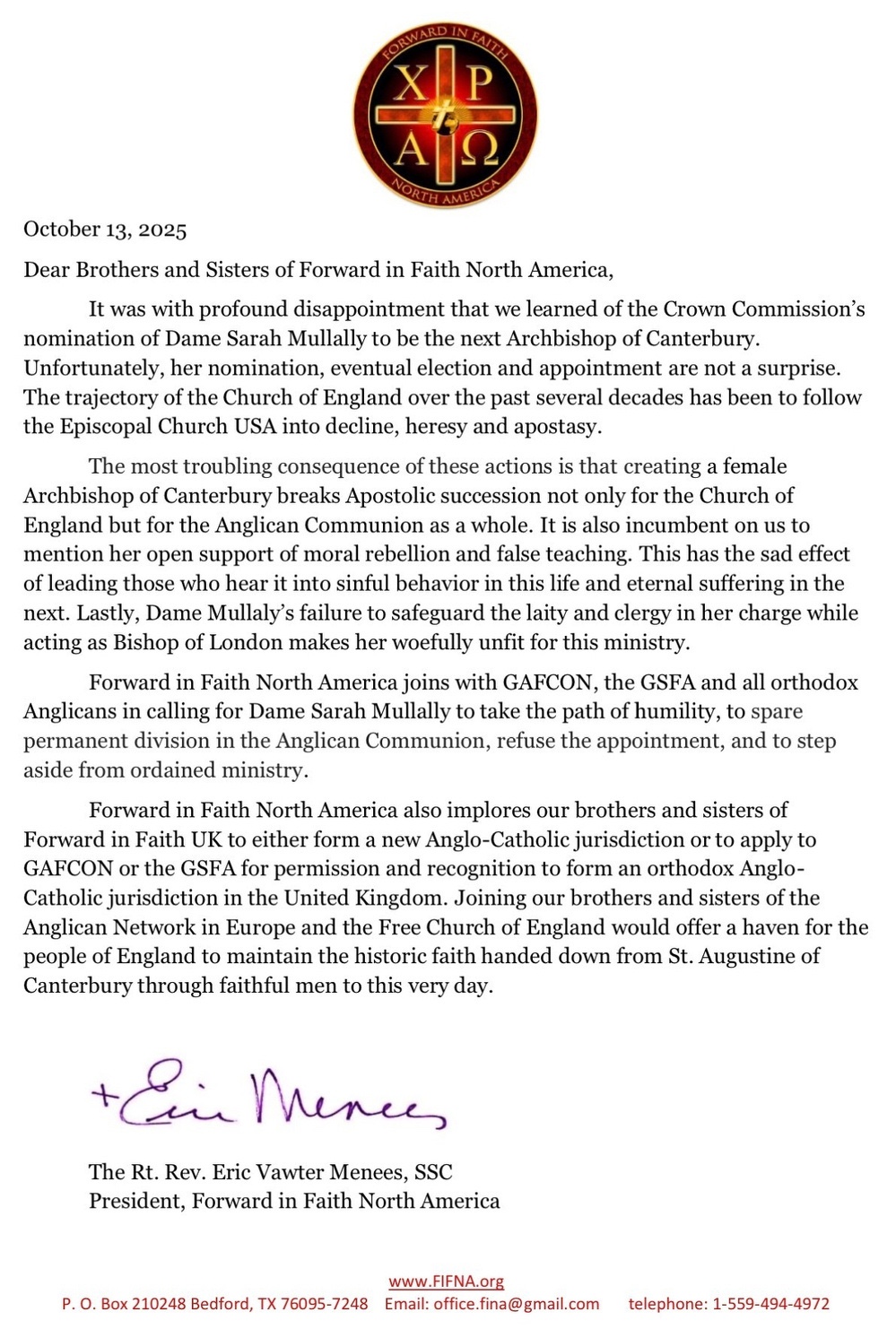
A line is being crossed in Canterbury. I share a communication published by a priest who received it:

Almost inevitably, these “Forward in Faith” and other GAFCON Anglicans will be painted in the popular press as schismatic for not going along with a radical provocation. I hope, but faintly, that the popular press will report their claim (encountered elsewhere) that they are the Anglican Church.

I make no facile prediction that “history will vindicate them,” but I’d rather be among them than the innovators when, at the end of history, Christ comes from heaven to judge the living and the dead.

Not every wound is PTSD

Therapists themselves are noting that if every time a soldier confesses his soul wound from combat we then label him with PTSD, that we will find ourselves recommending psychological therapies and prescribing psychiatric medications when what is needed is something like a religious ritual of purification and forgiveness.

Timothy Patitsas, The Ethics of Beauty.

Note to Peter Thiel

In the Lateran, at a council held in 1513, a formal prohibition had been issued against preaching the imminence of Antichrist.

Tom Holland, Dominion

Evangelicals and Calvinists

A lot of the evangelical world leaves the dirty work to the Calvinists.

Derek Rishmawi, Calvinist.

Caveat: Political Application is Patent

On Sundays, I rarely post things with pointed political applications. For that matter, I rarely post political items with explicit Christian underpinnings on Mondays through Saturdays. Today marks an exception where I judged that these fit Sunday better than weekdays because my target readers are specifically Christians.

Salt & Light

Christians who vote for Republicans are called to be salt and light within the Republican Party. That means being a voice calling the Republican Party to obey the rule of law. Yours should be the loudest voice condemning Trump’s pardon for January 6 rioters and pushing against his challenge to the checks and balances that are supposed to constrain the executive . You should speak up in favor of the poor and powerless and against the culture of cruelty, spite, and vengefulness Trump cultivates. It corrodes our public square and demeans our shared citizenship even as it poses more specific dangers to those targeted by Trump’s weaponization of federal law enforcement. If you do not speak up, you are both credulous and culpable, complicit with the party’s sins—including those yet to come.

Paul D. Miller, A Confessing Church for America’s Weimar Moment

MAGA Christianity

In last Sunday’s “Dispatch Faith” Column, Paul D. Miller asks Is MAGA Christianity True Christianity?, and essentially answers “no”: MAGA Christianity often mixes Christian symbols and Scripture with partisan rhetoric and calls to fight enemies, producing superficially Christian religion that departs on key theological and ethical points.

Commenting on The Charle Kirk Moment, Nijay Gupta resurrected a saying I’m pretty sure I last heard decades ago:

What you win them with is what you win them to.

Gupta’s role in this podcast was that of a more progressive Christian, relatively skeptical of the work of Charlie Kirk, and this comment had in view Kirk’s interweaving of conservative politics and evangelism.

I repeat from prior posts: I knew very, very little about Kirk until he was killed. From what I’ve learned since, I suspect he’d have insisted that conservative politics is such a concomitant of Christian faith that it is meet and right to interweave them from the podium/pulpit. (He said repeatedly that one cannot be a Christian and vote for Democrats.)

That is a message I’ve heard (though almost always tacitly) most of my life, and have resisted for almost as long. Despite my impression that most conservative Christians in North America lean right, and acknowledging that I, too, do so (though the meaning of “right” grows ever fuzzier), I nevertheless endorse the shared thrust of Miller and of Gupta.

And that’s why I consciously avoid political talk at Church coffee hour. All are welcome, regardless of politics, though some politics will prove to be baggage that must eventually be shed, as I’ve had to shed some of my own baggage.


Religious ideas have the fate of melodies, which, once set afloat in the world, are taken up by all sorts of instruments, some woefully coarse, feeble, or out of tune, until people are in danger of crying out that the melody itself is detestable.

George Elliot, Janet’s Repentance, via Alan Jacobs

[N]one of the things that I care about most have ever proven susceptible to systematic exposition.

Alan Jacobs, Breaking Bread With the Dead

You can read most of my more impromptu stuff here and here (both of them cathartic venting, especially political) and here (the only social medium I frequent, because people there are quirky, pleasant and real and it has no-algorithms). All should work in your RSS aggregator, like Feedly or Reeder, should you want to make a habit of it.

Sunday, 10/12/25

Total apostasy?

… Mormons claim that “total” apostasy overcame the church following apostolic times, and that the Mormon Church (founded in 1830) is the “restored church.” …

A bullet-point in an anti-Mormon tweet after the attack on a Michigan Mormon meeting place. (My source identified the tweeter as “fundamentalist.”) The bullet-points built to the conclusion that Mormons (Latter-Day Saints) are not Christian.

Fine. But the Evangelical and Evangelical-adjacent world in which I spent many decades believes something very much like that Mormon “total apostasy” story. They may think it started in the 4th century and ended in the 16th instead of the 19th, but a lot of them (including former-me) functionally think it ended in the 19th, with the revivals of the “Second Great Awakening,” when the distinctive style of Evangelicalism emerged. (BTW: Try to define “Evangelical.”)

Here, I submit, is a more accurate summary of Church history:

There’s no need of a restored church because Christ’s One Holy Catholic and Apostolic Church never went away.

And I stumbled onto it …

Speaking of which, I had occasion this week to reread an eight year-old blog constituting, my only published spiritual biography (it was reprinted elsewhere one time). There are a few things I’ve written over the years that stick in my mind as worthy efforts, not throw-away lines or curations, and that post is one of them.

Some things bear repeating, and so I shall:

Having settled in for a few decades, what have I found uniquely true about the Orthodox Church?

It’s hard to put into words. That’s why Orthodox evangelism tends to consist of “come and see.”

Harder still for me personally, I need to find words for feelings and tendencies that an intellectualoid has trouble trusting — things that may be true but approach ineffability. I have a Dostoyevsky “Beauty Will Save the World” sticker on my office window, but long habit and self-image keep pulling me back toward “Spock-like logic (think of that tidy, air-tight 5-Point Calvinism) will save the world.”

But here goes. Turn on your feeler.

I’ve found, again, the love of God. Over and over and over and over we hear liturgical exclamations “for You are a gracious God and love mankind.” There’s no contrary stream of wrath that I’ve noted. The steadfast love of the Lord endures forever.
I’ve found true worship of God, which was something I longed for and agitated for in my prior Evangelicalism and Calvinism, as best as I then understood worship. For instance, I wanted no “hymns” in worship that were addressed to encouraging one another rather than praising God. Yet somehow bathos kept cropping up, and emotionally manipulative gospel songs kept elbowing out too many hymns. I really had no idea what real worship looked like, but my longing was wholesome. I am very much a member of homo adorans.
I have found sobriety and balance. The Christian Reformed Church was on the right track when it aspired to “Catechism Preaching,” an effort to tie sermons to the prescribed portion of the Heidelburg Catechism appointed for that Sunday, rather than letting pastors riff on whatever they read in Saturday’s newspaper or National Review. But Catechism Preaching was a tradition honored more in the breach than in the observance. I have found the Orthodox liturgical cycles (very complex and overlapping) to produce sobriety and balance in homilies, but more, in the entire service (hymnody, Epistle and Gospel readings, etc.)
I have found a hard path which, if I faithfully walk it, will make me more Christlike — a nice Protestant way of referring to becoming a “partaker of the divine nature.”
I have found a Church that really is a hospital for sinners instead of a club for self-styled saints. Some patients have more embarrassing ailments than others, but we’re all chronic cases; sacramental confession helps to drive that home. Not one of us is a hopeless case: the lives of the Saints help drive that home. Some check out of the hospital against medical advice, but we don’t do involuntary discharges of anyone who knows (s)he’s sick and wants to get well.

Another’s conversion

She elaborates the point with more than a little self-deprecation: “I’d backed myself into a corner. There wasn’t anyone else in the world who talked about ‘the Platonic ideal of the Good as an active agent with a special care for humankind’ without shortening that whole cumbersome phrase to simply God.”

In short, although she resisted the conclusion (or was it a solution?) with all her strength, she finally welcomed its inevitability. “I had just enough love in me to be able to be warmly surprised to find out the rules I loved, loved me back.”

… If one can know what she thinks by reading the Catechism, what’s left to surprise?

Answer: not her background convictions, but how she applies them to concrete questions, especially questions about public policy and the modern household ….

Brad East, quoting Leah Libresco Sargeant’s conversion from atheism to Roman Catholicism. The occasion, of course, is that she has written a new book, The Dignity of Dependence: A Feminist Manifesto.

Orthodoxy and Roman Catholicism are not in communion with each other since, in the simplified version, the Great Schism of 1054 (see the timeline above). But a lot of people coming out of Protestant traditions have felt that those were the only two viable Christian alternatives, and I have never found it in me to criticize those who made the wrong-but-plausible choice, like Leah did.

Fallen

Of course, we speak of human beings as “fallen.” However, in Orthodox teaching, this does not refer to our nature itself. Rather, it refers to the fact that we have been made subject to death – we are mortal. It is “death at work in us” that we describe as “sin.” But the origin of sin is not found in our nature. Our nature is inherently good. Understanding this makes a huge difference when we think about human relationships and the character of our common life.

If you take the view (which is common in certain corners of Western Christianity) that human beings have a “sin nature” – that we are, in fact, essentially bad – then how we view one another and the character of our common life takes on a different caste. In an Orthodox understanding, a Bible verse such as, “Spare the rod and spoil the child,” can mean little more than “children need discipline in their lives to help them”. Whereas in a world in which human nature is held to be a “sin nature,” then “sparing the rod,” would be seen as letting evil run amok. It would hold that our nature not only needs to be restrained but requires a vigorous regime of reward and punishment. It has not been that long since the notion of “beating the evil out of a child” was common.

When we speak of our nature as “good,” we are not declaring that human beings are born as saints. Rather, we are saying that our nature (“what we are”) tends towards the good, desires the good. We desire beauty. We desire well-being. We desire truth. Even when we engage in evil actions, they are most often grounded in a misperception of the good. Dictators do not come to power by asking people to be evil – they come to power by distorting the image of the good.

Fr. Stephen Freeman, The Nature of Being Human


Religious ideas have the fate of melodies, which, once set afloat in the world, are taken up by all sorts of instruments, some woefully coarse, feeble, or out of tune, until people are in danger of crying out that the melody itself is detestable.

George Elliot, Janet’s Repentance, via Alan Jacobs

[N]one of the things that I care about most have ever proven susceptible to systematic exposition.

Alan Jacobs, Breaking Bread With the Dead

You can read most of my more impromptu stuff here and here (both of them cathartic venting, especially political) and here (the only social medium I frequent, because people there are quirky, pleasant and real and it has no-algorithms). All should work in your RSS aggregator, like Feedly or Reeder, should you want to make a habit of it.

Friday, 10/10/25

Nonpartisan

Levelers

Emily Ruddy was traveling the country with her new husband, Mike, when news reached them of Charlie Kirk’s shooting, then death:

Back in the car with Mike, approaching the Florida border, I’m looking at pictures of Charlie Kirk on my phone. He is staggeringly tall, taller than I ever realized, with a celebratory fist in the air. Reading his Wikipedia page, which has now been changed to past tense, I am reminded of a story I first read in middle school: Kurt Vonnegut’s “Harrison Bergeron.” The story is set in the late twenty-first century, in a dystopian America where the authorities have taken it upon themselves to ensure no person is better than another, be it in athleticism, intelligence, or beauty. The strong citizens get weighed down with bags of bird shot. The attentive citizens are intermittently bombarded with hideous sounds through tiny radios in their ears. The most beautiful faces are concealed by hideous masks.

But it’s the title character, Harrison Bergeron—exceptionally tall, handsome, brilliant and outspoken—who is shackled most heavily. At the end of the story he breaks through the shackles, and as punishment he is shot down on live TV: a warning to whoever tries to pull a similar stunt. Or at least, it would be a warning, if the viewers’ memories weren’t instantly blasted away by the ear radio’s next awful sound.

Emily Ruddy, Battle Above the Clouds.

If you haven’t read Harrison Bergeron, a (very) short story, by all means do. It’s freely available, like, for instance, here.

After Christian faith dies

The biggest confusion among my own students used to be rudderless moral relativism.  Although there is still a lot of that, it seems to be on the decline.  Now the problem is the explicit embrace of evil.  The suggestion that one must never do what is intrinsically evil for the sake of a good result is a hard sell.  Many of students are strongly attracted to “consequentialism,” the view that whether an act is right or wrong is determined only by the result.  To say that the ends do not justify the means puzzles them.

The decline of faith has also produced changes in character.  Young people who were raised in Christian homes, but then abandoned Christianity, often used to retain vestiges of their moral upbringing, and accepted such ideas as courtesy, love of neighbor, and the sacredness of innocent human life.  Today, having grown up in faithless homes, many seem to think that courtesy is for fools, that no one with whom they disagree is their neighbor, and that they should hate those they consider wrong instead of praying for their repentance and restoration.  As for the sacredness of innocent human life – for them, that idea went out when they embraced abortion.

I don’t spend much time asking what is going to happen, but I do ask what God would like me to do in my own place.  He sees the whole shape of things.  I can’t, but like a faithful bone, I can try to turn nimbly in the joint where I’m placed.

J Budziszewski, How Can I Think About the Assassination?

Budziszewski’s description of the decline of faith, as early as the second generation (the first generation of lapsed Christians lives on the vapors of the empty tank), is a description of devolution toward the “nasty, short and brutish” of pre-Christian antiquity.

If you think I’m just making a casual partisan slur, take a look at either of these two books, the first lengthy, the second shorter and more focused.

Wordplay

Frank Bruni’s back with recent favorite sentences. (Do not read this with beverages or food in your mouth.):

  • Also in The New Yorker, Jessica Winter read the infamous Jeffrey Epstein birthday book so that you and I don’t have to: “Sometimes it’s like you’ve discovered a rich man’s contract with the devil, and next to his signature, he’s drawn a little penis cartoon.” (Matthew Ferraro, East Providence, R.I.)
  • And Kelefa Sanneh, reporting from a recent Bad Bunny concert, described an ecstatic fan who “danced so vigorously with a decorative plant that he seemed to be trying to pollinate it.” (Bob Marino, Paris)
  • In The Los Angeles Times, Christopher Goffard tried to make sense of a former Los Angeles County sheriff’s rambling: “As he sat down to face questions from the feds, his sentences traveled winding paths through vague precincts to fog-filled destinations.” (Robin April Dubner, Oakland, Calif.)
  • In The Guardian, Bryan Armen Graham commiserated with the polite subgroup of American fans at an annual Europe-versus-United States golf tournament, who were too often “drowned out by the performative tough guys in flag suits and plastic chains who treat the Ryder Cup like a tailgate with better lawn care.” (John LeBaron, Acton, Mass.)
  • In The Dispatch, Nick Catoggio regarded the marks that President Trump and Defense Secretary Pete Hegseth made to military leaders last week as “a case of two men who radiate neurosis about their own toughness lecturing a roomful of actual tough guys about how to be tough. It had the feel of Pop Warner players scolding a group of N.F.L. linebackers about the importance of hustle.” (Glen T. Oxton, Mamaroneck, N.Y., and John Sabine, Dallas)
  • And John McWhorter analyzed the president’s loopy language: “Even Trump’s most positive-sounding coinages are acts of a certain kind of verbal aggression. I sometimes stop to marvel that the House passed something with the actual official title the One Big, Beautiful Bill Act. That goofy bark of a name is a boisterous clap back against opposing views, an attempt to drown out inconvenient facts with braggadocio. It is a linguistic snap of the locker room towel.” (Matt Masiero, Richmond, Mass., and Sue Hudson, Simi Valley, Calif., among many others)

Anarchism

[T]he essential practices of anarchism — negotiation and collaboration among equals — are ones utterly neglected and desperately needed in a society in which the one and only strategy seems to be Get Management To Take My Side.

Alan Jacobs, Should Christians be Anarchists?

Partisan

Transparent pretext

Trump’s remarks on the night of Kirk’s murder redefined violent incitement to include harsh criticism of judges. (“My administration will find each and every one of those who contributed to this atrocity and to other political violence, including the organizations that fund it and support it, as well as those who go after our judges, law-enforcement officials, and everyone else who brings order to our country.”) Now [aide Stephen] Miller himself is going after judges.

To call this “hypocrisy” is to engage Miller’s reasoning at a level upon which it does not operate. The essence of post-liberalism is the rejection of the notion that some neutral standards of conduct apply to all parties. Miller, like Trump, appears to believe his side stands for what is right and good, and his opponents stand for what is evil. Any methods used by Trump are ipso facto justified, and any methods used against him illegitimate.

A couple of weeks ago, Miller claimed that a disturbed gunman shooting Charlie Kirk impelled the government to crack down on the left. Now he says a handful of activists protesting ICE impel the government to crack down on the left.

Violence is not the cause of Trump and Miller’s desire to use state power to crush their opposition. It is the pretext for which they transparently long.

Jonathan Chait, Stephen Miller is Going for Broke

Bad faith

You can and should worry about American leaders at any level viewing their opponents as the enemy within, whether it’s the president of the United States or a random [Democratic] candidate for state AG. But if you’re more vocal about the latter than the former, forgive me for thinking you’re more interested in contriving a “both sides” equivalency to minimize what the White House is up to than you are about addressing the problem of incitement.

Two things are remarkable about [continuing troop deployments in “blue cities”]. One, which almost goes without saying, is that it’s another case of the Trump administration aiming to normalize unprecedented authoritarian shows of force. But the other is underappreciated: It’s all being done in bad faith, as a provocation, and quite plainly. There’s barely a pretense anymore of a colorable emergency like a riot that might justify the president deploying troops. He’s doing it unbidden and enthusiastically, looking for excuses to intimidate Democrats by symbolically occupying their cities with troops yanked from duty [and civilian jobs] in other states.

Needless to say, this is why the Trump White House didn’t get the benefit of the doubt from Judge Immergut on the Portland deployment, or from Judge Waverly Crenshaw on whether Kilmar Abrego Garcia was vindictively prosecuted. It’s also why the case against James Comey will end up in the toilet sooner rather than later. Courts have traditionally given the president and the Justice Department wide discretion in commanding the military and choosing whom to prosecute, but that’s because presidents traditionally haven’t given courts good reason to think they’re acting in bad faith.

Nick Catoggio, American versus American.

I look forward to the day when judges cease giving a “presumption of regularity,” of good faith, to the actions and legal arguments of this Administration. They have forfeited it because so much of what they do plainly is done in bad faith.

On keeping an impossible promise

Anyone with brown skin and the wrong kind of tattoo is therefore now at risk of being carted off to torture by the US government, with absolutely no safeguards that they have gotten the right people. Or do you think that an administration that confuses billions with millions, and puts classified intelligence on a Signal app, is incapable of making an error?

Andrew Sullivan, Two Perfect Months (March 2025)

I will give Trump “credit” for trying to keep his deportation campaign promise. The problems is, it’s impossible even for competent, non-malicious government workers to keep it (it included luridly-high numbers) without wholesale errors and ubiquitous denials of due process (i.e., in context, the process by which we assure that a person truly is subject to deportation under the law).

Your tax dollars at work

Short Circuits is a punchy weekly summary of notable Federal Court of Appeals decision, like this summary of activities by an ICE goon:

ICE agent escorting passenger from Dallas to Miami takes upskirt pictures and videos of flight attendant. He’s convicted of interfering with her flight-crew duties, sentenced to two years’ probation. Agent: I didn’t know that she was aware of my “clandestine video voyeurism,” and that’s an element of the crime. Eleventh Circuit (unpublished): It is not.

Divine retribution in Dallas

The covert operations of the Kennedys haunted Lyndon Johnson all his life. He said over and over that Dallas was divine retribution for Diem. “We all got together and got a goddamn bunch of thugs and we went in and assassinated him,” he lamented. In his first year in office, coup after coup wracked Saigon, a shadowy insurgency started killing Americans in Vietnam, and his fear that the CIA was an instrument of political murder festered and grew.

Tim Weiner, Legacy of Ashes

Rulebreaker

There are certain unwritten rules in American life, and one of them is that before your face is featured on the nation’s currency you are first obliged to die. There is no constitutional provision that mandates this, nor any law written tightly enough to guarantee it. But, as a general matter, we have shied away from putting living figures on our notes and coins, on the grounds that it is monarchical behavior and that the United States is not a monarchy. Unsurprisingly, this salutary tradition is not of great interest to the Trump administration, which intends to put an image of Trump on both sides of a commemorative $1 coin that will be produced for the 250th anniversary of the Declaration of Independence. On one side, Trump will appear in profile. On the other, he will appear pumping his fist, with the words “Fight Fight Fight” lining the coin’s perimeter. Answering questions about the plan, Trump’s press secretary, Karoline Leavitt, said that she was unsure if Trump had seen it, but that she was “sure he’ll love it.” He will. But that’s not really the important point, is it?

National Review week in review email.

Here’s a coin suggestion:


We are all gatekeepers now.

Peggy Noonan

Your enemies are not demonic, and they are not all-powerful and the right hasn’t always lost and the left hasn’t always won. But if you convince yourself of that, you give yourselves all sorts of permission to do a lot of stupid and terrible things under the rubric of “Do you know what time it is?”

Jonah Goldberg.

[A] critical mass of the American people … no longer want[s] to govern themselves, … are sick of this republic and no longer want to keep it if it means sharing power with those they despise.

Nick Catoggio

I don’t do any of the major social media, but I have two sub-domains of the domain you’re currently reading: (a) You can read most of my reflexive stuff, especially political here. (b) I also post some things on my favorite no-algorithm social medium.

Sunday 10/5/25

Fullness

Orthodoxy holds that the fullness of the Faith was revealed to the Church at Pentecost, once and for all. The Greek Fathers utilized their education in the service of the Church to explain doctrine, not to find new truths, since the fullness of the truth was received at Pentecost.

Dr. Eugenia Scarvelis Constantinou, Thinking Orthodox

Secularism

Secularism was not a neutral concept. The very word came trailing incense clouds of meaning that were irrevocably and venerably Christian.

Tom Holland, Dominion

Ring-lust

When people justify their voting choice by its outcome, I always think of The Lord of the Rings. Tolkien emphasizes repeatedly that we cannot make decisions based on the hoped-for result. We can only control the means. If we validate our choice of voting for someone that may not be a good person in the hopes that he or she will use his power to our advantage, we succumb to the fallacy of Boromir, who assumed he too would use the Ring of Power for good. Power cannot be controlled; it enslaves you. To act freely is to acknowledge your limits, to see the journey as a long road that includes dozens of future elections, and to fight against the temptation for power.

Jessica Hooten Wilson, What ‘The Lord of the Rings’ Can Teach Us About U.S. Politics, Christianity and Power.

In the US, we decided, twice, that if we gave Sauron the ring, he’d use it for good. How’s that workin’ out for ya?

Conversion and cosmology

There is no point in converting people to Christ if they do not convert their vision of the world and of life, since Christ then becomes merely a symbol for all that we love and want already – without Him. This kind of Christianity is more terrifying than agnosticism or hedonism.

Fr. Alexander Schmemann. Again:

A modern secularist quite often accepts the idea of God. What, however, he emphatically negates is precisely the sacramentality of man and world.

Fr. Alexander Schmemann (different source).

Climbing the elite ladder

Here’s one way to think about it. An evangelical who climbs the elite ladder is more or less required, by the nature of the case, to shed vital elements of her evangelical identity. But a Catholic is not. And a Catholic is not for the same reason that, once upon a time, a liberal Protestant was not.

Brad East, Conversions, Protestantism, and a New Mainline. I would add that an Orthodox Christian need not shed identity either.

East’s post is target-rich with suggestions about questions that fascinate me.

Politically homeless

According to the Public Religion Research Institute’s annual census last year, upward of 80 percent of Republicans described themselves as Christian …

Ryan Burge. It might surprise you that I’m unimpressed and un-encouraged by that. I don’t even know what “Christian” means in common parlance any more if 80% of Republicans think of themselves as Christians.

Ain’t. No. Way.

… But the Democratic coalition is a very different spiritual universe. It is made up of a big mix of faiths — Christians of various kinds, Jews, Muslims — as well as somewhere between 30 percent and 40 percent of nones, or people who describe their faith as atheist, agnostic or nothing in particular.

Ryan Burge again. These figures are a surprise, but they may be correlated to the Democrat party positions that keep me politically homeless instead of joining the Dems.

Chicago archbishop Blase Cardinal Cupich, who has stirred some controversy recently, said one true thing that made my heart leap when it was misattributed to the new Pope by a commentator: that Christians (Cupich said “Catholics”) are now politically homeless in the US.

I have recognized my political homelessness for twenty years now.

On reading the Bible

Most North American Christians assume that they have a right, if not an obligation, to read the Bible. I challenge that assumption. No task is more important than for the Church to take the Bible out of the hands of individual Christians in North America. Let us no longer give the Bible to all children when they enter the third grade or whenever their assumed rise to Christian maturity is marked, such as eighth-grade commencements. Let us rather tell them and their parents that they are possessed by habits far too corrupt for them to be encouraged to read the Bible on their own ….

Stanley Hauerwas. Hauerwas wrote the book this quote comes from 32 years ago. It seems to me that those corrupt habits haven’t been reformed.

Get ready

You may have heard these famous lines from Cardinal Francis George, the late archbishop of Chicago …:

I expect to die in bed. My successor will die in prison. And his successor will die a martyr in the public square. His successor will pick up the shards of a ruined society and slowly help rebuild civilization, as the church has done so often in human history.

Kevin D. Williamson, The Totalitarian Tendency and the Confessional, reflecting on a new Oregon law requiring that Catholic priests report certain sexual crimes that might be communicated to them in the confessional.

Starving the beast

In our last episode, I wrote “I don’t think I frequent any websites that use algorithms to target my inferred vulnerabilities.” It may be worth noting that I also have unsubscribed from some blogs and Substacks that I felt were grinding out agitprop aimed at people like me.

Go thou and do likewise.


Religious ideas have the fate of melodies, which, once set afloat in the world, are taken up by all sorts of instruments, some woefully coarse, feeble, or out of tune, until people are in danger of crying out that the melody itself is detestable.

George Elliot, Janet’s Repentance, via Alan Jacobs

[N]one of the things that I care about most have ever proven susceptible to systematic exposition.

Alan Jacobs, Breaking Bread With the Dead

You can read most of my more impromptu stuff here and here (both of them cathartic venting, especially political) and here (the only social medium I frequent, because people there are quirky, pleasant and real and it has no-algorithms). All should work in your RSS aggregator, like Feedly or Reeder, should you want to make a habit of it.

Saturday, 9/27/25

Addled religio-politics

David Brooks isn’t a practitioner of zingers or even aphorisms. He is a penetrating thinker and writer on a lot of our public life in the US:

What happens when people operate without any coherent theory of how religion should relate to politics?

First, people treat electoral politics as if it were a form of spiritual warfare. A battlefield mentality prevails between the forces of Jesus and the forces of Satan. Fear replaces the traditional Christian virtue, hope: We’re under attack, and we have to destroy our enemies! That’s the easiest way to mobilize people.

Second, the process of moral formation is perverted. Instead of discipling people in the Christian virtues of faith, hope and charity, people get discipled in the political passions — enmity, conquest and the urge to dominate.

Third, people develop an addiction to rapture. You’ve probably heard the sort of Christian worship music that preceded and punctuated Sunday’s ceremony. Traditional hymns from centuries gone by covered a range of experiences, but modern worship music tends to hit the same emotional chord over and over again: rapture and praise. Its job is to drive your arms heavenward or to knock you to your knees. It can be a delicious and transforming experience.

The problem is that politics is prosaic. Deliberation and negotiation work best in a mood of moderation and equipoise. If you want to practice politics in the mood best suited for the altar call, you’re going to practice politics in a way that sends prudence out the window.

Fourth, a destructive kind of syncretism prevails. Syncretism is an ancient religious problem. It occurs when believers try to merge different kinds of faith. These days, it’s faith in Jesus and the faith in MAGA all cocktailed together. Syncretism politicizes and degrades faith and totalizes politics.

Fifth, it kicks up a lot of hypocrisy. It’s nice to hear Carlson say he practices a religion of love, harmony and peace, but is that actually the way he lives his life?

Finally, it causes people to underestimate the power of sin. The civil rights movement had a well-crafted theory of the relationship between religion and politics. The movement’s theology taught its members that they were themselves sinful and that they had to put restraints on their political action in order to guard against the sins of hatred, self-righteousness and the love of power. Without any such theory, MAGA imposes no restraints, and sin roams free.

The critics of Christian nationalism sometimes argue that it is a political movement using the language and symbols of religion in order to win elections. But the events of the past week have proved that this is a genuinely religious movement and Charlie Kirk was a genuinely religious man. The problem is that unrestrained faith and unrestrained partisanship are an incredibly combustible mixture. I am one of those who fear that the powerful emotions kicked up by the martyrdom of Kirk will lead many Republicans to conclude that their opponents are irredeemably evil and that anything that causes them suffering is permissible. It’s possible for faithful people to wander a long way from the cross.

David Brooks, We Need to Think Straight About God and Politics (gift link because I’ve quoted so much). I bolded the paragraph about syncretism because that’s my own strong conviction about American MAGA politics. See, for instance, the Jonah Goldberg quote in the footer.

Ya gotta love markets

Wall Street investors are buying up claims to potential tariff refunds, betting that the Supreme Court will strike down President Donald Trump’s signature economic policy and require the government to disgorge tens of billions of dollars that companies have paid this year in import taxes. A handful of hedge funds and specialized investment firms are offering importers around 20 cents for every dollar they paid in Trump’s “reciprocal” tariffs and roughly 5 cents per dollar for levies on Canadian, Mexican or Chinese goods stemming from the president’s ire over fentanyl trafficking, according to Salvatore Stile, founder of Alba Wheels Up International, a New York-based customs broker. The antidrug tariff claims are worth less because they are seen as more likely to survive legal challenges and thus less likely to produce refunds. The deals offer immediate cash for importers that have been absorbing most of the cost of Trump’s tariffs. Investors, meanwhile, hope to profit by collecting the rest of the refund if the Supreme Court invalidates Trump’s tariffs. (Source: washingtonpost.com)

John Ellis. Ingenious, but you’ve got to have gigabucks already even to get into this game.

Against the Machine

I’ve read just about everything Paul Kingsnorth has written since I learned of his conversion to Orthodoxy. So I questioned my need to buy his new book, Against the Machine, released Tuesday.

Upon reading a few favorable comments by a trusted friend, I did buy it — for reading on my reading machine (Kindle). Such ironies are not lost on Kingsnorth.

I’m 24% into it and I do recommend it

Farewell to a friend, with an apologia

I lost a valued early subscriber to this blog Wednesday. He had his fill of my “Trump Derangement,” and also thought I was negative toward Charlie Kirk. I know I lost him not because I pay attention to who reads the blog, but because he offered a comment asking that I unsubscribe him. (Neither of us knew how to do that, but I figured it out. I didn’t post his comment because it read more like a personal letter.)

About Charlie Kirk, my subscriber, a skilled wordsmith, nevertheless misread what I wrote, attributing my exceedingly mild criticism of Kirk to Kirk’s support of Trump. Let me say to all you what I said to him:

I regret leaving the impression of a more unfavorable view of Charlie Kirk than I feel. I’ve read a lot about him in the past two weeks because I knew so little about him before September 10. I came to see him as a young man who made fewer mistakes than I did at his age and was maturing before he was cut down. I barely thought about him supporting Trump.

And I’ll add, as justification for criticism that too many conservatives seemed amnesiac about the blemishes on Kirk’s record, eager to declare him a martyr-saint. Treating me as a member of a presumed tribe that must speak thus-and-so is a good way to get my back up.

I’ll add further add: I’m praying for the repose of Charlie’s soul as (and for as long as) I pray for most friends who have died (a few I pray for with no end anticipated). But I am decidedly not asking Charlie to intercede with God for my salvation because I don’t buy the insta-beatification.

If pouring cold water on excessive praise equals condemnation, then I’d plead guilty — but it doesn’t.

As for my Trump Derangement, I’ll quote Jonah Goldberg:

[T]he fact is that the GOP controls the White House and Congress and Trump controls his party in ways no president in living memory has. Moreover, he’s coloring outside the lines. He’s testing the system. He’s redefining conservatism in real time. He does everything he can to be the center of attention constantly. In short, he’s making news. He’s driving events. When people yell at me for writing too much about Trump, what many of them—not all—really mean is “Why do you have to criticize him so much?” Part of this response stems from the idea that conservative commentators are supposed to be partisan Republican commentators. But in ways that have never been truer in my lifetime, Republican and conservative are not synonymous terms.

It’s true, though: I don’t have to criticize him. But I do have to tell the truth as I see it. And I’m sorry to tell you this, but believing what I believe, telling the truth about Trump and criticizing him are pretty close to the same thing.

But nothing I write is likely to dissuade a Trump supporter, just as I have been unmoved by all the “but-look-at-his-policies” rationalizations over the past 8 years. The reader I lost probably isn’t the only one to find it all rather tedious. I should know that by now.

I even understand why people voted for Trump in preference to the Democrat candidates of the last three cycles (I voted for a third party each time in a state that was a polling lock for Trump).

What I don’t understand is those Christians who hold Trump up as a great President instead of “a terrible man, but a better choice than Clinton, Biden or Harris.” Especially when they tell me that I should believe that, too.

That’s my story and I’m sticking to it, while intending to waste fewer obsessive words about it — because I, unlike Jonah Goldberg, don’t charge a subscription that obliges me to endure The Boredom of Writing in the Trump Era.


We are all gatekeepers now.

Peggy Noonan

Your enemies are not demonic, and they are not all-powerful and the right hasn’t always lost and the left hasn’t always won. But if you convince yourself of that, you give yourselves all sorts of permission to do a lot of stupid and terrible things under the rubric of “Do you know what time it is?”

Jonah Goldberg.

[A] critical mass of the American people … no longer want[s] to govern themselves, … are sick of this republic and no longer want to keep it if it means sharing power with those they despise.

Nick Catoggio

I don’t do any of the major social media, but I have two sub-domains of the domain you’re currently reading: (a) You can read most of my reflexive stuff, especially political here. (b) I also post some things on my favorite social medium.

Charlie Kirk

Charlie Kirk and his memorial service

I don’t want to keep banging on about this, because two weeks ago all I consciously knew about Charlie Kirk was that he was affiliated with Jerry Falwell Jr. around the time Falwell made spiritual shipwreck. My impression of him is more favorable now (mama was right: you’re known by the company you keep).

I suspect that Charlie will stop occupying our mind-space relatively soon. Meanwhile, here are some observations I think trenchant.

False note

Some “Evangelicals” are reportedly are starting to style Charlie Kirk as a Christian martyr. Rachel Roth Aldhizer gives examples and cautions that they’re playing with fire.

I have a more fundamental objection: the hagiography should stop not because of dangerous eventualities, but because it’s false.

Not every Christian who is murdered is a Christian martyr, and a Christian martyr is not a murdered Christian who is liked by lot of people, even a lot a people who are good at wordcraft.

Rather, a martyr must be murdered because of his Christian faith. The “tell” in this “Christian martyr” tale is the pronoun “they.” “They killed Charlie because ….“

No, “they” did not, and so far as we know at this point, based on very sketchy information, “he” didn’t either. What little we know points toward the lone shooter perceiving Kirk’s politics as hate-filled.

Plus ça change …

In most secular colleges and universities the largest evangelical organization was Campus Crusade for Christ, founded in 1951 by Bill Bright, a conventionally right-wing Presbyterian, to evangelize students and instruct them in conservative religion and politics.

Frances Fitzgerald, The Evangelicals. Is Turning Point USA the new Campus Crusade?

Erika Kirk

Erika Kirk set a stellar moral example yesterday despite immense emotional and political temptation to be vindictive. All but uniquely for a MAGA Republican, her country is better today for her public influence.

Then the president spoke.

“He did not hate his opponents. He wanted the best for them,” Donald Trump said of Charlie Kirk, seemingly praising the dead. Then he veered off-script: “That’s where I disagreed with Charlie. I hate my opponents, and I don’t want the best for them. I’m sorry. I am sorry, Erika.”

He joked that maybe she could convince him that hating one’s enemies isn’t right, which turned her moving statement of Christian witness into a set-up for a punch line. The crowd laughed. When it was over, Mrs. Kirk embraced him.

I’ve heard of political “big tents,” but I’ve never heard of one big enough to accommodate two moral systems that aren’t just contradictory but irreconcilable. “Christ’s message, followed by its very antithesis,” philosophy professor Edward Feser wrote of the contrast between Kirk’s and Trump’s remarks. “It’s almost as if the audience is being put to a test.”

Almost, yeah.

It’s been many years since I read the gospels, but I do remember Matthew 6:24: “No one can serve two masters. He will either hate one and love the other, or be devoted to one and despise the other.” That’s the test. Many American Christians, possibly including Erika Kirk, seem to reject the premise.

Nick Catoggio

The audience failed the test. They cheered Erika Kirk, but also cheered Trump, who logically they should have booed.

MAGA theology laid bare

Many people who saw or read about the rally were puzzled by what they perceived as a contradiction. How can you cheer love and hate at the same time? How can you worship Jesus and cheer such a base and gross description of other human beings, people who are created in the image of God?

My reaction was different. Finally, I thought, curious Americans who tuned in got to see MAGA theology more completely — and what they witnessed was the best and worst of MAGA Christianity.

The objection to Trump isn’t so much that he’s aggressive — Abraham Lincoln was aggressive against the Confederacy, just as Franklin D. Roosevelt was aggressive against the Axis powers — but that he’s malicious and unjust. And when Trump says that he hates his political enemies, it’s a confession that he’s governing through his basest desires.

David French

The attack on free speech

Our fundamental bargain

Every generation of Americans must come to terms with the fundamental bargain of free speech: we agree that we won’t use the mechanism of the state to punish speech we don’t like and will talk back instead … Every generation has to accept the deal that they’re going to refrain from censorship to protect their own right to speak. Plenty of us still don’t accept that bargain, but if a critical mass of people don’t accept it, then it stops working. Free speech is Tinker Bell; if enough kids don’t clap, she dies. Or as Learned Hand put it more poetically: “liberty lies in the hearts of men and women; when it dies there, no constitution, no law, no court can even do much to help it.”

Popehat

That was then, this is then plus a few months and an opening to act more fashy

Then there’s the Big Guy. In his inauguration speech this year: “I will also sign an executive order to immediately stop all government censorship and bring back free speech to America. Never again will the immense power of the state be weaponized to persecute political opponents.” Trump now: “The [networks] give me only bad publicity, press. I mean, they’re getting a license. I would think maybe their license should be taken away.” And this: “That leaves Jimmy and Seth, two total losers, on Fake News NBC. Their ratings are also horrible. Do it NBC!!!”

Andrew Sullivan.

Plutocrats in the C-Suite

One of the lesser-noted disturbing developments (because of all the higher-profile more “urgent” news) is the takeover of a vast swath of our media by family of billionaire Trump supporter Larry Ellison.

As Thomas Edsall notes in the linked article, this sort of thing is one of the ways Hungary’s Viktor Orbán built an illiberal democracy. They still have elections; they still have free speech; but anti-Orbán speech faces hurdles because Hungarian media are controlled by Orbán supporters.

Donald Trump is a much nastier man than Viktor Orbán. His instincts, unchecked by Congress as they are, are likely to take us to a place that makes Hungary look like paradise.

Chew on this

[T]he most trenchant point about the Kimmel saga was made by civil-rights lawyer Matthew Segal. “In my opinion, when companies or institutions cave to Trump despite the law being on their side, they are not misunderstanding the law,” he wrote. “They are making educated guesses that the U.S. is heading in a direction where, in practice, the law won’t matter.”

Go to court, one might say. Okay—but court is expensive, takes a long time, and risks winning the battle but losing the war. That’s Segal’s point: Even if Disney had prevailed in a legal battle with the FCC, our vindictive president would have looked for other levers of federal power to pull to damage the company. Keeping Jimmy Kimmel on the air and then turning around to find that the FCC has canceled your multibillion-dollar merger out of spite is the definition of a pyrrhic victory.

Nick Catoggio. I can’t say that’s entirely wrong, but this may be a better explanation. As to Jimmy Kimmel in particular, this too is relevant:

If CBS and ABC, two networks that have lately bowed to the president, gave half a hoot, they would easily have prevailed on First Amendment grounds if they put up a fight.

That is, if they prized their network TV businesses sufficiently as businesses, as opportunities to display stewardship, or even as instruments of influence. But they don’t.

Their network news and late-night talk shows are money-losing artifacts of an industry model their parent companies have no intention of investing in or taking risks for.

Holman W. Jenkins, Jr.

Miscellany

A well/ill (choose one) founded fear of persecution

Hannah Kreager, a “trans woman,” fled Tucson for Calgary, Alberta, Canada, and promptly filed for asylum. Kreager had discerned which way the wind was blowing, and it was not propitious:

“If this had been just George Bush or some run-of-the-mill Republican president, I wouldn’t have left,” Kreager said. “I’d have stayed, written to my legislators, and protested because that’s what you do in a democracy. But this feels like an authoritarian regime.”

Rupa Subramanya, The Americans Seeking Refuge from Trump in Canada.

I don’t think Donald Trump feels any personal animus against transgender people, but he knows that quite a few in his base do feel such animus, and he panders to them periodically. Moreover, he is busily demolishing the rule of law in America, and one doesn’t know where he’ll turn next. I can’t say a fear of persecution is less than well-founded, although the Canadian government may, for diplomatic reasons, have trouble admitting that.

Trump lied, children died

The Trump administration has claimed that no one has died because of its cuts to humanitarian aid, and it is now trying to cancel an additional $4.9 billion in aid that Congress already approved. Yet what I find here in desperate villages in southwestern Uganda is that not only are aid cuts killing children every day, but that the death toll is accelerating.

Stockpiles of food and medicine are running out here. Village health workers who used to provide inexpensive preventive care have been laid off. Public health initiatives like deworming and vitamin A distribution have collapsed. Immunizations are being missed. Contraception is harder to get. Ordinary people are growing weaker, hungrier and more fragile. So as months pass, the crisis is not easing but growing increasingly lethal — and because children are particularly vulnerable, they are often the first to starve and the first to die.

It’s difficult to know how many children are dying worldwide as a result of the Trump aid cuts, but credible estimates by experts suggest that the child death toll may be in the hundreds of thousands this year alone — and likely an even higher number next year. In short, President Trump’s cuts appear to be by far the most lethal policy step he has taken.

Let me introduce Trump to the mothers of children that his cost-cutting has killed.

Nicholas Kristoff (Gift Link)

We are all gatekeepers now.

Comparing the top-down “gatekeeper” suppression of the full Zapruder film of JFK’s assassination to the easy access to videos of Charlie Kirk’s assassination:

The gatekeepers are long gone and will never return, but we can’t live as a healthy society without them. We prove this every day.

So you have to be the gatekeeper for your family. You have to be the gatekeeper for yourself. You have to hit delete as the stain tries constantly to creep in, you have to look away and guide others to look away. The school has to be a gatekeeper (removing smartphones from class is a gatekeeping action).

We are all gatekeepers now.

Peggy Noonan.


Your enemies are not demonic, and they are not all-powerful and the right hasn’t always lost and the left hasn’t always won. But if you convince yourself of that, you give yourselves all sorts of permission to do a lot of stupid and terrible things under the rubric of “Do you know what time it is?”

Jonah Goldberg.

[A] critical mass of the American people … no longer want[s] to govern themselves, … are sick of this republic and no longer want to keep it if it means sharing power with those they despise.

Nick Catoggio

I don’t do any of the major social media, but I have two sub-domains of the domain you’re currently reading: (a) You can read most of my reflexive stuff, especially political here. (b) I also post some things on my favorite social medium.