Traditional Vernal Equinox 2023

Some gaslighters are claiming that Spring began yesterday, but I distinctly remember that it starts March 21. That’s my story and I’m stickin’ to it.

Culture

The World Beyond Your Head

Matthew Crawford, who does not know me nor I him, nonetheless describes a very strong tendency in my life:

I can take a virtual tour of the Forbidden City in Beijing, or of the deepest underwater caverns, nearly as easily as I glance across the room. Every foreign wonder, hidden place, and obscure subculture is immediately available to my idle curiosity; they are lumped together into a uniform distancelessness that revolves around me. But where am I? There doesn’t seem to be any nonarbitrary basis on which I can draw a horizon around myself—a zone of relevance—by which I might take my bearings and get oriented. When the axis of closer-to-me and farther-from-me is collapsed, I can be anywhere, and find that I am rarely in any place in particular.

The World Beyond Your Head: On Becoming an Individual in an Age of Distraction

I suspect that this is why I like to travel: it forces on me that particularity of places.

My Man Mitch

Mitch Daniels, former Purdue president, didn’t hold back about the state of today’s athlete in his latest Washington Post column. The headline was about women’s sports, but Daniels really laid into what he considered “sports figures who embody self-absorption over collective commitment, who cultivate their personal ‘brands’ at the expense of collective success.” An example: “A top athlete can consort with criminals, brandish guns in public and litter the landscape with illegitimate children in whose lives he has no intention of playing a father’s role, seldom with career consequences.” Read the rest here: “In a me-first era, my appreciation of women’s sports just keeps growing.”

Dave Bangert

Shame on the Met

The Metropolitan Opera has been ordered by an arbitrator to pay the Russian soprano Anna Netrebko more than $200,000 for performances it canceled last year after she declined to denounce President Vladimir V. Putin of Russia following the invasion of Ukraine.

New York Times

I wish the Met had been hit harder than that, but as a private company, it has some latitude to indulge its oppressive impulses. (Netrebko lost claims for performances where she and the Met had not yet inked the deal.)

Colonialism

  • “We must find new lands from which we can easily obtain raw materials and at the same time exploit the cheap slave labour that is available from the natives of the colonies. The colonies would also provide a dumping ground for the surplus goods produced in our factories.” (Cecil Rhodes)
  • In general terms aid cannot be of use to the poor of the Third World for the critical reason that they necessarily depend on the local economy for their sustenance, and the local economy does not require the extensive highways, big dams, or for that matter hybrid seeds, fertilisers and pesticides of the Green Revolution, any more than it does the fleet of helicopters that the British government imposed on India. These are only of use to the global economy, which can only expand at the expense of the local economy, whose environment it degrades, whose communities it destroys and whose resources (land, forest, water and labour) it systematically appropriates for its own use.

Edward Goldsmith, Development As Colonialism

March Madness

[D]espite having NCAA eligibility remaining, the Ivy League hasn’t budged from its position to limit its athletes a four-year window to compete. It’s something that Princeton, as an institution, also believes in, according to coach Mitch Henderson.

"We have [two] other seniors that have eligibility. Each one of these guys has an extra year," Henderson said. "It doesn’t change anything for us. We’re very much about the four-year process.

"Princeton, we’re about the growth of the student-athlete over the four-year process. I hope that’s not saying we’re a stick in the mud. It’s very much who we are. We expect them after senior year to be able to kind of go out and make pretty serious contributions in their communities."

ESPN story on Princeton men making the Sweet 16.

Princeton just became my emotional favorite in the tournament. Much as I like college basketball, I love colleges and universities that are about education.

Academic theology (and apologetics)

It has been roughly 25 years since it dawned on me that a secular person can never do truly Christian theology, which is more than an academic pursuit.

There’s no one more dangerous than the man who knows the steps but hasn’t walked them.

Steven Christoforou, Why Christian Apologetics Miss the Mark

Despite that epigram, Christoforou was not writing about Ravi Zacharias. He wrote something better than that would have been.

The pornified campus

1-in-3 collegiate women report being choked during most recent sex.

Brad Wilcox on Twitter via Aaron Renn

My presumption — rebuttable but strong — is that their sexual partners learned this frightening twist on love-making from watching hardcore porn (of a sort I never encountered).

Men are not guarding their imaginations. Women, too, are setting themselves up for divorce, with all its ramifications:
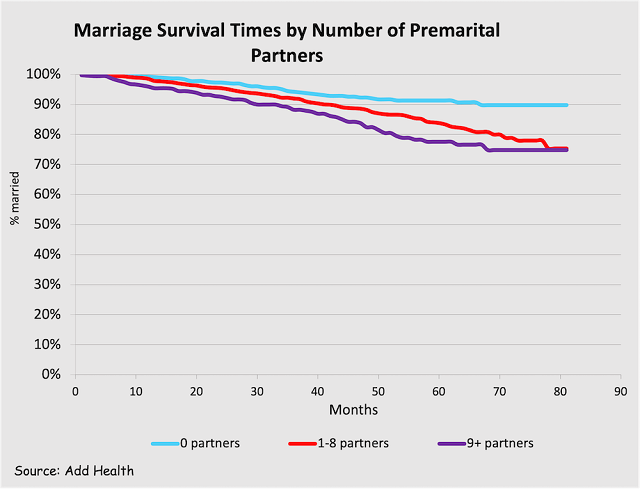
Calling a spade a spade

“Conversion therapy” bans pressure therapists to never help any patient try to feel comfortable in her body. That’s not some unintended consequence; it’s the essence of these bans. As Jack Turban has put it, it’s "unethical" to try to make a child "cisgender."

Leor Sapir on the 20 states and DC with such bans, via Andrew Sullivan

On Wokeness

Diversity and inclusion today

The thinking class, meanwhile, squanders its waking hours on a quixotic campaign to destroy every remnant of an American common culture and, by extension, a reviled Western civilization they blame for the failure to establish a heaven on earth of rainbows and unicorns. By the logic of the day, “inclusion” and “diversity” are achieved by forbidding the transmission of ideas, shutting down debate, and creating new racially segregated college dorms.

James Howard Kunstler, Living in the Long Emergency

The vice that dare not assume a name

Damon Linker again weighs in on wokeness:

The activists … appear deliberately to avoid giving their efforts a name, and they will likely object to anything that might be more descriptively accurate—like my preferred “antiliberal progressivism”—on the grounds that it carries negative connotations … I do think there’s a good reason to opt for “antiliberal progressivism” instead of “woke” or “wokeness”: doing so connects current trends to historical antecedents that, it’s now possible to see, were earlier chapters in a single, episodic story of intrafactional conflict on the left.

[T]here’s [a] reason [besides fearful capitulation] why liberals, especially over the last few years, have been so quick to fold in the face of antiliberal demands by militant progressives. It’s because liberals get caught in the either/or dynamics of polarized politics, thinking that any expression of criticism about their ostensible allies on the left invariably amounts to an in-kind contribution to advancing the political aims of their enemies on the right. This thinking runs something like this:

Yes, some of what the left-wing activists want is bad, defies liberal norms, and pushes pretty far into radical territory when it comes to race and gender. But the right is responding to this stuff by doing even worse things (including banning books, gutting academic freedom, and restricting free speech and other liberties). For that reason, it’s important we not criticize the left—because doing so empowers the right. Just look at what’s happened to Freddie deBoer this past week: He wrote a powerful Substack post criticizing the activists in the name of the left, and now he’s being quoted by right-wingers. We need to choose sides, and it’s not a hard call. We must stand with our somewhat wayward allies on the left for fear of empowering the fascism that’s making inroads all the time in the Republican Party.

I think the truth is pretty close to the opposite of this view: If the liberal center-left doesn’t stand up to antiliberal progressivism and refuse to capitulate to its demands within institutions, then those who disdain its influence will have nowhere to turn besides the right. That’s why liberals ought to do more to defend liberal ideals and norms where they hold power in civil society—because it will demonstrate that one needn’t embrace the right’s own antiliberalism in order to combat antiliberalism on the left.

I find this heartening, and I see Linker as an ally. I think “antiliberal progressivism” perfectly captures what is objectionable about wokeism. I reflexively recoil from progressive excesses, but have been unable to make peace with opportunistic and heavy-handed “conservative” responses — a sort of reverse mirror-image of what Linker is advocating for his side.

I can’t omit a bit more Linker, though:

Liberalism itself is more than capable of defending itself from opponents in either direction, as long as liberals summon the courage and rise to the challenge of doing so. It can do this most effectively by drawing crucial distinctions that comport more fully with the complex truth of things than the edifying homilies preferred by the right or the furious craving for moral purity that so often prevails on the left.

  • Yes, transgender adults should enjoy the same legal protections as other vulnerable minorities. But that doesn’t mean “gender-affirming care” (which can include radical pharmaceutical and surgical interventions) is the proper path forward for the rapidly growing numbers of teenagers who express discomfort with their sexuality and gender identity. Neither does it imply that the rest of us need to embrace the philosophically and biologically dubious assertions of many transgender activists about the thoroughgoing fluidity of sex and gender.

Linker is very much on the same wavelength as leftist philosopher Susan Neiman, (The true Left is not woke):

[T]he fact that politicians ranging from Ron DeSantis to Rishi Sunak deploy “woke” as a battle cry should not prevent us from examining its assumptions. For not only liberals, but many Leftists and socialists like me are increasingly uneasy with the form it has taken.

What concerns me most here are the ways in which contemporary voices considered to be progressive have abandoned the philosophical ideas that are central to any liberal or Left-wing standpoint: a commitment to universalism over tribalism, a firm distinction between justice and power, and a belief in the possibility of progress.

A preemptive barrier to productive disagreement

Before you can attempt to define what “wokeness” is, you should acknowledge this basic fact. Going further, you should acknowledge that as with cancel culture, critical race theory, and even structural racism, the contested nature of the term imposes a preemptive barrier to productive disagreement.

The constellation of social-justice concerns and discursive lenses that have powerfully influenced institutional decision making does work to sort individuals into abstract identity groups arranged on spectrums of privilege and marginalization. To paraphrase James Baldwin, it proceeds from the insistence that one’s categorization alone is real and cannot be transcended. The idea that patriarchy, white supremacy, transphobia, homophobia, Islamophobia, and other ills inexorably saturate our lived realities and that the highest good is to uncover and oppose them is, I think, a central component of “wokeness” as both its proponents and critics understand it.

[P]erhaps we can all agree, at bare minimum, to set ourselves the task of limiting our reliance on in-group shorthand, and embracing clear, honest, precise, and original thought and communication. If we want to persuade anyone not already convinced of what we believe, we are going to have to figure out how to say what we really mean.

Thomas Chatterton Williams

I try to avoid “you should have written about X instead of about Y” critiques, but how in heaven’s name could Williams note the wokesters’ obsessive use of “patriarchy, white supremacy, transphobia, homophobia, [and] Islamophobia” without commenting on how ill-defined those slurs are? His only hint at “both sides” is his last paragraph.

To the list of ill-defined or undefined put-downs of people not on the Left, I would certainly add “white Christian nationalism.”

A substitute religion?

[M]embership in houses of worship sank to 47% – below the 50% mark for the first time. In 1999, that number was 70%.

It’s possible, said [former Congressman Daniel] Lipinski, that many citizens are now searching for "for meaning, or a mission, or truth, somewhere else," which only raises the stakes in public life.

"Partisanship has become not just a social identity, but a primary identity considered to be more important than any other," he said. "We all identify ourselves as belonging to different groups – our families, our religions, our favorite sports teams, our professions. But more and more Americans are defining who they are by the political parties that they choose."

At this point, said Lipinksi, political dogmas have become so powerful that they now appear to be shaping the religious, class and sexual identities of many Americans – instead of the other way around. The teachings of competing politicos. preachers and pundits define the boundary lines in this war zone.

The bottom line: The "partisan virtue-signaling" that became so obvious in the Donald Trump era now dominates political discourse and news coverage about America’s most divisive religious and moral issues.

Politics

Reality candidates

In case you were wondering: He’s in.

I mean, of course, newly announced 2024 presidential contender Joseph Allen Maldonado, a.k.a. Joe Exotic, a.k.a. the Tiger King, a.k.a. the reality-television grotesque who actually had the No. 1 show in the nation, with truly unbelievable ratings: Tiger King had more than 34 million viewers in its first 10 days, nearly five times the average viewership of Celebrity Apprentice in its 2014-15 season. If ratings are what matters, then Joe Exotic is surely the best-qualified presidential candidate since Dwight Eisenhower: D-Day got great ratings.

No? Okay, then.

Why not Joe Exotic?

Isn’t being a reality-television star a presidential qualification? There are enough Americans who believe that to elect a president, are there not? Are we doing the democracy thing or aren’t we?

Let’s not be snobs about it. Sure, he looks like a guy you’d see walking south alongside the northbound lanes of I-35 just past the Lake Murray State Park exit in skull-print hoodie pushing a baby stroller with a missing wheel—but we are done, done, done with those fancy elites condescending to Real Americans™ from behind the safety of their Audi windshields as they speed down the road to the Harvard Club or Trader Joe’s or a job or wherever. If having a ridiculous mullet means you can’t be president, then the current guy is disqualified; if a ridiculous bleach-and-dye job means you can’t be president, then somebody explain the last guy.

(Really. Somebody explain the last guy. I tried my best.)

Kevin D. Williamson

Just can’t shake these DTs.

On the supposed impending arrest of Florida Man:

There are two things we know for certain about Donald Trump: The first is that he is the sort of irritating New York neurotic who believes that he ceases to exist when attention is not being paid to him, and the second is that he is constitutionally incapable of producing three consecutive sentences without a lie in one of them. A lie that brings him attention must be as irresistible as a well-seasoned hunk of porn-star jerky who pays him postcoital hush money rather than his usual arrangement, which goes the other way around. If you cannot see the hand of divine judgment at work in the prospect of this ailing republic being convulsed over an episode that, by the account of one of the intimately involved parties, had all of the impact of a Vienna sausage landing in a catcher’s mitt, then you have no religious imagination at all.

A federal prison is not the only kind of facility one can imagine Donald Trump locked up in. I don’t know whether he is mentally ill in a medical sense any more than I know whether Joe Biden is cognitively impaired in a medical sense, but I do know that, in the colloquial sense of the word crazy, he is as crazy as a sack of ferrets.

What is remarkable to me is that, all these years after the fact, the Trump admirers are still complaining that Hillary Rodham Clinton called them “deplorables.” The Clintons are awful and embarrassing and gross—Roger Stone has been known to plagiarize my line about the Clintons’ being “the penicillin-resistant syphilis of American politics”—but, if all this isn’t deplorable, what is?

Kevin D. Williamson. Williamson closes with delicious irony:

If you really want entitlement reform, don’t send an American conservative to do the job—what you want is a slightly rehabilitated French socialist.


For all its piety and fervor, today’s United States needs to be recognized for what it really is: not a Christian country, but a nation of heretics.

Ross Douthat, Bad Religion

You can read most of my more impromptu stuff here (cathartic venting) and here (the only social medium I frequent, because people there are quirky, pleasant and real). Both should work in your RSS aggregator, like Feedly or Reeder, should you want to make a habit of it.

Sunday, 1/8/23

Orthodoxy

Two from Constantinou

  • Orthodoxy holds that the fullness of the Faith was revealed to the Church at Pentecost, once and for all. The Greek Fathers utilized their education in the service of the Church to explain doctrine, not to find new truths, since the fullness of the truth was received at Pentecost.
  • Ultimately, theology is not a set of definitions or theories. Theology is mystery since it transcends the rational mind and attempts to express the inexpressible. In schools of theology and seminaries, theology is indeed an academic subject and, as such, it requires accuracy and embraces a certain “intellectual rigour,” as Met. Kallistos remarks. This does not conflict with Orthodoxy, since “we do not serve the Kingdom of God through vagueness, muddle and lazy thinking.” But he also notes that in other sciences or areas of investigation, the personal sanctity of the scientist or inquirer is irrelevant. This is not the case with theology, which requires metanoia (repentance), catharsis (purification), and askesis (spiritual struggle).

Eugenia Scarvelis Constantinou, Thinking Orthodox: Understanding and Acquiring the Orthodox Christian Mind (emphasis added)

Both of these observations point out true Orthodox distinctives in comparison to Western Christendom, don’t they?

How to Live (temporally)

Within this longer blog post is a priceless bullet-list on “how to live.” I review it regularly.

Though I blog a lot about politics, it’s been a long time since I argued politics. The difference in outcomes between policy A and policy B are usually less important to me than the potential for personal alienation. So my political blogs are mixtures of “this is my opinion; yours may vary” and “here’s something thought-provoking or very well written.”

I guess that confirms that I’m temperamentally in David French’s “hope and freedom” camp versus the camp of “anger and power.”

Other

A Reminder of Where We Were Two Years Ago

Certainly, the bulk of Pentecostal-charismatics who follow the prophets are in for a shock when Biden gets inaugurated Jan. 20. Rather than admit their error, Brown says some prophets have already concocted a scenario where Trump will be inaugurated “in heaven” and that God will replace Biden with Trump sometime this spring.

Julia Duin, Charismatics are at war with each other over failed prophecies of Trump victory

The whole story is well worth reading, Julia Duin being a “Religion Beat” pro in the press.

Homeless

I am thinking of a Black Southern Baptist–trained pastor who could not stomach taking his kids to church within his denomination anymore because of his fellow church members’ reluctance to talk about racism. A longtime staffer at a major American archdiocese who feels daily rage at the Catholic Church’s inability to address the clergy sexual-abuse crisis. A young woman fired from her job at a conservative Christian advocacy organization because she spoke out against President Trump. A Catholic professor who bitterly wishes the Democratic Party had room for his pro-life views. These are all examples from the world of religion and politics, but they speak to a deep and expansive truth: In many parts of American life, people feel the institutions that were supposed to guide their lives have failed, and that there is no space for people like them.

Emma Green, The American ‘way of life’ is unsustainable for so many. Is it time to build radical forms of community?

Seeing this excerpt surface in Readwise, I’m reminded that I haven’t seem much from Emma Green lately, and I miss her.

A baffling, frustrating, near-Saint

Did the 20th century produce anyone more baffling than Simone Weil? Christ at the Assembly Line

Russia and Ukraine

It’s a useful skill to be able to hold two truths in mind at the same time.

Truth #1 is that Russia is unjustified in invading Ukraine.

Truth #2 is that, discounting all the bullshit about “de-Nazification” or “Russki Mir,” Russia is right that the West is decadent, particularly in the area of sex and gender (with the U.S. leading the way), and that Ukraine is worrisomely trending westward in many areas of culture.

I literally pray every day that God will thwart our meddling in traditional cultures, and I generally have sexual perversity in mind as the distinctive way we meddle these days. I also pray that God will turn back all manner of attacks on Ukraine. So I’m rooting for Ukraine to win against Russia in the hot war, but also that it will reject some of our ways as it grows closer to the West.

Nota Bene

No Orthodox Christians observe Christmas on January 6 or 7. All Orthodox Christians observe Christmas on December 25.

You read that right.

The thing is, December 25 on the Julian calendar (which much of world Orthodoxy follows liturgically) is January 7 on the Gregorian Calendar, the “civil calendar,” which some Orthodox (including my parish) follow for every Christian feast except Easter/Pascha.

Religion News Service summarizes plausibly enough, given its Gregorian Calendar premises:

While the Orthodox Christian churches in Greece, Bulgaria and Romania celebrate [Epiphany/Theophany] on Jan. 6, Orthodox Churches in Russia, Ukraine and Serbia follow the Julian calendar, according to which Epiphany is celebrated on Jan. 19, as their Christmas falls on Jan. 7.

It is not disputed that the Gregorian Calendar is more accurate astronomically.

I won’t get into the intra-Orthodox disputes over the “calendar issue,” which I personally shunted aside decades ago. Those arguments do nothing to edify.


You can read most of my more impromptu stuff here (cathartic venting) and here (the only social medium I frequent, because people there are quirky, pleasant and real). Both should work in your RSS aggregator, like Feedly or Reeder, should you want to make a habit of it.

Late Sunday fare

Bad Tipy! Bad bad Tipsy! I should have posted this about 10 hours ago.

Faith versus Ideology

She came from rough people but she had a natural love for poetry, history, and politics. She wasn’t ideological—ardent Catholics don’t need an ideology, they’ve already got the essential facts.

Peggy Noonan’s Thanksgiving Day reminiscence.

The tainting of Christian (perhaps others, too) faith with ideology seems to be a persistent risk, even if Peggy Noonan’s great-aunt escaped it. The relationship between religion and ideology is one I’ve been pondering for around 25 years now, and I’m not certain I’m any closer to an answer I can articulate. If only I were a fiction writer, maybe I could put it in a story! (I’ll bet others have.)

Not even half-converted

There is no point in converting people to Christ if they do not convert their vision of the world and of life, since Christ then becomes merely a symbol for all that we love and want already –without Him. This kind of Christianity is more terrifying than agnosticism or hedonism.

The Journals of Father Alexander Schmemann (quoted elsewhere).

This is more or less what I always thought St. Paul had in mind in Romans 12:1-2.

Amuse-bouche

A couple years ago, my daughters and I found an online recipe for a raspberry swirl pound cake. Wishing to surprise my wife, we decided to bake one for her. We failed miserably. The inedible monstrosity that emerged from the oven bore no resemblance whatsoever to the cake photographed on the recipe’s webpage. What went wrong? After all, I found a recipe that was profitable for instruction on how to bake the cake in order that I would be complete and thoroughly prepared for this good work.

As sufficient as the recipe was, I had very little experience with baking, and no one with the necessary experience was around to guide me so that I would be able to apply these instructions correctly.

Dr. Amir Azarvan, How to Test the Protestant Doctrine of Sola Scriptura

Reading a different critique of sola scriptura was an eye-opener on my unexpected journey to Orthodox Christianity a quarter-century ago. But I found in this short piece several more very good points — beyond this appetite-whetter — points that make it worth reading even though it is not very well-written.

On my wish list

His Grace has taken theology … out of the[] hands of sterile systematic dogmaticians, and returned it to its proper artistic home. And as Mr. Gleason noted about the music of his day, this also “has begged to be done for generations”. This book is a work of theological art.

By “art” I mean the work of those who see a vision of beauty, truth, and insight, who are filled with wonder at what they have experienced, and who strive to communicate it to others.

Father Lawrence Farley, on Wonder as the Beginning of Faith by Bishop Maxim Vasiljevic.

You better believe it’s on my wish-list.

“Let me keep my distance, always, from those
who think they have the answers.

Let me keep company always with those who say
"Look!" and laugh in astonishment,
and bow their heads.”

Mary Oliver

Wordplay

Thought and speech I used
as weapons.  My words are now
judges at my trial

To teach us union
and separation: this is
what bodies are for

Joshua Alen Sturgill, Eighteen Death Haiku


“The Hubriscene Age.” Substacker Caroline Ross’s characterization of our times.


We must believe in free will—we have no choice.

Isaac Singer via the Economist


[S]ubordinating truth to politics is a game which tyrants and bullies always win.

Jonathan Rauch, The Constitution of Knowledge

To believe that wealth is the only significant measure of the worth of an individual, a family, or a community is to reject the teaching of nearly every religion and wisdom tradition that ever was.

Mark Mitchell and Nathan Schlueter, The Humane Vision of Wendell Berry

The Orthodox "phronema" [roughly, mind-set] cannot be programmitized or reduced to shibboleths.

Fr. Jonathan Tobias

You can read most of my more impromptu stuff here (cathartic venting) and here (the only social medium I frequent, because people there are quirky, pleasant and real). Both should work in your RSS aggregator, like Feedly or Reeder, should you want to make a habit of it.

Wednesday, 7/6/22

Eye of newt, toe of frog: what’s cooking in Nashville?

“The greatest danger to America is not our enemies from the outside, as powerful as they may be,” said former President Donald Trump, who delivered the keynote address at the event. “The greatest danger to America is the destruction of our nation from the people from within. And you know the people I’m talking about.”

Katherine Stewart, Christian Nationalists Are Excited About What Comes Next

Because Trump’s words are in quotation-marks, I trust Stewart on the quote. (Otherwise, she’s prone to reckless hyperbole.) Can we agree that "you know the people I’m talking about," coming from the mouth of the man who’d have been glad of the lynching of Mike Pence on 1/6/21 for frustrating his coup attempt, is legitimately chilling?

But, ironically, he almost spoke the truth for once: the greatest danger is within, and a big part of it was listening to him with rapt attention.

The "theology of dominionism — that is, the belief that “right-thinking” Christians have a biblically derived mandate to take control of all aspects of government and society" (Stewart’s pretty accurate summary) is deeply unchristian, and I don’t mean that it isn’t nice enough or sweet enough. I’m using Christian in a, well, Christian sense, not as a synonym for "mensch." (There are nasty Christians in this world and admirable non-Christians.)

I mean that grasping for political power through threat of violence is demonic, not Christian. I don’t care what kind of half-assed "Seven Mountains Dominionism" you can brew up from eye of newt, toe of frog, tongues of glossolalia and Calvin’s sting to justify it.

No, the problem isn’t wanting to win. The problem is the unwillingness to lose. That is, the problem is the impossibility of imagining that certain forms of losing might be preferable to certain forms of winning – that some things might not be worth doing even if not doing them would entail losing.

Brad East, Another Option for Christian Politics.

The Rise and Fall of Nondenominationalism

Christianity Today had an excellent podcast series, The Rise and Fall of Mars Hill, with Mars Hill being a Seattle-area megachurch led by its founder named Mark Driscoll. Driscoll was autocratic, toxic, and had some weird obsessions. The Church finally exploded, for reasons you can learn by listening to the podcast series.

Or, in my opinion, you could listen to one of the follow-on episodes, specifically a new interview with Tim Keller. Keller has tremendous insight, but you need to listen closely because he doesn’t say narrowly and judgmentally "this what went wrong with Mars Hill and Mark Driscoll." What he does say has to do with the weaknesses of nondenominational Evangelicalism.

It’s not that hard to connect the dots from there. And in the end, that’s far more important than the weaknesses of Mark Driscoll and Mars Hill.

Stories

Stanley is convinced that at least part of a theologian’s job is to tell stories, and stories should be entertaining. Though some might take this as a sign of unsophistication, Stanley would argue that Wittgenstein and others have cured him of theology’s self-defeating post-Enlightenment attempt to ground itself on anything but the biblical narrative.

Stanley Hauerwas, John Berkman, Michael G. Cartwright, The Hauerwas Reader. Or, as Fr. Hans Jacobse said, "We are not in a post-Christian age, but in a post-Enlightenment age. The reason why these Christianities are collapsing is that they were rationalized."

Blinking in shock at a different kind of midlife crisis

Like me, Martin recently found himself blinking in shock as he was dragged unexpectedly towards Christianity in midlife, after a career as a storyteller, mythologist and wilderness rites-of-passage guide. Wondering what we can do about our mutual weird journey, we’ve put our heads together to organise a day-long event of stories, talks, workshops and other bits and pieces, aimed at reviving the wild, ancient Christian legacy of the West.

It’s quite a legacy, too. Once upon a time these islands were sprinkled with cave-dwelling monks, forest Christians, old stone monasteries, wandering fools-for-Christ and stories of faith wound deep in the woods and the wild. It’s a deep liturgical, mythological and wild legacy that most of us have forgotten, and we’re going to spend a day and a night talking about it.

Paul Kingsnorth. The "Martin" is Martin Shaw (The House of Beasts & Vines and Amazon).

These aren’t, I think, kinds of stories Stanley Hauerwas was referring to (above), because they’re not exactly biblical. But they’re very good.

I’d give a lot to hear these two together, but not as much as transatlantic air fare.

Humility Today

Ever notice how the people who mention humility the most tend to have it in the shortest supply? Citing a tweet from European Central Bank President Christine Lagarde—that she was “humbled to be awarded an honorary degree by the London School of Economics”—David Brooks dives into the false modesty phenomenon, and why it’s found such a natural home online. “If you’ve spent any time on social media, and especially if you’re around the high-status world of the achievatrons, you are probably familiar with the basic rules of the form,” he writes. “The first rule is that you must never tweet about any event that could actually lead to humility. Never tweet: ‘I’m humbled that I went to a party, and nobody noticed me.’ Never tweet: ‘I’m humbled that I got fired for incompetence.’ The whole point of humility display is to signal that you are humbled by your own magnificent accomplishments. We can all be humbled by an awesome mountain or the infinitude of the night sky, but to be humbled by being in the presence of yourself—that is a sign of truly great humility.”

The Morning Dispatch

Pride is generally thought a, if not the, cardinal sin. Humility is its opposite. When people turn "humbled" into the equivalent of "proud", we’re in a world of hurt — worse by far than when they turned "literally" into another word for "figuratively."

David Brooks is one of a handful of reasons I renewed my New York Times subscription after they offered another year at 75%+ discount. Ask and ye shall receive, I guess.

School Shootings (and likely more, but tacitly)

The problem is not that there is an endless supply of deeply disturbed young men who are willing to contemplate horrific acts. It’s worse. It’s that young men no longer need to be deeply disturbed to contemplate horrific acts.

Malcolm Gladwell via David French, on school shootings as slow-motion riots (among other things).

French:

[T]he “ideology of masculinity” is more dysfunctional than I’ve ever seen. It’s trapped between two competing extremes, a far-left version that casts common male characteristics as inherently toxic or unhealthy and a right-wing masculine counterculture that often revels in aggression and intimidation. One extreme says, “Traditional masculinity is toxic,” and the other extreme responds, “I’ll show you toxic masculinity.” In the meantime, all too many ordinary young men lack any kind of common vision for a moral, meaningful life.

The Supreme Court’s War on Life, the Universe and Everything

From the first full term of a high court whose majority is committed to interpreting the law rather than making it, we know definitively it is for many Americans a revolutionary concept tantamount to an act of aggression. The left and its standard bearers in the media have become so inured to the idea of the judicial branch as an additional arm of the legislature that they regard any departure as an act of hostility.

For that half-century, judges have been allies in the progressive struggle to remake America—either as friendly facilitators of the aims of Democratic presidents and lawmakers or as useful bulwarks against the efforts of Republicans.

The left has surely been encouraged in this belief by the apparently bipartisan nature of the progressive, activist interpretation of the judiciary’s role. Justices appointed by presidents of both parties, have affirmed it. If Anthony Kennedy could reaffirm Roe and John Roberts could uphold ObamaCare, then this is surely the settled and universally agreed-on function of the court: to align itself efficiently with the dominant ideology of the times.

This ideology requires the judiciary to view its role not as the independent interpreter of law in the light of what the Constitution as written permits, but as supplier of a spurious legal authority for explicitly political goals that have no constitutional justification.

Gerard Baker, The Supreme Court’s War on Life, the Universe and Everything


If people have always said it, it is probably true; it is the distilled wisdom of the ages. If people have not always said it, but everybody is saying it now, it is probably a lie; it is the concentrated madness of the moment.

Anthony Esolen, Out of the Ashes

You can read most of my more impromptu stuff here (cathartic venting) and here (the only social medium I frequent, because people there are quirky, pleasant and real). Both should work in your RSS aggregator, like Feedly or Reeder, should you want to make a habit of it.

Faith Issues, Roe (and more)

Faith matters

Theology vs. Academic Theology

Theologians, like all academics, have to keep coming up with original things to say. If you just kept repeating the words you received from your old professors, it would get you nowhere. What you need is fresh, even daring, new material. And that means theology will always be in flux.

A venerable Catholic theologian once told me, with great irritation, “Lay people don’t understand what theology is!” They think it’s set in stone, he said, but it’s always evolving and progressing. He seemed to think that theology was something lay people could never hope to keep up with. Their meddling was annoying. They should get out of the way, and wait for the professionals to tell them what the new thinking is.

Theology has a completely different basis in Orthodoxy. It doesn’t change, because it is the faith taught by the Apostles themselves; Orthodoxy is the unbroken continuation of the Church founded by Christ, and carried by the Apostles into the world. We do keep repeating the words we received from our teachers and elders in Christ. Orthodoxy doesn’t need updating, because it provides everything a person needs to be saturated with the presence of God (a process called “theosis”). It fits the needs of every human being like water and air do, no matter what culture or time.

Frederica Matthewes-Green in a letter to Rod Dreher.

Do take note of that first paragraph. Heresy is baked right into the cake of academic theology as presently structured. And that’s an insight that is baked pretty deeply into my bones now. Calling a theological writing “novel” is generally a powerful insult in Orthodoxy.

Not following which faith?

People often talk to me about their adult children who are not following the Lord. I think they want to introduce them to me, as if my brand of wacky Miss Frizzle theologian would inspire them to follow Jesus (reader, I am not that compelling). I have started to ask these folks, which faith do you think your children are longer following? Tell me about it. Was it perhaps one that promised that Jesus would be primarily a place where they got their psychological needs met? Did you raise them to believe that middle-class respectability and good religious feelings were the goal of following Christ? Did you teach them how to suffer?

To the Shire

Classical Liberalism or Postliberalism?

Over a busy weekend (my final choral concert of the Spring), I almost forgot to share two very civil and worthwhile (opening?) arguments on how conservative Christians should behave in 2022:

Apart from the response’s resonance with my lifelong habits of thought, I think the response convincingly shows that the opening volley’s premise that we’ve recently entered “negative world” (cultural hostility to Christianity, which the coiner of the term thinks follows a long stretch of American approbation of Christianity and a few decades of neutrality) is dubious if not mythical. The folks who are more openly hostile now were just subtler before. I fear I greeted the original “negative world” theory with a lot of confirmation bias.

And of course, this debate, nominally about Tim Keller’s approach to politics, is a microcosm of the much larger argument, widely contested among self-identified Christians, about classical liberalism (French) versus some manner of postliberalism (Wood). Don’t cabin this argument.

Update: Rod Dreher weighs in against French, failing badly if he was trying to cover himself in glory instead of just waving the tribal flag. I wonder if American Conservative would give him a sabbatical while he works through a few things? I wonder if it would really make things better if they did.

The impending “reversal of Roe

The salutary political consequences

Peggy Noonan goes a bit meta on the consequences if SCOTUS “reverses Roe“:

[Roe] left both parties less healthy. The Democrats locked into abortion as party orthodoxy, let dissenters know they were unwelcome, pushed ever more extreme measures to please their activists, and survived on huge campaign donations from the abortion industry itself. Republican politicians were often insincere on the issue, and when sincere almost never tried to explain their thinking and persuade anyone. They took for granted and secretly disrespected their pro-life groups, which consultants regularly shook down for campaign cash. They ticked off the “I’m pro-life” box in speeches, got applause and went on to talk about the deficit. They were forgiven a great deal because of their so-called stand, and this contributed, the past 25 years, to the party’s drift.

Abortion distorted both parties.

Advice now, especially for Republican men, if Roe indeed is struck down: Do not be your ignorant selves. Do not, as large dumb misogynists, start waxing on about how if a woman gets an illegal abortion she can be jailed. Don’t fail to embrace compromise because you can make money on keeping the abortion issue alive. I want to say “Just shut your mouths,” but my assignment is more rigorous. It is to have a heart. Use the moment to come forward as human beings who care about women and want to give families the help they need. Align with national legislation that helps single mothers to survive. Support women, including with child-care credits that come in cash and don’t immediately go to child care, to help mothers stay at home with babies. Shelters, classes in parenting skills and life skills. All these exist in various forms: make them better, broader, bigger.

This is an opportunity to change your party’s reputation.

Democrats too. You have been given a gift and don’t know it. You think, “Yes, we get a hot new issue for 2022!” But you always aggress more than you think. The gift is that if, as a national matter, the abortion issue is removed, you could be a normal party again. You have no idea, because you don’t respect outsiders, how many people would feel free to join your party with the poison cloud dispersed. You could be something like the party you were before Roe: liberal on spending and taxation, self-consciously the champion of working men and women, for peace and not war. As you were in 1970.

Or, absent the emotionally cohering issue of abortion, you can choose to further align with extremes within the culture, and remain abnormal.

But the end of Roe could be a historic gift for both parties, a chance to become their better selves.

How will the court “reverse Roe“?

Thursday’s Advisory Opinions podcast persuaded me, without saying it in so many words, that Alito’s first draft won’t be his last. He has a bit of a needle to thread (the needle is oxymoronically named “Substantive Due Process”) and the first draft doesn’t persuasively thread it.

The main article in Friday’s Morning Dispatch also covers the question of unenumerated rights that might theoretically be at risk if the opinion doesn’t get the reasoning right.

My own opinion (caveat: I’m retired and rusty on legal analysis, and my opinion has been clarified only recently by thinking harder than before about stare decisis) is that:

  • almost all the cases recognizing unenumerated rights over the last 60 years have been bogus, the right to marry across lines of “race” (Loving v. Virginia) being the only exception I can think of readily;
  • of the remaining bogus decisions (Griswold, Lawrence, Obergefell) I can think of none that require reversal under the considerations that come into play in stare decisis. That’s another way of saying that “wrongly decided” (or “bogus”) doesn’t necessarily imply “should be reversed”; it’s more complicated than that.

Concise

The latest theme on the political left is that the Supreme Court Justices who might overturn Roe v. Wade are at war with democracy. It’s a strange argument, since overturning Roe would merely return abortion policy to the states for political debate in elections and legislatures. That’s the definition of democracy.

Wall Street Journal Editorial Board. Most Editorial Board editorials aren’t worth reading, but that first paragraph was at least concise. The rest of the editorial? Meh.

American progressives, and some on the right, have convinced themselves that legal abortion will disappear the moment the Supreme Court reverses its Roe v. Wade precedent. Since the Court is contemplating this, readers might appreciate examples from democracies that have grappled with this difficult issue without nine Justices to tell them what to do.

We mean Europe, where abortion is legal in most countries, usually with limits that are more strict than America’s and generally as a result of democratic choice.

Wall Street Journal Editorial Board separately.

Worth your time

Overruling Roe Would Extinguish A Judicially Created Right, But Would Restore The People’s “Precious Right To Govern Themselves”

The other stuff

An artefact of sensible times

For those curious, the Fifth Circuit [U.S. Court of Appeals] is holding its conference in Nashville because, apparently, there are no facilities large enough in Mississippi to host this confab.

Update: I have since been reliably informed that judicial conferences are not held in Mississippi for another reason: all of the hotels large enough in the state are attached to casinos, and some rule prohibits holding judicial functions in places attached to casinos. As a result, several hotels in Mississippi are large enough, but due to the casinos, none are not suitable.

Josh Blackman

An interesting rule from the days when people were smart enough to know that casinos are disreputable. They still are — as is commercial gambling on sports.

But we’ve decided to monetize vice, often with the promise that the revenue will fund schools. Monetizing vice does indeed “school” children, but not in any good way.

Surviving big cultural disasters

Having an inner life is how we can survive if the world falls apart … It’s how people have endured and thrived living under authoritarian regimes … If a populist regime … is in the cards, it’s time to become bird-watchers and hikers and readers of classics and take care of our friends and children and ignore the ignorance and cruelty afar.

Garrison Keillor, with some historic particulars elided. Some of the elisions may leave the impression that Keillor is opposed to all populism, though I don’t know that. I’d like to think there could be a populism that isn’t ignorant and cruel, though I see few signs of one yet.

Facing the end of life

I realize that we are all circling around the Airport of Death, but it just seems to me that if you take that step [moving to a retirement community] it means that you are entering your landing pattern. I think that I will rather just live until I die.

Terry Cowan.

At 73, I think I’ve fairly realistically reckoned with my mortality at last.

But that can be dangerous; you mustn’t just sit and wait for the grim reaper when getting up and moving could keep him away a bit longer. Sloth is a sin even for oldsters. And even if moving hurts a bit.

Wordplay

  • the right place to be is surely in the woods, or in a monastery. Or in a monastery in the woods.

Paul Kingsnorth

  • All slang is metaphor, and all metaphor is poetry.

G. K. Chesterton


You can read most of my more impromptu stuff here (cathartic venting) and here (the only social medium I frequent, because people there are quirky, pleasant and real). Both should work in your RSS aggregator, like Feedly or Reeder, should you want to make a habit of it.