Saturday, 7/13/24

Democrats’ “revealed preference”

[I]t’s always been clear that the Democratic Party in the age of Trump isn’t as NeverTrump as the truest NeverTrump believers, that it usually chooses “mundane imperatives” and self-interest over emergency measures geared to existential stakes.

Time and again, from 2016 to the present, the Democratic Party has treated Trumpism not as a “civic emergency” but as a political opportunity, a golden chance to win over moderate and right-leaning voters with the language of anti-authoritarianism while avoiding substantive concessions to these voters and actually moving farther to the left.

I’m not saying that you can’t find moments here and there where Democrats moderated on some issue or made a patriotic concession for the anti-Trump cause. But the overarching pattern is better represented by the various times when Democrats deliberately boosted MAGA candidates in Republican primaries on the theory that they’d be easier to beat — or for that matter by the fact that right now, as Biden teeters on the brink, his vice president and natural successor is a figure chosen entirely for the “mundane imperatives” of Democratic interest groups, rather for a scenario where she might be called upon to face Trump with democracy supposedly at stake.

The idea of an anti-Trump “coalition of all democratic forces” has been prominent in the media and the commentariat, and there you have seen big shifts and concessions. But these have mostly been made by anti-Trump conservatives and ex-conservatives moving leftward, not by the political coalition that they’re joining.

Ross Douthat

Douthat goes on to concede some ways in which the Democrats’ approach may not be cynical and deceptive, but I’ve quoted enough. For the rest, my link gets you past the paywall.

Smart people swapping stupid barbs?

It seems that for Roberts, the criminal prosecution of Donald Trump is so transgressive as to demand the immediate intervention of the Supreme Court.

Jamelle Bouie, proving that smart people with blind spots can write stupid things.

If only Bouie had written

It seems that for Roberts, the criminal prosecution of Donald Trump, combined with Trump’s pledge to prosecute Joe Biden and lower court rulings that President’s have no immunity from criminal prosecution, are so transgressive as to demand intervention of the Supreme Court

I wouldn’t have bothered writing my own stupid things.

Lies in service of “higher truths”

This past week, a Pennsylvania man was arrested for the murder and dismemberment of a 14-year-old boy. The man allegedly lured the boy to his death through Grindr, a gay hookup app. The boy’s last Snapchat image was posted at 2:30 in the morning, on a dark road, with the comment that he was just out for a late-night walk. Nobody ever heard from him again.

Several grim and (one would think) obvious lessons should immediately present themselves to all concerned adults here. However, it appears that the adults are determined not to learn them, because this particular boy believed he was a girl. Consequently, all their energy has been spent on making sure nobody “misgenders” him in death, using him as a mascot of “anti-trans” violence, and taking the opportunity to lobby for new “hate-crime” legislation.

[The Free Press sent Ben Kawaller to Laramie, Wyoming, to talk to people about Matthew Shepard, murdered there in 1998 and lionized ever since.]

One resistant young gay man asks Ben what’s to be gained by reassessing the crime. Ben asks whether he would agree that it’s worthwhile simply because the reassessment might be true. The young man pauses for a moment, then stutters a bit, casting about. “There’s a point when you as a person should look around and see, like…read the room. And what has happened, this is really important, the, the…understanding of what happened to Matthew means a lot to a lot of people. So just leave it alone.”

Notice that this young man isn’t even bothering to debate the history or discredit Jimenez. He is saying that even if Jimenez were right, it wouldn’t matter. The truth wouldn’t matter.

Bethel McGrew, What is Truth?

After careful consideration, I decided last fall not to sit out a performance of Considering Matthew Shepard by a chorus I’ve been in for more than two decades now.

Considering Matthew Shepard is a sort of cantata on the murder of young Shepard. I carefully scrutinized the libretto for any explicit perpetuation of the Matthew Shepard myth (i.e., that it was the quintessential anti-gay hate crime) and found none. I considered the feelings of my fellow-choristers and the Artistic Director who programmed it. I also considered the “meta” point that the piece never would have been composed (and nobody would attend if it had been composed) were it not for the prevalence of the myth, and that performing it probably perpetuates the myth tacitly. My decision to go ahead and sing may have been sub-optimal. I’m still not sure.

But I want people to know that there’s almost zero truth to the myth — the standard Matthew Shepard narrative that gave us the federal “Matthew Shepard Hate Crimes” law — and almost no poetry to the truth. If you want to know the grimier and better-substantiated counter-narrative, it’s readily available.


I suffer more from the humiliations inflicted by my country than from those inflicted on her.

Simone Weil, from a letter to Georges Bernanos.

I don’t do any of the major social media, but I have two sub-domains of the domain you’re currently reading: (a) You can read most of my reflexive stuff, especially political here. (b) I also post some things on the only social medium I frequent, because people there are quirky, pleasant and real.
Friday, 7/12/2

Culture

Anti-Christian, anti-religion, anti-tradition

The modern West is said to be Christian, but this is untrue: the modern outlook is anti-Christian, because it is essentially anti-religious; and it is anti-religious because, still more generally, it is anti-traditional; this is its distinguishing characteristic and this is what makes it what it is.

René Guénon Guénon, The Crisis of the Modern World.

Creepier than frank laxity

Just don’t do it again, promise? Remember those kids who got suspended from Harvard after setting up encampments on the lawn and then harassing other students? Well, the Harvard College Administrative Board has reversed the decision, a win for the “student intifada,” which I thought was slanderous but is actually just what they call themselves. And then over at Columbia, the administrators who texted each other vomit emojis during a panel discussing a rabbi’s op-ed about his fears for Jews on campus—they were fired, right? Well, actually they were just put on leave and will be assigned to different jobs later. And remember the Columbia students who were arrested after they occupied a campus building? Most of their charges were dropped. There’s something way creepier about punishing people in the moment only to reverse it as soon as the zeitgeist moves on to the next thing versus not punishing them at all.

Suzy Weiss

Prescient

This was not written of Team Biden, but it sure seems to fit:

The elites who manage the system no longer believe in a way forward. Stuck in the muck, they strive simply to endure: après moi le deluge.

Martin Gurri, The Revolt of the Public and the Crisis of Authority in the New Millennium

Not a flattering juxtaposition

  • In The Guardian, Marina Hyde: “It’s incredible to think that only a short while ago we thought we’d eradicated measles and Nigel Farage. Both have now been brought back, largely by the same people.”

Via Frank Bruni. (I didn’t call this “Politics” because it’s foreign politics.)

Enemies of Article III

Federal Court critics

Never forget, most commentary about the Supreme Court is performative. Critics have a vested interest in making the decisions seem so much worse than they really are.

Josh Blackman, Everyone Needs To Take A Deep Breath About Trump v. United States

AOC, ever-performative, is “trying” to impeach Justices Alito and Thomas — a kind of performative commentary uniquely available to congress-critters.

The Consumer Financial Protection Bureau, supported by left-wing interest groups, demanded that Judge Don Willett of the Fifth Circuit U.S. Court of Appeals recuse himself from a case challenging the CFPB’s rule on credit-card late fees. One of Judge Willett’s child college savings accounts held around $2,000 of stock in Citigroup, which wasn’t a party to the case.

Normally, parties to a lawsuit have a strong incentive not to provoke judges with baseless recusal demands. That makes it surprising the CFPB would join in such an unwarranted demand. But the bureau seems to be more an extension of certain Democratic politicians these days than a federal agency respectful of the rule of law. Several members of Congress, led by Sen. Elizabeth Warren, responded to the committee’s opinion with a hyperbolic letter declaring that the opinion and Judge Willett’s decision not to recuse himself “represent ongoing threats to the integrity of the judicial system.”

Recusal tactics have become more outrageous. Normally, only parties directly involved in the litigation can file a motion to recuse a judge for an alleged conflict of interest. But we now see coordinated campaigns to pressure recusals. Left-wing interest groups are submitting demands for recusal, coupled with press releases and press conferences. This practice should stop. There is no formal mechanism for outsiders to file such recusal demands, and for good reason. They clog courts with additional briefings and hearings, causing delays and distorting outcomes. Courts should refuse to entertain these ill-intended requests, and the lawyers and litigants responsible should be subjected to sanctions.

Theodore B. Olson, Proliferating Recusal Demands Threaten the Judiciary

Politics, more or less

What liberal democracy sounds like

In America, it can be easy to forget what liberal democracy sounds like. But it used to sound something like this:

Whilst he has been my political opponent, Sir Keir Starmer will shortly become our prime minister. In this job, his successes will be all of our successes and I wish him and his family well. Whatever our disagreements in this campaign, he is a decent public-spirited man who I respect. He and his family deserve the very best of our understanding as they make the huge transition to their new lives behind this door, and as he grapples with this most demanding of jobs in this increasingly unstable world.

Those are the words of former British prime minister Rishi Sunak in his farewell speech last week outside Number 10, Downing Street. This is how Keir Starmer responded:

I want to thank the outgoing Prime Minister Rishi Sunak, his achievement as the first British-Asian prime minister of our country. The extra effort that that will have required should not be underestimated by anyone, and we pay tribute to that today. And we also recognize the dedication and hard work he brought to his leadership.

He went on:

If you voted Labour yesterday, we will carry the responsibility of your trust as we rebuild our country. But whether you voted Labour or not, in fact, especially if you did not, I say to you directly, my government will serve you.

And, if you listen to them say these words, they even seemed to mean it. That’s what it takes to put a toxically divided country back on track toward liberal democracy, after a woundingly divisive period centered on Brexit.

No one claimed fraud. No one derided the lopsided unfairness of the parliamentary results, where Labour got 34 percent of the vote and a whopping 63 percent of the seats, and where the new rightist Reform Party won 14 percent of the vote and got only 5 seats. Those were the rules ahead of the game, and they were the rules everyone had agreed to.

There is one reason and one reason only why this kind of conciliatory exchange cannot happen any time soon in America, and that is Donald J. Trump ….

Andrew Sullivan, pitch-perfect.

I wish it were true that Trump is the whole problem, but he tapped into something that won’t go away just because he sheds this mortal coil.

Art of the Deal

  • “That the sheep are still on the air, dispensing undiminished certitudes, is evidence of two things. That — outside of a few bastions of meritocracy and accountability, such as professional sports — there is no penalty for failure in contemporary America. And that many prominent people have the scary strength that comes from being incapable of embarrassment.” (George Will on the Dem/MSM bunker)
  • “If Trump is elected again, Dems should get over it and try to do more deals with him like they did on the USMCA and First Step Act. Trump isn’t an ideologue and just has an enormous ego anyone can exploit,” – Zaid Jilani.
  • “Some will say now that I am calling America a Christian Nation. So I am. And some will say that I am advocating Christian Nationalism. And so I do,” – Josh Hawley.

Via Andrew Sullivan.

Comments:

  • Zaid Jilani’s advice is brilliant! We need more like that!
  • There is all kinds of play in the joints of “Christian Nationalism,” but any politician of Josh Hawley’s intelligence who demagogues the term is playing with fire and is going to find me unmoved when he tries to disambiguate it into something benign. Once a bright hope for the GOP, he’s gone shamelessly whoring after Trump.

You can have my delegates when you pry them from my cold, dead fingers

In his selfish desperation to retain control of his party, the president has resorted to political hostage-taking. His pitch to Democrats for sticking with him has nothing to do with sketching out a compelling plan to win or demonstrating his mental agility by holding numerous live events or even outlining a policy program for a second term. It’s simply this: The delegates he earned by winning this year’s primary (under false pretenses about his fitness) are pledged to him and he’s not giving them up.

Nick Catoggio, The Return of the Smoke-Filled Room

The window into Trump’s id

The best window into Trump’s ignorant and destructive id is often his Truth Social account. While normal Americans were making plans for Independence Day, an obsessive on Truth Social was declaring, “Elizabeth Lynne Cheney is guilty of treason. Retruth if you want televised military tribunals.” “Retruth,” in the idiom of Truth Social, means “to repost.” Trump of course retruthed. The former president also took time to retruth a post calling for Mike Pence, Mitch McConnell, Cheney, and a dozen prominent Democrats to be jailed because they saw fit to tell the American people the truth that the 2020 “elections were fair.” Republicans would be wise to remember that character is destiny and that Trump has never had any.

National Review, The Week


I suffer more from the humiliations inflicted by my country than from those inflicted on her.

Simone Weil, from a letter to Georges Bernanos.

I don’t do any of the major social media, but I have two sub-domains of the domain you’re currently reading: (a) You can read most of my reflexive stuff, especially political here. (b) I also post some things on the only social medium I frequent, because people there are quirky, pleasant and real.
Mostly political (sigh)

After the July 4 British election:

Conservatism has died, not from an assassin’s bullet, or even from old age or because it was run over by a bus. It has died because there is no call for it anymore. This isn’t to say that nobody wants it, but that nobody cares that we want it. The same thing has happened to most of the things I like, from the forgotten Aztec chocolate bar to railway restaurant cars, from woodland peace to proper funerals.

In fact, conservatism — not to be mistaken for its loud, overdressed cousin, the Conservative Party, which somehow lives on — will probably not even get a proper funeral. Its passing will not be marked by sonorous gloom and penitence, and stern dark poetry borne away on the wind at the muddy edge of a deep, sad grave. Nobody can stand that sort of thing now. It will get a cheerful informal send-off with jokes and applause …

… The other day I was asked to define the word, on Twitter, and came up with something like “Love of God, love of country, love of family, love of beauty, love of liberty and the rule of law, suspicion of needless change”. Given more room I’d have added all kinds of preferences for poetry and sylvan beauty over noise and concrete, for twilight over noonday, for autumn over summer and wind over calm, for the deep gleam of iron polished in use over the flashy sparkle of precious metal.

But you probably know what I mean. And all my life these things have been slipping away from me. I am using them as metaphors for conservatism in politics, in education, literature and music as well.

Peter Hitchens

US Politics

Trump’s first-term SCOTUS picks

[SCOTUS Justices] Gorsuch and Kavanaugh are not cut from the same block of wood as Barrett. Barrett was a piece of unfinished wood, and Justice Kagan is coating her with one layer of glossy lacquer after another.

I am also curious about this part: “[Barrett] spoke favorably of the work of Gorsuch and Kavanaugh.” A common swipe at Judge Ho and others is that they are “auditioning” for the Supreme Court with their opinions. I think that criticism is quite unfair for a host of reasons, but at least their so-called “auditions” are public and transparent. They are taking actions for all to see. I did a quick search of Judge Barrett’s 7th Circuit decisions, and the names “Kavanaugh” and “Gorsuch” appear nowhere. Barrett did not even cite any Kavanaugh’s decisions on the Second Amendment in Kanter. If she thought so favorably of their work, surely she could have found a chance to cite them. But she didn’t. She played it safe. But in private, she quietly praised those judges–a convenient thing to do when a Supreme Court seat is on the horizon. We need to retire this “auditioning” barb–it is what judicial nominees say in private that is auditioning. When they say things in public, they are doing their job.

Josh Blackman, The Goal Of The “Architects of the Supreme Court” Was Always Overruling Chevron, and not Overruling Roe

I’ve mentioned before, I’m pretty sure, that in 2002, I was given a red-pill I really didn’t want to swallow: that the GOP was playing pro-life voters for fools. I nevertheless left the GOP fewer than three years later and now think that my “doctor” was right in his diagnosis (although he had decided that the cranky “Constitution Party” was the cure).

Josh Blackman confirms in this article that we were being played (our votes were wanted, but Roe-reversal wasn’t) and that it was a miracle that Roe got reversed by Dobbs.

Leashing populism

Ross Douthat said in 2016 that both parties were like fully fueled jets sitting on the tarmac just waiting to be hijacked. Bernie Sanders almost succeeded. Trump pulled it off. I would argue, somewhat counter-intuitively, that Sanders failed where Trump succeeded in part because historically the Democratic Party is the more populist party. … [P]opulist economics has always been at the center of Democratic rhetoric (if not always policy). As a result, the Democrats developed mechanisms—political, psychological, and institutional—to channel populism effectively and, when necessary, to check it. It’s not a coincidence Democrats invented “super-delegates.” The GOP, for all of its efforts at tapping into the “silent majority,” never built safeguards like that. So when actual rightwing populism surged, it had no arguments or tools to check it. It is no coincidence, as the Marxists like to say, that as the GOP has gone populist it has moved leftward on economics. JD Vance, Marco Rubio, Josh Hawley, and all sorts of nominally “conservative” institutions are bending to the cruel logic of audience capture.

Jonah Golberg, in part 2 of an email dialog with Damon Linker.

This observation haunts me, a former Republican.

Nonsequiturs

The narrative the left appears to want is that EVERYTHING IS FINE with Biden and how dare we ask if everything is ok because, um, Trump.

Chris Cillizza

Biden must be fine “because, um, Trump”? It’s not possible that we’ve polarized ourselves into a no-win situation?

But there’s also something else going on: Since the evening of June 27, the Biden administration, many leading Democrats, and a swarm of the party’s online advocates have responded in the way you described, by attacking those rightly treating this as a massive story — and in terms that sound as cynical and contemptuous of truth as anything you’ll hear from a Trumpist Republican. We’re “bedwetters.” We’re indulging in “bad politics.” We don’t realize that the right way to respond to something like the June 27 debate is to admit Biden did poorly, wave away any broader concerns, and change the subject, moving on like nothing important happened. 

Pretend it was no big deal, and it will be no big deal.

Damon Linker replying to Cillizza

[T]ime and again I was told — by the White House, by Democratic readers etc. — that I was part of the problem: That Biden was old, sure, but that he was vigorous as hell and outworked even his youngest and spryest of aides.  Hell, do you remember the outrage by the White House and the online left when the Wall Street Journal published a story a month or two ago about Biden’s mental slippage behind the scenes? Lots and lots of people — including, I am sorry to say, plenty of “mainstream” reporters — insisted that the story was total bullshit and that it was deeply irresponsible that the Journal published it. They said it was Rupert Murdoch pushing his agenda!

Cillizza again

Checking the ruling class

In a democratic republic such as the United States, where the people elect leaders to govern on their behalf, the ballot box is the primary check on an unresponsive, incompetent or corrupt ruling class — or, as Democrats may be learning, a ruling class that insists on a candidate who voters no longer believe can lead. If those in power come to believe they are the only logical options, the people can always prove them wrong. For a frustrated populace, an anti-establishment outsider’s ability to wreak havoc is a feature rather than a bug. The elevation of such a candidate to high office should provoke immediate soul-searching and radical reform among the highly credentialed leaders across government, law, media, business, academia and so on — collectively, the elites.

The response to Mr. Trump’s success, unfortunately, has been the opposite. Seeing him elected once, faced with the reality that he may well win again, most elites have doubled down. We have not failed, the thinking goes; we have been failed, by the American people. In some tellings, grievance-filled Americans simply do not appreciate their prosperity. In others they are incapable of informed judgments, leaving them susceptible to demagoguery and foreign manipulation. Or perhaps they are just too racist to care — never mind that polling consistently suggests that most of Mr. Trump’s supporters are women and minorities, or that polling shows he is attracting far greater Black and Hispanic support than prior Republican leaders.

Mr. Trump is by no means an ideal tribune of the popular will, especially considering his own efforts to defy it after the 2020 presidential election. But the nation, given full opportunity to assess that conduct, seems to have decided it likes him more than ever, at least compared with the alternatives on offer. Somehow the response of elites to that humiliating indictment of their leadership is a redoubled obstinance: Democracy itself is at stake if the election does not go their way, they lecture, even as they pursue plainly anti-democratic strategies. How’s that going? One recent poll of swing-state voters found that most see “threats to democracy” as an extremely important issue in the coming election, and that they are more likely to believe Mr. Trump can handle the issue well.

Oren Cass

How to pick Zombie Joe’s replacement

Jonathan Chait … argues that “a small group of party leaders—say, Biden, Barack Obama, Nancy Pelosi, Chuck Schumer, Hakeem Jeffries, and Jen O’Malley Dillon—should decide on a new candidate over the next week.” Is it democratic? No. But hey, sometimes a smoke-filled room is just what you need. (New York)

The Free Press

I concur. Compared with what primary elections has given us (at taxpayer expense, and with high barriers to third parties), the old smoke-filled rooms of my youth look pretty good.

Unless the GOP abandons the primary system or comes up with an equivalent of the Democrats’ “Super Delegates” (the Democrats’ prescient protection against left-populism run amok), we’re in for a long run of right-populist GOP nominees.

Miscellany

On not liking the immunity decision

I don’t like the Supreme Court’s recent decision on presidential immunity. I don’t think it’s the disaster or outrage some people claim it is, but I also think … it was flawed …. But I mostly blame Donald Trump for putting us in this situation. I also blame Merrick Garland and Jack Smith to a lesser extent …. I think Chief Justice John Roberts believes Trump is a one-off, … and he doesn’t want to mess up the constitutional order by deciding a case based on the one guy … .

… 

This week’s immunity ruling sheds light on something that would have been better kept in the shadows: There’s nothing in our system that outright prevents a terrible man from doing terrible things if he gets in power and enough people want him in power. If you think every job applicant is going to be respectful of the unwritten rules, and if you think voters will only support such people, the need to write out rules against selling pardons or trying to steal an election by force and intimidation seems like a waste of time.

The people angriest at the Supreme Court think that the judicial system should do the job the voters are unwilling to do—stop Trump. Given that I think he’s guilty of many disqualifying crimes, that idea doesn’t bother me. What bothers me is the idea that the courts should deviate from the rules to do it. Charges should have been brought against Trump the day after impeachment (as Mitch McConnell suggested). It is not Chief Justice Roberts’ fault the Department of Justice waited too long and brought needlessly unconventional charges. It’s also not his fault that the Republican Party—elected officials and voters alike—failed in their moral and civic obligation to vomit him out like the poison he is.

I don’t particularly like Roberts’ answer to this dilemma, but he is not the real author of it. We are increasingly living in the worst-case scenario envisioned by John Adams: a society so unburdened by conventional morality or the willingness to demand it from our leaders that the system cannot function as designed.

The only reliable remedy to our political problems is a citizenry willing to do the right thing—and demand that their leaders follow their example.

Jonah Goldberg

Social Darwinism

One of Darwin’s most influential German publicists was Ernst Haeckel (Darwin actually endorsed him personally). He claimed the world was divided into multiple races that functioned almost as distinct species. One of these, the Caucasians, was superior to all others. This radical division of humanity by race led the German evolutionist to declare that science should assign to members of inferior races—“psychologically nearer to the mammals (apes and dogs) than civilized Europeans”—a “totally different value to their lives.”

John Strickland, The Age of Nihilism


So: where did all my mockery of Trump go? Well, first, I resolved to stop harping on it. But then, I just moved it off to my reflexive blog, trying to keep this one relatively reflective.

I suffer more from the humiliations inflicted by my country than from those inflicted on her.

Simone Weil, from a letter to Georges Bernanos.

I don’t do any of the major social media, but I have two sub-domains of the domain you’re currently reading: (a) You can read most of my reflexive stuff, especially political here. (b) I also post some things on the only social medium I frequent, because people there are quirky, pleasant and real.

Sunday July 7

Why classical education? Why ecclesial Christianity?

(Sorry if this item feels a bit stream-of-consciousness. If you can’t get into my stream, it’s probably my fault. Skip to the next item if you get lost.)

A cyberfriend, who is both an Anglican rector and a classical school headmaster, posted this as an audio file, which I have (with a little help from VR) transcribed:

I occasionally find myself talking to folks who know that I moved into the classical Christian tradition from other educational models and they’re curious what the draw was into the classical Christian world.

Similarly, I find myself talking to many people who know that I moved into the Anglican tradition from the beginning of the century. from other Christian traditions and they have similar questions. What was it that drew you into the Anglican tradition?

Every once in a while, I also encounter people who are curious about both at the same time. Kind of what moved you into the classical Christian world while you were being moved into the Anglican world as it were, and in conversations with folks like that, I’ve begun to pinpoint some movements, some understandings of who God is, that moved me along in both of those worlds, the worlds of education and the world of Anglicanism.

Here’s one example. Seeing God as infinitely grand was one of those movement moments for me. Once I saw God as infinitely grand, I realized he could no longer be contained to a religion class or a Bible class, and all other disciplines just carry on as usual.

If God is infinitely grand, he must appear pretty thoroughly and visibly and noticeably across all disciplines, and that’s something that the classical Christian movement has focused on for some time. Seeing God in all disciplines.

Similarly, if God is infinitely grand, then he cannot be contained by words alone. We can’t worship him with just words if he’s infinitely grand. Our worship must capture more of the human person than just our words. We can’t fully grasp him, though we can sometimes helpfully describe him with words, but we can’t fully grasp him through doctrine alone. There has to be an element of mystery involved, and when we capture God in some ways through words, we do our best to be as broad as possible with those words. So a preference, for example, for something as broad and ancient as and as ecumenical as the Nicene Creed as a statement of faith, as opposed to some later post-enlightenment, more detailed statements of faith.

… Once I saw God as infinitely grand, that vision moved me both into the world of classical Christian education, where God is throughout all disciplines. It moved me more into a Catholic or Anglican tradition that is going to describe and understand and participate in worship of that infinitely grand God in ways that go beyond mere cognition and mere words.

Things like this make me feel much closer to Anglicans than I do to most Western Christian traditions — some of which I’ve been having trouble seeing even as authentically Christian, so far down Nathan Hatch’s Democratization road have they gone. (But then I go to the website of a Mount Pleasant, South Carolina Anglican parish, pastored by the newly-elected Anglican Presiding Bishop for North America, and find what looks like a cringey megachurch. If I had no Orthodox option, I personally would prefer a dignified Episcopal liturgy to any plexiglas-podium, praise-band “Anglican” operation.)

I don’t remember how far I’d gone along the road into Orthodox Christianity before I internalized that it didn’t have anything equivalent to, say, the massive and detailed Catechism of the Catholic Church, and that wasn’t just because they were too lazy to prepare one.

That was a surprise. I’d previous identified “orthodoxy” as detailed doctrinal rectitude. Now I was finding that it was like a high plateau, with dangerous cliffs all around it. The Nicene Creed was a fence to keep people from careening unwittingly over any of the cliffs; but the plateau was large, and diverse. The residents were not clones. Our priests and confessors may prescribe individual conduct on the plateau, but that can vary from person to person according to the discernment of priests and confessors.

Fr. Jon hints at why this is proper: God’s infinity makes Him apprehendable, but incomprehensible. We can’t fully define Him or cabin him, although doing so would make Him ever so more convenient and comforting. And it’s a fearful responsibility to be a spiritual guide who needs discernment, not just a rulebook with a good table of contents.

In fact, Orthodox (and orthodox) Christianity can feel kind of wild. Coincidentally, or likelier providentially, I’ve been getting a lot of exposure to that wildness lately in ways that I’m not (yet?) ready to articulate.

[John] Moriarty spoke of himself as a singing Christian. I would also suggest we may need to be grieving Christians, earthy Christians, happy Christians, and yes, on occasion, troublesome Christians. How did this Middle-Eastern mystery religion get so corralled?

Martin Shaw

Democratized heresies

Despite the variety of Christian idioms that flowered in the early republic, most seemed to spring from the common conception that Christian tradition since the time of the apostles was a tale of sordid corruption in which kingcraft and priestcraft wielded orthodoxy to enslave the minds of the people. Ties with Catholic and Protestant traditions were severed, with a heady sense that a restoration of the primitive church was at hand.

Nathan O. Hatch, The Democratization of American Christianity

21st Century Rabbinic Judaism isn’t New Testament Judaism

As explained at the outset of this chapter, scholars today commonly presume that a form of Rabbinic Judaism that uniformly promoted a form of unitarian monotheism predated Christianity. New Testament scholars who have accepted this incorrect presupposition and marginalized the Old Testament evidence to the contrary have produced all manner of conjectures to explain how a supposed “transition” to belief in the Holy Trinity must have come about.

Fr. Stephen DeYoung, Religion of the Apostles.

At least two things gave rise to Rabbinic Judaism in the centuries after Christ:

  1. Christ and Christians. From a controversial sect within the worship of the first century synagogue and temple, to the casting out of Christians therefrom, to the growth of Christianity and its eventual embrace by the emperor, Christ and Christianity haunted and bedeviled the Scribes and Pharisees and Rabbis.
  2. The final destruction of the Jerusalem temple in A.D. 70. No temple means no sacrifice. So what do we do now? That, along with “how do we repudiate these Christians?”, led to a refashioning along the lines we see today (though not in final form).

I am told that well-educated modern Rabbis will readily admit this, but cannot confirm it.

Not the only, or last, amnesiac

He was a pure product of the postwar period; his heroes were the post-Left French who suffered for their apostasies, like Aron and Furet and Revel. He was right to honor them.

Right, I say, in what he honored, but wrong in what he ignored. Even on his own terms, [Clive] James should have read, memorialized, and found profit in Dostoevsky, Kierkegaard, Maritain, Eliot, Belloc, Knox, Greene, Undset, Bonhoeffer, Barth, Weil, Mauriac, Bernanos, de Lubac, Auden, Lewis, Tolkien, Fermor, Solzhenitsyn, Ratzinger, Percy, Illich, Berry, MacIntyre, Taylor, Levertov, and so many others. Instead, it’s as if religion in any form except the severely private disappears from the world by the end of the long nineteenth century. You certainly wouldn’t know that theists of any kind put pen to page in the twentieth, much less that it was good, sometimes, and that their words and deeds regularly made a difference on the public stage.

A writer like James, for all his erudition, has amnesia of his own, both in the immediate past and in the distant past. It’s a deficit common to most of his peers: highbrow journalists and elite critics who can’t bother to glance in the direction of the pious (at least, not without cringing). The deficit may be understandable, but it’s not defensible. It renders all that they write incomplete from the outset, by definition. Not just their knowledge but their love is circumscribed artificially by choice, and this alienates them from every human culture of which we have evidence.

Brad East. I’ve quoted most of it, but it would be worth your time to read the rest. Clive James wasn’t the only, or the last, amnesiac.

IVF reconsidered

If you are uneasy about IVF, as am I, you may benefit from reading this brief against it on Christian grounds. I hope I’m not just being contrarian, pushing against a pro-IVF consensus whose “arguments” I find unpersuasive.

Miracles and science

Given the assumptions and endeavor of the modern natural sciences, the profound irony is that science precludes any possible verification of the claim that miracles worked by a transcendent God are impossible. Only a transgression of science understood as an empirical investigation of the natural world could rule out the possibility of miracles. The philosophical belief that natural laws are necessarily exceptionless is not empirically verifiable in our own or any conceivable configuration of human knowledge, because verification would require the observation of all natural events in all times and places.

Brad S. Gregory, The Unintended Reformation

America’s Puritanism

America’s Puritan …, while possessed of many virtues, also brought about deformations of central Christian themes and ideas. The danger of Puritanism lay not just in the incipient utopianism of the “city on a hill” metaphor, but in an excessively low view of nature and creation.

Gregory S. Wolfe, Beauty Will Save the World


… that Christ may dwell in your hearts through faith; that you, being rooted and grounded in love, may be able to comprehend with all the saints what is the width and length and depth and height — to know the love of Christ which passes knowledge; that you may be filled with all the fullness of God.

Ephesians 3:17-19 (NKJV)

You can read most of my more impromptu stuff here and here (both of them cathartic venting, especially political) and here (the only social medium I frequent, because people there are quirky, pleasant and real). All should work in your RSS aggregator, like Feedly or Reeder, should you want to make a habit of it.

Independence Day

Public Affairs

The Immunity Ruling

The mark of an iconic Supreme Court decision is timelessness. With every read, the opinion teaches new insights and provides new lessons on our Constitution. Each semester when I prepare a case like Marbury or McCulloch, I learn something new.

Opinions from Chief Justice Roberts, however, are just the opposite. They are best read once. After the first read, you will come away entirely persuaded that Roberts’s analysis was not only the best answer (to use the Loper Bright framing), but the only conceivable answer, as any contrary positions are unfounded. That’s the first read.

But when you read a Roberts decision a a second, a third, and a fourth time, all of the fancy veneers and window dressing start to come off ….

Josh Blackman.

On Trump v. United States, people I trust who’ve taken the time to work through the case (I was never a prosecutor, rarely a criminal defense attorney) say it’s going to be very hard to prosecute a President for anything. That is not the impression Justice Roberts created on first reading of his opinion.

That means, in essence, that “the President is not above the law” is substantially false now.

And that means that Trump may soon no longer be a convicted felon (because Judge Merchan admitted testimony of a sort that Justice Roberts dubiously says may not be admitted).

I guess we’ll just have to elect someone else. What crueler punishment for Trump than an emphatic electoral drubbing? (But what crueler punishment for the USA than to re-elect the zombie currently in the Oval Office?)

Some thoughts, though:

  1. I just about freaked out when, in law school, I learned that “immunity” was a thing. Lots of people are “above the law” in various circumstances, including crooked prosecutors, judges, policemen (“qualified immunity” in too many circumstances), trash-talking Congressmenpersons. I’ve even figured out why that’s often the lesser evil compared to no immunity. So get it out of your head that keening about “they made him above the law” communicates anything salient.
  2. This isn’t just about Trump. It’s about all Presidents. Good luck prosecuting Joe Biden, Cheeto Benito — or Mike Pence, or Barack Obama, for that matter.
  3. Do you really think that none of the Presidents in your lifetime until Trump has crimed — if only to protect the country from, for instance, terrorists whose location we knew?
  4. That we have an ex-President who is almost certainly guilty of vile, self-serving, delusional crimes is a very, very, very sorry commentary. That his crimes commend him to so many voters is even worse.
  5. Just about everyone agreed that the court would extend, and should extend, some measure of immunity from criminal prosecution to our Presidents. The decisions of the lower courts that Presidents have zero immunity were surprising (likelier, shocking) and unlikely to stand. But few expected the court to give Presidents the extensive practical immunity that emerges from the weeds when you get deeply enough into them.
  6. The lack of constitutional language making the President immune to criminal prosecution is barely interesting, let alone dispositive. There’s no “separation of powers” clause, either and for instance, but it’s fundamental to our system and implied by what is specified.
  7. If and when Trump issues a lawless order, the people he orders should consider refusing to carry it out because I don’t believe they’ll ride his immunity coat-tails. I can only hope that Project 2025 hasn’t vetted a full slate of Trumpist sociopaths who’ll never threaten mass walkouts.
  8. We need to get it through our heads that our Presidents are, pretty much, above the law and that we should try to elect people who aren’t, for instance, promising a retributive crime spree against their adversaries.
  9. When Trump crimes in his second term, I hope we’ll have a Congress willing to impeach, because the Senate will no longer have the excuse that the criminal justice system can deal with it.

I don’t mean to say it will all work out okay. We’re in unchartered territory with Zombie Joe v. Cheeto Benito and his merry band of Project 2025 vandals. I’ve been bearish on the USA for quite a while now, heaven help me — the cultural equivalent of “the financial doomsayers who has correctly predicted 10 of the last three recessions” (see below).

The Unitary Executive

Not unrelated to the matter of Presidential immunity is the “unitary executive” theory.

I thought I was fairly sophisticated on matters of Constitutional Law, but an article in the New York Times lays out with unusual clarity a sort of meta-battle going on in the legal ether above some recent SCOTUS decisions: Charlie Savage, Conservative Legal Movement’s Agenda Unites Court’s Rulings on Executive Power. That’s freebie “shared link,” by the way.

It leaves me feeling freshly conflicted about the independent regulatory agencies we have. They’re “a headless fourth branch of the U.S. government” as Justice Kavanaugh once put it in his pre-SCOTUS days. But the Project 2025 vandals are not at all conflicted; they want to domesticate all regulatory agencies. That would mean that we would have even wider swings in policy from Administration-to-Administration, as far fewer career civil servants would carry over, and far fewer good people would be willing to go into low-profile career governmental service.

I highly recommend the article, and plan to re-read it at least once in a few weeks.

UPDATE: A recommended companion read for Savage is from Josh Blackman again, The Goal Of The “Architects of the Supreme Court” Was Always Overruling Chevron, and not Overruling Roe.

Bare-faced lies

Earlier this year, New York Times columnist Paul Krugman was boasting of the personal time he spent with Biden, who he proclaimed to be “completely lucid and with excellent grasp of detail”. After the debate, Krugman called on Biden to step down. Senile dementia is a clever disease. Or maybe Krugman didn’t like the face he saw in the mirror the morning after Biden’s debate performance.

What astounded Krugman and his fellow bold-faced journalist types about Biden’s rotten debate performance wasn’t the obviousness of Biden’s mental decline, but the fear that they were now publicly shown to have been lying. Krugman’s fellow in-house NYT author of Soviet state propaganda, Thomas Friedman, who fancies himself an “old friend” of Biden’s, was writing fibs about Biden as late as last month while boasting of his long off-the-record conversations with the President about the future of the Middle East. It took Friedman less than 24 hours to proclaim that Biden’s debate performance had made him “weep”. Poor man — no doubt it did. David Remnick of The New Yorker, who authored a door-stopper-sized hagiography of Barack Obama during the President’s first year in office, was equally quick to go public with his discovery that Joe Biden was maybe not exactly up to sorting marbles by size or colour, just in time to become a virgin for the next election.

It’s hard to be revealed as a fibber — especially when your job is ostensibly to tell the truth. But the sight of journalistic worthies suddenly grabbing hand towels to cover their proximity to power was not by itself enough to explain the Night of the Journalistic Long Knives.

David Samuels

Whataboutism comes home

On the center-left, Mark Leibovich isn’t pulling his punches in a piece on the Democrats sticking with Biden: “Since President Joe Biden’s debate debacle on Thursday, I’ve learned two things for sure: first, that Republicans are not the only party being led by a geriatric egotist who puts himself before the country. And second, that Republicans are not the only party whose putative leaders have a toxic lemming mindset and are willing to lead American democracy off a cliff.” (The Atlantic)

The Free Press

History will, if necessary, judge between the harm wrought by the two geriatric egotists.

Without comment

Lighter fare

One movie is worth how many words?

The shocking decline of the city—driven by any number of factors, but most certainly liberal policies high among them—drove massive white flight and deindustrialization of the city. Vast numbers of New Yorkers moved to the suburbs in Long Island, New Jersey, or in enclaves in the outer boroughs.

(An interesting exercise is to look at the movies set in the Big Apple in the early sixties compared to those in the early 70s and you can see the suddenness of the decline. From Breakfast at Tiffanys, That Touch of Mink, and Barefoot in the Park_to _Death Wish, Taxi Driver, Dog Day Afternoon, and Serpico in about a decade.).

Jonah Goldberg

Past its sell-by date

MoveOn is the textbook example of an organization that has outlived its purpose. Founded more than a quarter-century ago to argue that the country needed to “move on” from Bill Clinton’s intern-diddling impeachment drama, it had two things that confer a very long life in American politics: office space and a good fundraising list. And so, while the country has moved on, MoveOn hasn’t. Which is weird, but this is America.

Kevin D. Williamson.

Frank Bruni’s beloved sentences this week

  • In The New Yorker, Susan B. Glasser reflected on a micro-tussle toward the end of last Thursday night’s presidential debate: “Is this how democracy dies, in a shouting match between two seniors about their golf game?” (Thanks to Mike Greenwald of Melville, N.Y., for nominating this.)
  • In The Connecticut Post, Colin McEnroe pondered the president’s proper course: “I’m guardedly a ‘replace him’ guy. Some of you may recall that in 2019, I compared Biden to a Subaru with 310,000 miles on the odometer … But Thursday night was 90 minutes of the ‘check engine’ light flashing desperately in the darkness.” (Holly Franquet, Fairfield, Conn.)
  • In The Atlantic, Caitlin Flanagan evaluated Americans’ attitudes toward NATO … NATO is the rotary phone of geopolitical alliances.” (Richard Reams, San Antonio)

Frank Bruni

Quickies

a matryoshka doll of mendacity

George Conway’s description of Trump, apropos of the New York records falsification case.

one of those financial doomsayers who has correctly predicted 10 of the last three recessions.

The Free Press

Slate, which, as we all know, employs lab monkeys escaped from federal cocaine experiments as fact-checkers

Kevin D. Williamson

An aphorism can never be the whole truth; it is either a half-truth or a truth-and-a-half

Karl Kraus

(Economist World in Brief)

Plaintiff Accused of Being “Litigious” Sues for Slander

Eugene Volokh

Male and female

This view would understand the division of man into male and female as, of course, a biological actuality; i.e., this is the way it is. It seems to be a necessity; it is at least a convenience; and it is certainly a delight.

Thomas Howard, Chance or the Dance?, written before gender ideology was a thing.


I suffer more from the humiliations inflicted by my country than from those inflicted on her.

Simone Weil, from a letter to Georges Bernanos.

I don’t do any of the major social media, but I have two sub-domains of the domain you’re currently reading: (a) You can read most of my reflexive stuff, especially political here. (b) I also post some things on the only social medium I frequent, because people there are quirky, pleasant and real.

Election 2024 (and beyond)

A soulless man does not care

Nobody actually admires Trump … The Republicans sucking up to him now will go down in history as suck-ups, whether they think so or not. It will be a blot on the record. Their biographers will have to work their way around it, like a conviction for embezzlement or marriage to a cousin.

In Minnesota we’ve come to the sad realization that corporations don’t have souls. Our beloved 3M has done wretched things and poisoned its own people and lied about it, which no human being you respect would do. Trump is a corporation, he is not a genuine human being. He is not vermin, he is apparently sensate and responds to commands, but he has conquered his own soul and a soulless man does not care. That is not a quality one seeks in a leader. A Shakespearean tale is unwinding and it does not appear to me to be a comedy.

Garrison Keillor

Presidential Immunity

Former President Trump over the weekend escalated his vows to prosecute his political opponents, circulating posts on his social media website invoking “televised military tribunals” and calling for the jailing of President Biden, Vice President Kamala Harris, Senators Mitch McConnell and Chuck Schumer and former Vice President Mike Pence, among other high-profile politicians. Mr. Trump, using his account on Truth Social on Sunday, promoted two posts from other users of the site that called for the jailing of his perceived political enemies. One post that he circulated on Sunday singled out Liz Cheney, the former Wyoming congresswoman who is a Republican critic of Mr. Trump’s, and called for her to be prosecuted by a type of military court reserved for enemy combatants and war criminals. “Elizabeth Lynne Cheney is guilty of treason,” the post said. “Retruth if you want televised military tribunals.” (Source: dnyuz.com)

John Ellis News Items. The Soviet Union had its Pravda; Trump has his Truth Social; the former probably had a higher proportion of truth.

Silver lining report: Donald Trump will find that yesterday’s Presidential immunity case will make it tough for him, if elected, to honor these vows.

Gotta look for that silver lining because what that soulless man in the Presidency likely will do with this decision come January 21 is pretty grim.


So: where did all my mockery of Trump go? Well, first, I resolved to stop harping on it. But then, I just moved it off to my reflexive blog, trying to keep this one relatively reflective.

I suffer more from the humiliations inflicted by my country than from those inflicted on her.

Simone Weil, from a letter to Georges Bernanos.

I don’t do any of the major social media, but I have two sub-domains of the domain you’re currently reading: (a) You can read most of my reflexive stuff, especially political here. (b) I also post some things on the only social medium I frequent, because people there are quirky, pleasant and real.

July already! Sheesh!

Steve Bannon

Last month, I shared Ross Douthat’s long interview with J.D. Vance. July 1, the Times published a long interview of Steve Bannon by David Brooks. I’m going out on a limb here with a wager that this is one of the ten most shareworthy I’ll read this month in the Times.

For my response, let’s just say I have a presumption against all revolutions; they seldom elevate, frequently immiserate. But they’ll happen when enough people think it couldn’t get any worse.

Bring back frank established religions?

Thoughts as we close out “Pride Month:”

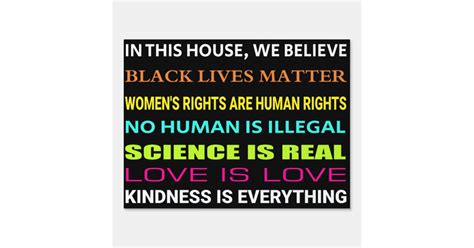
(In my house, we believe the Nicene Creed)

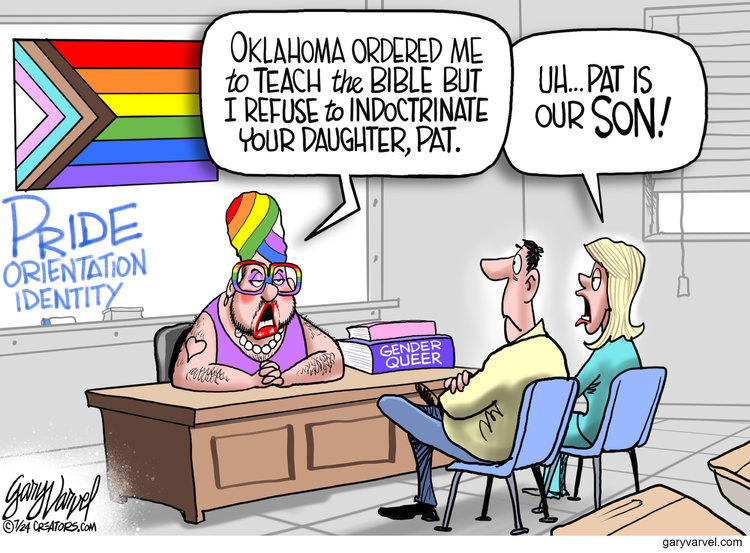
Instead of a naked public square, we see one festooned today with every imaginable image of the rainbow and associated symbology: from flags to backlighting, from crosswalks to entire murals on the sides of buildings. The public square went briefly from being a space where one might once have found images of the Ten Commandments or, during the holidays, a Christmas crèche, to one where the White House might be lit up by the rainbow celebrating a judicial fiat declaring a right to marriage of homosexuals in a constitution written in the 1780s, to public libraries where praise of cross-dressing, transexuality, and gay sex would become run-of-the-mill children’s programming.

When religion in any traditional or recognizable form is excluded from the public square, it does not mean that the public square is in fact naked. When recognizable religion is excluded, the vacuum will be filled by ersatz religion, by religion bootlegged into public space under other names.

The high priests of the new religion insist upon enthusiastic public expressions of support—especially during the holy month of June—lest one’s relative lack of fervency be taken as an indication of disbelief and grounds for being purged from the ranks of the elect. In nearly every respect, expressions of Pride are deployed in identical ways to traditional religious symbols and belief, in the eyes of many constituting a replacement religion. The inescapable, even overbearing presence of Pride symbology thus today bears all the unmistakable features of a “comprehensive doctrine,” the prevention of which earnest liberals of yesteryear insisted was their sole, modest aim.

Any war of “comprehensive doctrines” also brings attendant dangers. However, only someone not paying attention could believe that those dangers have been absent in recent years. My hope is that forthrightness about the terms of the debate may lead not to renewed “wars of religion,” but to a new settlement. A more pacific settlement might arise from acknowledgment that the actual “fact of pluralism” may require increased acceptance and acknowledgement of various state establishments. Such a settlement would return us to the original arrangement of the constitutional order, in which various religious traditions could coexist with robust internal unity amid relative proximate concord. California might thus retain its de facto established religion of Pride, and Alabama would establish some form of broadly nondenominational Protestant Christianity.

Patrick Deneen, inluding a prophetic insight of Richard John Neuhaus.

Comments:

  1. I think Deneen is correct that “Pride” has become a Rawlsian comprehensive doctrine — i.e., a de facto religion. (That doesn’t mean I think it will endure.)
  2. Deneen’s suggestion of permitted state establishments of religion is America’s original pattern (for what it’s worth). The First Amendment’s prohibition of Congress making any “law respecting an establishment of religion” was indeed a restriction on Congress, not the states. Massachusetts (of all places) had a state establishment until the 1830s and abandoned it voluntarily, not because some court declared it unconstitutional.
  3. I suspect I could formulate an argument that a state establishment of religion, unlike a limit on free exercise of religion, ought not be barred by the 14th Amendment “incorporation.” So long as a citizen is not coerced, I question whether their 14th Amendment “rights” are violated by an establishment.
  4. I’m under no illusion that I will like the religion established by any state: While I differ from him in details, I concur with Ross Douthat’s daring book title Bad Religion: How We Became a Nation of Heretics, and the best state establishment I could realistically hope for is mainstream Protestant (i.e., moralistic therapeutic deism).

Progressives verus liberals

You know you’ve touched a nerve with progressive activists when they tell you not just that you’re wrong but that you’re on the other side.

Such is the fate of any old-school liberal or mainstream Democrat who deviates from progressive dogma …

If this was just about our feelings, these denunciations could be easily brushed aside. But the goal and the effect is to narrow the focus of acceptable discourse by Democrats and their allies. If liberals are denounced for “punching left” when they express a reasonable difference of opinion, potentially winning ideas are banished.

In the run-up to a tight election with a weak Democratic candidate and a terrifying Republican opponent, pushing liberals and centrists out of the conversation not only exacerbates polarization, it’s also spectacularly counterproductive.

Those on the left who’ve been dumbstruck as Donald Trump has intimidated his most vociferous Republican critics (see: Chris Sununu, Nikki Haley) into falling in line might exert a little more self-awareness of similar moves by the left.

The goal of progressives may be solidarity, but their means of achieving it are by shutting alternative ideas down rather than modeling tolerance.

Pamela Paul, Who You Calling Conservative?

Note that I am not denying a similar Trumpist lock-step on the Right, nor does Ms. Paul.

Understanding the 2024 Roberts Court

If you really want to understand the conservative-dominated Supreme Court, it’s important to realize that all the Republican nominees who sit on it formed their legal philosophy and forged their legal reputations long before Donald Trump was elected president. This is no less true of Trump’s three nominees than of the three justices who were nominated by previous Republican presidents. Neil Gorsuch, Brett Kavanaugh and Amy Coney Barrett all possessed a robust legal identity and a considerable body of work before their selection to the high court. In fact, each has his or her own maverick streak, with Gorsuch perhaps most notable in his steadfast defense of Native Americans and the rights of criminal defendants.

When you understand this reality, what can seem to be a confounding, surprising Supreme Court term is actually predictable. The Trumpist right is lobbing a number of novel cases presenting aggressive legal theories to justices with pre-Trump legal philosophies, and the pre-Trump justices are rejecting them, repeatedly.

David French (emphasis added).

The Trumpist right is especially getting aggressive in Mississippi, Louisiana and Texas, part of the 5th Circuit U.S. Court of Appeals. The 5th Circuit has become where conservatives play out their fantasies to an obliging court as the 9th Circuit used to be the playground for progressives. You could say the 5th is the new 9th.

Republicans Pounce

A politically inconvenient rape and murder: Two migrants who’d crossed the border illegally have been charged with the rape and murder of 12-year-old Jocelyn Nungaray in Houston. The Associated Press managed to not once mention the status of the killers. The NYT eventually covered it, only in the context of how darned politically inconvenient it is: “The killing of Jocelyn Nungaray in Houston has become the latest crime seized on by Republicans to attack President Biden over his immigration policies.” Right. That 12-year-old, so rude of her to be murdered by the wrong type and letting Republicans “seize on” it. 

Nellie Bowles.

I’ll give the New York Times credit for disguising the usual formulation wherein the real story is “Republicans pounce” instead of what detestable thing they pounce on.

Tradition

Most of the things in our lives are not of our own making – they were given to us. Our language, our culture, the whole of our biology and the very gift of life itself is something that has been “handed down” to us. In that sense, we are all creatures of “tradition” (traditio=“to hand down”). Of course, these things that are not of our own making and are the least controllable are also those things that we take most for granted. We may hate our culture and our biology, but will still have to use our traditioned language (or someone’s traditioned language) to say so. Tradition is simply the most foundational, inescapable aspect of human existence.

Fr. Stephen Freeman, Things You Can’t Invent


So: where did all my mockery of Trump go? Well, first, I resolved to stop harping on it. But then, I just moved it off to my reflexive blog, trying to keep this one relatively reflective.

I suffer more from the humiliations inflicted by my country than from those inflicted on her.

Simone Weil, from a letter to Georges Bernanos.

I don’t do any of the major social media, but I have two sub-domains of the domain you’re currently reading: (a) You can read most of my reflexive stuff, especially political here. (b) I also post some things on the only social medium I frequent, because people there are quirky, pleasant and real.