Saturday, 8/23/25

Public Affairs

Ted Cruz knows better

[Ted] Cruz was an intellectually serious politician of the kind who would quote Hayek and reference Milton Friedman off-the-cuff in private conversation until he discovered—and this is a thing with Texas politicians—that there was more juice to be had from pretending to be the good ol’ boy that he is not than in simply being the Ivy League lawyer he is. Cruz’s current position in American public life is that of a piteous and contemptible figure. … [F]or the moment, he is still a senator caught between the fringeward push of his radicalizing party and the centerward pull of his state’s urbanizing electorate. 

Cruz is (or should be) smart enough to have figured out by now that he is never going to be president, and he ought to allow himself to be liberated by this and take on a new role—one that the genuine Ted Cruz, if there is anything left of him inside the chrysalis of grotesque opportunism and self-degradation in which he has enveloped himself, would be well-suited to undertake: defending the Constitution and the American order from a sustained assault that is coming from within his own party.

It would not take very much: “No, Mr. President, you may not willy-nilly create a new national sales-tax regime with rates based on how you’re feeling that day, even if you call it a tariff; no, you may not federalize the Philadelphia police department or deploy troops in U.S. cities based on whatever phony emergency pretext occurs to you in between social media posts; no, the states are not your ‘agents,’ and they most certainly do not have to do ‘whatever the president of the United States tells them’ to do, even if you put ‘FOR THE GOOD OF OUR COUNTRY’ in capital letters. And if you refuse to honor the constitutional limits on your office, then you can be removed from that office—with my vote, if necessary, though I would regret it and would probably lose my Senate seat as a result. But there are things more important than winning the next election.” 

No, I do not think Cruz has it in him. 

But he is starting to reach the stage of life when, to borrow David Brooks’ formulation, it is time to stop thinking about one’s résumé and start thinking about one’s eulogy.

Kevin D. Williamson, Ted Cruz Knows Better.

In which I reveal an unpopular opinion

Almost everything I knew about him, and particularly his professional accomplishments and opinions, made me think that Brett Kavanagh would be a good Supreme Court justice, and I haven’t been disappointed.

Why “almost”? It wasn’t really the Christine Ford Blasey accusations, but it was related to them: Brett Kavanaugh was an underage, binge-drinking party boy.

That was never in dispute. And I hate that. From him, there wasn’t so much as a “when I was young and foolish, I was young and foolish” acknowledgment. I don’t care if his parents winked at it or even bought the beer.

Now I don’t recall anyone else who was bothered enough even to shrug it off with “boys will be boys.” I seemingly stood alone in thinking underage binge drinking a blot on his character and fitness to uphold the law — all of it, including the parts that inconvenience him.

It’s not okay, and if that makes me a prig, so be it.

There is no possible religious neutrality in schools. So there!

J Budziszewski wants to make Catholic education more widely available without the governmental “strings attached” of Charter School (or presumably vouchers):

Please let’s not blather about religious “neutrality.”  So called secular education is not neutral, but reflects a bias against faith in favor of irreligion.

In fact, even that way of putting it is not precisely accurate. It isn’t that public schools have no god; in fact they place many gods before God. Superficial thinkers suppose that unconditional loyalties – whether of the “woke” or another variety — don’t count as religion just because they don’t use the word “god” for their gods. But the crux of the matter does not lie in the words they use.

I take a different minor issue with the first paragraph quoted than Budziszewski himself does. What “secular education” does is inculcate indifference. Purporting to teach children what they need to know without telling them anything about religion tacitly tells them that they need not know anything about it.

And this is not a straw man. The two-hundred-page course guide for Advanced Placement (AP) course in U.S. government and politics “doesn’t mention Christianity or the Bible—not once, even though it professes to cover ‘the intellectual traditions that animated our founding.’” (Mark Bauerlein)

But that’s not the same as teaching hostility toward religion (“irreligion”).

On the point about unconditional loyalties I couldn’t agree more. I just don’t know what we do about it. Deschooling Society?

DOGE

I have had a faint hope that we would discover that DOGE has begun modernization of software and strategic use of AI in the agencies they blitzkrieged immediately after our latest Presidential inauguration.

But they appears at this point to have been engaged in pure, nihilistic destruction — a style that, along with vengeance-destruction, appears to be what this 47th Presidency is all about.

Capitalist Economy

Pay no heed to the man in the management handcuffs

Ted Gioia was writing a book and looking for a publisher:

This person ran a legendary publishing house, and was also a jazz lover. He was a fan of my writing. We exchanged some emails, and then had a phone conversation.

“Ted, I love the book you’re writing,” he told me. “The sample chapters you sent are outstanding. You’re a special writer, and I’d love to sign you a contract. But…”

My head was already spinning. These people typically pay out big advances. I could finish the book and pay all my bills—no sweat! But before I could pursue these daydreams any further, this famous editor went on:

“I’d love to sign you to a contract. But I can’t.”

“Why not?” I asked—and even I could hear the plaintive note in my voice.

“Well, I’m sure your book would sell. But we evaluate books on their projected sales during the three years following release. If a book doesn’t have a three-year payback, we don’t do it.”

“I don’t think I understand this,” I whimpered in reply. “What are you saying?”

“It’s simple. Your book will probably sell for the next ten years or more. But I can only consider the first three years in making an offer—that’s why I have to turn you down.”

Okay, I understood discounted cash flow even better than this editor. I could give you a lecture on the Capital Asset Pricing Model in my sleep. In my early days, I made a living doing this kind of analysis.

But this way of thinking is wrong in the world of arts and culture.

When I tell editors that my books demonstrably sell for 25-50 years and longer, this is a turn-off. They actually hate it when I say it.

They won’t be around that long—editors constantly change jobs. They don’t give a hoot what sales will be like in the year 2050. They want something with cocktail party buzz for the six weeks following publication.

That’s the world they live in. But I don’t—and I refuse to move there.

How I Learned to Stop Worrying About Short-Term Results in My Career (bold added)

There’s a lot more where that came from because Ted Gioia is a freakin’ polymath. His has become (probably) my favorite Substack that doesn’t focus on religious subjects.

Work-life balance

I’m 22 and I’ve built two companies that together are valued at more than $20 million. I’ve signed up my alma mater as a client, connected with billionaire mentors and secured deferred admission to Stanford’s M.B.A. program. When people ask how I did it, the answer isn’t what they expect—or want—to hear. I eliminated work-life balance entirely and just worked. When you front-load success early, you buy the luxury of choice for the rest of your life.

… I averaged 3½ hours of sleep a night and had about 12½ hours every day to focus on business. The physical and mental toll was brutal: I gained 80 pounds, lived on Red Bull and struggled with anxiety. But this level of intensity was the only way to build a multimillion-dollar company.

Emil Barr, ‘Work-Life Balance’ Will Keep You Mediocre

So that’s the world he lives in. I don’t, never have, and I refuse to move there — or to recommend it to anyone I care about.

Culture

Gay race communism

Now, Cracker Barrel is updating its décor and branding—slightly. The bulk of the update is a brighter, less cluttered interior design, but the “controversial” decision is to change its logo. The company removed the old white guy in overalls sitting by a barrel, and now just has a text-only sign that reads “Cracker Barrel.” 

And people are losing their minds, claiming that it has gone “woke.” What seems to have sparked this brouhaha is a tweet saying that the store has “scrapped a beloved American aesthetic and replaced it with sterile, soulless branding.” 

This prompted an outraged “WTF is wrong with @CrackerBarrel??!” tweet from Donald Trump Jr., that loyal guardian of all that is homey and traditional in American life. The very popular End Wokeness Twitter account proclaimed: “Cracker Barrel CEO Julie Masino should face charges for this crime against humanity.”

Chris Rufo then came out with a Cracker Barrel delenda Est pronunciamiento:

Alright, I’m hearing chatter from behind the scenes about the Cracker Barrel campaign and, on second thought: we must break the Barrel. It’s not about this particular restaurant chain—who cares—but about creating massive pressure against companies that are considering any move that might appear to be “wokification.” The implicit promise: Go woke, watch your stock price drop 20 percent, which is exactly what is happening now. I was wrong. The Barrel must be broken.

Now, it’s true that Cracker Barrel has done some LGBT marketing stuff, probably as a result of being criticized for alleged discriminatory policies in the 1990s. But maybe also because gay people—and people who aren’t particularly horrified by gay people—might like good, affordable breakfasts, too. They’ve also tried to cultivate Hispanic customers. I’m not sure this means they’ve been taken over by the Latinx reconquista

I am also, shall we say, skeptical that a few old website screenshots of these efforts are proof that, in the words of Federalist co-founder Sean Davis, “Cracker Barrel’s CEO and leadership clearly hate the company’s customers and see their mission as re-educating them with the principles of gay race communism.”

Jonah Goldberg. It’s enough to make me want to try to remember that I keep forgetting to eat at Cracker Barrel.

What nihilists can’t believe

It’s hard enough to get people to believe something, but it’s really hard to get people to believe in belief — to persuade a nihilist that some things are true, beautiful and good.

David Brooks, The Rise of Right-Wing Nihilism (gift link)

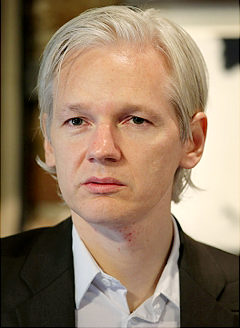
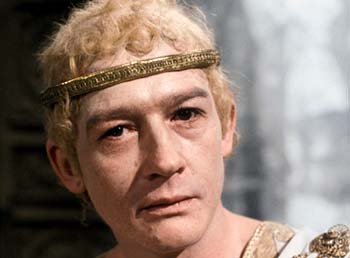
I just can’t root for a guy who looks like Caligula

My libertarian and anti-state impulses incline me to be favorable toward Julian Assange, but I’ve never been able to shake how much he looks like John Hurt’s Caligula.
Technology

The technologies we use to try to “get on top of everything” always fail us, in the end, because they increase the size of the “everything” of which we’re trying to get on top.

Oliver Burkeman, Four Thousand Weeks

Brought to you by the letter “D”

Dust and decay,
ditherers upon the doorstep
of death itself; dried-
up ghosts of daisy-chain
days that were once dappled
with dew and delight.

R.S. Thomas, Anybody’s Alphabet, Collected Later Poems 1988-2000.

The Los Alamos Sin

As Freeman Dyson put it, the “sin” of the scientists at Los Alamos was not that they made the bomb but that they enjoyed it so much.

Walker Percy, Lost in the Cosmos


I don’t do any of the major social media, but I have two sub-domains of the domain you’re currently reading: (a) You can read most of my reflexive stuff, especially political here. (b) I also post some things on my favorite social medium.

Potpourri, 5/14/21

Last chance to recalibrate

Many years ago, I met a woman who had had the kind of experience you ordinarily only find in fiction. As a young adult, she was in a serious car accident, resulting in a head injury. She suffered a period of total amnesia, followed by months of convalescence. When she recovered, she was never the same: Her family relationships weakened; she cut out former friends and found new ones; she moved halfway across the world; her interests and tastes changed; she became more outgoing and less self-conscious; she no longer cared much what other people thought about her.

Her parents always attributed these major character changes to her “bump on the head.” But she told me no—the injury had nothing to do with it. Rather, it was the recovery time, away from ordinary routines, that created a punctuation mark in the long sentence of her life. She had a unique opportunity to assess her priorities. She vowed to take nothing in her former life as given. She tore her beliefs and values down to the studs, and rebuilt them. And in so doing, she said, she became happy for the first time in her life.

Arthur C. Brookes, How to Have a Happier Post-Pandemic Life (The Atlantic)

This intriguing opening led me into an okay essay — an essay that might profitably be expanded.

I agree with the author that the pandemic had given a lot of us a chance for introspection, and even more broadly that Brookes undertakes.

Essential workers

Among the less imaginative "takes" on the pandemic are (1) how essentially nobody could self-quarantine for months in the last pandemic because "remote work" wasn’t feasible; (2) how scientific knowledge facilitated development of vaccines with astonishing rapidity, further lessening the effect of the pandemic.

What I think remains under-covered in the pandemic is about how the truly essential workers in our economy are those who must show up in person, including not only nurses (who have gotten a reasonable amount of good press), but grocery store cashiers, shelf-stockers (is that the gender-neutral term?), bus drivers, police, fire, paramedics. A lot of these people not only must show up in person, but must do so for a second full-time or part-time job to make ends meet.

Economists, especially of the Austrian school, will hate this, but I’ll say it anyway: a lot of these people are underpaid for the risks they took.

Brett Kavanaugh

The Atlantic’s McCay Coppins has moved on from speculating about Trump to speculating wildly about Brett Kavanaugh. The Advisory Opinions podcast and legal blogger Josh Blackman have both pushed back, the former as Kavanaugh fans, the latter somewhat skeptical.

I think Kavanaugh got treated very badly on the supposed sexual misbehavior and that it was a mere understandable human lapse, poor form but not disqualifying, for him to have lost his cool at the end of all that indignity.

But his adolescent aspiration to become alcoholic got treated too gently. I avoided underage drinking (three or four lapses between 18 and 21, zero drunkenness) because it was illegal (kind of a litmus test for a future lawyer/judge, don’t you think?), and I’m pretty scornful of a guy who upholds the law for everyone but himself.

Doing real good versus limelight-grabbing

I recently started listening to Malcolm Gladwell’s Revisionist History podcast. When he’s good, he’s very good.

My Little Hundred Million, is very, very good. Just listening to it is instructive, but you could spend a lot of time thinking about other applications of the insights (Gladwell gives several).

Low-valence geezer

I resist bonding with fellow liberals because it gets to feeling too comfy, sitting and murmuring in unison about Mitch McConnell and how devious and evil he is, so I say, quietly, “The real problem is that he’s smarter than the others. There is an art to obstruction and he is an artist.” So they start unloading on Trump and I listen and then I put my oar in: “ Donald Trump is an original, nobody like him before or since. All the others, either party, are variants of a type, but Trump came along, boasting, wearing his contempt proudly, and enough people loved him for that to elect him. Other presidents took the job very seriously but he was more like a sultan or an emir. And here he is, the most admired man in America. Democrats approve of Biden; Republicans adore Trump. No comparison.”

This statement lets some air into the conversation. You sit around on a terrace with your fellow liberals and the conversation turns choral and my job is to soloize, offer dissent in a minor key ….

Garrison Keillor


I now turn toward political matters. Don’t say I didn’t warn you.

Not worth the powder to blow them up

I would feel differently if NRO was a religious journal, especially if it were explicitly Roman Catholic, but somehow it smells exceedingly fishy when political journal National Review Online is constantly meddling in whether President Biden should be denied communion (Thursday’s installment) because of his support of legal abortion.

This is doubly so because "pro-life" Republicans haven’t really done a damn thing for the unborn beyond (a) confirming judges thought to be hostile to abortion, (b) proposing that Catholic Democrats be excommunicated. They’ve been playing pro-life voters for suckers. I wish I could remember the guy who first threw that in my face in 2002 so I could apologize for my hostile reaction. (They’ve been playing all social conservatives for suckers on all issues. Remember you heard it here first.)

Perhaps if the GOP truly does "permanently become the Party of the Working Class" (see below) that will change, but I wouldn’t bet on it considering its odd idea of who is "working class."

Trump > truth

The calculation was pretty straightforward: The need to stay on the good side of Trump voters and donors—which necessarily means staying on the good side of Trump—was greater than the need to tell the truth about January 6, the “big lie,” or Trump generally.

Jonah Goldberg

Staying on the good side of Trump is more important than truth-telling? You know what I say about that? Die, GOP, die!

Working Class Republicans

I have seen it suggested that most of the country doesn’t know who Liz Cheney is and that in a few months, nobody will remember or care about her ouster. There may be some truth in that. Heck, there may be a lot of truth in that.

I also recall confidently announcing that Election 2016 meant that some major political realignment was underway, and by that I meant

  • working-class voters migrating to the GOP
  • suburban soccer moms migrating to the Democrats and
  • other things beyond my imagination at that point (sort of implied by "major realignment").

Well, Kevin McCarthy wants the GOP to "permanently become the Party of the Working Class." (If you don’t know Liz Cheney or Kevin McCarthy, why are you reading?) That was kind of predictable, as one of the big stories of 2016 was how many had come on their own.

So the GOP got a real working man running for governor of Virginia (he typed with a smirk on his face). Read all about it in the first of three items here.

The ambiguous adjective 45 has earned, fair and square

I have never wavered on whether 45 (he who shall not be named) was a suitable President of the United States (or candidate, for that matter). But I think, considering his continued reach and inexplicable popularity, that I must allow him the ambiguous adjective "consequential."


You can read most of my more impromptu stuff at here. It should work in your RSS aggregator, like Feedly, should you want to make a habit of it.

Mildly offensive to all

1

There has been a fair amount of terse commentary in my field of vision on the question of “Is R.R. Reno correct in this assessment?” By “this assessment, I assume the reference is to the conclusion, from which I’ll quote a great deal:

I’m willing to bet that hostility toward Kavanaugh increases proportionally with socio-economic status. It is an elite rage of law professors and management consultants. It’s the rage of the powerful, which is always more dangerous than the rage of the downtrodden. It finds articulate, well-placed leaders who can draw upon fully theorized narratives of oppression. They position themselves to speak for all who resent exclusion or exploitation, actual or perceived. They draw upon an intersectionality of rage.

For this reason, the decision by the Democrats to turn the Kavanaugh hearings into a theater of rage was a dangerous ploy. Perhaps I am even over-stating the element of calculation in the decision. Because this rage affects the powerful, Dianne Feinstein, Kamala Harris, and the others may themselves be animated by it—rage’s instruments, rather than its masters. If so, the situation for the Democrats is more perilous still.

Donald Trump raises the emotional stakes of political debate. This has been the key to his political success. But his success has come at a cost. Trump’s politics of rage unsettles establishment Republicans. Staid suburban voters who are moderate conservatives see Trump as a destabilizing figure in our body politic, putting a hard ceiling on his support.

In this context, Democrats have much to gain by presenting themselves as the responsible adults, the ego to Trump’s id. Dianne Feinstein and most other Democratic leaders are ultra-establishment figures with no interest in upheaval. Soon they will pivot back to playing the “responsible party” against Trump and Republican “extremism.” But the rage on display during the Kavanaugh hearings will not be easy to contain. It is fueling Leftist populism, which is on the rise. It highlights the Left’s own destabilizing politics of rage and destruction.

Ever since Trump’s ascent, the strongest arguments against him have focused on his temperamental unfitness for the presidency and his polarizing effect on our society. These are arguments for establishment competence and sobriety. In the aftermath of the rage-driven strategy to derail Kavanaugh’s appointment (quite different from the quiet, procedural tactics of Mitch McConnell, which derailed Merrick Garland’s appointment), these arguments are harder to make.

The Democrats may imagine that they, like Trump, will benefit from the politics of rage. But the Democrats’ power flows from their monopoly on the “responsible center.” The last season of leftwing rage came as the 1960s crashed to a close, and it did great harm to the Democratic Party. This time is different, in that both sides are drawing upon reservoirs of rage. But in my estimation, the Democrats will suffer more than the Republicans, because the Democrats have long been the establishment party. The politics of rage are far more likely to undermine than to renew the Ivy League–Goldman Sachs–Silicon Valley liberalism that has stood astride our politics since 1945, for rage always upsets the calculations by which establishments maintain their grip.

The analysis seems too varied to support a wager, so I’ll not play my chips. But I dread living in a country where the two major parties have become, basically, alt-right and antifa.

2

I can hear the “what about Merrick Garland” already:

Democrats file cloture on every nominee, which kicks off 30 hours of debate even if no Senator is opposed. They figure if they can’t defeat nominees they can delay and consume valuable time. Democrats have forced 117 cloture votes—versus 12 in Barack Obama’s first two years and four in George W. Bush’s.

Wall Street Journal. This is not “responsible center,” is it? Were I in Congress, I’d want to make sure there were as many adults around Trump as possible, unless my motive was letting him screw things up so badly that my odds of winning the next Presidential election reached the stratosphere.

3

Longtime readers will remember that three years ago, a reader told me his elderly mother, who spent years in a communist prison as a dissident, told him that the spirit overtaking our culture today reminds her of the years when communism came to her country.

Thinking that must be an exaggeration, I relayed that observation to a friend in the UK who defected with his wife in the 1960s from a communist country. He said that it was absolutely true. I asked him to explain that conclusion, because it made no sense to me. He said that it has to do with the willingness of people to try to destroy their opponents. With righteous mobs, aided and abetted by the media. Ideological hysteria. This was how the communist behaved. And these aging former dissidents, who don’t know each other, see the same thing happening in the liberal West.

(Rod Dreher, The Media & The Mob)

4

Oh, dear! At least one person is not fawning over Nikki Haley during her lame duck period:

But because she only advocates establishment-sanctioned mass murders (and perhaps partly because she wears the magical “Woman of Color” tiara), Haley can be painted as a sane, sensible adult-in-the-room by empire lackeys who are paid to normalize the brutality of the ruling class. While you still see Steve Bannon routinely decried as a monster despite his being absent from the Trump administration for over a year, far more dangerous and far more powerful ghouls are treated with respect and reverence because they know what to say in polite company and never smoked cigars with Milo Yiannopoulos. All it takes to be regarded as a decent person by establishment punditry is the willingness to avoid offending people; do that and you can murder as many children with explosives and butterfly bullets as your withered heart desires.

Haley will be departing with a disgusting 75 percent approval rating with Republicans and 55 percent approval with Democrats, because God is dead and everything is stupid. It is unknown who will replace her once she vacates her position (I’ve got my money on Reaper drone in a desk chair), but it’s a safe bet that it will be someone who espouses the same neoconservative imperialist foreign policy that this administration has been elevating since the beginning. Whoever it is should be watched closely, as should the bipartisan beltway propagandists whose job it is to humanize them.

Caitlin Johnstone, Empire Loyalists Grieve Resignation Of Moderate Psychopath Nikki Haley.

5

A non-trivial number of Evangelical women in Texas are supporting Beto O’Rourke over Ted Cruz. Two vignettes feature competing baby-centered narratives:

“I care as much about babies at the border as I do about babies in the womb,” said Tess Clarke, one of Ms. Mooney’s friends, confessing that she was “mortified” at how she used to vote, because she had only considered abortion policy. “We’ve been asleep. Now, we’ve woke up.”

Ms. Clarke, who sells candles poured by refugee women in Dallas, began to weep as she recalled visiting a migrant woman detained and separated from her daughter at the border.

Plenty of white evangelical women still support Mr. Cruz. Pam Brewer, who leads women’s ministries at Mr. Jeffress’s First Baptist Dallas, does because she wants to end legalized abortion and increase border security, to stop allowing “criminals to come kill our babies,” she said.

6

Justice Kavanaugh’s worst decision of the last month (it’s not even a close call, IMHO) was taking a victory lap with partisans Monday night. Everyone knew Trump would sully it.

Depth to which Republicans have not yet sunk: Trying to pack the court before they lost political power.

7

Reminder to the Democrats: There are good people who could actually vote for Democrats, but who don’t do so currently, because of your friends of feticide platform.

(Lurking background concern for some of us: your little-remarked transformation into the secularist party as the Republicans transformed into the Religious Right and then, mirabile dictu, the Trump party. But you’ll not cease friendship with feticide until that secularism moderates, and the GOP’s “religion” currently is so toxic, that this concern merely lurks.)

8

Noble is right to say that society sends me on a quest for authenticity. Wisdom sends me on a quest to know myself. They are utterly different adventures. Society wants me to be my true self, philosophy demands I be as I should be.

John Mark Reynolds in part of a series of comments on Alan Noble’s Disruptive Witness.

* * * * *

Follow me on Micro.blog Follow me on Micro.blog, too, where I blog tweet-like shorter items and … well, it’s evolving. Or, if you prefer, those micro.blog items also appear now at microblog.intellectualoid.com.

Potpourri (mostly political) 9/25/18

1

I apologize if I’ve quoted this before, but I’m a retired lawyer, I’ve watched SCOTUS for decades, and I can’t stop mulling this over.

Here goes:

I can imagine two operative standards for a nominee in Kavanaugh’s shoes. One is what we might call the minimally convincing standard—which we can loosely define as a showing just powerful enough to align the few uncommitted Republicans with the already-declared Republicans and thus assure confirmation.

The other let’s call the no-asterisks standard—that is, a showing sufficiently powerful that a reasonable person will not spend the years of Kavanaugh’s service mentally doubting his integrity or fitness for the role he is playing. It is a showing sufficient for a reasonable pro-choice woman to believe it legitimate—if not desirable—for Kavanaugh to sit on a case reconsidering Roe v. Wade, or for a sexual-assault victim, whatever she may think of his views, to believe it legitimate for him to hear her appeal.

Putting it all together, Kavanaugh’s task strikes me as an unenviable one. He needs to prove a negative about events long ago with sufficient persuasiveness that a reasonable person will regard his service as untainted by the allegations against him, and he needs to do so using only arguments that don’t themselves taint him.

Benjamin Wittes in the Atlantic.

I have called this article “clarifying,” and I particularly had these passages in mind. But now I’m wondering.

We’re all aware of the high levels of polarization in the country. Democrat Senator Mazie Hirono says she disbelieves Kavanaugh’s denial of Dr. Ford’s accusation because she doesn’t like his ideology. On the other side, we have Donald Trump predicting he could shoot someone in Times Square and get away with it.

Consider Hirono and those blasé Times Square bystander archetypes. Where is the archetypal “reasonable person” (or “reasonable pro-choice woman”) who hasn’t already made up his or her mind on the Kavanaugh nomination, or whose opinion of his qualifications (not some political calculus) has materially changed because of the accusations against him?

If you were already inclined to trust Kavanaugh, the evidence against him is weak enough to justify rallying to his side. (“How dare these liberals engage in dirty tricks against this smart, decent family man who’s devoted his life to the law!”) But if you were already inclined to distrust him, the evidence against him is strong enough to justify feeling vindicated. (“You mean the guy who seems eager to gut women’s reproductive rights shows a pattern of misogyny and violence againéé women? No kidding!”)

Damon Linker.

Who thinks that they’ll watch Dr. Ford or Kavanaugh without a glimmer of confirmation bias?

Can any justice be confirmed in this toxic atmosphere without an asterisk by his or her name? (“Hey! I’m reasonable! I think he’s guilty as hell! He’s just the type!”)

Can any conservative man be confirmed without accusations of sexual improprieties? If it comes from an old acquaintance rather than a total stranger, won’t it always come packing an asterisk?

There’s an aphorism about not letting the perfect be the enemy of the good. It’s on my mind these days.

2

FBI Director Christopher A. Wray recently told an audience that there must be a way that cryptographers hadn’t thought of yet to securely guarantee that law enforcement could unlock encrypted devices. He proclaimed “We put a man on the moon” in trying to make the point that if mathematicians and scientists could do that, surely they could find a way to build a secure encryption backdoor. But after decades of research and debate, the experts overwhelmingly agree: trying to build a secure backdoor would be like asking NASA’s to safely land a human on the sun. It’s not possible.

Robyn Greene

3

If Trump fires Rosenstein, he gets rid of the guy who has been Robert Mueller’s main protector at Justice. Yet firing him on charges of insubordination means believing that the Fake News got the story about Rosenstein’s 25th Amendment musings right. This may be the ultimate Trumpian dilemma.

Bret Stephens, in conversation with Gail Collins.

4

The clear implication of the [ad’s] sumptuous red lipstick and the impossibly tall high-heel is that a woman’s womb, ovaries, and breasts are recreational equipment which it would be unthinkable to waste on nurturing a new human being. Maybe when these organs are older and starting not to work so well, they can be used for making and nourishing babies—after a few rounds of chemical fertility treatment, of course. But right now, it’s party time. It’s me time. It’s little black dress time.

Because sex is fun, right? And it’s even more fun when there’s an edge of risk in it, which is why we end up with “emergency contraception” ads in the Underground and an epidemic of STDs. But what’s the purpose of all these cocktails and clubbing? Why do people devote so much of their lives to finding someone with whom to rub bodies if they’re not interested in what body-rubbing was designed to create?

Or take for example this WebMD article about “emergency contraception,” which suggests a woman might want to use it if she had sex and “something went wrong.” Could you run that by me again? In what other instance do we describe body systems accomplishing their intended functions by saying “something went wrong”? ….

G. Shane Morris, If You Don’t Want Kids, Don’t Have Sex (or Get Married).

Caveat: Do not ever think that my quoting something from Shane Morris implies that I agree with him more than about half the time. Some day, I may even unload on him about something in the other half.

5

… I despise Ted Cruz. That is “D-e-s-p-i-s-e,” in case I haven’t spelled out my loathing clearly enough … Because he’s like a serpent covered in Vaseline. Because he treats the American people like two-bit suckers in 10-gallon hats. Because he sucks up to the guy who insulted his wife — by retweet, no less. Because of his phony piety and even phonier principles. Because I see him as the spiritual love child of the 1980s televangelist Jimmy Swaggart and Jack Nicholson’s character in “The Shining.” Because his ethics are purely situational. Because he makes Donald Trump look like a human being by comparison. Because “New York values.” Because his fellow politicians detest him, and that’s just among Republicans. Because he never got over being the smartest kid in eighth grade. Because he’s conniving enough to try to put one over you, but not perceptive enough to realize that you see right through him. Because he’s the type of man who would sell his family into slavery if that’s what it took to get elected. And that he would use said slavery as a sob story to get himself re-elected.

Otherwise, you might say I’m his No. 1 fan.

Bret Stephens, in conversation with Gail Collins.

* * * * *

Follow me on Micro.blog Follow me on Micro.blog, too, where I blog tweet-like shorter items and … well, it’s evolving. Or, if you prefer, those micro.blog items also appear now at microblog.intellectualoid.com.

Bearing reality

I anticipated reading in Monday’s newspapers some analysis of how Dr. Christine Blasey Ford’s potential corroborating witnesses (those she said were at the party where Brett Kavanaugh allegedly assaulted her) have all failed to corroborate anything about the party, including its existence, and that some even volunteered defenses of Kavanaugh.

That’s all true, and I wondered how the crypto-Resistant press would handle it.

But it was not to be. (Trigger warning for sexual assault):

Judge Kavanaugh’s prospects were further clouded on Sunday when The New Yorker reported on a new allegation of sexual impropriety: A woman who went to Yale with Judge Kavanaugh said that, during a drunken dormitory party their freshman year, he exposed himself to her, thrust his penis into her face and caused her to touch it without her consent.

In a statement, Judge Kavanaugh denied the allegation from the woman, Deborah Ramirez, and called it “a smear, plain and simple.” The New Yorker did not confirm with other eyewitnesses that Judge Kavanaugh was at the party.

The Times had interviewed several dozen people over the past week in an attempt to corroborate her story, and could find no one with firsthand knowledge. Ms. Ramirez herself contacted former Yale classmates asking if they recalled the incident and told some of them that she could not be certain Mr. Kavanaugh was the one who exposed himself.

New York Times. The New Yorker, though, makes the new allegation sound a bit more plausible.

I’ve had two simmering reactions to the whole picture, new allegation aside, lasting for a few days now, that I at first thought unsuitable for public consumption. They went in my personal journal today for that reason.

Standing alone, I suppose they are unfit for public consumption, in addition to or as a function of being cryptic, but I’m not going to let them stand alone:

  1. My oatmeal’s cold! I want the FBI to investigate!
  2. Hey, boys and girls! Aren’t drunken parties fun!?

* * *

It’s my understanding that FBI investigations of nominees are focused on whether the nominee is a national security threat. It certainly is not the role of the FBI to investigate the truth or falsity of allegations of decades-old violations of state law just because partisans want to know more for purposes of a political fight. (Such skeletons presumably might come out in response to the question “Any skeletons in his closet?” as the FBI interviews old acquaintances.)

When politicians demand an FBI investigation in circumstances like those now present, they’re just buying time. That’s why the calls are all coming from Democrats currently. They are performing so strongly in election polls that they just might re-take both House and Senate in January and force Trump to nominate, say, Merrick Garland (that is, someone sufficiently moderate that he won’t plausibly be cast as the vehicle for a nefarious agenda, and who will allow both POTUS and the Senate avoid the onus of leaving a seat vacant for years).

The echoed calls of others, not in politics, for FBI investigations are, it seems to me, at least one of at least two things (that’s not a typo; it’s an acknowledgement that beyond that, imagination currently fails me):

  1. Partisan efforts to buy time, just like the Senate Democrats.
  2. Tacit admissions that all the unfounded he-said-she-said accusations flying around are disorienting, and we want some putative neutral expert to tell us what to believe.

The first point requires no elaboration beyond that such calls come from Democrats or progressives even if they’re not personally involved in politics because they’re savvy enough to know the strategy.

As for the second point, I’ve known for decades that we turn inappropriately to “experts” to resolve our vexing problems. I first noticed it when physicians were asked about “quality of life” in the context of medical treatment, nutrition and hydration for gravely ill or injured people — typically, survivors of drug overdoses, traumatic head injuries or dementia.

But quality of life is not a medical question, something about which physicians by experience and training have special knowledge. It’s existential (for the person being evaluated), philosophical for the rest of us. Vexing, yes, but not in the doctor’s bailiwick. (I believe that a few curmudgeonly or pro-life lawyers successfully excluded such testimony on the basis that physicians have no expert qualifications on the subject.)

Another approach to those same tragic situations was to let a proxy decisionmaker, typically a close family member, make the non-treatment decision in the name of patient autonomy. (Yes, the desired decision was non-treatment; if the proxy chose treatment, the search for another proxy who wasn’t an “extremist” or “vitalist” would continue.)

But “autonomy by proxy” is a blatant oxymoron.

The main virtue of letting doctors opine on “quality of life” or letting proxy decisionmakers exercise a patient’s autonomy to refuse further treatment, food or water, was that it spared the rest of us the wrestling with such issues and permitted us to evade what was really going on.

A final example of the phenomenon is conducting capital punishment covertly, so the rest of us can pretend it’s somehow quick and humane. Lethal injection even made it clinical (and we know how expert doctors are about everything).

Similarly, the main virtue of letting the FBI investigate decades-old questions, beyond delay for delay’s sake, is the hope that it will come up with a plausible declaration that the accusation is clearly true or clearly false.

That a professional law enforcement agency is not designed to do, but if they did, we’d be back close to square one asking “so now what?” If true, is it disqualifying?

* * *

My second reaction (“Aren’t drunken parties fun!?”) is aimed at a social problem from which we’ve averted our gaze in a different way.

Instead of delegating amelioration or elimination of adolescent drinking to putative experts, we’ve just decided to ignore it. “Boys will be boys.” “When I was young and foolish, I was young and foolish.” “Harmless fun so long as they don’t drive.”

Or as long as it doesn’t get sexy somehow without full and informed consent. (Or whatever next decade’s #MeToo Moment will be focused on.)

Dare I suggest that a history of binge drinking is itself a problem, or at least a big ole warning flag of problems?

For a change, I’m suggesting something without the need to say “Yes, I did so myself, but have repented.” I never have binge-drunk. When they asked me in my character and fitness examination (for admission to practice law) about past law-breaking, I confessed two occasions where I had one alcoholic beverage where I was not of legal age. The examiner, a cop-turned-lawyer, laughed out loud. At least I’m pretty sure. My memory is fuzzy. That may be my sole qualification for high office.

We know that kids drink, if for no other reason, to lower their inhibitions. In some cases, to lower them specifically to facilitate hooking up, an unchivalrous and predatory act by men and an unnatural act by women.

Are we really shocked by what those inhibitions were holding back? Truly, humankind cannnot bear very much reality.

* * *

Here endeth my meditation, because I have no more expertise than your doctor to tell you what to think about all this. I’m mostly just cynical about our odds of resolving the factual questions.

For what it’s worth, I’m starting to think that Drunk Brett was or is different than Sober Brett, and that the difference may be revelatory. Your mileage may vary, as may your assessment of how that should affect confirmation.

My closest approach to a personal resolution for this whole saga came from reading this, published before the second accusation, which suggests a course of action for Sober Brett.

* * * * *

Follow me on Micro.blog Follow me on Micro.blog, too, where I blog tweet-like shorter items and … well, it’s evolving. Or, if you prefer, those micro.blog items also appear now at microblog.intellectualoid.com.

Brett Kavanaugh again (9/23/18)

All of these have something to do with the Kavanaugh nomination and Dr. Ford’s accusation. I’m saving the best for last — analysis from Ben Wittes at the Atlantic.


1

McConnell’s incentive to confirm Garland was simple: A reality TV star had hijacked his party’s presidential nominating process and appeared ready to drive the GOP bus over a cliff. If that had happened, Hillary Clinton would have won the White House. She could, if she wished, have taken Garland off the table and replaced him with a younger and far more liberal nominee who might have been around for 30 years or more.

But McConnell didn’t blink … In November, to Washington’s amazement, Clinton lost the election and McConnell won his bet.

McConnell’s gamble on stonewalling Garland may have been the key to Trump’s narrow victory. It made the stakes crystal clear for self-professed Christian conservatives who might otherwise have been loath to vote for a boorish former casino owner ….

David Von Drehle.

I’m glad I clicked that link, not just for that bit of recent history insight, but for his thoughts on what the bets on the table are now.

2

Every one of us has a moral bank account. Our good deeds are deposits, and our bad deeds are withdrawals. We therefore assess a person the same way we assess our bank account. If our good actions outweigh our bad actions, we are morally in the black; if our bad actions greatly outweigh our good actions, we are morally in the red.

By all accounts — literally all — Brett Kavanaugh’s moral bank account is way in the black. He has led a life of decency, integrity, commitment to family, and commitment to community that few Americans can match. On these grounds alone, the charges against him as a teenager should be ignored.

Dennis Prager.

I quote that to disapprove it. It’s even more repulsive than I suspected when Nancy French took issue:

Without judging the veracity of Ford’s memories or accusations, most reasonable people would agree that a male attacking a female is serious. Not Prager. His article can be summed up in five words: If it happened, so what?

He justifies his position by using the concept of a “moral bank account.” He writes: “Our good deeds are deposits, and our bad deeds are withdrawals. … If our good actions outweigh our bad actions, we are morally in the black; if our bad actions greatly outweigh our good actions, we are morally in the red.”

Among the many problems with this assertion, including that he presents his readers with no legal or scriptural source for it, is that it gives carte blanche to the powerful. Victims who’ve been abused by clergy, the wealthy or the philanthropic are frequently assured that their predators are overall “good people.” But how much money does a person need to donate to a women’s shelter to make up for striking a woman in the face? How much for a rape? Who determines the value of innocence? Who determines the price to be paid?

I will grant Prager a measure of consistency, though. He’s dismissive of sexual assaults even against his mother and his wife.

French adds this, too:

One reason I’m not a Democrat is because they’ve been telling women for years that Kennedy’s and Clinton’s support for women, generally, outweighs their interactions with them individually. One reason I’m no longer a Republican is that, more and more, they tell me character doesn’t matter and that people are disposable when power, policies and Supreme Court seats are on the line.

I used to enjoy Dennis Prager. I don’t know which of us has changed more, but I rarely read him any more, and the column in question here was reptilian.

3

What’s done is done, but I want to share John Murdock’s account of how we got here:

The Judiciary Committee hearings began with coordinated Democratic theatrics. Then, Senator Diane Feinstein played a card she had been sitting on since July. Ostensibly, this delay was fueled by the senator’s deep concern about maintaining her informant’s anonymity. And what better way to honor a victim’s request than to issue a statement about the allegation and release the media hounds!

Conservatives have been rightly repulsed by Feinstein’s tactics, but they have worked. The accuser was flushed out of hiding and onto the public stage ….

Overall, Murdock makes a pretty decent (inadvertent?) case for Dr. Ford.

We are in a pretty lousy position, with no good and honorable way out, it seems to me. (Confirm him just because you can? Drop him just because he’s an electoral liability?)

4

I wrote the immediately preceding question before reading this, which concludes the most clarifying commentary I’ve seen, from someone not hostile to Kavanaugh. It can be viewed as a reframing of the question “what is the standard of proof for the accusation?”:

As a general matter, Kavanaugh cannot blame or attack or seek to discredit a woman who purports to have suffered a sexual-assault at his hands. He cannot play Harvey Weinstein games if he wants to emerge from this episode as a credible figure. A Supreme Court justice is not a movie executive. Simply winning isn’t good enough.

Putting it all together, Kavanaugh’s task strikes me as an unenviable one. He needs to prove a negative about events long ago with sufficient persuasiveness that a reasonable person will regard his service as untainted by the allegations against him, and he needs to do so using only arguments that don’t themselves taint him.

If Kavanaugh believes he can do this, he should certainly try. In fairness to both Ford and to him, I will reserve judgment on the merits of the matter until I hear a full account of both sides of it. I urge others to do the same. I can imagine, in theory, defenses that would meet the high bar I think Kavanaugh needs to clear.

But if Kavanaugh cannot present such a defense—even if he truly believes himself innocent, even if he is innocent—the better part of valor is to get out now.

Getting out does not mean admitting that Ford’s account of his behavior is accurate, something Kavanaugh should certainly not do if her account is not accurate. It means only acknowledging that there is no way to defend against it in a fashion that is both persuasive and honorable in the context of seeking elevation to a job that requires a certain moral viability. It means acknowledging that whatever the truth may be, Kavanaugh cannot carry his burden of proof given the constraints upon him.

It means accepting that it is better to continue serving as a D.C. Circuit judge than to play the sort of undignified games that Republicans are playing on his behalf.

Ben Wittes, H/T Ross Douthat. Do read the whole commentary if you find this intriguing. Am I missing anything? (I am not missing the possibility that Dr. Ford’s accusation will be unproven or weakly proven; as long as it’s plausible, it taints.)

* * * * *

Follow me on Micro.blog Follow me on Micro.blog, too, where I blog tweet-like shorter items and … well, it’s evolving. Or, if you prefer, those micro.blog items also appear now at microblog.intellectualoid.com.

Monday 9/17/18

1

David French is much more sensible than Damon Linker on the current status of the Brett Kavanaugh nomination. Linker’s approach gives veto power to accusers whose lurid accusations are likelier false than true (by which I’m not pre-judging the current accusations — I’m talking about his rationale).

Neither would approve a Thursday vote, though.

2

I believe it was Ross Douthat who coined “if you don’t like the Religious Right, just wait ’till you see the irreligious right.” That’s panning out — though the “irreligion” is just one facet of communal breakdown:

[T]he different groups make about the same amount of money, which cuts against strict economic-anxiety explanations for Trumpism. But the churchgoers and nonchurchgoers differ more in social capital: The irreligious are less likely to have college degrees, less likely to be married and more likely to be divorced; they’re also less civically engaged, less satisfied with their neighborhoods and communities, and less trusting and optimistic in general.

This seems to support the argument, advanced by Tim Carney of the Washington Examiner among others, that support for populism correlates with a kind of communal breakdown, in which secularization is one variable among many leaving people feeling isolated and angry, and drawing them to the ersatz solidarity of white identity politics.

… only about a third of Trump’s 2016 voters are in church on a typical Sunday, and almost half attend seldom or not at all.

Ross Douthat

3

[T]he Deep State now feels confident enough to say … openly: the Deep State wants international conflict. The op-ed includes a bald-faced declaration to that effect:

Take foreign policy: in public and private, President Trump shows a preference for autocrats and dictators, such as President Vladimir Putin of Russia and North Korea’s leader, Kim Jong-Un . . .

Astute observers have noted, though, that the rest of the administration is operating on another track, one where countries like Russia are called out for meddling and punished accordingly. . .

The op-ed goes on to talk approvingly about how the Deep State has punished Russia against the President’s wishes, to the point of boasting about it:

He (President Trump) complained for weeks about senior staff members letting him get boxed into further confrontation with Russia, and he expressed frustration that the United States continued to impose sanctions on the country . . .

But his national security team knew better – such actions had to be taken, to hold Moscow accountable.

Here is the significance of the op-ed, not in what it reveals about President Trump but what it says about the Deep State itself, namely that it thrives on unnecessary and strategically counterproductive international conflicts. Those conflicts justify the trillion dollar “national security” budget off which the Deep State feeds, they provide the arenas in which the “national security team” builds its careers and power and they distract the public from our sorry military performance against the real threat, the threat of Fourth Generation war and the entities that wage it. They are, in short, bread for the Establishment and circuses for the citizens.

William S. Lind, The Deep State Speaks (emphasis added).

4

First, now that being censored on social media is a surefire way to win conservative clicks, it’s fair to assume that claims of censorship will proliferate, and not all of them will be true. Second, that doesn’t mean they’re all false, either. When it comes to the right, Silicon Valley almost certainly suffers from what the Valley used to call “epistemic closure” before the Valley embraced it. In that climate, “Sorry, mistake” isn’t likely to mollify anyone.

So the right has good reason for its suspicion, and no way to get good evidence that might rebut it. To see if Alex Jones had indeed been turned into Voldemort, I had to put my Facebook account — and a bit of my reputation — at risk. And even then, the fact that my account stayed up might simply show that the censors saw it as a trap that they were smart enough to avoid.

Bottom line: conservative concern about platform bias will continue to grow, and only radical transparency about platform standards and due process is likely to address that concern.

Stewart Baker (emphasis added), who tested reports that linking to Infowars from Facebook could get you suspended from the latter.

My personal “line I won’t cross” is somewhere between Breitbart and Infowars. I’ll occasionally visit the former, never knowingly visit the latter as if I might learn anything except how odious it is.

Where’s Facebook’s? Okay to link to Richard Spencer? Daily Stormer?

5

The McCarrick outcry is fading, it would appear, because his victims are adult men. Apparently sexual abuse of young men by an older man who is their ecclesiastical superior isn’t that big a deal.

Adult men make less instantly sympathetic victims than children, and the alleged incidents involving McCarrick are less headline-grabbingly horrifying than the episodes revealed by Pennsylvania’s recent grand jury report. But the church has more than a duty to ensure that minors aren’t victimized and should be sensitive to the fact that, where religious authority is exploited, the effects of sexual abuse can be especially devastating, as in Reading’s case.

Terry Mattingly, commenting on some fine reporting by Elizabeth Breunig under the Washington Post’s “Acts of Faith” rubric.

Yeah. Right. Winnowing out men who don’t want the priesthood so much that they’ll tolerate hanky-panky is a swell way of making sure you get lots of gay or sexually ambivalent priests who value the prestige of priesthood more than the truth of dogma and moral teaching.

6

Seriously, folks, if you are planning to withhold your regular tithe to your diocese for the time being, why not redirect it to the Norcia monks, who are the real deal? They are a light for the whole world. Please think about making a donation — or sign up for regular donations. You know how much I care about them, and esteem them. If you want to give confidently to help build a Catholic future you can believe in, the Monks of Norcia need your help.

Rod Dreher.

* * * * *

Follow me on Micro.blog Follow me on Micro.blog, too, where I blog tweet-like shorter items and … well, it’s evolving. Or, if you prefer, those micro.blog items also appear now at microblog.intellectualoid.com.