The politicians lied and couldn’t be trusted, the bureaucrats lied and couldn’t be trusted, the government scientists lied about the data in front of their eyes, the national press was a propaganda machine. As much as anything, Chernobyl contributed to the toppling of the Soviet Union.
Looking back on the Covid crisis, a lot of professionals were trusted beyond the point they deserved. So were many politicians. As people on the ground in America rose up against lockdowns, closed schools, mask mandates, closed churches, they were often unheard, or heard slowly, reluctantly and disrespectfully. The medical and scientific establishment didn’t seem to be a part of the public anymore, but handling the public.
And by the end, a lot of people thought they couldn’t trust the politicians and couldn’t trust the scientists.
My fear is that next time, and there likely will be a next time, regular people will think: There’s no one to trust. We’re on our own.
It’s true, of course, that pleading the Fifth isn’t proof of wrongdoing, no matter what Josh Hawley might tell you. But it’s also true that it’s a tactic that the public associates with criminal lowlifes like gangsters, or the president. Fauci will never fully recover.
…
The two lessons I gleaned from yesterday’s hearing and the right-wing commentary around it are (1) Fauci isn’t very trustworthy, and (2) if you’re forced to choose between letting him set your scientific policy and letting Republicans do it, take Fauci every time.
That’s what I meant when I said above that the hearing was a missed opportunity for populism. Having effectively discredited the expert di tutti experts, the GOP should have been teed up to assert itself as the superior choice for Americans on public health. It … did not do that.
When I say that Wednesday’s “right-wing commentary” about COVID wasn’t reassuring, I’m not talking about crank randos on social media. I’m talking about Republican lawmakers. Sen. Ron Johnson babbled at the hearing about an alleged epidemic of suicides among people who’ve been “injured” by the COVID vaccine. Rep. John McGuire complained to Newsmax that Americans had been urged to take a vaccine that includes “human fetus baby parts” when they could have simply used ivermectin instead. Then Sen. Tommy Tuberville topped both of them by accusing Fauci of having been responsible for no fewer than 9 million deaths.
Granted, not every Republican in Congress is a lunatic. But they all answer to lunatics, which is how we ended up with Bill Cassidy, M.D., feeling obliged to support the most infamous anti-vaccine advocate in the country to be head of the Department of Health and Human Services. In a declining America, you can have Fauci spearheading pandemic policy in between signing autographs—or you can have Robert F. Kennedy Jr. presiding over an unfolding disaster in American vaccine uptake with potentially dire long-term consequences. Take Fauci.
QAnon chronicler Mike Rothschild captured the absurdity of populist strains of thought about COVID with what’s at best a half-joke: “The overwhelming right-wing sentiment is that COVID was an engineered bioweapon that was also harmless. Trump overreacted to it by shutting down the country, then engineered a drive to create a vaccine that was the real bioweapon that killed millions, and it’s Joe Biden’s fault.” …
As I am writing these lines I see the following headlines on my Bloomberg: →Dow is up 1.03 on lower interest rates. →Dollar down 0.12 yen on higher Japanese surplus. and so on for an entire page. If I translate it well, the journalist claims to provide an explanation for something that amounts to perfect noise. A move of 1.03 with the Dow at 11,000 constitutes less than a 0.01% move. Such a move does not warrant an explanation. There is nothing there that an honest person can try to explain; there are no reasons to adduce. But like apprentice professors of comparative literature, journalists being paid to provide explanations will gladly and readily provide them. The only solution is for Michael Bloomberg to stop paying his journalists for providing commentary.
This doesn’t seem unrelated to the two Covid-related items, above. The public wants explanations and reassurances. There’s some cynical benefit in giving the public what it wants as Fauci did and the financial press continues to do.
AI pundits?
And then, finally, there’s AI. My contempt for generative AI could not be more thorough. I’ve tried to withhold judgment about it while I wait to see what becomes of it. But I’ve now seen enough to conclude it really will strip away an essential element of our humanity if we let it. Writing is a quintessentially human activity; it’s how we communicate our thoughts with one another. It’s an art that takes considerable skill to do well. Why would we seek to relieve ourselves of it? Writing isn’t a burden, any more than thinking is. Yes, it can be hard, but most worthwhile endeavors are. Accomplishing it despite that challenge is part of the reward of undertaking it in the first place.
Yet at a formal level, writing an op-ed isn’t that difficult. Your thesis statement (or “nutgraf,” as editors call it) goes near the top, preceded by an introduction that frames it artfully. Then come the arguments and supporting evidence, plus some examination of contrary arguments (“to be sure” paragraphs), followed by a concession or two and lots of pushback designed to knock down the strawmen. And that’s assuming the writer even aims to do that thing I noted above, where he or she makes an effort to persuade. If the goal, instead, is to foster communal feeling, then there’s no need to look at or even acknowledge counterarguments. Just wield the sledgehammer point by obvious point, followed by a conclusion that says, in effect, as I told you at the start, I am right and everyone who disagrees is either operating in bad faith or a retard. (Have you noticed how many people online—usually on the right, but not always—use the epithet retard in their social-media posts now?)
Why can’t an LLM do that? Believe me, it can. If not flawlessly already, it will be up to the task very soon, I can assure you.
I don’t want to think that AI punditry is what’s in store for us, but as Linker notes, the New York Times has made little effort to replace departing luminaries on the Opinions page.
Some smear
Tom Tiffany, the Republican running for Wisconsin governor, is smearing his opponent Francesca Hong, the progressive Democrat. Smears such as pointing out that she said she wants to abolish the Senate. Francesca’s team hit back hard: “Tom Tiffany is once again telling lies and inventing quotes, because he can’t run on his record. Rep. Hong has never called for abolishing the U.S. Senate. Tiffany cannot produce a single statement where she did, because it doesn’t exist.”
Hmm. Hmm.
Hmm. This post is still up, so, I think it’s safe to say it exists? That she pretty clearly made the statement?
Some Wisconsin fact-checkers are choosing to “pass” on it, though, with one writing in an email to Tiffany: “As always, thanks for the suggestion, but I think we’re going to pass on this one since it’s one tweet and this doesn’t seem to be her position.” Ohh, got it, so her position is just whatever she says, but the things she says aren’t relevant. Makes sense.
WEST LAFAYETTE, IN — A late-night post on X by Indiana Lt. Governor Micah Beckwith took aim at the state’s public universities, specifically calling out Purdue after he read a message from a parent of a prospective Boilermaker.
In a post Wednesday night, Beckwith said he received a message from a parent who recently toured the West Lafayette campus. In the message, the parent took issue with the university’s marketing of cultural clubs, which included the “LGBTQ club,” in an informational video produced by the university.
“Then on tour had to point out their diversity tree. Then one of the Muslim guides made sure to proudly mention that she was part of the MSA Muslim student org,” Beckwith’s post said, quoting the parent. “Had to explain to my kid that’s the org that caused all of the violence and hate on campuses everywhere. I hate colleges altogether I think.”
…
In his post, Beckwith asked, “Why are state schools in Indiana the worst?”
”Do yourself a favor, send your kids to Hillsdale College where woke indoctrination won’t happen,” Beckwith said.
I didn’t even need added context to see that the “parent of a prospective Boilermaker” was insular and hysterical, and that the Lt. Governor’s response was among his more troglodyte utterances.
But the reporter did provide some added context:
The Diversity Tree, outside the Class of 1950 Lecture Hall along Oval Drive, celebrates the National Pan-Hellenic Council and Multicultural Greek Council, according to the Purdue Arboretum website. The tree is frequently painted with the letters of those member organizations.
So the simple presence of the word “diversity” was enough to set off insular parent and Lt. Governor even though the substance was “lots of fraternities and sororities.”
That leaves two objections intact:
Purdue doesn’t cover up the existence of an LGBTQ Club among its cultural clubs.
Purdue allowed a Muslim to conduct a prospective student and parent around campus and did not forbid her to mention her religion and the existence of a Muslim Student Association on campus, even though some insular and hysterical folksidiots freak out at the mere mention of Islam.
There’s good news and bad news in the background to this story. The good news is that Governor Mike Braun backed another hopeful as his running-mate and reportedly is uneasy with Beckwith, whose public profile and exceedingly thin political resumé (from two years on a local library board to Lieutenant Governor) make him a total loose cannon. The bad news is that the GOP in solemn convention thrust this unqualified pentecostal preacher onto the slate anyway. I think his lack of qualification was a feature, not a bug.
I do hope that Hoosier Republicans are appropriately appalled at Beckwith’s poor choice of targets (Purdue is hardly woke; it’s a Land Grant college, strong on agriculture, engineering, veterinary medicine and such, with a culture about like what you’d expect from future farmers, engineers and animal docs) and at his appalling recommendation of a private college in Michigan over an Indiana public university.
Shorts
[T]he difference between Americans and Europeans: Americans think a hundred years is a long time, and Europeans think a hundred miles is a long distance. (Paul Kingsnorth, Zen and the Art of Bear Spotting)
It seems anyone who takes up the Cross, or even seeks to do so, hears pretty soon about “works righteousness.” (My cyberfriend John Brady on micro.blog)
“Fidel Castro was a billionaire. Putin is a billionaire. The leaders of communist regimes are always rich. They steal and rob from those they govern,” – Ted Cruz. And Trump? (Andrew Sullivan)
Your enemies are not demonic, and they are not all-powerful and the right hasn’t always lost and the left hasn’t always won. But if you convince yourself of that, you give yourselves all sorts of permission to do a lot of stupid and terrible things under the rubric of “Do you know what time it is?”
I don’t do any of the major social media, but I have two sub-domains of the domain you’re currently reading: (a) You can read most of my reflexive stuff, especially political here. (b) I also post some things on my favorite no-algorithm social medium.
I’m not sure there’s anybody in the second Trump administration, save Marco Rubio, to which I would extend a defense on almost anything. But whataboutism isn’t a defense.
So long as Democrat nominees to high office cannot affirm that men do not become pregnant (a stock Republican gotcha question), they lack standing to criticize Trump nominees’ refusal to affirm that Joe Biden won the 2020 election (a stock Democrat gotcha question).
(Heck, in one sense, the Democrats are worse. I’m not sure I, who detest Trump, could affirm Biden’s victory in terms stronger than “I believe he won because it has been reported so, and certified so, and I know no credible evidence to the contrary.”)
Who’s the more partisan Justice?
Who’s more partisan:
Justice Samuel Alito, who on questions of central importance to Trump, votes with him 87% of the time? Or maybe it’s …
Ketanji Brown Jackson, who on questions of central importance to Trump, votes against him 98% of the time?
Somehow, the press just isn’t interested in the KBJ side of that. (H/T Sara Isgur)
Trump doesn’t give a rip about the GOP
The only thing good things to say about Trump’s speech Thursday night were that he reportedly kept it down to 25 minutes and didn’t harp on the supposed theft of the 2020 Election. Other than that, his party was almost certainly damaged badly:
In early 2021, Republicans were poised to win a majority in the U.S. Senate … All they had to do was win the two Senate seats in Georgia headed to a runoff in January.
Then Donald Trump opened his yap. He had just lost the presidency. To assuage his own ego injury, Trump attacked the election as fake and rigged. TheAtlanta Journal-Constitutionreported the effect of this talk in Georgia … Trump had discouraged his own voters and energized his foes. His party lost both seats and any hope of retaining the Senate.
Tonight, Trump repeated …
If … you are pro-Trump, you heard a message of despair. Your president, in whom you trust, described a hopelessly compromised voting system, so broken that it fooled even Trump himself in his first presidency. Between the Chinese, the illegal aliens, and the hated liberal media, your vote will probably count for nothing. Plus, it’s crooked and unpatriotic to vote by mail. It’s all hopeless. Why bother?
… Trump’s message was one of futility, as if to say: It doesn’t matter how many of us show up, because of all the sinister plots against us. We’re doomed almost no matter what we do.
That message makes psychic sense for Trump. He’s probably going to lose at least one congressional chamber in November, perhaps two, and he desperately needs an explanation as to why it’s not his fault.
… among those who watched for sure—the hard-pressed Republican candidates begging for Trump to throw them a frickin’ bone on some issue of concern to voters—how mad are they tonight?
Trump is always about Trump first. Tonight was about Trump alone. He’s abandoned his allies because it’s his nature; he cannot help it. Soon he’ll discover what it’s like to be even more isolated and embattled than he needed to be, because he could not speak for—or about—anything other than himself.
If there is a season to everything, and a time to every purpose under heaven (Eccles. 3:1), then there are right and wrong ways to observe the landmarks of life. It simply does not make sense for secular authorities to use this extraordinary national birthday as the vehicle for eliciting waves of national guilt and launching a search for means of atonement. Compare this to, say, the way we characteristically observe a human birthday. When someone turns one hundred years old, do we see it as the opportunity for a struggle session, in which we browbeat that person into confessing the many misdeeds that have accumulated over the course of a long life? Or do we instead use it as an opportunity for the expression of love, and of our gratitude for the remarkable fact that this person is still among us? To what season does this occasion belong?
My avoidance of reading The End of Reading is Here despite repeated recommendations (it’s so looooong!) reflected that even geezers can fall prey to the malady. Excerpts:
Ong cited case studies by the neuropsychologist Alexander Luria, who traveled to remote villages in Uzbekistan and Kirghizia in the 1930s, when peasants were starting to receive rudimentary reading and writing instruction. Luria met his subjects at teahouses, in field camps, and around evening fires. There, he posed a number of questions designed to elucidate differences in how illiterate and literate peasants thought. Luria told the peasants: “In the Far North, all bears are white. Novaya Zemlya is in the Far North.” He then asked them the color of bears in Novaya Zemlya. The literate peasants were able to complete the syllogism. But the illiterate ones refused to try, explaining that they had never been to the north and thus couldn’t answer. Achieving literacy seemed to have conveyed an ability to think logically and abstractly, not simply to read words.
[A]s writing eroded individuals’ memories, the media theorist Andrey Mir has observed, it improved society’s collective memory.
Trump is our first postliterate president. It is difficult to imagine him being elected leader of a country where information is primarily spread through text. Ahead of the 2024 election, an NBC News poll of 1,000 voters found that Joe Biden had a 49-point lead among respondents who read newspapers. Trump has pioneered a style of communication that exploits our distracted, disputatious age.
Politicians on the right and the left have figured out how to exploit these new platforms. Reihan Salam, the president of the conservative-leaning Manhattan Institute, described to me how this plays out. “You name an enemy and you polarize the public,” he said. “You don’t allow for nuance, because nuance is just a confusion when you’re in a struggle for power.” (Ironically, Salam is the boss of Christopher Rufo, who calculatedly used exactly this strategy to attack “critical race theory”.)
Don’t be like me. Read it. Reading something that long by itself begins the cure.
A linguistic curiosity
In Turkish we have a special tense that allows us to distinguish hearsay from what we’ve seen with our own eyes; when we are relating dreams, fairy tales, or past events we could not have witnessed, we use this tense.
Freddie de Boer has an interesting piece on the brittleness of AI-detector Pangram (which I hadn’t heard of by name, though I knew the concept).
I’m fortunate to be able to subscribe to many interesting things. But I still have only 24 hours in my day, like everyone else. I’m just not that interested in whether a human or a machine wrote a logical, even persuasive, argument; what matters is the truth, falsity, or fruitfulness of it in my situation. Only if I’m trying to decide whether the putative author is trustworthy would the AI question come up.
This is not to indict as foolish those who are interested in things like Pangram. I’m only saying that given my situation in life and reading habits, it’s not of interest to me — and that some of my readers might similarly be in a situation where the human or cyber source of a writing is irrelevant.
Luigi: The Musical
The hard part of selling liberalism or American conservatism (which seeks to conserve the liberal principles of the American founding) is not how we talk about the philosophy—the trouble is with the philosophy itself. Restraint is (barring some kink) unsexy. There is nothing thrilling about acknowledging the necessity of trade-offs, the role of prudence applied ad hoc to individual cases, or that the best-case scenario we are offering is a series of good-enough second-best settlements and accommodations. (Kevin D. Williamson)
I recently reviewedLuigi: The Musical, which closes with the titular antihero (Luigi Mangione is being tried for the murder of health insurance executive Brian Thompson) singing a song in which he proposes to keep murdering people until there is peace and justice upon the land while the chorus behind him sings about policy trade-offs, the complexity of health care as a social issue, and the necessities of compromise and negotiation. Of course, Luigi drowns out the chorus. That is how it goes.
AI is controversial in many ways, and I know a few people who consciously shun it completely. I, in contrast, use it while continuing to read about the dangers, horror stories, and other things to hone discernment.
I came across a list of recommendations for AI use that I agree with completely:
Avoid using AI chatbots for personal, spiritual, or emotional matters.
Restrict use strictly to non-personal tasks (e.g., recipes, summaries).
Do not seek consciousness, spiritual counsel, or relationship advice from AI.
Those with mental health issues or in vulnerable states should be warned against AI chatbot use.
Recognize that while most chatbot interactions are neutral, there is an elevated risk for spiritual deception.
In addition, I just haven’t been comfortable with the thought of speaking directly to a chatbot. I’ll dictate questions, then cut-and-paste into it instead. I think I’m trying to avoid any faux-personal relationship.
So how does this cash out? Of what use is AI if those things are out of bounds?
Maybe this will help. Here are some questions I’ve posed to it or some requests I’ve made over about 14 months:
Why do so many organizations I give to send me membership cards? Is that supposed to create some special bond?
Is there any evidence that any of the Minneapolis protesters of ICE immigration enforcement were “paid agitators”?
Please compare English translations of The Brothers Karamazov, ranking them if there is a critical consensus.
Can you please summarize, in 1000 words or less, the change from Second-Temple Judaism to Rabbinic Judaism?
I’m trying first to recall and then to flesh out an assertion I heard or read in podcast, print or another “public-like” forum./The assertion was something along the lines that whether extraterrestrial intelligent life exists will never be definitively answered because it is impossible (as a matter of physics?) for such life to travel inter-galactically (or was it impossible from one solar system to another?)/Can you help me pin it down, and give a simplified not-too-scientifically-sophisticated explanation, not just the conclusion some have reached?
How prevalent is “birth tourism” in the United States?
How is the post-flood restoration of Asheville, NC coming along?
Then there were a couple of dialogs to get things done. Omitting those related to my work with some Boards of Directors, these include:
I used Claude AI to help me dress up my micro.blog posts with a custom CSS (since I don’t understand CSS it’s not worth the time it would take to learn).
My most ambitious use of an AI agent was to migrate a couple of years of Common Place Book entries from a run-on Markdown file, with date and time metadata for each separate entry, to DayOne, a Mac journaling app that just looks way nicer. I did the same with a run-on Markdown file of Diary entries.
My commonest AI use by far is a separate service, a browser plug-in called Voilá. I think it’s built on Chat GPT, and it has capabilities beyond my humble but time-saving use: Unless I know a writer as someone I read for the writing skill, not just for the opinion or other content, I repeatedly, multiple times per day, have Voilá summarize webpages for me to see if they’re worth reading. If I save the article, I typically prepend the Voilá summary to orient me if and when I come back to it.
Shorts on the Department of Justice
In 2019 Bill Barr, then Mr Trump’s pick for attorney-general, said that Americans “have to know that there are places in the government where the rule of law—not politics—holds sway” and that the Department of Justice “must be such a place”. Mr Trump has no time for that. Less than halfway through his second term, he has turned the DoJ from an arm of the law into a muscular limb of the presidency.(The Economist)
With warrants and subpoenas, the DoJ is pursuing Mr Trump’s critics and his hobby-horses, from political adversaries to election fraud to leaks in the press. The number of lawyers has dwindled by 20%; former prosecutors point to an incompatibility between the president’s agenda and the fair application of law. The DoJ is retreating from certain types of criminal enforcement. And, increasingly, judges are telling government lawyers that they cannot be taken at their word. (The Economist again)
Shorts
“It’s sad for Senator Lindsey Graham that the last person he spoke to on this earth was the president who stole his soul,” – Tina Brown. (Via Andrew Sullivan)
“14,000 Europeans died due to heat in June. This is the same continent that doesn’t believe in installing air-conditioning. For context, [14,000] is over 10 times the number of people who get murdered in America with a gun,” – Steve Guest. (Via Andrew Sullivan)
In The Atlantic, Helen Lewis processed Vice President JD Vance’s recent three-hour chat with Joe Rogan: “Watching Vance’s media appearances is uniquely painful. He lacks the authentic berserk of Kash Patel, or the pageant-queen polish of Karoline Leavitt, or his boss’s unique corkscrew approach to conversation. Like Stephen Miller, Vance desperately wants to be funny and cool. Like Stephen Miller, he is neither.” (Alex Gontscharow, Ashburn, Va., and Mike Marquard, Portland, Ore.) (Via Frank Bruni)
… “It’s not that nothing happens. It’s that the same thing almost happens, over and over, for two hours. A promising run, broken up. A cross to no one. A shot into the third row. Soccer isn’t really about scoring. It’s about the threat of scoring, endlessly deferred. It’s all foreplay, no sex.” (Sam Downing, Houston ) (Via Frank Bruni)
And in his newsletter, Ron Charles captured the vertical charms — and challenges — of Portugal’s capital: “We walked 24,000 steps, and somehow 23,000 of them were uphill. Lisbon, we’ve discovered, is basically an antique StairMaster tiled blue.” (Donna Peremes, Hyattsville, Md.) (Via Frank Bruni)
These are just horrible people, doing horrible things, on purpose. (David French regarding the Trump administration siccing their attack dogs on federal judges, and even on their law clerks).
Your enemies are not demonic, and they are not all-powerful and the right hasn’t always lost and the left hasn’t always won. But if you convince yourself of that, you give yourselves all sorts of permission to do a lot of stupid and terrible things under the rubric of “Do you know what time it is?”
I don’t do any of the major social media, but I have two sub-domains of the domain you’re currently reading: (a) You can read most of my reflexive stuff, especially political here. (b) I also post some things on my favorite no-algorithm social medium.
Goldstein: Let me try to tempt you into armchair diagnosing another group of people: politician-critics of elite higher ed who are themselves products of elite higher ed — Ted Cruz, Josh Hawley, JD Vance, Ron DeSantis, Elise Stefanik.
Brooks: Stephen Miller.
Goldstein: That’s another one. Is there anything novel going on with these folks? Or is this the latest incarnation of an old story going back to at least Bill Buckley at Yale?
Brooks: What’s happening now is different than Buckley. He genuinely loved Yale, even while critiquing the professors. Let me tell the story this way. I graduated from Chicago in 1983, and at about the same time a group of people graduated from Dartmouth. We all moved to Washington about the same time. I knew them, and some of them have become famous, like Laura Ingraham and Dinesh D’Souza. I didn’t appreciate it at the time, but I came out of Chicago earnestly reading Edmund Burke and Adam Smith and all that, and my friends and I became pro-conservative. But the Dartmouth Review folks were not pro-conservative, they were anti-left. So in retrospect, I can see how big and vast a difference there was between people that I thought were part of the same movement. The sad news is that they now dominate conservatism and the Republican Party. Whereas my friends became Never Trumpers.
David Brooks and Evan Goldstein upon Brooks’ departure from the New York Times to, among other things, teach at Yale.
This sign, from the late Charlie Kirk’s Turning Point America and carried by a supporter of the Trump-backed challenger in the nationally-famous 3-vote-margin Indiana race, is not conservative:
Note well: MAGA is not conservative. It is anti-left. Conservatives have been pretty much sidelined in our public life.
Courts
Having knowingly (we knew damn well beforehand) installed a snake in the Oval Office, and having reduced Congress to a bunch of internet trolls and “influencers,” Americans turn their attention to destroying the Courts, the Last Branch Standing between the present mess and the abyss.
The impetus toward postliberalism
The less capable our system is of producing outcomes that the losing side will see as “fair,” the greater that side’s appetite for postliberalism will be. If a process-oriented politics can’t deliver fair results, its frustrated subjects will conclude that a results-oriented system is the only alternative.
To many, a court overturning a vote of millions of Virginians that went in Democrats’ favor on a debatable procedural technicality will seem unfair. A second court dominated by Republican appointees choosing to end majority-minority redistricting coincidentally at the moment the GOP faces an electoral debacle will seem very unfair. The fact that Donald Trump and his party have broken norm after norm over the last 10 years, yet have plainly strengthened their hold on power over the same period, seems especially unfair, making traditional civic norms feel like a sucker’s game and a path to perpetual minority status.
Nick Catoggio, whose concern in The Road to Perdition is less the mid-decade gerrymander wars than the calls for court-packing. The boldest postliberal court-packing scheme I’ve seen is that of the Democrats in Virginia, which dials up to eleven the already outrageous mid-decade gerrymandering frenzy, which the Republicans started.
Suicide in the cause of process over results
The Virginia Court opinion invalidating the referendum-approved pro-Democrat gerrymander was, in my casual consideration, a by-the-book insistence on following the right process to get your desired result. Those who look closer at the opinion, or have deep insight into the Virginia judicial context, might differ.
As Justice Elena Kagan bemoaned in her dissent, a plaintiff objecting to district maps that kept Black voters from electing representatives of their choice would need to show that the maps were “motivated by a discriminatory purpose,” something that is “well-nigh impossible.” She thought the court need concern itself only with the racial effects, not racial purpose, as it had from 1986 until last week’s ruling.
But we seem less concerned about effects when other groups of people have limited ability to elect their favorite candidates. We do not think of the white Republican in San Francisco as meaningfully disenfranchised.
The question is whether present-day conditions justify classifying Black people as a special case.
…
W.E.B. DuBois in “The Souls of Black Folk” asked, “How does it feel to be a problem?” If Black voters can be meaningfully represented only by Black candidates, and some shifty Republican operators with their maps can really all but undo 60 years of electoral transformation, then Black Americans remain a problem.
I don’t think we are. There has been enough “good trouble,” as the great John Lewis used to put it, that I highly suspect that, to put it in the modern argot, We Got This.
I’ve seen so much abuse of language (and not just from Team Trump) that I was working on the assumption that “ceasefire” was broad enough to cover “we’re shooting at each other a little bit less now.” But we shouldn’t let “them” do that to us.
There is a real challenge for reporters and editors, opinion columnists, and [headline writers] when it comes to covering Donald Trump and his grim, grubby little band of slavering sycophants, which is that it is difficult to write about people who simply lie about everything all the time, from the minor to the major, changing their story from moment to moment, saying the first thing that comes into their minds or whatever it is they think will get them through the next two minutes. The difficulty is in striking a balance between implicitly adopting the assumptions of the people who are lying to you (who you know are lying to you, and who know that you know are lying to you, and you know that they know that you know, etc. ad literal nauseam) and writing as though you were always performing a real-time fact-check in the background of whatever reporting it is you are trying to do or whatever argument it is you are trying to make.
And so we end up with reporters writing about the possibility that a ceasefire that does not exist will cease to exist
…
But a lie is a lie is a lie is a lie is a lie.
That’s important for people in the journalism business, of course—if you can’t write or say that a lie is a lie, or if you feel compelled to treat an obvious lie as though it were something other than an obvious lie, then you really can’t do the work of journalism, whether you are an opinion-and-commentary guy or a straight-news reporter—but, more than that, it is important for us as free men and women in our roles as citizens in a self-governing republic. You can run a fiefdom on deceit, a kingdom on lies, and an empire on baloney, but you cannot long maintain a free society under the rule of law without a reasonably high baseline of honesty in the public conversation. Right now, we have a situation in which federal judges have decided that they can no longer assume that the lawyers serving the executive branch are not simply lying to the courts in their filings and statements. (The legal mumbo-jumbo for this is the “presumption of regularity.”) Once you lose that, you don’t get it back …
Trump is, of course, a pathological liar in his own right, but what is arguably worse is that he makes telling the most risible, shameful, and obvious lies a condition of serving in his administration ….
I didn’t even rush to print with this because I was pretty sure that any day this week (it’s Monday as I’m writing this item) it will still be true that there’s no ceasefire—and that the press will be talking and writing as if the sorta-kinda is.
Another nonsense that gets my nose out of joint is that Congress won’t impeach Trump, and remove him from office, for defying the War Powers Act’s 60-day time limit with the sophistry that “Epic Fury” is over and we’re into “Enduring Freedom” now.
Grrrrrr!
“Russia is safer” than the US
I follow the blog of an older American widower with a young Russian-American daughter, Marina. After his younger Russian wife’s death, they moved back to the U.S.
They’re now back in Russia, and the widower father explains why:
[W]hile I loved being back in the U.S., the political and social disintegration was clear. The economy seemed and still seems to be on the verge of collapse. The national debt is greater than the entire U.S. budget [sic – it’s bigger than the GNP]! I see absolutely no rhyme or reason to major political and military decisions made by Trump, e.g., the attack on Iran. The U.S. simply has to be in war or conflict somewhere …
I did not and do not want Marina raised in such a place. Russia is safer. Further, I sincerely believe she will get a better education in the public schools here, and I don’t have to wonder about any social agenda. For example, Putin has made it clear that the terms “mom” and “dad” will be used, not “parent 1” and “parent 2.”
Were I to become an expatriate, my heart would lead me to France, not Russia, but then I don’t have an impressionable child.
Apparition
I walked my fastest down the twilight street;
Sometimes I ran a little, it was so late.
At first the houses echoed back my feet,
Then the path softened just before our gate.
Even in the dusk I saw, even in my haste,
Lawn-tracks and gravel-marks. “That’s where he plays;
The scooter and the cart these lines have traced,
And Baby wheels her doll here, sunny days.”
Our door was open; on the porch still lay
Ungathered toys; our hearth-light cut the gloam;
Within, round table-candles, you — and they.
And I called out, I shouted, “I am come home!”
At first you heard not, then you raised your eyes,
I cannot call to mind what this poem means, but I like it.
Shorts
It says a lot about our current president that in response to the news that a giant gold statue of Donald Trump was dedicated this week, you have to ask, “Which one?” (Margaret Hartmann, Gold 22-Foot Trump Statue Definitely Isn’t a False Idol)
The State Department will begin revoking the passports of about 2,700 individuals who owe more than $100,000 in child support. (The Morning Dispatch) That seems, at least superficially, like a good idea. Will they stop deporting individuals who owe more than $100,000 in child support?
“The Iran conflict has entered its metaphysical phase. Like Erwin Schrödinger’s famous thought experiment involving a cat that is simultaneously dead and alive, in the Strait of Hormuz there is both a war and a ceasefire,” – Eli Lake via Andrew Sullivan
“Arrived in Palm Beach, drove by a gas staion [sic], $4.50 a gallon. Result of failed @BarackObama leadership,” – Donald Trump tweeting in April 2012 via Andrew Sullivan
Security at Saturday night’s White House Correspondents’ Dinner performed as well as one would expect any American institution to perform in 2026. That is, it was competent enough to accomplish its basic task yet incompetent enough to leave everyone wondering whether the country survives mostly on luck.
Treating Saturday’s assassination plot as cause to ignore the legal niceties and plunge ahead with construction [of the White House ballroom] anyway felt like absurdist satire of the “emergency” rationales authoritarians are forever concocting to rationalize their power grabs and lawbreaking. The president’s life is in danger! Only a fabulously luxe gilded ballroom built to his exact specifications without any oversight whatsoever stands between America and catastrophe!
The luxe gilded ballroom Trump is building summarily like, I dunno, a dictator or something, wouldn’t come anywhere close to accommodating the White House Correspondents Dinner (2000+ guests versus ~900 capacity of the WH ballroom), apart from any other symbolic or logistical issues.
Royalty meets Pretender
[T]he trick of the royal family is to make everyone feel special, however brief their acquaintance. Some presidents realize that this is a necessary illusion …
…
In “The Godfather, Part II,” Michael Corleone tells his treacherous brother Fredo that he no longer means anything to him. “You’re not a brother, you’re not a friend,” he says. “I don’t want to know you or what you do. I don’t want to see you at the hotels, I don’t want you near my house. When you see our mother, I want to know a day in advance, so I won’t be there. You understand?” Michael issues strict instructions to his aides that nothing should happen to his brother while his mother is alive.
It’s a story that might ring a bell. Just a few years after the queen’s death, Charles stripped his brother, Andrew Mountbatten-Windsor, of his title and evicted him from his home. The image handed down to posterity will be of Mr. Mountbatten-Windsor slumped in the back of a police car, desperately trying not to be seen.
This week Charles will be smiling benignly and nodding politely, but it’s worth remembering that beneath that good humor and politesse there is a layer of steel. Courtesy can be tactical as well as virtuous.
I hope that the King won’t allow any meeting with Trump to be recorded. I guess Trump is kind of star-struck by the British Royals and might actually behave himself, but I wouldn’t risk it.
The Justice Department secured an indictment against James Comey in connection with a photo showing seashells arranged in a way that prosecutors said could be interpreted as a threat to kill President Trump.
The case is the Trump administration’s second attempt to prosecute the former FBI director, a prominent Trump critic. He was charged in September with lying to Congress, but a judge dismissed that case. The latest indictment centers on a 2025 Instagram post. At the time, Comey said it didn’t occur to him that the post would be read as a threat, and that he opposed such violence. Comey and his lawyers didn’t immediately respond to requests for comment.
Nobody believes this was a threat. Trump’s DOJ is indicting one of Trump’s enemies for publishing on Instagram a wry, cryptic and mild criticism of him because a deranged person (like the President, a toxic narcissist) might interpret as a threat.
This is what they do in authoritarian regimes. I only once did a piece of a Federal Criminal Law matter and have no opinion on how the courts will deal with this. I can only hope that they will deal with it summarily and with a stern rebuke to the government.
FCC Chair Brendan Carr is launching an early review of Disney’s broadcast TV licenses, the regulatory agency said.
Trump yesterday called for late-night host Jimmy Kimmel to be fired for joking that first lady Melania Trump had “a glow like an expectant widow.” His show is broadcast by Disney’s ABC network. Kimmel made the remark days before an alleged gunman opened fire outside the White House Correspondents’ Dinner that Trump attended on Saturday. Yesterday, Kimmel called his prior remarks a “very light roast.”
A crypto venture linked to men sanctioned in a scam-ring probe partnered with the Trump family’s crypto company.
Last fall, the Trump administration announced criminal charges against what it said was a transnational criminal syndicate that had stolen billions of dollars through online scams. Less than a month later, World Liberty Financial announced that it had partnered with a virtual-currency venture, one of whose projects had been led by two men sanctioned in the U.S. crackdown. A lawyer for World Liberty said it has never had any association or relationship with the sanctioned individuals. “WLF takes its compliance obligations very seriously,” he said. The lawyer said his client first became aware of allegations that the venture was connected to a project that had involved sanctioned individuals in January this year.
Shorts
In The Toronto Star, Rosie DiManno pondered piety and pooches: “Sitting at the right hand of God-Trump is Vice President JD Vance, a converted Catholic all of seven years. That’s 49 in lapdog years.” (Via Frank Bruni)
In his newsletter, I Might Be Wrong, Jeff Maurer responded to commentary about overlong movies — including in my newsletter last week — by observing that the huge piles of money spent on key sequences all but guarantee those blockbusters’ bloat. “This isn’t just sunk cost fallacy — this is sunk cost fallacy plus the knowledge that if you go to your boss and say, ‘We wasted $10 million of your money,’ your boss will say, ‘I understand, I respect your honesty, now step into this rocket: I’m going to fill it with scorpions and fire it into a volcano’,” Maurer wrote. (Via Frank Bruni)
Wishful thinking is the alchemy that turns fools’ gold into silver linings. (Kevin D. Williamson)
I don’t do any of the major social media, but I have two sub-domains of the domain you’re currently reading: (a) You can read most of my reflexive stuff, especially political here. (b) I also post some things on my favorite no-algorithm social medium.
“You want to leave a place better than you found it,” he told me. And for a long time, he felt like he had.
But that was before LifePoint Health, one of the biggest rural-hospital chains in the country, saw his hospital as a distressed asset in need of saving through a ruthless search for efficiencies, and before executives at Apollo Global Management, a private-equity firm whose headquarters looms above the Plaza Hotel in Midtown Manhattan, began calling the shots. That was before Gose realized that, in the private-equity world, hospitals were just another widget, a tool to make money and nothing more.
These claims to lawless space are remarkably similar to those of the robber barons of an earlier century. Like the men at Google, the late-nineteenth-century titans claimed undefended territory for their own interests, declared the righteousness of their self-authorizing prerogatives, and defended their new capitalism from democracy at any cost. At least in the US case, we have been here before. Economic historians describe the dedication to lawlessness among the Gilded Age “robber barons” for whom Herbert Spencer’s social Darwinism played the same role that Hayek, Jensen, and even Ayn Rand play for today’s digital barons.
Shoshana Zuboff, The Age of Surveillance Capitalism
Legalia
The hills worth dying on
Like any of its predecessors, the Trump administration appeals only a small number of losses in the lower courts and then takes an even smaller share—the cases it thinks it is most likely to win—to the Supreme Court. And how is that going? The Supreme Court has rejected Trump on tariffs and on domestic deployment of the National Guard, and it seems almost certain to reject the administration on birthright citizenship. The court has stymied the president’s efforts to purge the Federal Reserve and to deport people without due process under the Alien Enemies Act. Where the Trump administration’s top policy preferences have been in conflict with the law—as they often will be in a lawless administration—the Supreme Court has reliably sided with the law.
…
The court has, indeed, emerged as the federal government’s preeminent conservative institution. That is not to say conservative in the sense of politically right-wing—the American right, currently in revolutionist mode, has ceased to be conservative in any meaningful sense, and the high court’s conservatism can be seen in its limiting of Donald Trump’s abuses and pretenses as clearly as anywhere. The Supreme Court, rather, is conservative in the sense of defending and fortifying the American constitutional order, which is what it is there to do. In anno Domini 2026, a branch of government that is content to simply try its best to do its job is as great a display of conservatism as a realistic American could hope to see.
The ramifications of the boldface observation above seems lost on the nihilists who want to tear down the courts as no more than political hacks in robes.
But I’m starting to think that “the cases it thinks it is most likely to win” misses something. Unless Trump has no competent legal advisers, I’m inclined to modify that to “the cases it thinks it is most likely to win or the hills it’s willing to die on.”
The stupid ideas that Trump is willing to defend all the way to SCOTUS probably have some kind of coherent common impulse behind them. If you connected the dots, I don’t think the picture would look much like the American I grew up in. We owe more to SCOTUS than the nihilists are willing to acknowledge.
An Aha! moment
I just learned, in the Advisory Opinions podcast’s discussion about the Supreme Court’s Chiles v. Salazar decision, that the legislative and other advocates of banning “conversion therapy” do not really have categorical “mounting evidence that conversion therapy is associated with increased depression, anxiety, suicidal thoughts, and suicide attempts.” Rather, “the lawyer for the state had to acknowledge that all of the studies that they were basing this on were aversive therapy, you know, electroshock therapy or other types of behavioral therapy, um, that were quite different.”
There was no evidence that mere counseling (“talk therapy”) about sexual orientation was harmful, and it likely contributed to Ms. Chiles’ SCOTUS victory that talk therapy was all she did.
I’m starting to get the feeling that someone with an agenda is just making this stuff up.
Legal abuse
Though vexing in this situation, it probably is for the best that we do not have a law under which the prosecution of Pam Bondi would be convenient—if Bondi’s career as attorney general shows us anything at all, it is that in our current debased political environment the DOJ could not be entrusted with a statute containing provisions flexible enough to treat as a criminal matter such abuses of power as Bondi’s. A law meant to curtail such abuses of power would, ironically, almost certainly facilitate new ones.
Delta Airlines, you might have noticed, does not run negative TV ads about USAir. It does not show pictures of the crash of USAir Flight 427, with a voice-over saying: “USAir, airline of death. Going to Pittsburgh? Fly Delta instead.”
And McDonald’s, you might also have noticed, does not run ads reminding viewers that Jack in the Box hamburgers once killed two customers. Why? Because Delta and McDonald’s know that if the airline and fast-food industries put on that kind of advertising, America would soon be riding trains and eating box-lunch tuna sandwiches.
Yet every two years the American politics industry fills the airwaves with the most virulent, scurrilous, wall-to-wall character assassination of nearly every political practitioner in the country and then declares itself puzzled that America has lost trust in its politicians.
Charles Krauthammer, Things that Matter.
Trump Needs Smarter Sycophants
The former secretary of homeland security, the jettisoned attorney general and the embattled secretary of defense have often seemed like President Trump’s ideal cabinet officials: selected for televisual looks and energy, lacking any political constituency apart from Trump himself, serving without qualm as pure conduits of his will. So their struggles offer a lesson for Republicans contemplating service in this administration’s 33 (but who’s counting?) remaining months: What Trump appears to want and what he actually wants are not exactly the same thing.
The seeming desire of the president is for loyalty, sycophancy and TV-ready swagger. He wants to turn on Fox News and see his top officials performing like reality-show characters in the drama of his administration. He wants to sit in a cabinet meeting and listen to a litany of his accomplishments. He wants the decisions made in the West Wing or at Mar-a-Lago to be simply rubber-stamped in his departmental fiefs.
He wants all that, but at the same time he also wants victory rather than defeat, and he definitely doesn’t want embarrassment. His metrics for success are unusual by normal presidential standards: He has a high tolerance for unpopularity, to put it mildly, and a remarkable shamelessness around corruption. But there is a point at which, even inside his cocoon, Trump senses that things aren’t going well for him. And then sycophancy doesn’t work, and it doesn’t matter if you were acting on his orders; you will be punished for that unsuccessful service just as surely as if you’d tried to thwart his aims.
I’m all for protests, it’s our right as Americans. But nailing down the reason for No Kings is more like spinning the Wheel of Defeatists Complaints. Signs noted fascism, wars, school funding, billionaires, LGBT issues, allowing illegal immigration, even the Epstein files. And really, the rallies are mostly about Donald Trump’s winning the election. Forget protests, they’re more of a massive primal scream therapy session.
This jumped out as a bit of sanity amid a column that otherwise made me want to cancel my WSJ subscription.
I haven’t gone to a No Kings March for this reason. The soup lacks a worthy theme.
Miscellany
Gay versus Queer
I was gay, I had faced discrimination, and I had fought for my rights. But now that gay rights had become “LGBTQ” rights, I found myself force-teamed with a lot of people whose values were nothing like mine. I didn’t experience my life as a rebellion against reality. I didn’t want to be an identity insurgent. I wanted to participate in the world as a normal person.
The most important thing I learned at Columbia was this: I am gay, but I am not queer. My sexuality doesn’t obligate me to embrace a particular ideology or to reject the moral inheritance of the society that made my life possible. Progress happens by acknowledging shared human values and working within our reality rather than declaring war on it.
(Andrew Sullivan has often made the same point, with less emphasis on the “critical theory” aspect.)
So what’s the new “learn to program”?
I’ve been on the faculty at Duke University for five years now, and this past one has been the most challenging and the strangest by far.
That’s not about Duke. It’s about higher education. It’s about America. It’s about dynamics — chiefly, this country’s tilt toward authoritarianism and the rapidly accelerating advances of A.I. — that render our tomorrows even hazier than usual. None of us knows what we’re in for and up against, and that confusion crystallizes on college campuses, which are by definition gateways to the future. They’re supposed to leave students with maps, routes, a destination. Not with compasses whose needles gyrate this way and that.
For much of the past decade, college students flocked to computer science, wagering that few majors were surer on-ramps to employment. A.I. has exploded that roadway. I teach in Duke’s school of public policy, where many students point themselves toward jobs in government or nonprofit groups. The ax that fell in the first months of Trump’s present term deforested that landscape.
Those are just examples, and this is hardly the first generation of young people to face disruption and major economic shifts. I can’t say just how unusual, in a historic sense, the unease that I feel around me is.
But I can tell you that my previous nine semesters at Duke are no rival for this one when it comes to the number of students who initiate conversations about what they should do next, what they should expect after that, where the country is headed, whether they’ll have any real say in that.
There are all kinds of ideas and policies that would have bad effects if implemented. But there is a special class of bad ideas and policies that proliferate in good part because those who hold them, being insulated from their effects, have never seriously thought about the consequences that would ensue from their implementation. The reason why the concept of luxury beliefs has resonated so widely is that it gives a name to people who treat as a parlor game questions that potentially have very serious consequences—just not for themselves.
I was thinking this week that Mr. Trump’s vision of himself as primarily a dealmaker is unsuited to a necessity of presidential leadership, which involves laying out the logic of a difficult case. Deal makers gain advantage through strategies that don’t necessarily involve transparency and forthrightness. (Peggy Noonan)
Defense Secretary Pete Hegseth uses language the way an adolescent boy uses Axe body spray — subtlety’s for wimps. (John McWhorter)
If four out of ten Americans cannot see how truly awful this is, how vast and long-lasting the domestic and global damage this president is inflicting on this country is, our 250 years really are up. (Andrew Sullivan).
In The Times, Yonatan Touval stressed the limits of the spycraft and technology behind Israel’s development of strike coordinates in Iran: “That is an extraordinary achievement of surveillance and targeting. Yet never has so much been seen, so precisely, by so many people who understand so little of what they are seeing. A system can tell you where a man is. It cannot tell you what his death will mean for a nation.” (via Frank Bruni)
The moment you step into the world of facts, you step into a world of limits. You can free things from alien or accidental laws, but not from the laws of their own nature. You may, if you like, free a tiger from his bars; but do not free him from his stripes. Do not free a camel of the burden of his hump: you may be freeing him from being a camel. Do not go about as a demagogue, encouraging triangles to break out of the prison of their three sides. If a triangle breaks out of its three sides, its life comes to a lamentable end. (G.K. Chesterton, Orthodoxy)
I confess, however, that I am not myself very much concerned with the question of influence, or with those publicists who have impressed their names upon the public by catching the morning tide and rowing very fast in the direction in which the current was flowing; but rather that there should always be a few writers preoccupied in penetrating to the core of the matter, in trying to arrive at the truth and to set it forth, without too much hope, without ambition to alter the immediate course of affairs, and without being downcast or defeated when nothing appears to ensue.
I don’t do any of the major social media, but I have two sub-domains of the domain you’re currently reading: (a) You can read most of my reflexive stuff, especially political here. (b) I also post some things on my favorite no-algorithm social medium.
I hear rumors that The Big Dance, a/k/a March Madness, has begun, but inasmuch as Purdue versus Queens isn’t until tomorrow night, I don’t really care.
Iran
Karl Rove’s vindication
Whatever misgivings Democrats had about attacking Iran, the deed’s been done. In launching this war, Trump has committed not only himself and his administration but also the United States, its regional allies, and the Iranian people. If the war goes wrong, all will suffer.
Some Democrats want to use the power of the purse to end the war “immediately,” but that is like parking a jet in midair. What does “stopping” mean now? Shrug off the danger Gulf states face from retaliatory fire in a fight the U.S. started? End the U.S. air campaign and let Israel fight alone in its own way to achieve its own goals? Leave the mullah regime intact to plot its revenge? “Stopping” is a formula that blinks away every real-world question that Americans now face.
We’re an empire now, and when we act, we create our own reality. And while you’re studying that reality — judiciously, as you will — we’ll act again, creating other new realities, which you can study too, and that’s how things will sort out. We’re history’s actors . . . and you, all of you, will be left to just study what we do.
We have become a country that demonstratively tramples on international laws. Our military bombs a different nation every few weeks, commits murder on the high seas and removes foreign political leaders by force. Our government threatens the world, including our allies, with its imperial ambitions.
We are a country ruled by a megalomaniac whose views are openly hateful and proudly ignorant, whose avarice knows no bounds and whose claim to power is absolute. Foreign leaders try to appease him with flattery and curry his favor with gifts. It rarely works to temper his appetite or even catch his attention, but it’s seemingly all they can do.
Any successful revolutionary populist movement will eventually purge its political enemies. And after it does, the new establishment it creates will be more corrupt and more ruthless than the one it replaced.
Those historical rules aren’t hard and fast but the exceptions are rare. When a populist insurgency takes charge, expect total consolidation of power—and chaos, of course—to follow.
The purge of the Republican Party by Donald Trump and his Jacobin base took longer than it had to, nearly 10 years from start to finish. That’s because Trump himself isn’t a revolutionary or even much of an ideologue. He’s a narcissist, so he would have happily kept the pre-Trump establishment intact forever as long as it agreed to blindly serve his needs.
Attorneys representing the 30-year-old Virginia resident accused of planting pipe bombs outside the Washington, D.C., headquarters of both the Republican National Committee and the Democratic National Committee on the night of January 5, 2021, requested in a legal filing that the federal judge overseeing his case dismiss the charges because he was protected by the presidential pardon Trump granted for January 6 offenders. Trump’s pardon applied to those charged with “offenses related to events that occurred at or near” the U.S. Capitol on January 6, and the suspected would-be pipe bomber’s legal team argued that such a description “unequivocally applies” to him, because his alleged actions are “in no manner … wholly independent of events at the Capitol on January 6.”
– A White House official said in a statement that the pardon “clearly does not cover this scenario,” noting that the pipe bombs were allegedly placed on January 5, not January 6. – Trump issued the sweeping pardon on January 20, his first day back in office, fulfilling a 2024 campaign promise.
The “White House official” is irrelevant. Trump said what he said, and the courts aren’t going to worry about what he meant.
The schadenfreude of seeing Trump’s reckless pardons bite him on the backside would almost be worth the added terrorist threat of springing this bomber from prison.
Revealed preferences
I had a not-insubstantial financial windfall within the past few weeks, but I cannot bring myself to invest any of it in stocks or bonds. Instead, for the first time in my life, I put surplus funds into a money market fund, not for a few days or weeks while I pick a few investments, but rather with no intention of investing it elsewhere until, say, January 20, 2029.
The tacit message: Just choose. Toss a coin if necessary.
These incompatible assumptions and claims are taught to undergraduates, who might be told in a biology class that universal moral norms such as (survival-minded) cooperation or (gene-perpetuating) altruism are the product of evolutionary natural selection, only to hear in an anthropology or philosophy class the next hour, based on the empirical heterogeneity of moral practices across space and time or the obvious inconclusiveness of arguments among moral philosophers, that there are no universal moral norms. What are they to infer? No undergraduate courses teach students how they might even begin to evaluate contrary claims in disparate disciplines.
Brad S. Gregory, The Unintended Reformation
Education too narrow
Science’s analytical methods and positivist presuppositions restrict the questions we ask in education and about education, and we begin mouthing a catechism of questions for which our techniques can provide answers, whether the answers are significant or not. In education, this preoccupation with false or trivial questions makes the student adept at “faking it,“ that is, at finding the right answers to the wrong questions, questions he has never really asked himself, questions without normative consequence or implication.
David V. Hicks, Norms and Nobility
If you didn’t gasp, read it again. If you still didn’t, read Iain McGillchrist.
Shorts
… a culture which makes “living standards” the final norm of the good life and which regards the perfection of techniques as the guarantor of every cultural as well as of every social-moral value. (Reinhold Niebuhr, The Irony of American History) I think you can guess what culture he meant.
Trump still has the dumbest hair in America, which is a hell of a thing to write about a man standing next to Pete Hegseth, the Brylcreem-addicted grandstanding dipsomaniac peacock … (Kevin D. Williamson, Take your @#$%&! hat off)
We have no Government armed with Power capable of contending with human Passions unbridled by morality and Religion. Avarice, Ambition, Revenge or Galantry, would break the strongest Cords of our Constitution as a Whale goes through a Net. (John Adams’ 1798 letter to the Massachusetts Militia)
I will die on this hill: For all his faults, the president hasn’t made anyone’s character worse. He simply removed the few remaining moral checkpoints to mainstream political success and left it to individuals to decide for themselves what they’re willing to condone to gain power. Nothing in my lifetime has illuminated the American character as starkly as how right-wingers reacted to that invitation. Trump is the Great Revealer. (Nick Catoggio)
Murphy’s Armageddon Observation: Those who don’t learn from the past are condemned to write end-times books. Corollary: God doesn’t read prophecy books. (Quoted by Mark A. Noll, The Scandal of the Evangelical Mind)
The Metastate subsists upon family breakdown. (Anthony Esolen, Out of the Ashes)
Education turns out competitive consumers; medicine keeps them alive in the engineered environment they have come to require; bureaucracy reflects the necessity of exercising social control over people to do meaningless work. (Ivan Illich, Tools for Conviviality)
We no longer need the devil because we had Hitler. We no longer needed hell because we had Auschwitz. (Historian Tom Holland, quoted by Glen Scrivener, The Air We Breathe)
(I hope you’re enjoying these “shorts” as much as I’m enjoying gathering them for us. I’m pretty sure I was inspired by Frank Bruni’s “For Love of Sentences,” which appears in most of his columns.)
I confess, however, that I am not myself very much concerned with the question of influence, or with those publicists who have impressed their names upon the public by catching the morning tide and rowing very fast in the direction in which the current was flowing; but rather that there should always be a few writers preoccupied in penetrating to the core of the matter, in trying to arrive at the truth and to set it forth, without too much hope, without ambition to alter the immediate course of affairs, and without being downcast or defeated when nothing appears to ensue.
I don’t do any of the major social media, but I have two sub-domains of the domain you’re currently reading: (a) You can read most of my reflexive stuff, especially political here. (b) I also post some things on my favorite no-algorithm social medium.
I seem to be publishing more frequently. That’s at least partly because I hate to write something and then have it obsoleted by, say, a 2 am Truth Social Administration reversal. Better obsoleted after I publish.
Truth and Facticity
I recall, as a High School Senior, giving a metaphorical side-eye to our English teacher, fresh out of college, barely 3 years older than us (because he flew through college), somehow distinguishing truth from fact.
I was having none of it, and began to suspect that he was unsound (this was, for those who don’t recall my life story, an evangelical Christian school). Squishy non-factual “truths” clearly were an oxymoronic slippery slope (though “slippery slope” wasn’t yet in common coinage so far as I can recall).
These days, it feels as if I’m mostly interested in supra-factual truths: myths, poetry, tall tales generally. Before there was IainMcGillchrist, there was MichaelPolanyi, and then, if not earlier but undetected, the spell of fact had been broken.
I’ve joked that my gravestone should read “Darn! Just when I almost had it all figured out!” I’m still reading as if I’ll figure it all out some day, but “it” is now rarely popularized treatments of science, or political polemics, or even “theology” in a cataphatic key.
Iran war
My spirit animal writes on Iran
Meanwhile, the best thing I’ve seen on our war on Iran so far is from center-left Damon Linker: Zero Cheers for Trump’s Regime Change War. That was true when I wrote it Monday or Tuesday and it’s still true.
Linker and I had similar breaks with the GOP, but he wised up 22 months or so before I did:
He broke with the GOP over the Iraq war, which he opposed from before the onset and ended center-left. I thought that Bush was under a regrettable political necessity, wrought by 9/11, to do something big and hostile in the Middle East.
I didn’t break until Dubya pledged in his second inaugural address to eradicate tyranny from the world. I ended on the center-right, if only because I’m very concerned about the insanity I’d be associated with if I were further right.
I find an awful lot of wisdom in what Linker has to say.
An explanation of the war
President Metamucillini can’t give a consistent account of our objectives in Iran, but our co-belligerent did:
A senior Israeli military official said Israel’s objective was to “dismantle the regime’s military infrastructure, including the IRGC” as well as Iranian nuclear sites, military production facilities and space and cyber capabilities. “We’re preparing for several long weeks,” the official said. They said the “third phase” of the war was under way. That followed a first phase that consisted of deadly opening strikes in Tehran on Saturday targeting the Iranian leadership, followed by a second phase of “100 hours” focused on destroying ballistic missile, drone and air-defence capabilities. A former senior Israeli official who is familiar with the current war plans warned that “this will take time . . . There is a lot of work to be done. Iran is huge.”
Financial Times via John Ellis News Items for March 5. Note that the Israeli official does not mention regime change, though dismantling the IRGC would come pretty close to that.
The Free Press and The Dispatch
I am a charter subscriber to both the Free Press and the Dispatch. I’m not giving up on either of them, but it seems to me, at least this morning after a weekend flurry of Free Press articles on our Israel-aligned attack on Iran, that the Free Press has a stableful of clever contributors with prominent names while the less prominent folks at the Dispatch not too infrequently achieve something wise or at least wisdom-adjacent.
We’ll see if that impression sticks. It may just be a side-effect of the Free Press covering so many things that do not interest me. It seems almost flighty, nerve-wracking. Maybe that’s because I’m trying to cut back on news consumption.
Sissy boys
As an adult, I vowed to help create a world where sissy boys like me could find space in society to be themselves, without any pressure to change—a goal that still feels urgent today. What I know now is that gender nonconformity didn’t disqualify me from being male. Effeminate boys, however atypical, are a natural variation of their own sex. The notion that they are really girls is anything but progressive.
My childhood experiences make me skeptical about pediatric gender medicine today. In many kids who grow up to be gay, gender nonconformity manifests long before overt same-sex attraction does. Yet from peers, from social media, and even from some school districts’ teaching material, kids learn simplistic lessons that equate gender nonconformity with gender dysphoria—in essence, If you act and dress like a girl, you are one. In recent years, many doctors and hospitals have been willing to provide puberty blockers and gender-related hormone treatments to minors after only the briefest evaluation of each patient’s circumstances, and LGBTQ activists have cheered the lack of gatekeeping.
Ben Appel. I highly recommend this article if you’re unsettled about “LGBT” issues. Appel has been through, and thought through, a lot, with a personal authority I lack. (That doesn’t mean I agree with everything he, a clever writer, says.)
Some of those gender nonconforming kids grow up to be gender nonconforming straight adults, too. Tomboys aren’t all lesbians; sissy boys aren’t all gay. It’s the flip side of the macho guy hidden in the closet.
The assumption that they are all LGBs of some sort is a subset of stereotyping. Stereotypes arise for a reason, but they’re not infallible guides. We probably can’t function without them, but they can do a lot of harm, too. Being a sometimes-thoughtful American, I’m thinking foremost of racial stereotypes in the harmful category, but sexual stereotypes are in the frame, too.
I haven’t sorted through that beyond musing that (1) we must resist unjust stereotypes and (2) our inevitable failures are part of why we need grace — from God and between one another.
That’s right, I’m not from Texas
I lived in Texas briefly, and I liked it. My inlaws lived in Texas briefly. I have a brother and some of his descendants settled in Texas, not briefly.
But I’m glad I don’t live in Texas now:
“The correct strategy for any candidate is to tie yourself as closely to President Trump as possible,”Rice University political science professor Mark Jones told TMD. “We can expect the Paxton campaign to really hit him [Cornyn] hard on this … that he’s insufficiently conservative, and that his track record has not always been nearly as supportive of President Trump as Ken Paxton’s record.”
Jones told TMD that while “Paxton has been a die-hard Trump supporter from the very beginning, Cornyn has ebbed and flowed” in his support for Trump. The Cornyn campaign has taken steps to address this, such as flagging that he votes in line with the White House 99 percent of the time. But Paxton—who appealed the 2020 election results to the Supreme Court, seeking to throw out electoral votes from Georgia, Michigan, Pennsylvania, and Wisconsin, based on Trump’s spurious claims of voter fraud—has worked to position himself as the authentic MAGA option.
…
“Republican primary voters are very much aware of his legal baggage,” but they “discount it pretty heavily as partisan,” Southern Methodist University political science professor Cal Jillison told TMD. “They know that he has ethical and legal baggage, but they see him as a knife fighter, and that’s what they want.”
So why does this make me glad I don’t live in Texas?
It sounds like Texans don’t know there’s a difference between following Trump and being a conservative.
Although Paxton and Cornyn will have a runoff election in May, in a sane state a corrupt knife-fighting Trumpist would not have come close enough to a proven conservative to force a runoff.
For a guy of my advance years, I’m a bit of a geek. Oh, I long ago gave us being my lawfirm’s tech guy, and left the Microsoft cosmos at the office when I retired to my cozy Appleworld.
But as I typed a Markdown file recently, I had a flashback to my former bafflement with the idea of hyperlinks, and trying to figure out what they’d be useful for (versus a cute useless parlor trick).
I remember, earlier, standing slack-jawed at the Novell booth at the ABA’s Technology in the Practice of Law show/conference in Boston, in 1988, wondering why in the world anyone would need to connect computers to one another. (I went to Boston that year with a TRS0-80 Model 100 for daytime note-taking and a 16-pound NEC Multispeed HD luggable for evening processing — which ironically required a primitive connection between computers).
Now it’s AI I don’t understand, only this time I’m reassured that nobody understands it, and bummed that everybody’s fearful about it.
When you believe in things You don’t understand Then you suffer Superstition ain’t the way
(Wonder, Stevie, Superstition, 1972)
What ultimately made me back off may have been that questions arose faster than I could find answers and I decided to leave it to guys who figured out those things for a living, focusing on what I did for a living.
I still have impulses, like glancing longingly at Linux, but I’ve learned to stop at loving glances most of the time.
Now, I’ve got to go figure out some more of the settings on my new Android-based e-reader. It’s not like iOS you know.
Unitary Executives
Listening to the March 3 Advisory Opinions podcast, I agree with Sarah and David that the current occupant of the White House doesn’t justify altering “Unitary Executive Theory,” but the occupant being Donald J. Trump instead of George Washington (the president when Article II Section 1 was adopted) does focus the mind on a question:
Was and is the strong Unitary Executive Theory wrong?; or
Is the strong Unitary Executive Theory right, and we must simply rely on impeachment if we continue electing, ummmm, less than optimally stable and conscientious Presidents?
I’m increasingly leaning toward strong Unitary Executive Theory being wrong, neat and tidy though it be. I also confess that if someone sane were in the White House exercising strong Unitary Executive Theory, fewer articles would have been written revisiting it (here, for instance) and I would have been less eager to read them.
The judge overseeing Perkins Coie’s case, Beryl Howell, said the executive order “sends little chills down my spine,” later writing that the administration had sent a clear message, “Lawyers must stick to the party line, or else.” The orders, she wrote, were “an unprecedented attack” on foundational constitutional principles.
The larger goal of the executive orders was chilling. The president attacked a bedrock principle of the law, which is that everybody deserves legal representation. He sought to frighten lawyers from representing people who had the temerity to criticize him. By extension, he sought to frighten any Americans who might criticize him.
Fighting the executive orders took courage, and the four firms deserve praise and gratitude for standing up to the president. They all risked losing clients and even having their firms collapse. Nine other firms folded and struck deals intended to mollify the president.
Peace means the ascent from simple coexistence to co-operation and common creativity among countries and nations. (Mikhail Gorbachev via Economist World in Brief)
SOTU
Most of the people I know declined to watch Trump’s State of the Union remarks. They’re not living in denial. They’re preserving their sanity for better days. (Frank Bruni)
I agreed wholeheartedly with a few of Trump’s [SOTU]comments. “What a difference a president makes.” Truest words he has ever spoken. “Nobody can believe what they’re watching.” I nodded so hard I’m pretty sure I fractured one of my cervical vertebrae. (Frank Bruni)
I have been thinking about existence lately. In fact, I have been so full of admiration for existence that I have hardly been able to enjoy it properly. (Marilynne Robinson)
The tide has so turned on adolescent “gender confirmation” hormones and surgeries, a madness and abdication of adult responsibility that long horrified me, that I don’t even read all the latest news items and commentary about the return to sanity.
There is no great performance — not even a theatrical one whose surface is, by design, artifice — that doesn’t have truthfulness at its core. The search for truth is an artist’s life’s work. (Jonathan Biss, Music, at Least, Doesn’t Lie)
There were planning Ghosts who implored them to dam the river, cut down the trees, kill the animals, build a mountain railway, smooth out the horrible grass and moss and heather with asphalt. (C.S. Lewis, The Great Divorce. The “Ghosts” were hell-dwellers on a day trip to heaven.)
They took paradise and put up a parking lot. (Joni Mitchell)
I confess, however, that I am not myself very much concerned with the question of influence, or with those publicists who have impressed their names upon the public by catching the morning tide and rowing very fast in the direction in which the current was flowing; but rather that there should always be a few writers preoccupied in penetrating to the core of the matter, in trying to arrive at the truth and to set it forth, without too much hope, without ambition to alter the immediate course of affairs, and without being downcast or defeated when nothing appears to ensue.
I don’t do any of the major social media, but I have two sub-domains of the domain you’re currently reading: (a) You can read most of my reflexive stuff, especially political here. (b) I also post some things on my favorite no-algorithm social medium.
I need to post this one quickly because I feel as if Linda Greenhouse (second item) may have caught a nuance in the Supreme Court tariffs decision that nobody else (to my knowledge) has caught.
Sarah Isgur’s reading of the tea leaves on the current Supreme Court’s “agenda” (first item) is also good. Don’t worry: the “agenda” according to Isgur is restoring the structural balance that gives Congress the preeminent role in our constitutional system. But can this Congress, a bunch of sycophants and social media influencers, rise to the sober occasion?
Civics lessons
“What the Roberts Court Is Actually Trying to Accomplish”
One of my pet peeves—no, it’s bigger than a peeve; more like an exasperation—is people who get paid for written opinions insouciantly treating the Supreme Court as just another bunch of partisan political hacks serving the interests of whichever major party has more SCOTUS appointees.
Sarah Isgur demonstrates to the attentive reader that they do their readers a disservice and lazily bear false witness when they treat the present court that way.
In preventing presidents from both parties from digging up decades-old statutes with vague language as the basis to expand their own power, as Trump tried to do in the tariffs case, the Court is forcing Congress to assert itself. Democrats in the past have criticized these kinds of decisions, arguing that the experts in executive-branch agencies are better positioned to address emerging crises than Congress is. But in Trump’s second term, they might now be realizing the value in limiting the power of presidents. After all, this is the logic by which the Court has stopped Trump from implementing worldwide tariffs at a whim and deploying the National Guard into cities. I predict that the justices will rule against Trump for the same reason in the upcoming birthright-citizenship case.
Her version of what I take to be her top-level theme: “Trump will be a more powerful president over a weaker presidency.” If that sounds like double-talk, then you definitely need to follow that shared link and thus brush up what I hope you knew after your high school Civics class.
Losing Patience with POTUS
Linda Greenhouse, whose Supreme Court analysis I ofter disagree with or even detest, has a very interesting comment on Chief Justice Roberts’ concise opinion in the tariffs case:
There was, however, one exception to the opinion’s conciseness: a meaty paragraph describing the roller-coaster course of Mr. Trump’s tariff regime. Here, with citations to seven separate executive orders omitted for the sake of readability, is the chief justice’s account:
Since imposing each set of tariffs, the president has issued several increases, reductions and other modifications. One month after imposing the 10 percent drug trafficking tariffs on Chinese goods, he increased the rate to 20 percent. One month later, he removed a statutory exemption for Chinese goods under $800. Less than a week after imposing the reciprocal tariffs, the president increased the rate on Chinese goods from 34 percent to 84 percent. The very next day, he increased the rate further still, to 125 percent. This brought the total effective tariff rate on most Chinese goods to 145 percent. The president has also shifted sets of goods into and out of the reciprocal tariff framework ([e.g.,] exempting from reciprocal tariffs beef, fruits, coffee, tea, spices and some fertilizers). And he has issued a variety of other adjustments ([e.g.,] extending “the suspension of heightened reciprocal tariffs” on Chinese imports).
For all the attention the decision in this case, Learning Resources v. Trump, has received, this paragraph has gone largely unremarked. I understand why; it’s unnecessary to the opinion’s argument. If, as a matter of law, the tariffs are invalid, it doesn’t matter whether they were imposed sensibly or capriciously. The paragraph is, in a word, gratuitous, something that can rarely be said about a passage in a Roberts opinion. So what is it doing there?
The answer, I think, is that the chief justice is sending a message not necessarily or not only to Mr. Trump but also to the waiting world. Something along the lines of, “People, this is what we’re dealing with.”
Correlation doesn’t imply causation, but it does waggle its eyebrows suggestively and gesture furtively while mouthing “look over there.” Randall Munroe via Maarten Boudry.
Nothing has misled the American people to the warped belief that the president can act like a king more than this stupid, boring, performative after-dinner speech from hell. (Bill Maher on the State of the Union address)
He’s already given himself a grade—“A-plus-plus-plus-plus-plus.” (Emma Tucker, Wall Street Journal, anticipating the State of the Union address)
If your child tells you they will kill themselves if you do not allow them to medically transition (perhaps following a script he or she is provided on Reddit or Tumblr), take them to the hospital so they can be treated for suicidal ideation. Suicidal ideation and seeking transition are separate issues, so separate them. (Scott Newgent, Forget What Gender Activists Tell You. Here’s What Medical Transition Looks Like)
Should we trust the science? Sure, in theory — but only when the science in question has earned our trust through transparency and rigor. (Jesse Singal)
We do not go to church to understand. Rather, we go to church to meet God, and there is probably a great deal of that meeting which will have nothing to do with understanding. (Fr. Meletios Webber, Bread & Water, Wine & Oil)
Trigger warning: Although I have taken to posting my criticisms of Trump 2.0 elsewhere (and then offering links to those interested), this post is all criticism of Trump 2.0.
Are careful legal arguments irrelevant?
This past Friday afternoon, President Trump openly attacked the Supreme Court majority for failing to side with him in Learning Resources and praised the three dissenting conservatives by name for doing exactly that. … Vice President JD Vance also accused the SCOTUS majority of “lawlessness.”
It should be obvious to everyone, but just in case it isn’t: This is a purely nihilistic way to treat a branch of the federal government that justifies its decision in lengthy, reasoned opinions. It presumes that good-faith arguments and competing forms of legal interpretation are irrelevant in the work of the courts—and that justices picked by a given president are expected to serve as loyal supporters of anything that president (or another of the same party) might do in office, regardless of what the Constitution and/or the statutory record might say. There are six conservatives on the high court; therefore Trump should have won Learning Resources by a vote of 6-3. It’s that simple, and anything that diverges from a thoughtless display of partisan fealty is supposed to stand as transparent evidence of corruption.
In a world where most voters view the judiciary this way, there really is no place for a judicial branch at all ….
Linker’s first observation (what the court holds) is inaccurate, but I thought this excerpt from his fifth observation was pretty sharp, and as a “courts man” I wanted to pass it along.
Are we the baddies?
On a note not unrelated to the prior item:
[W]ith fleeting exceptions, every one before Trump 2.0 accepted two core principles: There is space between the president’s every wish and what the law permits. And, relatedly, executive branch lawyers should not merely rubber stamp presidential initiatives.
The system has always been imperfect because the law is often unclear and government lawyers face pressure to approve presidential action. But the basic arrangement has been that government lawyers interpret law with some independence from the president, and that some policies are blocked or modified when lawyers identify clear legal problems. Presidents embraced this arrangement because legal compliance demands it and because systemic inattention to law leads to bad policy or undesirable political or legal risk.
Until Trump 2.0, that is. The Trump administration since January 2025 has rejected this system root and branch.
First, it has sought to ensure that the senior ranks of lawyers are filled with loyalists. I don’t mean loyalists in the sense in which past administrations typically hired people supportive of the president’s program and in line with the president’s outlook and politics. I mean lawyers who are willing to do whatever the president (or a senior proxy) asks, including in legal decision making, despite what law and professional norms say.
Second, the administration has issued formal directives to eliminate lawyers’ independence judgment. The most important one says:
No employee of the executive branch acting in their official capacity may advance an interpretation of the law as the position of the United States that contravenes the President or the Attorney General’s opinion on a matter of law, including but not limited to the issuance of regulations, guidance, and positions advanced in litigation, unless authorized to do so by the President or in writing by the Attorney General.
Since the president is indifferent or hostile to law, and since the attorney general is a sieve for the president, this directive makes the president’s policy whims—which he thinks by definition are lawful (“I . . . have the right to do anything I want to do”)—the governing rule.
Third, the administration has fired, threatened, or sidelined lawyers in the government who express disagreement with the party line established in the White House (or who were connected to past legal actions against Trump). Every lawyer not directly subject to this regime gets the message.
Jack Goldsmith
How does this cash out in Pete Hegseth’s “Department of War”?
Topic
Summary
Military Legal Culture
Traditionally strong post-Vietnam; lawyers integral to lawful military conduct.
Hegseth’s Approach
Seeks to reduce lawyers’ independence; prioritizes loyalty; hostile to existing legal culture.
Trump 2.0 Legal Model
Presidential interpretations override traditional legal checks; lawyers must follow party line.
Boat Strikes
Legally questionable strikes justified by dubious administration definitions of “armed conflict.”
Congress
Largely inactive in oversight; failed to challenge changes weakening DOD’s legal integrity.
Outlook
Possible future exposure of legal violations; need for Congressional accountability.
This is a scandal, but if it lies, as I think it does, at the intersection of Absolute Presidential Immunity and the Unitary Executive, I don’t readily see a legal remedy. Trump is immune because SCOTUS says so. His minions are immune because Unitary Executive.
Chief Justice John Roberts does Thomas the courtesy of a very thoughtful response to his dissent in the recent tariffs case, a response that contains what I think we might consider a “Kinsley gaffe,” i.e., stating a truth that is more than one meant to say. The chief justice writes:
Suppose for argument’s sake that Congress can delegate its tariff powers to the President as completely as Justice Thomas suggests. Even then, the question remains whether Congress has given the President the tariff authority he claims in this case—or whether the President is seeking to exploit questionable statutory language to aggrandize his own power.
Chief Justice Roberts is a very careful writer, and his words here, while couched in the form of a question, are plainer than I am accustomed to reading from him or from any other member of the court: “the President is seeking to exploit questionable statutory language to aggrandize his own power.” One need not be an esoteric Straussian to assume that the word whether should be omitted to access the sentence’s true meaning.
Of course “the President is seeking to exploit questionable statutory language to aggrandize his own power.” He also seeks to exploit imaginary statutory language to aggrandize his own power, and seeks to exploit phony emergencies to aggrandize his own power, to exploit imaginary Venezuelan fentanyl to aggrandize his own power, to exploit imaginary Haitian cat-eaters in Ohio to aggrandize his own power, to exploit an absolutely ignorant misunderstanding of trade deficits to aggrandize his own power, etc. The president of these United States is not an aspiring autocrat but an actual autocrat acting outside of the constitutional powers of his office in matters ranging from imposing illegal taxes on Americans to carrying out massacres of civilians in the Caribbean. Speaking with his trademark stroke victim’s diction, Trump insisted:
I am allowed to cut off any and all trade or business with that same country. In other words, I can destroy the trade. I can destroy the country! I’m even allowed to impose a foreign country-destroying embargo. I can embargo. I can do anything I want, but I can’t charge $1. Because that’s not what it says, and that’s the way it even reads. I can do anything I wanted to do to them but can’t charge any money. So I’m allowed to destroy the country, but it can’t be a little fee.
A year after the Trump administration began the dismantlement of USAID, it is initiating a new round of significant cuts to foreign assistance. This time, programs that survived the initial purge precisely because they were judged to be lifesaving are slated for cancellation.
… Each of them is classified as lifesaving according to the Trump administration’s standards.
The administration had already canceled the entire aid packages of two nations, Afghanistan and Yemen, where the State Department said terrorists were diverting resources. The new email, sent on February 12 to officials in the State Department’s Bureau of African Affairs, makes no such claims about the seven countries now losing all U.S. humanitarian aid: Burkina Faso, Cameroon, Malawi, Mali, Niger, Somalia, and Zimbabwe. Instead, according to the email, these projects are being canceled because “there is no strong nexus between the humanitarian response and U.S. national interests.”
I don’t do any of the major social media, but I have two sub-domains of the domain you’re currently reading: (a) You can read most of my reflexive stuff, especially political here. (b) I also post some things on my favorite no-algorithm social medium.
I’ve long believed that there is a weird market failure in American culture. There are a lot of shows on politics, business and technology, but there are not enough on the fundamental questions of life that get addressed as part of a great liberal arts education: How do you become a better person? How do you find meaning in retirement? Does America still have a unifying national narrative? How do great nations recover from tyranny?
…
We have become a sadder, meaner and more pessimistic country. One recent historical study of American newspapers finds that public discourse is more negative now than at any time since the 1850s. Large majorities say our country is in decline, that experts are not to be trusted, that elites don’t care about regular people. Only 13 percent of young adults believe America is heading in the right direction. Sixty-nine percent of Americans say they do not believe in the American dream.
Loss of faith produces a belief in nothing. …
Nihilism is the mind-set that says that whatever is lower is more real … Disillusioned by life, the cynic gives himself permission to embrace brutality, saying: We won’t get fooled again. It’s dog eat dog. If we’re going to survive, we need to elect bullies to high places …
Multiple generations of students and their parents fled from the humanities and the liberal arts, driven by the belief that the prime purpose of education is to learn how to make money.
We’re abandoning our humanistic core. … As a result of technological progress and humanistic decay, life has become objectively better but subjectively worse. We have widened personal freedom but utterly failed to help people answer the question of what that freedom is for.
The most grievous cultural wound has been the loss of a shared moral order. We told multiple generations to come up with their own individual values. This privatization of morality burdened people with a task they could not possibly do, leaving them morally inarticulate and unformed. It created a naked public square where there was no broad agreement about what was true, beautiful and good. Without shared standards of right and wrong, it’s impossible to settle disputes; it’s impossible to maintain social cohesion and trust. Every healthy society rests on some shared conception of the sacred — sacred heroes, sacred texts, sacred ideals — and when that goes away, anxiety, atomization and a slow descent toward barbarism are the natural results.
It shouldn’t surprise us that, according to one Harvard survey, 58 percent of college students say they experienced no sense of “purpose or meaning” in their life in the month before being polled. It shouldn’t surprise us that people are so distrusting and demoralized. I’m haunted by an observation that Albert Camus made about his own continent 75 years ago: The men of Europe “no longer believe in the things that exist in the world and in living man; the secret of Europe is that it no longer loves life.”
David Brooks’ farewell column for the New York Times (gift link) reprises the concerns about which he has been writing of late, which writing made him my favorite at the Times. (See below for an example.) I hope he won’t just disappear into some Yale classroom, never again to share his wisdom with the wider world.
The idea that “the prime purpose of education is to learn how to make money” has outraged me for as long as I can remember — perhaps because I succumbed to it for what seemed like an adequate personal reason (an engagement to be married in a year when I was 19), but then never got back formally to the humanities when that reason vanished. I’ve been an autodidact ever since, envious of those who studied the humanities more formally, in the give-and-take of a well-run classroom.
Devouring “the news”
Something I still aspire to
One journalist I knew (who worked for a far bigger outlet as a political correspondent) once told me that the news was the first thing she read when she opened her eyes, and the last thing she saw before falling asleep.
Perhaps this is how some journalists need to live their lives. If reporting the daily news is their calling, they must be deeply aware of what is going on. Even if it means watching and reading all the time.
But it is not for you and me, friends. This sort of news consumption will reign your emotions: it will drive you to anger, terror, annoyance, and despair. It will make you feel helpless. It will divorce you from the daily, real things happening in your own home. Take it from someone who’s lived it: knowing absolutely everything that is happening right now—whether in Iran, or Ukraine, or Washington, D.C., or Minnesota—is not your calling. It can actually serve as a dangerous distraction from the vocations of your own life, neighborhood, and community.
…
Here are some boundaries I’ve set in place for my news consumption since 2020. They have been very helpful. I pray they are helpful to you.
Check one site, and check it once every couple days at most. If you can, check it once a week. That’s it. Find a reliable source that you trust—preferably a site that tries not to follow a party line. It is more likely to give you the nuance partisan news outlets neglect. If the events of the hour are truly and lastingly important, they will still be talked about a week later. If a credible news outlet, one you find trustworthy and careful, isn’t talking about it, there’s a good chance you should not worry about it. This filters out a lot of momentary “noise,” and allows you to attend to what truly matters.
Olmstead is the second person who tacitly or explicitly recommends what strikes me, at the gut level, as excessive disengagement: once-weekly news exposure. Alan Jacobs, who only reads the Economist, and that only when it arrives at his home, is the other.
I was raised in such a way that, by precept or example (I don’t remember the precept being vocalized), I absorbed the message that “good citizens stay on top of the news.” I don’t know that it was ever right. Maybe it was in the 1950s. But “the news” is far vaster today than it was then, and more polarized, and frequently (especially if you get social media news) insane.
All that aside, I sense that I’m spending too much time on the news because, well, I sit down for morning devotions and news around 5:30 am and often am still sitting there at 10 am. Like today, for instance, he typed at 10:00 am.
I’m retired, so it’s not like I’m robbing from my employer. God, maybe, but not, god forbid, my employer.
I’m aware of this. I think I’m making progress.
Re-orientation
Alan Jacobs sympathizes with people who are tempted to give up reading the news because it’s too depressing. But that:
is an inadequate response; it has a tendency to leave you fretful and at loose ends.
What helps is to read works from the past that deal with questions and challenges that are structurally similar to the ones we’re facing but that emerged in a wholly different context. Right now I am reading the Psalms, especially those that deal with questions of justice and injustice, and the Hebrew prophets. Though comparisons of the current moment to the rise of Nazism often strike me as overblown, they seem increasingly apt these days, so I am returning to Bonhoeffer’s Letters and Papers from Prison. I am also reading, perhaps surprisingly but quite appropriately and illuminatingly, Machiavelli’s Discourses. Machiavelli himself was breaking bread with the dead: reading Roman history as a way of understanding the challenges of 16th-century Florentine politics.
This practice offers a threefold reorientation:
Emotional, because it gives you a break from people who are continually trying to stoke your feelings of anger and hatred;
Intellectual, because in comparing past situations with ours you get an increasingly clear sense of what about our current situation is familiar (and therefore subject to familiar remedies) and what unusual or even unique (and therefore in need of new strategies);
Moral, because, as Aragorn says to Éomer, “Good and ill have not changed since yesteryear; nor are they one thing among Elves and Dwarves and another among Men. It is a man’s part to discern them, as much in the Golden Wood as in his own house.”
Radicalization
Ambition versus lust for domination
The 18th-century English historian Edward Wortley Montagu distinguished between ambition and the lust for domination. Ambition can be a laudable trait, since it can drive people to serve the community in order to win public admiration. The lust for domination, he wrote, is a different passion, a form of selfishness that causes us to “draw every thing to center in ourselves, which we think will enable us to gratify every other passion.”
The insatiable lust for domination, he continues “banishes all the social virtues.” The selfish tyrant attaches himself only to those others who share his selfishness, who are eager to wear the mask of perpetual lying. “His friendship and his enmity will be alike unreal, and easily convertible, if the change will serve his interest.”
…
Tacitus was especially good at describing the effect the tyrant has on the people around him. When the tyrant first takes power, there is a “rush into servitude” as great swarms of sycophants suck up to the great man. The flattery must forever escalate and grow more fawning, until every follower’s dignity is shorn away. Then comes what you might call the disappearance of the good, as morally healthy people lie low in order to survive. Meanwhile, the whole society tends to be anesthetized. The relentless flow of appalling events eventually overloads the nervous system; the rising tide of brutality, which once seemed shocking, comes to seem unremarkable.
I have suspected that part of the reason for a rightward swing in young people [blood-and-soil nationalism,, though] may be that the holocaust is not seared into their worldview and identity as it is in my generation. I was born after the war, but was acutely aware of its horrors. I specifically recall Life’s Picture History of World War II in my childhood home. A child who viewed that repeatedly, as I did, isn’t likely to forget.
When I think about the distortion of history, I remember when I was updating my history of Jerusalem and a friend rang me and said she had an “indispensable history of the Jewish people that you have to read.” She sent it over, all wrapped up. When I opened it, I was surprised to find it was TheProtocols of the Elders of Zion, the antisemitic forgery created by the czar’s secret police. History matters, but more than ever, we need to assert that it be based on real events.
A way in which I do agree with my fellow panelist that political correctness has done an enormous amount of harm in the sliver of the population whose affiliation might be up for grabs comes from the often highly literate, highly intelligent people that gravitate to the alt-right – internet savvy, media savvy – who often are radicalized in that way – who “swallow the red pill” as the saying goes from the Matrix – when they are exposed for the first time to true statements that have never been voiced in college campuses or in the New York Times or in respectable media. It’s almost like a bacillus to which they have no immunity, and they are immediately infected with both an outrage that these truths are unsayable, and no defense against taking them to what we might consider rather repellent conclusions.
Early in Trump’s second administration, handwriting appeared on the walls of the Department of Justice and the offices Federal District Attorneys:
Integrity will not be tolerated if it requires candor to the court about weaknesses in the Administration’s position.
If you’ve ever been even a mediocre lawyer, you know that intransigence toward a judge who has figured out your case’s weakness is not wise even in the short term. In the longer term, it tells the court you can’t be trusted to be honest.
In Federal Courts, there was a longstanding “presumption of regularity” in the doings of government lawyers. That has been lost so completely that it’s no longer even talked about in the news, especially when there are new Administration theatrics to talk about.
But I’m going to talk about something related. Minneapolis is a “sanctuary city” of a fairly rigorous sort. It won’t cooperate with DHS/ICE even so modestly as to let them know when they have illegal immigrants convicted of violent crimes in their custody. That’s part of Trump’s rationale, at least after-the-fact, for sending in 3000 ICE agents ostensibly to deal with welfare fraud that didn’t involve illegal immigrants but US Citizens who were once immigrants. So something smells fishy.
Those ICE agents are wearing masks. They’re behaving provocatively. The news has stories about them grabbing brown kids as they leave school, then returning them hours later because they’re here legally, and about American citizens of foreign origin being snatched and sent to hellhole foreign prisons.
The new guy in charge of ICE in Minneapolis says he’ll draw down his troops if Minneapolis will start cooperating on the transfer of immigrant prisoners to ICE control.
Can you, Minneapolis official, entertain any presumption of regularity on the part of ICE? Can you presume that American Citizens won’t be manhandled, tortured, deported by these masked goons?
iPhone, the Kleenex for wiping up ICE
The iPhone [note iPhone standing in for all smartphones, like Kleenex=facial tissue] seems to be the only serious threat to ICE’s violence. We know they feel emboldened to do virtually anything to anybody and have been granted a rhetorical “absolute immunity.” We also know that the federal government will tell big, beautiful, massive lies to justify any and all ICE abuses — before any investigations.
So Renee Good was a “deranged lunatic,” Karoline Leavitt declared. Good didn’t just try to run over an ICE officer; she did run him over, and it was unclear if he would survive his injuries, said the president. She was engaged in “domestic terrorism,” according to Stephen Miller. Equally, Alex Pretti was another “would-be assassin” who walked up to ICE officers “brandishing” a gun, trying “to murder federal agents” who, fearing a “massacre,” fired solely in self-defense. He was an “insurrectionist” rightly “put down,” in the words of one MAGA congressman. Last night, Trump repeated his description of Pretti as an “insurrectionist” and “agitator.”
…
We’ve become worried — with very good reason — about the damage phones have done to our brains, our attention span, and our democracy. But without them, the Trump lies about Minneapolis might well have prevailed.
…
In a country with a fascistic government that disseminates massive lies — ours — iPhone videos become essential to keep democracy and objective truth on life support. There are dangers, of course. Lack of context can deceive; AI has made every video’s authenticity suspect; people can subjectively interpret things any way they want. But what happened this past week in America was that, even with all those caveats, a big majority of sane Americans emerged out of the woodwork, looked at the videos, rejected tribalism, and said: Nah, ICE is lying. And ICE had to retreat.
Civic hygiene: another reason to hold onto my phone while many around me are (vocally) giving up theirs. I don’t struggle with compulsive smartphone use; if you do, your mileage may vary.
Really, the only qualms I have about my phone are about the Chinese factory workers who make them — and that’s always a tough call because some jobs just are hard or boring, and the line between that and metaphorical slavery is indistinct.
The death of the magazine
But a magazine I always thought of as a relatively small group of identifiable writers, connected with some broad themes. They could disagree with each other. They had some broad agreements, creating this little thing that would have a variety of their views.
The Atlantic is now just now a machine. I mean, it has hundreds of staffers. It has hundreds of writers. … The magazine itself, of course, was directly challenged by the internet in ways that probably impossible to recreate. The fact that you had to have these writers stapled together with paper really did create a particular cultural product that cannot be done anymore.
Throughout the extensive litigation over the [Alien Enemies Act], in this case and others, the Trump Administration has claimed the president deserves absolute deference when he claims that an “invasion” exists. The absurd implications of this position were highlighted in yesterday’s argument, when Fifth Circuit Chief Judge Jennifer Elrod (appointed by George W. Bush) asked whether the president could invoke the AEA in response to the “British Invasion” of rock stars, like the Beatles. “What if,” she asked “the [President’s] proclamation said ‘we’re having a British invasion.’ They’re sending all these musicians over to corrupt young minds…. They’re coming over and they’re taking over all kinds of establishments.” Could courts then rule the president’s invocation of the AEA was illegal? In response, Justice Department lawyer Drew Ensign admitted the government’s position would require courts to still defer to the president, and allow him to wield the extraordinary emergency powers that can only be triggered by an actual “invasion.”
Rachel Louise Snyder appraised the Immigration and Customs Enforcement agent who killed Renee Good: “The man, with his face covering, his tactical vest, his handgun and his shorn hair, was kitted up to playact in a war against unarmed everybodies. He was frailty wrapped in fatigues.” (Karla Holomon, Cary, N.C., and Molly Gaffga, Sanatoga, Pa., among many others)
Maureen Dowd parsed this cursed second term of Trump’s: “Trump Redux is infatuated with drone strikes and airstrikes, tumescent with the power of the world’s greatest military, hungry to devour the hemisphere in one imperialistic gulp.” (Ellen Casey, Hope, R.I., and Kate Kavanagh, Concord, Mass.)
I’ve always been kind of anti-populist because I know people. And the more people you know, the less of a populist you are, I think. (Kevin D. Williamson)
From the perspective of political theory, my argument falls within the category of “political indifferentism”–that is, the notion that politics is mostly a matter “indifferent” to core human interests. (Ephraim Radner, Mortal Goods)
There are many who do not know they are Fascists, but will find it out when the time comes. (Ernest Hemingway via Kevin D. Williamson)
Of all his weaknesses that is one of his greatest, that he’d rather hurt himself than not fight. He’d rather hurt the country than not fight. The fight is all. (Peggy Noonan)
“Today,” says de Lubac, “when the essential doctrine of the unity of the human race is attacked, mocked by racism,” we should feel anguish that it is so weakly defended by Christian leaders. (James R. Wood)
Nihilism is the mind-set that says that whatever is lower is more real. (David Brooks in his farewell NYT column)
I don’t do any of the major social media, but I have two sub-domains of the domain you’re currently reading: (a) You can read most of my reflexive stuff, especially political here. (b) I also post some things on my favorite no-algorithm social medium.

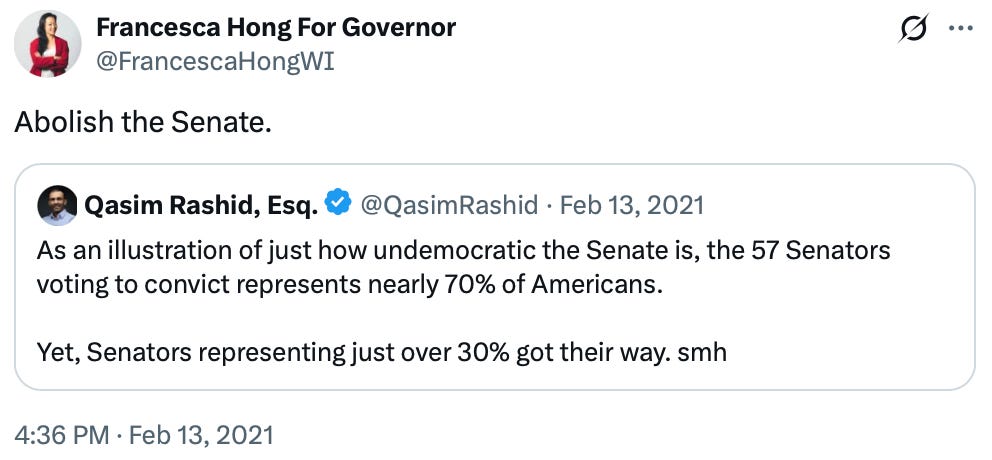
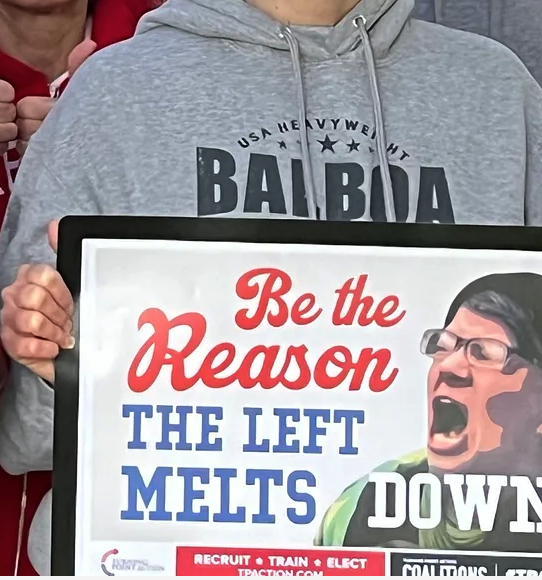
 Tipsy Teetotaler ن