
L’affaire Coldplay
If there’s a truly compelling reason not to normalize shaming as a global, always-on public spectator sport, it’s not that it degrades the humanity of the shamed; it’s not even the trite “who among us has not canoodled at a Coldplay concert with his sidepiece” justification. It’s simply this: When we take joy in the distress and ruination of other people, we make monsters of ourselves.
Apart from taking joy in distress and ruination, I have no reason to seek out the mêmes and other drollery about the ColdPlay kisscam. This, though, came to me unbidden:
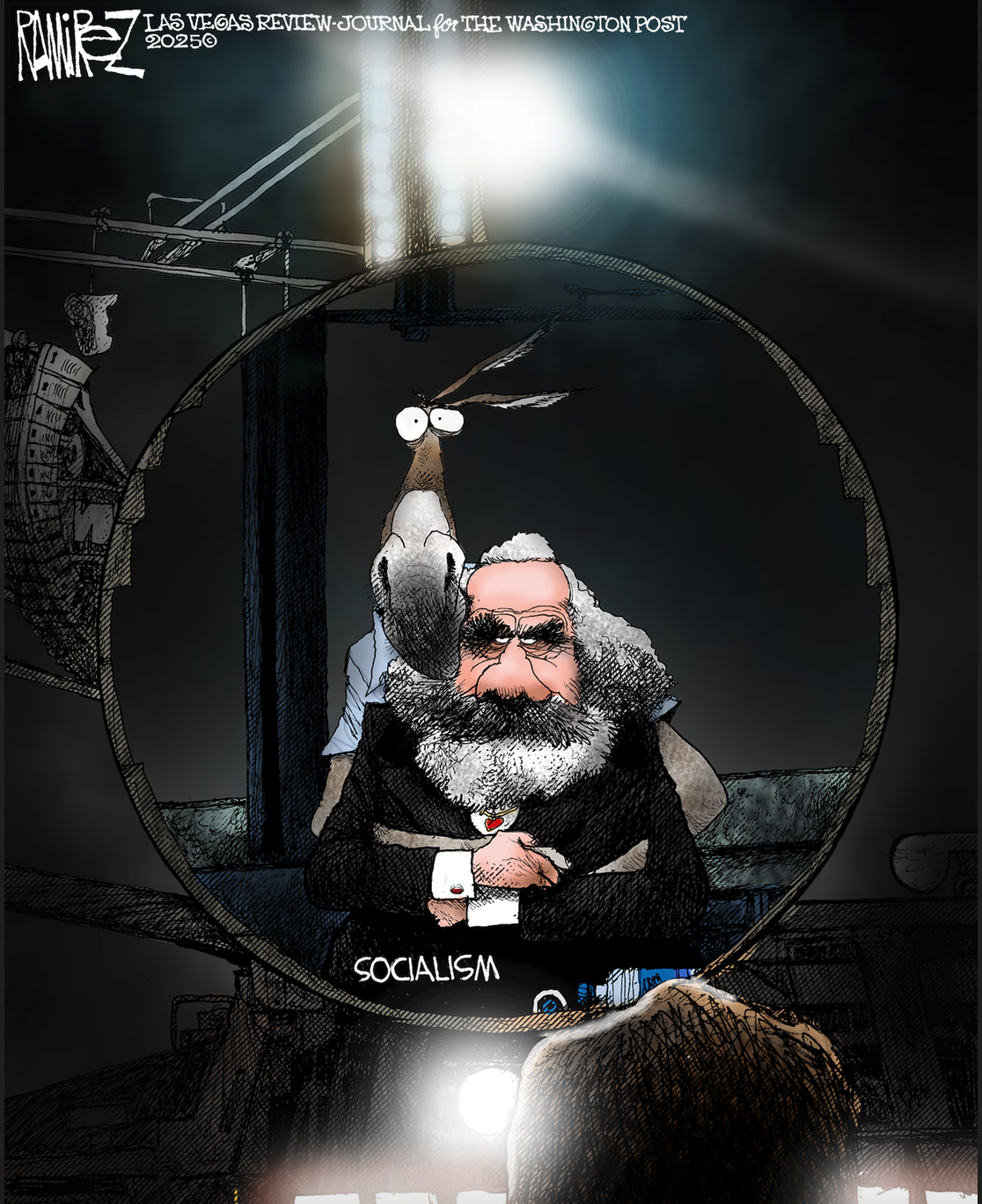
Who’s killing the liberal arts?
An unpleasant truth has emerged in [the University of] Tulsa over the years. It’s not that traditional liberal learning is out of step with student demand. Instead, it’s out of step with the priorities, values and desires of a powerful board of trustees with no apparent commitment to liberal education, and an administrative class that won’t fight for the liberal arts even when it attracts both students and major financial gifts. The tragedy of the contemporary academy is that even when traditional liberal learning clearly wins with students and donors, it loses with those in power.
For those who do care to see liberal learning thrive on our campuses, the work my colleagues and I did at Tulsa should be a model. How did we do it? We created an intentional community where our students lived in the same dorm and studied the same texts. We shared wisdom, virtue and friendship as our goals. When a university education is truly rooted in the liberal arts, it can cultivate the interior habits of freedom that young people need to live well. Material success alone cannot help a person who lacks the ability to form a clear, informed vision of what is true, good and beautiful. But this vision is something our students both want and need.
Jennifer Frey, This Is Who’s Really Driving the Decline in Interest in Liberal Arts Education
Voting consequentially
When people justify their voting choice by its outcome, I always think of The Lord of the Rings. Tolkien emphasizes repeatedly that we cannot make decisions based on the hoped-for result. We can only control the means. If we validate our choice of voting for someone that may not be a good person in the hopes that he or she will use his power to our advantage, we succumb to the fallacy of Boromir, who assumed he too would use the Ring of Power for good. Power cannot be controlled; it enslaves you. To act freely is to acknowledge your limits, to see the journey as a long road that includes dozens of future elections, and to fight against the temptation for power.
Jessica Hooten Wilson, What ‘The Lord of the Rings’ can teach us about U.S. politics, Christianity and power
I met Jessica some years ago at a conference where she was the Protestant keynoter. We spoke a bit because she was teaching at a University that I don’t even bother putting on my resumé despite spending three semesters there in the very late 60s. I dare say her scholarship was an order of magnitude higher than any of the mediocrities teaching when I was there.
Even the one prof to whom I owe a debt of gratitude earned that by a pretty banal observation that just happened to be what I needed at the moment — and I can’t even remember his name because at the time I didn’t realize how consequential that moment would prove to be.
Shorts
- We’ve been telling kids for 15 years to code. Learn to code, we said. Yeah well, AI is coming for the coders. They’re not coming for the welders. (Mike Rowe)
- I grew up in San Francisco, walking with my family by the Golden Gate Bridge. I still remember the thick and iconic chain railing that gave the place a sense of distinctiveness. Now the chains are gone, and they’ve been replaced by a soulless metal railing that’s colder than a hospital waiting room. … This is how a culture loses its charm: slowly, quietly. (David Perell).
Quotes via Andrew Sullivan
The convoluted feelings behind the right to be killed
Let us first note that the demand for legal assisted suicide addresses not the legality of killing oneself, but the legality of assisting others to kill themselves. The suicidee (patient? victim?) is secondary. The primary object of the right-to-die movement is the living.
People may kill themselves at any time, without permission or even much pain. Even where it is not legally permitted, suicide, once accomplished, is beyond the reach of legal consequence.
… We must … focus on the desire for someone else to do the killing. Alongside fear of a botched attempt or leaving behind a mess for others, I suggest that the desire for assisted suicide is a perverse expression of the need for recognition. People who wish to kill themselves also want their choice to be socially approved.
… Its advocates say they wish to die with dignity, and then they ask to be euthanized like pets. … [T]he “right” to assisted suicide can only be the right not to be recognized as a human being.
When black Americans were struggling for civil and human rights—for the recognition of their humanity— they arrived at the profound conviction that it was dignified to risk death in that struggle. Assisted suicide represents a perverse inversion: a renunciation of dignity, the demand that one’s humanity go unrecognized. A society that honors that demand will not, in the end, recognize the humanity of anyone.
Matthew Burdette, The Right to Be Killed
From “worst of the worst” to “anybody will do”
Earlier this month, 25-year-old George Retes was arriving for work at a Southern California marijuana farm when federal agents circled his vehicle, broke his window, and sprayed him with tear gas and pepper spray before taking him into custody. Retes, among the more than 360 people to be arrested in the large-scale immigration raid, went on to spend three days in a Los Angeles detention center.
The problem? Retes is a U.S. citizen and Army veteran, and was not charged with breaking any laws. “I want everyone to know what happened. This doesn’t just affect one person,” he told reporters following his release, sharing plans to sue for wrongful detention. “It doesn’t matter if you’re a veteran or you serve this country. They don’t care. They’re just there to fill a quota.”
…
It’s now been six months since President Donald Trump entered office with a promise to remove “the worst of the worst” from American soil. And indeed, arrests by Immigration and Customs Enforcement (ICE) have shot up as illegal border crossings—and, consequently, detentions by Customs and Border Protection—wane. Yet a significant portion of ICE detainees have no criminal record aside from being in the country illegally, with the Trump administration’s sweeping roundups seemingly targeting individuals on a more or less random basis.
I don’t particularly care if Trump deports everyone who is in the US illegally, though I doubt that any President will do that as long as we want people to do unattractive jobs for “dirt cheap” — including, I suspect, at Trump’s own Casinos and resorts. On the other hand, I’m not eager for him to do it.
What I definitely object to is the apparatus of terror, with masked ICE agents more-or-less indiscriminately grabbing and gassing people who just might help them meet quota. Or even doing that more discriminatingly, come to think of it.
Dreaming of Europe. And waking up.
Whenever I’m down; whenever I’m blue; whenever I think e.e. cummings retired the poet trophy with one poem; especially whenever I wonder whether it’s too late to become a naturalized Frenchman (or Italian, or …); I should by all means remember this: more Europeans die of heat death—largely due to lack of air-conditioning—than Americans die from gunshot wounds. (Factoid via Tyler Cowen)
I’m not so stupid as to think this is the ultimate answer to whether we’re the greatest country in the world. But even if it’s the best argument we’ve got, it’s not nothing.
It was and is ever so
You can take this to the bank: If the New York Times notices the Buddha, the enlightened one has already left town.
Ted Gioia, The Ten Warning Signs
Two political items
Jonathan Rauch had Trump 2.0 pegged years in advance
In August, 2022, Jonathan Rauch delineated what would happen if America elected Trump again: We Don’t Have to Speculate About Trump’s Next Term
I thought at the time that he was uncharacteristically shrill, even if he was right. But I came across it again, and he was remarkably accurate.
The (In)Effective Executive
President Donald Trump has a couple of problems when it comes to being an effective executive, the top two being: 1) He is an ignoramus and 2) He insists on surrounding himself with yes-men who are too afraid to tell him that he is an ignoramus.
Your enemies are not demonic, and they are not all-powerful and the right hasn’t always lost and the left hasn’t always won. But if you convince yourself of that, you give yourselves all sorts of permission to do a lot of stupid and terrible things under the rubric of “Do you know what time it is?”
Trumpism can be seen as a giant attempt to amputate the highest aspirations of the human spirit and to reduce us to our most primitive, atavistic tendencies.
I don’t do any of the major social media, but I have two sub-domains of the domain you’re currently reading: (a) You can read most of my reflexive stuff, especially political here. (b) I also post some things on my favorite social medium.

 Tipsy Teetotaler ن