I seldom agree so strongly with anything R.R. Reno writes, in First Things or elsewhere, as I agree with this:
Along with online sports betting, marijuana legalization is an instance of the grotesque misgovernance by leaders in the West. Instead of promoting the welfare of citizens, our elites accommodate our vices. More than that, they turn them into industries and revenue producers. Historians writing of this period will note that the policy response to catastrophically high levels of drug overdose deaths was to legalize marijuana. And the response to the inability of younger people to buy homes (the “affordability crisis”) was to legalize easily accessible and addictive gambling.
A Provocative Observation
A couple of years ago, I was at city hall in my little town when I got caught in a conversation with our assistant city manager. I mentioned that I was a professor at EIU at the time, and that we had a lot of students studying public administration and public policy. In fact, many of our recent graduates wanted to do exactly what he was doing for a living.
He said something that’s really stuck with me — and I think it highlights one of academia’s biggest problems. The kinds of questions we try to answer in the ivory tower just don’t line up with the ones people in the field actually need answered.
For example, he wanted to know: How much money should a city keep in reserves to supplement its general fund during an economic downturn? What a practical and important question. Yet, despite earning a concentration in public administration in grad school, I’d never seen a single article about that topic.
Ryan Burge, introducing a post on money in one prominent Protestant denomination (emphasis added).
Unwinding the revolution
The Bolshevik nationalization of property had, in a real sense, placed a curse on the Soviet regime. Unless it could find a way to divest itself of the exclusive property rights its founders had seized, it would be torn asunder. It could no longer return property to the individuals who once had owned it, most of whom were dead, and there were no legitimate claimants other than the nation as a whole to the assets that had been created during the Soviet period. Nevertheless, if it was to survive, the regime needed to find a way to empower its citizens to own and administer property directly. The state bureaucracy, theoretically a trustee for the people, had proven to be not merely inefficient but faithless and corrupt as well.
Legends of the curse carried by ill-gotten property are staples in many cultures. Whether it is a stolen gem or the gold of the Rhine immortalized in Richard Wagner’s cycle of operas or one of the many other variants, one invariable feature is that the greed of the illegitimate owner blinds him to the danger of possession.
Throughout 1990 and 1991, as I witnessed repeated futile efforts to reform the economy, I was often reminded of these legends. Unless the state could find a way to divest itself of control over most income-producing property, reform could not take hold since no real market system of economic interchange would be possible. Unless Gorbachev could find a way to terminate the central government’s possession of most property in the Soviet Union, his own position would crumble under the pressure of newly empowered republics that were no longer willing to have their economic fate decided by bureaucrats in Moscow. Yet, like the protagonists of countless legends, he seemed oblivious to the curse. He could not bear the thought of some of his authority passing to others. By clinging to the power over property, he doomed his own office and the state he headed.
Jack F. Matlock, Autopsy on an Empire. I’m quite interested in Russia, partly because it occasionally claims that it is the “Third Rome” as leader of the Church after Rome and Constantinople, partly because I know many Russian immigrants. I enjoyed this book a lot, as it avoids the cartoonish simplifications of the popular press.
Chosen troubles
Every generation has its burdens to bear, and many of Americans’ burdens—9/11, COVID, etc.—are not burdens of Americans’ choosing. But some of those burdens Americans have chosen: the national debt, inflation, the unresolved problems in our immigration system and in urban administration, the cozy crony capitalism that has contributed to economic stagnation, a class of elected political leaders that range from time-serving mediocrities (Nancy Pelosi, Mike Johnson) to corrupt authoritarians (Donald Trump) to elderly incompetents who used to be middle-aged incompetents (Joe Biden). Some of our troubles have been dropped upon us as though by some malevolent storm cloud, but others we have chosen. Into every nation’s life a little rain must fall, but the decision to spend all our umbrella-and-galoshes money on gelato and strip clubs while letting the gutters clog up and the storm sewers go unmaintained—that is on us.
…
In September, we will be a quarter-century on from 9/11. And though the idea may seem alien to many Americans right now, 25 years is more than enough time to grow up and get your act together.
I’ve spent much of my adult life attending or teaching at elite universities. They are impressive institutions filled with impressive people. But they remain stuck in the apparatus that Conant and his peers put in place before 1950. In fact, all of us are trapped in this vast sorting system. Parents can’t unilaterally disarm, lest their children get surpassed by the children of the tiger mom down the street. Teachers can’t teach what they love, because the system is built around teaching to standardized tests. Students can’t focus on the academic subjects they’re passionate about, because the gods of the grade point average demand that they get straight A’s. Even being a well-rounded kid with multiple interests can be self-defeating, because admissions officers are seeking the proverbial “spiky” kids—the ones who stand out for having cultivated some highly distinct skill or identity. All of this militates against a childhood full of curiosity and exploration.
Ted Gioia, The Honest Broker, is buying a lot of second-hand items these days, even for gifting:
For a start, you are immune to AI slop, which is now flooding the market, especially for books and music. Technology is empowering scams and frauds at an unprecedented rate.
I now pay close attention to dates. I just can’t trust any cultural artifact made after 2023. I hear from other people who have the same concern. They don’t want slop, and the people peddling it refuse to put warning labels on it. So your only sure way to avoid it is by picking the vintage secondhand object.
Cultural conservatism originated in the experience of a way of life that was under threat or disappearing. The memory of that way of life could be preserved, and its spiritual meaning enshrined in works of art. But the way of life itself could not be so easily protected.
Roger Scruton, Conservatism
Frustration
I’d really like to link book recommendations to Bookshop.org instead of to the Bezos empire. But too often, books that have formed me do not appear at Bookshop.org.
Shorts
Journalism is the art of translating abysmal ignorance into execrable prose. At least, that is its purest and most minimal essence. (David Bentley Hart, of Adam Gopnik)
It is impossible to study the radical right without noticing its profound suspicion of Christianity… (Matthew Rose, The World After Liberalism)
When the traffic lights go out during a storm, it sometimes feels like waking up from a long slumber. We realize that we can work things out for ourselves, with a little faith in one another. (Matthew B. Crawford, Why We Drive)
The best thing about New Years Day 2026 is that it means 2025 is over. President Ozymandias really hit the ground running for his second term, having surrounded himself with evil, shrewd, and power-hungry operatives this time instead of Republican normies who muted his bellowing. It’s hard to imagine (knocks on wood) that the worst of the self-aggrandizing vandalism isn’t over now.
Wordplay
Aphorisms
A platitude is a placebo for the mind; an aphorism is a wake-up call. Aphorisms provoke debate; they don’t promote dogma. Though they’re short, aphorisms spur considered reflection, not Pavlovian partisanship. At a time when polarization is so amped up, aphorisms can serve as psychological circuit breakers, interrupting our comfortable assumptions and prodding us to open our minds, unclench our fists, and think for ourselves.
In The Washington Post, Dana Milbank responded to some Republicans’ suggestion that the D.C. Metro be renamed the “Trump Train”: “It’s a great idea. Qatar will donate the subway cars, which will be powered by coal. Passengers will pay for fares with cryptocurrency after first showing proof of citizenship. And the trains will reverse themselves regularly and without warning — never quite reaching their original destination.” (Mary Ellen Maher-Harkins, Orwigsburg, Pa.)
In The Atlantic, David A. Graham processed the addition of “Trump” to “Kennedy” in the moniker for Washington’s premier performing arts center: “He asks not what he can do for his country, but what his country can name for him.” (Darrell Ing, Honolulu)
In Esquire, Dave Holmes acknowledged that Senator Lindsey Graham was maybe joking that Trump should be the next pope — but maybe not: “You can’t be tongue-in-cheek when you are actively licking the boot. There is just not enough tongue for both jobs.” (Susan Fitzgerald, Las Cruces, N.M.)
In The Wall Street Journal, Jason Gay rued the effect of obsessive replays on the determination of what, in pro football, constitutes a catch. “It’s the affliction of overthinking: If it walks like a duck, and talks like a duck, wait, hold on, it must be a chandelier,” he wrote. “It’s further evidence humans can ruin the spirit of anything, if given the time and technology.” (Bill Sclafani, Rockport, Mass.)
\[I\]n The Washington Post, Ron Charles assessed “The Little Book of Bitcoin,” by the supremely self-confident pitchman Anthony Scaramucci: “In one passage, he touts the convenience of transporting $500 million in Bitcoin on a thumb drive, which is the best news I’ve heard since my yacht got a new helipad.” (Stephen S. Power, Maplewood, N.J., and Hannah Reich, Queens, among others)
Charles also observed that the scolds who ban books have taken issue with “Maurice Sendak’s ‘In the Night Kitchen,’ which has been proven in the state of Florida to turn straight white Christian boys into polygender Marxists who eat only quinoa.” (Jill Gaither, St. Louis, and John Jacoby, North Andover, Mass.)
In The Times, Kevin Roose worried that when it comes to regulations, the stately metabolism of institutions is no match for the velocity of A.I.: “It feels, at times, like watching policymakers on horseback, struggling to install seatbelts on a passing Lamborghini.” (Conrad Macina, Landing, N.J.)
In The Times, A.O. Scott sang a similar song: “Occam’s razor, the venerable philosophical principle that the truest explanation is likely to be the simplest, has been thrown away. We’re living in the age of Occam’s chain saw, when the preferred answer is the one that makes the loudest noise and generates the most debris.” (Charles Kelley, Merrimack, N.H., and Trisha Houser, Durham, N.C., among others)
I saved three of Bruni’s best as personal favorites:
Also in The Times, Matt Hongoltz-Hetling considered the importance of an annual communal feast to a Vermont town’s special fellowship: “Whether a vibrant community created the potluck or the potluck created a vibrant community is like asking which came first, the fried chicken or the deviled egg.” (Stacey Somppi, Cottonwood, Ariz., and Hillary Ellner, Durham, N.C., among others)
In The Times, James Hamblin parodied the typical message and script of a television drug ad: “You will frolic on the beach at sunset psoriasis-free, with a golden retriever, smiling into the distance. You also may experience sudden loss of cardiac function, seizures of the arms or intermittent explosive ear discharge. Talk to your doctor.” (Susan Casey, Palm City, Fla.)
In The Dispatch, Kevin D. Williamson gave thanks for academia, despite its flaws: “The American university system is the envy of the world, and we are burning it down because there’s a couple of nonbinary gender studies professors at Bryn Mawr who say crazy stuff from time to time and there is a brain-dead gaggle of Jew-hating weirdos at Columbia. Of course, there is room for reform. But you don’t have to love every feather on the goose when it is laying golden eggs.” (Dan Markovitz, Corte Madera, Calif.)
The first just feels perfect; “explosive ear discharge” in the second was the only thing in the list that made me laugh uncontrollably; Kevin Williamson captures perhaps the single most tragic thing about what “we” are doing, (purely by coincidence, of course, during the second reign of the orange barbarian).
Finally: “Some of you should walk a mile in my shoes, because then you would be a mile away from me. Keep the shoes.” (Encountered by my wife on Pinterest)
My 2025
Reading
As I always note in my footer, I blog and socialize at micro.blog in addition to here. One of my friendlies at MB, an uncommonly sane Evangelicalish pastor in Chicagoland (very keen on racial reconciliation is he), posted his 2025 reading list and inquired about what others read this year.
My response:
At 77, I feel the Grim Reaper breathing down my neck, and I already own more books than I’ll get read before he wins. Further, I’ve read many, many books in my life already, including multiple books on many perennial themes. And although I love poetry, I either had poor teachers or was too barbarian to learn how to read demanding examples.
So I don’t have much toleration for books that are cumulative of what I already understand, or are neither pleasurable nor (so far as I can tell after reading a bit) profitable, including ones that many good people were raving about.
To avoid performative listing, then (e.g., Geoffrey Hill poetry, which defeated me utterly), I’ve eliminated all the books I abandoned part way in. Finally, listing a volume of poetry doesn’t mean I’ve read it all yet.
Book
Author
Rings Trilogy
Tolkien
Albion’s Seed
David Hackett Fischer
The World After Liberalism
Matthew Rose
Coracle
Kenneth Steven
Table for Two
Amor Towles
Till We Have Faces
C.S. Lewis
Godric
Beuckner
Stalingrad
Anthony Beever
Small Is Beautiful
Schumacher
Rilke Poetry
Rilke
Apocrypha
Stephen De Young
The Greek East and the Latin West: A Study in the Christian Tradition
Philip Sherrard
A Time of Gifts
Patrick Leigh Fermor
The New Science of the Enchanted Universe
Marshall Sahlins
Bread & Water, Wine & Oil
Fr. Meletios Webber
Lost in the Cosmos
Walker Percy
Giovanni’s Room
James Baldwin
The Long Loneliness
Dorothy Day
The innocence of Father Brown
G.K. Chesterton
Against the Machine
Paul Kingsnorth
You Have Arrived at Your Destination
Amor Towles
The Air We Breathe: How We All Came to Believe in Freedom, Kindness, Progress, and Equality
Extra pills are piling up across America. Excessive refills by U.S. pharmacies cost Medicare and patients $3 billion between 2021 and 2023, according to a WSJ analysis of Medicare prescription data.
WSJ. Based on my own rigorous anecdata, this is 1000% true. Which means that although mail-order pharmacies may have started it, brick-and-mortar local pharmacies are in the game now, too.
I really would rather not manually refill every prescription, but my pharmacy seems incapable of waiting 90 days to refill a 90-day prescription, and when I get a text that a prescription is ready for pick-up, I go pick it up (with rare exceptions, like a post-op opioid painkiller I definitely did not need).
Sam Altman, OpenAI’s chief executive, said in a recent podcast he can see ways that seeking companionship from an AI chatbot could go wrong, but that the company plans to give adults leeway to decide for themselves.
Nothing in her political career before September inclined me to cut Marjorie Taylor Green any slack whatever, but something has happened since then.
Her political conversion story, if you can call it that (it’s not about changing from MAGA to progressive or any other political position), rings true.
It started at the Charlie Kirk Memorial service:
What stayed with Greene long afterward were the last two speakers who took the stage. First there was Kirk’s widow, Erika, who stood in white before the crowd filling the Arizona stadium, lifted her tear-filled eyes and said that she forgave her husband’s killer. And then there was President Trump. “He was a missionary with a noble spirit and a great, great purpose,” he said of Kirk. “He did not hate his opponents. He wanted the best for them. That’s where I disagreed with Charlie. I hate my opponent, and I don’t want the best for them.”
“That was absolutely the worst statement,” Greene wrote to me in a text message months after the memorial service. And the contrast between Erika Kirk and the president was clarifying, she added. “It just shows where his heart is. And that’s the difference, with her having a sincere Christian faith, and proves that he does not have any faith.”
I thought at the time that should have been a wake-up call for every “Christian” Trump supporter in America. I still do. It speaks ominous things about our religious and political culture that it seems to have awoken so few.
But Marjorie Taylor Green, of all people, recognized it! And it appears that she has genuinely repented of her role in stoking hatred and division!
Time will tell; she’s been taking the potent MAGA pill for a long time, and withdrawal may prove too hard. But it’s looking good so far.
I wish her what I wished for Jimmy Carter on January 20, 1981: a long and happy and private life — plus a sustained repentance.
Paganism with worship music
We seem to be entering a pagan century. It’s not only Trump. It’s the whole phalanx of authoritarians, all those greatness-obsessed macho men like Vladimir Putin and Xi Jinping. It’s the tech bros. It’s Christian nationalism, which is paganism with worship music. (If you ever doubt the seductive power of paganism, remember it has conquered many of the churches that were explicitly founded to reject it.)
“If you dislike the religious right, wait till you meet the post-religious right,” Ross Douthat warned presciently at the dawn of Trumpism in 2016. … What Douthat calls the “post-religious right” certainly is more obnoxious and morally degenerate than its Bush-era forebear was, but it’s not correct to call a movement that’s developed its own alternate morality “post-religious.” It’s not even correct to call it “post-Christian,”…
The modern right is boisterously Christian, but without Christ. It extols Christianity aggressively but has ditched most of the moral content …
…
The purest expression of Christianity without Christ came from Trump himself, not coincidentally. At Charlie Kirk’s memorial service, shortly after Kirk’s widow, Erika, moved viewers by publicly forgiving her husband’s killer, the president strode to the mic and said, “That’s where I disagreed with Charlie. I hate my opponents, and I don’t want the best for them. I’m sorry.” That’s the literal antithesis of Christian morality …
But there were no mass defections by Christians from the president’s camp after his heresy. Erika Kirk herself remains a loyal Trump ally in good standing. And why not? Hating one’s enemies is squarely in line with the three purposes of post-Christ right-wing Christianity. The first is establishing the right’s cultural hegemony over other American factions; the second is narrowing the parameters of the right-wing tribe to exclude undesirables; and the third is deemphasizing morality as a brake on ruthlessness toward one’s opponents.
Almost everything written about the “alternative right” has been wrong in one respect. The alt-right is not stupid; it is deep. Its ideas are not ridiculous; they are serious. To appreciate this fact, one needs to inquire beyond its presence on social media, where its obnoxious use of insult, obscenity, and racism has earned it a reputation for moral idiocy.
Matthew Rose, A World After Liberalism
At the outset of debate
If we are willing to grant, at the outset, that the people we’re debating agree about ends—that they want a healthy and prosperous society in which all people can flourish—then we can converse with them, we can see ourselves as genuine members of a community. And even if at the end of the day we have to conclude that we all do not want the same goods (which can, alas, happen), it is better that we learn it at the end of the day than decide it before sunrise.
Would we necessarily say that government, civic life, the media, or high finance work better now than in the mid-20th century? We can scorn the smug WASP blue bloods from Groton and Choate—and certainly their era’s retrograde views of race and gender—but their leadership helped produce the Progressive movement, the New Deal, victory in World War II, the Marshall Plan, NATO, and the postwar Pax Americana. After the meritocrats took over in the 1960s, we got quagmires in Vietnam and Afghanistan, needless carnage in Iraq, the 2008 financial crisis, the toxic rise of social media, and our current age of political dysfunction.
We are also offended by the contumely of allies as well as foes, who refuse to regard our prosperity as fruit and proof of our virtue but suggest that it may be the consequence of our vulgar Philistinism.
Reinhold Niehbur, The Irony of American History
Read the fine print
On the surface, it would seem that the assurances given in the Declaration of the Rights of the Peoples of Russia were clear and unequivocal. But lurking in the shadowy annals of communist polemics there was a catch. To paraphrase, but not distort, Lenin’s position, nations have the right to self-determination, but only the proletariat has the right to decide. And, as if that were not enough, only the Communist Party can speak for the proletariat.
Jack Matlock, Autopsy on an Empire
Raising the bar for Tinhorn Dictators
Ramsey’s intolerance for dissent has created what former employees call a cultlike environment, where leaders proclaim their love for staff and then fire people at a moment’s notice.
A new crop of moderate Democrats is trying to counter both President Trump and progressive influence in their own party. (WSJ) May their tribe increase.
And so we have before us one of the characteristic political necessities of our time: to take seriously what we cannot respect. (Wendell Berry, The Unsettling of America)
Conservative and mainstream media were drifting apart, not just ideologically but epistemically… (Jonathan Rauch, The Constitution of Knowledge) This epistemic drift (of the Right, I think, not the mainstream) tempts me to despair.
“The only thing we have to fear is fear itself,” … was a damned funny thing for Franklin Roosevelt to say in 1933, the year Adolf Hitler came to power. (Kevin D. Williamson)
The face of my fear is not a new Hitler but the Old Adam. It is the face in the mirror. (Kevin D. Williamson)
One category I used to apply to some of my posts became obsolete almost overnight around 1/20/2017: Zombie Reaganism. You never see that any more, and I miss it more than I thought I would.
I don’t do any of the major social media, but I have two sub-domains of the domain you’re currently reading: (a) You can read most of my reflexive stuff, especially political here. (b) I also post some things on my favorite no-algorithm social medium.
As for insisting on your right to complete self-governance, free from “secondary, external aims,” as Siraganian puts it … well, if you expect someone else to pay you to pursue truth, at some point, you must accept some secondary, external aims.
Academics tend to recoil from such a crass and mercenary idea, and fair enough, but the world is a crass and mercenary place. We talk about pursuing truth for its own sake, but most academics are pursuing it in exchange for money they can use to satisfy their many less elevated needs. The people who provide that money want something in return. Many will not be content to know that somewhere the global stock of Truth is increasing. Especially if one of the Truths you insist on is that they are dim-witted bigots.
Last week, OpenAI CEO Sam Altman made an announcement. “In December, as we roll out age-gating more fully and as part of our ‘treat adult users like adults’ principle, we will allow even more, like erotica for verified adults,” he wrote on X.
…
It is odd to treat adult spaces as though the marker of maturity is simply abundant pornography. In response to Altman’s post, one user asked: “Why do age-gates always have to lead to erotica? Like, I just want to be able to be treated like an adult and not a toddler, that doesn’t mean I want perv-mode activated.” Altman ducked the question, replying simply, “You won’t get it unless you ask for it.”
But the cultural impact of increasingly violent pornography makes it obvious he is wrong. Women who have never watched pornography will still meet men in their dating pool who are disgusted by pubic hair, since those men’s appetites have been formed to desire pre-pubescent-appearing women. Women will meet men who assume women commonly enjoy anal sex. And increasingly, women meet men who assume choking is a natural part of sex.
(And seemingly everybody takes for granted that “dating” means some kind of sex, notes Tipsy.)
Incorrigibly ignorant
All those nice scientists from 1970 to 2000 sitting in their Presbyterian and Lutheran church pews on Sunday telling the world that feeding dead cows to cows was a wonderful way to feed everyone because their parts-and-pieces worldview said so. Eventually, they were jolted out of their self-assured righteousness when mad cow raised its ugly head. But they didn’t repent in sackcloth and ashes, like they should have. Oh no, they went about their Western thought processes with nary a break in stride.
Your enemies are not demonic, and they are not all-powerful and the right hasn’t always lost and the left hasn’t always won. But if you convince yourself of that, you give yourselves all sorts of permission to do a lot of stupid and terrible things under the rubric of “Do you know what time it is?”
[A] critical mass of the American people … no longer want[s] to govern themselves, … are sick of this republic and no longer want to keep it if it means sharing power with those they despise.
I don’t do any of the major social media, but I have two sub-domains of the domain you’re currently reading: (a) You can read most of my reflexive stuff, especially political here. (b) I also post some things on my favorite no-algorithm social medium.
Many sober voices warned that an expansion of NATO to Russia’s border would poke the Bear, leading to an inevitable war. As long ago as 1998, following the U.S. decision to expand NATO eastwards, George Kennan said the following to Thomas Friedman:
I think it is the beginning of a new cold war. I think the Russians will gradually react quite adversely and it will affect their policies. I think it is a tragic mistake. There was no reason for this whatsoever. No one was threatening anybody else. This expansion would make the founding fathers of this country turn over in their graves.
Patrick Deneen. (Link may be inaccurate; I don’t think it was on Substack when I read it.)
Unless we’re prepared to drop our Monroe Doctrine, we ought to be able to understand Russia’s prickliness about Ukraine’s loving glances at the West and the West sidling up to Russia’s “near abroad.”
Spencer Cox
If you had asked me last week to handicap Utah Gov. Spencer Cox’s chances of winning the 2028 Republican presidential primary, I’d have said 1 percent. But after watching him demonstrate impressive moral leadership in calling on Americans to unite after Charlie Kirk’s murder, I’ve changed my mind. It’s zero percent.
The governor is a good man in a party that’s led by hideous people and backed by voters who consider being a hideous person a political virtue …
Catoggio continues, pivoting to an important distinction I hadn’t made and that few others seem to have made, either:
Cancel culture, properly understood, is an attempt to bully institutions like businesses into enforcing one faction’s cultural preferences in the absence of moral consensus around those preferences. It doesn’t involve subjects about which we’re all in broad moral agreement, like whether pedophilia should be a crime. It involves subjects about which we disagree, like whether trans women are women. As Thomas Chatterton Williams put it in The Atlantic, “Cancel culture is more fundamentally about solidifying norms that haven’t yet been established.”
That seems like a very sensible way to distinguish “cancellation” of those who celebrate Kirk’s murder from cancellation of those who pointed out that Kirk was no saint (e.g., me, humanizing him) or even demonized him (tastelessly, given the timing).
Is this possible, circular-firing-squad style?
Vacationing in Michigan, I’m struck by all the Marijuana stores. People have spent a lot of money to build or remodel stylish stores in densities that boggle the mind (at least along major roads).
I hate it. So I was heartened by the account of a native Michigander who tells me that competition is so fierce that prices have dropped 91%. That’s one of those facts that’s too good to check. I hope every last one of them is driven out of business by every last one of them.
I’ll spare you catching up on commentary
I’ve been wading through a backlog of reading as my vacation permits. A lot of it, from guttersnipes to established journalists at major publications, comes down to arguing that the other guys are more prone to lethal political violence.
I have concluded (actually, had concluded before Charlie Kirk’s murder) that lethal political violence is bad. I’ve also concluded that the argument about which side is guiltier of it is stupid and likely to be forever inconclusive.
Accusing the head of the Justice Department of being an idiot would seem like a lazy smear during any other administration, but Pam Bondi wasn’t selected for her legal acumen. She was picked for the same reason that Kash Patel and Pete Hegseth were, because the president wants the most dangerous arms of the federal government led by people whom he knows will choose him over the law.
When you select for loyalty instead of competence in staffing your government, you’re guaranteeing yourself a higher than usual quotient of morons ….
[Bondi’s moronic comments about “hate speech” and “discrimination” omitted.]
We’re left with two explanations, then. One is that Pam Bondi truly is a moron, irresponsibly BS-ing her way through questions on what can and can’t legally be said in the United States like a 1L who hasn’t done the reading. The other is that Pam Bondi knows what time it is.
In a government distinguished by extreme malevolence and extreme incompetence, it’s hard to tell.
…
Postliberals don’t worry about what Democrats will do when they return to power because they have the ability right now, or so they believe, to make sure that Democrats never do.
That’s the alternate explanation for Pam Bondi’s “hate speech” comments. She’s not stupid. She just “knows what time it is” and is proceeding accordingly.
Nick Catoggio, riffing off Pam Bondi’s unironic rant and declaration of war against “hate speech.”
Why Tyler Robinson shot Charlie Kirk
I submit that we don’t really know why, and that Nick Cattogio raced just a bit ahead of the evidence here:
Unless the indictment omitted something important, though, the motive was straightforward: Like practically every progressive in this country, he abhorred Kirk’s condemnations of transgenderism. That’s legibly leftist.
I find that very plausible, but I don’t think we’re to the point where the official allegations or known evidence compel it.
In point of fact, Catoggio and I, as inactive and retired lawyers respectively, probably should be saying “it’s not looking good for him, but Robinson is innocent until proven guilty.”
Your enemies are not demonic, and they are not all-powerful and the right hasn’t always lost and the left hasn’t always won. But if you convince yourself of that, you give yourselves all sorts of permission to do a lot of stupid and terrible things under the rubric of “Do you know what time it is?”
[A] critical mass of the American people … no longer want[s] to govern themselves, … are sick of this republic and no longer want to keep it if it means sharing power with those they despise.
I don’t do any of the major social media, but I have two sub-domains of the domain you’re currently reading: (a) You can read most of my reflexive stuff, especially political here. (b) I also post some things on my favorite social medium.
Trump, Claiming Weak Jobs Numbers Were ‘Rigged,’ Fires Labor Official Economists said ousting the head of the Bureau of Labor Statistics could undermine confidence in government economic data.
My net worth fluctuates, and it goes up and down with the markets and with attitudes and with feelings, even my own feelings … Yes, even my own feelings, as to where the world is, where the world is going, and that can change rapidly from day to day.
Some data, such as the number of votes he received at the polls in 2020, initially refused to budge. But with a little bit of threatening from some extra-patriotic patriots, the election turned out to have been a Trump blowout. Just ask any elected Republican; they’ll tell you!
…
Fumbling around in a fog of vibes and misinformation and things you saw on Fox News is good enough for the president; why should the rest of us ask for anything better? Soon, no one will know what is happening—what the problem is, or what remedies to apply. What sectors are booming and which are contracting, whether interest rates should be higher or lower, whether it’s hotter or colder than last year, whether mortality has gone up or gone down. It will be vibes all the way down. Soon we will all be bumping around helplessly in the dark.
In his 1970 Nobel lecture, Aleksandr Solzhenitsyn said, “You can resolve to live your life with integrity. Let your credo be this: Let the lie come into the world, let it even triumph. But not through me.” The problem presently before the United States is that the Trump administration will be staffed in its upper reaches by political appointees who, without exception, have failed this test.
To get their positions, these men and women have to be willing to declare, publicly if necessary, that Donald Trump won the 2020 election and that the insurrectionary riot of January 6, 2021, was not instigated by a president seeking to overturn that election.
Terminating BLS Commissioner Erika McEntarfer because her agency delivered bad news on the economy is the most cartoonishly banana republic move Trump has pulled in his second term so far (that is, apart from shipping people off to prison in an actual banana republic without due process to be abused).
…
His reaction to the latest jobs report isn’t much different, in fact, from his reaction to the early spread of COVID in the United States in 2020. “If we stop testing right now, we’d have very few cases, if any,” the president famously complained. Then, as now, when confronted with information that might create trouble for him, his instinct is to suppress it.
…
There’s a fourth way in which firing McEntarfer was stupid. Ironically, a weak jobs report combined with downward revisions of the May and June numbers greatly strengthens the president’s case to the Fed to lower interest rates. But Trump couldn’t seize the obvious opportunity here because his narcissism wouldn’t let him: He’d rather pretend that job growth is stronger than the BLS believes, undercutting his own argument for a rate cut, than allow that the economy is cooling off and needs some heat.
If the President can fire the head of BLS, an agency whose purpose is the nonpartisan and objective collection, distillation and publication of economic data, I may need to think the Unitary Executive theory. Donald Trump’s willfulness will do that to you.
Four (more) flavors of stupid
“If there’s anything more important than my ego around, I want it caught and shot now.”
…
One of the major difficulties Trillian experienced in her relationship with Zaphod was learning to distinguish between him pretending to be stupid just to get people off their guard, pretending to be stupid because he couldn’t be bothered to think and wanted someone else to do it for him, pretending to be outrageously stupid to hide the fact that he actually didn’t understand what was going on, and really being genuinely stupid.
Douglas Adams, The Hitchhiker’s Guide to the Galaxy, quoting Zaphod Beeblebrox.
Hegseth’s stewardship of our military
Secretary of Defense Pete Hegseth, surely suffering from imposter syndrome, is systematically stripping military education of humanizing and broadening elements. Hegseth’s Headlong Pursuit of Academic Mediocrity. (gift link)
Trumpism can be seen as a giant attempt to amputate the highest aspirations of the human spirit and to reduce us to our most primitive, atavistic tendencies.
Power is in the pain and humiliation
George Orwell is a useful guide to what we’re witnessing. He understood that it is possible for people to seek power without having any vision of the good. “The Party seeks power entirely for its own sake,” an apparatchik says in 1984. “We are not interested in the good of others; we are interested solely in power. Not wealth or luxury or long life or happiness: only power, pure power.” How is power demonstrated? By making others suffer. Orwell’s character continues: “Obedience is not enough. Unless he is suffering, how can you be sure that he is obeying your will and not his own? Power is in inflicting pain and humiliation.”
[N]ever forget this: Whenever you see a public attack on a judge, know that it is like a signal flare. It galvanizes some of the worst people in America to make threats, dox family members and harass public officials into a state of fear and misery.
David French on the explosion of death threats against Judges, their families, and their loved ones. (shared link)
Your enemies are not demonic, and they are not all-powerful and the right hasn’t always lost and the left hasn’t always won. But if you convince yourself of that, you give yourselves all sorts of permission to do a lot of stupid and terrible things under the rubric of “Do you know what time it is?”
I don’t do any of the major social media, but I have two sub-domains of the domain you’re currently reading: (a) You can read most of my reflexive stuff, especially political here. (b) I also post some things on my favorite social medium.
The Sleep Number bed is typical of smart home devices, as Harvard business school professor Shoshana Zuboff describes in The Age of Surveillance Capitalism. It comes with an app, of course, which you’ll need to install to get the full benefits. Benefits for whom? Well, to know that you would need to spend some time with the sixteen-page privacy policy that comes with the bed. There you’ll read about third-party sharing, analytics partners, targeted advertising, and much else. Meanwhile, the user agreement specifies that the company can share or exploit your personal information even “after you deactivate or cancel” your Sleep Number account. You are unilaterally informed that the firm does not honor “Do Not Track” notifications. By the way, its privacy policy once stated that the bed would also transmit “audio in your room.” (I am not making this up.)
The damages of our present agriculture all come from the determination to use the life of the soil as if it were an extractable resource like coal, to use living things as if they were machines, to impose scientific (that is, laboratory) exactitude upon living complexities that are ultimately mysterious.
Wendell Berry, The Unsettling of America
Touching politics
What’s remotely “risible” here?
Cyril Hovorun, a Ukrainian theologian … believes the Russian [Orthodox] church waded into Africa to spread propaganda and stoke hostility towards the West. The idea is less risible than it may at first seem. The Russian church’s favourite subject—“traditional values” and how the decadent West wants to pervert them—aligns with conservative religious views in Africa, where clerics tend to oppose homosexuality.
The idea did not at first seem risible to me, and it still does not.
Under the Biden administration, the U.S. had Ambassadors giving the middle finger to traditional lands by flying Pride flags at embassies and marching in gay rights parades (seehere and here). Are we so clueless that we don’t recognize that putting lightning-rod sexuality issues front-and-center in our foreign policy makes us vulnerable to adversary countries who aren’t yet out of their minds?
Money Quotes For The Week (excerpted from Andrew Sullivan)
“You know that scene in an action movie when the bad guy runs through the kitchen of a restaurant and pulls down all the pots and pans behind him to slow down his pursuers? We’re in that part of the Trump presidency,” – Jason Kander.
“So lemme get this straight: The Biden Admin (2021-2025) fabricated the Epstein Files before 2019 but did NOT release them before the 2024 election — instead expecting that Trump would demand their release only to do an about-face because Biden in fact made it all up. Got it,” – Daniel Goldman.
…
“People are mocking [Speaker Mike Johnson] but it’s important to realize the moral progress it represents for the GOP: less than 20 years ago the Republicans chose an actual pedophile, Denny Hastert, to be Speaker, whereas Johnson merely is running interference for pedophiles,” – Matt Sitman.
How it ends
The uproar over Jeffrey Epstein increasingly feels more like a simulacrum of a political scandal than an actual scandal.
…
[W]e all, and I do mean all, know how this will end.
Donald Trump is going to let Ghislaine Maxwell out of prison early in exchange for absolving him of wrongdoing related to Epstein.
For the record, I did not “know” that. I didn’t even suspect it. I’ve apparently been paying too little attention to the simulacrum.
But now that he mentions it, that denouement seems consistent with Trump’s overall shamelessness and abuse of the pardon power.
More:
I myself theorized four days ago that Team Maxwell had leaked the “bawdy” 2003 letter (allegedly) from Trump to the Wall Street Journal in the hopes of pressuring the president to make a deal with her. Lo and behold, today we find that the deputy attorney general wants to meet her. After six months of watching how postliberals operate, we’re all conspiracy theorists now. Take one look at this and try to imagine trusting this administration to behave on the up-and-up.
Events since Catoggio published this have swung me toward thinking he’s right about what’s it the works.
Despite it all, including my contempt for Trump, I would wager a moderate amount that Trump will not be shown to have partaken of Jeffrey Epstein’s adolescent delights. Do you really think the Biden DOJ wouldn’t have at least leaked it if he had (leaks could avoid unmasking Democrat ephebophiles)? (See Andrew Sullivan’s second quote of the week, above.)
I would not wager, though, that Trump didn’t know roughly what Epstein was up to.
Lest you think I’m being pedantic, by the way, I generally make it a point to distinguish ephebophilia from pedophilia because the latter always strikes me as more perverted, less understandable. Dennis Hastert, for instance, was an ephebophile, not a pedophile.
Apology accepted, sir.
I am writing to offer an apology. The short version is this: I severely underestimated the threat posed by a Donald Trump presidency. The never-Trumpers—who never seemed to stop issuing their warnings and critiques—struck me as psychologically and emotionally weak people with porcelain-fragile sensibilities. It turns out their instincts were significantly better attuned than my own.
… I, like many, took a transactional view of Trump. In the middle of a debate, he suddenly announced he had become pro-life (something Rudy Giuliani refused to do in 2008, which derailed his campaign). He also adopted a list of potential judicial nominees that accorded with constitutional conservatism. The author of The Art of the Deal drove the bargain that would take him to an unlikely presidency.
While some conservatives remained never-Trumpers, the rest, including me, made peace with Trump as the alternative to Hillary Clinton in a binary political system. Had we lived in a country with a multiparty system, we would have voted for the Christian Democrats and hoped for a part in a governing coalition, but that option didn’t exist.
I want to use this occasion to reiterate that I, a never-Trumper, have voted for America’s Christian Democrat party three quadrennia in a row. It is an option.
Unserious people governing an unserious people
Mediaite: Tulsi Gabbard Argues Obama Is Guilty of Treason Because ‘There Has to Be Peaceful Transition of Power’
On The Charlie Kirk Show, Kirk asked Gabbard to back up her “fighting words.”
“Can you make the case– can you present the arguments– the best bill you can with unclassified information and public information what makes you believe that this reaches that sort of threshold?” he asked.
Gabbard’s smoking gun? Obama — she claimed — disrupted the peaceful transfer of power.
“When we look at our Democratic Republic, Charlie, our system is built on the foundation of the American people casting their votes for who they want to be in office, to be our president and commander-in-chief.” said Gabbard. “In this system, there has to be a peaceful transfer of power.”
I’m pleasantly surprised that Charlie Kirk, himself something of a MAGA grifter, would challenge Gabbard on accusing Obama of treason.
I’m not surprised that Mediaite had to state the obvious because Kirk apparently didn’t pursue it:
Neither the Obama administration nor Obama himself ever claimed that Trump did not legitimately win the election. The former president never attempted to obstruct the certification of the election, he never told a news outlet that Clinton was the real winner, and he never encouraged supports to take matters into their own hands and attempt to stop the transition of power.
Gabbard’s boss, however, engaged in all of these actions repeatedly. President Trump claims, to this day, that he won the 2020 election. He actively fought against the certification of election results, and he was impeached for inciting an insurrection at the Capitol on Jan. 6.
Kirk, Gabbard and Mediaite all leave it to me, though, to point out that Trump “treasonously” interfered with Obama for eight freakin’ years through his birtherism BS. And that Obama has an airtight defense against treason.
And as long as I’m free-associating, what brainworm makes wing-nuts insist that the wives of politicians they don’t like are really men (not that the Macron marriage isn’t a little odd, mind you)?
A unified theory of Trump
Early the evening of the assassination attempt on candidate Trump, Peggy Noonan got a call from:
a friend … from California … He had been very close with Mr. Trump once, and was no longer. He asked my thoughts and I said wow, that was some kind of moment. He said that wasn’t spirit, it’s rage. I quote from memory: “He said ‘fight fight fight’ because he wants everyone fighting, because the game of dominance and defeat is everything to him.” That is him, my friend said, and the fight isn’t for something, it’s just what he likes.
…
In just the past week Mr. Trump accused one of his predecessors, Barack Obama, of treason. Not of a dereliction or mistake but actual treason—betraying his country and giving aid and comfort to its enemies. He told reporters in the Oval Office on Tuesday that, in National Intelligence Director Tulsi Gabbard’s recent report on Mr. Obama’s actions regarding Russia-gate, “It’s there, he’s guilty. This was treason.” “Obama was trying to lead a coup . . . This is the biggest scandal in the history of our country.”
You can say, “He’s just trying to distract from his Jeffrey Epstein problem” and yes, of course he is. But it’s also fight for the fight’s sake, and unthinkingly destructive. Is it good for young people, for instance, to hear one president accuse another of an act so wicked the penalty of conviction is death? It is not good for them.
Before the Journal last week broke the story of the Jeffrey Epstein bawdy birthday book with its letter bearing Mr. Trump’s signature, Mr. Trump threatened “I’m gonna sue the Wall Street Journal just like I sued everyone else.” He filed suit last Friday against the Journal and reporters Khadeeja Safdar and Joe Palazzolo.
An ardent Trump supporter might say, “Good, never let up.” Maybe Mr. Trump says that to himself. But it’s no good for the country for its president to attempt to muscle the press in this way, and it’s no good even for him. If and when the suit goes forward Mr. Trump will be forced to testify under oath on his history with Epstein. There is no way on earth that will be a net positive for him. Which surely he knows. He fights even when he will hurt himself, because the fight is all.
… He is like a strange general who can’t quietly establish camp or dig new fortifications. He shoots his cannon for no reason, just for the sound.
…
Of all his weaknesses that is one of his greatest, that he’d rather hurt himself than not fight. He’d rather hurt the country than not fight. The fight is all.
Your enemies are not demonic, and they are not all-powerful and the right hasn’t always lost and the left hasn’t always won. But if you convince yourself of that, you give yourselves all sorts of permission to do a lot of stupid and terrible things under the rubric of “Do you know what time it is?”
Trumpism can be seen as a giant attempt to amputate the highest aspirations of the human spirit and to reduce us to our most primitive, atavistic tendencies.
I don’t do any of the major social media, but I have two sub-domains of the domain you’re currently reading: (a) You can read most of my reflexive stuff, especially political here. (b) I also post some things on my favorite social medium.
You’d have to be stupid not to specialize in generalizing
[C]olleges’ pre-professional bent — reflected, too, in some schools’ elimination of such unpopular humanities majors as classics and art history — can be as imprudent as it is unimaginative. The modern job market has a flux and furious metabolism that routinely make a mockery of the best laid plans. “The Computer Science Bubble Is Bursting,” read the headline on an article in The Atlantic by Rose Horowitch last month. It noted that while the number of computer science majors in the United States had quadrupled between 2005 and 2023, it was now on the decline because of “a grim job outlook for entry-level coders.” “Artificial intelligence has proved to be even more valuable as a writer of computer code than as a writer of words,” Horowitch wrote. “This means it is ideally suited to replacing the very type of person who built it.”
So, consulting is the ticket? Not so fast. “If consulting was a stock, I’d be shorting it right now,” the entrepreneur and venture capitalist Peter Thiel told Joe Nocera for an article in The Free Press last week. Its headline: “The Consulting Crash Is Coming.” Its subhead explained that consultants, like coders, are being “outpaced by A.I.”
The moral of those two stories is that the smartest approach to college may be precisely the one that its trajectory of late has conspired against: range widely across subject offerings and focus not on a skill that could become obsolete but on intellectual dexterity and powers of judgment with better odds of enduring relevance. “A liberal arts degree is a pre-professional degree — you just don’t know what the profession is,” said Zimmerman, who teaches a seminar for first-year students at U-Penn called “Why College?”
“Learn to code” seemed the veriest wisdom, until suddenly it wasn’t. It has been so my whole lifetime: “We have a shortage of X; therefore, the smart college major is X” has never been very good at assuring that X is a remunerative profession even in the short-term.
Correctionist history
We have a view of the war that emphasizes the decisive American involvement, and with Hollywood’s aid, has become part of our national myth. I do not discount that. My mother had a brother who fought in the Pacific, my dad had three brothers who saw active duty, my father-in-law served, and countless kinsmen of my wife saw combat. But our victory in the West was made possible by the Russians pulverizing the Germans in the East. It was a great victory to us, but to the Russians it was existential. We think that the October Revolution of 1917 defined Russia. It did not, as it did not ultimately “take,” and died the death of all imposed ideologies. But the Great Patriotic War does define modern Russia. Their struggle to protect the Motherland is perhaps one of the most important components that define their national identity.
… Use any metric you want, the Russians far exceeded any of the other Allies.
Terry Cowan. If you doubt Terry, read Anthony Beever’s Stalingrad.
Pronouns
When the poet Andrea Gibson learned two years ago that their ovarian cancer was incurable, the news marked a turning point; Gibson would often say it led to some of the most joyous moments of their life.
Before the terminal prognosis, they were always afraid. They had severe anxiety and chronic panic attacks; they were petrified of the ocean; they couldn’t bring themselves to eat nuts on a plane, in case they turned out to have developed a new allergy and might suffocate in flight. For years, they’d lived in constant fear that everything would come crashing down. Then, of course, it did. And just at the moment when patients are frequently pushed to start “battling” cancer, Gibson finally learned to stop fighting. In an interview last year with the website Freethink, they remembered telling themself: “I will allow this.”
I am, I guess, a troglodyte. I cannot help but consider a person with ovarian cancer a woman, whose pronouns therefore are “she” and “her.”
Had I known Faith Hill, I would have tried to use her preferred pronouns in speaking to her as a matter of courtesy. But she’s gone now, and the two quoted post-mortem paragraphs speak for themselves about how awkward and artificial the pronoun thing can be.
Politics
GOP: You Are Dead to Me
JAN. 6 RIOTERS ARE THE NEW HOT EVENT IN TOWN FOR REPUBLICANS County parties say they want to hear directly from people charged with storming the Capitol; former defendants are eager to recast the narrative
…
The Davis County Republican Party in the Salt Lake City suburbs held its annual Abraham Lincoln Day Dinner in March at $75 a plate. One marquee speaker was a pardoned defendant who federal prosecutors said knocked back a shot of Fireball whiskey in the conference room of then House Speaker Nancy Pelosi.
“This was not an insurrection,” the speaker, Treniss Evans, told the crowd. “This was Kent State. This was Tiananmen Square.”
I think what I need to do in response is the presume every Republican supports Trump and the insurrectionists unless they affirmatively show otherwise.
As always, this does not mean that I’ll begin default-voting for Democrats. They just get less of my bile because I had no high hopes that they have shattered.
Legalia – of my former profession and its practitioners
Thinking of the children
I think Skrmetti, Mahmoud, and Free Speech Coalition can be summed up in a meme: Won’t somebody please think of the Children? But more precisely, the Court was protecting children from misguided parents. https://www.youtube.com/embed/q3D8670smTI?feature=oembed
In Free Speech Coalition, the Court allowed the state to protect children from accessing pornography that their parents might wish to access. In Skrmetti, the Court allowed the state to protect children whose parents approved puberty blockers and cross-sex hormones. And in Mahmoud, the Court allowed parents to protect their children from the school board.
These three cases are not the same, but at bottom, they were all about protecting the children.
The U.S. Justice Department unit charged with defending against legal challenges to signature Trump administration policies – such as restricting birthright citizenship and slashing funding to Harvard University – has lost nearly two-thirds of its staff, according to a list seen by Reuters.
Sixty-nine of the roughly 110 lawyers in the Federal Programs Branch have voluntarily left the unit since President Donald Trump’s election in November 2024 or have announced plans to leave, according to the list compiled by former Justice Department lawyers and reviewed by Reuters.
… Reuters spoke to four former lawyers in the unit and three other people familiar with the departures who said some staffers had grown demoralized and exhausted defending an onslaught of lawsuits against Trump’s administration.
‘Many of these people came to work at Federal Programs to defend aspects of our constitutional system,’ said one lawyer who left the unit during Trump’s second term. ‘How could they participate in the project of tearing it down?’
I considered cutting these, especially the second, because everyone is talking about Jeffrey Epstein and MAGA bucking the Boss over his attempted denouement.
But I’m publishing the first largely because I share Kevin Williamson’s sense that a certain ink-stained wretch at the Daily Wire is particularly wretched, unreliable, and transgressive of the Ninth Commandment; the second because even on a subject as tired as Epstein’s ephibophilia, Freddie DeBoer is unlikely to write anything outworn; the third because it, too, is about l’affaire Epstein, and you might want to be spared it.
The high cost of low trust
There’s the obvious moral thing, of course, and the specifically religiousscandal of a bunch of people who invoke their Christian faith every third sentence publicly taking consecutive high-volume hippopotamus dumps on the Ninth Commandment (“Thou shalt not bear false witness”) in each of the other two sentences. Watching my conservative-leaning, Trump-supporting, Christian friends, from the Catholics to the evangelicals, try to explain that away, twisting themselves into metaphorical knots that Dante would have done something awful with, fills me with dread. J.D. Vance, who lies about immigrants with comprehensively amoral facility, may be thinking about his place in history, but he should be thinking about his place in eternity.
…
Which brings me to Megan Basham, a dim, boring liar who is nonetheless useful as an example of what politics on the right looks like in our time. Basham, who plays in the right-wing Christian sandbox (you can read my review of her excruciatingly stupid and dishonest Shepherds for Salehere, and I don’t know whose cornflakes I pissed in to keep getting these assignments) recently tweeted this carefully composed casserole of imbecility and insipidity: “We need a new red scare. And a new McCarthy.”
…
McCarthy’s low character did not make it easier to fight Moscow’s agents in the United States—his sodden stupidity and willful dishonesty made it much, much more difficult, a fact for which his enablers bore some responsibility. In our time, the United States needs immigration reform, and consistent enforcement is going to have to be a part of that—and Donald Trump is going to make it a lot harder to get that done. J.D. Vance is going to make it harder to get that done. The clutch of fools around them—Kash Patel, Dan Bongino, Pam Bondi, Pete Hegseth, Robert Kennedy Jr.—is going to make it harder, because they have the net effect of undermining trust in government, including those such as Kennedy who are not directly involved in immigration. They do not seem untrustworthy—they are untrustworthy. Cheerleaders and enablers and turd-polishers great and small, from big noises such as Sean Hannity and Robert Jeffress to little fish such as Megan Basham, are making the kinds of reform they purport to desire harder to achieve, too.
Speaking of Megan Basham, this needs to be said about her demonization of George Soros, and Kevin D. Williamson said it better than I could:
There isn’t any question that Soros and his Open Society project hope to influence prominent institutions, including conservative-leaning churches and religious associations. Soros is engaged in a social change project, and that is what social change projects do. His ends are not generally ends that I share, but that doesn’t make it nefarious.
The Epstein Conspiracy Theory
It’s an old saw, but for good reason – conspiracy theories tend to flourish because they are in some strange sense comforting. They create the appearance of order in a universe filled with chaos. If a lone nutcase can kill John F. Kennedy, then there’s a certain inextinguishable randomness to the violence that governs human affairs. But if it was all a conspiracy, one involving the CIA and the FBI and the KGB and the mafia and the Freemasons and the Knights Templar and Opus Dei and – if it’s all a vast and magisterial conspiracy, well, then in a deep sense the world is governed by rules. Cruel and unjust rules, maybe, the kind that rob the country of their telegenic leader. But still, there is a logic to that injustice, a cold sort of stepwise purpose. No wonder even a president can be killed, if the most powerful forces in the world were conspiring to end his life! And that’s a lot more comforting, isn’t it? If Lee Harvey Oswald was just some guy with a gun, well… who among us is safe?
… And that’s exactly what I think of when I see all of this fixation on Jeffrey Epstein; it’s a record of our desire to force the most disturbing crime of all to make sense.
Epstein was a true monster and I wish he had not successfully avoided jail, even though he did so through suicide. I’m glad Ghislaine Maxwell will likely die in prison. I don’t doubt that powerful people were involved in their systematic abuse of underage women, and in a perfect world we’d be able to name them, shame them, and prosecute them. I want whatever was true of his death to come to light, and if there was a coverup, I want whoever was involved to face consequences. (But this is the United States so lol.)
I haven’t been reading Michelle Goldberg, a progressive New York Times columnist, but recently read some praise for her writing. So despite my low interest in Jeffrey Epstein, I read her Monday musings (gift link) on the disappearance/nonexistence of Epstein’s client list.
I think she’s onto something, especially when she points out the curiosity that “Among those on the right who believe there’s an Epstein cover-up, few seem to be entertaining the idea that Trump is protecting himself.”
That he, Bondi and all are protecting him was my first thought when they sandbagged us. But not the QAnon-addled Trump-worshippers of MAGA. They thought he was secretly waging war on a cabal of child-molesting Democrat cannibals. (See Michelle Goldberg’s column on that.) That he, a serial-adulterer buddy of Epstein (who once non-judgmentally noted that Jeff “likes beautiful women as much as I do, and many of them are on the younger side”) might have enjoyed a bit of facilitated statutory rape himself never occurred to them.
Donald Trump’s ham-fisted reversal on his promise to release a secret list of Jeffrey Epstein’s clients has accomplished something long considered impossible by virtually everybody, including Trump himself: He has finally exceeded his followers’ credulity. The Epstein matter is so crucial to Trump’s base, and the excuse offered is so flimsy, that the about-face has raised questions within perhaps the most gullible movement in American history.
Bonus
Your enemies are not demonic, and they are not all-powerful and the right hasn’t always lost and the left hasn’t always won. But if you convince yourself of that, you give yourselves all sorts of permission to do a lot of stupid and terrible things under the rubric of “Do you know what time it is?”
Trumpism can be seen as a giant attempt to amputate the highest aspirations of the human spirit and to reduce us to our most primitive, atavistic tendencies.
I don’t do any of the major social media, but I have two sub-domains of the domain you’re currently reading: (a) You can read most of my reflexive stuff, especially political here. (b) I also post some things on my favorite social medium.
Trump really seems not to give a crap about the working class. Trump is not a populist. He campaigns as a populist, but once he has power, he is the betrayer of populism.
What’s going on here is not a working-class revolt against the elites. All I see is one section of the educated elite going after another section of the educated elite. This is like a civil war in a fancy prep school in which the sleazy kids are going after the pretentious kids.
…
Conservatives believe in constant and incremental change. Nihilists believe in sudden and chaotic disruption. Conservatism came into being opposing the arrogant radicalism of the French Revolution. The Trump people are basically the French revolutionaries in red hats — there are the same crude distinctions between good and evil, the same contempt for existing arrangements, the same descent into fanaticism, the same tendency to let the revolution devour its own.
The evils of revolutions almost invariably outweigh the goods. We’re getting what we voted for good and hard.
What’s radical about Trump?
[Trump]’s simply not as radical a departure from his predecessors’ worst policy instincts as we’d like to believe. But he is a radical departure in cultivating fear as a tool of leverage, right out in the open. And not just fear of political repercussions either.
In his earliest days as a Republican candidate for president, he half-joked with fans that he’d pay their legal bills if they punched protesters at his rallies. As he moved toward the GOP nomination in 2016, he warned there’d be riots if conservatives tried to block him at the convention. … It flatters his ego to know that his fans might be willing to kill for him and it pleases him to have an extra lever most politicians lack to pressure others into giving him what he wants. His amoral willingness and charismatic ability to intimidate is the molten core of his strongman persona.
January 6 is the supreme illustration … More than one Republican member of Congress has claimed that fear of rabid Trump supporters harming their families led some of their GOP colleagues to oppose his impeachment and removal after the insurrection.
Encouraging unrest if he doesn’t get his way isn’t the only tool he uses to intimidate opponents, though.
…
He yanked federal protection details from John Bolton, Mike Pompeo, Mark Milley, and Anthony Fauci, placing them in danger for no better reason than that they criticized him in the past.
If you cross the president, you should expect your career, your finances, or even your life to be imperiled if it’s within his power to facilitate that. And rather than obscure that horrifying fact, Trump seems eager to advertise it: Freeing the thugs who broke into the Capitol on January 6 hoping to hang Mike Pence was his way of showing opponents that there’s no sin he won’t countenance if it’s committed in service to him.
Trump is no friend of Ukraine. Earlier this week he dipped into his stream of consciousness to pronounce that Ukraine “might be Russian someday” as J.D. Vance, the poor man’s Tucker Carlson, prepared to meet with Ukrainian leader Volodymyr Zelensky. He is surrounded by people who derive some weird kind of jollies from smearing and vilifying the Ukrainians—the vice president and other so-called nationalists who are all too happy to see a nationality exterminated if that pleases Vladimir Putin—as well as by people such as Kash Patel, the Kremlin stooge (on the cheap, no less) whom Trump has nominated to run the FBI. Trump will simply never forgive Ukraine for its government’s failure to help him manufacture a phony scandal (entirely superfluous, given the real ones) involving corrupt business practices and the Biden family.
[Howard] Kurtz: It’s been reported, and feel free to push back on this, that when Trump won in 2016, you were at The Wall Street Journal and you were sobbing at your desk. . . . Has your view of him evolved since then?
[Bari] Weiss: It’s a good question. I mean, look, I’m the first to admit that I was a sufferer of what conservatives at the time would have called TDS, Trump Derangement Syndrome. . . . I’m someone that believes, call me old-fashioned, that everything is sort of downstream of character. And the kinds of things that he had said, and the way that he talked, and the way I felt he would coarsen our public discourse, those are all real. . . .
There were two things, I think, that I didn’t know in that moment when I was crying at my desk. One would be the sort of overzealous, out-of-touch, hysterical reaction to him, and the kind of illiberalism that was born out of the reaction to him that calls itself democratic, that calls itself progressive, but is actually extraordinarily authoritarian and totalitarian in its impulses. . . .
The other thing that I didn’t see was that Trump was going to do a lot of policies that I agreed with. I thought the Abraham Accords were historic and excellent. I thought his policy vis-à-vis Iran was excellent. The economy was better.
That’s a fair summary of longer comments, which you can view in less than 5 minutes via the “interviewing” link. The character issue remains.
J.D. Vance
A Trump presidency would have been completely unbelievable to me when I wrote my book about the G.O.P. and younger voters, so I approach political prediction with humility. Republicans do not have a robust modern record of vice presidents becoming their party’s presidential nominee — just ask Dan Quayle, Dick Cheney and Mike Pence. And those working under Mr. Trump do not always emerge from the experience unscathed. Four years is an eternity in politics, and if America ultimately concludes that the Trump-Vance administration was a failure, the Republican Party could look to turn the page.
But so far a good many voters like the direction this administration is going in, and Mr. Vance is finding his own moments, as at the A.I. conference, to show how he’s different from our recent generation of presidents. Mr. Trump may think it’s too soon to anoint successors, but he finds himself with a vice president who is better aligned with the spirit of what he is trying to achieve than virtually any other Republican.
Imagine what they might have done. Trump could have announced that Musk and his minions were going in to audit the federal government. Within a few months, they’d bring a report, outlining every insane piece of waste or DEI excess or fraud they could find. Trump would then urge Congress to vote on these reforms. Win, win, win. It’s a great idea to shake up the joint with an outsider! But nah. They are busy ensuring that any cuts they make are brutal, dumb, and destined to expire.
…
Last year, a ton of readers who agreed with me on immigration, DEI, the transing of children, and the need for a more restrained foreign policy asked, in frustration, why I still couldn’t endorse Trump.
Unlike Andrew Sullivan, Baker did vote for Trump and regrets it.
Ordo Amoris
I’m not personally going to enter into the little debate that has been going on about J.D. Vance’s characterization of Ordo Amoris, the ordering of loves, in Christian ethics. Here’s where the debate seems to stand:
Last month in a Fox News interview Vice President JD Vance articulated a … vision of a Catholic doctrine, ordo amoris. He said, “You love your family, and then you love your neighbor, and then you love your community, and then you love your fellow citizens in your own country. And then after that, you can focus and prioritize the rest of the world.”
While there were Catholics who agreed with Vance and defended his argument, Pope Francis was not among them.
On Tuesday the pope published a letter attacking Trump’s policy of mass deportations that appeared to directly address Vance’s argument. “Christian love is not a concentric expansion of interests that little by little extend to other persons and groups,” Francis wrote.
“The true ordo amoris that must be promoted,” he said, is “love that builds a fraternity open to all, without exception.”
Make of that what you will, but don’t make too much of it because it’s a red herring:
Even if you agree with Vance’s formulation of ordo amoris, it strains credulity to argue that the United States isn’t prioritizing its own citizens when it spends such a small fraction of its budget on foreign aid — and when that aid provides concrete strategic benefits to the United States.
It’s also just bizarre to argue that describing the consequences of a policy is somehow emotionally manipulative when avoiding those consequences was the purpose of the program that’s being frozen or cut.
So, yes, you say that children might die without a certain program when the very purpose of the program is to prevent children from dying. That’s not manipulation. It’s confronting individuals with facts. It’s making them understand exactly what they are choosing to do.
There are few things more symbolic of the decline of the Republican Party than this radical turn against humanitarian aid ….
I got a real punch-in-the-face reminder just days ago of how out of touch I am on today’s Evangelicalism. So all I’ll say on French’s perception that “Trump is influencing the evangelical church more than the church is influencing him” is that:
It’s plausible: American evangelicalism has always been “plastic” (H/T Mark Noll, America’s God).
I appreciate French’s tacit acknowledgement that there’s more to the Church than its distorted-but-prominent evangelical presentation.
The waning of family
“Like the waning of Christianity, the waning of the traditional family means that all of us in the modern West lead lives our ancestors could not have imagined. We are less fettered than they in innumerable ways; we are perhaps the freest people in the history of all humanity. At the same time, we are also more deprived of the consolations of tight bonds of family and faith known to most of the men and women coming before us—and this fact, it will be argued, has had wider repercussions than have yet been understood.”
Mary Eberstadt, How the West Really Lost God (Disclaimer: This book has long been in my queue because of quotes like this, but I have not read it.)
Colluding on the narrative
When, on a single day in 2018, more than 300 newspapers ran synchronized editorials against the president’s claim that the news media were the enemy of the American people, they sent a message about journalism’s independence.
Jonathan Rauch, The Constitution of Knowledge
I like Jonathan Rauch, but it seems to me that the message was that the media collude to set the narrative.
Most of the time, it’s not so patent.
A new form of ideological aggression
Dugin is extremely critical of modern Western society, and has written that “the entirety of Russian history is a dialectical argument with the West and against Western culture, the struggle for upholding our own (often only intuitively grasped) Russian truth.” But he also says: I am not anti-Western. I am anti-liberal. In fact, I love the West.… … I simply cannot accept the West in its current condition, at the end of modernity.… … He complains that “spiritually, globalization is the creation of a grand parody, the kingdom of the Antichrist.… American values pretend to be ‘universal’ ones. In reality, they are a new form of ideological aggression against the multiplicity of cultures and traditions still existing in the rest of the world.”
I don’t do any of the major social media, but I have two sub-domains of the domain you’re currently reading: (a) You can read most of my reflexive stuff, especially political here. (b) I also post some things on the only social medium I frequent, because people there are quirky, pleasant and real.
In The Rutland Herald, of Vermont, an unsigned editorial summarized our new president’s fusillade of executive orders: “Donald Trump just decided to slam the nation up against the locker and demand that we all play his game — or else. That’s not leadership. That’s a shakedown.”
2015 me would have gazed around at the first nine days of Trump’s term, taking each policy in isolation, and concluded that the individual trees look pretty good. 2025 me stares around at the forest Trump is planting and shudders.
“What we are witnessing is nothing short of a revolution inside the U.S. government,” Politico announced on Tuesday in response to Trump’s latest personnel purges. That’s the right word.
Only two presidents in my lifetime have been truly visionary, I wrote a few weeks before the election. One is Ronald Reagan, the other is Trump. But while both treated the federal government as a beast to be broken, their goals in subduing it were all but directly opposed. Reagan believed that a weaker government would mean greater individual liberty for Americans. Trump believes that a weaker government will be less able to prevent him from consolidating power and dominating American life.
Policy by policy, he’s trying to bring about a postliberal revolution in which all meaningful federal authority ultimately rests with him. If you’re judging his daily executive actions in isolation, without regard to that fact, you’re missing the forest for the trees.
I usually read Catoggio for laughs. This time, he’s spot-on about a matter of vital national interest. Like Catoggio, I see a lot of nice trees; my list of them is up to seven so far. But the forest is “Mafia Don.”
Of all the links in this post, this one is the one I most hope you’ll follow, devour, and digest.
The Softest of Targets
One of the problems with Donald Trump is that he doesn’t … know stuff.
My own theory of the case, following Sherlock Holmes’ advice—“When you have eliminated the impossible, whatever remains, however improbable, must be the truth”—is that Trump is exactly what he appears to be: an ignorant buffoon who has been carried to the presidency twice on the winds of resentment, romanticism, and nihilism. Trump is a weird combination of Chauncey Gardiner and the Bizarro World version of Pope Celestine V, the naïve hermit who was dragged out of his hole in the ground and plunked down in the Chair of St. Peter when exasperated cardinals decided that what the sclerotic papacy needed was a political outsider … who could be easily manipulated by insiders.
…
[T]hreatening to take away Putin’s access to U.S. markets is like threatening to take away Donald Trump’s library card—it’s not like he’s using it a whole heck of a lot.
… I’ve been to Ukraine and seen some of the damage done. On July 8 of last year, Putin’s forces bombed a children’s hospital in Kyiv. Putin knows a soft target when he sees it, and there are few targets in the geopolitical theater right now softer than Donald Trump.
Trump 47 signed an Executive Order on sex that I appreciated for its refusal to pussy-foot around. There has been some pushback (maybe a lot of pushback) that much prefers pussy-footing. Jesse Singal is on it:
What’s going on here, as usual, is that left-of-center thinkers are trying to squeeze a scientific argument into the clothes of a moral one. They have foolishly accepted the framing that we should only treat trans people with dignity and grant them certain rights if they are really the sex they say they are.
(Bold added) Isn’t that really what’s going on with the pushback?
If I only treated people with dignity and as rights-bearers when I agreed with all their delusional ideas, I’d have suffered a lot more broken bones and black eyes in my life.
Abusing the Courts
Donald Trump has sued election pollster J. Ann Selzer for “consumer fraud” and “election interference” for incorrectly projecting Kamala Harris to win Iowa by 3 points:
Efforts to prohibit purportedly false statements in politics are as old as the republic. Indeed, our First Amendment tradition originated from colonial officials’ early attempts to use libel laws against the press.
America rejected this censorship after officials used the Sedition Act of 1798 to jail newspaper editors for publishing “false” and “malicious” criticisms of President John Adams. After Thomas Jefferson defeated Adams in the election of 1800, he pardoned and remitted the fines of those convicted, writing that he considered the act “to be a nullity, as absolute and as palpable as if Congress had ordered us to fall down and worship a golden image.”
Trump’s allegations against Selzer are so baseless that you’d be forgiven for wondering why he even bothered. That is, until you realize that these claims are filed not because they have any merit or stand any chance of success, but in order to impose punishing litigation costs on his perceived opponents. The lawsuit is the punishment.
In fact, Trump has a habit of doing this. He once sued an architecture columnist for calling a proposed Trump building “one of the silliest things anyone could inflict on New York or any other city.” The suit was dismissed. He also sued author Timothy L. O’Brien, business reporter at the New York Times and author of TrumpNation: The Art of Being The Donald, for writing that Trump’s net worth was much lower than he had publicly claimed. The suit was also dismissed.
But winning those lawsuits wasn’t the point, and Trump himself said so. “I spent a couple of bucks on legal fees, and they spent a whole lot more,” he said. “I did it to make his life miserable, which I’m happy about.” Back in 2015, he even threatened to sue John Kasich, then-governor of Ohio and a fellow Republican candidate for president, “just for fun” because of his attack ads.
This tactic is called a “strategic lawsuit against public participation,” or SLAPP for short, and it’s a tried-and-true way for wealthy and powerful people to punish their perceived enemies for their protected speech. It’s also a serious threat to open discourse and a violation of our First Amendment freedoms.
Lawsuits are costly, time-consuming, and often disastrous to people’s personal lives and reputations. If you have the threat of legal action hanging over you for what you’re about to say, you will think twice before saying it—and that’s the point.
Greg Lukianoff of FIRE, which is doing the free speech work that no longer interests the pathetic ACLU since it discovered LGBTetc. issues. (Bold added)
I’m going to say what is said too rarely: the lawyers who file these suits for Trump are acting unethically and should be personally sanctioned.
That’s not only a huge imbalance but also an unprecedented one.
In fact, Democrats’ 57 percent unfavorable rating is their highest ever in Quinnipiac’s polling, dating back to 2008, while the GOP’s 43 percent favorable rating is its highest ever. (Sources: washingtonpost.com, poll.qu.edu)
[A]s the teens drew to close, punctuated by the COVID pandemic and the George Floyd summer of 2020, the left was both larger than it had been in a long time and very different from earlier iterations. This was a left that believed America was a white supremacist society, fully bought into climate catastrophism, prized “equity” above social order, good governance and equal opportunity and thought “no human being is illegal” was a good approach to immigration policy. And they were perfectly willing to shout you down if you didn’t believe all this stuff or even if you didn’t use the right language when referring to these issues. Not coincidentally this was also a left with almost no connection to the working class, in stark contrast to the 20th century left’s origin story.
[O]n the eve of the 80th anniversary of Auschwitz’s liberation, [Elon] Musk beamed into a meeting of Germany’s right-wing, populist Alternative für Deutschland (AfD) party to urge them to stop feeling guilty about the Holocaust, I wondered if building a “doomsday machine” might not be in his future after all.
“There is too much focus on past guilt, and we need to move beyond that. Children should not be guilty of the sins of their parents, let alone their great-grandparents,” Musk said, seeming to reference the country’s history when the Nazis rose to power.
“You should be optimistic and excited about a future for Germany,” said Musk, as the crowd applauded.
Elon Musk is correct, of course, that one generation should not be deemed guilty of the sins of another. No one should want to see German Chancellor Olaf Scholz hauled off to the Hague to answer for the crimes of the S.S.
But no one does want to see that, as far as I know. It’s a red herring. In his address to the German far right, Musk conflated personal responsibility with cultural responsibility.
Personal responsibility says “you, personally, committed this sin and should pay for it.” Cultural responsibility says “you are capable of committing this sin, as you belong to a culture in which it was once widely and flagrantly committed, and that fact should inform your understanding of your culture and yourself.”
German children should not be made to feel responsible for the Holocaust. But they should be keenly aware of the fact that their culture, within living memory, barfed up a government of degenerates so depraved that it literally industrialized murder.
We all know the Santayana quote about remembering the past and being condemned to repeat it. Musk would do well to think on it a while. If your condition for feeling “optimistic and excited” about Germany’s future is everyone “moving beyond” Auschwitz, you’re not ready to move beyond Auschwitz.
I am not prepared to wave away Musk’s alleged Nazi salute. I don’t really do social media, and I don’t follow Musk on X (pronounced “shitter”), but I have reliable reports of him repeatedly boosting truly extreme and racist tweets of others. That’s some of the context for what Catoggio calls “spaz.”
I suffer more from the humiliations inflicted by my country than from those inflicted on her.
I don’t do any of the major social media, but I have two sub-domains of the domain you’re currently reading: (a) You can read most of my reflexive stuff, especially political here. (b) I also post some things on the only social medium I frequent, because people there are quirky, pleasant and real.
I took my Lincoln into the dealer last week because wiper fluid wouldn’t spray. They fixed it and suggested wiper blades, too.
I of course got a Customer Satisfaction Survey afterword because — well, this is Weimar America 2024.
In my value system, a 3 out of 5 means this was a perfectly okay experience, no problem. I don’t expect bliss or epiphanies from a car repair.
But to Ford-Lincoln, anything less that straight 5s triggers a message to the dealer that it desperately needs to call me to fix things. So the dealer called, and I told him his corporate overlords are idiots.
And then, incredibly, another survey came to ask whether the dealer called me, and now what are my answers to the other questions (how likely are you to recommend, etc.)? I couldn’t just say the dealer called me; the other questions were mandatory so I couldn’t submit the form without answering them.
But, aha!, they had a field for free-form comments, which I filled and submitted thus:
I am never going to answer another customer satisfaction survey. You won’t be satisfied until I’ve lied and given you all fives, so I’m going to lie like a dog and give them to you. But the truth is that Ford-Lincoln has burnt some goodwill by the refusal to accept “this was a satisfactory service call.” You won’t even let me say the dealer followed up and leave it at that, because I can’t say that (which is true) without answering all the other questions and risking another round of fawning attention if the answers are less than 5. I DON’T WANT FAWNING ATTENTION. I WANTED MY CAR FIXED. I GOT MY CAR FIXED. NOW LEAVE ME ALONE! WHAT KIND OF IDIOTS ARE TELLING YOU THAT THIS HARASSMENT IS A WAY TO BUILD CUSTOMER SATISFACTION?!
(That felt good, but I’m not sure my pulse and blood pressure are back down yet. I claim no copyright on this, and you can substitute another “f-word” for “fawning.”)
Gratitude Grievance
I beam with pride when I see companies like Shopify, GitHub, Gusto, Zendesk, Instacart, Procore, Doximity, Coinbase, and others claim billion-dollar valuations from work done with Rails. It’s beyond satisfying to see this much value created with a web framework I’ve spent the last two decades evolving and maintaining. A beautiful prize from a life’s work realized.
But it’s also possible to look at this through another lens, and see a huge missed opportunity! If hundreds of billions of dollars in valuations came to be from tools that I originated, why am I not at least a pétit billionaire?! …
This line of thinking is lethal to the open source spirit.
The moment you go down the path of gratitude grievances, you’ll see ungrateful ghosts everywhere. People who owe you something, if they succeed. A ratio that’s never quite right between what you’ve helped create and what you’ve managed to capture. If you let it, it’ll haunt you forever.
…
Thou shall not lust after thy open source’s users and their success.
Everything except language knows the meaning of existence. Trees, planets, rivers, time know nothing else. They express it moment by moment as the universe.
Even this fool of a body lives it in part, and would have full dignity within it but for the ignorant freedom of my talking mind.
Les Murray, New Selected Poems
Religion (whatever that is)
Papering over an abyss of waste and horror
[T]he 2024 presidential campaign is a type of tragedy. For many Evangelicals, choosing between the two is a near-existential psycho-intellectual crisis. Because we lack an understanding of the tragic, we tend to think that everything we do must somehow be “redemptive.” …
…
Evangelical treatment of politics as nearly sacramental, rather than a part of temporal or natural life, has left them unable to conceive of political tragedy. Greg Wolfe in Image sees this as an essentially American failing, and he’s probably right. “My youthful, earnest religiosity” Wolfe writes, papered over “an abyss of waste and horror with innocuous pieties.”
…
Evangelicals seem convinced that they could never be a part of a national political tragedy, and their refusal to concede the essentially tragic nature of American politics is to their peril. Every succeeding generation of evangelicals, left right and center, seem convinced that salvation lies in their own political exertions, seemingly unaware that they too could be a part of a national political tragedy, wherein God’s judgment comes on the moral and immoral, on the pious and impious. There are cases, I am sure, to be made for voting for Trump, and that is who most of my tribe will tend towards. Maybe it is necessary. Maybe it is prudent. But don’t tell me it is anything other than tragic that either of the two leading candidates for the presidency will eventually govern the American republic.
There was in fact a strange mix of Evangelicalism clericalism and charismatic political action that Trump effectively harnessed in unique ways.
It is not coincidental that many, if not most, exvangelical memoirs are written by people who have had some background with charismatic influence, and why the specific Cold War confluence of legacy Evangelicals and charismatics created the conditions for the exvangelical movement. In their Washington Post piece Erica Ramirez and Leah Paynerightly note that while the “Pentecostal-Charismatic movement overlaps with evangelical traditions in many ways, especially in their conservative ideas about political issues such as abortion, marriage and prayer in schools,” evangelicals and Pentecostals are “historically distinct — until the mid-20th century, Pentecostals and their Charismatic descendants weren’t routinely grouped with their evangelical counterparts.”
There was in fact a strange mix of Evangelicalism clericalism and charismatic political action that Trump effectively harnessed in unique ways.
It’s tempting to muse about why both “sides” consented to the conflation of pentecostal/charismatic and evangelical.
Perhaps another day. If I tried it today, I’d be neglecting other things and my take would probably be too cynical.
Politics
New Nadir
The Rutherford County, North Carolina, Sheriff’s Office said on Monday that police officers arrested a 44-year-old man on Saturday suspected of threatening violence against Federal Emergency Management Agency (FEMA) disaster workers. The Washington Post reported over the weekend that FEMA ordered its employees to temporarily evacuate the county after National Guard service members reported seeing a truck of armed militants who were “out hunting FEMA,” though law enforcement said the suspect acted alone. The man—carrying a handgun and rifle at the time of his arrest—was charged with “going armed to the terror of the public” and released later that day on $10,000 bail.
With Harris I’m pretty sure there will be another Election in four years; I’m not at all sure with Trump. But with Trump at +16 in my state, I have the luxury of voting for neither of them.
Poetic justice
Less than four weeks from the election, Michigan’s Democratic governor made an in-kind contribution to Donald Trump’s campaign. Gretchen Whitmer appeared last week in a video featuring her placing a Dorito chip on the tongue of a kneeling social-media influencer. After Michigan’s bishops denounced the clip as “specifically imitating the posture and gestures of Catholics receiving the Holy Eucharist,” Ms. Whitmer apologized.
The kicker: She was wearing a Harris-Walz campaign hat in the video.
The swing-state governor says she had no idea people might find the post offensive, which speaks to how out of touch Democratic elites are ….
This may qualify as poetic justice. Kamala Harris deserves to be outed as anti-Catholic (see this as well as the McGurn column) quite apart from Gretchen Whitmer’s mockery of the eucharist.
But I’m kind of waiting for the rest of the Whitmer story. What’s above is suspiciously weird; I just don’t know how Whitmer could have blundered her way into that highly-scripted gaff unless it was some kind of Borat or Project Veritas entrapment. Maybe that kneeling social-media influencer was a conservative provocateur, in which case I’d fault her (him?) equally with Whitmer in staging the mockery.
Russian 1988, China 2024
So: Why didn’t Gorbachev’s reforms succeed and save an empire?
Regarding the key figure, opinion was split at least five ways: some said it had been Ukrainian President Leonid Kravchuk; others, Russian President Boris Yeltsin; still others, Soviet President Mikhail Gorbachev or KGB Chairman Vladimir Kryuchkov. Finally, one or two passed the credit (or guilt) back to Leonid Brezhnev.
Each had a cogent reason for his answer. Moscow’s Mayor Gavriil Popov and Alexander Yakovlev fingered Kravchuk because his action in leading Ukraine to complete independence had removed an essential component of any possible union. Without Ukraine, their argument went, a union would be unworkable, since the discrepancy in size between Russia and each of the other republics was so great. At least one unit of intermediate size was needed to create the sort of balance a federation, or even confederation, would require.nov Others, such as Anatoly Sobchak and Konstantin Lubenchenko, the last speaker of the USSR Supreme Soviet, did not agree with this logic.
Russia, Belarus, the countries of Central Asia, and perhaps one or two from the Transcaucasus could have formed a viable union even without Ukraine, they argued. Only one republic was irreplaceable, and that was Russia. Ergo, Yeltsin had been the key figure. If he had not conspired with the leaders of Ukraine and Belarus to form the Commonwealth of Independent States, some form of confederation could have been cobbled together to the benefit of all.
“No,” said others, including Vladislav Starkov and Sergei Stankevich, who felt that Gorbachev’s stubbornness, his failure to understand the force of nationalism, his devotion to a discredited socialism, and the authoritarian streak in his personality had prevented him from voluntarily transferring the sort of power to the republics that their leaders demanded. His failures in leadership, in short, had determined the collapse of the state he headed, and no other political figure could have saved it.
Anatoly Chernyayev, ever loyal to his boss, would have none of that. He felt that a union treaty would have been signed if the attempted coup had not occurred in August. This implied that Vladimir Kryuchkov had been the key figure. He, after all, had organized the coup, and nobody else could have done it without his cooperation.
Starkov, who named Gorbachev as the principal culprit, also pointed out that Leonid Brezhnev had shared much of the responsibility, for he was the Soviet leader who had set the stage for collapse by neglecting the country’s economic, social, and ethnic problems and by permitting local “mafias” under the guise of the Communist Party to obtain a hammerlock on power in many of the union republics.
This stuff’s complicated and most of us Americans haven’t got a clue what Russia is about. Gobachev tried major reform, but there were too many moving pieces and personalities — so he got collapse in the end.
I don’t do any of the major social media, but I have two sub-domains of the domain you’re currently reading: (a) You can read most of my reflexive stuff, especially political here. (b) I also post some things on the only social medium I frequent, because people there are quirky, pleasant and real.

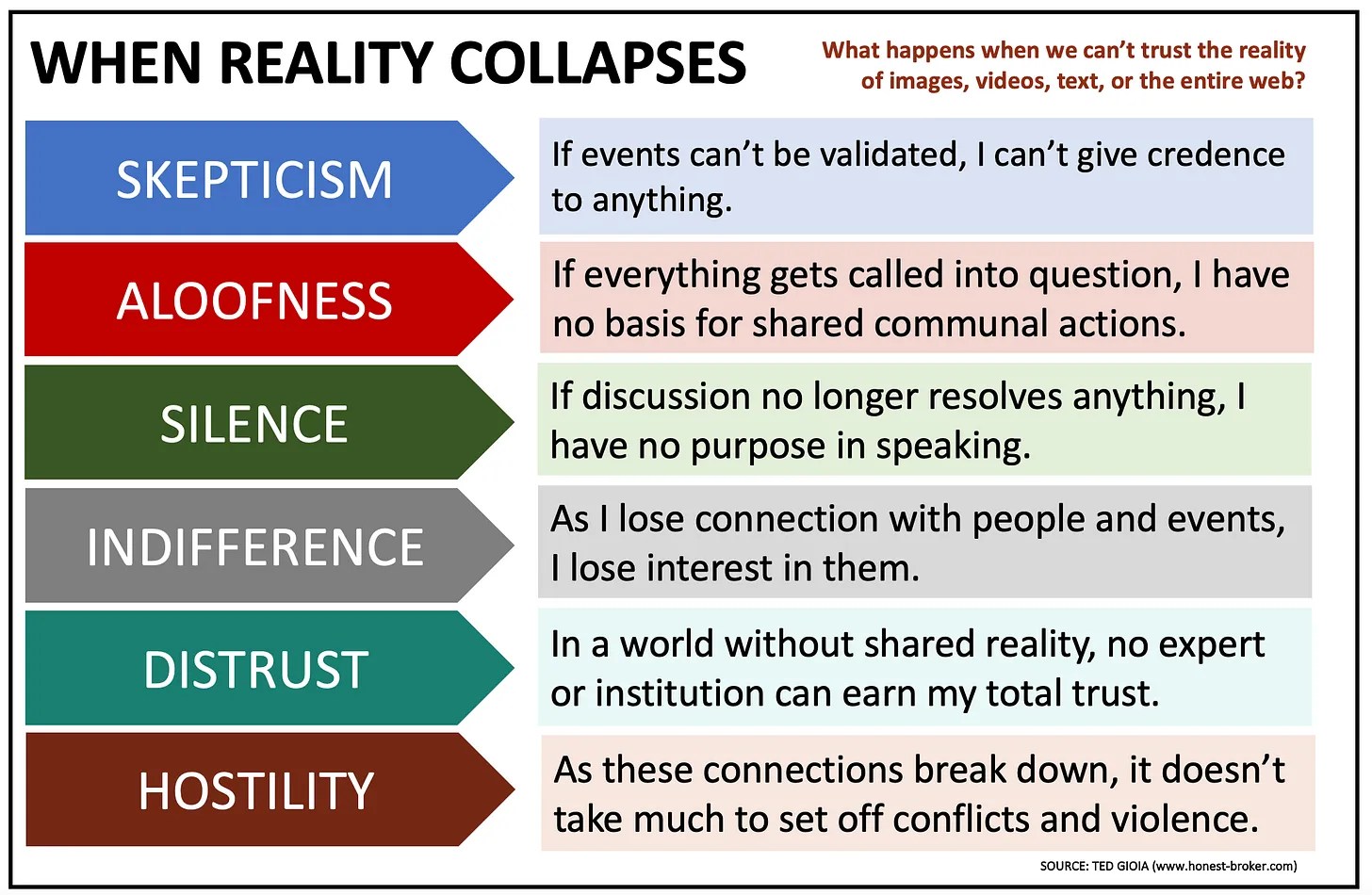


 Tipsy Teetotaler ن