Sunday, 11/9/25

No excuses

I find that when I think I am asking God to forgive me I am often in reality (unless I watch myself very carefully) asking Him to do something quite different. I am asking Him not to forgive me but to excuse me. But there is all the difference in the world between forgiving and excusing.

C.S. Lewis, The Weight of Glory.

I spent almost five decades in churches that didn’t do sacramental confession, and I confess that I have not “taken to it” as I have taken to other aspects of Orthodoxy.

But in reading early in my Orthodox walk about how to confess well sacramentally, I was struck by this: there should be no excuses in confession; you’re there to confess how you sinned, missed the mark, not to indict the person who provoked you or or distracted you.

It’s a mark of how right Lewis is in the above quote that this is sometimes very hard to do. We are provoked. We are distracted.

And yet we are responsible (and in my mind equally weighty: we are ourselves damaged by it), needing forgiveness, penance, and healing.

(In my experience of Orthodoxy, penance is generally an exercise of the spiritual muscles. Like maybe reading James 3 every day if one of your sins is a foul mouth—not that I’d know anything about that, mind you.)

Victimless sins?

In our modern culture, it is claimed that all things should be allowable as long as they don’t hurt anyone else. This is not the Orthodox approach, since it is impossible that our spiritual condition should not affect those around us. As the poet John Donne wrote, “No man is an island.” By virtue of the contact we have with others, the consequences of our words and actions, or even the energy that emanates from our soul, we bring either grace or harm to others, directly or indirectly. St. Seraphim of Sarov famously expresses this when he advises, “Acquire the Spirit of peace, and thousands around you will be saved.”

Michael Shanbour, Know the Faith.

Moreover, one should care about hurting oneself. See generally, Lewis, C.S., The Great Divorce.

Bad Religion

America has … become less traditionally Christian across the last half century … But certain kinds of religious faith are as influential as ever … [T]o the extent that there’s an ongoing crisis in American culture, the excesses of the faithful probably matter more than the sins of unbelievers.

For all its piety and fervor, today’s United States needs to be recognized for what it really is: not a Christian country, but a nation of heretics.

Ross Douthat, Bad Religion.

Prayer

No one may mock another’s form of prayer. Extempore prayers and set prayers both reach the Throne if there is any spark of desire in the one praying that they do so. God is not a literary critic or a speech teacher. He does not grade our prayers. But it is for us to realize that there is great help available for us in our prayers. Spontaneity is impossible sooner or later; there only remains for us to choose which set of phrases we will make our own. The prayers of the church lead us into regions that, left to our own resources, we might never have imagined. Also, in this connection, it is worthwhile remembering that prayer is as much a matter of our learning to pray what we ought to pray, as it is expressing what we feel at given moments. The prayer of the church gives us great help here.

Tom Howard, Evangelical is not Enough.

Mixed marriage

At a recent Turning Point USA event at the University of Mississippi, JD Vance remarked that he hoped his wife, Usha, would convert to Catholicism. The backlash was swift and savage. People criticized the vice president for being a bad husband and not respecting his wife’s choices and Hindu faith. Most of it was just noise. The backlash does, however, express an unfortunate reality. It is the terminus of American small-l liberalism: The ultimate truth is individual autonomy, and by publicly expressing a desire for his wife to convert, the vice president committed the cardinal sin in the religion of liberalism.

First, a simple directive: “Husbands, love your wives, even as Christ also loved the church, and delivered himself up for it” (Eph. 5:25). Given that to love is to will the good of the other, that God is the greatest good, and that religion is an aspect of the virtue of justice whereby we render unto God what is owed him, it follows that husbands are to will that their wives believe and practice the true religion. JD Vance ought to will that his wife convert. To do otherwise would be unloving.

I told my wife on more than one occasion that I hoped she would convert, and I even expressed that desire publicly. Willing the good of the other is a concept mostly lost on liberalized Americans. “You do you” is the motto of our day. But it is an uncharitable motto.

Jeremy M. Christiansen, On Converting Your Spouse


Religious ideas have the fate of melodies, which, once set afloat in the world, are taken up by all sorts of instruments, some woefully coarse, feeble, or out of tune, until people are in danger of crying out that the melody itself is detestable.

George Elliot, Janet’s Repentance, via Alan Jacobs

[N]one of the things that I care about most have ever proven susceptible to systematic exposition.

Alan Jacobs, Breaking Bread With the Dead

You can read most of my more impromptu stuff here and here (both of them cathartic venting, especially political) and here (the only social medium I frequent, because people there are quirky, pleasant and real and it has no-algorithms). All should work in your RSS aggregator, like Feedly or Reeder, should you want to make a habit of it.

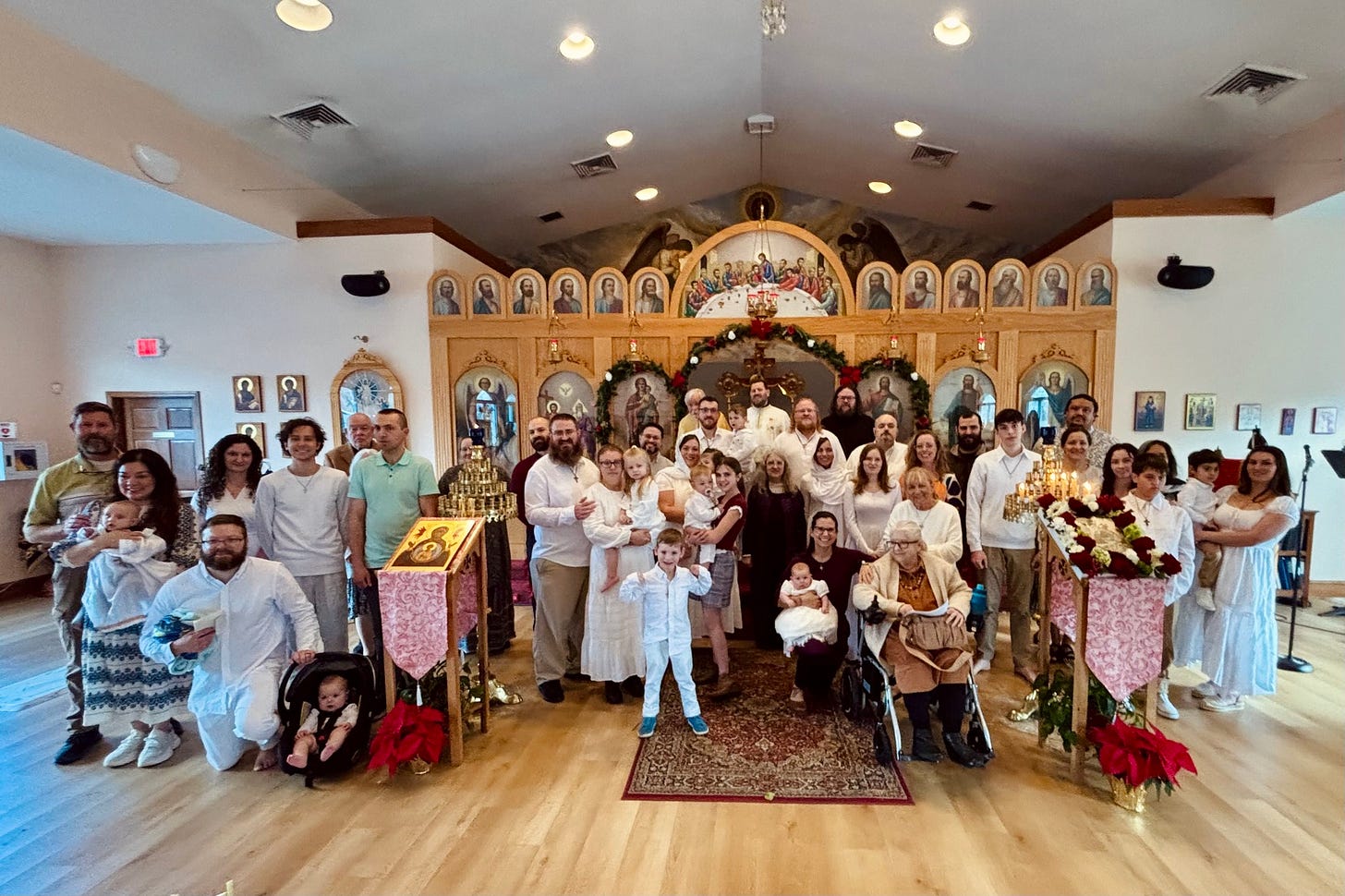
Sunday, November 2

The final blow

A campaign led by the kings of France and England to recapture it had failed. A second expedition, launched in 1202 in obedience to Innocent’s own summons, had been diverted to Constantinople. In 1204 it had stormed and sacked the city. A stronghold that for long centuries had withstood the envy of pagan warlords had fallen at last—to a Christian army. Its captors justified their storming of the city by charging that its inhabitants were rebels against the papacy: for the churches of Rome and Constantinople, ever since the age of Gregory VII, had been divided by an ever-widening schism. Innocent, however, appalled by the despoliation of Christendom’s bulwark, lamented the fall of Constantinople as a work of hell.

Tom Holland, Dominion.

The Great Schism between the papacy and Eastern Christian patriarchs is conventionally dated 1054, and not without reason. But those who dig deeper (or, like me, who read those who have dug deeper) tend to think that the 1054 schism was curable until this sacking of Constantinople by Crusaders.

A quintessential American heresy

[L]iving by no rule but the Bible turned out to be a defense against virtually the same list of enemies as living up to the standards of republicanism: “Many are republicans as to government, and are yet half republicans, being in matters of religion still bent to a Catechism, creed, covenant, or a superstitious priest. Venture to be as independent in things of religion as in those which respect the government in which you live.” Few Protestants expressed themselves as flamboyantly as [Elias] Smith in the early republic, but most followed where he led.

Mark A. Noll, America’s God.

I was reminded this week of a distinction that’s relevant here. I believe I learned it from the late Richard John Neuhaus, who I followed closely starting sometime in the 1980s. I won’t give a name (other than “quintessential American heresy”) to the view expressed so flamboyantly by Elias Smith, a view which I once effectively held, but I’m now in the camp of “ecclesial Christians”: those for whom faith in Christ and faith in His Church is one act of faith, not two.

I decidedly do not venture to be independent in things of religion, but very consciously submitted to the tradition of the Church particularly about Mary, the Mother of God-in-the-flesh, who was a stumbling-block to me as she has been to other Protestants (who in our generation call her “blessed” only sullenly, bound by scripture to do so).

The worst of the worst

Church management is a tricky and complicated business. I am glad that it is not my job. But I do know this much: The church is there for Gyp the Blood and Humpty Jackson, for Charlie Whitman and John Wilkes Booth and me. If there is no room for the worst of the worst in your church, then you do not have a church: You have a crappy book club.

Kevin D. Williamson (hyperlinks added).

Work and play

But there is the question. What, precisely, is “the business of life”? We can get onto an endless carousel if we try to decide which is the serious stuff of life, work or play. It is possible to take either view: either we toil away our eight hours so that we can get down to the real stuff—pleasure and love and recreation—or we enjoy periodic intervals of escape from the real stuff, the work.

Thomas Howard, Chance or the Dance? I would not have retired had I thought the real stuff was work; that’s just livelihood, not life.

What evangelism can obscure

With the clergy focused on the task of evangelism, their doctrines received so little scrutiny that laypeople took them for granted: the Bible was an infallible guide in every situation, and the church taught what was written in it. Coming into contact with people who read the Bible differently, southerners, unconscious of their own scrim of interpretation, concluded that those others were not Christians.

Frances Fitzgerald, The Evangelicals.

Fallen hero

Jérôme Lejeune was a hero of the National Right to Life Committee for his stance against aborting unborn children with Down syndrome.

He also was a thief—a stealer of glory that belonged to others.

It was apparently how the game was played back then. (Gift Link) That may not have changed much.

There’s probably a better moral to this little story than I can write: convention is no assurance of morality.

Upright life, sound doctrine

Over and over again he insisted that in electing an abbot upright life and soundness of doctrine were to be the prime considerations, not rank or family influence. ’I tell you in all sincerity,’ he said, ‘that as a choice of evils I would far rather have this whole place where I have built the monastery revert forever, should God so decide, to the wilderness it once was, rather than have my brother in the flesh, who has not entered upon the way of truth, succeed me as abbot. Take the greatest care, brothers, never to appoint a man as father over you because of his birth; and always appoint from among yourselves, never from outside the monastery.

Bede et al, Bede


Religious ideas have the fate of melodies, which, once set afloat in the world, are taken up by all sorts of instruments, some woefully coarse, feeble, or out of tune, until people are in danger of crying out that the melody itself is detestable.

George Elliot, Janet’s Repentance, via Alan Jacobs

[N]one of the things that I care about most have ever proven susceptible to systematic exposition.

Alan Jacobs, Breaking Bread With the Dead

You can read most of my more impromptu stuff here and here (both of them cathartic venting, especially political) and here (the only social medium I frequent, because people there are quirky, pleasant and real and it has no-algorithms). All should work in your RSS aggregator, like Feedly or Reeder, should you want to make a habit of it.
25 years

Early Sunday posting.

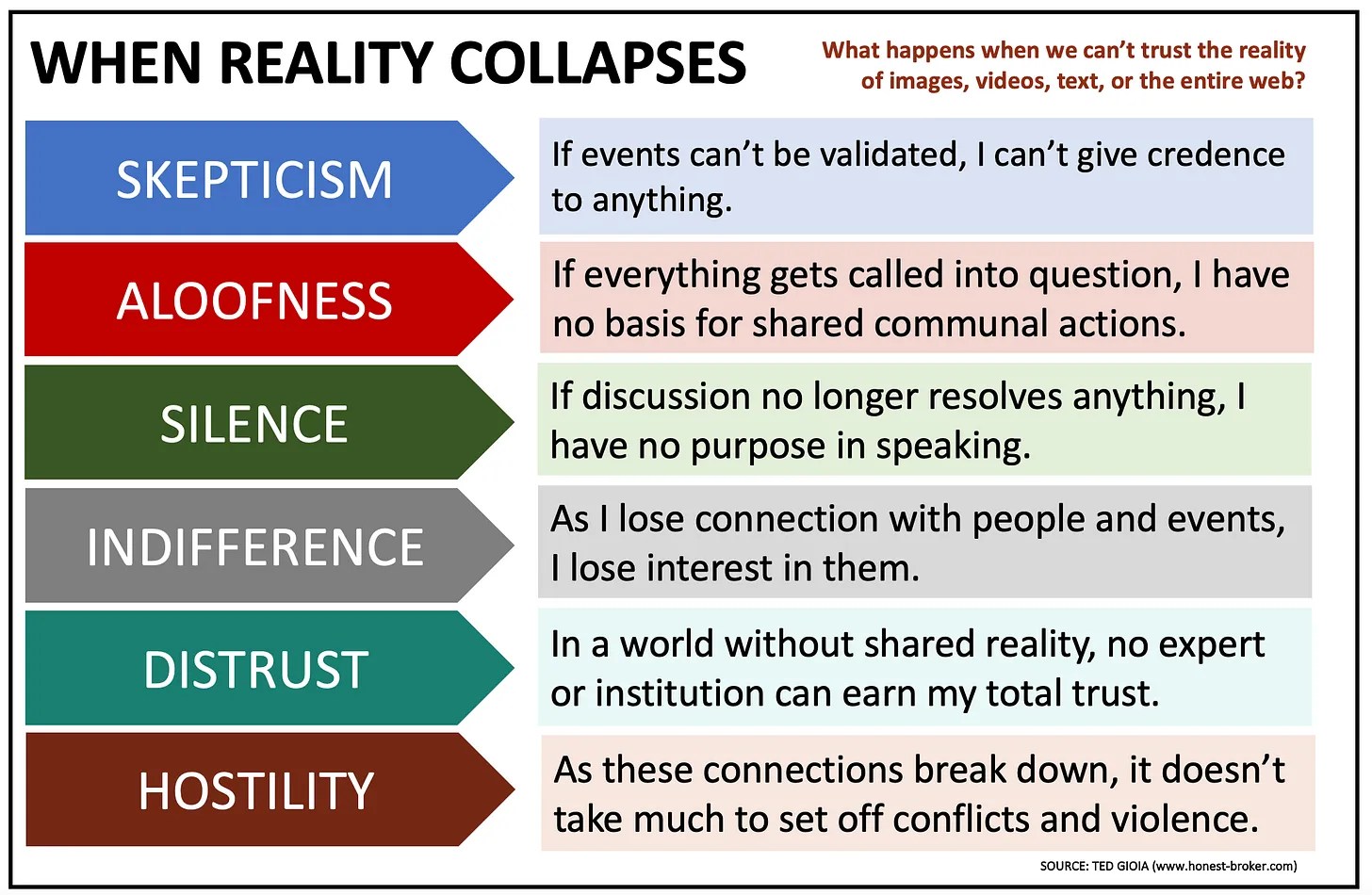
Sunday is the 25th ordination anniversary of our Priest, Fr. Gregory. He was getting close to retirement age already, but he has worked tirelessly well beyond normal retirement age, and we have seen huge numerical growth and, I think, growth in our sense of community. I’m not leaving out spiritual growth; I just don’t know if I’m a competent judge of that or have any right to try. By the criterion of “what you convert them with is what you convert them to,” we should be doing fine.

Thoughts on Pope Leo XIV

  • A man of significant ecclesiastical responsibility who gets to age sixty-nine without attracting attention to his thinking has made a deliberate choice.
  • Growing up in the Chicago suburbs, he saw what Catholic immigration to the United States could accomplish—and how the lack of deep adherence, interior conversion, and evangelization led it to unravel in only a few generations.

Fr. Raymond J. de Souza, Two Takes on Pope Leo

The Fissiparous Principle

A similar, but more sophisticated, complaint of monograph length came from John W. Nevin in 1849 when he rounded on what he called the sect system. According to Nevin, “This professed regard for the Bible” was what “distinguishes the sects in general.” But to Nevin the difficulty in that profession was as manifest as it was stupendous: “If the Bible be at once so clear and full as a formulary of Christian doctrine and practice, how does it come to pass that where men are left most free to use it in this way…they are flung asunder so perpetually…instead of being brought together?” This anomaly showed that the principle of “no creed but the Bible” was “absurd and impracticable”; it breathed “the spirit of hypocrisy and sham.”

Mark A. Noll, America’s God.

Union with God

But how could we ever relate to God or, even more challenging, truly unite with Him? Of all religions, only Orthodox theology emphasizes union with God—in a real and actual sense—as the goal and purpose of all human life. We rarely speak of “going to heaven,” as though it were a destination. We do not speak of experiencing a “beatific vision” of God, as though God could be viewed but remained at some distance from us. Rather, Orthodox Christianity speaks of theosis, the divinization of the human person. We expect, hope, and strive for actual union with the perfect, infinite, eternal, omnipresent, and changeless God. But we are flawed, limited, and come into existence for a brief time; we are confined to one place at one time, and we are constantly changing. So how is union with God possible? The Incarnation, the enfleshment of the Son of God, gave us the ability to truly connect to God and become united with Him, transformed and illumined by Him, not simply because He died for us but because of the way He lived among us.

Dr. Eugenia Scarvelis Constantinou, Thinking Orthodox.

This idea lingers

This dual idea of the depravity of infants and the perversity of their natural will led Puritans to the conclusion that the first and most urgent purpose of child rearing was what they called the “breaking of the will.” This was a determined effort to destroy a spirit of autonomy in a small child—a purpose which lay near the center of child rearing in Massachusetts. The idea of “will-breaking” was not invented in New England. It also appeared among Puritan clergy in the east of England, and among Calvinist writers from the Netherlands to Hungary.

David Hackett Fischer, Albion’s Seed

A surprising figure

Nearly half of the congregations that recently exited United Methodism have not affiliated with the new Global Methodist Church or any other denomination or network. They understandably feel burned by their previous denomination and see these outside connections as only a hindrance, sometimes expensive. But can they survive long term if suffering scandal or deep division among themselves? Absent denominational ties, what will keep them together long-term institutionally?  Perhaps the future of American Christianity is even more Protestant, with constant schisms and new creations, with most Christians not staying anywhere for very long. Congregations will survive only so long as they can command a customer base, like a grocery store. This arrangement has some merit.  Dull or dysfunctional churches quickly die, while more vital ones quickly take their place. Such a cycle seems unstable, with a somewhat low view of the institutional church. But at least it is dynamic.

Mark Tooley at Juicy Ecumenism


Religious ideas have the fate of melodies, which, once set afloat in the world, are taken up by all sorts of instruments, some woefully coarse, feeble, or out of tune, until people are in danger of crying out that the melody itself is detestable.

George Elliot, Janet’s Repentance, via Alan Jacobs

[N]one of the things that I care about most have ever proven susceptible to systematic exposition.

Alan Jacobs, Breaking Bread With the Dead

You can read most of my more impromptu stuff here and here (both of them cathartic venting, especially political) and here (the only social medium I frequent, because people there are quirky, pleasant and real and it has no-algorithms). All should work in your RSS aggregator, like Feedly or Reeder, should you want to make a habit of it.

Sunday, 10/19/25

The cultural formations of western Christianity

Christianity as we see it in eighteenth-century Britain or twenty-first-century America is not Christianity as it has always been, and the more fundamental changes may not be those that the received history of religion narrates. The cultural formations of western Christianity, growing as they do in good part from binary, Protestant-Catholic debates, can be thrown into stark relief, for instance, when studied in comparison to that much neglected third term in Christendom: the Eastern Orthodox churches from which Rome severed itself nearly half a millennium before the Reformation, charting a course for Western Christianity wed to rationalism and enamored of individual authority, whether papal or personal.

Lori Branch, Rituals of Spontaneity (italics added).

The italicized phrase warms my heart because almost every non-Orthodox writer in the West, including anti-Catholic polemicists, inverts it to Orthodox Churches severing themselves from Rome.

A well I keep returning to

It’s mind-bending in a good way to consider the possibility that Protestantism is effectively dead because the nondenominational megachurchy world is something, or some things, else:

Imagine a world without Protestantism.

I don’t mean a world without Christians who are neither Catholic nor Orthodox. I mean a world in which there are only two groups of Christians. The first group encompasses believers who belong to ancient fellowships led by bishops and ordained priests, who confess the Creed and their sins and celebrate the Eucharist in a traditional liturgy of word and sacrament. These believers hand on tradition, petition the saints, venerate icons, and baptize their babies. Call them “catholic.”

Call the other group “evangelicals.” They have no creed but the Bible. They have no bishops or priests; instead, they have ministers and elders, who are rarely ordained. They baptize not infants but adults, who can make a public declaration of faith. They reject the interposition of anyone or anything between the individual and Jesus, who is known immediately in the soul and clearly through the Scriptures.

Imagine a world in which every Christian is either catholic or evangelical, with nothing in between. It is a world without Protestantism—for the religion of the magisterial Reformers in the sixteenth century did not desire, commend, or practice either of these options. Theirs was a via media. They baptized babies, recited the Creed, ordained pastors to the service of word and sacrament, practiced baptism and communion as sacraments (not as symbols), and insisted on the validity of the early councils.

The world I invite you to imagine, then, is one in which this middle way—neither Roman nor Anabaptist, both traditional and reformed—has vanished. Is such a world possible? It is. In fact, we are living in it right now. Ours is a world without Protestantism.

Brad East, Goldilocks Protestantism, First Things.

Stumbled onto this …

As a 14-year-old I had embraced Jesus as my Savior but had confused the abundant Christian life with the great American dream: I was a Christian and would lose weight, get good grades, get voted captain of the hockey team, go to college, marry a wonderful man who made $250,000 a year, and we’d have 2.5 children. It was me-focused: What can God do for me? I almost thought I had done God a great big favor by accepting Jesus ….

Joni Eareckson Tada.

I recently got a digital subscription to Christianity Today, a magazine I’ve known all my life, in order to keep up a little with doings in the non-Orthodox Christian world. Eareckson Tada was a big deal in the Evangelical tradition decades ago and apparently has remained so, living a remarkably long life for a quadriplegic – perhaps because she has kept so busy with her talents.

Related: Frederika Matthewes-Green reported in one of her books the comment of a first-time visitor to an Orthodox Church: “Wow! That was soooo not about me!”

Duly Noted

A line is being crossed in Canterbury. I share a communication published by a priest who received it:

Almost inevitably, these “Forward in Faith” and other GAFCON Anglicans will be painted in the popular press as schismatic for not going along with a radical provocation. I hope, but faintly, that the popular press will report their claim (encountered elsewhere) that they are the Anglican Church.

I make no facile prediction that “history will vindicate them,” but I’d rather be among them than the innovators when, at the end of history, Christ comes from heaven to judge the living and the dead.

Not every wound is PTSD

Therapists themselves are noting that if every time a soldier confesses his soul wound from combat we then label him with PTSD, that we will find ourselves recommending psychological therapies and prescribing psychiatric medications when what is needed is something like a religious ritual of purification and forgiveness.

Timothy Patitsas, The Ethics of Beauty.

Note to Peter Thiel

In the Lateran, at a council held in 1513, a formal prohibition had been issued against preaching the imminence of Antichrist.

Tom Holland, Dominion

Evangelicals and Calvinists

A lot of the evangelical world leaves the dirty work to the Calvinists.

Derek Rishmawi, Calvinist.

Caveat: Political Application is Patent

On Sundays, I rarely post things with pointed political applications. For that matter, I rarely post political items with explicit Christian underpinnings on Mondays through Saturdays. Today marks an exception where I judged that these fit Sunday better than weekdays because my target readers are specifically Christians.

Salt & Light

Christians who vote for Republicans are called to be salt and light within the Republican Party. That means being a voice calling the Republican Party to obey the rule of law. Yours should be the loudest voice condemning Trump’s pardon for January 6 rioters and pushing against his challenge to the checks and balances that are supposed to constrain the executive . You should speak up in favor of the poor and powerless and against the culture of cruelty, spite, and vengefulness Trump cultivates. It corrodes our public square and demeans our shared citizenship even as it poses more specific dangers to those targeted by Trump’s weaponization of federal law enforcement. If you do not speak up, you are both credulous and culpable, complicit with the party’s sins—including those yet to come.

Paul D. Miller, A Confessing Church for America’s Weimar Moment

MAGA Christianity

In last Sunday’s “Dispatch Faith” Column, Paul D. Miller asks Is MAGA Christianity True Christianity?, and essentially answers “no”: MAGA Christianity often mixes Christian symbols and Scripture with partisan rhetoric and calls to fight enemies, producing superficially Christian religion that departs on key theological and ethical points.

Commenting on The Charle Kirk Moment, Nijay Gupta resurrected a saying I’m pretty sure I last heard decades ago:

What you win them with is what you win them to.

Gupta’s role in this podcast was that of a more progressive Christian, relatively skeptical of the work of Charlie Kirk, and this comment had in view Kirk’s interweaving of conservative politics and evangelism.

I repeat from prior posts: I knew very, very little about Kirk until he was killed. From what I’ve learned since, I suspect he’d have insisted that conservative politics is such a concomitant of Christian faith that it is meet and right to interweave them from the podium/pulpit. (He said repeatedly that one cannot be a Christian and vote for Democrats.)

That is a message I’ve heard (though almost always tacitly) most of my life, and have resisted for almost as long. Despite my impression that most conservative Christians in North America lean right, and acknowledging that I, too, do so (though the meaning of “right” grows ever fuzzier), I nevertheless endorse the shared thrust of Miller and of Gupta.

And that’s why I consciously avoid political talk at Church coffee hour. All are welcome, regardless of politics, though some politics will prove to be baggage that must eventually be shed, as I’ve had to shed some of my own baggage.


Religious ideas have the fate of melodies, which, once set afloat in the world, are taken up by all sorts of instruments, some woefully coarse, feeble, or out of tune, until people are in danger of crying out that the melody itself is detestable.

George Elliot, Janet’s Repentance, via Alan Jacobs

[N]one of the things that I care about most have ever proven susceptible to systematic exposition.

Alan Jacobs, Breaking Bread With the Dead

You can read most of my more impromptu stuff here and here (both of them cathartic venting, especially political) and here (the only social medium I frequent, because people there are quirky, pleasant and real and it has no-algorithms). All should work in your RSS aggregator, like Feedly or Reeder, should you want to make a habit of it.

No Kings Saturday, 10/18/25

No kings!

Binding precedent

Protesters have protested at an ICE facility a few miles west of Chicago for the past 19 years—with somewhat more intensity recently following the announcement of Operation Midway Blitz. A month after the announcement, the president federalized the Illinois National Guard. District court: Enjoined. Seventh Circuit: Just so. Political opposition is not rebellion, and a protest doesn’t become a rebellion merely due to a few isolated incidents of violence. Without that, none of the statutory predicates for federalizing the National Guard have been met.

Institute for Justice, Short Circuits for 10/17/25 (bold added). This is now the law in the 7th U.S. Circuit – Indiana, Illinois and Wisconsin.

Look for the Administration to try to provoke a rebellion it can crush. Everyone who’s paying attention knows Trump wants to invoke the Insurrection Act (as he stuffs his pockets and those of his family).

Wanted: a viable counternarrative

Trump’s actions … are part of one project: creating a savage war of all against all and then using the presidency to profit and gain power from it. Trumpism can also be seen as a multipronged effort to amputate the higher elements of the human spirit—learning, compassion, science, the pursuit of justice—and supplant those virtues with greed, retribution, ego, appetite. Trumpism is an attempt to make the world a playground for the rich and ruthless, so it seeks to dissolve the sinews of moral and legal restraint that make civilization decent.

Trumpism, like populism, is more than a set of policies—it’s a culture. Trump offers people a sense of belonging, an identity, status, self-respect, and a comprehensive political ethic. Populists are not trying to pass this or that law; they are altering the climate of the age. And Democrats think they can fight that by offering some tax credits?

To beat a social movement, you must build a counter social movement. And to do that, you need a different narrative about where we are and where we should be heading, a different set of values dictating what is admirable and what is disgraceful. If we fail to build such a movement, authoritarian strongmen around the globe will dominate indefinitely.

David Brooks.

You can’t beat something with nothing. I can’t come up with a political counternarrative to Trumpism. The Democrats can’t come up with a political counternarrative, either. Brooks couldn’t come up with a strong political counternarrative.

I can only hope and pray that people will look for their compelling (counter-)narrative to the Gospel of Jesus Christ. (And that meantime there will be some legal counternarratives to prevent irretrievable damage, as in the preceding item.)

Music Reviews

There may be nothing better than old music reviews to let you know that it’s okay to like what you like, critics be damned.

I like Debussy’s La Mer, and I don’t care what the stupid early reviews said:

On today’s date in 1905, Claude Debussy’s orchestral suite La Mer or The Sea was performed for the first time in Paris. Today this music is regarded as an impressionistic masterpiece, but early audiences — especially those in America — found it rough sailing.

“We clung like a drowning man to a few fragments of the tonal wreck,” wrote a 1907 Boston critic, and suggested that instead of The Sea Debussy should have titled his piece Sea-Sickness.

“The Sea is persistently ugly,” wrote The New York Times that same year. “Debussy fails to give any impression of the sea … There is more of a barnyard cackle in it than anything else.”

And in 1909, this on La Mer from The Chicago Tribune: “It is safe to say that few understood what they heard and few heard anything they understood … There are no themes … There is nothing in the way of even a brief motif that can be grasped securely enough by the ear and brain to serve as a guiding line through the tonal maze. There is no end of queer and unusual effects, no end of harmonic complications and progressions that sound so hideously ugly.”

Ah, the perils of “modern music” in the early 20th century!

Giving the Devil his due, impressionism had to be a real mind-blower for critics attuned to, say, the sonata-allegro form.

Comprehensive tradition

We’re often not very aware of the “tradition” in which we live. A student in a classroom would readily agree that the words of a teacher or professor were a “traditioning” of sorts. But they will fail to notice that how the room is arranged, how the students sit, what the students wear (or don’t wear), how the professor is addressed, how students address one another, what questions are considered appropriate and what are not, and a whole world of unspoken, unwritten expectations are utterly required in the process. The modern world often imagines that “online” education is equivalent to classroom education since the goal is merely the transmission of information. But the transmission of information includes the process of acquiring the information and everything that surrounds it. Those receiving the “tradition” online will have perhaps similar information to those receiving it in a classroom – but they will not receive the same information.

Fr. Stephen Freeman, The Tradition of Being Human

Stages of life

Two questions:

  1. Do I want to read/watch/listen to this?
  2. Should I read/watch/listen to this?

When I was younger the second question often dominated my decision-making. Now that I am officially ancient that question has virtually disappeared and the first one is usually the only one I ask. That’s been the single most notable change in my personality in these my declining years.

Alan Jacobs

Alan is a decade or more younger than me, yet I only very recently seem to have arrived at this point, especially regarding political matters.

Note that he’s talking about a change in personality. This isn’t a life rule. There are things that younger people should read/watch/listen to, in order to become well-formed human beings.

Two ways

[R]evival begins with the people proclaiming, by word and deed, “I have sinned.”

MAGA Christianity has a different message. It looks at American culture and declares, “You have sinned.”

David French

Noteworthy

In the aftermath of Kirk’s murder, we witnessed young people at vigils rather than at “mostly peaceful” demonstrations.

R.R. Reno in First Things


We are all gatekeepers now.

Peggy Noonan

Your enemies are not demonic, and they are not all-powerful and the right hasn’t always lost and the left hasn’t always won. But if you convince yourself of that, you give yourselves all sorts of permission to do a lot of stupid and terrible things under the rubric of “Do you know what time it is?”

Jonah Goldberg.

[A] critical mass of the American people … no longer want[s] to govern themselves, … are sick of this republic and no longer want to keep it if it means sharing power with those they despise.

Nick Catoggio

I don’t do any of the major social media, but I have two sub-domains of the domain you’re currently reading: (a) You can read most of my reflexive stuff, especially political here. (b) I also post some things on my favorite no-algorithm social medium.

Sunday, 10/12/25

Total apostasy?

… Mormons claim that “total” apostasy overcame the church following apostolic times, and that the Mormon Church (founded in 1830) is the “restored church.” …

A bullet-point in an anti-Mormon tweet after the attack on a Michigan Mormon meeting place. (My source identified the tweeter as “fundamentalist.”) The bullet-points built to the conclusion that Mormons (Latter-Day Saints) are not Christian.

Fine. But the Evangelical and Evangelical-adjacent world in which I spent many decades believes something very much like that Mormon “total apostasy” story. They may think it started in the 4th century and ended in the 16th instead of the 19th, but a lot of them (including former-me) functionally think it ended in the 19th, with the revivals of the “Second Great Awakening,” when the distinctive style of Evangelicalism emerged. (BTW: Try to define “Evangelical.”)

Here, I submit, is a more accurate summary of Church history:

There’s no need of a restored church because Christ’s One Holy Catholic and Apostolic Church never went away.

And I stumbled onto it …

Speaking of which, I had occasion this week to reread an eight year-old blog constituting, my only published spiritual biography (it was reprinted elsewhere one time). There are a few things I’ve written over the years that stick in my mind as worthy efforts, not throw-away lines or curations, and that post is one of them.

Some things bear repeating, and so I shall:

Having settled in for a few decades, what have I found uniquely true about the Orthodox Church?

It’s hard to put into words. That’s why Orthodox evangelism tends to consist of “come and see.”

Harder still for me personally, I need to find words for feelings and tendencies that an intellectualoid has trouble trusting — things that may be true but approach ineffability. I have a Dostoyevsky “Beauty Will Save the World” sticker on my office window, but long habit and self-image keep pulling me back toward “Spock-like logic (think of that tidy, air-tight 5-Point Calvinism) will save the world.”

But here goes. Turn on your feeler.

I’ve found, again, the love of God. Over and over and over and over we hear liturgical exclamations “for You are a gracious God and love mankind.” There’s no contrary stream of wrath that I’ve noted. The steadfast love of the Lord endures forever.
I’ve found true worship of God, which was something I longed for and agitated for in my prior Evangelicalism and Calvinism, as best as I then understood worship. For instance, I wanted no “hymns” in worship that were addressed to encouraging one another rather than praising God. Yet somehow bathos kept cropping up, and emotionally manipulative gospel songs kept elbowing out too many hymns. I really had no idea what real worship looked like, but my longing was wholesome. I am very much a member of homo adorans.
I have found sobriety and balance. The Christian Reformed Church was on the right track when it aspired to “Catechism Preaching,” an effort to tie sermons to the prescribed portion of the Heidelburg Catechism appointed for that Sunday, rather than letting pastors riff on whatever they read in Saturday’s newspaper or National Review. But Catechism Preaching was a tradition honored more in the breach than in the observance. I have found the Orthodox liturgical cycles (very complex and overlapping) to produce sobriety and balance in homilies, but more, in the entire service (hymnody, Epistle and Gospel readings, etc.)
I have found a hard path which, if I faithfully walk it, will make me more Christlike — a nice Protestant way of referring to becoming a “partaker of the divine nature.”
I have found a Church that really is a hospital for sinners instead of a club for self-styled saints. Some patients have more embarrassing ailments than others, but we’re all chronic cases; sacramental confession helps to drive that home. Not one of us is a hopeless case: the lives of the Saints help drive that home. Some check out of the hospital against medical advice, but we don’t do involuntary discharges of anyone who knows (s)he’s sick and wants to get well.

Another’s conversion

She elaborates the point with more than a little self-deprecation: “I’d backed myself into a corner. There wasn’t anyone else in the world who talked about ‘the Platonic ideal of the Good as an active agent with a special care for humankind’ without shortening that whole cumbersome phrase to simply God.”

In short, although she resisted the conclusion (or was it a solution?) with all her strength, she finally welcomed its inevitability. “I had just enough love in me to be able to be warmly surprised to find out the rules I loved, loved me back.”

… If one can know what she thinks by reading the Catechism, what’s left to surprise?

Answer: not her background convictions, but how she applies them to concrete questions, especially questions about public policy and the modern household ….

Brad East, quoting Leah Libresco Sargeant’s conversion from atheism to Roman Catholicism. The occasion, of course, is that she has written a new book, The Dignity of Dependence: A Feminist Manifesto.

Orthodoxy and Roman Catholicism are not in communion with each other since, in the simplified version, the Great Schism of 1054 (see the timeline above). But a lot of people coming out of Protestant traditions have felt that those were the only two viable Christian alternatives, and I have never found it in me to criticize those who made the wrong-but-plausible choice, like Leah did.

Fallen

Of course, we speak of human beings as “fallen.” However, in Orthodox teaching, this does not refer to our nature itself. Rather, it refers to the fact that we have been made subject to death – we are mortal. It is “death at work in us” that we describe as “sin.” But the origin of sin is not found in our nature. Our nature is inherently good. Understanding this makes a huge difference when we think about human relationships and the character of our common life.

If you take the view (which is common in certain corners of Western Christianity) that human beings have a “sin nature” – that we are, in fact, essentially bad – then how we view one another and the character of our common life takes on a different caste. In an Orthodox understanding, a Bible verse such as, “Spare the rod and spoil the child,” can mean little more than “children need discipline in their lives to help them”. Whereas in a world in which human nature is held to be a “sin nature,” then “sparing the rod,” would be seen as letting evil run amok. It would hold that our nature not only needs to be restrained but requires a vigorous regime of reward and punishment. It has not been that long since the notion of “beating the evil out of a child” was common.

When we speak of our nature as “good,” we are not declaring that human beings are born as saints. Rather, we are saying that our nature (“what we are”) tends towards the good, desires the good. We desire beauty. We desire well-being. We desire truth. Even when we engage in evil actions, they are most often grounded in a misperception of the good. Dictators do not come to power by asking people to be evil – they come to power by distorting the image of the good.

Fr. Stephen Freeman, The Nature of Being Human


Religious ideas have the fate of melodies, which, once set afloat in the world, are taken up by all sorts of instruments, some woefully coarse, feeble, or out of tune, until people are in danger of crying out that the melody itself is detestable.

George Elliot, Janet’s Repentance, via Alan Jacobs

[N]one of the things that I care about most have ever proven susceptible to systematic exposition.

Alan Jacobs, Breaking Bread With the Dead

You can read most of my more impromptu stuff here and here (both of them cathartic venting, especially political) and here (the only social medium I frequent, because people there are quirky, pleasant and real and it has no-algorithms). All should work in your RSS aggregator, like Feedly or Reeder, should you want to make a habit of it.

Friday, 10/10/25

Nonpartisan

Levelers

Emily Ruddy was traveling the country with her new husband, Mike, when news reached them of Charlie Kirk’s shooting, then death:

Back in the car with Mike, approaching the Florida border, I’m looking at pictures of Charlie Kirk on my phone. He is staggeringly tall, taller than I ever realized, with a celebratory fist in the air. Reading his Wikipedia page, which has now been changed to past tense, I am reminded of a story I first read in middle school: Kurt Vonnegut’s “Harrison Bergeron.” The story is set in the late twenty-first century, in a dystopian America where the authorities have taken it upon themselves to ensure no person is better than another, be it in athleticism, intelligence, or beauty. The strong citizens get weighed down with bags of bird shot. The attentive citizens are intermittently bombarded with hideous sounds through tiny radios in their ears. The most beautiful faces are concealed by hideous masks.

But it’s the title character, Harrison Bergeron—exceptionally tall, handsome, brilliant and outspoken—who is shackled most heavily. At the end of the story he breaks through the shackles, and as punishment he is shot down on live TV: a warning to whoever tries to pull a similar stunt. Or at least, it would be a warning, if the viewers’ memories weren’t instantly blasted away by the ear radio’s next awful sound.

Emily Ruddy, Battle Above the Clouds.

If you haven’t read Harrison Bergeron, a (very) short story, by all means do. It’s freely available, like, for instance, here.

After Christian faith dies

The biggest confusion among my own students used to be rudderless moral relativism.  Although there is still a lot of that, it seems to be on the decline.  Now the problem is the explicit embrace of evil.  The suggestion that one must never do what is intrinsically evil for the sake of a good result is a hard sell.  Many of students are strongly attracted to “consequentialism,” the view that whether an act is right or wrong is determined only by the result.  To say that the ends do not justify the means puzzles them.

The decline of faith has also produced changes in character.  Young people who were raised in Christian homes, but then abandoned Christianity, often used to retain vestiges of their moral upbringing, and accepted such ideas as courtesy, love of neighbor, and the sacredness of innocent human life.  Today, having grown up in faithless homes, many seem to think that courtesy is for fools, that no one with whom they disagree is their neighbor, and that they should hate those they consider wrong instead of praying for their repentance and restoration.  As for the sacredness of innocent human life – for them, that idea went out when they embraced abortion.

I don’t spend much time asking what is going to happen, but I do ask what God would like me to do in my own place.  He sees the whole shape of things.  I can’t, but like a faithful bone, I can try to turn nimbly in the joint where I’m placed.

J Budziszewski, How Can I Think About the Assassination?

Budziszewski’s description of the decline of faith, as early as the second generation (the first generation of lapsed Christians lives on the vapors of the empty tank), is a description of devolution toward the “nasty, short and brutish” of pre-Christian antiquity.

If you think I’m just making a casual partisan slur, take a look at either of these two books, the first lengthy, the second shorter and more focused.

Wordplay

Frank Bruni’s back with recent favorite sentences. (Do not read this with beverages or food in your mouth.):

  • Also in The New Yorker, Jessica Winter read the infamous Jeffrey Epstein birthday book so that you and I don’t have to: “Sometimes it’s like you’ve discovered a rich man’s contract with the devil, and next to his signature, he’s drawn a little penis cartoon.” (Matthew Ferraro, East Providence, R.I.)
  • And Kelefa Sanneh, reporting from a recent Bad Bunny concert, described an ecstatic fan who “danced so vigorously with a decorative plant that he seemed to be trying to pollinate it.” (Bob Marino, Paris)
  • In The Los Angeles Times, Christopher Goffard tried to make sense of a former Los Angeles County sheriff’s rambling: “As he sat down to face questions from the feds, his sentences traveled winding paths through vague precincts to fog-filled destinations.” (Robin April Dubner, Oakland, Calif.)
  • In The Guardian, Bryan Armen Graham commiserated with the polite subgroup of American fans at an annual Europe-versus-United States golf tournament, who were too often “drowned out by the performative tough guys in flag suits and plastic chains who treat the Ryder Cup like a tailgate with better lawn care.” (John LeBaron, Acton, Mass.)
  • In The Dispatch, Nick Catoggio regarded the marks that President Trump and Defense Secretary Pete Hegseth made to military leaders last week as “a case of two men who radiate neurosis about their own toughness lecturing a roomful of actual tough guys about how to be tough. It had the feel of Pop Warner players scolding a group of N.F.L. linebackers about the importance of hustle.” (Glen T. Oxton, Mamaroneck, N.Y., and John Sabine, Dallas)
  • And John McWhorter analyzed the president’s loopy language: “Even Trump’s most positive-sounding coinages are acts of a certain kind of verbal aggression. I sometimes stop to marvel that the House passed something with the actual official title the One Big, Beautiful Bill Act. That goofy bark of a name is a boisterous clap back against opposing views, an attempt to drown out inconvenient facts with braggadocio. It is a linguistic snap of the locker room towel.” (Matt Masiero, Richmond, Mass., and Sue Hudson, Simi Valley, Calif., among many others)

Anarchism

[T]he essential practices of anarchism — negotiation and collaboration among equals — are ones utterly neglected and desperately needed in a society in which the one and only strategy seems to be Get Management To Take My Side.

Alan Jacobs, Should Christians be Anarchists?

Partisan

Transparent pretext

Trump’s remarks on the night of Kirk’s murder redefined violent incitement to include harsh criticism of judges. (“My administration will find each and every one of those who contributed to this atrocity and to other political violence, including the organizations that fund it and support it, as well as those who go after our judges, law-enforcement officials, and everyone else who brings order to our country.”) Now [aide Stephen] Miller himself is going after judges.

To call this “hypocrisy” is to engage Miller’s reasoning at a level upon which it does not operate. The essence of post-liberalism is the rejection of the notion that some neutral standards of conduct apply to all parties. Miller, like Trump, appears to believe his side stands for what is right and good, and his opponents stand for what is evil. Any methods used by Trump are ipso facto justified, and any methods used against him illegitimate.

A couple of weeks ago, Miller claimed that a disturbed gunman shooting Charlie Kirk impelled the government to crack down on the left. Now he says a handful of activists protesting ICE impel the government to crack down on the left.

Violence is not the cause of Trump and Miller’s desire to use state power to crush their opposition. It is the pretext for which they transparently long.

Jonathan Chait, Stephen Miller is Going for Broke

Bad faith

You can and should worry about American leaders at any level viewing their opponents as the enemy within, whether it’s the president of the United States or a random [Democratic] candidate for state AG. But if you’re more vocal about the latter than the former, forgive me for thinking you’re more interested in contriving a “both sides” equivalency to minimize what the White House is up to than you are about addressing the problem of incitement.

Two things are remarkable about [continuing troop deployments in “blue cities”]. One, which almost goes without saying, is that it’s another case of the Trump administration aiming to normalize unprecedented authoritarian shows of force. But the other is underappreciated: It’s all being done in bad faith, as a provocation, and quite plainly. There’s barely a pretense anymore of a colorable emergency like a riot that might justify the president deploying troops. He’s doing it unbidden and enthusiastically, looking for excuses to intimidate Democrats by symbolically occupying their cities with troops yanked from duty [and civilian jobs] in other states.

Needless to say, this is why the Trump White House didn’t get the benefit of the doubt from Judge Immergut on the Portland deployment, or from Judge Waverly Crenshaw on whether Kilmar Abrego Garcia was vindictively prosecuted. It’s also why the case against James Comey will end up in the toilet sooner rather than later. Courts have traditionally given the president and the Justice Department wide discretion in commanding the military and choosing whom to prosecute, but that’s because presidents traditionally haven’t given courts good reason to think they’re acting in bad faith.

Nick Catoggio, American versus American.

I look forward to the day when judges cease giving a “presumption of regularity,” of good faith, to the actions and legal arguments of this Administration. They have forfeited it because so much of what they do plainly is done in bad faith.

On keeping an impossible promise

Anyone with brown skin and the wrong kind of tattoo is therefore now at risk of being carted off to torture by the US government, with absolutely no safeguards that they have gotten the right people. Or do you think that an administration that confuses billions with millions, and puts classified intelligence on a Signal app, is incapable of making an error?

Andrew Sullivan, Two Perfect Months (March 2025)

I will give Trump “credit” for trying to keep his deportation campaign promise. The problems is, it’s impossible even for competent, non-malicious government workers to keep it (it included luridly-high numbers) without wholesale errors and ubiquitous denials of due process (i.e., in context, the process by which we assure that a person truly is subject to deportation under the law).

Your tax dollars at work

Short Circuits is a punchy weekly summary of notable Federal Court of Appeals decision, like this summary of activities by an ICE goon:

ICE agent escorting passenger from Dallas to Miami takes upskirt pictures and videos of flight attendant. He’s convicted of interfering with her flight-crew duties, sentenced to two years’ probation. Agent: I didn’t know that she was aware of my “clandestine video voyeurism,” and that’s an element of the crime. Eleventh Circuit (unpublished): It is not.

Divine retribution in Dallas

The covert operations of the Kennedys haunted Lyndon Johnson all his life. He said over and over that Dallas was divine retribution for Diem. “We all got together and got a goddamn bunch of thugs and we went in and assassinated him,” he lamented. In his first year in office, coup after coup wracked Saigon, a shadowy insurgency started killing Americans in Vietnam, and his fear that the CIA was an instrument of political murder festered and grew.

Tim Weiner, Legacy of Ashes

Rulebreaker

There are certain unwritten rules in American life, and one of them is that before your face is featured on the nation’s currency you are first obliged to die. There is no constitutional provision that mandates this, nor any law written tightly enough to guarantee it. But, as a general matter, we have shied away from putting living figures on our notes and coins, on the grounds that it is monarchical behavior and that the United States is not a monarchy. Unsurprisingly, this salutary tradition is not of great interest to the Trump administration, which intends to put an image of Trump on both sides of a commemorative $1 coin that will be produced for the 250th anniversary of the Declaration of Independence. On one side, Trump will appear in profile. On the other, he will appear pumping his fist, with the words “Fight Fight Fight” lining the coin’s perimeter. Answering questions about the plan, Trump’s press secretary, Karoline Leavitt, said that she was unsure if Trump had seen it, but that she was “sure he’ll love it.” He will. But that’s not really the important point, is it?

National Review week in review email.

Here’s a coin suggestion:


We are all gatekeepers now.

Peggy Noonan

Your enemies are not demonic, and they are not all-powerful and the right hasn’t always lost and the left hasn’t always won. But if you convince yourself of that, you give yourselves all sorts of permission to do a lot of stupid and terrible things under the rubric of “Do you know what time it is?”

Jonah Goldberg.

[A] critical mass of the American people … no longer want[s] to govern themselves, … are sick of this republic and no longer want to keep it if it means sharing power with those they despise.

Nick Catoggio

I don’t do any of the major social media, but I have two sub-domains of the domain you’re currently reading: (a) You can read most of my reflexive stuff, especially political here. (b) I also post some things on my favorite no-algorithm social medium.

Sunday 10/5/25

Fullness

Orthodoxy holds that the fullness of the Faith was revealed to the Church at Pentecost, once and for all. The Greek Fathers utilized their education in the service of the Church to explain doctrine, not to find new truths, since the fullness of the truth was received at Pentecost.

Dr. Eugenia Scarvelis Constantinou, Thinking Orthodox

Secularism

Secularism was not a neutral concept. The very word came trailing incense clouds of meaning that were irrevocably and venerably Christian.

Tom Holland, Dominion

Ring-lust

When people justify their voting choice by its outcome, I always think of The Lord of the Rings. Tolkien emphasizes repeatedly that we cannot make decisions based on the hoped-for result. We can only control the means. If we validate our choice of voting for someone that may not be a good person in the hopes that he or she will use his power to our advantage, we succumb to the fallacy of Boromir, who assumed he too would use the Ring of Power for good. Power cannot be controlled; it enslaves you. To act freely is to acknowledge your limits, to see the journey as a long road that includes dozens of future elections, and to fight against the temptation for power.

Jessica Hooten Wilson, What ‘The Lord of the Rings’ Can Teach Us About U.S. Politics, Christianity and Power.

In the US, we decided, twice, that if we gave Sauron the ring, he’d use it for good. How’s that workin’ out for ya?

Conversion and cosmology

There is no point in converting people to Christ if they do not convert their vision of the world and of life, since Christ then becomes merely a symbol for all that we love and want already – without Him. This kind of Christianity is more terrifying than agnosticism or hedonism.

Fr. Alexander Schmemann. Again:

A modern secularist quite often accepts the idea of God. What, however, he emphatically negates is precisely the sacramentality of man and world.

Fr. Alexander Schmemann (different source).

Climbing the elite ladder

Here’s one way to think about it. An evangelical who climbs the elite ladder is more or less required, by the nature of the case, to shed vital elements of her evangelical identity. But a Catholic is not. And a Catholic is not for the same reason that, once upon a time, a liberal Protestant was not.

Brad East, Conversions, Protestantism, and a New Mainline. I would add that an Orthodox Christian need not shed identity either.

East’s post is target-rich with suggestions about questions that fascinate me.

Politically homeless

According to the Public Religion Research Institute’s annual census last year, upward of 80 percent of Republicans described themselves as Christian …

Ryan Burge. It might surprise you that I’m unimpressed and un-encouraged by that. I don’t even know what “Christian” means in common parlance any more if 80% of Republicans think of themselves as Christians.

Ain’t. No. Way.

… But the Democratic coalition is a very different spiritual universe. It is made up of a big mix of faiths — Christians of various kinds, Jews, Muslims — as well as somewhere between 30 percent and 40 percent of nones, or people who describe their faith as atheist, agnostic or nothing in particular.

Ryan Burge again. These figures are a surprise, but they may be correlated to the Democrat party positions that keep me politically homeless instead of joining the Dems.

Chicago archbishop Blase Cardinal Cupich, who has stirred some controversy recently, said one true thing that made my heart leap when it was misattributed to the new Pope by a commentator: that Christians (Cupich said “Catholics”) are now politically homeless in the US.

I have recognized my political homelessness for twenty years now.

On reading the Bible

Most North American Christians assume that they have a right, if not an obligation, to read the Bible. I challenge that assumption. No task is more important than for the Church to take the Bible out of the hands of individual Christians in North America. Let us no longer give the Bible to all children when they enter the third grade or whenever their assumed rise to Christian maturity is marked, such as eighth-grade commencements. Let us rather tell them and their parents that they are possessed by habits far too corrupt for them to be encouraged to read the Bible on their own ….

Stanley Hauerwas. Hauerwas wrote the book this quote comes from 32 years ago. It seems to me that those corrupt habits haven’t been reformed.

Get ready

You may have heard these famous lines from Cardinal Francis George, the late archbishop of Chicago …:

I expect to die in bed. My successor will die in prison. And his successor will die a martyr in the public square. His successor will pick up the shards of a ruined society and slowly help rebuild civilization, as the church has done so often in human history.

Kevin D. Williamson, The Totalitarian Tendency and the Confessional, reflecting on a new Oregon law requiring that Catholic priests report certain sexual crimes that might be communicated to them in the confessional.

Starving the beast

In our last episode, I wrote “I don’t think I frequent any websites that use algorithms to target my inferred vulnerabilities.” It may be worth noting that I also have unsubscribed from some blogs and Substacks that I felt were grinding out agitprop aimed at people like me.

Go thou and do likewise.


Religious ideas have the fate of melodies, which, once set afloat in the world, are taken up by all sorts of instruments, some woefully coarse, feeble, or out of tune, until people are in danger of crying out that the melody itself is detestable.

George Elliot, Janet’s Repentance, via Alan Jacobs

[N]one of the things that I care about most have ever proven susceptible to systematic exposition.

Alan Jacobs, Breaking Bread With the Dead

You can read most of my more impromptu stuff here and here (both of them cathartic venting, especially political) and here (the only social medium I frequent, because people there are quirky, pleasant and real and it has no-algorithms). All should work in your RSS aggregator, like Feedly or Reeder, should you want to make a habit of it.

Sunday, 9/28/25

The mind boggles

Recently, I heard a gifted pastor, a man who leads a large nondenominational church, say this:

“You may not want to hear your pastor say this, but some of the things Jesus says are not very helpful. Loving your enemies, for example. We don’t need to love our enemies. We need to love our friends and crush our enemies.”

I winced, but I could hear my younger self trying to shock an audience with a line like that. I figured the pastor would follow up with something like, “But if that is what our Lord says, we need to be figuring out how we are going to obey him.”

No. His following comments dug in deeper. He said in essence that the Lord’s teaching was unrealistic and damaging to the present cause.

It astounded me.

How can one claim to be defending Christianity by disagreeing with what Christ said?

Defending Christianity? (I believe that this must have been my source for this old digital clip though I’m no longer on Facebook to confirm that.)

Doug Wilson

Calvinist provocateur has been getting a lot of press lately and he doesn’t even have a new book out:

Doug Wilson is not a prophet. He is a gifted writer, a trenchant cultural analyst, and a deliberate provocateur. As one observer memorably put it, “Doug is a Christian shock jock, a cable news host, a Daily Wire program (and I like a lot of what Ben Shapiro says).” Wilson’s approach reflects a right-wing attractional model characteristic of partisan punditry and movements, where the foil of political opponents seldom fades from view. The result is a message that tickles ears, entrenches self-righteousness, and bolsters partisan pride rather than cultivating prophetic witness.

If Wilson positioned himself simply as a cultural commentator, the problems would persist, and whatever good he offers could be found elsewhere without the accompanying liabilities, but at least the genre would be clear. The difficulty is that he holds the office of pastor in a church and denomination unwilling to discipline him for his excesses, however outrageous they become, leaving his rhetorical showmanship to be mistaken for faithful ministry. Worse still, he claims biblical warrant for language that Scripture itself calls ungodly.

Prophets Lament, Wilson Lampoons

Jeremy Sexton. If you don’t know who Doug Wilson is, congratulations! I, unfortunately, did know and once thought highly of him. Today, I’m not so sure that his contribution to Christianity is a net plus.

Old Scratch knows the Good Book

Jesus, in Luke 4, was tempted by the devil after 40 days of fasting.

What I had never noticed before is the escalation of the temptations. The first two temptations are pretty crass and Jesus answers them with “it is written.” So on the third temptation, Old Scratch goes all spiritual on Jesus and supports the temptation with his own “it is written” — indeed, with two “it is writtens.”

(And then my mind raced off to contemn snake-handling Pentecostals.)

Politics taints everything

It might have been expected that, since the situation in which the Greek hierarchy found itself after the fall of Constantinople seemed to provide it with an almost providential opportunity for the reassertion of the original and essential nature of the Church, it would have vindicated through its own actions its claims to superiority over what it regarded as the perverse confusion of temporal and spiritual in the Roman Church; but in fact the Greek hierarchy was to become involved in the ‘concerns of state’, the ‘things of Caesar’, to a degree which threatened not merely to confuse the spiritual and temporal, but to eclipse the spiritual altogether. For Mahomet II, in granting privileges to the Greek episcopate in the person of the Oecumenical Patriarch Gennadios, the first such Patriarch after the fall of Constantinople, did so in accordance with the Islamic tradition that a ‘nation’ (millet) is determined by its religious status: he looked upon the Greek Christians as a ‘nation’ of which the Patriarch was the ‘national’, temporal head, and not, as he is according to Orthodox tradition, merely the bishop of one particular local sacramental centre. Hence it was that the Patriarch assumed what the Pope already possessed, something of the power that belongs to Caesar.

Philip Sherrard, The Greek East and the Latin West

Culture wars

Destitute

Most medieval Europeans probably understood better than do nearly all Westerners today that acquisitive affluence is not a prerequisite for human flourishing—even though they also knew, in times of famine, for example, that utter material destitution made flourishing nearly impossible.

Brad S. Gregory, The Unintended Reformation.

Is this the religious right today, or should I look elsewhere?

A week ago there was a marathon funeral or memorial service for Charlie Kirk. I didn’t know about it in advance, and after it was over I only saw (1) Erika Kirk’s speech and (2) maybe a few other snippets. My first impression was of a syncretistic mash-up of Christianity and Americanism.

My delayed impression, though, was of an orderly affair, without (many if any) calls for vengeance. If this is the “religious right” of 2025, I don’t think secularists or religious folks ouside it have much to fear.

Damon Linker largely agrees, though he wrote a critique of the religious right in 2006 titled The Theocons. He concedes he may have been too shrill in 2006, but also sees more reassuring “facts on the ground” in 2025. He still fears the Right, but no longer so much fears the “religious right.” What gives?

On February 29, 2016, just as the pundit class was beginning to realize that Trump just might manage to win the Republican nomination that year, New York Times columnist Ross Douthat tweeted the following: “A thought sent back in time to the theocracy panic of 2005: If you dislike the religious right, wait till you meet the post-religious right.”

That’s a quote from Linker, and one he uses a lot. There are the Stewart Rhodeses and Andrew Tates and too many others to name who are a both non-Christian and a greater threat than TPUSA.

But “If this is the “religious right” of 2025 …” isn’t a throw-away line. I’m not entirely convinced that it is. But it is, as they say (or used to say), a “datapoint.”

I’m not sure I’ve digested this yet

It is time to recognize the Non-Denom Church as its own cultural and institutional force. It is likely to endure into the future as its own branch of Christianity, with much of its Protestantism left behind.

LONG FORM: Does Traditional Protestantism Have a Future?


Religious ideas have the fate of melodies, which, once set afloat in the world, are taken up by all sorts of instruments, some woefully coarse, feeble, or out of tune, until people are in danger of crying out that the melody itself is detestable.

George Elliot, Janet’s Repentance, via Alan Jacobs

[N]one of the things that I care about most have ever proven susceptible to systematic exposition.

Alan Jacobs, Breaking Bread With the Dead

You can read most of my more impromptu stuff here and here (both of them cathartic venting, especially political) and here (the only social medium I frequent, because people there are quirky, pleasant and real). All should work in your RSS aggregator, like Feedly or Reeder, should you want to make a habit of it.

Saturday, 9/27/25

Addled religio-politics

David Brooks isn’t a practitioner of zingers or even aphorisms. He is a penetrating thinker and writer on a lot of our public life in the US:

What happens when people operate without any coherent theory of how religion should relate to politics?

First, people treat electoral politics as if it were a form of spiritual warfare. A battlefield mentality prevails between the forces of Jesus and the forces of Satan. Fear replaces the traditional Christian virtue, hope: We’re under attack, and we have to destroy our enemies! That’s the easiest way to mobilize people.

Second, the process of moral formation is perverted. Instead of discipling people in the Christian virtues of faith, hope and charity, people get discipled in the political passions — enmity, conquest and the urge to dominate.

Third, people develop an addiction to rapture. You’ve probably heard the sort of Christian worship music that preceded and punctuated Sunday’s ceremony. Traditional hymns from centuries gone by covered a range of experiences, but modern worship music tends to hit the same emotional chord over and over again: rapture and praise. Its job is to drive your arms heavenward or to knock you to your knees. It can be a delicious and transforming experience.

The problem is that politics is prosaic. Deliberation and negotiation work best in a mood of moderation and equipoise. If you want to practice politics in the mood best suited for the altar call, you’re going to practice politics in a way that sends prudence out the window.

Fourth, a destructive kind of syncretism prevails. Syncretism is an ancient religious problem. It occurs when believers try to merge different kinds of faith. These days, it’s faith in Jesus and the faith in MAGA all cocktailed together. Syncretism politicizes and degrades faith and totalizes politics.

Fifth, it kicks up a lot of hypocrisy. It’s nice to hear Carlson say he practices a religion of love, harmony and peace, but is that actually the way he lives his life?

Finally, it causes people to underestimate the power of sin. The civil rights movement had a well-crafted theory of the relationship between religion and politics. The movement’s theology taught its members that they were themselves sinful and that they had to put restraints on their political action in order to guard against the sins of hatred, self-righteousness and the love of power. Without any such theory, MAGA imposes no restraints, and sin roams free.

The critics of Christian nationalism sometimes argue that it is a political movement using the language and symbols of religion in order to win elections. But the events of the past week have proved that this is a genuinely religious movement and Charlie Kirk was a genuinely religious man. The problem is that unrestrained faith and unrestrained partisanship are an incredibly combustible mixture. I am one of those who fear that the powerful emotions kicked up by the martyrdom of Kirk will lead many Republicans to conclude that their opponents are irredeemably evil and that anything that causes them suffering is permissible. It’s possible for faithful people to wander a long way from the cross.

David Brooks, We Need to Think Straight About God and Politics (gift link because I’ve quoted so much). I bolded the paragraph about syncretism because that’s my own strong conviction about American MAGA politics. See, for instance, the Jonah Goldberg quote in the footer.

Ya gotta love markets

Wall Street investors are buying up claims to potential tariff refunds, betting that the Supreme Court will strike down President Donald Trump’s signature economic policy and require the government to disgorge tens of billions of dollars that companies have paid this year in import taxes. A handful of hedge funds and specialized investment firms are offering importers around 20 cents for every dollar they paid in Trump’s “reciprocal” tariffs and roughly 5 cents per dollar for levies on Canadian, Mexican or Chinese goods stemming from the president’s ire over fentanyl trafficking, according to Salvatore Stile, founder of Alba Wheels Up International, a New York-based customs broker. The antidrug tariff claims are worth less because they are seen as more likely to survive legal challenges and thus less likely to produce refunds. The deals offer immediate cash for importers that have been absorbing most of the cost of Trump’s tariffs. Investors, meanwhile, hope to profit by collecting the rest of the refund if the Supreme Court invalidates Trump’s tariffs. (Source: washingtonpost.com)

John Ellis. Ingenious, but you’ve got to have gigabucks already even to get into this game.

Against the Machine

I’ve read just about everything Paul Kingsnorth has written since I learned of his conversion to Orthodoxy. So I questioned my need to buy his new book, Against the Machine, released Tuesday.

Upon reading a few favorable comments by a trusted friend, I did buy it — for reading on my reading machine (Kindle). Such ironies are not lost on Kingsnorth.

I’m 24% into it and I do recommend it

Farewell to a friend, with an apologia

I lost a valued early subscriber to this blog Wednesday. He had his fill of my “Trump Derangement,” and also thought I was negative toward Charlie Kirk. I know I lost him not because I pay attention to who reads the blog, but because he offered a comment asking that I unsubscribe him. (Neither of us knew how to do that, but I figured it out. I didn’t post his comment because it read more like a personal letter.)

About Charlie Kirk, my subscriber, a skilled wordsmith, nevertheless misread what I wrote, attributing my exceedingly mild criticism of Kirk to Kirk’s support of Trump. Let me say to all you what I said to him:

I regret leaving the impression of a more unfavorable view of Charlie Kirk than I feel. I’ve read a lot about him in the past two weeks because I knew so little about him before September 10. I came to see him as a young man who made fewer mistakes than I did at his age and was maturing before he was cut down. I barely thought about him supporting Trump.

And I’ll add, as justification for criticism that too many conservatives seemed amnesiac about the blemishes on Kirk’s record, eager to declare him a martyr-saint. Treating me as a member of a presumed tribe that must speak thus-and-so is a good way to get my back up.

I’ll add further add: I’m praying for the repose of Charlie’s soul as (and for as long as) I pray for most friends who have died (a few I pray for with no end anticipated). But I am decidedly not asking Charlie to intercede with God for my salvation because I don’t buy the insta-beatification.

If pouring cold water on excessive praise equals condemnation, then I’d plead guilty — but it doesn’t.

As for my Trump Derangement, I’ll quote Jonah Goldberg:

[T]he fact is that the GOP controls the White House and Congress and Trump controls his party in ways no president in living memory has. Moreover, he’s coloring outside the lines. He’s testing the system. He’s redefining conservatism in real time. He does everything he can to be the center of attention constantly. In short, he’s making news. He’s driving events. When people yell at me for writing too much about Trump, what many of them—not all—really mean is “Why do you have to criticize him so much?” Part of this response stems from the idea that conservative commentators are supposed to be partisan Republican commentators. But in ways that have never been truer in my lifetime, Republican and conservative are not synonymous terms.

It’s true, though: I don’t have to criticize him. But I do have to tell the truth as I see it. And I’m sorry to tell you this, but believing what I believe, telling the truth about Trump and criticizing him are pretty close to the same thing.

But nothing I write is likely to dissuade a Trump supporter, just as I have been unmoved by all the “but-look-at-his-policies” rationalizations over the past 8 years. The reader I lost probably isn’t the only one to find it all rather tedious. I should know that by now.

I even understand why people voted for Trump in preference to the Democrat candidates of the last three cycles (I voted for a third party each time in a state that was a polling lock for Trump).

What I don’t understand is those Christians who hold Trump up as a great President instead of “a terrible man, but a better choice than Clinton, Biden or Harris.” Especially when they tell me that I should believe that, too.

That’s my story and I’m sticking to it, while intending to waste fewer obsessive words about it — because I, unlike Jonah Goldberg, don’t charge a subscription that obliges me to endure The Boredom of Writing in the Trump Era.


We are all gatekeepers now.

Peggy Noonan

Your enemies are not demonic, and they are not all-powerful and the right hasn’t always lost and the left hasn’t always won. But if you convince yourself of that, you give yourselves all sorts of permission to do a lot of stupid and terrible things under the rubric of “Do you know what time it is?”

Jonah Goldberg.

[A] critical mass of the American people … no longer want[s] to govern themselves, … are sick of this republic and no longer want to keep it if it means sharing power with those they despise.

Nick Catoggio

I don’t do any of the major social media, but I have two sub-domains of the domain you’re currently reading: (a) You can read most of my reflexive stuff, especially political here. (b) I also post some things on my favorite social medium.