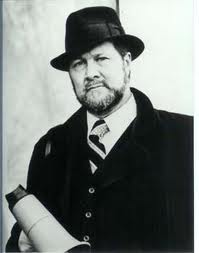
Health, Education — and Welfare?

If you want to give your mind a workout today, pour a cup of coffee and read Patrick Deneen’s Health, Education—and Welfare?

His launching point is that

the twin crises of health care and higher education are extraordinary in their similarities. Both are regarded as necessary goods for human flourishing whose costs are spiraling out of control. Both rely on a professional class that is becoming more specialized, losing the generalist who once cared for the “whole person.” Both have seen expanding intervention by the central government which has sought to provide access to the lower and middle classes. Both are believed by many conservatives to be properly reformed by means of market-based solutions. Both are the subject of intense contemporary political debate.

And both were once almost exclusively the province of the Church, and, indeed, can trace their institutional origins—hospitals and universities—as part of the Church’s charitable ministry.

The “intense political debate” falls into fairly predictable patterns, with one side arguing for free market solutions and the other arguing for regulation and price control/subsidy combinations to assure equal access. Deneen questions both effectively, though his questioning of The Right seems more devastating to me (maybe because I’ve tended to invest in that side). Summary introduction:

[T]here is something fundamentally amiss with making provision of health and higher education contingent on market models and profit calculus, as both seem to be goods that are not subject to the same kind of calculus as automobiles and bubble gum. The very idea that doctors and teachers are or ought to act out of the motivations of self-interest, and provide services to their “consumers,” seems fundamentally contradictory to the kind of work and social role performed by each. The decline of the “generalist” in each sphere is indicative of a deeper crisis of the willingness to act on behalf of a broader conception of the good intrinsic to each profession and on behalf of the person being served, in favor of the specialization encouraged by modern canons of efficiency, productivity, profit, and rationalization.

Summary introduction to his critique of The Left view:

At the same time, the State is rightly suspected of being unable to fundamentally improve or even maintain the quality of either sphere. It is doubtless the case that it can assure access by the heavy hand of threats, but many rightly worry that, as a consequence, the quality of care and education will deteriorate as a result. The State takes on the ersatz role of “generalist,” seemingly concerned for the good of the whole. It can only pursue that good by seeking to control pricing and access while influencing the ways “care” is provided, but it fails necessarily in caring for the vision of the whole that the actors of the professions are no longer willing or able to perform.

Segue:

The debate as currently constituted represents a pincer movement aimed ultimately at the re-definition of each area—as we have seen in so many areas of contemporary life. While superficially opposites, proponents of each position in fact share a fundamental hostility to the original presuppositions that had informed the foundation of both institutions—the corporal works of charity central to the Church’s earthly mission.

I wish I could say “Yeah, that’s what I’ve been thinking; Deneen just had the time to think it through and to say it better.” But that would be a big ole lie. I wasn’t thinking in these terms at all. They go to my head and make me kind of, well, Tipsy.

I don’t know where to stop quoting. In my own re-reading, I didn’t know where to stop highlighting. Deneen could have the makings of a serious book on his hands as he fleshes out this dense piece. That one would surely go on my wish list.

* * * * *

“The remarks made in this essay do not represent scholarly research. They are intended as topical stimulations for conversation among intelligent and informed people.” (Gerhart Niemeyer)


Some succinct standing advice on recurring themes.

Nativity of the Theotokos, September 8, 2013

1

We commemorate today the Nativity of Our All-holy, immaculate, most blessed and glorified Lady, the Theotokos and Ever-Virgin Mary, daughter of the righteous Joachim and Anna.

The Nativity of the Theotokos is one of the Great Feasts of the Orthodox Church, celebrated onSeptember 8 ….

The Holy Virgin and Theotokos Mary was born to elderly and previously barren parents by the names of Joachim and Anna, in answer to their prayers. Orthodox Christians do not hold to the Roman Catholicdoctrine of the Immaculate Conception of Mary, in which it is supposed that Mary was preserved from the ancestral sin that befalls us all as descendants of Adam and Eve, in anticipation of her giving birth to the sinless Christ. The Orthodox believe that Mary indeed received the ancestral sin, having been conceived in the normal way of humanity, and thus needed salvation like all mankind. Orthodox thought does vary on whether Mary actually ever sinned, though there is general agreement that she was cleansed from sin at the Annunciation.

(Orthodoxwiki) If you wonder why we commemorate such a thing and give Mary such an over-the-top title – and there are many in the world today, even among those calling themselves Christian, who do wonder, and even are scandalized – consider that she was prepared by God for her role, that she consented to becoming pregnant outside wedlock, and that without her consent – dixit autem Maria ecce ancilla Domini fiat mihi secundum verbum tuum, Our Lord God and Savior Jesus Christ would not have taken human flesh from her, and we would not be saved. (Yeah, I suppose there could be a “Plan B” but there didn’t need to be.)

And that doesn’t even touch on little things like her gestating God for 9 months, her womb containing the uncontainable one (“your womb he made more spacious than the heavens,” we sing), the creature giving birth to her creator.

Truth is, I wonder and am scandalized at those who refuse to venerate her, and who mutter “okay, dammit, she’s blessed,” thus performing what they think they biblically must, but with an attitude like an adolescent mad at being forced to apologize to another kid.

2

Christians are indistinguishable from other men either by nationality, language or customs. They do not inhabit separate cities of their own, or speak a strange dialect, or follow some outlandish way of life. Their teaching is not based upon reveries inspired by the curiosity of men. Unlike some other people, they champion no purely human doctrine. With regard to dress, food and manner of life in general, they follow the customs of whatever city they happen to be living in, whether it is Greek or foreign.

And yet there is something extraordinary about their lives. They live in their own countries as though they were only passing through. They play their full role as citizens, but labor under all the disabilities of aliens. Any country can be their homeland, but for them their homeland, wherever it may be, is a foreign country. Like others, they marry and have children, but they do not expose them. They share their meals, but not their wives.

They live in the flesh, but they are not governed by the desires of the flesh. They pass their days upon earth, but they are citizens of heaven. Obedient to the laws, they yet live on a level that transcends the law. Christians love all men, but all men persecute them. Condemned because they are not understood, they are put to death, but raised to life again. They live in poverty, but enrich many; they are totally destitute, but possess an abundance of everything. They suffer dishonor, but that is their glory. They are defamed, but vindicated. A blessing is their answer to abuse, deference their response to insult. For the good they do they receive the punishment of malefactors, but even then they, rejoice, as though receiving the gift of life. They are attacked by the Jews as aliens, they are persecuted by the Greeks, yet no one can explain the reason for this hatred.

(Epistle to Diognetus) I suppose the Krustian response to this quote, from somewhere between AD 130 and the end of the century, would be a triumphalist “We’ve come a long way, baby!” But have we? Really?

They live in their own countries as though they were only passing through. They play their full role as citizens, but labor under all the disabilities of aliens. Any country can be their homeland, but for them their homeland, wherever it may be, is a foreign country.

How are we doing on that “only passing through” thingy? It seems to me that a lot of Christians are very much at home in the America of, say, 25 years ago – any 25 years ago measured from now.

Our Christian Nation

(Epistle to the world from pickup truck window)

They live in the flesh, but they are not governed by the desires of the flesh.

When was the last time you fasted – skipped or deeply scrimped even one meal – to devote yourself to nourishment of the spirit?

But the days will come, when the bridegroom shall be taken away from them, and then shall they fast in those days.

(Luke 5:35) Are you addicted to any smutty TV shows?

And how’s your brotherly love doing?

Christians love all men, but all men persecute them … A blessing is their answer to abuse, deference their response to insult. For the good they do they receive the punishment of malefactors, but even then they, rejoice, as though receiving the gift of life.

When were you last persecuted? How loving was your response? When they come to take you away to the gallows (assuming you don’t deny Christ in order to live) will you welcome them and feed them a nice warm meal?

Mathetes wrote epistle to Diognetus when Christian numbers were probably increasing about 40% per decade, and Christendom was emerging from both their numbers and their influence.

We – cozy, warm, well fed, and feeling at home in America – are seeing the calamitous and undeniable collapse of Christendom, from absolutely pervasive dissembling and outright lies from our elected leaders, to a country intent on using terrorism as the pretext for building a police state, to a certainly Supreme Court Justice now thrice anathematizing traditional Christians as irrational haters.

And why shouldn’t it collapse? What credibility does it have left now that we’re lived it so indifferently?

There’s a point to my rant.

I’ve been to a number of Orthodox Evangelism conferences where people sought the magic formula for evangelizing our little American corner of the world. Maybe resuming the countercultural lifestyle Mathetes described to Diognetus would restore the good name of our Lord in the nostrils of out countrymen, where we’ve made Him a stench. And if not, at least it prepares us for the night that’s fast descending.

Whoever marries the spirit of this age will find himself a widower in the next.

(Dean William R. Inge)

* * * * *

“The remarks made in this essay do not represent scholarly research. They are intended as topical stimulations for conversation among intelligent and informed people.” (Gerhart Niemeyer)

Some succinct standing advice on recurring themes.

Thumb-in-the-Eye vs. High Trump

Planned Parenthood of Indiana and Kentucky (a/k/a PPINK) has predictably filed a lawsuit against a new Indiana abortion clinic regulation, set to take effect in January. You could see this one coming a mile away.

Ostensibly about a statewide law, the lawsuit really is about whether PPINK’s Lafayette facility will continue killing babies. You see, Lafayette only gets a live abortionist to make dead babies one day per week, and he, she or it does not do surgical abortions even then. The other four or five days per week, PPINK accommodates its customers by dispensing chemical abortifacients by “telemedicine,” calling up Dr. Skype for a pro-forma imprimatur on the dastardly deed. Servicing the felt needs of the Sexual Revolution is what PPINK and other PP affiliates are all about.

And, just to prove I’m a fair-minded guy, opposing Planned Parenthood by any nonviolent means necessary increasingly is what Indiana Right to Life is all about. God may have called Christians to faithfulness, not to success, but Indiana Right to Life intends to succeed, by God.

Thus we were treated, during legislative debates on the law, to earnest expressions of deep concern for the health and safety of PPINK’s soon-to-be-ex gravidas. (I’m not saying that pro-lifers wish harm to abortion-minded women, but the safety of abortion for women is not the raison d’être of right-to-life groups. You can look it up.) The Right-to-Life expression of concerns for women’s health and safety was to requires PPINK Lafayette (and the other zero Indiana clinics) providing non-surgical abortions to have separate procedure, recovery and scrub rooms like surgical centers starting January 1 (Chicago Tribune) although women won’t be at the clinic when complications occur.

The statute now challenged proves that Indiana Right to Life  can successfully stick a thumb in the eye of Planned Parenthood. How Christlike!

The lawsuit, in due course, will prove that Federal Courts trump the Indiana Legislature.

If you put feticide on one side of the scale and disingenuousness on the other side, feticide is by most accounts far graver. But without trivializing the arguments in favor of doing little evils in order to frustrate greater evils (a formulation that I’m sure some of the proponents of little evils would reject, but better than which I cannot now do), and despite having undergone the bloodless lobotomy of law school, I just can’t take some positions, and may God have mercy on me if that’s the sin of scrupulosity.

On a lighter note, I’d like to think that it’s a bit of progress when the face of Planned Parenthood is

Betty Cockrum
Betty Cockrum

instead of

Faye Wattleton
Faye Wattleton

(“like a gold ring in a pig’s snout is a beautiful woman without good sense“) and the face of Pro-life is

Michelle Malkin
Michelle Malkin

instead of

Joe Scheidler
Joe Scheidler.

But the fight isn’t over, and I expect lots of twists and turns down the pike.

* * * * *

“The remarks made in this essay do not represent scholarly research. They are intended as topical stimulations for conversation among intelligent and informed people.” (Gerhart Niemeyer)

Some succinct standing advice on recurring themes.