The War Party

One of the reasons I’m burned out on the two major parties is that, to a disgusting extent, they are one party, The War Party. That party’s going to be the death of this nation, as giddy, thoughtless, hubristic wars make us odious in the eyes of the world and eventually bankrupt us.

This is not conservatism. This is not Christian. This sure as hell is not “Christian conservatism.” No amount of drum-beating about Radical Islamic Terrorist Hoards can make it so.

The best conservative response to terrorism, it seems to me, is what I first heard from Pat Buchanan: If there’s no solution, there’s no problem.
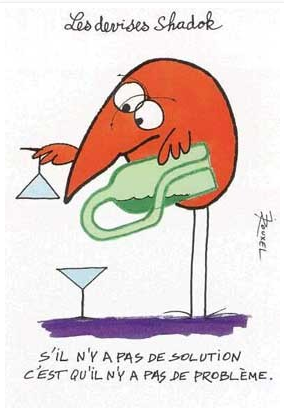
Terrorism is an evil, not a problem. We will not eradicate it (Hatfield probably said something like Bush’s second inaugural before he set out to end McCoy terrorism – or was it McCoy ending Hatfield terrorism?), and I personally – call me silly – don’t didn’t want to give up the Republic trying to eradicate it.

And while my individual position may shade into “isolationism” (due to personality quirks and a history of conscientious objection and borderline pacifism), the historic Christian conservative mainstream position is not isolationist.

That’s all I need to say to introduce and commend to you a great current piece by Winston Elliott III at The Imaginative Conservative. The author is appreciably more hawkish than I am, despite his having a son in the Army, but far less adventurist, interventionist and lunatic than either Dubya or Obama or anyone who’s taken seriously for President next year (Ron Paul, the favorite of active military people, not being taken seriously).

Excerpts:

Every conservative concerned about American foreign policy should read Foreign Policy for Conservatives on this site. This brilliant description of a conservative foreign policy is excerpted from Russell Kirk’s book The Political Principles of Robert A. Taft …

Those who wish to use the American military to effect regime change in foreign lands are sensitive to terms like “war party.” They say this is an exaggeration of their position. Poppycock. Let’s go ahead and add “interventionist” and “lover of foreign adventure” for good measure. They do not like it because it accurately describes their approach to using the military might of the American Republic. They are open to spending American blood and treasure whenever they feel that people in a foreign country are “oppressed” or their leader is a “tyrant” or “dictator.”…Before they start calling me an “isolationist” again let me state my position clearly (as I have before on this site). I don’t believe in “isolationism.” However, I do believe that prudence demands we count the costs of our actions, especially so that we learn from the past and may make better decisions in the future. Certainly 6,000 U.S. dead, 33,000 wounded, and $1.3 trillion is a very high cost indeed. 
Is it not legitimate to ask was it worth it?…Russell Kirk and Robert Nisbet, and other notable conservatives, have expressed great concern that centralization and militarization have been the greatest threats to preservation of the principles of the American Republic. They were not isolationists. They were true patriots who wished to guard against taking actions to destroy the enemy that may simultaneously lead to undermining the ordered liberty we claim to fight to preserve.I am for taking military action against those that clear evidence indicates threaten the safety of our Republic and its citizens. But, does this necessitate a permanent military presence in Iraq and Afghanistan? How about Germany, South Korea and Japan? Is there no end to this? If not, I fear that we must (as Brad Birzer has suggested on this site) admit that the Republic is lost and that we fight to defend a democratic empire … 

My policy … is simple: I say kill the enemy and come home. Don’t move into his house and call it defense….

I will say this again. When the real interests of Americans are threatened then to use military force is permitted. Kill those who plan to kill us. Destroy their bases. When necessary, go back and do it again. That is prudent application of military force against the enemy. It is not pacifism or isolationism. 

Don’t occupy foreign nations for decades, longer than WWI and WWII combined. This is foolishness. And it is not conservative.

All I ask for, beg for, is a prudent use of our military. Never one drop of blood for an American empire. Kill our enemies, destroy their bases and bring our boys home. I believe it is conservative to choose protecting American lives over a goal of changing the culture and politics of foreign nations.

Foreign Policy for Conservatives is itself a collection of excerpts, but I’ll be so bold as to pull one of them:

The statesman not concerned primarily with the national interest is tossed about by every wind of doctrine; he pursues with imprudent passion vague ideological objectives, and soon finds himself mired in diplomatic and military quicksands….

Finally, one more personal observation. I alluded to my conscientious objection which, if you know me, you’ll know was Vietnam era, shortly before the abolition of the loathed military draft. But I fear that the abolition of the draft, replaced by a “volunteer army,” has deprived our ruling class from having any flesh, blood or skin in the game of military adventurism. How many of our bellicose GOP hopefuls have a child in uniform? How many served themselves? Do you think there’s a snowball’s chance in hell that the Obama girls will go into the Army from Sidwell Friends School, rather than to University of Chicago, Stanford or one of the Ivy League schools?

No, I’m afraid that to our rulers, the flesh and blood of soldiers is just a “human resource,” to be squandered as freely as monetary resources.

We now return to lamestream programming. Look! Kim Kardashian! Chaz Bono! American Idol! Shiny! (HT Mark Shea)

* * * * *

View this in a browser instead of an RSS feeder to see Tweets at upper right, or subscribe on Twitter.

Standing advice on enduring themes.

Christopher Hitchens

Everyone seems to be lamenting the death of Christopher Hitchens. Some excerpts.

Mark Shea:

I will add this (since [Douglas] Wilson’s Calvinism forbid him from praying for the dead):

Father, grant Hitchens the grace of eternal life through Christ our Lord. Forgive him all his sins and find some way, through his love of honesty and scorn for BS, to sneak through some crack in his armor and let him see your face in the Christ who is truth. I don’t know how you might do that, but I do ask that he not be lost, through Christ our Lord. Amen.

Remember our brother Christopher, who bears forever the mark of baptism, the next time you go to Mass. He needs all the prayers he can get.

(Yes.  I’m aware of his faults.  One of them was an eagerness to speak ill of the dead when it was wrong to do so.  Do not imitate him in the comboxes, please.)

Daniel McCarthy:

I had read more polemic against Hitchens than of Hitchens himself until I picked up a copy of his Thomas Jefferson: Author of America and found myself compelled to recognize him as a writer first and ideologue a distant second — the only way any essayist of first rank should be evaluated. Read him, even if you shouldn’t believe him.

Mollie at GetReligion:

Many people have been noting that though they didn’t agree with him on many things, they grieve his death. Well, obviously. Not only did he change his mind rather dramatically on some seminal issues of our day, he was a through-and-through contrarian. If you agreed with him on too much, I’d suggest — in the words of Ed Koch — you seek a psychiatrist. Speaking as an anti-war, libertarian Lutheran … I’m not really sure I agreed with him on anything. But who cares? The man could write. An amazing prose stylist with devastating wit. A master.

Christopher Buckley, quoted by Mollie, above:

One of our lunches, at Café Milano, the Rick’s Café of Washington, began at 1 P.M., and ended at 11:30 P.M. At about nine o’clock (though my memory is somewhat hazy), he said, “Should we order more food?” I somehow crawled home, where I remained under medical supervision for several weeks, packed in ice with a morphine drip. Christopher probably went home that night and wrote a biography of Orwell. His stamina was as epic as his erudition and wit.

I don’t think it’s over, nor do I expect to channel these forever. You surely can find them if you’re interested.

Morals Mashup

I’ve been reading and enjoying Catholic blogger Mark Shea a great deal over the last month or two since discovering him (whereas, before, I merely had heard of him vaguely).

One of his recurring themes recently has been voting as a moral act. He has declared his unwillingness to support or vote for “grave intrinsic evils,” and has thus ruled out voting for most of the Republican field because they support the grave intrinsic evil of torture. He even wrote a column with a title along the lines of “Why I will no more vote for Gingrich than Obama” (Obama, of course, being a support of the grave intrinsic evil of abortion as well as claiming the right to have Americans gunned down without trial if he thinks they’re terrorists – and who knows what else).

Meanwhile, over at The Public Discourse, Matthew O’Brien argues that natural law moral arguments without resort to mention of God are unconvincing:

If you are going to make a moral argument, whether in the seminar room or in the public square, people today expect you to avoid invoking God. Atheists and theists alike share this expectation, with atheists eager to show that their moral knowledge and action are uncompromised by disbelief in God’s existence, and theists eager to establish the rational credentials of their moral convictions and protect themselves against charges of fideism. This expectation is unwarranted, however, because God’s existence is directly relevant to moral knowledge and action: If appeals to God get ruled out, either by disbelief in His existence or reluctance to rely upon it, then it isn’t possible to demonstrate that there are moral absolutes.

A moral absolute is an exceptionless norm against choosing a certain type of action that is intrinsically bad. Recognizing a moral absolute therefore involves two stages of evaluation: first, seeing that some act, such as killing an innocent person, is intrinsically evil, and second, seeing that one ought never to do evil. My contention is that a demonstration of this second stage of evaluation will need to appeal to God’s legislation against doing evil that good may come. This appeal of course assumes that God exists and that He legislates the moral law. Without this appeal, it remains logically possible for someone to think that there are intrinsically evil acts, and to think that virtuous people will habitually refuse to consider committing such acts, while yet refusing to infer that such acts must be avoided in every situation whatsoever.

[I]ntuitionism is as far as I think non-theological ethics can go. Receiving the correct upbringing will get you to see that certain acts are intrinsically bad, and you ought never to choose them; but in order to go further and demonstrate why this is true, you need to be able to appeal to God’s legislation of the moral law, which is what proves the reasonableness of forbearing from evil in the extreme tight-corner situation ….

I find O’Brien’s argument uncongenial as does Robert T. Miller, again at The Public Discourse:

The difference here is not merely one of temperament or rhetorical strategy or intellectual sophistication; it goes much deeper, even to the very foundations of morality. For some people—including many Protestant Christians under the influence of Martin Luther—believe in what might be called a divine command theory of morality. On this theory, it is not that some actions are right and others are wrong, with God commanding us to do the right ones and avoid the wrong ones, but that right actions are right precisely because God has commanded them and wrong actions are wrong precisely because God has forbidden them. God’s commanding or forbidding makes actions right or wrong. On a theory like this, it is obviously impossible to argue that a particular action is wrong without invoking the divine command, for there is nothing else to which to appeal. No wonder, then, that people who accept a divine command theory are quick to invoke God and His commands in moral argument.

That said, I think O’Brien is on to something important here. For, in our fallen state, when we are faced with an action that, although absolutely prohibited, has consequences that seem to us to be on balance very good, we are sorely tempted to ignore the absolute prohibition or to rationalize some exception to it and proceed with the action …

Mark Shea seems to side with O’Brien in this dust-up among kindred spirits, and to do so in the starkest terms:

It is not “perfectionism” to demand that we not be asked to support grave evil.  It is absolute bare minimum human decency.  I’m not looking to elect St. Francis of Assisi.  I’m looking to not be asked to put my soul at risk for everlasting damnation.  No matter how it’s spun, I do not believe I should take my puny penny of choice and give to the service of grave evil that Mother Church warns is worthy of the fires of hell.  And frankly, if everyone thought the way I do, we would not be stuck with the utterly dreadful political class we have because we would not stand for being manipulated into a perpetual choice between two parties who try to force us to support their preferred grave evil ….

Oh, my! “Fires of hell!” This has, I think, “divine command” written all over it (although I can map a convoluted course whereby it does not imply divine command theory).

Back to Robert T. Miller:

But divine command theory is in many ways unlovely. Suppose God had commanded us to slaughter our firstborn sons and feast on their roasted flesh marinated au jus; would this be morally permissible? On pain of inconsistency, the divine command theorist must say that it would be not only permissible but obligatory. If his good sense takes over and he says that God could not or would not command such a thing, then there must be some reason for this, and that reason almost certainly is a reason why such actions are morally wrong. But if there are reasons independent of the divine command why certain actions are morally wrong, then divine command theory collapses. Thus, philosophers going back to Plato in the Euthyphro have generally rejected divine command theory.

My every instinct cries out against the divine command theory in Shea’s stark terms. I don’t expect to be able to cut the Gordian knot, nor do I feel confident that Miller’s word will be the last on the topic at Public Discourse. But let me offer that “God will punish you with hellfire if you don’t do as he says” strikes me only a prudent reason to do what God says; I don’t see how what He commands is more moral because He commanded it than if He had not.

But the idea that morality can exist independent of God, or that there’s a reason why “God could not or would not command such a thing,” struck me when I was a Calvinist as a claim that there was something or someone higher even than God.vI no longer think that, but I can’t say exactly why. Perhaps it’s just that I’ve grown more tolerant of ambiguity, and less fixated on the need to “demonstrate that there are moral absolutes.”

I write mostly to note, and to publicize at least a bit more widely, that fideism and the divine command theory of morality are not the undisputed view of all Christians, your Tipsy scribe being one of many dissenters.

And I also note that – perhaps because the “Christianity” we have rejected in our post-Christian American world is a kind that did imply the divine command theory –  that O’Brien is indeed “onto something important” about how we’re functioning these days. As belief in God fades, with no concurrent rise in serious philosophy, moral behavior may indeed slip among those who were divine command theorists until they lost the divine.

* * * * *

View this in a browser instead of an RSS feeder to see Tweets at upper right, or subscribe on Twitter.

Standing advice on enduring themes.

Godbaby (and mom)

Back in my Conscientious Objector days, I had a passionate pacifist quote from Menno Simons (whence Mennonite, I believe) on my wall for several years, and even tried attending a Mennonite church because of their historic pacifism. I was kindly disposed toward them.

So that was the first reason it especially caught my attention when I came across this Thursday night:

Another Radical Reformation theologian set forth a Christology that said the Son of God became man not “of the womb” of Mary, but rather simply “in the womb” (Menno Simons), which means that Jesus’ humanity is a new creation, not an assumption of the humanity created in Adam. Mary becomes a kind of surrogate mother, and Jesus is not truly a member of our race.

(Orthodoxy and Heterodoxy: Exploring Belief Systems through the Lens of the Ancient Christian Faith) So I’d been unwittingly flirting with a novel (yes, 500 years old is “novel”) Christology, though even then, I knew that Christology was where most cults (in the theological sense, not necessarily sociological) became cultic. (For the record, I don’t know if Menno Simons’ Christological heresy is held by Mennonites today.)

It caught my attention for a second, bigger, reason: I heard this same sort of “Mary was just a conduit for the godbaby, Jesus” thing from a Breathless Woman’s Inspirational Show on WMBI in Chicago (flagship station for Moody Bible Institute’s mainstream Evangelical radio network) while driving a Chicago expressway, and I startled my wife when my head exploded at the heresy of it. (I’ve learned a few things in 40 years.)

Breathless Woman’s Inspirational Show is a peculiar radio genre. I can literally tell, within seconds, that I’m listening to “Christian” radio, just by the tone of voice, even if what the hostess is saying is “take two eggs and fold them into two cups of flour.” It’s the same with CCM (Contemporary Christian Music); I’ll know within eight bars, apart from the lyrics, that this is “Christian” music.

But BWIS is a little like Rush Limbaugh in a way. These “ministries” are on the air so many hours per week that they can’t possibly be working from a script – not a real, written one, anyway.

So on the one hand, I need to cut heretical Breathless Woman’s Inspirational Show hostess a little slack. She may not really have meant it. She surely hasn’t thought it through.

But she has an unwritten Romophobic script: don’t say anything about the Virgin Mary that might give aid and comfort to Catholicism. So “incarnate of the Holy Spirit and the Virgin Mary” blithely becomes “Wow! Isn’t it amazing! Mary allowed her womb to be used so Jesus could zoop down to earth through her! What a gal! (Not that she’s anything more than an inspiring example, mind you.)”

I cannot cut that any slack at all, even if I cut some slack for the airhead ministress that utters it.

In contrast (and here, I enter dangerous territory, because I’m blogging without taking time to look up everything), the historic teaching is:

  • “And in one Lord Jesus Christ, the only-begotten Son of God, begotten of the Father before all worlds (æons), Light of Light, very God of very God, begotten, not made, being of one substance with the Father; by whom all things were made; who for us men, and for our salvation, came down from heaven, and was incarnate by the Holy Ghost of the Virgin Mary, and was made man ….” (Nicene Creed)
  • What is not assumed is not redeemed. (St. Athanasius, I believe). Jesus had to be a full member of the human race to redeem the human race.
  • “Who’s the only human who ever gave God something that He didn’t already have?” (Riddle) Answer: The Virgin Mary gave God human flesh.
  • “… ascended into heaven, and sitteth on the right hand of the Father ….” (Nicene Creed) Note: human flesh, which the second person of the Holy Trinity assumed permanently, is seated at the Father’s right hand right now. (Salvation is bigger than you may have thought.)

And that, folks, is why we call her Theotokos or just “Mother of God.”

But if you’d rather be a heretic than give aid and comfort to Roman Catholicism (and Orthodoxy, and the Magisterial Reformation), it’s a free country. Just don’t say I didn’t tell you.

* * * * *

View this in a browser instead of an RSS feeder to see my Tweets at upper right.

I also have some succinct standing advice on recurring themes.

Putting “Christ” in “Black Friday.”

Social conservatives will soon be “trying to take Christmas back” or to “put Christ in Christmas.” Perhaps they’ll be calling, again, for boycotts of stores that don’t say “Merry Christmas.”

I’ll not be joining them. Because it isn’t “the Christmas season.” Continue reading “Putting “Christ” in “Black Friday.””