I seldom agree so strongly with anything R.R. Reno writes, in First Things or elsewhere, as I agree with this:
Along with online sports betting, marijuana legalization is an instance of the grotesque misgovernance by leaders in the West. Instead of promoting the welfare of citizens, our elites accommodate our vices. More than that, they turn them into industries and revenue producers. Historians writing of this period will note that the policy response to catastrophically high levels of drug overdose deaths was to legalize marijuana. And the response to the inability of younger people to buy homes (the “affordability crisis”) was to legalize easily accessible and addictive gambling.
A Provocative Observation
A couple of years ago, I was at city hall in my little town when I got caught in a conversation with our assistant city manager. I mentioned that I was a professor at EIU at the time, and that we had a lot of students studying public administration and public policy. In fact, many of our recent graduates wanted to do exactly what he was doing for a living.
He said something that’s really stuck with me — and I think it highlights one of academia’s biggest problems. The kinds of questions we try to answer in the ivory tower just don’t line up with the ones people in the field actually need answered.
For example, he wanted to know: How much money should a city keep in reserves to supplement its general fund during an economic downturn? What a practical and important question. Yet, despite earning a concentration in public administration in grad school, I’d never seen a single article about that topic.
Ryan Burge, introducing a post on money in one prominent Protestant denomination (emphasis added).
Unwinding the revolution
The Bolshevik nationalization of property had, in a real sense, placed a curse on the Soviet regime. Unless it could find a way to divest itself of the exclusive property rights its founders had seized, it would be torn asunder. It could no longer return property to the individuals who once had owned it, most of whom were dead, and there were no legitimate claimants other than the nation as a whole to the assets that had been created during the Soviet period. Nevertheless, if it was to survive, the regime needed to find a way to empower its citizens to own and administer property directly. The state bureaucracy, theoretically a trustee for the people, had proven to be not merely inefficient but faithless and corrupt as well.
Legends of the curse carried by ill-gotten property are staples in many cultures. Whether it is a stolen gem or the gold of the Rhine immortalized in Richard Wagner’s cycle of operas or one of the many other variants, one invariable feature is that the greed of the illegitimate owner blinds him to the danger of possession.
Throughout 1990 and 1991, as I witnessed repeated futile efforts to reform the economy, I was often reminded of these legends. Unless the state could find a way to divest itself of control over most income-producing property, reform could not take hold since no real market system of economic interchange would be possible. Unless Gorbachev could find a way to terminate the central government’s possession of most property in the Soviet Union, his own position would crumble under the pressure of newly empowered republics that were no longer willing to have their economic fate decided by bureaucrats in Moscow. Yet, like the protagonists of countless legends, he seemed oblivious to the curse. He could not bear the thought of some of his authority passing to others. By clinging to the power over property, he doomed his own office and the state he headed.
Jack F. Matlock, Autopsy on an Empire. I’m quite interested in Russia, partly because it occasionally claims that it is the “Third Rome” as leader of the Church after Rome and Constantinople, partly because I know many Russian immigrants. I enjoyed this book a lot, as it avoids the cartoonish simplifications of the popular press.
Chosen troubles
Every generation has its burdens to bear, and many of Americans’ burdens—9/11, COVID, etc.—are not burdens of Americans’ choosing. But some of those burdens Americans have chosen: the national debt, inflation, the unresolved problems in our immigration system and in urban administration, the cozy crony capitalism that has contributed to economic stagnation, a class of elected political leaders that range from time-serving mediocrities (Nancy Pelosi, Mike Johnson) to corrupt authoritarians (Donald Trump) to elderly incompetents who used to be middle-aged incompetents (Joe Biden). Some of our troubles have been dropped upon us as though by some malevolent storm cloud, but others we have chosen. Into every nation’s life a little rain must fall, but the decision to spend all our umbrella-and-galoshes money on gelato and strip clubs while letting the gutters clog up and the storm sewers go unmaintained—that is on us.
…
In September, we will be a quarter-century on from 9/11. And though the idea may seem alien to many Americans right now, 25 years is more than enough time to grow up and get your act together.
I’ve spent much of my adult life attending or teaching at elite universities. They are impressive institutions filled with impressive people. But they remain stuck in the apparatus that Conant and his peers put in place before 1950. In fact, all of us are trapped in this vast sorting system. Parents can’t unilaterally disarm, lest their children get surpassed by the children of the tiger mom down the street. Teachers can’t teach what they love, because the system is built around teaching to standardized tests. Students can’t focus on the academic subjects they’re passionate about, because the gods of the grade point average demand that they get straight A’s. Even being a well-rounded kid with multiple interests can be self-defeating, because admissions officers are seeking the proverbial “spiky” kids—the ones who stand out for having cultivated some highly distinct skill or identity. All of this militates against a childhood full of curiosity and exploration.
Ted Gioia, The Honest Broker, is buying a lot of second-hand items these days, even for gifting:
For a start, you are immune to AI slop, which is now flooding the market, especially for books and music. Technology is empowering scams and frauds at an unprecedented rate.
I now pay close attention to dates. I just can’t trust any cultural artifact made after 2023. I hear from other people who have the same concern. They don’t want slop, and the people peddling it refuse to put warning labels on it. So your only sure way to avoid it is by picking the vintage secondhand object.
Cultural conservatism originated in the experience of a way of life that was under threat or disappearing. The memory of that way of life could be preserved, and its spiritual meaning enshrined in works of art. But the way of life itself could not be so easily protected.
Roger Scruton, Conservatism
Frustration
I’d really like to link book recommendations to Bookshop.org instead of to the Bezos empire. But too often, books that have formed me do not appear at Bookshop.org.
Shorts
Journalism is the art of translating abysmal ignorance into execrable prose. At least, that is its purest and most minimal essence. (David Bentley Hart, of Adam Gopnik)
It is impossible to study the radical right without noticing its profound suspicion of Christianity… (Matthew Rose, The World After Liberalism)
When the traffic lights go out during a storm, it sometimes feels like waking up from a long slumber. We realize that we can work things out for ourselves, with a little faith in one another. (Matthew B. Crawford, Why We Drive)
Today, we commemorate Christ raising Lazarus from the dead. Essentially, I’m now in an eight-day marathon until Pascha/Easter — serving at least two services daily.
No thanks, Sununu said Tuesday. “It’s not for me,” he explained in an interview. “I talked to the White House this morning. I talked to Tim Scott [the head of the National Republican Senatorial Committee]. Thanked him for all their support and confidence. But I don’t have to be the candidate, and I’m not going to be the candidate.”
“I don’t have to be the candidate” is interesting phrasing. It’s what you’d say when refusing an unwelcome burden ….
Chiming in on the factory work fetish is—who else?—former gay-turned-antigay Milo Yiannopoulos: “Men are depressed and addicted and broken because they have nothing to do. They get no stimulation or satisfaction from BS email jobs. I’m telling you, white Americans will love working in factories again. Making things, in the image and likeness of God the Maker.” Let me tell you: The image of God is not in the microscopic iPhone screw you’ll be mastering until your eyes burn out, Milo. Installing airbags until your elbows give out is—well, that one’s maybe in His image.
[Trump tariff advisor Peter] Navarro’s books have often cited an economist named Ron Vara, who is entirely made up. It’s just an imaginary friend Navarro uses in arguments, created through an anagram of his last name. So he earned his nickname [Peter Retarrdo].
Mississippi now has the best standardized test scores for fourth graders, when adjusted for demographics (i.e., taking into account socioeconomic status, native language, race, whether your parents raised you to have enough self-esteem, ate enough broccoli, etc.). The rise follows a 2013 decision to use phonics-based learning statewide and to hold back third graders who failed to pass a reading test, which may seem mean until you realize that blue states are letting entirely illiterate kids graduate into the world, a world that—for now—still requires literacy. Meanwhile, Oregon, whose fourth graders have the lowest demographically adjusted test scores, has paused the use of any standardized test as a graduation requirement until at least 2029 and is, of course, obsessed with the Lucy Calkins school of teaching kids reading with vibes. Sigh. The real tragedy is that these kids will never be able to read my columns. Luckily for them, I will read it out loud!
During a lowkey argument over lawn chairs at a track meet, a teenager named Karmelo Anthony allegedly stabbed Austin Metcalf in the heart, killing him. Within days, both 17-year-olds had fundraisers opened in their names. Karmelo’s has raised $330,000, keeping a rough pace with the victim’s. The moment has turned into a race war, with people donating as if these were two teams in some cosmic battle. As if supporting one or the other is part of racial pride. It’s very scary ….
Anderson Cooper, leading a town hall with Bernie Sanders, got chastised for using she/her pronouns for a completely normal-looking woman, with a completely normal-woman name of Grace. Called upon by Cooper, she snaps: “I use they/them pronouns actually, thank you,” clearly annoyed, clearly relishing the moment. Then she starts her question, which is about why men aren’t compelled by the Dems anymore, and no, I’m not kidding: “Polling and turnout data indicate that men of all racial demographics are turning away from the Democratic Party. . . ” Yes, it is a great mystery, Grace, they/them. I’m obsessed with Bernie’s face as this is unfolding:
John Oliver dedicated his entire show to a monologue about how there are no differences between men and women in athletics, and transwomen should be able to compete against natal females. “Bigger and stronger bodies are not automatically advantaged in every scenario. . . we have no research about how being trans or undergoing gender-affirming treatment impacts athletic performance in teens.” Which is sort of like saying we have absolutely no research indicating that a giraffe is bigger than a goldfish—no double-blind peer-reviewed studies have been done to date, so really, how can you say which is bigger? …
Oliver is such a pitch-perfect caricature of progressive self-regard – snarky, aloof, judgmental, incurious – that I sometimes wonder if his show is a brilliant op pulled off by the Heritage Foundation.
I’ve been puzzling over the term “over/under,” which increasingly seems to be one of the two numbers reported in sports stories where I’m looking for a straightforward prediction of who wins and by how many points.
Since I do not bet on sporting events, I never bothered to try to figure out the term. But the increasingly it is appearing as shorthand in political reporting, e.g.:
One Dispatch colleague told me he’d set the over/under on how many Senate Republicans would vote to convict in the scenario I described at 1.5—and that he’d take the under.
So I finally took the trouble to look it up. You can, too, if you’d like.
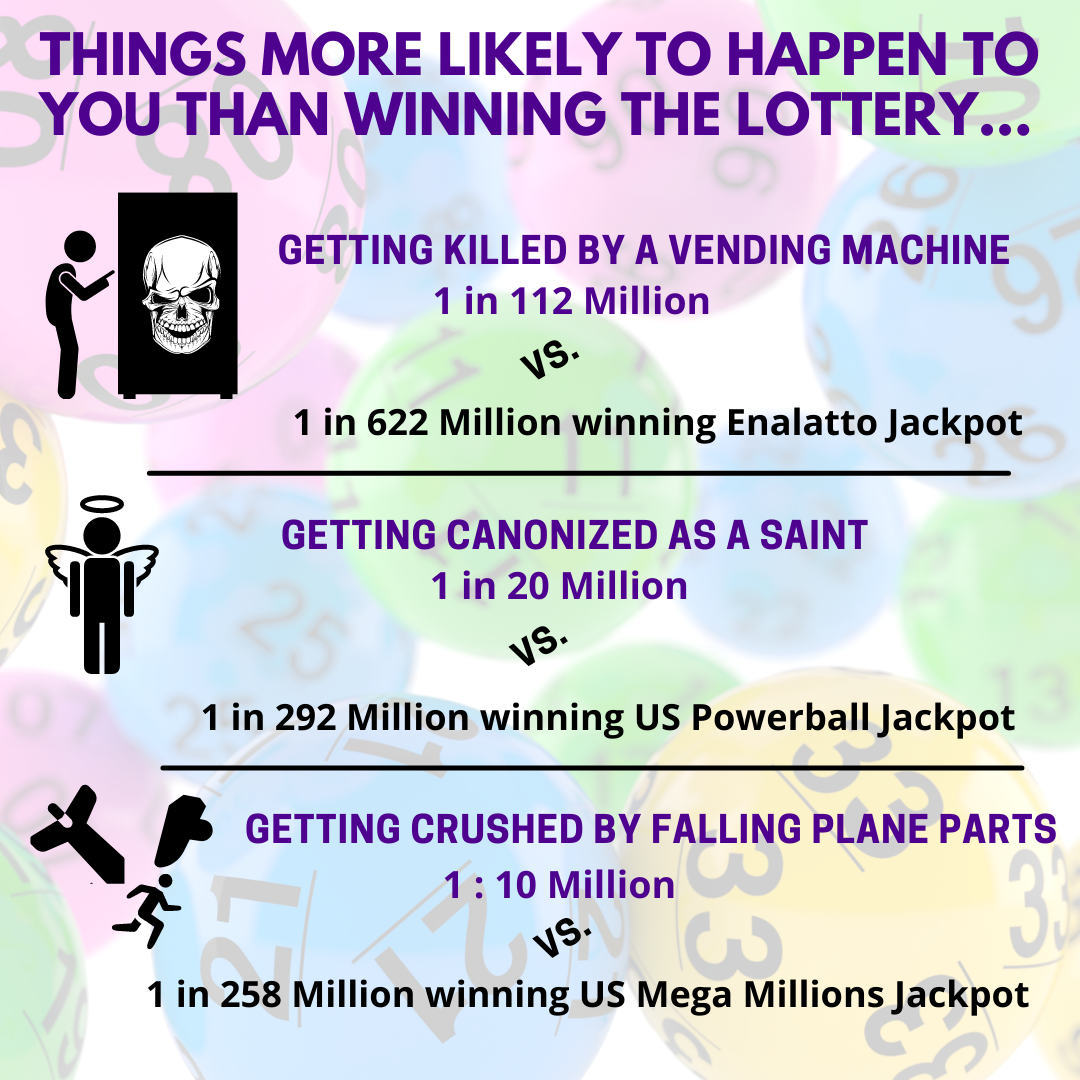
It’s not a useless way to express a prediction, but I really hate gambling terminology, becoming obligatory for political discourse. Nick’s Dispatch colleague could have said “I don’t think Senate Republicans could get more than one vote.”
Not so much about Trump as about DC
In a recent members-only Dispatch conversation, Steve Hayes argued that Trump enjoys nothing as much as the exercise of power, and I disagreed with him: It seems to me that Trump does not at all enjoy the actual exercise of power, which is very difficult and demanding work of precisely the sort that he has spent a lifetime avoiding. The counterintuitive fact is that one of the big problems in Washington is that almost nobody enjoys the actual exercise of power, which is why the three branches of government keep trying to hand responsibilities off to each other: from our drama-queen president to our do-nothing Congress to the tortured pseudo-institutionalism of the chief justice, we have a government run by a team of Bizzaro World Kobe Bryants—guys who only know how to pass and never take a shot. Trump wields power in Washington in approximately the way a man playing Macbeth wields power in Scotland. In Trump’s case—which is our case—the damage is real, of course, but that is no more an actual exercise of political power than a drunk crashing his Buick into a school bus is an example of motorsport.
[MAGA Christianity] is nostalgic for America’s past but not necessarily for America’s founding constitutional principles, which can impair its ambitions.
It mostly hat tips to traditional Christian views about abortion and marriage but is willing to subordinate those stances to wider political ambitions. With the rest of MAGA, it is skeptical if not hostile to American international commitments and to free trade. It’s also impatient with the humanitarian values of the old Religious Right, which it sometimes disdains as signs of weakness if not wokeness. Pentecostal preacher Paul White Cain, the White House faith advisor sometimes associated with the New Apostolic Reformation, is a leading figure. But many others who were conventional Religious Right have aligned with MAGA Christianity. Charlie Kirk of Turning Point USA is a leading cheerleader.
The overall story was about “Five Current U.S. Protestant Political Outlooks.” The other four are:
Religious Left
Religious Right
neo-Anabaptist left
TheoBro right
I find all five options unpalatable. There’s no paywall, so take a look for yourself.
Let’s us three make a deal
Strikingly, … some of the shrewdest officials and analysts in such capitals as Beijing, Brussels and Washington are focused on a challenge to the established world order that is harder to see or hear. To them, the most disruptive force in geopolitics today is Mr Trump’s apparent desire to huddle with other world leaders, and quietly carve up the world together.
For the good of my soul, I’ve got to stop paying so much attention to Donald Trump.
(That paragraph replaces several paragraphs of TMI.)
Due Process
Of all the lawless acts by the Trump administration in its first two and a half months, none are more frightening than its dumping of human beings who have not had their day in court into an infamous maximum-security prison in El Salvador — and then contending that no federal court has the authority to right these brazen wrongs.
I have been reminded several times lately that this doesn’t quite tell the entire story.
Many of the people swept up and shipped to El Salvador did have their day in court: in ordinary procedures under the Immigration and Naturalization Act, where they were adjudicated deportable. Instead of self-deporting, they remained in the US where nobody got around to deporting them until someone quite suddenly did with lots of fanfare.
Others indeed had no day in court, but were swept up dubiously under the Foreign Enemies Act and summarily deported. They are fairly described by Tribe and Chemerinsky. Moreover, without due process we have no reason to trust that they were deportable at all.
None of this is to defend the prison conditions to which any of the deportees are being subjected and for which we are paying.
Chris Krebs
Lost yesterday amid the public jubilation over being liberated from “Liberation Day” was the signing of two new executive orders, one aimed at Chris Krebs, the other at Miles Taylor.
Krebs led the Cybersecurity and Infrastructure Security Agency during Trump’s first term, placing him in charge of, among other things, detecting and preventing any tampering with America’s election technology. The president fired him on November 17, 2020 not for doing his job poorly but for doing it honestly and well. Krebs insisted repeatedly after Election Day that there had been no security breaches involved in Joe Biden’s victory. That qualified as insubordination in the Trump White House.
…
Trump’s new memorandum on Krebs accuses him of various offenses, including “censoring” conservative viewpoints, but the true nature of his grievance is right there in the text: “Krebs, through CISA, falsely and baselessly denied that the 2020 election was rigged and stolen, including by inappropriately and categorically dismissing widespread election malfeasance and serious vulnerabilities with voting machines.”
That’s nakedly retaliatory, just like the executive orders targeting law firms that caused legal trouble for the president in the past. Once again, Trump’s corruption is right out in the open. But I believe this is the first time he’s gone as far as to officially penalize someone for rejecting his conspiratorial nonsense about the 2020 election, a position shared by a large majority of the American public and even by some of his own Cabinet nominees. Or former nominees, anyway.
I don’t do any of the major social media, but I have two sub-domains of the domain you’re currently reading: (a) You can read most of my reflexive stuff, especially political here. (b) I also post some things on the only social medium I frequent, because people there are quirky, pleasant and real.
I wanted to suggest a few ideas that could anchor what we might jokingly refer to as “Frog and Toad Christendom.”
The idea is best summarized, as one friend helpfully put it, as resetting society’s defaults to favor people’s long-term interests rather than short-term pleasures. At present, we make it easy for people to indulge in in short-term pleasures that will, stretched out over time, leave them poorer, more lonely, and less able to contribute to their communities. We also make it harder to pursue things that will be in our best interests long-term. This is precisely the opposite of how it should be. We want to make it easier to choose virtue and harder to choose vices on a broad, societal level.
Here are six ideas that I think could fit under this overall principle:
First, ban online gambling …
Second, ban porn …
Third, place higher taxes on vices, such as marijuana and alcohol …
Fourth, redesign cities to discourage speeding and to make roads more pedestrian friendly. Third places thrive in walkable neighborhoods and because so much of our social connectedness comes via third places, we should want our cities to be walkable …
Fifth, birth should be free …
Sixth, to make it easier for workers, particularly workers with only high-school degrees, to form and support families, we should repeal right to work laws where they exist …
I agree with the spirit of all these, particularly when Jake fleshes them out (my ellipses). But they’re the work of a generation, and David Samuels’ “glittering oligarchy” (see The problem, and the un-solution below) will fight them as the existential threat they are.
What if …?
What if Arthur, eldest son of Henry VII, had not died in his mid-teens?:
There would have been no Dissolution of the Monasteries, and the subsequent upheaval to the rhythm of rural English life. 90% of English art would not have been destroyed in an iconoclastic orgasm of ideological fervor, and English churches and shrines would have remained awash in color, rather than the stone or whitewashed sepulchers of today. There would have been no new aristocracy to steal the land of the peasants, and there would have been no Enclosures Act … There was no New England because there were no Puritans—no “City on a Hill,” no Protestant work ethic … The empire would have been English rather than British. The Industrial Revolution would have been muted, not being able to feed upon rural dispossession and poverty, and would consequently been less convulsive to English society.
Since Terry’s an actual historian, he plays out a lot more detail than this. I, not a historian but made heartsick by Bradford Wicox’s Unintended Reformation, was reminded again that destroying culture and smashing artifacts was a Protestant thing before it was an ISIS thing.
Well played
(H/T Todd Grotenuis on micro.blog)
Must reading
When doctors fundamentally misunderstand the cause of a condition and treat the symptoms instead, and fail to properly monitor outcomes, and modify their practice in response to known adverse outcomes, our patients suffer — often greatly and for the rest of their lives — if indeed they survive. These fundamental errors underpin the depressingly regular scandals that punctuate the history of medicine. (The stakes are particularly high if surgery is involved.)
It is naïve to think that all these scandals are in the past … So where might the next medical scandal be brewing?
The increasing visibility of detransitioners suggests it may lie in wait in gender-affirming medicine. Many detransitioners are young women who underwent treatment for psychological distress that has left them with irreversible, life-long changes to their bodies: a deep voice, a beard, and compromised sexual function. Some have had their breasts surgically removed; some may be infertile. Others are young men who have been castrated.
…
For many detransitioners, the cause of their distress as a teenager was misattributed by their clinicians to the notion that they had been born in the wrong body, and that they would be helped by the surgical creation of the “correct” body ….
Mutilating bodies ought to be the very, very last resort for a problem that starts in the mind.
Ardently seeking catharsis
[I]ntroducing no-fault divorce was a travesty, and in many ways redefined marriage more drastically than Obergefell vs. Hodges.
None of this is even on the radar of many of today’s conservative elites. As often as not, they have been through a divorce themselves, and the compromise that marks their personal lives renders them reticent about standing up for traditional marriage. The consequence has been that most conservative influencers seek to move on from same-sex marriage as quickly as possible. Battle lines have been redrawn, the tent broadened, and now—they loudly proclaim—we can get back to promoting the free market and taking on the really crazy leftist proposals. Sure, the institution of marriage might be an unfortunate piece of collateral damage in the fight, but at least we won’t give an inch on this transgender nonsense.
I, too, had never heard of Mr. Harrold. And I disagree with his vitriol toward the Respect for Marriage Act. But I’m glad someone had the balls to write something so contrary to the Zeitgeist that for a moment, I felt positively moderate.
The right kind of facts, mediated by our betters
In an important article titled “Google.gov,” the law professor Adam J. White writes that Google views “society’s challenges today as social-engineering problems” and aspires to “reshape Americans’ informational context, ensuring that we make choices based only upon what they consider the right kind of facts—while denying that there could be any values or politics embedded in the effort.”
A society which wants to preserve a fund of personal knowledge must submit to tradition.
Michael Polanyi, Personal Knowledge. But we won’t submit because we’re Mur’cans.
Legalia
Protecting freedom of religion — through the speech clause
In case you hadn’t noticed, or had forgotten, the free speech clause of the First Amendment has been more effective in protecting religiously-informed conscience than have free exercise or non-establishment clauses, directly concerned with religion though they be.
I cannot imagine a factual scenario where that would not continue to hold true, though that may be a failure of imagination (from too many years between me and a Socratic law school classroom).
Simple question, botched answer
The reliance of religious dissenters on the free speech clause should have come up here, too:
Another dissenter has “a simple question regarding 303 Creative”:
If the website designer’s action is expressive, and if her closely held religious belief was to believe that God was against interracial or inter-religious wedding, is it okay for her to refuse service? If not, why not? If so, it would seem to open a Pandora’s Box of truly held religious beliefs (with no way to prove/disprove) overriding any and all anti-discrimination protections if the business’s product is viewed as expressive — which is just as nebulous as knowing if a belief is truly held.
One answer is that all the major religions bar homosexual sex. A better case would be where a religion forbids divorce. Would someone refuse to design a site for a second wedding? Possibly, I suppose. I don’t doubt that some of this is driven by homophobia and very selective enforcement of Biblical strictures. As a Christian, I think it’s immoral to single out gays — and only gays — in this way. But a fundamentalist may differ, and they have rights too.
Sullivan is a very smart fellow but he blew this one.
The simple answer to the dissenter’s simple question is “Yes, she may deny her expressive services to create custom websites for interracial or inter-religious weddings” in this fairly wild hypothetical, because this was a free speech case; all references to religious beliefs are beside the point because it’s not a free exercise of religion case.
Although I would find opposition to interracial weddings atavistic, offensive and anti-Christian, and opposition to inter-religious weddings surprising in this day and age, I believe that freedom from compelled expression is “high trump” and will be so held if challenges continue. The only viable question will be in edge cases: “is this really compelled expression”?
As I was writing the preceding, I remembered the days when I thought otherwise, thought that the gay tsunami would crush all before it — as its legal theorists intended:
In her symposium paper Moral Conflict: (Some) Religions and Marriage Equality, [Georgetown law prof and later Obama recess appointment to the EEOC Chai] Feldblum asked what effect “marriage equality” – i.e., marriage between members of the same sex – will have on the rights of those employers, landlords and others whose religion teaches them that same-sex sexual conduct is sinful (and perhaps harmful to society):
Let me be very clear … [I]n almost all the situations (not perhaps in every one, but in almost every one), I believe the burden on religious people that will be caused by granting gay people full equality will be justified …. That is because I believe granting liberty to gay people advances a compelling government interest, that such an interest cannot be adequately advanced if “pockets of resistance” to a societal statement of equality are permitted to flourish, and hence that a law that permits no individual exceptions based on religious beliefs will be the least restrictive means of achieving the goal of liberty for gay people.
Are gay rights in conflict with religious freedom? – Tipsy Teetotaler ن. I don’t know what Feldblum would have said about those “others” whose (religious) convictions might motivate a free-speech refusal of expressive services, and I won’t speculate about that. But with that sole carve-out, Feldblum has been vindicated so far.
Racial gerrymandering in a SCOTUS dissent on affirmative action
Leftists who love racial discrimination when they control it have responded widely and loudly. This tweet from Erica Marsh, a Democrat operative, provides an excellent summary of them all:
Today’s Supreme Court decision is a direct attack on Black people. No Black person will be able to succeed in a merit-based system which is exactly why affirmative-action based programs were needed. Today’s decision is a TRAVESTY!!!
Twitter being Twitter, there was a nice pile-on, back-tracking, blacksplaining, etc.
(Do not rely on Mr. Larson for analysis of the Supreme Court cases he’s celebrating. He’s conservative, but he’s just as sloppy about the details as most liberals who are lamenting the same cases.)
SCOTUS
Be it noted that I disapprove the feeding frenzy of attacks on conservative Supreme Court justices, notably Thomas and Alito. I won’t go into the reasons why, which have been well-addressed by their defenders or, in Alito’s case, by himself.
But I can still appreciate the wordcraft of these bits via Frank Bruni:
In Slate, Dahlia Lithwick parsed the generosity from billionaires that Justices Samuel Alito and Clarence Thomas have so richly enjoyed: “A #protip that will no doubt make those justices who have been lured away to elaborate bear hunts and deer hunts and rabbit hunts and salmon hunts by wealthy oligarchs feel a bit sad: If your close personal friends who only just met you after you came onto the courts are memorializing your time together for posterity, there’s a decent chance you are, in fact, the thing being hunted.”
In The Washington Post, Alexandra Petri mined that material by mimicking the famous opening line of “Pride and Prejudice” by Jane Austen: “It is a truth universally acknowledged that an American billionaire, in possession of sufficient fortune, must be in want of a Supreme Court justice.”
Politics
$35 million per quarter
Trump raking it in: The Prince of Mar-a-Lago pulled in $35 million in the second quarter of the year, double what he raised the quarter before. It looks like Republican donors not only weren’t put off by the classified document scandal. . . or the New York indictment. . . or the Georgia case, but are, in fact, rallying behind him, perhaps hoping to get a better seat at the document viewing table. If you had to guess, how much would you need to donate to see the aliens? Just images of aliens, printed and spread out next to a Diet Coke and onion rings, preferably. Asking for a friend.
I was taken by surprised at least twice by this quote from Peggy Noonan:
Chris Christie could easily defeat Joe Biden. So could several of the GOP candidates now in the field. Donald Trump wouldn’t, for one big reason: His special superpower is that he is the only Republican who will unite and rally the Democratic base and drive independents away. He keeps the Biden coalition together.
A sad thing is that many bright Trump supporters sense this, and the case against him, but can’t concede it and break from him, in some cases because they fear him and his friends. They don’t want to be a target, they don’t want to be outside the in-group, they want to be safely inside. They curry favor.
This weekend at a party, one of Mr. Trump’s New York supporters, a former officeholder, quickly made his way to me to speak of his hero. He referred to the Abraham Accords and the economy and said: “Surely you can admit he was a good president.”
He was all wound up, so I spoke slowly. “I will tell you what he is: He is a bad man. I know it, and if I were a less courteous person I would say that you know it, too.”
He was startled, didn’t reply, and literally took a step back. Because, I think, he does know it. But doesn’t ever expect it to be said.
A journalist in our cluster said, musingly, “That was an excellent example of apophasis,” the rhetorical device of saying something by saying you’re not going to say it.
Imagine that! Knowingly forfeiting the Presidency for this evil man. But I think Noonan’s right, as she so often is.
The problem, and the un-solution
The country once defined by its powerful middle class is now a flagship of inequality that looks more like a high-end version of Brazil or Nigeria than the mid-20th century bastion of strong unions, churches, civic associations and inclusive political parties … A glittering oligarchy … presides over a simmering landscape of uncontrolled low-skill immigration, drug addiction and dead-end service jobs.
… Propelled by the rise of identity politics, the fragmenting logic of market capitalism or the force of new technologies that reconfigure space and time — or all three forces working hand-in-hand — America has become the prize for a set of tribes engaged in a zero-sum contest for power and spoils.
…
Where the idea of an American nation or community is increasingly rejected as a remnant of a hegemonic and oppressive past, the celebration of particularity reigns. There is the mandatory replacement of the American flag by sectarian banners — the Black Lives Matter flag for Black History Month; the ever-changing LGBTQA+ symbols for Pride Month — along with elaborate ceremonies of printing new postage stamps, and rewriting history books to focus on the laudable achievements of tribal heroes …
The paradoxical nature of the current American predicament is therefore hard to miss. On the one hand, Silicon Valley has cemented America’s place as the wealthiest and most powerful nation on Earth, the unchallenged global leader in fields like AI and biotech — capable of disintegrating any would-be rival by pushing a button and detaching them from the global banking system and the internet. On the other, the digital revolution propelled by American technology and finance is visibly disintegrating America itself. The meritocratic universities and other institutions that once made America the envy of the world are hostages of a new political system in which rote repetition of Democratic Party catechisms about race, class, gender and identity has replaced institutional values such as intellectual independence and critical inquiry. Such ambitions, along with the pursuit of beauty and other forms of excellence, are now signs of Right-wing heresy, to be stamped out by party administrators who administer, well, pretty much everything.
The Democratic Party plays a central role in the new American order, serving as a kind of shadow state, or state-within-a-state — the supremacy of the former being characteristic of so-called revolutionary regimes overseas. Once a vehicle for working Americans to achieve tangible goals such as home ownership, decent healthcare, national parks and a dignified old age, the Democrats under the presidencies of Bill Clinton and Barack Obama found a new place in the sun as the address to which the oligarchs pay protection money and do deals with the security agencies in Washington — after endorsing a global trade regime that cost millions of Americans their jobs and flooded their towns with fentanyl.
The Republican Party, meanwhile, once the party of America’s richest moneymen and biggest industrialists, now poses as the party of small business and the dispossessed, under the leadership of an oft-indicted figure who surrounds himself with the dregs of American political life. Whatever threat Donald Trump once posed to the robber barons and the bureaucracies they have allied themselves with, he long ago revealed himself to be a clownish figure, alternating populist rhetoric with self-pitying conspiracy theories while repeatedly failing to protect himself or his followers from forces that mean them harm. The result has been political suicide for Republicans who support him, as well as those who oppose them.
One of the key moments in the creation of modernity occurs when production moves outside the household. So long as productive work occurs within the structure of households, it is easy and right to understand that work as part of the sustaining of the community of the household and of those wider forms of community which the household in turn sustains. As, and to the extent that, work moves outside the household and is put to the service of impersonal capital, the realm of work tends to become separated from everything but the service of biological survival and the reproduction of the labor force, on the one hand, and that of institutionalized acquisitiveness, on the other. Pleonexia, a vice in the Aristotelian scheme, is now the driving force of modern productive work.
[W]e tell ourselves that we’re advancing because “grandma gets an iPhone with a smooth surface,” but meanwhile she “gets to eat cat food because food prices have gone up.”
A letter to Dear Abby: I am a twenty-three-year-old liberated woman who has been on the pill for two years. It’s getting pretty expensive and I think my boyfriend should share half the cost, but I don’t know him well enough to discuss money with him.
Remember (or know, if you can’t remember) that Lost in the Cosmos is a very strange book. I don’t know whether this was a real “Dear Abby” letter.
But it should be.
Sex
When biologists claim that sex is binary, we mean something straightforward: There are only two sexes. This is true throughout the plant and animal kingdoms. An organism’s sex is defined by the type of gamete (sperm or ova) it has the function of producing. Males have the function of producing sperm, or small gametes; females, ova, or large ones. Because there is no third gamete type, there are only two sexes. Sex is binary.
…
For the vast majority of people, their sex is obvious. And our society isn’t experiencing a sudden dramatic surge in people born with ambiguous genitalia. We are experiencing a surge in people who are unambiguously one sex claiming to “identify” as the opposite sex or as something other than male or female.
The legislation also demonstrates one of the oddest results of the modern emphasis on the radical freedom of the individual. In such a world, all must theoretically be allowed to have their own narratives of identity. But because some narratives of identity inevitably stand in opposition to others, some identities must therefore be privileged with legitimate status and others treated as cultural cancers. And that means that, in an ironic twist, the individual ceases to be sovereign and the government has to step in as enforcer. The lobby group of the day then decides who is in and who is out, with the result that, in this instance, the gay or trans person who wants to become straight or “cis” (to use the pretentious jargon), cannot be tolerated. His narrative calls into question that of others. We might say that his very existence is a threat. To grant any degree of legitimacy to his desire is to challenge the normative status of the desires of others.
[W]e’d be foolish not to see the risk of civil disorder and legal shenanigans as high no matter who loses in 2024. Downtowns were boarded up on the eve of the 2020 race not against angry and aggrieved Trump voters. Rural riots are hardly a thing. It was in deeply blue areas that local officials feared mass violence if the election didn’t turn out the way Democrats wanted.
…
You can’t analyze realities you refuse to see. Take a recent podcast with the Democratic campaign guru Joe Trippi that borders on the neurotic. He’s alarmed not because 75% of voters say they fear for the future of democracy, but because Republicans are saying this, since in his mind only Democrats are allowed to feel democracy is under threat (from Republicans, of course).
Spoiler alert: populism isn’t going away any time soon, but Trump needn’t be its avatar.
Ennui
A Jules Feiffer cartoon in the Village Voice once depicted a man suffering from liberal ennui. The man shifted uncomfortably in his chair and explained how he was bored all the time, had no appetite, no interest in life, no sense of humor, no capacity even for outrage.
As a grown-up, I’m sure you can imagine the current-world analogy.
Greg Abbott goes beyond jackassery
The law-and-order party has a law-and-order problem.
I’m not talking about the Republican Party’s tolerance for, and even unconditional defense of, Donald Trump’s many legally dubious acts—though that is certainly bad.
I’m talking, instead, about something far broader in the party and the culture from which it derives its political energy. We saw it in the way conservative media outlets and personalities back in 2020 treated 17-year-old Kyle Rittenhouse as some kind of folk hero for shooting three men, killing two, during civil unrest in Kenosha, Wisconsin, after he made a point of driving, heavily armed, to the site of the protests from his home in neighboring Illinois.
We see it in strong support among Republicans, not only for permissive gun regulations, but also for laws allowing private citizens to carry military-grade firearms in public places, whether concealed or not.
And we see it in its most alarming form yet in Texas Governor Greg Abbott’s promise to pardon Army sergeant Daniel Perry, who was convicted of murder last week for killing 28-year-old Garrett Foster at a Black Lives Matter demonstration in Austin in 2020.
Together these trends—but especially Abbott’s stance on Perry’s murder conviction—show us a party staking out a position incompatible with life under the rule of law and within a civil society. In its place, the GOP appears to favor a return to the unlawful disorder of the wild west, where vigilante violence and factional allegiances took the place of establishing justice, ensuring domestic tranquility, and promoting the general welfare.
The jury’s conviction of Daniel Perry was amply supported by the evidence. No stand your ground law should cover a hot-head going and looking for trouble, then shooting someone dead before it even arrives.
The serial jackassery of Gov. Abbott is one reason why, netting the negatives out from the positives, living in Texas doesn’t appeal to me.
A successful third party
[I]t is worth remembering that there already has been a very successful third party: the Republican Party, which skyrocketed to power very shortly after its founding in 1854, with the first Republican president, Abraham Lincoln, winning the White House in 1860. By contrast, the Libertarian Party, founded in 1971, has topped out at 3.3 percent in presidential elections—and that was in 2016, when the party’s ticket comprised two moderate Republican former governors (Gary Johnson and William Weld) running against two corrupt and contemptible New York Democrats, Hillary Clinton and Donald Trump.
You can read most of my more impromptu stuff here (cathartic venting) and here (the only social medium I frequent, because people there are quirky, pleasant and real). Both should work in your RSS aggregator, like Feedly or Reeder, should you want to make a habit of it.


 Tipsy Teetotaler ن