Bright Wednesday, 4/19/23

Living spaces

Village versus good Urbanism

Modern households with no shared good can end up feeling this way, with each of the members going off to pursue their own aims. Returning, they can only robotically ask, “How was your day?”

This phenomenon is one reason some describe New Urbanist communities as “creepy.” New Urbanist development Seaside, Florida was chosen as the set for “The Truman Show” because it does such a good job at creating the material presentation of a community, while giving some the sense that it is not quite real. Good urbanism, and Seaside is a nearly perfect example, can certainly bring people together, but one must admit that the pattern of causation is a bit backwards.

Phillip Bess, in his important book, Till We Have Built Jerusalem, throws cold water on the aspirations of his fellow urbanists, saying that “something more than urban form is going to be required for a genuine renewal of traditional urbanism. To what extent do the realities of contemporary life even allow for, let alone encourage, a new traditional architecture and urbanism?”

We may be able to build Mayberry architecturally, but if it didn’t arise from a real community pursuing a real common good, it would only be a theme park—just a soulless Frankenstein’s monster of urban form. Individualists living in these well-designed neighborhoods may appreciate their beauty, but they will only be lonely individualists mimicking life in a healthy human settlement, like the strangers sharing a home.

David Larson, Man Without A Village: A Beast Or A God? (emphasis added).

Not so simple a story

Fifty years ago, few would have predicted that the American South would emerge as an economic dynamo — and that people would be flocking to places like South Carolina and Tennessee, but it’s happening.

So can we tell a simple story here: Republican policies work, Democratic policies don’t?

Well, not quite. When you look inside the red states at where the growth is occurring, you notice immediately that the dynamism is not mostly in the red parts of the red states. The growth is in the metro areas — which are often blue cities in red states.

…

If you look at these success stories you see they are actually the product of a red-blue mash-up. Republicans at the state level provide the general business climate, but Democrats at the local level influence the schools, provide many social services and create a civic atmosphere that welcomes diversity and attracts highly educated workers.

…

We know the policy mix that creates a dynamic society. We just don’t yet have a party that wants to promote it.

David Brooks

Mental spaces

As if disinformation wasn’t bad enough already

Don’t ask who’s funding all the disinfo lists: The nonprofits affiliated with the Global Disinformation Index are hiding just about everything they can. Typically, in exchange for the tax benefits of being a nonprofit, these groups are required to disclose information about leadership and funders. Not the ones around the GDI, which has been a central player in the new censorship efforts and now cites “harassment” as the reason they need to stay super private. From a great Washington Examiner investigation:

“I don’t think I’ve ever seen a 990 that excludes the names of officers and directors,” said Alan Dye, a partner at Webster, Chamberlain & Bean who has specialized in nonprofit law since 1975. “And I’ve looked at hundreds.”

Nellie Bowles

Exonerating witches

Some legislatures, apparently having nothing better to do, are playing with Bills to exonerate those convicted of witchcraft in the 17th century. But they’re meeting some resistance in Connecticut:

The fear in Connecticut, as Republican senator John Kissel put it, is that a precedent would be set; that we would “have to go and redress every perceived wrong in our history”. Similar concerns have been expressed elsewhere. A journalist writing in the Scottish newspaper The Herald worried that pardons vilify accusers and that “we should not judge people for living in the past”.

…

Yet, it remains reasonable to ask: how can we exonerate a crime that modern society no longer believes exists? This is a question not just of history, but of jurisprudential ethics. An empirically supported understanding of “the great witch-craze” should inform questions of whether we need to act, and if so what to do. Are we quashing what now seem like unsafe convictions of witchcraft or offering modern pardons for contemporaneously just ones?

…

If we are to exonerate convicted witches, we must ensure that the process is historically rigorous. It undermines the enterprise if, say, we set out to pardon five million people tried for witchcraft when, in fact, we have evidence for only around 100,000. We should know that our ancestors were surprisingly sceptical and wary about pointing the finger, and that across continental Europe about half of trials resulted in acquittal. In England and Connecticut, it was more like 75%, owing to the caution of judges and juries about passing guilty verdicts where the proof for this most secretive crime amounted to little more than hearsay.

Malcolm Gaskill, The pantomime of pardoning witches

C.S. Lewis once observed that it’s no great moral advance that we no longer execute witches — because the reason for our ceasing is that we no longer believe that witchcraft is real.

That’s a bit like the people who can never claim to be tolerant because they say they like (or even love) those they tolerate; you actually need to dislike something in order to tolerate it.

In that vein, I freely admit that I dislike drag, and always have; I nevertheless tolerate it as a lesser evil than suppressing marginal uses of free expression.

But what do I know? …

Somebody from a developing country said to me, “what we get from China is an airport. What we get from the United States is a lecture.”

Larry Summers Warns of US Losing Influence as Other Powers Band Together

The U.S. lecture probably will be about “tolerance” of every flavor of sexual practice, preference, orientation, or line-blurring. By “tolerance” will be meant “enthusiastic approval and suppression of those who dissent.”

I suspect that a major motivator for America’s tolerance toward sexual deviance from norm is that it allows for a Pharisaical attitude in attention-misdirecting from our own sexual transgressions:

I’ve written in this blog numerous times about the “revenge of conscience. Conscience wreaks this revenge in a particularly spectacular way in the domain of sex. We aren’t really shameless; rather, because of our shame, we make excuses.  People on the left make excuses for their shameful practices by saying that now all perversions are okay (in fact, they aren’t perversions). People on the right implausibly say “No, only my shameful practice is okay. Yours isn’t.”  Is it any wonder that the liberal dog is winning this fight?

J Budziszewski

Miscellany

Nellie’s Briefs

  • Welcome to the radical middle, Ana Kasparian: Prominent leftist media personality and cohost of The Young Turks Ana Kasparian recently made enemies within her tribe by saying it was kind of annoying to be called a birthing person and that she’d like to be called a woman. The fallout continued this week as her request is literal violence and means. . . Ana Goes to Gulag! Ana Goes to Gulag!
  • [A] 65,000 square foot downtown [San Francisco] Whole Foods closed, citing staff safety concerns. (A man had died in their bathroom; also, every single shopping cart had been stolen.)
  • The term drug dealer is super stigmatizing. Please call them drug workers, says Canadian PhD student.

Nellie Bowles

Ineffective altruism

[Ken Griffiths’ $300 million dollar] gift basically funds Harvard qua Harvard, carrying coals to the Newcastle that is the school’s almost bottomless endowment, which even by ineffective-altruist standards seems indefensibly useless and pathetic. Even if Griffin’s interests were ruthlessly amoral and familial — all-but-guaranteed admission for all his descendants, say — the price was ridiculously inflated: The Harvard brand and network might be worth something to younger Griffins and Griffins yet unborn, but not at that absurd price. And if he’s seeking simple self-aggrandizement, he won’t gain it, since nobody except the chatbot in charge of generating official Harvard emails will ever refer to the “Kenneth C. Griffin Graduate School of Arts and Sciences.” (At least make them build you some weird pharaonic monument along the Charles, Ken!)

The sheer unimaginativeness makes Griffin’s gift a useful case study in one important ingredient in our society’s decadence: the absence of ambition or inventiveness among of our insanely wealthy overclass when it comes to institution building. There was a time when American plutocrats actually founded new institutions instead of just pouring money into old ones that don’t need the cash. And for the tycoon who admires that old ambition but thinks playing Leland Stanford is too arduous these days, there are plenty of existing schools that could be revived and reconfigured, made competitive and maybe great, with the money that now flows thoughtlessly into the biggest endowments.

Ross Douthat

Projecting the AI future

Today, the World Economic Forum imagines that AI will lead us to a less primitive “utopia”, a 21st-century Promised Land in which people will “spend their time on leisure, creative, and spiritual pursuits”. A safer bet would be drugs and sex robots. Ninety years ago, John Maynard Keynes prophesied, with what looks like eerie accuracy, that machines would make labour obsolete within a century. The prospect filled him with “dread”, because very few people have been educated for leisure.

…

In 2018, an article in Scientific American predicted that advanced AI will “augment our abilities, enhancing our humanness in unprecedented ways”. This Pollyannaish prognosis ignores the fact that all human capacities tend to atrophy in disuse. In particular, AI is inexorably changing the way we think (or don’t). Students now use ChatGPT to do their homework for professors who perhaps rely on it to write their lectures. What makes this absurd scenario amusing is not just the thought of machines talking to machines, but that intellectually lazy people would employ a simulacrum of human intelligence for the sake of mutual deception.

Compared with the natural endowment of human intelligence, the artificial kind is an oxymoron, like “genuine imitation leather”. AI is a mechanical simulation of only one part of intelligence: the capacity of discursive thinking, or the analysis and synthesis of information. Discursive thinking deals with humanly constructed tokens, including numerical and linguistic symbols (or, in the case of AI, digitally encoded data). While human intelligence can compare these tokens with the things they represent, AI cannot because it lacks intuition: the immediate cognition of reality that roots us in the world and directs our energies beyond ourselves and the operations of our own minds. It is intuition, for example, that tells us whether our nearest and dearest are fundamentally worthy of trust.

Jacob Howland, AI is a false prophet

A couple of little jewels

  • It’s curious that both left and right seem to think that things are falling apart — but what each side views as remedy, the other views as decline. People often say they wish left and right would “come together to solve the country’s problems," but they define the problems in opposite ways. For example, one side thinks that racism is on the increase and reverse racism is necessary to fight it; the other side thinks that racism was on the decline but that reverse racism is bringing it back in force. Again, one side thinks that crime is an innocent response to deprivation, and that the problem lies in the police; the other side thinks crime is wrong and dangerous, and that although we should help disturbed people, the problem lies in punishing the police and encouraging the criminals.
  • The proponents of the so called “new natural law theory,” or “basic goods theory,” say that we shouldn’t speak of the natural purposes of things.  For example, we shouldn’t say that the natural purpose that anchors the sexual powers is procreation, because this “instrumentalizes” and “depersonalizes” us – it makes us tools for making babies.  This is absurd.  One might as well say that it depersonalizes us to say that the natural purpose of the intellectual powers is deliberating and knowing the truth.

J Budziszewski

Cornered, with nothing left to do but confess the truth

The conclusion of Freddie deBoer’s parody dialogue with a standard-issue Lefty about crime, and where the Lefty, cornered, finally fesses up:

Look, I’m gonna level with you here. Like the vast majority of leftists who have been minted since Occupy Wall Street, my principles, values, and policy preferences don’t stem from a coherent set of moral values, developed into an ideology, which then suggests preferred policies. At all. That requires a lot of reading and I’m busy organizing black tie fundraisers at work and bringing Kayleigh and Dakota to fencing practice. I just don’t have the time. So my politics have been bolted together in a horribly awkward process of absorbing which opinions are least likely to get me screamed at by an online activist or mocked by a podcaster. My politics are therefore really a kind of self-defensive pastiche, an odd Frankensteining of traditional leftist rhetoric and vocabulary from Ivy League humanities departments I don’t understand. I quote Marx, but I got the quote from Tumblr. I cite Gloria Anzaldua, but only because someone on TikTok did it first. I support defunding the police because in 2020, when the social and professional consequences for appearing not to accept social justice norms were enormous, that was the safest place for me to hide. I maintain a vague attachment to police and prison abolition because that still appears to be the safest place for me to hide. I vote Democrat but/and call myself a socialist because that is the safest place for me to hide. I’m not a bad person; I want freedom and equality. I want good things for everyone. But politics scare and confuse me. I just can’t stand to lose face, so I have to present all of my terribly confused ideals with maximum superficial confidence. If you probe any of my specific beliefs with minimal force, they will collapse, as those “beliefs” are simply instruments of social manipulation. I can’t take my kid to the Prospect Park carousel and tell the other parents that I don’t support police abolition. It would damage my brand and I can’t have that. And that contradiction you detected, where I support maximum forgiveness for crime but no forgiveness at all for being offensive? For me, that’s no contradiction at all. Those beliefs are not part of a functioning and internally-consistent political system but a potpourri of deracinated slogans that protect me from headaches I don’t need. I never wanted to be a leftist. I just wanted to take my justifiable but inchoate feelings of dissatisfaction with the way things are and wrap them up into part of the narrative that I tell other people about myself, the narrative that I’m a kind good worthwhile enlightened person. And hey, in college that even got me popularity/a scholarship/pussy! Now I’m an adult and I have things to protect, and well-meaning but fundamentally unserious activists have created an incentive structure that mandates that I pretend to a) understand what “social justice” means and b) have the slightest interest in working to get it. I just want to chip away at my student loan debt and not get my company’s Slack turned against me. I need my job/I need my reputation/I need to not have potential Bumble dates see anything controversial when they Google me. Can you throw me a bone? Neither I nor 99% of the self-identified socialists in this country believe that there is any chance whatsoever that we’ll ever take power, and honestly, you’re harshing our vibe. So can you please fuck off and let us hide behind the BLM signs that have been yellowing in our windows for three years?

It would be interesting to see a similar parody featuring a standard-issue Right figure.

Three foundational myths of MAGA

While Trumpism is a complex phenomenon, there are three ideas or principles that are consistently present: First, that before Trump the G.O.P. was a political doormat, helplessly walked over by Democrats time and again. Second, that we live in a state of cultural emergency where the right has lost everywhere and must turn to politics to reverse this cultural momentum. And third, that in this state of emergency, all conservatives must rally together. There can be no enemies to the right.

Add these three ideas together, and you have a near-perfect formula for extremism and authoritarianism.

David French

Prediction

Having a bit of blood in the water, the media (Jamelle Bouie at the New York Times in particular) will be trying to devour Justice Clarence Thomas until they drive him from office (unlikely since Anita Hill could deny him the office), lose interest, or motivate Congress to enact a binding judicial code of conduct (which Chief Justice Roberts has cautioned might violate separation of powers). Stay tuned.


For all its piety and fervor, today’s United States needs to be recognized for what it really is: not a Christian country, but a nation of heretics.

Ross Douthat, Bad Religion

You can read most of my more impromptu stuff here (cathartic venting) and here (the only social medium I frequent, because people there are quirky, pleasant and real). Both should work in your RSS aggregator, like Feedly or Reeder, should you want to make a habit of it.
Sunday, 4/16/23

It’s Pascha (Easter) in Orthodoxy. Our Vigil was wonderful, but you had to be there to enjoy it, so I’ll not say any more.

Latins vs. Greeks

  • Two centuries later, fundamental differences in phronema [mindset] would again be an obstacle to union between the West and the East at the Council of Florence in 1439. Catholics presented rational arguments for their positions, and the Orthodox responded by citing apostolic Tradition. It was “the constant conviction of the Latins that they always won the disputation, and of the Greeks that no Latin argument ever touched the heart of the problem.”
  • Orthodoxy theology defines only what is necessary and always leaves unspoken that which cannot be explained. This approach was part of the Christian faith from the beginning. But the Western phronema often suppresses, dismisses, minimizes, or ignores this stance. The Western mind is compelled to define and explain everything, since without a rational explanation a concept or fact cannot be considered true, or, conversely, all truth can be proven rationally.

Eugenia Scarvelis Constantinou, Thinking Orthodox: Understanding and Acquiring the Orthodox Christian Mind

Ireland vs. America

Ireland is a palimpsest, a manuscript scraped imperfectly clean and reused, the old text bleeding through the new. A landscape with a long memory. As an American, I grieve the mnemonic emptiness of the New World. I long for ruins.

Justin Lee, Rewilding American Christianity

What the wrath of God looks like

I was nurtured on stories as a child that contrasted Christ’s “non-judging” (“Jesus, meek and mild”) with Christ the coming Judge (at His dread Second Coming). I was told that His second coming would be very unlike His first. There was a sense that Jesus, meek and mild, was something of a pretender, revealing His true and eternal character only later as the avenging Judge.

This, of course, is both distortion and heresy. The judgment of God is revealed in Holy Week. The crucified Christ is the fullness of the revelation of God. There is no further revelation to be made known, no unveiling of a wrath to come. The crucified Christ is what the wrath of God looks like.

Fr. Stephen Freeman, The Bridegroom and Judgment

This rings very true, although in my case “nurtured” refers mostly to my Christian high school and 2.5 years of Christian colleges. I do not recall my parents nurturing such a view.

But in your pondering whether you, too, were so nurtured, don’t fail to ponder the second paragraph.

Conservative Christian Europeans

The European experiment with trying to keep the Church alive amid dechristianization by making it more like the world has been a decisive failure. Christianity has to be different, and not be ashamed of that difference. In my European travels, the believers with whom I have spent time would be counted as conservative in moral and theological terms, but that, of course, does not track neatly with political conservatism.

Rod Dreher, Reconciling With The Really Real

Wild Christianity

“Wild Christianity” seems to have achieved almost (shudder!) même status, and predictably if being used in conflicting senses. But here’s a notable observer:

I have read an obscenely large number of articles and books on the decline of Christendom and the West, and even rushed in to write one myself, where angels fear to tread. But I have read absolutely nothing as close to the bull’s eye and as far from the bull’s opposite end as “A Wild Christianity” by Paul Kingsnorth, who, being a true poet, is not merely a singer but also a seer. Thank you, Gandalf.

Peter Kreeft, Boston College

I don’t disagree with Kreeft, who I have admired for more than 50 years. Read the worthy Kingnorth article.

Souls

[O]nce I was at an academic conference in Balamand, Lebanon, and I got a message that the Patriarch of Antioch, Ignatios IV at that time, wanted to meet me and another young theologian, who was from Greece, privately. What could this be about? We were ushered into a private drawing room, stood as His Beatitude entered, came forward to kiss his hand, and then sat down after he did. Well, he looks at us, and in perfect English exclaims, “The problem with you Greeks is that you are all dualists! Even a rock has a soul!!!” And that was it. He’d spoken his peace, he got up and left, and we were ushered back out.

‘Beauty First’ With Timothy Patitsas

Spiritual success

For those not fitting the NAR emotional profile (see below), there’s another option.

I have wondered how the “success” of the spiritual life would be measured? I could imagine that the number of persons baptized might be compared to the number of the baptized who fall short of salvation—but there is no way to discover such a thing. In lieu of that, we often set up our own way of measuring—some expectation of “success” that we use to judge the spiritual life. “I tried Christianity,” the now self-described agnostic relates, “and found that it did not live up to its claims.” [Laughter] I’ve seen things like that.

To my mind, the entire question is a little like complaining about your hammer because it doesn’t work well as a screw-driver. The problem is that the spiritual life doesn’t “work,” and it was never supposed to. It is not something that “works”; it is something that “lives.” And this is an extremely important distinction.

Fr. Stephen Freeman, The Slow Road to Heaven

It occurred to me within the last week or two that there’s at least one thing in America that’s immeasurably better than my childhood and adolescent status quo: there are Orthodox Christian Churches all over the place, and Orthodoxy has become a live option for Christians in other traditions they’re finding empty.

The Slow Road to Heaven

  • Despite every atheist protestation, religion abides – and if there is not one that is inherited, then a culture will invent new ones.
  • Power is an ever-present temptation in this world. It offers the notion that we can, by force (of arms or law), achieve our desired ends. That was true under emperors and tsars, and remains true within modern democracies. When Pilate questioned Jesus regarding the nature of His kingdom, Christ was very clear that His kingdom “is not of this world.” He adds that were His kingdom of this world – then His disciples would arm themselves and fight. That many Christians through the ages have imagined armed struggle to be an important element of the Christian life is a testament to our confidence in the weapons of this world and our lip-service to the Kingdom of God.
  • The crucified life is seen most clearly when it stands out against a background of worldliness.

Fr. Stephen Freeman, The Slow Road to Heaven

Safety check

“People aren’t asking whether Christianity is true, Abe. They aren’t even asking if it is good. My friends are wondering if Christianity is even safe.”

Jake Meador, quoting a friend of Abe Cho

I too readily accepted Cho’s quote as a valid indictment of (much) American Christianity. Meador does some helpful disambiguation of “safe.”

False mysticism

There’s a hymn that they used to sing at my childhood church that goes, “Turn your eyes upon Jesus, look full in his wonderful face, and the things of earth will grow strangely dim in the light of his glory and grace.” I get the point it’s trying to make: that encountering true hope, beauty and holiness puts pettier things in perspective. Still, my experience of faith is nearly the opposite of what the hymn describes. The more I have tried to seek God — the more I reach for truth, beauty and mystery that I know exceeds my grasp — the more bright, vivid and vital the things of earth become.

Tish Harrison Warren

New Apostolic Reformation

I usually park this provocative quote in the ending material of my blogs:

For all its piety and fervor, today’s United States needs to be recognized for what it really is: not a Christian country, but a nation of heretics.

Ross Douthat, Bad Religion

I had that point driven home powerfully in the last week, for I somehow stumbled upon an intriguing series within a podcast I almost certainly would never have visited otherwise.

The series was on the New Apostolic Reformation (NAR), about which I knew only three things fairly firmly:

  1. It emerged during my middle-age years.
  2. A formerly mainstream evangelical, C. Peter Wagner, who has been obsessed with “church growth” as long as I’ve known of him, was a prominent proponent.
  3. NAR believes it has Apostles leading the Church.

I now know much, much more, and it ain’t pretty.

The podcast was named “Straight White American Jesus.” With a title like that, it’s not the sort of place I frequent, just as I don’t dumpster-dive for my food. But despite the semiotics of that name, the podcast series, titled “Charismatic Revival Fury,” was delivered soberly and in scholarly fashion until the presenter got worked up for a while at the hypocrisy of NAR “Apostles” and “Prophets” backpedaling from the January 6 rioters, so many of whom they had inspired and whipped into frenzy. These were the rioters who apparently considered themselves Christian but who fit no pigeon-hole I knew — because their pigeon-hole was NAR.

I now realize that the NAR novelties have extended quite far, perhaps because C. Peter Wagner, even before his NAR days, would resort to just about anything in the name of “Church growth,” and NAR follows his example, thus keeping things at fever pitch with a stream of new “prophesies” and unchristian promises of political power (dominion).

Overall, the series was focused on the political ramifications of NAR. Usually, I think the press stupidly considers religion merely notional and fundamentally unreal until it eventuates in something political. And there was a bit of that sense here. I don’t think Straight White American Jesus would have been interested in exposing the heresies of NAR apart from its political ramifications. But when I went looking for analysis of NAR’s religious beliefs, the top hits were not from sources I think are reliable.

I’m not prepared to try to make sense of NAR here except that

  • it seems almost designed to be elusive, like nailing jello to the wall; and
  • it seems from the 30,000-foot level like an emotionalistic tradition led by a mixture of narcissistic “Apostles” and “Prophets.”

For all its piety and fervor, today’s United States needs to be recognized for what it really is: not a Christian country, but a nation of heretics.

Ross Douthat, Bad Religion

You can read most of my more impromptu stuff here (cathartic venting) and here (the only social medium I frequent, because people there are quirky, pleasant and real). Both should work in your RSS aggregator, like Feedly or Reeder, should you want to make a habit of it.
Thursday April 13, 2023

Cultural

A key moment creating modernity

One of the key moments in the creation of modernity occurs when production moves outside the household. So long as productive work occurs within the structure of households, it is easy and right to understand that work as part of the sustaining of the community of the household and of those wider forms of community which the household in turn sustains. As, and to the extent that, work moves outside the household and is put to the service of impersonal capital, the realm of work tends to become separated from everything but the service of biological survival and the reproduction of the labor force, on the one hand, and that of institutionalized acquisitiveness, on the other. Pleonexia, a vice in the Aristotelian scheme, is now the driving force of modern productive work.

Alasdair MacIntyre, After Virtue

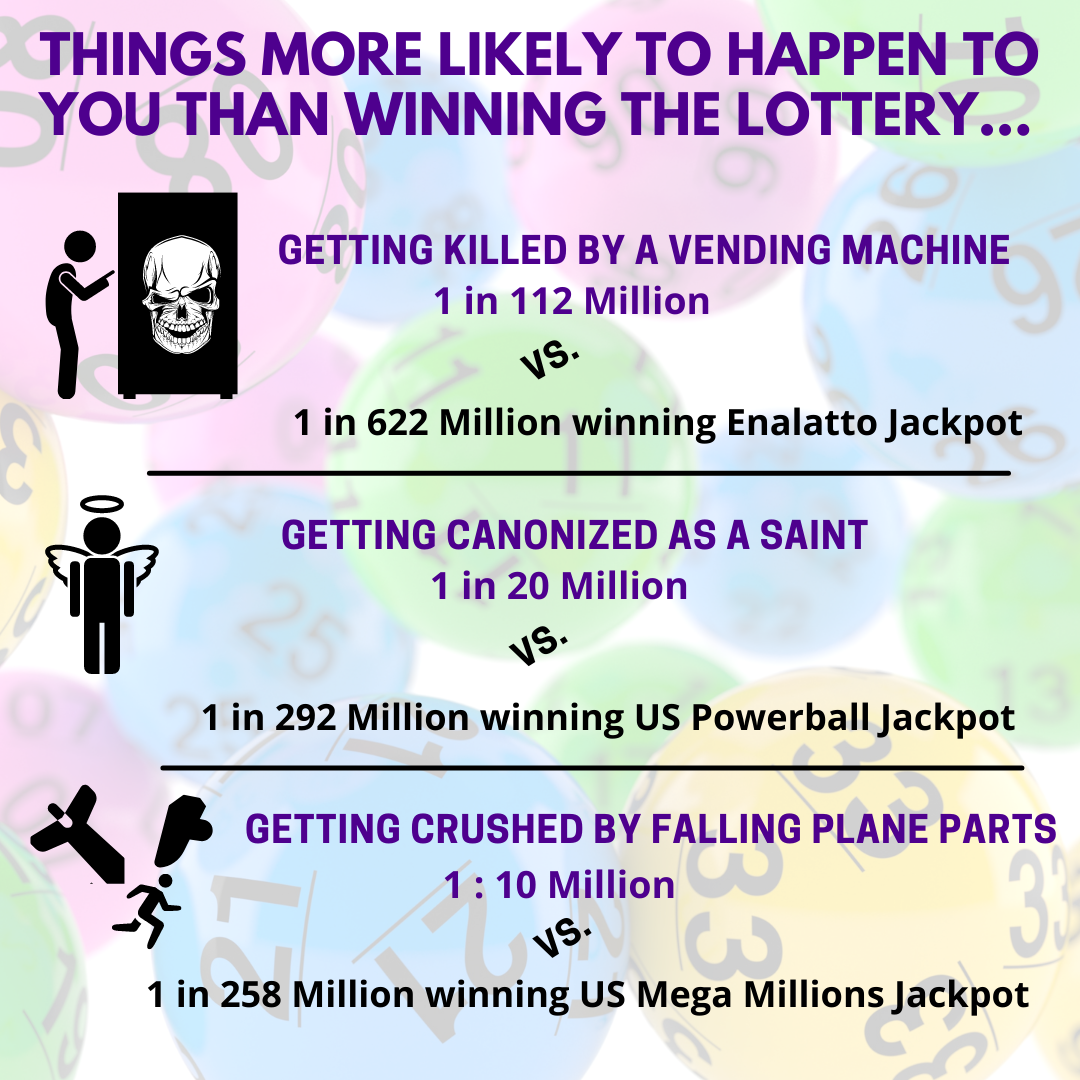
Lotteries in perspective

Relatively unlikely

The Lottery: The Poor are Playing, and the Wealthy are Winning – Focus for Health

Progress?

[W]e tell ourselves that we’re advancing because “grandma gets an iPhone with a smooth surface,” but meanwhile she “gets to eat cat food because food prices have gone up.”

Peter Thiel

Another Percy thought-experiment?

A letter to Dear Abby: I am a twenty-three-year-old liberated woman who has been on the pill for two years. It’s getting pretty expensive and I think my boyfriend should share half the cost, but I don’t know him well enough to discuss money with him.

Walker Percy, Lost in the Cosmos

Remember (or know, if you can’t remember) that Lost in the Cosmos is a very strange book. I don’t know whether this was a real “Dear Abby” letter.

But it should be.

Sex

When biologists claim that sex is binary, we mean something straightforward: There are only two sexes. This is true throughout the plant and animal kingdoms. An organism’s sex is defined by the type of gamete (sperm or ova) it has the function of producing. Males have the function of producing sperm, or small gametes; females, ova, or large ones. Because there is no third gamete type, there are only two sexes. Sex is binary.

…

For the vast majority of people, their sex is obvious. And our society isn’t experiencing a sudden dramatic surge in people born with ambiguous genitalia. We are experiencing a surge in people who are unambiguously one sex claiming to “identify” as the opposite sex or as something other than male or female.

Colin Wright, A Biologist Explains Why Sex Is Binary

When individualisms clash, who wins?

This short paragraph is dense, but rewarding:

The legislation also demonstrates one of the oddest results of the modern emphasis on the radical freedom of the individual. In such a world, all must theoretically be allowed to have their own narratives of identity. But because some narratives of identity inevitably stand in opposition to others, some identities must therefore be privileged with legitimate status and others treated as cultural cancers. And that means that, in an ironic twist, the individual ceases to be sovereign and the government has to step in as enforcer. The lobby group of the day then decides who is in and who is out, with the result that, in this instance, the gay or trans person who wants to become straight or “cis” (to use the pretentious jargon), cannot be tolerated. His narrative calls into question that of others. We might say that his very existence is a threat. To grant any degree of legitimacy to his desire is to challenge the normative status of the desires of others.

Carl Trueman, Prohibiting Prayer in Australia

Political

Election 2024 Aftermath

[W]e’d be foolish not to see the risk of civil disorder and legal shenanigans as high no matter who loses in 2024. Downtowns were boarded up on the eve of the 2020 race not against angry and aggrieved Trump voters. Rural riots are hardly a thing. It was in deeply blue areas that local officials feared mass violence if the election didn’t turn out the way Democrats wanted.

…

You can’t analyze realities you refuse to see. Take a recent podcast with the Democratic campaign guru Joe Trippi that borders on the neurotic. He’s alarmed not because 75% of voters say they fear for the future of democracy, but because Republicans are saying this, since in his mind only Democrats are allowed to feel democracy is under threat (from Republicans, of course).

Holman W. Jenkins, Jr., If Trump Wins in 2024, Then Who Threatens Democracy?

A new avatar for populism?

If you are someone who wish Trump would go away, Frank Luntz has some excellent, well-researched advice on what it will take (and thus implies what kind of candidates you should support).

Spoiler alert: populism isn’t going away any time soon, but Trump needn’t be its avatar.

Ennui

A Jules Feiffer cartoon in the Village Voice once depicted a man suffering from liberal ennui. The man shifted uncomfortably in his chair and explained how he was bored all the time, had no appetite, no interest in life, no sense of humor, no capacity even for outrage.

The punch line? “I need Nixon.”

William McGurn, Donald Trump’s Enemies Need Him, of a September 1974 cartoon.

As a grown-up, I’m sure you can imagine the current-world analogy.

Greg Abbott goes beyond jackassery

The law-and-order party has a law-and-order problem.

I’m not talking about the Republican Party’s tolerance for, and even unconditional defense of, Donald Trump’s many legally dubious acts—though that is certainly bad.

I’m talking, instead, about something far broader in the party and the culture from which it derives its political energy. We saw it in the way conservative media outlets and personalities back in 2020 treated 17-year-old Kyle Rittenhouse as some kind of folk hero for shooting three men, killing two, during civil unrest in Kenosha, Wisconsin, after he made a point of driving, heavily armed, to the site of the protests from his home in neighboring Illinois.

We see it in strong support among Republicans, not only for permissive gun regulations, but also for laws allowing private citizens to carry military-grade firearms in public places, whether concealed or not.

And we see it in its most alarming form yet in Texas Governor Greg Abbott’s promise to pardon Army sergeant Daniel Perry, who was convicted of murder last week for killing 28-year-old Garrett Foster at a Black Lives Matter demonstration in Austin in 2020.

Together these trends—but especially Abbott’s stance on Perry’s murder conviction—show us a party staking out a position incompatible with life under the rule of law and within a civil society. In its place, the GOP appears to favor a return to the unlawful disorder of the wild west, where vigilante violence and factional allegiances took the place of establishing justice, ensuring domestic tranquility, and promoting the general welfare.

Damon Linker

The jury’s conviction of Daniel Perry was amply supported by the evidence. No stand your ground law should cover a hot-head going and looking for trouble, then shooting someone dead before it even arrives.

The serial jackassery of Gov. Abbott is one reason why, netting the negatives out from the positives, living in Texas doesn’t appeal to me.

A successful third party

[I]t is worth remembering that there already has been a very successful third party: the Republican Party, which skyrocketed to power very shortly after its founding in 1854, with the first Republican president, Abraham Lincoln, winning the White House in 1860. By contrast, the Libertarian Party, founded in 1971, has topped out at 3.3 percent in presidential elections—and that was in 2016, when the party’s ticket comprised two moderate Republican former governors (Gary Johnson and William Weld) running against two corrupt and contemptible New York Democrats, Hillary Clinton and Donald Trump.

Kevin D. Williamson, Meet the Whigs


For all its piety and fervor, today’s United States needs to be recognized for what it really is: not a Christian country, but a nation of heretics.

Ross Douthat, Bad Religion

You can read most of my more impromptu stuff here (cathartic venting) and here (the only social medium I frequent, because people there are quirky, pleasant and real). Both should work in your RSS aggregator, like Feedly or Reeder, should you want to make a habit of it.

Palm Sunday (your mileage may vary)

Testimony

I’ve now heard two podcast interviews with Jon Ward and was sufficiently impressed by him that I’m pre-ordering his new book, Testimony:

A respected journalist, Ward asks uncomfortable but necessary questions, calling those inside and outside conservative Christian circles to embrace truth, complexity, and nuance. He recounts his growing alarm and grief over the last several years as evangelical conservatives attacked truth, rejected personal character, and embraced authoritarianism and conspiracism. He shares his search for a faith that embodies the values he was taught as a child.

Ward’s experience and reflections will resonate with many readers who grew up in the evangelical movement as well as all those who have an interest in the health of the church and its impact on American life.

Sin as an ontological problem

“Is it a sin to withhold help from someone in need?” The answer is yes – but not in a merely legal sense. It is a sin – a movement towards non-existence – a movement away from the proper direction of our lives.

Fr. Stephen Freeman, The Erotic Language of Prayer

Saved by Grace

We are indeed saved by grace. However, the Protestant meme that interprets this as mere judicial kindness is an egregious error. Grace is the very life of God, the Divine energies, the fire by which we are transformed into the image of Christ. We do not earn it, but we can certainly shield ourselves from its action. Christ describes this in terms of a seed sown among thorns ….

Fr. Stephen Freeman, Rest for Your Soul

A forgotten homily

And Jacob said to Rebekah his mother, Behold, Esau my brother is a hairy man, and I am a smooth man

Genesis 27:11

One of my earliest television memories, probably still the 1950s, was a British comic reading this with exaggerated antiquity (“an hairy man … an smooth man”) and then delivering a homily on it.

Unfortunately, I can’t remember anything about the homily. If the comic had a prophetic streak, it could have been free-association on the day’s politics. But I suspect it was a sly intimation of the irrelevance of Christianity.

Or maybe those two possibilities amount to the same thing.

Transmogrified

[T]he Enlightenment—and, yes, we are painting with broad strokes here—did not do away with the notions of Providence, Heaven, and Grace. Rather, the Enlightenment re-framed these as Progress, Utopia, and Technology respectively. If heaven had been understood as a transcendent goal achieved with the aid of divine grace within the context of the providentially ordered unfolding of human history, it became a Utopian vision, a heaven on earth, achieved by the ministrations Science and Technology within the context of Progress, an inexorable force driving history toward its Utopian consummation.

L.M. Sacasas

How and where?

Science Finds, Industry Applies, Man Conforms.

The theme of the 1933 World’s Fair in Chicago

I’m not sure how or in what universe such a slogan would seem uplifting.

Whited sepulchres

You look so good the slum must be inside you

Poet Tomas Tranströmer via Martin Shaw

There oughtn’t be a law

I don’t want to make an ordinance just to make an ordinance. I don’t think I’ve heard one complaint about this, ever.

A City Councilman, apparently compos mentis, regarding an ordinance to require smokers to stay 15 feet, rather than 8 feet, from building entrances.

Bare inspiration

Without craftsmanship, inspiration is a mere reed shaken in the wind.

Johannes Brahms

Faith

What you’ve done becomes the judge of what you’re going to do—especially in other people’s minds. When you’re traveling, you are what you are right there and then. People don’t have your past to hold against you. No yesterdays on the road.

William Least Heat Moon

Man does not simply exist but always decides what his existence will be, what he will become in the next moment.

Victor Frankl

Both quotes from Jacob Sims, A Community of Aliens, an example of why I always at least glance at new stuff from Front Porch Republic. Mr. Sims has a book out called Wanderlost, published this week.

One source of imperialism

Imperialism is the necessary logical consequence of universalism.

Samuel P. Huntington, The Clash of Civilizations and the Remaking of World Order

Quite the wordsmith

  • … Donald Trump’s post-indictment Festivus-style airing of grievances …
  • One lottery ticket is gambling, two is innumeracy.

Kevin D. Williamson


For all its piety and fervor, today’s United States needs to be recognized for what it really is: not a Christian country, but a nation of heretics.

Ross Douthat, Bad Religion

You can read most of my more impromptu stuff here (cathartic venting) and here (the only social medium I frequent, because people there are quirky, pleasant and real). Both should work in your RSS aggregator, like Feedly or Reeder, should you want to make a habit of it.

This was my week that was

Priorities

Rs are gonna lose a consequential Supreme Court race in WI and watch the soft defund candidate win the mayoralty in Chicago tonight, and they’ll spend all day tomorrow talking about Trump. And no one will see the problem.

Noah Rothman on the evening of 4/4.

I’m no longer an R, and not even sure I lean that way any more. But I’m going to try to be less obsessive in my denunciations of Orange Man. In fact, I’ll let him speak for himself. https://www.youtube-nocookie.com/embed/ERUngQUCsyE?rel=0&autoplay=0&showinfo=0&enablejsapi=0

Gun culture

I think I’ve said, maybe even recently, that the 2nd Amendment is no special preoccupation for me. I just accept what the Supreme Court says about it.

But that’s not the end of the topic. There are cultural questions, too. And I think Matthew Walther’s voice is valuable:

The AR-15 is situated at the intersection of a relatively innocent hobbyism and the sinister mainstreaming of features of the militia culture of the 1990s, even among people who lead law-abiding lives. The primary selling point of the AR-15 is that it can be endlessly modified, configured, reimagined. It can become louder or quieter, easier to carry, wield, fire and reload, or more lethal. It is meant to be combined with a seemingly endless array of customizable stocks and grips, blast mitigation devices, piston uppers and conversion kits. These components are themselves paired with a vast assortment of accessories — vests, helmets, straps and other gear unfailingly designated as “tactical.”

It is this adjective, and the ubiquity of references to “tacticians” in advertising copy, review sites and hobby forums, that suggests the baleful aspect of AR-15 culture. Who exactly is practicing these tactics, and where and for what purpose? What this “tactics” business signals is not so much a commitment to action (the overwhelming majority of those who own AR-15s are law-abiding) as a general frame of mind. To the would-be tactician, every place that humans inhabit — housing developments, apartment complexes, stores, strip malls, hotels, churches, hospitals and, yes, schools — is another opportunity to imagine oneself taking part in military-style maneuvers. Where would you go for cover if you were here? How would you hold this position? What weapons and gear would you use?

… For AR-15 enthusiasts, the gun is not a means to an end — a tool with which you hunt, a weapon with which you protect your family and property — but rather the end itself, a site of fantasy and meaning making.

I suspect that part of the reason for the rise of AR-15 fandom is the decline of other American hobby cultures …

But for all the amateur tinkering, the reality is that these fetishized murder weapons, so often treated by their owners as if they were indistinguishable from model ships or Pokémon cards, have been used repeatedly in incidents like the recent one in Nashville. …

… My opposition to what the AR-15 represents is not a methodologically rigorous attempt to identify the primary cause of what social scientists call mass shootings. In some ways it is simply an expression of hope for a saner culture, a plea for something other than hypothetical terrorism to form the basis of our leisure time and family memories.

Interesting hypothesis about American hobby cultures, too. The link, above, should get you through the Times paywall.

I’m broadly supportive of a saner culture. If my Congressman posed with his family armed with AR-15s on his Christmas card, I’d never again vote for him, much as I’ve never voted for the current Indiana Attorney General, who early in his very first campaign did something (the specific having been lost to memory) that showed him a base and demagogic liar.

Ephemeral “growth”

Sometimes growth is an accounting artifact, with work formerly done in the home moving into the market. For example, two mothers who would prefer to take care of their own children would create GDP growth by hiring each other as nannies instead, because unpaid work for one’s own family goes uncounted but paid work for someone else’s represents new economic activity.

Oren Cass, The Once and Future Worker

I felt just covered with dirt afterwards

Auden experienced some of the complexities of this situation in early 1939, soon after his arrival in the United States. He gave a speech at a dinner in New York convened to raise money for refugees from the Spanish Civil War, and, as he later reported to an English friend, “I suddenly found I could really do it, that I could make a fighting demagogic speech and have the audience roaring. So exciting but so absolutely degrading. I felt just covered with dirt afterwards.”

Alan Jacobs, The Year of Our Lord 1943

I experienced that thrill once as Emcee, warming up a crowd. It took some years for the shame to sink in with me, though, and that the demagoguery was in a “good cause” doesn’t much help.

She made her bed …

Wisconsin has elected to its Supreme Court a candidate who has all but promised how she would vote on issues including abortion and redistricting. The way she campaigned is a huge breach of how judicial candidates are supposed to behave.

Her breach will open her up to many recusal motions. I cannot explain it better than Josh Blackman did in Justice Janet Protasiewicz, Say Hello To Caperton v. Massey. Short version: there’s an ill-reasoned Supreme Court precedent (by Anthony Kennedy, king of ill-reasoned precedents) that denial of a motion to recuse can violate the federal due process clause.

Meanwhile, the prominence of abortion in that election further confirms my suspicion that most states are going to end up with European-type laws, permitting abortion for roughly one trimester, than generally banning it, in order to lay the issue more or less to rest. Specifically, the total bans (not even exceptions for the life of the mother) enacted in several red states are unsustainably unpopular.

Rhetorical escalation

I have complained more than once that is one (I have in mind a pompadoured southern pastor preaching in demagogic tones) calls Playboy “hard core pornography,” he’s limited his options for describing Hustler (and even worse publications).

It dawns on my that our current demagogues of the press have done something similar in describing Viktor Orbán’s Hungary as “authoritarian.” Yes, they’ve left room for “totalitarian” to describe Russia, but what then do we call North Korea?

How about acknowledging that Hungary is a kind of democracy — an illiberal one — and that an electoral majority seems to like it that way?

Child and Adolescent Gender Transitioning

On different sides of the Atlantic, medical experts have weighed the evidence for the treatment of gender-dysphoric children and teenagers, those who feel intense discomfort with their biological sex. This treatment is life-changing and can lead to infertility. Broadly speaking, the consensus in America is that medical intervention and gender affirmation are beneficial and should be more accessible. Across Europe several countries now believe that the evidence is lacking and such interventions should be used sparingly and need further study. The Europeans are right.

…

Proponents say that the care is vital to the well-being of dysphoric children. Failure to provide it, they say, is transphobic, and risks patients killing themselves. The affirmative approach is supported by the American Academy of Paediatrics, and by most of the country’s main medical bodies.

Arrayed against those supporters are the medical systems of Britain, Finland, France, Norway and Sweden, all of which have raised the alarm, describing treatments as “experimental” and urging doctors to proceed with “great medical caution”. There is growing concern that, if teenagers are offered this care too widely, the harms will outweigh the benefits.

The Economist, What America has got wrong about gender medicine

A Finnish review, published in 2020, concluded that gender reassignment in children is “experimental” and that treatment should seldom proceed beyond talking therapy. Swedish authorities found that the risks of physical interventions “currently outweigh the possible benefits” and should only be offered in “exceptional cases”. In Britain a review led by Hilary Cass, a paediatrician, found that gender-affirming care had developed without “some of the normal quality controls that are typically applied when new or innovative treatments are introduced”. In 2022 France’s National Academy of Medicine advised doctors to proceed with drugs and surgery only with “great medical caution” and “the greatest reserve”.

The Economist, The evidence to support medicalised gender transitions in adolescents is worryingly weak

Humanities murdered?

The end of the humanities: Fewer and fewer college students are choosing to study the humanities.

I will say the very best place to hide something interesting is inside a 10,000-word New Yorker story on the crisis. Thankfully, Blaise Lucey at Litverse read the whole thing and pulled the numbers.

“From 2012 to 2020:

Tufts lost ~50% of humanities majors 

Boston University lost 42% of humanities majors 

Notre Dame lost 50% of humanities majors

The study of English and history at the college-level dropped by 33% 

More than 60% of Harvard’s class of 2020 planned to enter tech, finance, and consulting jobs”

The crash makes sense. How much do you really want to pay for a semester on the white supremacy of Jane Austen, the blinding cis-ness of Homer, the anti-lesbianism of Gilgamesh? More efficient just to burn the books and major in statistics. According to a new WSJ poll, the majority of Americans, especially young Americans, now say a college degree isn’t worth the money.

Nellie Bowles

If that last paragraph really reflects how humanities are taught today, it’s no wonder — though it remains a tragedy — that enrollments are dropping.

Soros: Now you see him, Now they mustn’t

It is sometimes allowed to be said that Alvin Bragg was funded by George Soros, but only when New York mag Soros want it to be noted in a positive way, but if it’s said with a vaguely negative tone then it’s a Fact Check: False.

Nellie Bowles

Hate to say it …

[S]ometimes you come across certain places, and even certain countries, that are clean and well-lighted. They are pleasant and harmonious. They work. …

What strikes me today is how impossible it is to feel this about the United States. As Robin Williams joked, Canada is like a nice loft apartment, but America is the party raging underneath. That party, though, is turning sour; something is rotten in the state of America. Even Williams later changed his analogy. Canada was still a nice apartment, but America had turned into the nightmare meth lab below.

Tom McTague, America’s desperate dysfunction


For all its piety and fervor, today’s United States needs to be recognized for what it really is: not a Christian country, but a nation of heretics.

Ross Douthat, Bad Religion

You can read most of my more impromptu stuff here (cathartic venting) and here (the only social medium I frequent, because people there are quirky, pleasant and real). Both should work in your RSS aggregator, like Feedly or Reeder, should you want to make a habit of it.f

Sunday, 4/2/23

The secularists’ god

A modern secularist quite often accepts the idea of God. What, however, he emphatically negates is precisely the sacramentality of man and world.

Fr. Alexander Schmemann, For the Life of the World

Peter Pan and Prosperity

There was a strangely gripping part of the televised Peter Pan of my childhood (featuring Mary Martin as Peter) where Tinkerbell drank poison to save Peter, but she “could get will again if children believed in fairies.” The children watching were encouraged to clap to let Tinkerbell know they believed.

Her recovery was nothing short of miraculous. No thanks to me.

I’m almost positive I didn’t clap because I didn’t believe in fairies. I even felt a bit resentful at the manipulation, (Yeah, I was that kid.)

Believe hard enough and good things will happen to you, from earthly to heavenly riches (so it’s your own fault if you’re not rich) is not a message that has gone away.

Christian America or White America?

We often hear that the most significant trend in religion in America is the rise of the “nones,” those who profess no religious affiliation. That demographic group is indeed important for the future of religion, culture and politics in America, and as of 2021, Pew reported that 29 percent of all adults identified as atheists, agnostics or “nothing in particular.” But alongside that trend, the changing demographics of Christianity promise to transform faith and religious discourse. We cannot assume that America will become more secular so long as the future of America is less white.

…

I quickly recognized that the standard American religious survey categories no longer account for the realities expressed in the church in America. “White evangelicalism,” “Protestant mainline” and “progressive” are categories that are largely defined by a white majority. This “browning” of the church in America, as some scholars call it, scrambles all the categories. What we are seeing isn’t simply that white evangelicalism is changing; it’s that something new is emerging.

… What will it mean for politics and religion in America when religious conservatives are by and large voices of color? Even now, when white progressives criticize “conservative Christians” or “conservative evangelicals,” they, perhaps unknowingly, are largely critiquing people of color from the majority world. On the other hand, when conservatives for so-called family values take anti-immigration stances, they are ironically abetting the secularization of America.

This influx of nonwhite believers will challenge white religious conservatives to choose between xenophobia and building alliances with immigrants who share their views on social issues. These trends will also challenge them to unbundle their religious views on social issues from a kind of libertarian economics that harms those who are less wealthy. In the same way, white progressives will be in the awkward spot of choosing whether to continue to push boundaries about sexuality and gender — which will put them on the side of largely white, wealthier Westerners — or to be in solidarity with those from the majority world who most likely hold views that are out of step with social progressivism.**

Tish Harrison Warren.

I skipped over this once or twice the day it appeared, on the assumption that it was demographic stuff I already knew. But while I knew the “arc,” I did not know how far the trends have progressed nor had I thought about the political ramifications of conservative Christians of several colors making political cause against white progressives.

(Silly me! I tend to think about “religion” in religious terms, not political. And in religious terms, some of the groups Warren describes do not sound unequivocally Christian.)

Ambiguity about creation

Put in biblical imagery, this tension might be expressed as follows: On the one hand, we want, with the psalmist, to see the lion stalking its prey as seeking its food “from God” (Ps 103/4.21). On the other hand, we also want to say, with the Book of Isaiah, that when God’s ultimate purposes are fulfilled, “the wolf shall dwell with the lamb and the leopard shall lie down with the kid” (Is 11.6). And in wanting to use both of these images, we are implicitly admitting to an ambiguity in our attitude to God’s creation as we experience it.

Christopher C. Knight, Science and the Christian Faith

It takes a family to raise a Christian

Protecting mumbo-jumbo and mummery?

Legislators in Washington State, Vermont, and Delaware are trying to abolish clergy-penitent privilege in the context of mandatory reporter laws. In other words, a Clergyman who hears a confession of child sexual abuse would have to report it.

Eric Kniffin of the Ethics and Public Policy Center has been fighting these legislative efforts and explains persuasively why the bills are “impractical, discriminatory, and unconstitutional.”

All I want to add (or emphasize), as a retired attorney and a Christian in a tradition that practices sacramental confession, is that I’m offended by an odious implication of abolishing the clergy-penitent privilege while continuing the attorney-client privilege: that implication is that the attorney-client privilege is important because it allows attorneys to do important jobs properly while the clergy-penitent privilege merely protects some mumbo-jumbo and mummery.

Fortunately, that very invidious implication is part of the reason why the laws are unconstitutional.

Epistle of James

Pure religion and undefiled before God and the Father is this, To visit the fatherless and widows in their affliction, and to keep himself unspotted from the world.

James 1:27

I’ve always been more diligent about avoiding spots than about visiting the fatherless and widows in their affliction.

Getting real

You look so good the slum must be inside you

Poet Tomas Tranströmer via Martin Shaw


For all its piety and fervor, today’s United States needs to be recognized for what it really is: not a Christian country, but a nation of heretics.

Ross Douthat, Bad Religion

You can read most of my more impromptu stuff here (cathartic venting) and here (the only social medium I frequent, because people there are quirky, pleasant and real). Both should work in your RSS aggregator, like Feedly or Reeder, should you want to make a habit of it.

April Fools Day

AI

I finally dipped my toe into ChatGPT, having been inspired by a story of a mom who used it to plan her child’s birthday party.

I had it draft a policy on delinquent tuition payment for a private school. High marks. Over the coming days, I’ll see what other logjams it can break on my project list.

I asked it “What are some real-world applications of the quadratic equation?” It gave a plausible answer, which I cannot evaluate since I haven’t used the equation since high school and cannot remember it. (If any kids are reading this, that’s probably because I became a lawyer, not an engineer.)

Since I get too easily enamored of technology, it behooves me to read smart critiques and concerns as they come along, if only to guide my personal conduct toward AI.

Nashville shooting

Journalistic lacunae

Why not explore [journalistically] how the attack on children and teachers in a Christian school affects Christians. This massacre may have been what some call a “hate-crime” against a religious group. And it’s odd that the community whose actual children were murdered seems less deserving of coverage than the community wrongly associated with a child-killer. It would be the equivalent of asking the Muslim community how they felt about a mass shooting in a synagogue, but never asking Jews.

It also seems legit to me to cover how violent memes and slogans and rhetoric can prime already-unstable people to commit violence. If it’s fair to call out the NRA’s materials after a mass killing (and I think it is), it’s also fair to note how common violent imagery and rhetoric has become in the TQIA+ world.

“Kill Terfs” is not a fringe slogan; it’s everywhere. A leader of the TQIA+ movement, Chase Strangio, has written that laws restricting child sex-changes are, in fact, laws to “criminalize known survival care for trans youth … That goal is akin to a goal of killing us.“ He has also claimed that his opponents “want to control and eradicate” trans people. Last weekend, a trans activist assaulted a gender-critical speaker with tomato juice in New Zealand, telling a crowd that “I want her to be full of blood, because that’s what she’s advocating for. She’s advocating for our genocide … our extermination.” The mob violently shut the event down. Then there are the many

grimacing skulls that promise “DEATH BEFORE DETRANSITION”, knives, baseball bats wrapped in barbed wire, assault rifles painted in the pastel tones of the trans flag, torrents of rape and death threats, the grim vow that “EVERY DAY IS TRANS DAY OF VENGEANCE.

And it would also be great if the press could fact-check not just the falsehood that trans people are more likely to murder, but also the idea, constantly reiterated by TQIA+ groups, of an “epidemic” of anti-trans, hate-motivated murders. That notion has been repeatedly debunked ….

Andrew Sullivan

Why don’t the police release the "manifesto"?

I was just about ready to join the demand for release of the Nashville Christian School shooter’s reported “manifesto” when this brought me up short:

consider this other possibility: Might the shooter’s manifesto contain accusations of some kind against family, school, church or others? If that’s the case, police and legal officials may be investigating these claims before airing them to the public.

That’s not an entirely idle speculation, as you’ll see if you follow the hyperlink, nor is it implausible: an extremely conservative Presbyterian church in my hometown badly mishandled sexual abuse in the congregation.

So, yes, sooner or later we need to see the “manifesto.” If they’re investigating claims of the manifesto, it would be nice to know.

The Trump Indictment

Selected quotes

I’ve written a bit about the New York case against Trump, now gone to indictment. None of it was particularly original, and neither is this, but then I’m pretty selective about what sources I’ll spend time reading.

That said, some notable commentary by others:

  • David Frum notes that the charges might not even be about Stormy Daniels. (Deciding what a grand jury’s up to is a bit like reading chicken entrails.)
  • In his statement responding to the indictment, the former president said, “Never before in our Nation’s history has this been done.” But never before in our nation’s history have we had a president as dishonorable, as unethical, and as malicious as Donald Trump. (Peter Wehner)
  • There’s something very, well, Trumpy about this: He has a way of making everything sordid. Instead of a dramatic discussion about the meaning of accountability for a president who sought to overthrow the will of the voters to stay in power, we’re arguing about the dirty mechanics of hush-money payments to an adult-film star. (Quinta Jurecic)
  • I worry that a failed prosecution might strengthen Trump. Yet I’d also worry — even more — about the message of impunity that would be sent if prosecutors averted their eyes because the suspect was a former president. [Paragraph break omitted] The former president’s fixer, Michael Cohen, was sentenced to three years in prison for doing Trump’s bidding, and a fundamental principle of justice is that if an agent is punished, then the principal should be as well. That is not always feasible, and it may be difficult to replicate what a federal prosecution achieved in Cohen’s case. But the aim should be justice, and this indictment honors that aim. (Nicholas Kristoff, I Worry About a Failed Prosecution of Trump, but I Worry More About No Prosecution)
  • There is a counterargument that this is America’s moment for prosecutorial discretion to allow the country to recover and move on. As a teenager, I was outraged when President Gerald Ford pre-emptively pardoned former President Richard Nixon, yet over time I came to think that it was the right call and allowed the country to heal. Yet one difference is obvious: Nixon in 1974 was already completely discredited, ostracized and broken, while Trump denies any wrongdoing and is running again for the White House. (Nicholas Kristoff, I Worry About a Failed Prosecution of Trump, but I Worry More About No Prosecution)

Extradition

When someone on the Right accuses a progressive of being funded by George Soros, it damages my regard for the accuser more than for the accused. It’s a mark either of stupidity by the accuser or of his contempt for those listening. (The same goes for Lefties’ obsessions with the Koch brothers or Peter Thiel.)

Ron DeSantis is not stupid. You draw the necessary inference.

By the way, as Radley Balko points out, DeSantis famously removed a local prosecutor from office last year for declaring that he wouldn’t enforce the law as written for political reasons. That’s no different from what DeSantis himself is guilty of here [in claiming that “Florida will not assist in an extradition request”].

Nick Cattogio

Politics

Benchmarks

I want to leave a note here, because I expect to have many occasions to link back to it in the next several months.

Americans and Republicans, remember: You asked for this. Given the choice between a dozen solid conservatives and one Clinton-supporting con artist and game-show host, you chose the con artist. You chose him freely. Nobody made you do it.

I will be reminding you all of that, from time to time.

Kevin D. Williamson, May 4, 2016, right after Donald Trump secured the votes to be the Republican presidential nominee.

But he was wrong about something: he has had “occasions to link back to it” for years, not several months.

Williamson has another epochal column, Witless Ape Rides Escalator with perhaps the most on-point succinct summary of that ape:

[W]hen Trump sings “How Great Thou Art,” he sings it in a mirror.

When Ruy Teixeira talks

When Ruy Teixeira talks (Republicans Really Are the Party of the Working Class), Democrats should listen attentively.

In a lot of ways, the reversal of party affiliation by the white working class, in increasingly by “POCs” in the working class, is the most astonishing part of the realignment since witless ape rode escalator.

Elite Populism

There is an elite version of populism that masquerades as technocracy.

Jonah Goldberg

Freddie on “all that politics is”

I’m not sure who first said it, but it’s been observed that Trump’s fundamental political proposition is not really populism, or foreign policy isolationism, or economic protectionism. Trump’s political pitch is, simply, “I will destroy your enemies.” Which is part of what makes him a monster, his zeal for attacking his targets and the targets he picks. But when I see people who favor police and prison abolition exactly up until the police and prisons become useful tools to them, it convinces me even more that “I will destroy your enemies” is all that politics is. When you scrape the surface even a little bit, that’s all that you find, the will to destroy the other side.

Freddie deBoer, May "Destroy My Enemies" Be All of Our Law

I do not agree with Freddie on “all that politics is,” but he’s got an awfully good point about Trump.

Freddie gems

  • I am waiting for someone to tell me what the radical left approach to law and order adds up to, these days, other than an injunction against ever calling the cops for anything and people screaming on Twitter that it’s fine if you smoke meth in a crowded elevator. No one has taken me up on the offer to explain how any of this works. Because none of it works, and it’s not clear if it was ever intended to work as an actionable set of proposals. It’s all pose, all fashion. Three years after “defund the police” became a ubiquitous slogan in left spaces, nobody knows what it means, nobody feels any pressure to figure that out, but everyone is still sure that if you expect any enforcement of basic order at all, you’re a fascist.
  • Trump stood for very little in any conventional political terms, barely attempted to define a political agenda on the campaign trail, and was most notable in policy terms for his willingness to defend Medicare and Social Security after Paul Ryan’s former stranglehold on Republican fiscal ideals. Instead, he offered the ritualistic scourging of the people his fans found detestable – first in the primary, mocking John McCain and Jeb Bush and whoever else stood in his way, then the effete liberals who were allowing immigrants and criminals to ruin the country. His potential successor, Ron Desantis, is something of an idea man, but he tilts those ideas towards the urge to destroy constantly. His signature policies are all oriented towards reminding voters that he will target their enemies and use government to oppose them. He has to; it’s a political necessity for a 21st-century Republican with great ambitions.
  • What all of us have to recognize is that the nihilism and score-settling of the past seven years are not the fault of a single awful man but emergent properties of a toxicity deeply embedded in the guts of this country. We can’t cure that toxicity if we spend all of our time diagnosing it in the other side. Of course I think Republicans are mostly to blame. But that belief tells us nothing about how to build a better, healthier political culture.

Freddie deBoer

Indirect evidence on gun control

Here’s the funny thing: while conservatives balk at even the mildest gun control efforts on account of it being a slippery slope (fine), progressives have absolutely no intention of enforcing even existing gun control laws. What could I mean by this? Just listen to Philadelphia District Attorney Larry Krasner this week on how his office won’t prosecute illegal gun possession:

We do not believe that arresting people and convicting them for illegal gun possession is a viable strategy to reduce shootings,” the DA’s office said.

This is the ur-progressive prosecutor, saying gun control doesn’t stop shootings and that he’s just not going to do it. Because enforcing gun control laws would mean—it’s almost too terrible to say—enforcing laws. And that’s a line that America’s progressive prosecutors simply cannot cross.

Nellie Bowles

Gun control gets a boost every time there’s a mass shooting, especially of schoolchildren. But when you get into the weeds, the details, where the devil notoriously lurks, it’s far from obvious what to do. We can wish that we’d never become so gun-infatuated as a nation, but we did.

Kevin D. Williamson demolishes (as have countless others before him) the case against the AR-15 in The Washington Post Misfires—Again. The only thing particularly dangerous about the AR-15 seems to be its cool factor, its status as an icon of toughness.

So what now? “Do something! (however symbolic, ill-advised or constitutionally provocative)” is not an answer I’ll accept.

Challenge

Purity … is NOT the one thing needful; and it is better that a life should contract many a dirt-mark, than forfeit usefulness in its efforts to remain unspotted.

William James

Pure religion and undefiled before God and the Father is this, To visit the fatherless and widows in their affliction, and to keep himself unspotted from the world.

James 1:27

I’ve done the hard part, gathering the epigraphs. Would you now like to write the essay?

(H/T James K.A. Smith, by whose standard these epigraphs are far too direct for the essay I might write.)

Curiosities

Notable oddity to add a little seasoning to life: Vollis Simpson Whirligig Park

Wordplay

Anisogamy: Sexual reproduction involving two types of gametes that differ in size.


Walking:

  • All horsepower corrupts. (Patrick Leigh Fermor)
  • Walking “is how the body measures itself against the earth.” (Rebecca Solnit)
  • I only went out for a walk and … going out, I found, was really going in. (John Muir)
  • I took a walk in the woods and came out taller than the trees. (Henry David Thoreau)

Via Andrew McCarthy


If I were to support, much less endorse, Donald Trump for president, I would actually have to go back and apologize to former President Bill Clinton.

Southern Baptist Seminary President Al Mohler, 2016. “By 2020, Mohler had nonetheless become a public supporter of Trump, even standing by his vote for Trump after the Jan. 6 insurrection. ‘Based upon the binary choice we faced on November the third, I believe then that that was the right action to take,’ Mohler said on his podcast on January 7, 2021. ‘And going back to November the third, I would do the same thing again.’ To my knowledge, Mohler has yet to issue an apology to Bill Clinton.” (Robert P. Jones, Why a Trump indictment will matter so little to most of his Christian supporters)


Then the angel of the Lord went forth, and smote in the camp of the Assyrians a hundred and fourscore and five thousand: and when they arose early in the morning, behold, they were all dead corpses.

Isaiah 37:36 (King James Version)


‘Traditional art invites a look’, she wrote. ‘[Modernist art] engenders a stare’. The stare is not known for building bridges with others, or the world at large: instead it suggests alienation, either a need to control, or a feeling of terrified helplessness.

Iain McGilchrist, The Master and His Emissary. (I don’t recall who he was quoting.)


Disneyland is presented as imaginary in order to make us believe that the rest [of America] is real.

Jean Baudrillard


The irony of Chat GTP asking me to verify I’m a human

@philbowell on micro.blog


… the difference between what Rowling says she believes and what her critics claim she does ….

J.K. Rowling Addresses Her Critics


For all its piety and fervor, today’s United States needs to be recognized for what it really is: not a Christian country, but a nation of heretics.

Ross Douthat, Bad Religion

You can read most of my more impromptu stuff here (cathartic venting) and here (the only social medium I frequent, because people there are quirky, pleasant and real). Both should work in your RSS aggregator, like Feedly or Reeder, should you want to make a habit of it.

Thursday, 3/30/23

Education

Alarming if true

Over a third of our college seniors couldn’t show any significant cognitive gain for their college years.

Michael Poliakoff, president of the American Council of Trustees and Alumni via William McGurn.

Saucing geese and ganders

[T]he wrongs wrought by [university DEI policies] are three: First, by folding socio-political goals into the process for tenure and promotion the policy conflates those ends with professional qualifications. This conflation infringes academic freedom. Further, were it to become acceptable for a university to commandeer its faculty toward socio-political ends, made part of the faculty’s professorial obligations, there would be no principled reason why those who fund the institution—the legislatures—should not impose those socio-political ends that they hold dear.

Prof. Matthew Finkin, Diversity! Mandating Adherence to a Secular Creed.

Note well that last sentence, particularly if you commend DEI and contemn Ron DeSantis’s dealings with New College Florida.

What happens on campus doesn’t stay on campus

For a long time we tolerated campus behavior much as we used to tolerate the behavior of toddlers. They’ll grow out of it, we thought, when they enter the real world. But the joke was on us. They graduated into the real world and started to impose their views on it. Weak-kneed managers, eager to protect their privileges and preserve a quiet life, couldn’t face the hostility they’d get from their employees and a media of the same ideological mindset always willing to air the grievances.

We see the implications—occasionally bursting into the open—as when the New York Times forced its opinion editor to resign for publishing an article the radicals didn’t like, or Google dropping a Pentagon contract because employees objected to helping the U.S. defend itself. Most of the time it advances without publicity, as steadily, day by day, the former campus totalitarians make their way in the “real world.”

It’s time employers started to resist, and began to educate their employees—the hard way if necessary—why free speech is so important.

Gerrard Baker, Employers Need to Put the Squeeze on Woke Intolerance.

Culture

AR-15s and Whole Foods

If the Red Ryder BB gun is an artifact of an America in which little boys dreamed of growing up to be cowboys, then the omnipresent AR-pattern rifle testifies to a world in which the great masculine ideals are SEALs and snipers. SOCOM stands for “Special Operations Command,” but you’ll see that acronym deployed at least as often in firearms-related marketing material as you will in actual military reports.

(Incidentally, I was going to link to a “SOCOM” example above, but I am at the moment working from the cafe of a Whole Foods Market, which apparently employs a digital nanny that blocks U.S. gun-manufacturer websites. The link to the Communist Party of China works just fine. It’s a funny old world.)

Kevin D. Williamson

When polling reveals nothing useful

I am not particularly worried about a new poll everyone keeps talking about that shows collapse of civic virtues.

It’s not just that a knowledgeable pollster counsels caution about this particular due to a change in the pollster’s methodology (internet polling verses phone interview). It’s that I’ve already noted, polling aside, collapse of much about America and I don’t find quantification of it worth my time.

Progress in the 21st century

In the 21st century, Progress means the unbounded forward march of commerce and technology. And any effort at all to set any limits on that forward march, by calling for limits on the free global movement of low-skilled labour, for example, makes you far-Right by definition. As for asserting a sexed limit to self-identification, this also amounts to standing athwart the march of commerce and technology, yelling “Stop!”.

Mary Harrington, What Posie Parker learnt from Brexit

An arresting phrase

… the difference between what [J.K.] Rowling says she believes and what her critics claim she does.

J.K. Rowling Addresses Her Critics

Is Rowling a notorious liar? Are her critics clairvoyant? Are they grievance-pickers?

ICYMI

Hence the old parable about a vacationing New York businessman who gets talking to a Mexican fisherman, who tells him that he works only a few hours per day and spends most of his time drinking wine in the sun and playing music with his friends. Appalled at the fisherman’s approach to time management, the businessman offers him an unsolicited piece of advice: if the fisherman worked harder, he explains, he could invest the profits in a bigger fleet of boats, pay others to do the fishing, make millions, then retire early. “And what would I do then?” the fisherman asks. “Ah, well, then,” the businessman replies, “you could spend your days drinking wine in the sun and playing music with your friends.”

Oliver Burkeman, Four Thousand Weeks

Politics

Radical reformers

the Ukraine episode showed how Trump and DeSantis, each lionized by their admirers as men of conviction, are opposites in a sense. Trump has extreme instincts but was deterred repeatedly from following them by his advisers while in office. DeSantis, by contrast, works his will routinely in governing Florida but retreated toward a mainstream position on Ukraine when his initial reaction proved too extreme for some of his fans.

Who is the candidate of disruption between the two? The radical who doesn’t know how to govern effectively or the effective governor whose radicalism is shallow?

Nick Cattogio

The “Christians” of Coeur d’Alene

On Wednesday, as the frenzied mob of Trump enthusiasts desecrated the US Capitol, I had to go into Coeur d’Alene to run a few errands. On the street I saw a group of men and women gathered together, glued to their phones in ecstatic glee. I went into a store, where two men approached me to check if I’d heard the wonderful news about the invasion of the Capitol. They announced that the people are taking power, and this is just the beginning of a new revolution.

“And when the revolution arrives in this town,” they told me, “we’ll be driving all the liberals and BLM people into the hills.”

…[W]hen these men announced that they hoped the storming of the Capitol would culminate in the violent expulsion of their political rivals from town, I replied, “In a free society, people have the right to be jerks if they want to.” I was shouted down by everyone in the store. “Not anymore!” they yelled. “Things are different now.”

Robin Mark Phillips, 1/11/21


For all its piety and fervor, today’s United States needs to be recognized for what it really is: not a Christian country, but a nation of heretics.

Ross Douthat, Bad Religion

You can read most of my more impromptu stuff here (cathartic venting) and here (the only social medium I frequent, because people there are quirky, pleasant and real). Both should work in your RSS aggregator, like Feedly or Reeder, should you want to make a habit of it.

Tuesday, 3/28/23

Florida

Helen Lewis, Brit, visits Ron DeSantis’ Florida

This one goes out to a certain gun-lover in my life:

When I first arrived in Orlando, in late October, I rented what to me was a comically large Ford SUV and drove to McDonald’s for hash browns and a cup of breakfast tea (zombie-gray, error). Then I went to a gun range, where I began by firing two pistols. The very serious man behind the desk had clocked my teeth (British), accent (Hermione Granger), and sex (female), and expressed skepticism that I would want to fire an AR‑15 assault rifle too. But I did. In the past decade, semiautomatic rifles like the AR-15 have become the weapon of choice for young killers, and I needed to see what America was willing to put into the hands of teenagers in the name of freedom.

With the pistols, my shots pulled down from the recoil or the weight. But the AR‑15 nestled into my shoulder pad, and the shots skipped out of it and into the center of the target. I felt like I was in Call of Duty, with the same confidence that there would be no consequences for my actions; that if anything went wrong, I could just respawn.

Later, a friend texted to ask how firing the rifle had been. I loved it, I said. No one should be allowed to have one_._ This is not a sentiment to be expressed openly in DeSantis’s Florida. When the Tampa Bay Rays tweeted in support of gun control after the Uvalde, Texas, massacre last year, the governor vetoed state funding for a new training facility, saying that it was “inappropriate to subsidize political activism of a private corporation.” You might think: How petty. Or maybe: How effective.

Helen Lewis, How Freedom-Loving Florida Fell for Ron DeSantis

Florida as educational microcosm

[Florida] is a textbook example of academic bloat. The State University System of Florida consists of 12 public universities, with 341,000 enrolled students, of which only four are engaged in what the Carnegie Classification of Institutions of Higher Education refers to as “very high research activity”. The rest of these institutions, such as the enormous Florida Atlantic University, are vast and shabby post-secondary “student warehouses”, similar to UT-Arlington.

It is these universities, not the tiny New College of Florida, that constitute the real threat to public education — and not because they are “woke”, but because their retention and graduation rates are horrific. They are enrolling students, taking their federally-subsidised student loans, and barely graduating around 50% of them.

Oliver Bateman, America is fighting the wrong university wars

Culture

AI Status Report

All signs that I’ve registered counsel me that I’d been wasting my time trying to decide if Artificial Intelligence is boon, bane, or something even further out on the spectrum than those markers. I haven’t chatted with ChatGPT or immersed myself in a single longform essay on how “transformative” (grammatically neutral but functionally adulatory) or “apocalyptic” (mirror-image opposite) the technology is.

They’re all surely speculations by people who don’t really know because nobody knows the future, and I’d be astonished if I found a smoking-gun argument on either side.

I have spent a few minute, though, chuckling at AI screwups.

Routine corporate behavior

Fox News pandering to what its viewers wanted to hear after the last Presidential election is not really out of the mainstream of corporate behavior:

Sycophancy toward those who hold power is a fact in every regime, and especially in a democracy, where, unlike tyranny, there is an accepted principle of legitimacy that breaks the inner will to resist…. Flattery of the people and incapacity to resist public opinion are the democratic vices, particularly among writers, artists, journalists and anyone else who is dependent on an audience.

Allan Bloom, The Closing of the American Mind

Education more generally

The New York Times’ Frank Bruni opines on The Problem With College Rankings, and How We Fix It. The problem revolves around choosing for prestige.

The “fix” he alludes to is an interactive college selector of the Times’ own devising.

Here are the Times’ selection criteria:

Here’s the closest I thought I could come to what I value in a college or university (though “Academic Profile” seems a belamed version of “will they try to make me an educated person?”):

And here’s where I should go based on those criteria:

It was kind of interesting. If I actually were looking for a college, I’d definitely put this in the mix of tools.

Politics

Eric Metaxas and his kin

Eric Metaxas appeared to be a pretty solid guy until he sold his soul to a politician who remains too much in the news. His over-the-top comments between Election 2020 and the cool-down period after January 6 (see this) destroyed any trust I might have felt.

But I recently listened to a podcast discussion of his presumptuous newish book Letter to the American Church. I discerned very little thought, but a lot of rhetorical cunning: staccato riffs salted with endless straw men. I assume that sort of thing persuades some people. His resort to straw men in support of his inexplicably pre-ordained conclusions is of longstanding (see the Emma Green Atlantic story, the first link above).

Specifically, Mr. Metaxas,

  • I did not vote for Hillary Clinton just because I didn’t vote for Trump (have you heard of the “Electoral College” and “Red States”? A protest vote in a Red State need not be a Blue vote); and
  • I didn’t withhold my vote from Trump because I thought his supporters were yucky, tacky or whatever that straw man was. I refused to vote for him (twice now, and the second time the alternative was not Hillary, Trump’s biggest 2016 advantage) because he is a toxic narcissist and because sooner or later his pathological self-regard was going to make him misapprehend reality. (As we see his current deranged output on Truth Social, it’s obvious that I was right.)

I’ve thought about what would make someone like Metaxas lose his mind over this. There are people closer to me than him who’ve done much the same thing, such as the friend who recently faulted “SJW” jackboots at Purdue for disrupting a “conservative speaker.” That version has a few problems:

  1. Purdue has a strong free speech policy.
  2. So the SJWs did not disrupt, but rather counter-protested and acted up nearby.
  3. The dramtis personnae were not a benign conservative and malign SJWs, but rather a Right provocateur (“we must eradicate transgenderism from America”) eager to give offense and Leftish provocatees eager to take it.

What happened was that my friend had taken his Right narrative and applied it to facts that he assumed fit. He hadn’t bothered to ascertain what actually went on.

This suggests to me a possible causal sequence:

  1. My friend (and Metaxas?) assume that, this being America, if there’s a bad American guy or group, there must be a countervailing good American guy or group. It’s unthinkable that God would forsake America, His special darling, leaving its people with only miserably bad political choices (my strong suspicion of what happened).
  2. Having identified the Democrats as bad, the Republicans must be good (because only they are big enough to countervail; a vote for a third party candidate is “wasted”).
  3. Having identified the Republicans as good, their nominees and elected officials must be good — not just “less bad most of the time” but “good,” or “very good” or (as spoke another evangelical friend in 2016) “the best candidate I’ve had the privilege to vote for in my entire life.”
  4. Thus do we get Christian folk who have syncretized the faith with Manicheanism. Pas d’ennemies áu droit.

I suggest that narrative, which I shall for a while be tempted to use to structure what I observe and what I hear vague rumors about.

Where’s the beef? Maybe Georgia

In April 2020, businesses in Georgia were shuttered by government decree as in most of the rest of the country. Mr. Kemp was hearing from desperate entrepreneurs: “ ‘Look man, we’re losing everything we’ve got. We can’t keep doing this.’ And I really felt like there was a lot of people fixin’ to revolt against the government.”

The Trump administration “had that damn graph or matrix or whatever that you had to fit into to be able to do certain things,” Mr. Kemp recalls. “Your cases had to be going down and whatever. Well, we felt like we met the matrix, and so I decided to move forward and open up.” He alerted Vice President Mike Pence, who headed the White House’s coronavirus task force, before publicly announcing his intentions on April 20.

That afternoon Mr. Trump called Mr. Kemp, “and he was furious.” Mr. Kemp recounts the conversation as follows:

“Look, the national media’s all over me about letting you do this,” Mr. Trump said. “And they’re saying you don’t meet whatever.”

Mr. Kemp replied: “Well, Mr. President, we sent your team everything, and they knew what we were doing. You’ve been saying the whole pandemic you trust the governors because we’re closest to the people. Just tell them you may not like what I’m doing, but you’re trusting me because I’m the governor of Georgia and leave it at that. I’ll take the heat.”

“Well, see what you can do,” the president said. “Hair salons aren’t essential and bowling alleys, tattoo parlors aren’t essential.”

“With all due respect, those are our people,” Mr. Kemp said. “They’re the people that elected us. They’re the people that are wondering who’s fighting for them. We’re fixin’ to lose them over this, because they’re about to lose everything. They are not going to sit in their basement and lose everything they got over a virus.”

Mr. Trump publicly attacked Mr. Kemp: “He went on the news at 5 o’clock and just absolutely trashed me …

…

At that point, Florida was still shut down. Mr. DeSantis issued his first reopening order on April 29, nine days after Mr. Kemp’s. On April 28, the Florida governor had visited the White House, where, as CNN reported, “he made sure to compliment the President and his handling of the crisis, praise Trump returned in spades.”

Three years later, here’s the thanks Mr. DeSantis gets: This Wednesday Mr. Trump issued a statement excoriating “Ron DeSanctimonious” as “a big Lockdown Governor on the China Virus.” As Mr. Trump now tells the tale, “other Republican Governors did MUCH BETTER than Ron and, because I allowed them this ‘freedom,’ never closed their States. Remember, I left that decision up to the Governors!”

James Taranto, Brian Kemp, Georgia’s Affable Culture Warrior.

Res ipsa loquitur.

Ron DeSantis, George Soros and Peter Thiel

Governor Ron DeSantis should be ashamed.

In contemplating the possible criminal indictment of former President Donald Trump, the Florida governor tweeted: “The Manhattan District Attorney is a Soros-funded prosecutor.”

Let us review.

George Soros, the wealthy Hungarian-American financier and philanthropist, is the bogey man of the American right wing. They trace whatever they don’t like about liberalism or progressive politics back to Soros’ imaginary machinations. Soros is the puppet-master.

George Soros is a Jew.

These are antisemitic conspiracy theories. That is what makes antisemitism so potent, and unique among hatred — it has always existed as a network of conspiracy theories. You just have to say the name “Soros,” and you wind up with an antisemitic dog whistle — in much the same way as “Rothschild” has been, and continues to be.

Jeffrey Salkin, Call it Soros-phobia.

I completely agree that George Soros “is the bogey man of the American right wing.” I do not share that feeling about him.

I have no reason to doubt that Soros is a Jew.

I consider DeSantis’s comment about Alvin Bragg a combination of craven servility to Trumpist voters and hackneyed demagoguery about a bogey man.

But it does not follow that criticism of Soros is antisemitic, unless one absurdly considers any criticism of a Jew, at least if coupled with some dark hint that “he’s up to something,” antisemitic. And both Salkin and the ADL seem to have little more than that. (James Kirchik makes a similar point.)

They may nevertheless be right (I’ve been wrong about my “conservative” countrymen before). Let’s try a thought-experiment: Is Left criticism of Peter Thiel’s influence anti-gay?

Trump’s “Retribution Tour”

The accompanying article wasn’t revelatory, but I love Elaine Godfrey’s title: Trump Begins the ‘Retribution’ Tour


For all its piety and fervor, today’s United States needs to be recognized for what it really is: not a Christian country, but a nation of heretics.

Ross Douthat, Bad Religion

You can read most of my more impromptu stuff here (cathartic venting) and here (the only social medium I frequent, because people there are quirky, pleasant and real). Both should work in your RSS aggregator, like Feedly or Reeder, should you want to make a habit of it.