I’ve never been a fan of Mardis Gras, which I took to be “let’s sin a lot on the eve of Lent.” That just never sat right.
On the other hand, looking at my scale last Monday morning, I’d say we Orthodox (Americans at least) have something analogous: last weekend’s “Meatfare Sunday,” the last day meat is allowed before entering full Lent a week later (tomorrow). My attitude was “Whoopee! Let’s eat a lot of meat today!”
Forgiveness Sunday
Later today begins full Lent for Orthodox Christians:
This Sunday is the last day before the beginning of Great Lent, our 7-week journey to Pascha on April 12 … Lent begins at Sunday evening Vespers, followed by the ancient rite of forgiveness.
That’s when we line up and stand face-to-face with every member of the church in turn. We bow to them, honoring the presence of Christ in them, and say “Forgive me, my brother (or sister), for all my sins against you.” You put it in your own words, however you want to say it. That person says “I forgive you,” then goes on to say, “And forgive me for all the ways I have sinned against you” (phrasing it however they like.)
Even if there was no deliberate sin aimed against this person, you still ask forgiveness for contributing to the world’s burden of sin. A friend of mine says, “Forgive me for the way my sins pollute the world you have to live in.”
I found this helpful, because it has always seemed odd to ask forgiveness of someone I barely know. This idea of needing forgiven for the sort of cosmic effects of sin makes sense of it.
Yes, this implies that there are no “victimless crimes.”
A felicitous pairing
To see ourselves as a smart atheist sees us …
Christianity is a highly adaptable collection of faiths … It can be liberal or conservative or apolitical. It can be hellfire and brimstone or love and forgiveness. It can be whatever it needs to be to survive, [and] it will.
Christianity as a “collection of faiths” ought to jar those of us who are serious Christians, but I can certainly see how an outsider could reach that conclusion. Ecumenical bonhomie and back-slapping do nothing to throw a wet blanket over it.
“It can be whatever it needs to be to survive” also is an understandable conclusion for an atheist who watches the seven sisters jettisoning historic Christian dogmas and sexual morals.
… and as a smart Catholic sees us.
The religious mistake has been to fret over the threat posed by explicitly anti-Christian forces, while ignoring or minimizing the influence that the apostles of pseudo-Christianity exercise over the American soul.
Ross Douthat, Prologue: A Nation of Heretics, in Bad Religion.
Fairly nondescript warehouse-looking buildings
A couple of years ago, my wife and I were driving from our home in rural Illinois to St. Louis. The drive begins with corn fields, but after an hour gives way to the outer ring suburbs commonplace in any major metropolitan area. As we passed an area known mostly for the shopping centers, strip malls, and chain restaurants endemic to suburban sprawl, my wife pointed out a fairly nondescript warehouse-looking building off the highway. It had been freshly painted, and the parking lot had a new coating of asphalt.
The only thing that made this building stand out was a sign with a generic-looking logo — maybe a tree, maybe hands in prayer — and a single word, “Ascend.” “Is it a church?” my wife asked. We googled it. It wasn’t, as we expected, an upstart, non-denominational church. It was a marijuana dispensary, one of a number of stores cropping up on the Illinois side of the Mississippi as a result of the state’s legalization of recreational weed. We laughed about that for the rest of the drive into the city, sure that we couldn’t be the only ones unable to tell the difference between a new church or a dispensary.
Charismatic entrepreneurs, minimal formal training
Trust in Institution
Historically higher
Initially low but increasing as they institutionalize
Accountability
Institutional oversight
Often centered on individuals, risk of abuse
Cultural Impact
Cohesive groups like Religious Right
Fragmented evangelical fiefdoms
Is the Church obsolete?
A church that holds up secularized Christian values as the point of the Christian faith is not a church worth attending—let alone giving money to. So I have great sympathy for those who have stopped going to church or who haven’t bothered to try it. Theologically, I am one of those people who believes that every person needs Jesus—that a person lacks true life without him. But the evidence is in: the people have stopped going, and at the risk of saying the obvious, they have concluded they don’t need to go. They’re not getting anything out of church that they don’t already have. Who can blame them for quitting?
Matthew Burdette, Is the Church Obsolete?
I believe Burdette’s target may have been the mainstream Protestant denominations, but that phrase “secularized Christian values” could be applied to churches that are are unconsciously striving for political power as if it were more important than the Gospel:
A lot of covering up of the churches problems it’s motivated by the idea of that if the world knows the problems, we won’t achieve our real objective, which is political power.
It’s been decades since I heard it, but I still can’t shake it. The “it” I heard was a story from the Lutheran Church – Missouri Synod, which says it believes in Christ’s real presence in the Eucharist. I am reasonably sure that some other Protestant groups make the same claim, but as they say, “it’s complicated.”
In any event, the LCMS apparently follows the common Protestant practice of serving the blood of Christ (wine) in single-serv plastic cups. A convert to the Orthodox faith from the LCMS recounted what happens after the service.
The remaining single-serv cups’ contents are casually poured back into the bottle in the Church kitchen.
The cups themselves, with some wine residue still present, are thrown in the trash.
I have trouble seeing how this doesn’t mean throwing the blood of Christ into the trash — which surely vitiates the claim that the Church believes Christ is really present.
Your periodic reminder
The shift from church power to state power is not the victory of peaceable reason over irrational religious violence. The more we tell ourselves it is, the more we are capable of ignoring the violence we do in the name of reason and freedom.
Theology is offered to the glory of God, not ourselves. Since it is divine, it can never be based on human reasoning, ideas, speculation, or clever argumentation. Orthodox theology can never be disconnected from the spiritual life of the theologian or from the life of the Church. Authentic Orthodox theology is “liturgical, doxological and mystical.”
Dr. Eugenia Scarvelis Constantinou , Thinking Orthodox
You can read most of my more impromptu stuff here and here (both of them cathartic venting, especially political) and here (the only social medium I frequent, because people there are quirky, pleasant and real and it has no-algorithms). All should work in your RSS aggregator, like Feedly or Reeder, should you want to make a habit of it.
The best thing about New Years Day 2026 is that it means 2025 is over. President Ozymandias really hit the ground running for his second term, having surrounded himself with evil, shrewd, and power-hungry operatives this time instead of Republican normies who muted his bellowing. It’s hard to imagine (knocks on wood) that the worst of the self-aggrandizing vandalism isn’t over now.
Wordplay
Aphorisms
A platitude is a placebo for the mind; an aphorism is a wake-up call. Aphorisms provoke debate; they don’t promote dogma. Though they’re short, aphorisms spur considered reflection, not Pavlovian partisanship. At a time when polarization is so amped up, aphorisms can serve as psychological circuit breakers, interrupting our comfortable assumptions and prodding us to open our minds, unclench our fists, and think for ourselves.
In The Washington Post, Dana Milbank responded to some Republicans’ suggestion that the D.C. Metro be renamed the “Trump Train”: “It’s a great idea. Qatar will donate the subway cars, which will be powered by coal. Passengers will pay for fares with cryptocurrency after first showing proof of citizenship. And the trains will reverse themselves regularly and without warning — never quite reaching their original destination.” (Mary Ellen Maher-Harkins, Orwigsburg, Pa.)
In The Atlantic, David A. Graham processed the addition of “Trump” to “Kennedy” in the moniker for Washington’s premier performing arts center: “He asks not what he can do for his country, but what his country can name for him.” (Darrell Ing, Honolulu)
In Esquire, Dave Holmes acknowledged that Senator Lindsey Graham was maybe joking that Trump should be the next pope — but maybe not: “You can’t be tongue-in-cheek when you are actively licking the boot. There is just not enough tongue for both jobs.” (Susan Fitzgerald, Las Cruces, N.M.)
In The Wall Street Journal, Jason Gay rued the effect of obsessive replays on the determination of what, in pro football, constitutes a catch. “It’s the affliction of overthinking: If it walks like a duck, and talks like a duck, wait, hold on, it must be a chandelier,” he wrote. “It’s further evidence humans can ruin the spirit of anything, if given the time and technology.” (Bill Sclafani, Rockport, Mass.)
\[I\]n The Washington Post, Ron Charles assessed “The Little Book of Bitcoin,” by the supremely self-confident pitchman Anthony Scaramucci: “In one passage, he touts the convenience of transporting $500 million in Bitcoin on a thumb drive, which is the best news I’ve heard since my yacht got a new helipad.” (Stephen S. Power, Maplewood, N.J., and Hannah Reich, Queens, among others)
Charles also observed that the scolds who ban books have taken issue with “Maurice Sendak’s ‘In the Night Kitchen,’ which has been proven in the state of Florida to turn straight white Christian boys into polygender Marxists who eat only quinoa.” (Jill Gaither, St. Louis, and John Jacoby, North Andover, Mass.)
In The Times, Kevin Roose worried that when it comes to regulations, the stately metabolism of institutions is no match for the velocity of A.I.: “It feels, at times, like watching policymakers on horseback, struggling to install seatbelts on a passing Lamborghini.” (Conrad Macina, Landing, N.J.)
In The Times, A.O. Scott sang a similar song: “Occam’s razor, the venerable philosophical principle that the truest explanation is likely to be the simplest, has been thrown away. We’re living in the age of Occam’s chain saw, when the preferred answer is the one that makes the loudest noise and generates the most debris.” (Charles Kelley, Merrimack, N.H., and Trisha Houser, Durham, N.C., among others)
I saved three of Bruni’s best as personal favorites:
Also in The Times, Matt Hongoltz-Hetling considered the importance of an annual communal feast to a Vermont town’s special fellowship: “Whether a vibrant community created the potluck or the potluck created a vibrant community is like asking which came first, the fried chicken or the deviled egg.” (Stacey Somppi, Cottonwood, Ariz., and Hillary Ellner, Durham, N.C., among others)
In The Times, James Hamblin parodied the typical message and script of a television drug ad: “You will frolic on the beach at sunset psoriasis-free, with a golden retriever, smiling into the distance. You also may experience sudden loss of cardiac function, seizures of the arms or intermittent explosive ear discharge. Talk to your doctor.” (Susan Casey, Palm City, Fla.)
In The Dispatch, Kevin D. Williamson gave thanks for academia, despite its flaws: “The American university system is the envy of the world, and we are burning it down because there’s a couple of nonbinary gender studies professors at Bryn Mawr who say crazy stuff from time to time and there is a brain-dead gaggle of Jew-hating weirdos at Columbia. Of course, there is room for reform. But you don’t have to love every feather on the goose when it is laying golden eggs.” (Dan Markovitz, Corte Madera, Calif.)
The first just feels perfect; “explosive ear discharge” in the second was the only thing in the list that made me laugh uncontrollably; Kevin Williamson captures perhaps the single most tragic thing about what “we” are doing, (purely by coincidence, of course, during the second reign of the orange barbarian).
Finally: “Some of you should walk a mile in my shoes, because then you would be a mile away from me. Keep the shoes.” (Encountered by my wife on Pinterest)
My 2025
Reading
As I always note in my footer, I blog and socialize at micro.blog in addition to here. One of my friendlies at MB, an uncommonly sane Evangelicalish pastor in Chicagoland (very keen on racial reconciliation is he), posted his 2025 reading list and inquired about what others read this year.
My response:
At 77, I feel the Grim Reaper breathing down my neck, and I already own more books than I’ll get read before he wins. Further, I’ve read many, many books in my life already, including multiple books on many perennial themes. And although I love poetry, I either had poor teachers or was too barbarian to learn how to read demanding examples.
So I don’t have much toleration for books that are cumulative of what I already understand, or are neither pleasurable nor (so far as I can tell after reading a bit) profitable, including ones that many good people were raving about.
To avoid performative listing, then (e.g., Geoffrey Hill poetry, which defeated me utterly), I’ve eliminated all the books I abandoned part way in. Finally, listing a volume of poetry doesn’t mean I’ve read it all yet.
Book
Author
Rings Trilogy
Tolkien
Albion’s Seed
David Hackett Fischer
The World After Liberalism
Matthew Rose
Coracle
Kenneth Steven
Table for Two
Amor Towles
Till We Have Faces
C.S. Lewis
Godric
Beuckner
Stalingrad
Anthony Beever
Small Is Beautiful
Schumacher
Rilke Poetry
Rilke
Apocrypha
Stephen De Young
The Greek East and the Latin West: A Study in the Christian Tradition
Philip Sherrard
A Time of Gifts
Patrick Leigh Fermor
The New Science of the Enchanted Universe
Marshall Sahlins
Bread & Water, Wine & Oil
Fr. Meletios Webber
Lost in the Cosmos
Walker Percy
Giovanni’s Room
James Baldwin
The Long Loneliness
Dorothy Day
The innocence of Father Brown
G.K. Chesterton
Against the Machine
Paul Kingsnorth
You Have Arrived at Your Destination
Amor Towles
The Air We Breathe: How We All Came to Believe in Freedom, Kindness, Progress, and Equality
Extra pills are piling up across America. Excessive refills by U.S. pharmacies cost Medicare and patients $3 billion between 2021 and 2023, according to a WSJ analysis of Medicare prescription data.
WSJ. Based on my own rigorous anecdata, this is 1000% true. Which means that although mail-order pharmacies may have started it, brick-and-mortar local pharmacies are in the game now, too.
I really would rather not manually refill every prescription, but my pharmacy seems incapable of waiting 90 days to refill a 90-day prescription, and when I get a text that a prescription is ready for pick-up, I go pick it up (with rare exceptions, like a post-op opioid painkiller I definitely did not need).
Sam Altman, OpenAI’s chief executive, said in a recent podcast he can see ways that seeking companionship from an AI chatbot could go wrong, but that the company plans to give adults leeway to decide for themselves.
Nothing in her political career before September inclined me to cut Marjorie Taylor Green any slack whatever, but something has happened since then.
Her political conversion story, if you can call it that (it’s not about changing from MAGA to progressive or any other political position), rings true.
It started at the Charlie Kirk Memorial service:
What stayed with Greene long afterward were the last two speakers who took the stage. First there was Kirk’s widow, Erika, who stood in white before the crowd filling the Arizona stadium, lifted her tear-filled eyes and said that she forgave her husband’s killer. And then there was President Trump. “He was a missionary with a noble spirit and a great, great purpose,” he said of Kirk. “He did not hate his opponents. He wanted the best for them. That’s where I disagreed with Charlie. I hate my opponent, and I don’t want the best for them.”
“That was absolutely the worst statement,” Greene wrote to me in a text message months after the memorial service. And the contrast between Erika Kirk and the president was clarifying, she added. “It just shows where his heart is. And that’s the difference, with her having a sincere Christian faith, and proves that he does not have any faith.”
I thought at the time that should have been a wake-up call for every “Christian” Trump supporter in America. I still do. It speaks ominous things about our religious and political culture that it seems to have awoken so few.
But Marjorie Taylor Green, of all people, recognized it! And it appears that she has genuinely repented of her role in stoking hatred and division!
Time will tell; she’s been taking the potent MAGA pill for a long time, and withdrawal may prove too hard. But it’s looking good so far.
I wish her what I wished for Jimmy Carter on January 20, 1981: a long and happy and private life — plus a sustained repentance.
Paganism with worship music
We seem to be entering a pagan century. It’s not only Trump. It’s the whole phalanx of authoritarians, all those greatness-obsessed macho men like Vladimir Putin and Xi Jinping. It’s the tech bros. It’s Christian nationalism, which is paganism with worship music. (If you ever doubt the seductive power of paganism, remember it has conquered many of the churches that were explicitly founded to reject it.)
“If you dislike the religious right, wait till you meet the post-religious right,” Ross Douthat warned presciently at the dawn of Trumpism in 2016. … What Douthat calls the “post-religious right” certainly is more obnoxious and morally degenerate than its Bush-era forebear was, but it’s not correct to call a movement that’s developed its own alternate morality “post-religious.” It’s not even correct to call it “post-Christian,”…
The modern right is boisterously Christian, but without Christ. It extols Christianity aggressively but has ditched most of the moral content …
…
The purest expression of Christianity without Christ came from Trump himself, not coincidentally. At Charlie Kirk’s memorial service, shortly after Kirk’s widow, Erika, moved viewers by publicly forgiving her husband’s killer, the president strode to the mic and said, “That’s where I disagreed with Charlie. I hate my opponents, and I don’t want the best for them. I’m sorry.” That’s the literal antithesis of Christian morality …
But there were no mass defections by Christians from the president’s camp after his heresy. Erika Kirk herself remains a loyal Trump ally in good standing. And why not? Hating one’s enemies is squarely in line with the three purposes of post-Christ right-wing Christianity. The first is establishing the right’s cultural hegemony over other American factions; the second is narrowing the parameters of the right-wing tribe to exclude undesirables; and the third is deemphasizing morality as a brake on ruthlessness toward one’s opponents.
Almost everything written about the “alternative right” has been wrong in one respect. The alt-right is not stupid; it is deep. Its ideas are not ridiculous; they are serious. To appreciate this fact, one needs to inquire beyond its presence on social media, where its obnoxious use of insult, obscenity, and racism has earned it a reputation for moral idiocy.
Matthew Rose, A World After Liberalism
At the outset of debate
If we are willing to grant, at the outset, that the people we’re debating agree about ends—that they want a healthy and prosperous society in which all people can flourish—then we can converse with them, we can see ourselves as genuine members of a community. And even if at the end of the day we have to conclude that we all do not want the same goods (which can, alas, happen), it is better that we learn it at the end of the day than decide it before sunrise.
Would we necessarily say that government, civic life, the media, or high finance work better now than in the mid-20th century? We can scorn the smug WASP blue bloods from Groton and Choate—and certainly their era’s retrograde views of race and gender—but their leadership helped produce the Progressive movement, the New Deal, victory in World War II, the Marshall Plan, NATO, and the postwar Pax Americana. After the meritocrats took over in the 1960s, we got quagmires in Vietnam and Afghanistan, needless carnage in Iraq, the 2008 financial crisis, the toxic rise of social media, and our current age of political dysfunction.
We are also offended by the contumely of allies as well as foes, who refuse to regard our prosperity as fruit and proof of our virtue but suggest that it may be the consequence of our vulgar Philistinism.
Reinhold Niehbur, The Irony of American History
Read the fine print
On the surface, it would seem that the assurances given in the Declaration of the Rights of the Peoples of Russia were clear and unequivocal. But lurking in the shadowy annals of communist polemics there was a catch. To paraphrase, but not distort, Lenin’s position, nations have the right to self-determination, but only the proletariat has the right to decide. And, as if that were not enough, only the Communist Party can speak for the proletariat.
Jack Matlock, Autopsy on an Empire
Raising the bar for Tinhorn Dictators
Ramsey’s intolerance for dissent has created what former employees call a cultlike environment, where leaders proclaim their love for staff and then fire people at a moment’s notice.
A new crop of moderate Democrats is trying to counter both President Trump and progressive influence in their own party. (WSJ) May their tribe increase.
And so we have before us one of the characteristic political necessities of our time: to take seriously what we cannot respect. (Wendell Berry, The Unsettling of America)
Conservative and mainstream media were drifting apart, not just ideologically but epistemically… (Jonathan Rauch, The Constitution of Knowledge) This epistemic drift (of the Right, I think, not the mainstream) tempts me to despair.
“The only thing we have to fear is fear itself,” … was a damned funny thing for Franklin Roosevelt to say in 1933, the year Adolf Hitler came to power. (Kevin D. Williamson)
The face of my fear is not a new Hitler but the Old Adam. It is the face in the mirror. (Kevin D. Williamson)
One category I used to apply to some of my posts became obsolete almost overnight around 1/20/2017: Zombie Reaganism. You never see that any more, and I miss it more than I thought I would.
I don’t do any of the major social media, but I have two sub-domains of the domain you’re currently reading: (a) You can read most of my reflexive stuff, especially political here. (b) I also post some things on my favorite no-algorithm social medium.
How do we become uncomplicated and unsophisticated? Can we simply unlearn all that we have learned?
No, we cannot, but what we can do is to separate ourselves from it in order to look at it with new eyes. For us Westerners to truly enter into the ancient Christian transmission and catch the essence of Christ’s teaching, it is necessary for us to crucify our rationalizing minds and arise above the level of thought and emo for a society founded on Descartes’ proposition “I think, therefore I am,” this of course means a kind of suicide; and it is to precisely such an ego-death that Christ calls us. Contemporary western Christianity trained us how to think and what to think; whereas Christ himself, as did Lao Tzu before Him, taught us how not to need to think.
Hieromonk Damascene, Christ the Eternal Tao.
Theology is offered to the glory of God, not ourselves. Since it is divine, it can never be based on human reasoning, ideas, speculation, or clever argumentation. Orthodox theology can never be disconnected from the spiritual life of the theologian or from the life of the Church. Authentic Orthodox theology is “liturgical, doxological and mystical.”
Dr. Eugenia Scarvelis Constantinou, Thinking Orthodox.
I did not unequivocally “grow up fundamentalist,” but I was at least adjacent. Then Calvinism, which I discovered in my late 20s, increased the “thinking very hard.” But I did not think my way out of all that and into Orthodox Christianity. It was more as if I worshipped and trusted my way across that chasm.
Mike-drop
Whenever a traditional Christian defends some point of traditional Christian morality, you’ll hear one of our lefty friends cry, “I thought Jesus ate with prostitutes and tax collectors!” Once again, the proper response is: Do you identify with Jesus in that parable?
This is where liberal Christianity becomes—ironically; hilariously—elitist. Sorry, folks, but God’s not saying you must condescend to eat with sinners. No: you are the sinner. He condescends to eat with you.
As for us recovering sinners (i.e., Christians) Saint Paul gives us a different rule: “But now I have written to you not to keep company with anyone named a brother, who is sexually immoral, or covetous, or an idolater, or a reviler, or a drunkard, or an extortioner—not even to eat with such a person” (1 Cor. 5:11). Why? Because, not being Jesus, you can’t trust yourself not to fall into their vice.
Michael Warren Davis, You’re Not Jesus
Religious ideas have the fate of melodies, which, once set afloat in the world, are taken up by all sorts of instruments, some woefully coarse, feeble, or out of tune, until people are in danger of crying out that the melody itself is detestable.
George Elliot, Janet’s Repentance, via Alan Jacobs
[N]one of the things that I care about most have ever proven susceptible to systematic exposition.
You can read most of my more impromptu stuff here and here (both of them cathartic venting, especially political) and here (the only social medium I frequent, because people there are quirky, pleasant and real). All should work in your RSS aggregator, like Feedly or Reeder, should you want to make a habit of it.
I’m situated geographically in a place so sports- and Indy500-obsessed that in my former Church, men would disappear en masse on “Race Day.” Granted, I lived away from here 20-ish years, but it’s still a point of sinful pride that I’ve never been. Not to the race, not to the trials, not to carburation day.
(I apologize for some funky formatting today. After all these years, I still have trouble dealing with numbered or bulleted lists within block quotes.)
Filioque
As a protestant, I had no idea that the filioque (the words “and from the Son” in the Nicean Creed concerning the procession of the Holy Spirit) was added to the Creed hundreds of years later, nor that it was rejected from the beginning by Christians outside the jurisdiction of the Roman Patriarch, nor even (very distinctly at least) that there were catholic Christians outside the jurisdiction of the Roman Patriarch.
Since becoming Orthodox, I have taken it as a matter of high importance to reject the filioque, but I don’t recall previously seeing all of these reasons for the rejection:
Eastern Europe was converted to Christianity by Byzantine missionaries, the most prominent of whom are Saint Cyril and Saint Methodius. These bonds of religion created a deep sympathy between Bulgar to Byzantine. The Franks attempted to sever these bonds by sending missionaries into Eastern Europe, claiming that the Byzantines had taught them a heterodox version of Christianity and encouraging them to use the filioque.
I know Catholics are tired of Orthodox apologists going on about the Franks. But this really is an important test-case, for the following reasons:
  1. The threat of Arianism was resolved 300 years before the Schism. So, adding the filioque served no pastoral function. On the contrary, it was deeply divisive.
 2. The underlying theology of the filioque was hotly disputed, especially by the Eastern patriarchs. So, adding the filioque did not express the mind of the universal Church.
 3. The original Creed had been drafted in Council for a reason: it was supposed to express the *consent* and *concensus* of the orthodox, catholic bishops. So, adding the filioque defeated the whole purpose of the Creed.
 4. For about six hundred years, Popes had taught the dangers of inserting the filioque into the Creed. So, adding the filioque violated even Rome’s local customs.
 5. The Ecumenical Councils had ruled that the Creed should not be modified. So, adding the filiioque violated the Holy Canons.
 6. Rome was advancing the *filioque* for worldly reasons only. So, adding the filioque would have allowed a single bishop to advance his own political and economic interests at the whole Church’s expense.
The Eastern Patriarchs had every reason to reject the insertion of the filioque, and no reason to accept it—none except, “The pope said so, and we have to do whatever the pope says.”
To anyone who has had, be it only once, the true experience of worship, all this is revealed immediately as the ersatz it is. He knows that the secularist’s worship of relevance is simply incompatible with the true relevance of worship. And it is here, in this miserable liturgical failure, whose appalling results we are only beginning to see, that secularism reveals its ultimate religious emptiness and, I will not hesitate to say, its utterly anti-Christian essence.
Alexander Schmemann, For the Life of the World
Protestant, Catholic, Non-Denom
As my readers know, I’ve been an Orthodox Christian ever since I began blogging. The more attentive readers may know that before that I was Reformed (i.e., Calvinist, and specifically Christian Reformed) and before that, I was a generic Wheaton-College type evangelical.
Or maybe I should say “a generic Wheaton-College type evangelical as evangelicalism was configured in the 1950s through the mid-1970s.” Because it has come to my attention more forcefully, and in a way that more painfully implicates and pronounces doom on the kinds of Christian I once was, that things are changing. The evangelicalism I knew is not as powerful as it once was; evangelical denominations are shrinking and dying. So are Calvinist denominations. The Protestantism I knew most closely is increasingly nondenominational, and doesn’t care much about doctrine or sacraments, and increasingly doesn’t even want to be called “evangelical” or even “Protestant.”
This affects me closely because my wife remains Christian Reformed, and I consider it a pretty good penultimate tradition for an Orthodox Christian. And there is a very strong trend toward those denominational Churches dying out in favor of non-denoms.
And it worries me because those nondenominational Churches tend far too much to be personality cults and hotbeds of rampant sexual and other clergy abuse. And God only knows what they’re teaching, insofar as they’re teaching anything other than a mooshy-gooshy relationship with Jesus and a firm commitment to the GOP as a way of gaining power.
Yeah, this means I’ve gained some fresh respect even for the progressive Protestant denominations (which are also dying, even faster than the conservatives). At least there’s some accountability to hierarchies less likely than local parishioners to be mesmerized by Mr. Charisma. And some of them retain a liturgy that will expose worshippers to more scripture and doctrine than Joel Osteen can even imagine.
In any event, I say all that to introduce you to four of the thought-provoking articles (presented in the order in which I encountered them) that brought to my attention how much things are changing in my former haunts. A common thread is that denominational Protestantism is in deep, deep trouble; one goes so far as to suggest that nondenominational Churches are not really Protestant, but a whole new tradition:
Religious ideas have the fate of melodies, which, once set afloat in the world, are taken up by all sorts of instruments, some woefully coarse, feeble, or out of tune, until people are in danger of crying out that the melody itself is detestable.
George Elliot, Janet’s Repentance, via Alan Jacobs
[N]one of the things that I care about most have ever proven susceptible to systematic exposition.
You can read most of my more impromptu stuff here and here (both of them cathartic venting, especially political) and here (the only social medium I frequent, because people there are quirky, pleasant and real). All should work in your RSS aggregator, like Feedly or Reeder, should you want to make a habit of it.
I put the final touches on this as I waited for our Paschal/Easter Vigil. When it posts, I should be fat, happy — and sound asleep in a “meat coma.”
Fr. Stephen Freeman says “I can think of at least two times in my life that the failures of Church, or its hierarchy, drove me from the ranks of the Church, or what passed for Church at the time.” I can think of only one, but heightened apprehension of the Resurrection kept me from leaving what passed for Church at the time. So it seems personally fitting that this is Orthodoxy’s “Feast of Feasts,” surpassing even Christ’s Nativity (which seems more prominent in the West — forgive me if I err).
All around the world tonight and tomorrow, Orthodox priests will be spared writing an “Easter Sermon” because it’s customary to read this one from a master preacher. We even do a bit of call and response, shouting “It was embittered!”
Christ is Risen!
One more Easter thought
[Saint John] Chrysostom commented on this reality: I, for instance, feel differently about these subjects than an unbeliever. I hear, “Christ was crucified” and immediately I admire His loving-kindness to men. The other hears and esteems it as weakness. I hear, “He became a servant” and I wonder at his care for us. The other hears and counts it as dishonor. I hear, “He died” and I am astonished at His might, that He was not held in death, but even broke the bands of death. The other hears and surmises it to be helplessness. He, on hearing of the resurrection, says the thing is a legend. I, aware of the facts which demonstrate it, fall down and worship the dispensation of God. . . . For not by the sight do I judge the things that appear, but by the eyes of the mind. I hear of the “Body of Christ.” In one sense I understand the expression, in another sense the unbeliever.
Dr. Eugenia Scarvelis Constantinou, Thinking Orthodox
Heresy, not secularism
Ten years ago I published a book called “Bad Religion: How We Became a Nation of Heretics,” which offered an interpretation of the country’s shifting religious landscape, the sharp post-1960s decline of institutional faith. Before the book’s anniversary slips away, I thought I would revisit the argument, to see how it holds up as a guide to our now more de-Christianized society.
What the book proposed was that secularization wasn’t a useful label for the American religious transformation. Instead, I wrote, American culture seems “as God-besotted today as ever” — still fascinated with the figure of Jesus of Nazareth, still in search of divine favor and transcendence. But these interests and obsessions are much less likely to be channeled through churches, Protestant and Catholic, that maintain some connection to historical Christian orthodoxies. Instead, our longtime national impulse toward heresy — toward personalized revisions of Christian doctrine, Americanized updates of the Gospel — has finally completed its victory over older Christian institutions and traditions.
Having been tenant long to a rich lord, Not thriving, I resolvèd to be bold, And make a suit unto him, to afford A new small-rented lease, and cancel th’ old.
In heaven at his manor I him sought; They told me there that he was lately gone About some land, which he had dearly bought Long since on earth, to take possessiòn.
I straight returned, and knowing his great birth, Sought him accordingly in great resorts; In cities, theaters, gardens, parks, and courts; At length I heard a ragged noise and mirth
Of thieves and murderers; there I him espied, Who straight, Your suit is granted, said, and died.
(George Herbert, Redemption, via Sally Thomas at Today’s Poem).
I’m sorry that this won’t format exactly like the original I saw without using some coding that ends up rendering an ugly post.
The search for certainty
The Reformation is the first great expression of the search for certainty in modern times. As Schleiermacher put it, the Reformation and the Enlightenment have this in common, that ‘everything mysterious and marvellous is proscribed. Imagination is not to be filled with [what are now thought of as] airy images.’ In their search for the one truth, both movements attempted to do away with the visual image, the vehicle par excellence of the right hemisphere, particularly in its mythical and metaphoric function, in favour of the word, the stronghold of the left hemisphere, in pursuit of unambiguous certainty. … What is so compelling here is that the motive force behind the Reformation was the urge to regain authenticity, with which one can only be profoundly sympathetic. The path it soon took was that of the destruction of all means whereby the authentic could have been recaptured.
Iain McGilchrist, The Master and His Emissary
Pecking Order Ecclesiology
It isn’t strange to learn that Prestigious Scholar X on the law/econ/poli-sci faculty at Ivy League School Y is Roman Catholic. It is a bit of a surprise to learn that he’s an evangelical. The moment you hear it, though, you wonder (or ask) whether he’s an evangelical Anglican or some such.
Both the fundamentalist and the higher critic assume that it is possible to understand the biblical text without training, without moral transformation, without the confession and forgiveness that come about within the church. Unconsciously, both means of interpretation try to make everyone religious (that is, able to understand and appropriate scripture) without everyone’s being a member of the community for which the Bible is Scripture.
Stanley Hauerwas, Resident Aliens
It’s not just the “higher critics.” Lots of lazy unbelievers have their little proof-texts to illustrate that absurdity or barbarity of the Bible. But they read them as fundamentalists do, not as the historic Church does.
Balancing Rites
The campaign for same-sex marriage has triumphed, and I can’t imagine a successful counter-offensive (Maybe some day when I’m long dead and gone?). Meanwhile:
Maybe the prospective customers, like many Americans, do not see transcendent meaning in the ceremonial commencement of matrimony, because they associate a wedding as admittance to an institutional legal fiction that allows one access to nothing more than a cluster of political and social privileges not available to other friendships. So, given this understanding, it is not surprising that the customers see the provider’s refusal as a negative judgment on the public legitimacy of their union. Thus, it’s easy to see why the customers would be offended by the provider’s refusal and subsequently seek legal redress. But what the customers fail to see is that their demand that the courts force the providers to rescind their denial and be punished for it is really a demand that the state force the providers not to exercise their freedom of worship, the liberty not to participate in, or not provide assistance to, ceremonies that one believes have sacramental significance.
Francis J. Beckwith, Taking Rites Seriously
Convert shock
Steve Robinson on his initial experience in an Antiochian (f/k/a Syrian) Orthodox parish back when they weren’t really used to Protestant converts:
I can summarize the mutual culture shock, ours and theirs, over the next few years pretty succinctly: They didn’t know why we were so serious about Orthodoxy and we didn’t know why they weren’t. We had zeal with a little knowledge and no experience, they had some knowledge, a lifetime of experience, and little zeal (at least for the things WE thought “real Christians” should be zealous about). And for all of our decades of zealous “Christianity” we brought to the table, we didn’t know what love looked like.
This is one of the sorts of culture clashes that make Fr. Stephen De Young think that there will be no single “American Orthodox Church,” independent of traditional Orthodox lands, for a very long time — and a good thing it is! We converts (e.g., Steve Robinson, Fr. Stephen, me) are good for the Church, but we don’t have everything right. We might well push the “cradle Orthodox” aside in our arrogance and create something syncretistic under the “Orthodox” name.
More:
I came to the Church for respite and healing of my evangelical battle scars. After all, it is “the hospital for sinners” originally founded by The Great Physician, who organized and staffed it with his own hand picked specialists who were guided by an inspired Mission Statement.
…
I think of all I have learned in twenty six years, perhaps this is the most important: The Hospital is also The Arena. It is a place of a brutal, to the death cage fight with my demons and I will not finish the battle un-scarred. The Hospital treats my wounds with the sacramental medicine of immortality and arms me with the gifts of the Holy Spirit, sometimes in spite of the attending physician. I cannot pick only one wing of the building, they co-exist in the same place.
Though it feels rather remote now, it is important to recall that back in the 2000s and 2010s, popular level evangelical political theology basically did not exist. The two dominant paradigms on offer were a kind of lazy baptizing of conservative fusionism that was shockingly indifferent to historic Christian reflection or a watered down evangelical Hauerwasianism that attempted to locate Christian political witness within the church, all while being mostly unaware of how impoverished evangelical ecclesiology had become.
Religious ideas have the fate of melodies, which, once set afloat in the world, are taken up by all sorts of instruments, some woefully coarse, feeble, or out of tune, until people are in danger of crying out that the melody itself is detestable.
George Elliot, Janet’s Repentance, via Alan Jacobs
[N]one of the things that I care about most have ever proven susceptible to systematic exposition.
You can read most of my more impromptu stuff here and here (both of them cathartic venting, especially political) and here (the only social medium I frequent, because people there are quirky, pleasant and real). All should work in your RSS aggregator, like Feedly or Reeder, should you want to make a habit of it.
Just as the Bishop of Oxford refused to consider that he might be descended from an ape, so now are many in the West reluctant to contemplate that their values, and even their very lack of belief, might be traceable back to Christian origins.
Tom Holland, Dominion
The virtue of essays
I write here not as a teacher to students but rather as a reader to other readers, a citizen to other citizens. I write because I think I have learned a few things in my teaching life that are relevant to our common life. You will see what those are if you read on.
My approach here is anything but systematic. Of all the literary genres, I am fondest of the essay, with its meandering course that (we hope) faithfully represents the meanderings of the human mind … certain images in advance and people will recur throughout this book, returning perhaps when you think we’re done with them. I write this way because none of the things that I care about most have ever proven susceptible to systematic exposition.
Alan Jacobs, Breaking Bread with the Dead. That last sentence is a gem.
Notional Evangelical Bibicism
As a public relations stunt, Trump’s Bible photo might seem unserious, but the president certainly understood the importance of Christian scripture to a significant voting bloc. Evangelicals are biblicists, and the extent to which American religiosity has been dominated by evangelical Protestantism correlates to the degree to which American culture has been shaped by the Bible.
When I try to explain to people why we need to recover patristic interpretation, the biggest obstacle I face is the desire of my interlocutors to establish the one, true meaning of the text. When I assert that there is no such thing, I provoke raised eyebrows: I must be playing fast and loose with the biblical text, making it echo my preconceptions. My insistence that biblical texts have multiple, even innumerable meanings contradicts our modern objectivism. My defense of patristic allegorizing likewise elicits fears of arbitrariness and subjectivism.
Nearly two decades ago, Bruce McCormack, professor of systematic theology at Princeton Seminary, wrote: “The situation in which Christian theology is done in the United States today is shaped most dramatically by the slow death of the Protestant churches.” He went on:
if current rates of decline in membership continue, all that will be left by mid-century will be Roman Catholic, Eastern Orthodox and non-denominational evangelical churches. . . . The churches of the Reformation will have passed from the scene—and with their demise, there will be no obvious institutional bearers of the message of the Reformation. What all of this means in practice is that it will become more and more necessary, for the sake of the future of Christianity, to establish stronger ecumenical relations with the Catholics and the Orthodox.
This is a grave prediction, but its sobriety makes it not just prescient but practical. Non-catholic varieties of Christendom are here for good, but Goldilocks Protestantism was always doomed to fail. It presumed too much, relying on a common inheritance—patristic, medieval, and cultural—that was bound to be called into question by future reformers in search of their own style of biblical renewal.
In any case, McCormack is right: Whether, in the coming decades, magisterial Christians look “up” or “down” for friendship and cooperation, they will be living in a world without Protestantism. In truth, they already are.
Many a man will live and die upon a dogma: no man will be a martyr for a conclusion.
John Henry Newman
Religious ideas have the fate of melodies, which, once set afloat in the world, are taken up by all sorts of instruments, some woefully coarse, feeble, or out of tune, until people are in danger of crying out that the melody itself is detestable.
George Elliot, Janet’s Repentance, via Alan Jacobs
You can read most of my more impromptu stuff here and here (both of them cathartic venting, especially political) and here (the only social medium I frequent, because people there are quirky, pleasant and real). All should work in your RSS aggregator, like Feedly or Reeder, should you want to make a habit of it.
Worship is the arena in which God recalibrates our hearts, reforms our desires, and rehabituates our loves. Worship isn’t just something we do; it is where God does something to us. Worship is the heart of discipleship because it is the gymnasium in which God retrains our hearts.
[T]he practices and prayers set out for God’s people in the prayer book have been amongst the most formative in western and, indeed, global Christianity. But to American evangelicals in the 2020s, living after nearly 50 years in which our corporate liturgy and prayer life has soaked in the corrosive acid of seeker sensitive church life, the practices and even the language of the prayer book can feel strange and foreign and even a bit frightening, I think. We have become accustomed to three songs and a TED talk, to spectacle, and to spontaneity. And while I think there are a great many of us who are quite tired of such things, it is not easy for those on the far side of a great forgetting to regain what previous generations misplaced—unless they have help ….
Jake is a young man, so it’s understandable that he thinks the great forgetting began with seeker-sensitivity. I think it started earlier, perhaps more than a century earlier. But I’m neither a historian nor an eyewitness.
Miscellany
Out of my yawns, a grabber
Ross Douthat was being interviewed by Andrew Sullivan about his forthcoming book, Believe. For the most part, I am uninterested in this book (which gives all kinds of rational, scientific arguments for the reasonableness of belief and some kind of God) simply because I think God‘s existence per se is not very interesting.
However, there was one argument of a sort that I had not heard before, and that caught my attention: Why is mankind so gifted with intelligence and curiosity that he penetrates many of the secrets of the universe? Why was our intelligence not limited to that degree that, for instance, would allow us to be subsistence, farmers or herders? If we merely evolved, why didn’t evolution stop there? Might it be that we are given much greater intelligence than that in order that we could both discover facts about the universe and commune more fully with God?
(I’m not sure where Douthat ends and I begin in the prior paragraph.)
Some day, a story
I’m fatigued by politics at the moment – I have to be careful with attempting punditry in this state – as Gary Snyder said, “Don’t be a slave to your lesser talents”. But at some point a story rather than a polemic will appear that speaks to the moment we are in and I will proceed from there. Nobody needs more clever arguments. I miss the woods, the sea, the swooping buzzard, I don’t miss any more retina-blitzing bit of adrenal-wrecking rhetoric.
Nothing is as difficult as true theology. Simply saying something correct is beside the point. Correctness does not rise to the level of theology. Theology, rightly done, is a path towards union with God. It is absolutely more than an academic exercise. Theology is not the recitation of correct facts, it is the apprehension and statement of Beauty.
It is this aspect of liturgical life that makes it truly theological. It is also the failure of most contemporary Christian worship efforts. Gimmicks, emotional manipulation and a musical culture that barely rises above kitsch reveal nothing of God – and embarrassingly much about us.
It happened one afternoon last autumn. I was praying before an icon of the Holy Family. “What should I do? Should I stay Catholic or become Orthodox? Please give me some sign.”
A tear rolled down Mary’s face. I wiped it away. My fingers were wet. I burst into the living room and called to my wife. “The icon is weeping,” I told her. She looked incredulous. “Call Father T.,” she said.
Father T. was the priest of our Eastern-Catholic parish. He retired from the local police force as a homicide detective before taking holy orders. I told him what happened. “I’m an old cop,” he said, “so I assume there are natural causes before I start looking for supernatural ones.” As we were talking, I watched a tear form in Joseph’s eye and roll down his face.
“It’s happening again,” I said.
Father T. was silent for a moment. “Oh.”
We hung up. I was staring at the icon when another tear formed in Mary’s eye. This time I brought it to my wife. “Do you see this?” I asked her. She wiped the tear from the icon and tasted it. “It’s sweet.”
A few hours later I called Father T. back. He said that, in his opinion, the weeping icon was a sign to remain Catholic. Surely, Mary and Joseph were crying because I was thinking about leaving the Church. Also, icons of the Holy Family are definitely “Western-style.” (Mrs. Davis and I bought the icon shortly after we were married, at a conference hosted by the Society of St. Pius X.) Isn’t that significant? Besides, in the East, miraculous icons usually stream myrrh all over, like a glass of ice water sweating in the hot sun. Ours wept tears from its eyes, more like the miraculous statues one finds in the West. This was a “hybrid” miracle: no doubt a sign to remain Eastern Catholic. All of which are perfectly good arguments.
Afterwards I called Father A., an old Russian priest in whom I’d been confiding. Father A. also happens to be a master iconographer. I asked him, “Is this a sign to become Orthodox?” To my surprise, he demurred. Weeping icons are not like Ouija boards, he said. They don’t give yes-or-no answers to the questions we ask God in prayer. First and foremost, they are gifts. They remind us of God’s presence in our lives, and of His love for us. Secondly, they call us to repentance—to enter more deeply into a life of prayer and fasting.
Father A. told me that, of course, he would love for us to become Orthodox. He felt that our fasting and prayer would, in time, lead us to the Orthodox Church. But God is not like you and me, he said. His gifts are never purely utilitarian.
It may well be that “Father T” opined badly by the standards of his own Church and that Orthodox Priests exist who, unlike Father A, would play the same game. But I’m pretty sure Father A is in the Orthodox mainstream.
Lazarus on Cyprus
It is well-known among Cypriots, not to mention a matter of national pride, that St. Lazarus lived on the island of Cyprus after the Lord’s Resurrection. Saint John’s Gospel tells us that the Jewish leaders had resolved to kill both Jesus and Lazarus. They considered it necessary to kill Lazarus because belief in Jesus as the Messiah increased after he raised Lazarus to life when he had been dead for four days (John 12:9–11). Lazarus was literally living proof of this extraordinary miracle. The New Testament itself does not tell us that Lazarus went to Cyprus later, but this was known in the tradition of the Church of Cyprus. The gospel message came to Cyprus very early, and the Church was established there even before St. Paul became a missionary (Acts 11:19–21).
My husband, Fr. Costas, was born and lived on the island of Cyprus when it was still a British colony. He related to me that the Cypriots would boast about St. Lazarus to the British there. But the British would often scoff at this claim, saying there was no proof that Lazarus had ever come to Cyprus.
A very old church dedicated to St. Lazarus, dating back to the 800s, is located in Larnaca, Cyprus. In 1972 a fire caused serious damage to the church building. The subsequent renovation required digging beneath the church to support the structure during reconstruction. In the process of digging, workers uncovered the relics of St. Lazarus located directly below the altar in a marble sarcophagus engraved with the words “Lazarus, the four-day dead and friend of Christ.”
Dr. Eugenia Scarvelis Constantinou, Thinking Orthodox
Why do we find it implausible that Lazarus lived somewhere after Christ raised him, and that it/he was important enough that people there preserved the memory?
Religious ideas have the fate of melodies, which, once set afloat in the world, are taken up by all sorts of instruments, some woefully coarse, feeble, or out of tune, until people are in danger of crying out that the melody itself is detestable.
George Elliot, Janet’s Repentance, via Alan Jacobs
[N]one of the things that I care about most have ever proven susceptible to systematic exposition.
You can read most of my more impromptu stuff here and here (both of them cathartic venting, especially political) and here (the only social medium I frequent, because people there are quirky, pleasant and real). All should work in your RSS aggregator, like Feedly or Reeder, should you want to make a habit of it.
Yesterday was the 10th anniversary of my parish’s first Divine Liturgy in our purpose-built building. I have a handy way of remembering the date.
Two living churches
In England, the two kinds of churches I do still see filling appear rather different. In a local baptist church the pews are crammed with young families having powerful, intimate encounters with their faith. Something immediate is being accommodated. I remember seeing a guy fresh from a building site, dusty with a high viz jacket. Family with him, arms outstretched, tears on his cheeks. It would bring a lump to your throat.
Then I see my own parish, hushed and seemingly antique, but with more young people than ever before. In both I see people who look spiritually fed. Then out there in the wider audit of emptying churches there seems often to be a sense of weariness, or simple lack of oomph. There will be exceptions to this last sentence, I have no sneer in writing it. I sometimes go sit in those congregations simply out of love for the yards they’ve put in as parishioners. Solidarity, a hand held across the fence to a fellow worker bee.
It seems, from a distance, the two churches are very different, and I am well aware of the theological wrestles that create distance. What I don’t go along with is the notion that one is completely improvisational and unencumbered by tradition, and the other set-and-only-set in a kind of endless, ancient theatre or lifeless ceremony. Dame Mary Douglas, a cultural anthropologist, encapsulates something she calls the ‘anti-ritualist’ approach:
The confirmed anti-ritualist mistrusts external expression. He values a man’s inner convictions. Spontaneous speech that flows from the heart, unpremeditated, irregular in form, even somewhat incoherent, is good because it bears witness to the speaker’s real intentions.
I think actually, ritual is inevitable, even when tacit. We are ceremony people, no matter how spontaneous we think we may be. There will be a loved formula, a linguistic groove long established, a shared initiatory language in common for any community that lasts. It’s about the dynamic counterpoints of tradition and innovation. We may have done away with the candles, offerings and holy smoke, but simply to feel safe repetition will always have value.
Martin Shaw. I finally was able to begin reading Rituals of Spontaneity, which (if I’m not sorely mistaken) elaborates the folly of Christians dispensing with ritual.
Puritan Phobia
The Puritans quickly developed a phobia about ritual, going so far as to resist “rote” recitation of the Lord’s Prayer:
Henry’s Method culminates with his most fascinating phrase-collection of all, “A Paraphrase on the Lord’s Prayer, in Scripture Expressions.” Christ’s own form of prayer given to his disciples had long been a thorn in Puritans’ sides, to be plucked out by being understood as only a general guideline. Henry’s strategy is to neutralize the prayer’s form in a pages of verses elaborating on the one phrase “Our Father, who art in similar method; he provides, for instance, an amazing two and a half Heaven” (MP, 163-65), a general topos, he says, from which begins. Many editions of the Method were printed as Henry intended, interleaved with one blank page between each printed one, to enable the reader to pen in his own collection of phrases to supplement Henry’s own. Like Bunyan’s demand for scrupulous sincerity, Henry’s lists and blank pages, figures of accumulation and abstraction, combine literally to efface the Lord’s Prayer and erase it from Dissenting practice.
Between the ledgerlike pages of Henry’s collected phrases and the blank sheets for scribbled lists of readers’ personal prayer phrases, one senses of variety of fears: that without this careful accounting, the business might go bankrupt, that in the copious, nervous quoting from God’s word to talk and talk and talk to God, God might not listen or respond at all.
I have three lists of Maxims or such that I review regularly. This one, which I think was embedded in a longer blog post, seems more precious (in the good sense, not the snarky sense) every time I read it:
First, live as though in the coming of Jesus Christ, the Kingdom of God has been inaugurated into the world and the outcome of history has already been determined. (Quit worrying)
Second, love people as the very image of God and resist the temptation to improve them.
Third, refuse to make economics the basis of your life. Your job is not even of secondary importance.
Fourth, quit arguing about politics as though the political realm were the answer to the world’s problems. It gives it power that is not legitimate and enables a project that is anti-God.
Fifth, learn to love your enemies. God did not place them in the world for us to fix or eliminate. If possible, refrain from violence.
Sixth, raise the taking of human life to a matter of prime importance and refuse to accept violence as a means to peace. Every single life is a vast and irreplaceable treasure.
Seventh, cultivate contentment rather than pleasure. It will help you consume less and free you from slavery to your economic masters.
Eighth, as much as possible, think small. You are not in charge of the world. Love what is local, at hand, personal, intimate, unique, and natural. It’s a preference that matters.
Ninth, learn another language. Very few things are better at teaching you about who you are not.
Tenth, be thankful for everything, remembering that the world we live in and everything in it belongs to God.
A catholic vision of Christian faith
When I first opened A Severe Mercy nearly 20 years ago I had needed a vision of Christian faith that was unapologetically devoted to Christian doctrine without being materialistic, more American than Christian, and completely uprooted from history. Up to that point, the expressions of Christianity I had encountered were simply different forms of sectarian faith—a vapid progressivism or a parochial and narrow fundamentalism. Vanauken gave me catholicity ….
Christians can give their bodies over to the nation-state while continuing to express in textual terms that worship belongs to God alone.
William T. Cavanaugh, The Uses of Idolatry
Flipping the Script
On regular Christian campuses, there “are higher expectations for presidents than members of the faculty, and members of the faculty live with greater expectations than students,” noted religious-liberty activist David French, writing at The Dispatch. “Liberty flipped this script. The president lived life with greater freedom than his students or his faculty. The message sent was distinctly unbiblical – that some Christian leaders can discard integrity provided their other qualifications, from family name to fund-raising prowess, provided sufficient additional benefit.”
In practical terms, the Reformed commitment to the theological significance of everyday life led to the development of something like Protestant metaphysics, Protestant epistemology, Protestant science, Protestant politics, Protestant social and economic theory, Protestant art, and Protestant poetics.19 The development of these Reformed spheres of intellectual and cultural activity never occurred without substantial influence from sources not specifically religious. In Switzerland, the southern German regions, Hungary, Holland, and the British Isles, the Reformed perspective could be used to mask economic or political aggression. More commonly, it emerged from a complicated mix of sacred and secular motives. Yet wherever sufficient Reformed strength existed, the assumption also existed that biblical Christianity had something fairly definite to say about everything.
Mark A. Noll, America’s God
Theology isn’t all deductive
Catholics find it impossible to theologize without deductive reasoning—a characteristic shared by virtually all Western Christians…
Dr. Eugenia Scarvelis Constantinou, Thinking Orthodox
Sometimes this whole 2000-year-old faith seems like a living koan. Chew on this until you are enlightened. Keep walking.
You can read most of my more impromptu stuff here and here (both of them cathartic venting, especially political) and here (the only social medium I frequent, because people there are quirky, pleasant and real). All should work in your RSS aggregator, like Feedly or Reeder, should you want to make a habit of it.
This is the Eastern Church’s Indiction, the beginning of the liturgical year.
[I]n the day-to day trenches of adult life, there is actually no such thing as atheism. There is no such thing as not worshipping. Everybody worships. The only choice we get is what to worship. And the compelling reason for maybe choosing some sort of god or spiritual-type thing to worship . . . is that pretty much anything else you worship will eat you alive.
David Foster Wallace, quoted as the epigraph to the Introduction of William T. Cavanaugh’s new The Uses of Idolatry. It seemed a fitting epigraph for this post as well.
From incarnate God to Baby Jesus
Historian John Strickland rues
that moment in history when the incarnate God gives way to “Baby Jesus,” a departure from tradition so great that it represents the transition between a paradisiacal art and a utopian one. To a member of the old Christendom, it bordered on blasphemy. In an effort to celebrate human life in a spiritually untransformed world, the artist of the new Christendom now emasculates the image of the Godman and by doing so diminishes His divinity. … the only clue that the painting represented the Madonna was that it conformed in content to the standard iconography of the Theotokos inherited from and still normative in the East. … Jesus Christ had become an adorable baby whose passivity incites a desire to pinch him on the cheek and poke him in the belly like some fourteenth-century Pillsbury Doughboy.
Christian schools as an effective alternatives to secular schools
Christian schools will be effective alternatives to secular schools only to the extent that students at those schools are formed in a sacramental imagination that sees the cosmos as “charged with the grandeur of God.” Too often, Christian educators formed by the secular academy have unwittingly adopted modes of teaching and attention that impart a reductive, materialist understanding of reality.
Their materialist assumptions are often disguised by a veneer of prayer that is equal parts domesticated, distant, and safe. It’s easy to see why. While a handful of faithful families might reject a school that adopts the lens of the world, many more—hungry for their children to fit into mainstream American culture—will line up, especially if the school has a proven track record of finding places for their graduates at elite colleges and universities, which are still seen by far too many parents as the only path to a good life.
As families begin to see the dangers that secular and secular-adjacent institutions of higher education pose to their children over the next decade, and as alternative career paths in the trades become increasingly commonplace, it’s essential for educators at Christian schools to begin discerning a new path forward. Is there a different way to educate young men and women that avoids the college prep vortex?
What follows this quote are four suggested steps to inculcate a sacramental ontology.
As a Board Member of two different Christian schools in my lifetime, these opening paragraphs really ring true — especially the tacit point that it’s hard to maintain a school with just “a handful of faithful families” who set their sites higher than hunger for their children to fit into mainstream American culture with a little Baby Jesus thrown in for good measure.
Not my circus, not my monkeys inquisitors
It is noteworthy that no institutional form of religious persecution was ever introduced in the Christian East. Because of Western historiographical ignorance of the Orthodox Church, however, the inquisition would come to represent, for secular intellectuals in modern times, the illegitimacy of any civilization grounded in Christianity, whether Western or Eastern.
IT IS WELL KNOWN AMONG Cypriots, not to mention a matter of national pride, that St. Lazarus lived on the island of Cyprus after the Lord’s Resurrection. Saint John’s Gospel tells us that the Jewish leaders had resolved to kill both Jesus and Lazarus. They considered it necessary to kill Lazarus because belief in Jesus as the Messiah increased after he raised Lazarus to life when he had been dead for four days (John 12:9–11). Lazarus was literally living proof of this extraordinary miracle. The New Testament itself does not tell us that Lazarus went to Cyprus later, but this was known in the tradition of the Church of Cyprus. The gospel message came to Cyprus very early, and the Church was established there even before St. Paul became a missionary (Acts 11:19–21).
My husband, Fr. Costas, was born and lived on the island of Cyprus when it was still a British colony. He related to me that the Cypriots would boast about St. Lazarus to the British there. But the British would often scoff at this claim, saying there was no proof that Lazarus had ever come to Cyprus.
A very old church dedicated to St. Lazarus, dating back to the 800s, is located in Larnaca, Cyprus. In 1972 a fire caused serious damage to the church building. The subsequent renovation required digging beneath the church to support the structure during reconstruction. In the process of digging, workers uncovered the relics of St. Lazarus located directly below the altar in a marble sarcophagus engraved with the words “Lazarus, the four-day dead and friend of Christ.”
Dr. Eugenia Scarvelis Constantinou, Thinking Orthodox
Rubes
The Presbyterian David Rice described these impulses at work among people in Kentucky: “They were then prepared to imbibe every new notion, advanced by a popular warm preacher, which he said was agreeable to Scripture. They were like a parcel of boys suddenly tumbled out of a boat, who had been unaccustomed to swim, and knew not the way to shore. Some fixed upon one error, and some upon another.”
As a historical and empirical reality between the early Reformation and the present, “Protestantism” is an umbrella designation of groups, churches, movements, and individuals whose only common feature is a rejection of the authority of the Roman Catholic Church.
Convinced that capitalism must be abolished before the promises of humanism could be realized, they considered liberal democracy a functional dystopia. Contrary to the promises of Marx, the proletariat did not choose to overthrow the bourgeoisie when given the opportunity. In fact, it came to embrace the values of the oppressors. This was astonishing to Marxist intellectuals. The Frankfurt School developed an entirely new method of understanding the calamity, something they called “critical theory.”
One of the first things most young men do who authentically embrace the struggle is get rid of their video games. The same with drugs. If the young man is to succeed, the marijuana has got to go as well.
From the chapter An Approach to Healing in Frederica Mathewes-Green & Rod Dreher, Healing Humanity
Religious ideas have the fate of melodies, which, once set afloat in the world, are taken up by all sorts of instruments, some woefully coarse, feeble, or out of tune, until people are in danger of crying out that the melody itself is detestable.
George Elliot, Janet’s Repentance, via Alan Jacobs
You can read most of my more impromptu stuff here and here (both of them cathartic venting, especially political) and here (the only social medium I frequent, because people there are quirky, pleasant and real). All should work in your RSS aggregator, like Feedly or Reeder, should you want to make a habit of it.
(Sorry if this item feels a bit stream-of-consciousness. If you can’t get into my stream, it’s probably my fault. Skip to the next item if you get lost.)
A cyberfriend, who is both an Anglican rector and a classical school headmaster, posted this as an audio file, which I have (with a little help from VR) transcribed:
I occasionally find myself talking to folks who know that I moved into the classical Christian tradition from other educational models and they’re curious what the draw was into the classical Christian world.
Similarly, I find myself talking to many people who know that I moved into the Anglican tradition from the beginning of the century. from other Christian traditions and they have similar questions. What was it that drew you into the Anglican tradition?
Every once in a while, I also encounter people who are curious about both at the same time. Kind of what moved you into the classical Christian world while you were being moved into the Anglican world as it were, and in conversations with folks like that, I’ve begun to pinpoint some movements, some understandings of who God is, that moved me along in both of those worlds, the worlds of education and the world of Anglicanism.
Here’s one example. Seeing God as infinitely grand was one of those movement moments for me. Once I saw God as infinitely grand, I realized he could no longer be contained to a religion class or a Bible class, and all other disciplines just carry on as usual.
If God is infinitely grand, he must appear pretty thoroughly and visibly and noticeably across all disciplines, and that’s something that the classical Christian movement has focused on for some time. Seeing God in all disciplines.
Similarly, if God is infinitely grand, then he cannot be contained by words alone. We can’t worship him with just words if he’s infinitely grand. Our worship must capture more of the human person than just our words. We can’t fully grasp him, though we can sometimes helpfully describe him with words, but we can’t fully grasp him through doctrine alone. There has to be an element of mystery involved, and when we capture God in some ways through words, we do our best to be as broad as possible with those words. So a preference, for example, for something as broad and ancient as and as ecumenical as the Nicene Creed as a statement of faith, as opposed to some later post-enlightenment, more detailed statements of faith.
… Once I saw God as infinitely grand, that vision moved me both into the world of classical Christian education, where God is throughout all disciplines. It moved me more into a Catholic or Anglican tradition that is going to describe and understand and participate in worship of that infinitely grand God in ways that go beyond mere cognition and mere words.
Things like this make me feel much closer to Anglicans than I do to most Western Christian traditions — some of which I’ve been having trouble seeing even as authentically Christian, so far down Nathan Hatch’s Democratization road have they gone. (But then I go to the website of a Mount Pleasant, South Carolina Anglican parish, pastored by the newly-elected Anglican Presiding Bishop for North America, and find what looks like a cringey megachurch. If I had no Orthodox option, I personally would prefer a dignified Episcopal liturgy to any plexiglas-podium, praise-band “Anglican” operation.)
I don’t remember how far I’d gone along the road into Orthodox Christianity before I internalized that it didn’t have anything equivalent to, say, the massive and detailed Catechism of the Catholic Church, and that wasn’t just because they were too lazy to prepare one.
That was a surprise. I’d previous identified “orthodoxy” as detailed doctrinal rectitude. Now I was finding that it was like a high plateau, with dangerous cliffs all around it. The Nicene Creed was a fence to keep people from careening unwittingly over any of the cliffs; but the plateau was large, and diverse. The residents were not clones. Our priests and confessors may prescribe individual conduct on the plateau, but that can vary from person to person according to the discernment of priests and confessors.
Fr. Jon hints at why this is proper: God’s infinity makes Him apprehendable, but incomprehensible. We can’t fully define Him or cabin him, although doing so would make Him ever so more convenient and comforting. And it’s a fearful responsibility to be a spiritual guide who needs discernment, not just a rulebook with a good table of contents.
In fact, Orthodox (and orthodox) Christianity can feel kind of wild. Coincidentally, or likelier providentially, I’ve been getting a lot of exposure to that wildness lately in ways that I’m not (yet?) ready to articulate.
[John] Moriarty spoke of himself as a singing Christian. I would also suggest we may need to be grieving Christians, earthy Christians, happy Christians, and yes, on occasion, troublesome Christians. How did this Middle-Eastern mystery religion get so corralled?
Despite the variety of Christian idioms that flowered in the early republic, most seemed to spring from the common conception that Christian tradition since the time of the apostles was a tale of sordid corruption in which kingcraft and priestcraft wielded orthodoxy to enslave the minds of the people. Ties with Catholic and Protestant traditions were severed, with a heady sense that a restoration of the primitive church was at hand.
21st Century Rabbinic Judaism isn’t New Testament Judaism
As explained at the outset of this chapter, scholars today commonly presume that a form of Rabbinic Judaism that uniformly promoted a form of unitarian monotheism predated Christianity. New Testament scholars who have accepted this incorrect presupposition and marginalized the Old Testament evidence to the contrary have produced all manner of conjectures to explain how a supposed “transition” to belief in the Holy Trinity must have come about.
At least two things gave rise to Rabbinic Judaism in the centuries after Christ:
Christ and Christians. From a controversial sect within the worship of the first century synagogue and temple, to the casting out of Christians therefrom, to the growth of Christianity and its eventual embrace by the emperor, Christ and Christianity haunted and bedeviled the Scribes and Pharisees and Rabbis.
The final destruction of the Jerusalem temple in A.D. 70. No temple means no sacrifice. So what do we do now? That, along with “how do we repudiate these Christians?”, led to a refashioning along the lines we see today (though not in final form).
I am told that well-educated modern Rabbis will readily admit this, but cannot confirm it.
Not the only, or last, amnesiac
He was a pure product of the postwar period; his heroes were the post-Left French who suffered for their apostasies, like Aron and Furet and Revel. He was right to honor them.
Right, I say, in what he honored, but wrong in what he ignored. Even on his own terms, [Clive] James should have read, memorialized, and found profit in Dostoevsky, Kierkegaard, Maritain, Eliot, Belloc, Knox, Greene, Undset, Bonhoeffer, Barth, Weil, Mauriac, Bernanos, de Lubac, Auden, Lewis, Tolkien, Fermor, Solzhenitsyn, Ratzinger, Percy, Illich, Berry, MacIntyre, Taylor, Levertov, and so many others. Instead, it’s as if religion in any form except the severely private disappears from the world by the end of the long nineteenth century. You certainly wouldn’t know that theists of any kind put pen to page in the twentieth, much less that it was good, sometimes, and that their words and deeds regularly made a difference on the public stage.
A writer like James, for all his erudition, has amnesia of his own, both in the immediate past and in the distant past. It’s a deficit common to most of his peers: highbrow journalists and elite critics who can’t bother to glance in the direction of the pious (at least, not without cringing). The deficit may be understandable, but it’s not defensible. It renders all that they write incomplete from the outset, by definition. Not just their knowledge but their love is circumscribed artificially by choice, and this alienates them from every human culture of which we have evidence.
Brad East. I’ve quoted most of it, but it would be worth your time to read the rest. Clive James wasn’t the only, or the last, amnesiac.
IVF reconsidered
If you are uneasy about IVF, as am I, you may benefit from reading this brief against it on Christian grounds. I hope I’m not just being contrarian, pushing against a pro-IVF consensus whose “arguments” I find unpersuasive.
Miracles and science
Given the assumptions and endeavor of the modern natural sciences, the profound irony is that science precludes any possible verification of the claim that miracles worked by a transcendent God are impossible. Only a transgression of science understood as an empirical investigation of the natural world could rule out the possibility of miracles. The philosophical belief that natural laws are necessarily exceptionless is not empirically verifiable in our own or any conceivable configuration of human knowledge, because verification would require the observation of all natural events in all times and places.
Brad S. Gregory, The Unintended Reformation
America’s Puritanism
America’s Puritan …, while possessed of many virtues, also brought about deformations of central Christian themes and ideas. The danger of Puritanism lay not just in the incipient utopianism of the “city on a hill” metaphor, but in an excessively low view of nature and creation.
Gregory S. Wolfe, Beauty Will Save the World
… that Christ may dwell in your hearts through faith; that you, being rooted and grounded in love, may be able to comprehend with all the saints what is the width and length and depth and height — to know the love of Christ which passes knowledge; that you may be filled with all the fullness of God.
You can read most of my more impromptu stuff here and here (both of them cathartic venting, especially political) and here (the only social medium I frequent, because people there are quirky, pleasant and real). All should work in your RSS aggregator, like Feedly or Reeder, should you want to make a habit of it.

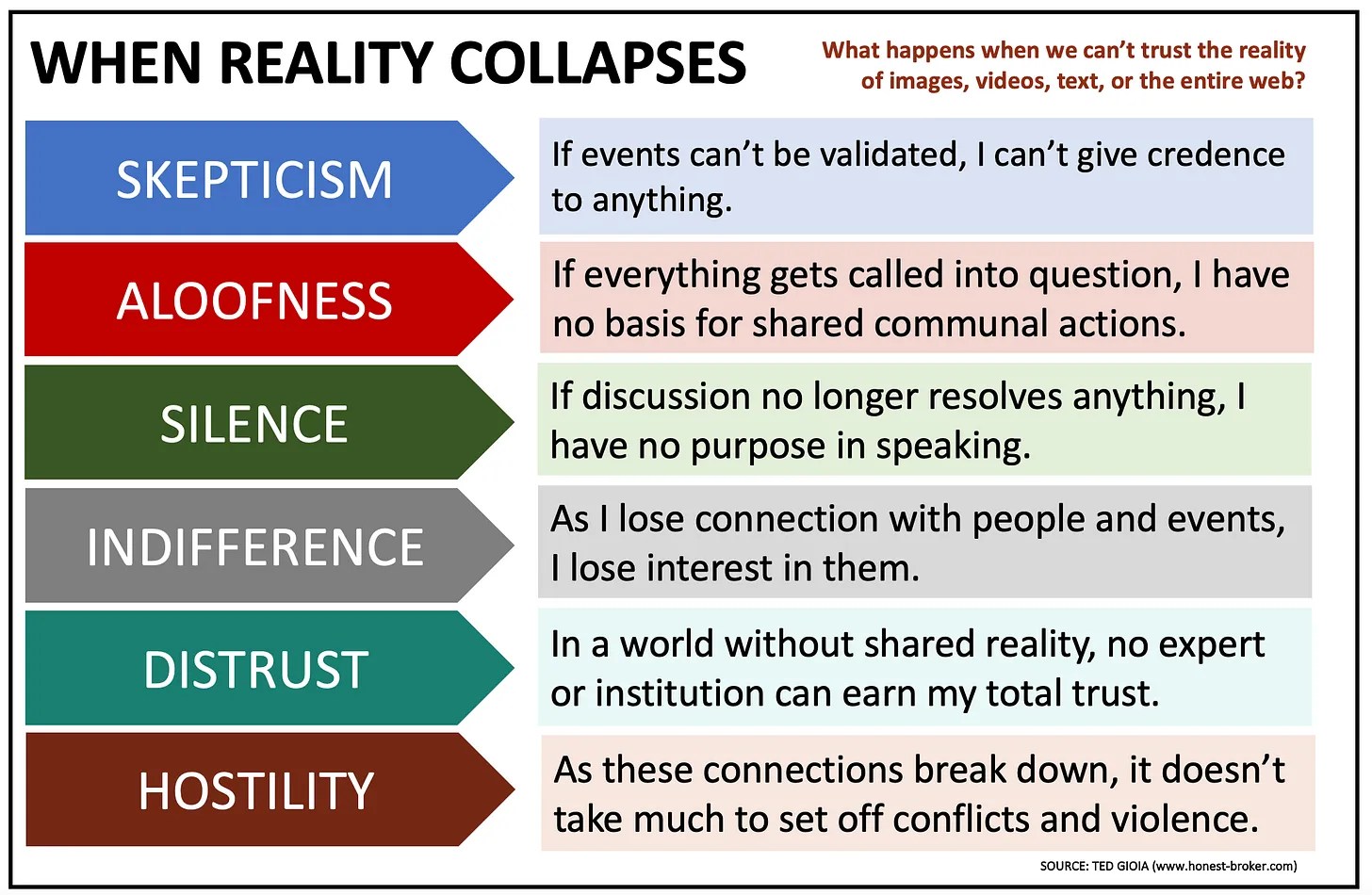
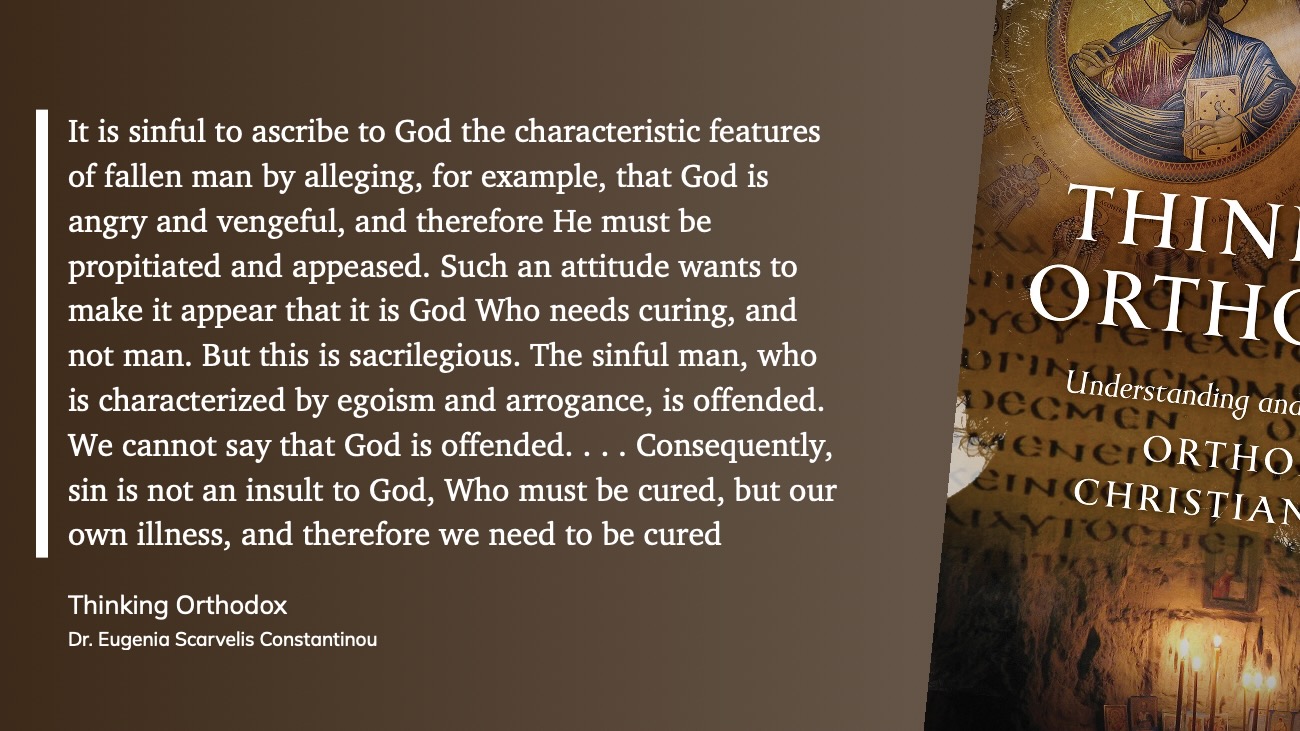
 Tipsy Teetotaler ن