In order to ameliorate the resulting clash of commitments to divergent, incompatible preferences and pursuits, political leaders and other elites rely heavily and increasingly on platitudinous rhetoric and consumerism, the latter involving citizens’ widespread conformity to a seemingly insatiable acquisitiveness regardless of their income level. Were the flow of prosperity’s spigot seriously to wane, however, citizens’ clashes would likely intensify, reversing the dominant trajectory through which Westerners have willingly permitted their self-colonization by capitalism since the seventeenth century. Hence the necessary ideological commitment of modern Western states to unending economic growth, which perpetuates “the notion of the state as a vast bureaucracy in the service of appetite, aimed above all at the promotion of economic life and comfort.
Brad S. Gregory, The Unintended Reformation
SPLC
Even more than two things can be true at the same time:
Southern Poverty Law Center did good work on civil rights decades ago;
Instead of declaring victory and closing up shop, SPLC became a grifting media darling with lazy leftwing slop like its “Hatewatch”;
Had you asked me if SPLC used moles to infiltrate right-wing groups, I probably would have paused for a few seconds and then answered “Why, yes; I suppose they do.” Were I an SPLC donor, I don’t think that would have deterred me.
To all appearances, the criminal indictment of SPLC is, if not garbage, at least garbage-adjacent. It looks like a typical Trump DoJ stunt.
Karma is real. OR “paybacks are hell” if you prefer.
I encourage you to contemn SPLC2026 and stop filling its ample coffers, but don’t expect that a criminal conviction is very likely.
Trolls and bootlickers — of the Left!
How quickly the winds have shifted! Yesterday’s elites promulgated ideas that I scorned, but it never occurred to me that the Successor Ideology was foreshadowing the populist trollery of today’s MAGA Right, albeit to opposite tribal effect. James Howard Kunstler distills some of it:
Are you against reason itself? For all your talk about the primacy of science, your agenda militates furiously against it: Math is “racist,” there’s no biological basis for understanding sex, all science is a “white colonial way-of-knowing,” masculinity is “toxic,” women can have penises and men can menstruate. Do you really believe these absurd fantasies manufactured in the graduate schools in the service of academic careerism at all costs — or do you just go along with them for the sake of protecting your own careers and perquisites?
(Pointless aside: I sing in a quite good choir and I use voice recognition a lot for writing in short bursts. Voice recognition has never gotten “chorale” right, always rendering it “corral,” regardless of context.)
Trump
I apologize for so much focus on Donald Trump. His unlawful and idiotic war against Iran (as I understand it, military war gamers always knew Iran would close the Strait of Hormuz in a war with the U.S.) makes it urgent to push back.
We’ve probably already lost “America as we knew it,” but that doesn’t mean it couldn’t get worse.
Time’s up on your stupid war, sir
For years, America’s cowardly political leadership class has pretended that the War Powers Act entitles the president to bomb whoever the hell he wants for 60 days without approval from Congress. Only after those 60 days have run does he have an obligation to seek authorization from the legislature.
Three seconds of thought about why the law was written will reveal why that’s stupid.
The War Powers Act was passed in 1973 to rein in Richard Nixon after he expanded the war in Vietnam by secretly bombing neighboring Cambodia. The point of the law, obviously, wasn’t to justify that bombing retroactively by granting Nixon a 60-day free pass. The point was to affirm that, with very limited exceptions, the president can’t engage in hostilities with a country unless Congress says so.
Nixon vetoed the bill when it reached his desk, but lawmakers felt so strongly about it that they overrode his veto by bipartisan supermajority margins. It was a bold play by the legislature to claw back its rightful war-making authority under Article I—not to create a massive two-month exception to it for the executive branch.
I always recognized the narcissism, but I pretty much missed the delusions of grandeur.
And they are “delusions,” considering the eulogistic connotations of “grandeur.”
But I think I’ve already acknowledged that Trump is an extremely consequential President, and “consequential” carries no eulogistic connotations. Under that rubric, he may indeed prove world historic. How could a chaos agent who has seized semi-dictatorial power over the world’s hegemon not have a shot at “world historic” if he’s willing to stoop low enough?
Conservatives versus power-seekers
As the conference went on, I noticed a contest of metaphors. The true conservatives used metaphors of growth or spiritual recovery. Society is an organism that needs healing, or it is a social fabric that needs to be rewoven. A poet named Joshua Luke Smith said we needed to be the seeds of regrowth, to plant the trees for future generations. His incantation was beatitudinal: “Remember the poor. Remember the poor.”
But others relied on military metaphors. We are in the midst of civilizational war. “They”—the wokesters, the radical Muslims, the left—are destroying our culture. There were allusions to the final epochal battles in The Lord of the Rings. The implication was that Sauron is leading his Orc hordes to destroy us. We are the heroic remnant. We must crush or be crushed.
David Brooks, I Should Have Seen This Coming. I don’t know that there’s a single real conservative in Trump’s administration. I once thought J.D. Vance was conservative, but Trump’s reverse Midas Touch hexed him.
Shorts
Pete Hegseth didn’t appreciate one congressman’s questions about the Iran war last Wednesday, so he accused him of “false equivolation.” (My own ears from CBS news)
[I]n Washington this past week, Charles came into his own. Forty years after Diana’s Cinderella turn, Charles got to be Cinderfella … In a country rife with No Kings protests, this king was a tonic. He presented himself with elegance, intelligence and wit — everything that has been wanting in Washington during the Trump era. Maureen Dowd
I confess, however, that I am not myself very much concerned with the question of influence, or with those publicists who have impressed their names upon the public by catching the morning tide and rowing very fast in the direction in which the current was flowing; but rather that there should always be a few writers preoccupied in penetrating to the core of the matter, in trying to arrive at the truth and to set it forth, without too much hope, without ambition to alter the immediate course of affairs, and without being downcast or defeated when nothing appears to ensue.
I don’t do any of the major social media, but I have two sub-domains of the domain you’re currently reading: (a) You can read most of my reflexive stuff, especially political here. (b) I also post some things on my favorite no-algorithm social medium.
Security at Saturday night’s White House Correspondents’ Dinner performed as well as one would expect any American institution to perform in 2026. That is, it was competent enough to accomplish its basic task yet incompetent enough to leave everyone wondering whether the country survives mostly on luck.
Treating Saturday’s assassination plot as cause to ignore the legal niceties and plunge ahead with construction [of the White House ballroom] anyway felt like absurdist satire of the “emergency” rationales authoritarians are forever concocting to rationalize their power grabs and lawbreaking. The president’s life is in danger! Only a fabulously luxe gilded ballroom built to his exact specifications without any oversight whatsoever stands between America and catastrophe!
The luxe gilded ballroom Trump is building summarily like, I dunno, a dictator or something, wouldn’t come anywhere close to accommodating the White House Correspondents Dinner (2000+ guests versus ~900 capacity of the WH ballroom), apart from any other symbolic or logistical issues.
Royalty meets Pretender
[T]he trick of the royal family is to make everyone feel special, however brief their acquaintance. Some presidents realize that this is a necessary illusion …
…
In “The Godfather, Part II,” Michael Corleone tells his treacherous brother Fredo that he no longer means anything to him. “You’re not a brother, you’re not a friend,” he says. “I don’t want to know you or what you do. I don’t want to see you at the hotels, I don’t want you near my house. When you see our mother, I want to know a day in advance, so I won’t be there. You understand?” Michael issues strict instructions to his aides that nothing should happen to his brother while his mother is alive.
It’s a story that might ring a bell. Just a few years after the queen’s death, Charles stripped his brother, Andrew Mountbatten-Windsor, of his title and evicted him from his home. The image handed down to posterity will be of Mr. Mountbatten-Windsor slumped in the back of a police car, desperately trying not to be seen.
This week Charles will be smiling benignly and nodding politely, but it’s worth remembering that beneath that good humor and politesse there is a layer of steel. Courtesy can be tactical as well as virtuous.
I hope that the King won’t allow any meeting with Trump to be recorded. I guess Trump is kind of star-struck by the British Royals and might actually behave himself, but I wouldn’t risk it.
The Justice Department secured an indictment against James Comey in connection with a photo showing seashells arranged in a way that prosecutors said could be interpreted as a threat to kill President Trump.
The case is the Trump administration’s second attempt to prosecute the former FBI director, a prominent Trump critic. He was charged in September with lying to Congress, but a judge dismissed that case. The latest indictment centers on a 2025 Instagram post. At the time, Comey said it didn’t occur to him that the post would be read as a threat, and that he opposed such violence. Comey and his lawyers didn’t immediately respond to requests for comment.
Nobody believes this was a threat. Trump’s DOJ is indicting one of Trump’s enemies for publishing on Instagram a wry, cryptic and mild criticism of him because a deranged person (like the President, a toxic narcissist) might interpret as a threat.
This is what they do in authoritarian regimes. I only once did a piece of a Federal Criminal Law matter and have no opinion on how the courts will deal with this. I can only hope that they will deal with it summarily and with a stern rebuke to the government.
FCC Chair Brendan Carr is launching an early review of Disney’s broadcast TV licenses, the regulatory agency said.
Trump yesterday called for late-night host Jimmy Kimmel to be fired for joking that first lady Melania Trump had “a glow like an expectant widow.” His show is broadcast by Disney’s ABC network. Kimmel made the remark days before an alleged gunman opened fire outside the White House Correspondents’ Dinner that Trump attended on Saturday. Yesterday, Kimmel called his prior remarks a “very light roast.”
A crypto venture linked to men sanctioned in a scam-ring probe partnered with the Trump family’s crypto company.
Last fall, the Trump administration announced criminal charges against what it said was a transnational criminal syndicate that had stolen billions of dollars through online scams. Less than a month later, World Liberty Financial announced that it had partnered with a virtual-currency venture, one of whose projects had been led by two men sanctioned in the U.S. crackdown. A lawyer for World Liberty said it has never had any association or relationship with the sanctioned individuals. “WLF takes its compliance obligations very seriously,” he said. The lawyer said his client first became aware of allegations that the venture was connected to a project that had involved sanctioned individuals in January this year.
Shorts
In The Toronto Star, Rosie DiManno pondered piety and pooches: “Sitting at the right hand of God-Trump is Vice President JD Vance, a converted Catholic all of seven years. That’s 49 in lapdog years.” (Via Frank Bruni)
In his newsletter, I Might Be Wrong, Jeff Maurer responded to commentary about overlong movies — including in my newsletter last week — by observing that the huge piles of money spent on key sequences all but guarantee those blockbusters’ bloat. “This isn’t just sunk cost fallacy — this is sunk cost fallacy plus the knowledge that if you go to your boss and say, ‘We wasted $10 million of your money,’ your boss will say, ‘I understand, I respect your honesty, now step into this rocket: I’m going to fill it with scorpions and fire it into a volcano’,” Maurer wrote. (Via Frank Bruni)
Wishful thinking is the alchemy that turns fools’ gold into silver linings. (Kevin D. Williamson)
I don’t do any of the major social media, but I have two sub-domains of the domain you’re currently reading: (a) You can read most of my reflexive stuff, especially political here. (b) I also post some things on my favorite no-algorithm social medium.
What are we doing here? We’re reminding how it’s done. We’re putting forward what it should look like when a president brings his nation to armed military action. He explains the history, offers the evidence, interprets its meaning, outlines the plan.
You can’t take a nation to war without this rhetorical predicate.
Mr. Trump has failed to provide it. Now and then he announces things behind a podium, and there are regular responses to questions in press gaggles, where he reacts off the cuff. But nothing thought-through, no serious document making the case. And the public is never reassured.
We don’t even know, a month into Iran, why now. Iran has been the world’s fanatic irritant for almost 50 years. What is the plan?
This absence of formal seriousness is part of why the president’s popularity is falling.
If Donald Trump can’t do this, and his vice president can’t do it sincerely, maybe the secretary of state should step in?
While we’re giving advice, one imagines the Vatican has many excitable monsignors running the pontiff’s social-media accounts, and one suspects they are hyped to show the pope is giving rizz. But homilies, speeches, papers and encyclicals are better suited to great statements at great moments than buzzy posts on X.
Don’t do it the cheap way. You are the throne of Peter. Do it the serious way.
With apologies to Emerson, why is the left hemisphere in the saddle, riding mankind?
I think [the left hemisphere’s] success can be attributed to several things. First, it makes you powerful, and power is very seductive. Second, it offers very simple explanations, that are in their own terms convincing, because what doesn’t fit the plan is simply declared to be meaningless. … Third, the left hemisphere is also … the Berlusconi of the brain – the political heavyweight that controls the media. It does the speaking, constructs the arguments in its own favour. And finally, since the Industrial Revolution, we have constructed a world around us externally that is the image of the world the left hemisphere has made internally.
Every of those four points distills hundreds of pages from McGilchrist’s very much larger works. But because of some other things I read recently that haunt me, the final one has created one of my exciting moments where I (silently) exult “Oh! That meshes with these other points! I’ve almost got it now: the grand unified theory of how everything works!”
Here’s one of the other thing I read:
We are discovering, for example, that AI is especially adept at displacing or, from the techno-optimist’s perspective, liberating us from human labour in contexts wherein humans had already conformed, willfully or otherwise, to the pattern of a machine. Build a techno-social system which demands that humans act like machines and it turns out that machines can eventually be made to displace humans with relative ease.
I read this less than a week ago, but it haunts me and keeps popping up in my head as I read things like, say, McGilchrist’s final point about “the image of the world the left hemisphere has made internally,”
The other thing I read (actually, heard and transcribed) was this:
Unfortunately, reason on its own will lead you astray very, very quickly …
People detect from what I wrote in The Master and His Emissary that I am not a huge admirer of the [left-hemisphere inspired] Reformation … Unfortunately, it brought with it a kind of headstrong view that ‘now we’re in the clear. Everything must be made explicit. The word triumphs over the image’ and so on. …
The trouble with the left hemisphere is … it tends to be headstrong. It tends to think it knows far more than it does.
My frustration with headstrong Protestants briefly led me off into thinking that, the Reformation having been midwifed by the left hemisphere, Protestants today remain too left-hemispheric.
I still think so, but then I realized that Protestantism never sits still — that the charismatic renewal of the 60s and 70s, and the happy-clappy guitar-and-drum assemblies of today, just might be human beings wittingly or unwittingly trying to counter-balance their left hemispheres.
I have learned to prefer icons, incense, fasting, feasting, eucharist and apophaticism generally to such ersatz, but à chacûn son gout.
More reasons to discipline yourself to spend more time attending to your world in a right-hemispheric way.
Learning to attend in an LLM world
Rules produce compliance. Distinctions produce discernment. Digital platforms are engineered to collapse that discernment. They optimize for engagement, for seamlessness, and for frictionless fulfillment. The tech arrives dressed as toys.
In an operating room, no one bans scalpels. Nor does a surgeon treat them casually. Instead, there’s a ritual: scrubbing in. The scrub-in isn’t merely about hygiene. It’s a cognitive threshold. It marks a passage from ordinary space to consequential space by establishing the sterile field: a bounded space of deliberate intervention where carelessness is as much the enemy as contamination. It means recognizing that environments carry risks and risks require care ….
…
[S]tudents don’t need prohibitions enforced by administrations, but disciplined practices modeled by adults; they need to learn to “scrub in” for the classroom. That means leaving things behind as well as bringing things in, not only in terms of the materials students bring to class but also the attitudes and sense of purpose as well.
In my own classes, this can be as simple as examining the threshold. At the start of a session, I might pull a trick from my meditation or yoga practice and say, as we’re opening our computers, that I know how tempting it is to check our carts, our socials, our text messages. I feel the pull, too. But for the next ninety minutes, we’re scrubbing in. Laptops are for notes and the text. Phones are face down. If your attention drifts, notice it. Bring yourself back. The drift isn’t failure. Noticing it is the lesson, and it’s what experts do.
My opening comments matter because they reframe distraction not as transgression but as training. Students begin to understand that governing their own attention is part of their education, not a prerequisite for it.
Neuman’s students are lucky to have such a thoughtful teacher, and he’s lucky to have students with the seriousness not to take governing their attention as a total joke.
Nick Catoggio suspects that Marco Rubio and J.D. Vance will both get straight-armed in 2028:
From monarchies to the mafia, outfits that follow preliberal norms place special value on familial relationships. For one thing, family members are (somewhat) less likely to betray each other than non-relations are, a valuable trait for those operating in cutthroat kill-or-be-killed cultures. And because preliberalism is all about leveraging power for one’s personal advantage, it stands to reason that those who rise to the top would want that power to be hereditary. If you can’t rule forever, the next best thing is ensuring that your gene pool does.
…
You don’t need a complicated triple-bank-shot theory to explain why the president’s son has the inside track. It’s this simple: Because the Republican Party is a moronic personality cult, Donald Trump effectively has the power to pick his own successor. Whomever he endorses will be a prohibitive favorite among his slavishly loyal supporters.
Such is the power of the Trump name on the right, as Last notes, that Junior is already polling in second place in early 2028 primary polls, slightly ahead of Secretary of State Marco Rubio. It’s a distant second behind Vance, sure, but so what? The vice president is coasting on his high profile and the widespread assumption that he’s Donald Trump’s choice for heir apparent. If that were to change—if Junior were to take a more visible political role after the midterms and his father were to begin sounding iffy on Vance—the polling would change as well. Dramatically.
Nick Catoggio, The Son Also Rises, speculating about Donald Jr. in 2028.
Why would a smart young conservative work for Trump?
After January 6, after Trump’s endless threats of “retribution” during the campaign, after multiple federal indictments, there are only two reasons a smart young conservative should want to work for him.
One: Said conservative is a sociopath who will, in the name of getting ahead, light the Constitution on fire if Donald Trump tells him or her to. Two: Said conservative is a patriot who fears that others will light the Constitution on fire if Trump tells him or her to and they want to be in the room to stop it when it happens. Ethical Republicans must fill vacant positions if only to block unethical ones from filling them instead.
Why I’d like for the GOP to lose the Senate this Fall
In my first draft of this sub-post, I indulged in some political wool-gathering about my current personal political proclivities. I decided to spare the world from slop that doubtless is more fascinating to me than it’s likely to be to anyone else.
But one thing stood out as worthy of publication:
Of course, the Supreme Court poses the highest stakes of all. The two oldest justices are Trump’s most reliable stalwarts, Clarence Thomas, 77, and Samuel Alito, 76. CBS News reports that neither plans to retire in 2026, but that hasn’t stopped Trump from cajoling them to step aside.
I hope neither Alito nor Thomas succumbs to Trump’s cajoling. Next, I don’t want either justice to die between this Fall’s election and Inauguration Day 2028, but if that should happen, I’d want Democrats in control of the Senate to force Trump into nominating someone well-enough qualified to gain a few Democrat votes for confirmation.
I don’t think we have any political hacks on the Court currently — neither Republican nor Democrat — but with Republicans in control of the Senate, Trump could nominate Emil Bove or John Eastman or the winner of the Kentucky Derby (the equine, not the jockey) and the Senate would confirm him (the filibuster for SCOTUS justices having been abolished). Having already trashed the Department of Justice with political hacks, putting political hacks on SCOTUS would set us back years further in the steps to post-Trump recovery.
Will Trump shoot himself in the foot again?
[I]t was strange to watch a man of Musk’s capacities burn political capital and the energy of his apprentices just to discover that the real money is in big popular entitlements that can’t be cut by presidential fiat.
Then, in a different key, Musk decided to do it again with the SAVE America Act, embracing (and hyping, with a strong dose of paranoia) the conceit that elections are rigged against Republicans because some vast number of noncitizens are casting illegal votes.
We have years of investigations by Republicanadministrations and years of evidence from voter ID laws to indicate that this is not the case. There are sound reasons to think that ID requirements don’t have the dramatic vote-suppressing effects alleged by left-wing critics. But neither do they have the election-protecting effects promised by their conservative champions. Voter fraud is just not an important reason that Republicans lose elections. (Moreover, now that the Republican coalition includes more low-propensity and downscale voters, any effect of ID requirements might actually cut against conservative turnout.)
Be honest. Do not say anything about yourself or others that you know is false. Absolutely refuse to let your mind be colonized. The first crazy thing someone asks you to believe or to profess, refuse. If you can, do so out loud. There is a good chance it will inspire others to speak up, too.
Jonathan Dupiton, host of the Rich and Unemployed podcast, was sentenced to seven years in federal prison for a $3.8 million unemployment fraud scheme. Turns out the secret to being rich and unemployed is crime. (TMD)
All material culture is an instantiation of ideas. But it’s easier to see ideas-in-things with a knowing, irony-laden look at the past. Putting babies on display in incubators, especially because they were ones unlikely to survive, now strikes us as abhorrent. We feel confident in seeing its errors and therefore reassured by our good judgment. It’s much harder to see what’s unfolding right in front of us. (Sara Hendren, Pattern Recognition)
Be it noted, please!, that NATO nations pledge to help defend countries attacked from outside NATO. It does not oblige anyone to help Donald Trump prosecute an offensive war against Iran.
No need to spend any money on a hot water heater, as hot water doesn’t need heating. Now, if we’re talking a water heater, different story (yes, I’m THAT GUY). (Social media poster, name withheld by me.)
A nation of sheep will beget a government of wolves. (Edward Murrow)
I confess, however, that I am not myself very much concerned with the question of influence, or with those publicists who have impressed their names upon the public by catching the morning tide and rowing very fast in the direction in which the current was flowing; but rather that there should always be a few writers preoccupied in penetrating to the core of the matter, in trying to arrive at the truth and to set it forth, without too much hope, without ambition to alter the immediate course of affairs, and without being downcast or defeated when nothing appears to ensue.
I don’t do any of the major social media, but I have two sub-domains of the domain you’re currently reading: (a) You can read most of my reflexive stuff, especially political here; (b). I also post some things on my favorite no-algorithm social medium.
Once we face the low level of Caesarism and how unchoiceworthy it is, we can begin to understand the danger that follows from normalizing public discussion of it as a possibility and option. Doing so “means encouraging dangerous men to confuse the issue by bringing about a state of affairs in which the common good requires the establishment of their absolute rule” (emphasis added). In other words, ambitious political actors will seek to create by their actions the very chaotic conditions that justify their own seizure of postconstitutional rule. This is a form of right-wing accelerationism.
I’m always looking for explanations for why 77 million Americans voted for Donald Trump even after January 6. (Sometimes, I hallucinate a reason, but when the fever breaks it goes away and the bafflement returns.)
I don’t think that the desirability of a “red Caesar” motivated voters consciously. I see it more as a way for MAGA intellectuals (e.g., Michael Anton, John Eastman and other Claremonsters), to try, try again to justify their support. It reminds me of how progressive intellectuals kept trying (and invariably failing), for almost five decades, to re-write Roe v. Wade so as to make it coherent.
As a disciple of Leo Strauss, the muse of Claremont, Damon Linker takes personal offense.
History Rhymes
They didn’t actively collaborate, but by declining to resist and going along with the government, they enabled the occupation. I have seen many examples, in the past decade, of journalists and historians using historical encounters with fascism and authoritarianism to comment on the present moment in the United States. Often, these parallels are forced; the situation in the U.S. is a far cry from Nazi-occupied Europe. But Ophuls’s film is illuminating precisely because its lessons about complicity apply to evil and corruption of all kinds.
…
Restoring democracy required opponents of fascism—nationalists, republicans, and Communists—to work together despite serious misgivings about one another’s views. Purity tests had to wait until the war was over.
I’ve certainly made my opposition to Trump obvious in my writings, but I think it’s time to drop my purity tests and attend the next “No Kings” event in town.
Piling up hoards of money
I see no special heroism in accumulating money, particularly if, in addition, the person is foolish enough to not even try to derive any tangible benefit from the wealth (aside from the pleasure of regularly counting the beans). I have no large desire to sacrifice much of my personal habits, intellectual pleasures, and personal standards in order to become a billionaire like Warren Buffett, and I certainly do not see the point of becoming one if I were to adopt Spartan (even miserly) habits and live in my starter house. Something about the praise lavished upon him for living in austerity while being so rich escapes me; if austerity is the end, he should become a monk or a social worker—we should remember that becoming rich is a purely selfish act, not a social one.
No longer was it uncommon, as in the time of James Fenimore Cooper, to see a husband and wife come aboard with three or four young children, as well as a servant or two. Among the earliest of such couples were Robert and Katherine Cassatt of Pennsylvania, who in the summer of 1851 embarked on an extended sojourn abroad, stopping first in London before moving on to Paris with their three young children, Alexander, Lydia, and Mary. In Paris they settled in for an extended stay at the Hôtel Continental, and seven-year-old Mary was to remember the day of Louis Napoleon’s coup d’état the rest of her life. It would also be said that her interest in painting began then, which would appear to make her the youngest American thus far to have come under the spell of the arts in Paris.
Pizzagate lost relevance over time, usurped by marginally less insane conspiracy theories about rigged elections and the “deep state.” So it felt newsy when J.D. Vance told a Turning Point USA crowd last Tuesday that mentions of pizza and grape soda in some of the Jeffrey Epstein files had piqued his interest. “I remember it sounding like the Pizzagate conspiracy theory,” he marveled at the language. “We should absolutely investigate.”
That was interesting for two reasons.
First, at a moment when swing voters and even certain “America First” postliberals are experiencing buyer’s remorse, it was useful of the VP to remind the country that Donald Trump’s movement has always been powered by febrile cranks and grifting sociopaths keen to monetize their paranoia.
Second, Turning Point USA is becoming the Zelig of febrile crankery and grifting sociopathy in the 2020s. (And no, that was not Catoggio’s second reason.)
He has put down the mighty and exalted the humble
10. The veneer of Wall Street’s longstanding assertion — that A.I. will enhance human work not replace it — is rapidly peeling away, as evidenced by the current quarterly earnings season. JPMorgan Chase, Citi, Bank of America, Goldman Sachs, Morgan Stanley and Wells Fargo racked up $47 billion in collective profits, up 18 percent, while shedding 15,000 employees. All of them credited A.I. to some degree with helping cut jobs and automate work in areas ranging from the so-called back office, where tens of thousands of employees fill out paperwork to comply with various laws and regulations, to the front office, where seven-figure salaried professionals put together complicated financial transactions for corporate clients. (Source: nytimes.com)
Digital Planet, my research center at Tufts University, recently released the American AI Jobs Risk Index, assessing vulnerabilities across 784 occupations. The economics are striking: 9.3 million jobs and $757 billion in annual income are at risk within five years, rising to 19.5 million jobs and $1.5 trillion if AI adoption accelerates. But the more consequential finding is the geography of the displacement. The occupations most at risk are concentrated in the “wired belts”: regions that have thrived on data, content and cognitive work. These areas may well become the new rust belts, stretching from the familiar tech hubs of Silicon Valley, Boston and New York to Philadelphia, Atlanta and Phoenix. Suburban knowledge corridors surrounding major US swing-state cities rank among America’s most vulnerable. (Sources: ft.com, digitalplanet.tufts.edu, fletcher.tufts.edu)
Tuesday, I groped for a half-remembered poem, and finally consulted the oracle, Claude AI:
I’m trying to recall a poem, with a woman author, that counsels against the party of certainty and for the party of awe. Can you help.
Claude went through iterative searches, fixated on my “party of certainty” and “party of awe” phrasings.
It came up dry but offered this:
…
A few other possibilities worth considering:
Mary Oliver, who consistently urges readers toward wonder over certainty in the natural world Lisel Mueller, whose poem “Alive Together” meditates on contingency and astonishment Naomi Shihab Nye, who writes about wonder and humility
Mary Oliver rang a bell for me, and I told Claude so.
” Mysteries, Yes” seems like a very strong candidate — it’s directly about marveling at mystery rather than demanding answers. Let me fetch the full text.
(Me:) I believe this is the one
(Claude) — “Mysteries, Yes” by Mary Oliver. It maps perfectly onto what you described. The poem opens by declaring that we live with mysteries too marvelous to be understood, and closes with this counsel:
Let me keep my distance, always, from those who think they have the answers.
Let me keep company always with those who say “Look!” and laugh in astonishment, and bow their heads.
Those were exactly the lines I half-remembered. I told Claude so.
Okay. This is why I don’t shun AI. But then Claude gave me strokes:
[Y]our summary of it — “the party of certainty versus the party of awe” — is honestly a more memorable distillation of its argument than most critical descriptions I’ve seen. It captures exactly what Oliver is doing in those final two stanzas.
I think Claude likes me! Is it any wonder that people anthropomorphize, and some even have AI girlfriends or boyfriends?
I liked “Project Hail Mary” until I didn’t, couldn’t, wanted to get on with my life, wanted to hit the men’s room, wanted to hit whoever had edited (or, rather, failed to edit) this needlessly epic adventure …
It’s as if Hollywood is punking us. How else to explain stretching a Tom Cruise stunt-a-thon to two hours and 43 minutes and then calling it “Mission: Impossible — Dead Reckoning Part One”? The italics are mine; read them as a primal scream. “Mission: Impossible — The Final Reckoning” lasts two hours and 49 minutes. It’s supposedly the end of impossible missions, but nothing ends anymore. By the current illogic of interminable narratives, there will surely be a “Mission: Impossible — One More Reckoning for the Road,” and it will be longer than the audiobook of “Middlemarch.” Cruise’s first “Mission: Impossible,” from 1996, is one hour and 50 minutes.
…
Explanations vary. Many Hollywood executives and moviemakers apparently believe that if you’re going to lure people out of their homes and away from their smaller screens to the communal experience of the multiplex — and if you’re also going to ask them to fork over roughly $30 for a ticket, popcorn and a soft drink — you better promise them a real event, even a spectacle, something with a sense of amplitude. That means three hours and one minute of “Avengers: Endgame,” three hours and 12 minutes of “Avatar: The Way of Water” and three hours and 17 minutes of “Avatar: Fire and Ash.” (Beware the colon movies — or at least make sure you haven’t planned anything else that day.)
Having just finished reading Middlemarch a few weeks ago, that line about Middlemarch busted me up.
Prequel
From today’s by Judge George C. Hanks, Jr. (S.D. Tex.) in Patel v. Figliuzzi, which stemmed from his exchange on MSNC’s Morning Joe with defendant Cesare Frank Figliuzzi, Jr., “the former assistant director for counterintelligence at the FBI”:
Host: “So, Frank, let’s turn to FBI Director Kash Patel, who has sort of taken a surprisingly backseat role—at least to this point, in the first 102 or 103 days, wherever we are right now. What do you make of that, that he’s just been a little less visible than I think a lot of people and Trump observers expected him to be?”
Figliuzzi: “Yeah, well, reportedly, he’s been visible at nightclubs far more than he has been on the seventh floor of the Hoover building. And there are reports that daily briefings to him have been changed from every day to maybe twice weekly. So this is both a blessing and a curse, because if he’s really trying to run things without any experience level, things could be bad. If he’s not plugged in, things could be bad, but he’s allowing agents to run things. So we don’t know where this is going.”
Patel claimed the “been visible at nightclubs far more than he has been on the seventh floor of the Hoover building” was actionable defamation, but the court found that it was nonactionable rhetorical hyperbole instead:
“Rhetorical hyperbole” is a subset of opinion, which Texas courts have “defined as extravagant exaggeration that is employed for rhetorical effect.” “Statements that would be perceived by the audience as ‘rhetorical hyperbole’ do not constitute defamation.” In this way, Texas law protects “statements that cannot reasonably be interpreted as stating actual facts about an individual.” “Whether an utterance is … rhetorical hyperbole turns not on what the speaker intended but what a reasonable person would believe and presents as a question of law for the court to decide.”
I didn’t watch any of the beauty pageants he bought so he could talk to cute girls and they’d have to listen (and could walk through dressing rooms when they were half-naked).
I didn’t watch any of his reality TV or gladiator spectacles.
Because I hadn’t followed him at all, I didn’t know he was a sexual predator (serial adulterer, yes) or a chronic liar (I’m not going to soften it by calling it “bullshitting”). I was sort of aware that he was incompetent enough to have bankrupted a casino (!) and other businesses.
I was alarmed when my former major party gave him the nomination. (I wish we could go back to smoke-filled rooms instead of rage-filled primary voters.) I opposed him as soon as he started dehumanizing people on the campaign trail. I was incredulous when he won the 2016 general election. I was not reassured when he assumed office by forcing his press secretary, Sean Spicer, to begin the gaslighting immediately. I was mildly reassured when he surrounded himself with pros who became the grownups in his room. I was pleasantly surprised when he honored his pledge about SCOTUS nominees.
This narrative is getting tedious, so I’ll cut to the chase: I ream out Trump and the GOP because I once was a Republican, and I feel their betrayal even though I repudiated the party in 2005. I wish I could ignore Trump, a toxic narcissist, but he very deliberately commits daily outrages to keep attention on himself, and fool though he be, as POTUS he is a very consequential fool.
I rarely ream out the Democrats because I have no stake in them, present or historic.
I have never even been able to consider Trump the lesser evil candidate because the Democrats aren’t actually demons and with them I’d at least be confident that there would still be elections in four years. Nevertheless, I haven’t voted for a Democrat for President since 1972.
My state is very red, and my half-hearted blue vote won’t change that. So I vote for the Christian Democrats.
Trump’s damage to the nation (and to the GOP) will not be repaired in my lifetime, nor (probably) in my son’s lifetime. Maybe during my grandchildren’s lives.
I was a conscientious objector and I’m close to pacifist. I won’t take up arms. But I will protest in the ways my conscience allows, and this blog has been one of those ways.
Shorts
[T]he nuclear question had been resolved peacefully by the JCPOA before Trump tore it up, and any remaining serious nuclear threat had been “obliterated” last year …. (Andrew Sullivan)
President Trump has been rampaging around the globe like Grendel at dinner time, a rapacious, feral creature. Who could stand up to him? (Maureen Dowd. The answer is “Pope Bob.”)
Himmler quite aptly defined the SS member as the new type of man who under no circumstances will ever do “a thing for its own sake.” (Hannah Arendt, The Origins of Totalitarianism)
For a variety of reasons, in recent decades the rate of profit to be made by producing goods has fallen below the rate of profit to be made through finance. (William T. Cavanaugh, The Uses of Idolatry)
Books are for people who wish they were somewhere else. (Mark Twain)
I don’t do any of the major social media, but I have two sub-domains of the domain you’re currently reading: (a) You can read most of my reflexive stuff, especially political here. (b) I also post some things on my favorite no-algorithm social medium.
“You want to leave a place better than you found it,” he told me. And for a long time, he felt like he had.
But that was before LifePoint Health, one of the biggest rural-hospital chains in the country, saw his hospital as a distressed asset in need of saving through a ruthless search for efficiencies, and before executives at Apollo Global Management, a private-equity firm whose headquarters looms above the Plaza Hotel in Midtown Manhattan, began calling the shots. That was before Gose realized that, in the private-equity world, hospitals were just another widget, a tool to make money and nothing more.
These claims to lawless space are remarkably similar to those of the robber barons of an earlier century. Like the men at Google, the late-nineteenth-century titans claimed undefended territory for their own interests, declared the righteousness of their self-authorizing prerogatives, and defended their new capitalism from democracy at any cost. At least in the US case, we have been here before. Economic historians describe the dedication to lawlessness among the Gilded Age “robber barons” for whom Herbert Spencer’s social Darwinism played the same role that Hayek, Jensen, and even Ayn Rand play for today’s digital barons.
Shoshana Zuboff, The Age of Surveillance Capitalism
Legalia
The hills worth dying on
Like any of its predecessors, the Trump administration appeals only a small number of losses in the lower courts and then takes an even smaller share—the cases it thinks it is most likely to win—to the Supreme Court. And how is that going? The Supreme Court has rejected Trump on tariffs and on domestic deployment of the National Guard, and it seems almost certain to reject the administration on birthright citizenship. The court has stymied the president’s efforts to purge the Federal Reserve and to deport people without due process under the Alien Enemies Act. Where the Trump administration’s top policy preferences have been in conflict with the law—as they often will be in a lawless administration—the Supreme Court has reliably sided with the law.
…
The court has, indeed, emerged as the federal government’s preeminent conservative institution. That is not to say conservative in the sense of politically right-wing—the American right, currently in revolutionist mode, has ceased to be conservative in any meaningful sense, and the high court’s conservatism can be seen in its limiting of Donald Trump’s abuses and pretenses as clearly as anywhere. The Supreme Court, rather, is conservative in the sense of defending and fortifying the American constitutional order, which is what it is there to do. In anno Domini 2026, a branch of government that is content to simply try its best to do its job is as great a display of conservatism as a realistic American could hope to see.
The ramifications of the boldface observation above seems lost on the nihilists who want to tear down the courts as no more than political hacks in robes.
But I’m starting to think that “the cases it thinks it is most likely to win” misses something. Unless Trump has no competent legal advisers, I’m inclined to modify that to “the cases it thinks it is most likely to win or the hills it’s willing to die on.”
The stupid ideas that Trump is willing to defend all the way to SCOTUS probably have some kind of coherent common impulse behind them. If you connected the dots, I don’t think the picture would look much like the American I grew up in. We owe more to SCOTUS than the nihilists are willing to acknowledge.
An Aha! moment
I just learned, in the Advisory Opinions podcast’s discussion about the Supreme Court’s Chiles v. Salazar decision, that the legislative and other advocates of banning “conversion therapy” do not really have categorical “mounting evidence that conversion therapy is associated with increased depression, anxiety, suicidal thoughts, and suicide attempts.” Rather, “the lawyer for the state had to acknowledge that all of the studies that they were basing this on were aversive therapy, you know, electroshock therapy or other types of behavioral therapy, um, that were quite different.”
There was no evidence that mere counseling (“talk therapy”) about sexual orientation was harmful, and it likely contributed to Ms. Chiles’ SCOTUS victory that talk therapy was all she did.
I’m starting to get the feeling that someone with an agenda is just making this stuff up.
Legal abuse
Though vexing in this situation, it probably is for the best that we do not have a law under which the prosecution of Pam Bondi would be convenient—if Bondi’s career as attorney general shows us anything at all, it is that in our current debased political environment the DOJ could not be entrusted with a statute containing provisions flexible enough to treat as a criminal matter such abuses of power as Bondi’s. A law meant to curtail such abuses of power would, ironically, almost certainly facilitate new ones.
Delta Airlines, you might have noticed, does not run negative TV ads about USAir. It does not show pictures of the crash of USAir Flight 427, with a voice-over saying: “USAir, airline of death. Going to Pittsburgh? Fly Delta instead.”
And McDonald’s, you might also have noticed, does not run ads reminding viewers that Jack in the Box hamburgers once killed two customers. Why? Because Delta and McDonald’s know that if the airline and fast-food industries put on that kind of advertising, America would soon be riding trains and eating box-lunch tuna sandwiches.
Yet every two years the American politics industry fills the airwaves with the most virulent, scurrilous, wall-to-wall character assassination of nearly every political practitioner in the country and then declares itself puzzled that America has lost trust in its politicians.
Charles Krauthammer, Things that Matter.
Trump Needs Smarter Sycophants
The former secretary of homeland security, the jettisoned attorney general and the embattled secretary of defense have often seemed like President Trump’s ideal cabinet officials: selected for televisual looks and energy, lacking any political constituency apart from Trump himself, serving without qualm as pure conduits of his will. So their struggles offer a lesson for Republicans contemplating service in this administration’s 33 (but who’s counting?) remaining months: What Trump appears to want and what he actually wants are not exactly the same thing.
The seeming desire of the president is for loyalty, sycophancy and TV-ready swagger. He wants to turn on Fox News and see his top officials performing like reality-show characters in the drama of his administration. He wants to sit in a cabinet meeting and listen to a litany of his accomplishments. He wants the decisions made in the West Wing or at Mar-a-Lago to be simply rubber-stamped in his departmental fiefs.
He wants all that, but at the same time he also wants victory rather than defeat, and he definitely doesn’t want embarrassment. His metrics for success are unusual by normal presidential standards: He has a high tolerance for unpopularity, to put it mildly, and a remarkable shamelessness around corruption. But there is a point at which, even inside his cocoon, Trump senses that things aren’t going well for him. And then sycophancy doesn’t work, and it doesn’t matter if you were acting on his orders; you will be punished for that unsuccessful service just as surely as if you’d tried to thwart his aims.
I’m all for protests, it’s our right as Americans. But nailing down the reason for No Kings is more like spinning the Wheel of Defeatists Complaints. Signs noted fascism, wars, school funding, billionaires, LGBT issues, allowing illegal immigration, even the Epstein files. And really, the rallies are mostly about Donald Trump’s winning the election. Forget protests, they’re more of a massive primal scream therapy session.
This jumped out as a bit of sanity amid a column that otherwise made me want to cancel my WSJ subscription.
I haven’t gone to a No Kings March for this reason. The soup lacks a worthy theme.
Miscellany
Gay versus Queer
I was gay, I had faced discrimination, and I had fought for my rights. But now that gay rights had become “LGBTQ” rights, I found myself force-teamed with a lot of people whose values were nothing like mine. I didn’t experience my life as a rebellion against reality. I didn’t want to be an identity insurgent. I wanted to participate in the world as a normal person.
The most important thing I learned at Columbia was this: I am gay, but I am not queer. My sexuality doesn’t obligate me to embrace a particular ideology or to reject the moral inheritance of the society that made my life possible. Progress happens by acknowledging shared human values and working within our reality rather than declaring war on it.
(Andrew Sullivan has often made the same point, with less emphasis on the “critical theory” aspect.)
So what’s the new “learn to program”?
I’ve been on the faculty at Duke University for five years now, and this past one has been the most challenging and the strangest by far.
That’s not about Duke. It’s about higher education. It’s about America. It’s about dynamics — chiefly, this country’s tilt toward authoritarianism and the rapidly accelerating advances of A.I. — that render our tomorrows even hazier than usual. None of us knows what we’re in for and up against, and that confusion crystallizes on college campuses, which are by definition gateways to the future. They’re supposed to leave students with maps, routes, a destination. Not with compasses whose needles gyrate this way and that.
For much of the past decade, college students flocked to computer science, wagering that few majors were surer on-ramps to employment. A.I. has exploded that roadway. I teach in Duke’s school of public policy, where many students point themselves toward jobs in government or nonprofit groups. The ax that fell in the first months of Trump’s present term deforested that landscape.
Those are just examples, and this is hardly the first generation of young people to face disruption and major economic shifts. I can’t say just how unusual, in a historic sense, the unease that I feel around me is.
But I can tell you that my previous nine semesters at Duke are no rival for this one when it comes to the number of students who initiate conversations about what they should do next, what they should expect after that, where the country is headed, whether they’ll have any real say in that.
There are all kinds of ideas and policies that would have bad effects if implemented. But there is a special class of bad ideas and policies that proliferate in good part because those who hold them, being insulated from their effects, have never seriously thought about the consequences that would ensue from their implementation. The reason why the concept of luxury beliefs has resonated so widely is that it gives a name to people who treat as a parlor game questions that potentially have very serious consequences—just not for themselves.
I was thinking this week that Mr. Trump’s vision of himself as primarily a dealmaker is unsuited to a necessity of presidential leadership, which involves laying out the logic of a difficult case. Deal makers gain advantage through strategies that don’t necessarily involve transparency and forthrightness. (Peggy Noonan)
Defense Secretary Pete Hegseth uses language the way an adolescent boy uses Axe body spray — subtlety’s for wimps. (John McWhorter)
If four out of ten Americans cannot see how truly awful this is, how vast and long-lasting the domestic and global damage this president is inflicting on this country is, our 250 years really are up. (Andrew Sullivan).
In The Times, Yonatan Touval stressed the limits of the spycraft and technology behind Israel’s development of strike coordinates in Iran: “That is an extraordinary achievement of surveillance and targeting. Yet never has so much been seen, so precisely, by so many people who understand so little of what they are seeing. A system can tell you where a man is. It cannot tell you what his death will mean for a nation.” (via Frank Bruni)
The moment you step into the world of facts, you step into a world of limits. You can free things from alien or accidental laws, but not from the laws of their own nature. You may, if you like, free a tiger from his bars; but do not free him from his stripes. Do not free a camel of the burden of his hump: you may be freeing him from being a camel. Do not go about as a demagogue, encouraging triangles to break out of the prison of their three sides. If a triangle breaks out of its three sides, its life comes to a lamentable end. (G.K. Chesterton, Orthodoxy)
I confess, however, that I am not myself very much concerned with the question of influence, or with those publicists who have impressed their names upon the public by catching the morning tide and rowing very fast in the direction in which the current was flowing; but rather that there should always be a few writers preoccupied in penetrating to the core of the matter, in trying to arrive at the truth and to set it forth, without too much hope, without ambition to alter the immediate course of affairs, and without being downcast or defeated when nothing appears to ensue.
I don’t do any of the major social media, but I have two sub-domains of the domain you’re currently reading: (a) You can read most of my reflexive stuff, especially political here. (b) I also post some things on my favorite no-algorithm social medium.
At my gym, I have spoken to at least a half-dozen young men who 1) are constantly engaged in betting on professional sports and 2) believe that professional sporting matches are rigged. I ask: “Do you really think that such a man as Jerry Jones would permit this sort of thing to happen where his financial interests are concerned?” The response: “He’s in on it, obviously.” And I ask: “Do you really think that such a man as Jerry Jones would put at risk billions of dollars of his own wealth and many billions more worth of intellectual property he controls in exchange for whatever paltry sums he might get from entering into a conspiracy—a conspiracy requiring the cooperation and disciplined silence of dozens of hot-tempered, high-testosterone, notoriously talkative 24-year-old men whose financial interests would in fact be much better served by betraying any game-fixing conspiracy they were invited to join—to make a little side money gambling? And do you really think that the people who run the gambling businesses would allow themselves to get taken that way? Because if you do believe that, I can tell you why Jerry Jones is rich and you are not.”
From here to “Shorts” is all about Donald Trump in one way or another. I’m not clever enough to write zingers, but I can read and curate interesting takes — for those who are interested.
Abberation
At points, I tell myself that Donald Trump is a uniquely malevolent figure who has seized levers of power that no previous president had ever dared to grasp. … Once Trump passes from the scene — as the laws of nature, if not politics, require — some kind of restoration of the American democratic and constitutional project can take place.
On darker days, I find myself turning to a more thoroughgoing narrative: that Trump is the fulfillment of what America has always been — a self-satisfied nation, granted license by its myths about providence and exceptionalism to do whatever it wants. Trump didn’t come from nowhere, after all. His two victories were forged by choices made by Americans and the leaders they elected. If he had not existed, history would have invented someone like him.
…
America does not know how to exist in a world it does not control. Since its inception, America has assured itself it was simply too big, too far away and too richly endowed to suffer any serious consequences for its actions.
I don’t necessarily agree with everything I curate here, but I note (1) my substantial agreement with Polgreen’s overall thrust but (2) disagreement with “what America has always been” and “[s]ince its inception.”
We were not born a superpower; we grew into it pretty slowly. And our superpowerdom wasn’t immediately arrogant, bullying and hegemonic.
Our current hubris may be the flowering of a tragic flaw present since our inception (in my circles, the facile fatal flaw is The Enlightenment), but tragedies would be terribly short if fatal flaws manifested instantly.
Epochal vandal
Trump’s break with neoliberalism and liberal internationalism perfectly fits Hegel’s profile of the world-historical individual standing at the center of a transition from one era to another. So do his character and leadership. He didn’t merely appear to act out of a “morbid craving” for power and glory; that is at the center of his being. When Napoleon became first consul of the French Republic in 1799, he had one of his successful battles turned into a national commemoration. Trump has put his name on buildings and institutions and lusted after the Nobel Peace Prize. When Napoleon became emperor in 1804, he bestowed titles and riches on his family and supporters. Trump has enriched himself and his family.
Trump, like Hegel’s world-historical individuals, has ignored or repudiated “sacred interests” including the Constitution and its checks and balances. He tried to overturn the 2020 election. He shut down or fired leaders of independent agencies that Congress created. He fabricated pretexts for patently illegal actions by invoking laws that were intended for entirely different purposes — for instance, citing the Alien Enemies Act of 1798, intended to root out French insurrectionists, to justify deporting Venezuelans to a foreign prison without a hearing. His actions — which have included calling Somali immigrants “garbage” and belittling a female reporter as “piggy” — have been, in Hegel’s parlance, “obnoxious” and deserving of “moral reprehension.”
When Caesar vanquished his enemies, Hegel wrote, they “had the form of the constitution, and the power conferred by an appearance of justice, on their side.” Like Caesar, Trump sees himself as above ordinary morality or law. In the wake of his invasion of Venezuela, The New York Times asked Trump if he saw any limits on his global use of power. “Yeah, there is one thing. My own morality. My own mind. It’s the only thing that can stop me,” he responded. “I don’t need international law.” This willingness to defy law and morality, and to pursue power and glory relentlessly, has been integral to world-historical individuals — and to their ability to detonate outworn ideas and institutions.
Don’t you dare dream that this is praise of Trump. It’s resignation that the vandal has well and truly broken priceless things for the foreseeable future. We’re not going back to normal any time in my lifetime.
Immune
I do not think that the U.S. Supreme Court decreed Presidential criminal immunity as some special favor to Donald Trump just because several of them were appointed by him and several others were appointed by other Republican Presidents. I think it would have decreed the same for any other President.
Note, too, that for the Court to make such a decree, it had to have a case before it wherein the President of the United States was facing criminal charges. Presidents numbered 1 through 44 didn’t get criminal immunity because nobody was charging them with crime(s).
I hope you understand that. Courts don’t reach out and decide things willy-nilly. They decide cases.
But what’s done is done. Now surrounded by a combination of cunning, conscienceless men and bootlickers, Trump is emboldened to take vengeance on his enemies and otherwise to take full advantage of Presidential immunity.
Introspection
In this worn, domesticated world of ours, there are few truly pristine wildernesses, remote regions where no man has gone before, places unseen by human eyes and unexamined by human exploration. And so I suppose we should be especially grateful for the undiscovered country that is Marc Andreessen’s soul.
As you may have heard, a couple of weeks ago, the billionaire investor went on a podcast and said that he aims to have “zero” introspection in his life, or at least “as little as possible.” He added that “I’ve found people who dwell in the past get stuck in the past. It’s a real problem.”
This whole introspection thing, Andreessen asserted, is a folly invented in the 20th century by people such as Sigmund Freud: “If you go back 400 years ago, it never would have occurred to anybody to be introspective.”
After the podcast aired, he doubled down on X: “It is 100% true that great men and women of the past were not sitting around moaning about their feelings. I regret nothing.”
As you can imagine, the internet erupted. Andreessen had unwittingly stumbled into one of the great cultural rivalries of modern times. On the one side are the business-world paragons who consider themselves decisive manly men of action who don’t waste time on girly things like feelings, self-doubt, and personal reflection. On the other are the humanists who look at Andreessen as just the sort of monster capitalism can create: emotionally impoverished, spiritually inert, arrogant, utilitarian, blind to all knowledge but empirical data, and voraciously materialistic.
Sunday and Monday, Thomas Chatterton Williams (The Very Powerful Men Who Think Introspection Is Dumb) and Brooks had very different articles on Andreesen’s comment about introspection in the Atlantic. I’d give Brooks the edge on subtlety, but Williams gets points for taking Andreesen’s philosophy into the White House to see how figures measure up — stopping just short of the President himself (but nailing Steven Miller). The number of very powerful men (no women were indicted) who think “move fast and break things” is veriest truth is scary.
Without even a hint about the President, Brooks equips the reader with the concept of low emotional granularity, where there are, in its purest form, just two poles: I_like and I don’t like. We must by all means avoid thinking that by gaining a name, we gain a solution, but low emotional granularity seems to me to play a major role in decisions coming out of the Oval Office.
I didn’t need Williams or Brooks to know that Andreesen was flat out wrong about the history of introspection, and my list of historic figures overlapped theirs. Beyond that, I commend both articles to you for their respective high merits. They’re not very long.
“Low emotional granularity,” unfortunately, is too opaque for a good epithet.
[C][onversion is a different thing, sociologically and personally, than what you might call the ordinary transmission of an established faith. (Ross Douthat)
I must study politics and war that my sons may have liberty to study mathematics and philosophy. My sons ought to study mathematics and philosophy, geography, natural history, naval architecture, navigation, commerce, and agriculture, in order to give their children a right to study painting, poetry, music, architecture, statuary, tapestry, and porcelain. (John Adams in the 1780s)
How to unlock the potential of AI for those in the field of education and the formation of human beings: throw the key into the middle of the ocean. (Fr. Jon Jordan)
Expressive activity includes presenting a curated compilation of speech originally created by others. (Justice Elena Kagan)
It’s a new world; it’s the same Constitution. (Chief Justice John Roberts responding to the Solicitor General’s argument that “we’re in a new world where 8 billion people are one plane ride away from having a child who’s a U.S. citizen” in the birthright citizenship case on April 1. Via the Advisory Opinions podcast; I think I’ve seen slight variants in the quotes.)
“The main characteristic of an alpha male wolf,” Rick says, “is a quiet confidence, quiet self-assurance. You know what you want to do; you know what’s best for the pack. You’re very comfortable with that. You have a calming effect. Point is, alpha males are surprisingly nonaggressive, because they don’t need to be.” (Carl Safina, Beyond Words, which I have not read but was suggested to me by Readwise.)
I am a big fan of the law. I like the faint, wheezing sound it makes as I trample on it, and the mountains of litigation that result. (Alexandra Petri satire on Trump’s personal attendance at the birthright citizenship oral arguments Wednesday.)
It is one thing to like defiance, and another thing to like its consequences. (The narrator in Middlemarch. That narrator’s pretty sharp.)
I confess, however, that I am not myself very much concerned with the question of influence, or with those publicists who have impressed their names upon the public by catching the morning tide and rowing very fast in the direction in which the current was flowing; but rather that there should always be a few writers preoccupied in penetrating to the core of the matter, in trying to arrive at the truth and to set it forth, without too much hope, without ambition to alter the immediate course of affairs, and without being downcast or defeated when nothing appears to ensue.
I don’t do any of the major social media, but I have two sub-domains of the domain you’re currently reading: (a) You can read most of my reflexive stuff, especially political here. (b) I also post some things on my favorite no-algorithm social medium.
There is a difference between an understandable overreaction to a real problem and derangement, pure and simple. The Manhattan Institute’s statement, with the incendiary, idiotic, and dangerous suggestion that “the universities” have “declared war” on Americans is the latter, not the former. And there is no arguing with derangement. There are plenty of conservative thinkers out there, in places like Compact magazine, who have made serious and sensible and often deservedly harsh critiques of tendencies within the American university system. With them, I’m happy to talk. With a ranting deranged person (and I’m a New Yorker—I have plenty of experience in this department), you need just to walk away.
David A. Bell, Derangement. I quote this not because I think all is well, or even that the Manhattan Institute got this all wrong, but because I appreciate that there’s just no arguing with some people over their obsessions.
Fairness
I and my colleagues at YourMorals.org had done a poor job of capturing conservative notions of fairness, which focused on proportionality, not equality. People should get what they deserve, based on what they have done. We had assumed that equality and proportionality were both part of the Fairness foundation, but the questions we used to measure this foundation were mostly about equality and equal rights. We therefore found that liberals cared more about fairness, and that’s what had made these economic conservatives so angry at me. They believed that liberals don’t give a damn about fairness (as proportionality).
Jonathan Haidt, The Righteous Mind
The exaggerated Rule of Law
Western society has given itself the organization best suited to its purposes based, I would say, one the letter of the law. The limits of human rights and righteousness are determined by a system of laws; such limits are very broad. People in the West have acquired considerable skill in interpreting and manipulating law. Any conflict is solved according to the letter of the law and this is considered to be the supreme solution. If one is right from a legal point of view, nothing more is required. Nobody will mention that one could still not be entirely right, and urge self-restraint, a willingness to renounce such legal rights, sacrifice and selfless risk. It would sound simply absurd. One almost never sees voluntary self-restraint. Everybody operates at the extreme limit of those legal frames.
Matthew Schmitz suggests in the Washington Post (The unreligious religiosity of Christian identity politics), among other things, that a new Religious Right (e.g., Candace Owens, Megyn Kelly, Florida Gubernatorial hopeful James Fishback) are “tradCaths,” “drawn to the traditional Latin mass and alienated from the church hierarchy.”
Sometimes, it helps for someone to point out the obvious. This helpfully fits part of my picture of the current Religious Right.
At least two of Schmitz’s three examples lean heavily antisemitic, unlike the dispensational premillenialists in a big chunk of the Protestant Religious Right; that could play out weirdly.
As an Orthodox Christian, I’ve generally felt closer to Catholics than to Protestants these past few decades, and I have much sympathy for traditional Catholics pushing back against their Church becoming crypto-Protestant.*** But I’m not sure that these “tradCaths” are the same as traditional Catholics or that they’re an improvement over a dispensational premillenialist Religious Right.
That’s all I have to say for now, since I haven’t fully digested this new “data.”
SAVE Act
By itself, the SAVE Act seems likely to hurt Republicans more than Democrats in the upcoming midterm elections. (The Republicans seem not to have grasped the demographic shifts that have made them the party of the less-than-fully-diligent.) Because it’s likely to backfire, I’m disinclined to lose much sleep over the fate of that devious law.
In a February podcast with Dan Bongino, former deputy director of the FBI, Trump urged that “Republicans should say … we should take over the voting … nationalize the voting,” because of what he claimed were “crooked” state-run elections. Trump has suggested the federal restrictions he wants can guarantee victory for his party. “For 50 years, we won’t lose a race,” he said in a Feb. 19 speech in Rome, Georgia.
So because I think SAVE is a bad law, constitutionally dubious even if the supposed problem it addresses were real instead of a Trump invention,** I’m opposing it.
Trump postponed strikes on Iranian power plants via Truth Social post (~7:05 a.m. ET)
$760M+ oil futures traded in a 2-minute window (6:49–6:51 a.m. ET); similar spike in S&P 500 futures; no clear catalyst.
Oil prices dipped during volume spike; fell sharply after post; stocks rallied. Critics allege insider trading but no evidence found.
Feb. 28, 2026
U.S. and Israeli strikes on Iran begin
Crypto prediction market Polymarket saw “suspected insiders” make $1.2M betting on U.S. strike date.
Polymarket tightened rules against insider trading.
Jan. 2, 2026
Trump ordered military operation against Venezuelan leader Maduro late at night
Mystery trader placed ~$34K on Maduro losing power bets; final wager under an hour before order; earned $400K+ profit.
Identity unknown; led to congressional bill proposal banning federal officials from trading on nonpublic info.
Oct. 10, 2025
Trump threatened 100% tariffs on China after rare-earth export restrictions
Two accounts made large bets on bitcoin and ether falling just before Trump’s tariff post; closed positions for $160M profit.
Could be reaction to China’s restrictions; one account later lost $128M on a bad bet; suspicion but alternative explanations exist.
April 9, 2025
Trump paused “Liberation Day” tariffs, reversing a stock selloff
Bullish call options on S&P 500 ETF (SPY) surged just after 1 p.m. ET, right before Trump’s post; bets paid off if index rose sharply.
Some see insider trading signs; others attribute to positive Treasury auction results; Democratic calls for investigation dismissed by allies.
Make of it what you will. My Hypothesis: All the crazy stuff Donald Trump does, especially reversing course repeatedly, is to allow his friends collectively (possibly including family, though probably not directly because of the risk) to make billions of dollars on this kind of “insider trading.”
Shorts
Our culture’s true religion is the Second World War, a faith centered not on the positive moral example of Jesus Christ but the negative one of Adolf Hitler. Perhaps we still believe that Jesus is good, but not with the same fervour and conviction that we believe Nazism is evil.* (Alec Ryrie via Christopher Gehrz)
In order to conduct fair elections, the county elections board must have members who are willing to accept the basic proposition of any democracy: that in a given election, their party can lose. (Dana Barrett and Mo Ivory, of Fulton County Georgia, How We Stopped a Bid to Seat Election Deniers in Fulton County)
Self-driving cars must be understood as one more escalation in the war to claim and monetize every moment of life that might otherwise offer a bit of private head space. (Matthew B. Crawford, Why We Drive)
NOMINEE, n. A modest gentleman shrinking from the distinction of private life and diligently seeking the honorable obscurity of public office. (Ambrose Bierce, “The Devil’s Dictionary,” via George Will)
Liberals are people who would like to see things improved, and conservatives are people who would like to see things not worsened. (Daniel Patrick Moynihan via George Will)
“This is like the horrible, lame-dad cover band version of the worst of American foreign policy,” said Matt Duss, the executive vice president of the Center for International Policy. (Of the Iran war via Michelle Goldberg)
The American age is over. And it ended because the American people were no longer worthy of it. (Jonathan V. Last)
** “The Times, Places and Manner of holding Elections for Senators and Representatives, shall be prescribed in each State by the Legislature thereof ….” But there’s a second clause that casts shade on the absoluteness of state power. See this annotation from Cornell Law School.
*** I probably should note that my closest traditional Catholic acquaintance turned out to be a pretty sick puppy, and we’re estranged now. Maybe my admiration-in-theory should take a closer look at how traditional Catholics trend in practice.
I confess, however, that I am not myself very much concerned with the question of influence, or with those publicists who have impressed their names upon the public by catching the morning tide and rowing very fast in the direction in which the current was flowing; but rather that there should always be a few writers preoccupied in penetrating to the core of the matter, in trying to arrive at the truth and to set it forth, without too much hope, without ambition to alter the immediate course of affairs, and without being downcast or defeated when nothing appears to ensue.
I don’t do any of the major social media, but I have two sub-domains of the domain you’re currently reading: (a) You can read most of my reflexive stuff, especially political here. (b) I also post some things on my favorite no-algorithm social medium.
I hear rumors that The Big Dance, a/k/a March Madness, has begun, but inasmuch as Purdue versus Queens isn’t until tomorrow night, I don’t really care.
Iran
Karl Rove’s vindication
Whatever misgivings Democrats had about attacking Iran, the deed’s been done. In launching this war, Trump has committed not only himself and his administration but also the United States, its regional allies, and the Iranian people. If the war goes wrong, all will suffer.
Some Democrats want to use the power of the purse to end the war “immediately,” but that is like parking a jet in midair. What does “stopping” mean now? Shrug off the danger Gulf states face from retaliatory fire in a fight the U.S. started? End the U.S. air campaign and let Israel fight alone in its own way to achieve its own goals? Leave the mullah regime intact to plot its revenge? “Stopping” is a formula that blinks away every real-world question that Americans now face.
We’re an empire now, and when we act, we create our own reality. And while you’re studying that reality — judiciously, as you will — we’ll act again, creating other new realities, which you can study too, and that’s how things will sort out. We’re history’s actors . . . and you, all of you, will be left to just study what we do.
We have become a country that demonstratively tramples on international laws. Our military bombs a different nation every few weeks, commits murder on the high seas and removes foreign political leaders by force. Our government threatens the world, including our allies, with its imperial ambitions.
We are a country ruled by a megalomaniac whose views are openly hateful and proudly ignorant, whose avarice knows no bounds and whose claim to power is absolute. Foreign leaders try to appease him with flattery and curry his favor with gifts. It rarely works to temper his appetite or even catch his attention, but it’s seemingly all they can do.
Any successful revolutionary populist movement will eventually purge its political enemies. And after it does, the new establishment it creates will be more corrupt and more ruthless than the one it replaced.
Those historical rules aren’t hard and fast but the exceptions are rare. When a populist insurgency takes charge, expect total consolidation of power—and chaos, of course—to follow.
The purge of the Republican Party by Donald Trump and his Jacobin base took longer than it had to, nearly 10 years from start to finish. That’s because Trump himself isn’t a revolutionary or even much of an ideologue. He’s a narcissist, so he would have happily kept the pre-Trump establishment intact forever as long as it agreed to blindly serve his needs.
Attorneys representing the 30-year-old Virginia resident accused of planting pipe bombs outside the Washington, D.C., headquarters of both the Republican National Committee and the Democratic National Committee on the night of January 5, 2021, requested in a legal filing that the federal judge overseeing his case dismiss the charges because he was protected by the presidential pardon Trump granted for January 6 offenders. Trump’s pardon applied to those charged with “offenses related to events that occurred at or near” the U.S. Capitol on January 6, and the suspected would-be pipe bomber’s legal team argued that such a description “unequivocally applies” to him, because his alleged actions are “in no manner … wholly independent of events at the Capitol on January 6.”
– A White House official said in a statement that the pardon “clearly does not cover this scenario,” noting that the pipe bombs were allegedly placed on January 5, not January 6. – Trump issued the sweeping pardon on January 20, his first day back in office, fulfilling a 2024 campaign promise.
The “White House official” is irrelevant. Trump said what he said, and the courts aren’t going to worry about what he meant.
The schadenfreude of seeing Trump’s reckless pardons bite him on the backside would almost be worth the added terrorist threat of springing this bomber from prison.
Revealed preferences
I had a not-insubstantial financial windfall within the past few weeks, but I cannot bring myself to invest any of it in stocks or bonds. Instead, for the first time in my life, I put surplus funds into a money market fund, not for a few days or weeks while I pick a few investments, but rather with no intention of investing it elsewhere until, say, January 20, 2029.
The tacit message: Just choose. Toss a coin if necessary.
These incompatible assumptions and claims are taught to undergraduates, who might be told in a biology class that universal moral norms such as (survival-minded) cooperation or (gene-perpetuating) altruism are the product of evolutionary natural selection, only to hear in an anthropology or philosophy class the next hour, based on the empirical heterogeneity of moral practices across space and time or the obvious inconclusiveness of arguments among moral philosophers, that there are no universal moral norms. What are they to infer? No undergraduate courses teach students how they might even begin to evaluate contrary claims in disparate disciplines.
Brad S. Gregory, The Unintended Reformation
Education too narrow
Science’s analytical methods and positivist presuppositions restrict the questions we ask in education and about education, and we begin mouthing a catechism of questions for which our techniques can provide answers, whether the answers are significant or not. In education, this preoccupation with false or trivial questions makes the student adept at “faking it,“ that is, at finding the right answers to the wrong questions, questions he has never really asked himself, questions without normative consequence or implication.
David V. Hicks, Norms and Nobility
If you didn’t gasp, read it again. If you still didn’t, read Iain McGillchrist.
Shorts
… a culture which makes “living standards” the final norm of the good life and which regards the perfection of techniques as the guarantor of every cultural as well as of every social-moral value. (Reinhold Niebuhr, The Irony of American History) I think you can guess what culture he meant.
Trump still has the dumbest hair in America, which is a hell of a thing to write about a man standing next to Pete Hegseth, the Brylcreem-addicted grandstanding dipsomaniac peacock … (Kevin D. Williamson, Take your @#$%&! hat off)
We have no Government armed with Power capable of contending with human Passions unbridled by morality and Religion. Avarice, Ambition, Revenge or Galantry, would break the strongest Cords of our Constitution as a Whale goes through a Net. (John Adams’ 1798 letter to the Massachusetts Militia)
I will die on this hill: For all his faults, the president hasn’t made anyone’s character worse. He simply removed the few remaining moral checkpoints to mainstream political success and left it to individuals to decide for themselves what they’re willing to condone to gain power. Nothing in my lifetime has illuminated the American character as starkly as how right-wingers reacted to that invitation. Trump is the Great Revealer. (Nick Catoggio)
Murphy’s Armageddon Observation: Those who don’t learn from the past are condemned to write end-times books. Corollary: God doesn’t read prophecy books. (Quoted by Mark A. Noll, The Scandal of the Evangelical Mind)
The Metastate subsists upon family breakdown. (Anthony Esolen, Out of the Ashes)
Education turns out competitive consumers; medicine keeps them alive in the engineered environment they have come to require; bureaucracy reflects the necessity of exercising social control over people to do meaningless work. (Ivan Illich, Tools for Conviviality)
We no longer need the devil because we had Hitler. We no longer needed hell because we had Auschwitz. (Historian Tom Holland, quoted by Glen Scrivener, The Air We Breathe)
(I hope you’re enjoying these “shorts” as much as I’m enjoying gathering them for us. I’m pretty sure I was inspired by Frank Bruni’s “For Love of Sentences,” which appears in most of his columns.)
I confess, however, that I am not myself very much concerned with the question of influence, or with those publicists who have impressed their names upon the public by catching the morning tide and rowing very fast in the direction in which the current was flowing; but rather that there should always be a few writers preoccupied in penetrating to the core of the matter, in trying to arrive at the truth and to set it forth, without too much hope, without ambition to alter the immediate course of affairs, and without being downcast or defeated when nothing appears to ensue.
I don’t do any of the major social media, but I have two sub-domains of the domain you’re currently reading: (a) You can read most of my reflexive stuff, especially political here. (b) I also post some things on my favorite no-algorithm social medium.
I went to a High School Show Choir show the other day. The highlight was a top Show Choir doing a star-spangled show with red, white and blue, flouncy red and white skirts, high energy, a made-in-America ballad (Aaron Copland, The Promise of Living), and other familiar pieces like Can’t tell a book by looking at the cover and America (from West Side Story)
The even had a Tejano-looking horn line, complete with black cowboy hats, adding a Mariachi flavor to one interlude in the singing.
All in all, it was a show that celebrated diverse America, subtly pushing back against … oh, just about anyone who fancies that Real America is white and European.
That’s the kind of resistance that’s hard for tyrants to crush.
Attacking the First Amendment
The bleeding-heart RINO communists at the Wall Street Journal investigated one particular aspect of immigration enforcement: the handling of peaceful protesters:
Out of 279 people accused of attacking federal officers on social media over the past year, 181 were U.S. citizens.
Nearly half of these Americans were never formally charged, and none have been convicted at trial.
Many faced public doxxing—release of personal information such as addresses and photos—leading to death threats.
Some bore financial burdens from bail, legal fees, and lost workdays defending themselves.
It’s impossible to keep up with all the outrages. Kudos to Brenna T. Smith, Hannah Critchfield, Brian Whitton, Belle Cushing and Emma Scott of the WSJ for trying.
Writing
Writing is a precarious profession. We are broke, for the most part. We work jobs we often don’t enjoy to keep the lights on: Faulkner at the post office, Vonnegut and his disastrous car dealership, every writer you know and their faculty gig. The average author doesn’t make enough from their royalties to clear the poverty line. Most books don’t even make back their advance, meaning they earn no royalties for the author at all. When Anna Burns won the Booker Prize, she thanked her food bank. Our work is stolen to train the software of multibillion-dollar artificial intelligence companies run by people who believe art is a problem to be solved.
Omar El Akkad, One Day, Everyone Will Have Always Been Against This
Shorts
Against the “flood the zone” strategy of misinformation that the current administration seems to favor, lawyers and judges, bound by legal, professional and social obligations to work in a reality-based world, can function as a critical levee. (Deborah Pearlstein, The Justice Department Wants to Make It Safe for Government Lawyers to Lie – shared link.)
[Self-identified Secretary of War Pete] Hegseth says that in order to win wars like the one now being waged in Iran, “our warriors deserve legal teams as lethal and focused as they are,” though he does not elaborate on what a lethal legal team might look like. (Sarah Fitzpatrick and Missy Ryan, The Pentagon’s Lawyers Are Now Under Review)
“The only thing prohibiting transit in the straits (sic) right now is Iran shooting at shipping. It is open for transit should Iran not do that.” (Mr. Obvious nominee Pete “Big Hair” Hegseth)
“I’m not worried. I do whatever the f**k I want. DJT will pardon me,” – Corey Lewandowski.
We know not through our intellect, but through our experience. (Maurice Merleau-Ponty via Economist)
I confess, however, that I am not myself very much concerned with the question of influence, or with those publicists who have impressed their names upon the public by catching the morning tide and rowing very fast in the direction in which the current was flowing; but rather that there should always be a few writers preoccupied in penetrating to the core of the matter, in trying to arrive at the truth and to set it forth, without too much hope, without ambition to alter the immediate course of affairs, and without being downcast or defeated when nothing appears to ensue.
I don’t do any of the major social media, but I have two sub-domains of the domain you’re currently reading: (a) You can read most of my reflexive stuff, especially political here. (b) I also post some things on my favorite no-algorithm social medium.
Everything about our entry into this war was wrong.
Articles of Impeachment should have been passed by now, with the Senate gearing up for trial.
Much as I detest Trump, I cannot root for America to lose.
But I can root for Americans, hurt in the pocketbook by his tariffs and the disruption of world oil flow (his general barbarity having passed without objection), to get furious and crush his bootlickers this Fall.
Mind you, this is reaction, not analysis. I have no qualifications to analyze the conduct of the war.
Liberating students from stultifying AI cheating
In his final year of teaching in Baylor’s Honors College, Alan Jacobs appears to be at the top of his game. He in particular has made me aware that there are, in theory, ways for conscientious profs to liberate their students from the stultifying pressure to let AI write their essays for them.
Now in his first column for the Dispatch, he gets a bit more concrete. For instance:
When I have talked with my fellow professors in the Great Texts program at Baylor’s Honors College, I have learned a few things. Some professors have for many years been giving oral examinations in the old Oxford and Cambridge tutorial style, where students read their papers aloud, and the professor interrupts to ask questions like “What do you mean by that word? What does that phrase mean?” This allows the professor to discover whether the student actually knows what he or she is talking about. In such situations, and in full oral exams, there are few ways to hide your ignorance. Professors who teach this way can largely (if not wholly) ignore the AI freakout.
…
Properly understood, the disruption of humanities teaching by AI is a gift, and I plan to receive it as such, rather than complain about a burden. As a teacher, I find these new conditions invigorating and refreshing. I feel like Charles Foster Kane when he started his career as a newspaper publisher: I don’t know how to teach masterpieces of literature and philosophy and theology, I just try everything I can think of. I find that my students—even if they’re not always as excited as I am—welcome these experiments and are quite willing to engage in them.
…
[F]or me, the rise of the chatbots has been an unexpected, late-career gift. It has made my teaching more fun for me, and I think more interesting for my students. And I believe the lessons I have learned can be generalized.
…
By depriving students of constant AI use—or, to put it more accurately, by allowing them some respite from the tyranny of the chatbots over their lives—we actually enable them to exercise their minds in unfamiliar, and for some unprecedented, ways.
In short, there’s a great opportunity here for those who want to take it. Humanities professors of the world, unite! We have nothing to lose but our self-forged chains.
Also in Texas, the private start-up University of Austin suffered an exodus of academic talent after its principal funder, Joe Lonsdale, strong-armed the institution into embracing “the four principles of anti-communism, anti-socialism, [anti]-identity politics, and anti-Islamism.”
This is a bitter, bitter disappointment for me, as I suspect it is for Pano Kanelos, who left the Presidency of the estimable St. John’s College – Annapolis to become the Founding President of University of Austin.
Is the idea of starting a new, excellent and free university Quixotic in the 21st century? Will moneyed barbarians always be in the saddle?
Tu quoque
Every one of these ideas is terrible — because every one of them follows from a fundamental failure to grasp the character of political reality in the United States. Hauling members of the opposing party before state tribunals for official condemnation, packing the country’s highest court with judges guaranteed to hand down decisions favorable to progressives, or otherwise altering the rules of American politics to systematically enhance the power of one party while diminishing the power of its opponents — none of that would move the country toward anything resembling “reconciliation.” On the contrary, it would move the country several steps closer to being torn apart.
The same observations apply to MAGA smashing norms in 2025-26 “to systematically enhance the power of one party while diminishing the power of its opponents.” The main difference is that MAGA is explicit about seeking to smash and humiliate, not reconcile.
Infantile rebellion
There is something infantile about rebellion and transgression. The need to perform and draw attention to oneself by constantly overthrowing and despising anything considered valuable or sacred by a previous generation has a rather Oedipal ring to it. Growing up used to be about learning and internalizing the values of the past in order to take one’s place in society. But a society built around transgression is really a society committed to a permanent state of immaturity.
So many felicitous phrases to brighten my day (via Frank Bruni)!:
In The Guardian, Dave Schilling considered an icy spectacle that has received more attention than usual lately: “Ah, hockey. The most impish of sports. A bunch of blissfully beefy individuals wearing colorful sweaters zoom around in skates chasing a wee little object called, of all things, a ‘puck.’ It’s adorable. It’s like ‘A Midsummer Night’s Dream’ for people missing teeth.”
In The Times, Wesley Morris argued that the real appeal of the hit television series “Heated Rivalry,” set in the world of professional hockey, isn’t the sex: “The talking is the strength of the show. On the one hand, big deal. Men have never been doing more talking. They’re talking so much that we now refer to that talking as the manosphere, meaning that the chat has achieved a degree of gaseousness that only earth science can name.”
W.J. Hennigan pondered the prickliness of a member of Trump’s cabinet: “For a guy who calls himself the secretary of war, Pete Hegseth sure is defensive.”
In a post on X, Sean Davis, the chief executive of The Federalist, made fun of many Republicans’ tortured efforts not to call the attack on Iran by a certain three-letter word: “It’s not a war unless it comes from the war region of France, otherwise it’s just sparkling combat.”
In The Atlantic, Jonathan Chait wondered about Trump’s focus and coherence amid his shifting explanations for military strikes against Iran: “The president’s strategy seems more sundown than Sun Tzu.”
Shorts
…sexless epileptics jerking and lurching across a dance floor, lewd yet without the touch of a human hand. (Anthony Esolen in Out of the Ashes, describing school dances of the period)
… “Richard Cory,” that poem whose last line seems written expressly for the purpose of startling high-school students out of their first-period-English slumbers. (Poems Ancient and Modern)
I recently heard of some new protein-heavy martini, which a comedian said tastes like a podcast. (My social medium friend Jeremy Abel, a fellow Hoosier.)
I confess, however, that I am not myself very much concerned with the question of influence, or with those publicists who have impressed their names upon the public by catching the morning tide and rowing very fast in the direction in which the current was flowing; but rather that there should always be a few writers preoccupied in penetrating to the core of the matter, in trying to arrive at the truth and to set it forth, without too much hope, without ambition to alter the immediate course of affairs, and without being downcast or defeated when nothing appears to ensue.
I don’t do any of the major social media, but I have two sub-domains of the domain you’re currently reading: (a) You can read most of my reflexive stuff, especially political here. (b) I also post some things on my favorite no-algorithm social medium.

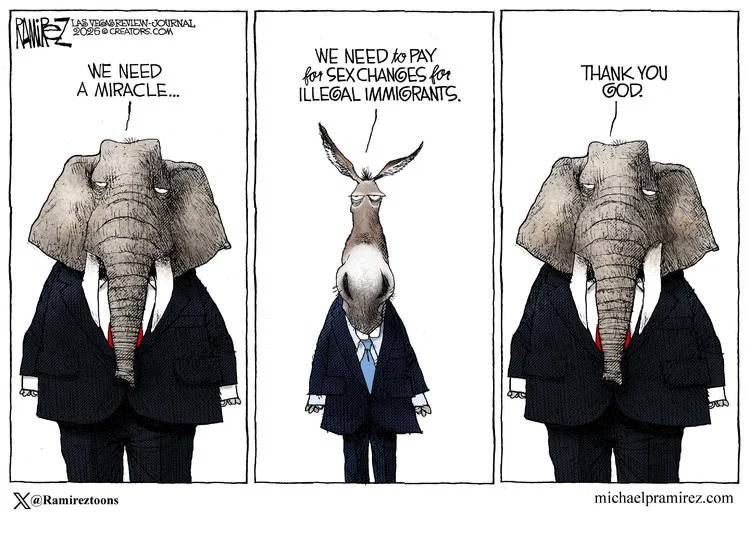
 Tipsy Teetotaler ن