Saturday, 6/17/23

Culture

Dogmatic nonsense at WSJ

Voters have to make a choice. Choices are always binary. In the end the majority of voters who aren’t fans of either man will have to decide whose flaws are greater. The presidential ballot doesn’t allow for a nuanced moral calculus.

Gerard Baker in the Wall Street Journal

Baloney! If the major parties keep serving up sh*t sandwiches, we can always refuse to choose (not vote). And there’s the choice of voting for the American Solidarity Party candidate (my choice the past two presidential elections).

Home-invasion robbers

Its mistake is not in any of the hand-written niceties it revels in, which make life orderly, cozy—even lovely. Its mistake is that it treats Leftist ideologues like quirky out-of-town guests arriving for brunch. It assumes we all want the same things and are equally devoted to the perpetuation of bedrock American commitments: free speech, free exercise of faith, equal protection, rule of law.

But the Woke are not zany guests. They are home-invasion robbers.

Abigail Schrier, Want to Save America? Don’t Act Like a Conservative

ESG follies

Nellie Bowles on Friday had the customary array of nut-picked items, but this one is particularly choice:

Philip Morris gets higher ESG rating than Tesla: Before anyone gets too excited about America making a sensible turn on climate change, let’s check in on our eco-investing program. Environmental, Social, and Governance (ESG) scores are meant to be guides for ethical investing, and a company’s score is extremely influential for where big investors put their money. It’s also fully corrupt, and data firms award high scores only to companies that give money to the most bizarre causes. So for example: Tesla now has an overall score of 37 out of 100, compared to Philip Morris International, which has a score of 84. Never mind that cigarettes accelerate the deaths of 8 million a year. (Read Rupa Subramanya’s Free Press article about ESG.)

(Emphasis added)

USA

American Exceptionalism

America’s “exceptional” nature … doesn’t imply superiority. It doesn’t even suggest excellence. It implies difference.

Charles J. Chaput, Strangers in a Strange Land

To see ourselves as others see us

When the head of USAID, Samantha Power, comes to your country and spouts off about America’s role in facilitating “civil society” and “independent journalism,” you are not only right to be worried—you have a duty to stay vigilant.

Dominick Sansone, Resurrecting the Balance of Power: Lessons From the Statesmanship of Viktor Orbán

Sometimes it’s good to be a hegemon

In my seemingly endless quest for balanced news and commentary (even if it’s roll-your-own balance by reading across a broad spectrum), I’ve been frustrated again and again. When I started in the early ’90s, with a shortwave radio, almost everyone was playing our music (literally) and singing our tune (figuratively). Soon came the internet, and shortwave went the way of the Dodo Bird.

C.S. Lewis in his essay wrote that “Every age has its own outlook. It is specially good at seeing certain truths and specially liable to make certain mistakes. We all, therefore, need the books that will correct the characteristic mistakes of our own period. And that means the old books.” Every country, too, tends to see some things especially well, others poorly. I try to be aware of that when I read putative enemies, both Americans, arguing with each other; I don’t always spot the hidden premise they share, that the world may not share, but I see it often enough to vindicate Lewis.

But such is the world today that even regions and countries who think differently from us publish their thinking in English, thank goodness, as I’m not currently literate other than in English. That means I can read:

Maybe foreign thinkers writing in English can supplement old books for expanding my mind.

Trump and his woes

Speaking of the Trump indictment

Here’s Marco Rubio:

There is no limit to what these people will do to protect their power & destroy those who threaten it, even if it means ripping our country apart & shredding public faith in the institutions that hold our republic together.

Rubio was speaking of the Democrats, of course; I could muster up some respect for him if it were a tearful admission he had been protecting his power by shredding public faith in the institutions of criminal justice.

Marco Rubio wasn’t necessarily the worst, but there was particular irony here.

Sober Peggy Noonan

My fear is that Mar-a-Lago is a nest of spies. Membership in the private club isn’t fully or deeply vetted; anyone can join who has the money (Mr. Trump reportedly charges a $200,000 initiation fee).

A spy—not a good one, just your basic idiot spy—would know of the documents scattered throughout the property, and of many other things. All our international friends and foes would know.

Strange things happen in Mar-a-Lago. In 2019 a Chinese woman carrying four cellphones, a hard drive and a thumb drive infected with malware breezed past security and entered without authorization. She was arrested and jailed for eight months. Another Chinese woman was arrested soon after; a jury acquitted her of trespassing but convicted her of resisting arrest. In 2021 a “Ukrainian fake heiress and alleged charity scammer” gained access, according to the Guardian.

Who else has?

Mar-a-Lago isn’t secure. Those documents didn’t belong there. It is a danger to our country that they were. This story will do Mr. Trump no good with his supporters. It will hurt him—maybe not a lot but some, maybe not soon but in time. I mean the quiet Trump supporters, not big mouths and people making money on the game, but honest people.

Peggy Noonan

Tragedy looms

When individuals and communities confront a range of options, all of which are likely to lead to bad consequences, that’s a tragic situation. I think that’s where the country finds itself today—in the midst of an unfolding tragedy. The proper response to such a situation is sobriety and honesty about the dangers that lie ahead.

Damon Linker, Blocking Trump’s Path Back to Power, on how the Trump federal indictment is likely to play out.

The Also-Rans

The New York Times describes advisers to rival campaigns wrestling today with the surreal task of “trying to persuade Republican primary voters, who are inured to Mr. Trump’s years of controversies and deeply distrustful of the government, that being criminally charged for holding onto classified documents is a bad thing.”

Nick Cattogio. Note, too, that the criminal charges came from a grand jury, not straight from DOJ.

Two key ideas for next year

I implore my conservative readers to consider two ideas:

  1. Donald Trump is unfit for the Presidency of the United States.‌
  2. The Democrats (and substantial portions of the civil service) have treated Donald Trump very shabbily. For sake of argument only, I’ll include the federal criminal indictment in that.

Now here’s the point, which doesn’t seem subtle to me but seems to be widely overlooked: Idea 2 doesn’t negate Idea 1.

Can you see that?

Should we inflict Donald Trump upon ourselves and our children just to get back at those who’ve wronged him? Couldn’t we just throw him a giant pity party? (Sorry: I’m expecting an emergency phone call that evening.)

Nailing the Wall Street Journal

Josh Barro nails the Wall Street Journal. Its opinion pieces really have been as bad as he describes in This Is Solely Donald Trump’s Fault. Excerpt:

People like those who constitute WSJ editorial board, who admit Trump broke the law but still don’t think he should be charged for it, should have to spell out what kinds of crimes a leading politician should not be allowed to commit.

And just in case you’ve wondered what Artificial Intelligence would come up with when asked for “A bathroom with a crystal chandelier, and an orange man with blond hair in a business suit reading a document on the toilet, and boxes and boxes of files stacked up everywhere, Pixar,” Barro answers that, too.

Will Republicans nominate a first-grader?

Overwhelming self-entitlement is just at the core of who Trump and [Boris] Johnson are. It is their character. This is how Johnson’s school principal described him when the future PM was just 17: “[He] sometimes seems affronted when criticized for what amounts to a gross failure of responsibility … I think he honestly believes that it is churlish of us not to regard him as an exception, one who should be free of the network of obligation that binds everyone else.” It could read as a summary of parliament’s report 41 years later.

And as with Trump and his bizarre behavior with “his boxes,” it’s very hard to see some profound, malign motive here in pursuit of something important. It’s just mindless egotism, married with an infinite capacity for deceit. Here’s how George M. White, Trump’s classmate at their military academy, characterized him at 17:

“The most significant incident, which I got into big trouble for, was when we were taking a picture in May of 1964, and Donald Trump refused to draw his sword. I’m the first captain and I order present arms and there are five guys behind me and they draw. But he refuses. I hear behind me, ‘Trump, draw your sword.’ Donald refuses. The picture gets taken. … He was defying a direct order, showing his defiance,” White said. “He was ‘being Trump,’ showing that his ego was more powerful than anybody’s. He later showed that picture around to show how defiant he was because he didn’t draw the sword.”

Trump himself told one biographer that “when I look at myself in the first grade and I look at myself now, I’m basically the same. The temperament is not that different.”

Andrew Sullivan

Douthat on the Trump candidacy

How seriously should we take Donald Trump’s candidacy?

Ross Douthat As seriously as a spring tempest. As seriously as a summer forest fire. As seriously as the north wind shaking the barren trees on the last day of autumn. As seriously as the winter wind, blowing in the same bare place, with the nothing that is not there and the nothing that is.

What matters most about him as a presidential candidate?

Douthat That his second term was foretold in the Necronomicon, written in eldritch script on the Mountains of Madness and carved deep, deep into the white stones of the Plateau of Leng.

What do you find most inspiring — or unsettling — about his vision for America?

Douthat I believe that before the sixth seal is opened, the sun becomes black as sackcloth and the moon becomes of blood, he will deliver more winning than we have ever seen, and I look forward to it.

Imagine you’re a G.O.P. operative or campaign manager. What’s your elevator pitch for a Trump candidacy?

Douthat Some say the world will end in fire, some say in ice. From what I’ve tasted of desire, I hold with those who favor fire. But if it had to perish twice, I think I know enough of hate to say that for destruction ice is also great and would suffice. MAGA!

Keeping Trump out of the brain

I can’t quite feel ashamed of my perpetual naïveté toward Donald Trump. I don’t want to be the kind of person who can easily enter the head of an amoral narcissist.

I’d rather not let him infect my brain. I’d rather not let that guy alter my views of the world. If occasional naïveté is the price for mental independence from Trump, I’m willing to pay it.

David Brooks, I Won’t Let Donald Trump Invade My Brain

Judging by how rarely Brooks writes about “Florida man,” he must be succeeding in his pledge to himself. (Lucky guy!)


For all its piety and fervor, today’s United States needs to be recognized for what it really is: not a Christian country, but a nation of heretics.

Ross Douthat, Bad Religion

We are in the grip of a grim, despairing rebellion against reality that imagines itself to be the engine of moral progress.

R.R. Reno

The end of the world as we know it is not the end of the world.

You can read most of my more impromptu stuff here (cathartic venting) and here (the only social medium I frequent, because people there are quirky, pleasant and real). Both should work in your RSS aggregator, like Feedly or Reeder, should you want to make a habit of it.

Thursday, 6/8/23

Politics of one sort or another

Plus ça change

Metapolitics

I’m a pluralist. I don’t just mean in the sense that I think modern societies are too highly differentiated for them to be oriented toward a single highest good in the way some on the right (the so-called Integralists) like to imagine they were in the supposedly good old days of unified Catholic Europe during the medieval period. I am that kind of pluralist, but I’m also a pluralist in another and deeper sense, one that traces its lineage to the work of Isaiah Berlin, who deployed the term to describe the character of moral reality itself, regardless of the composition of any specific society.

Individual freedom from external constraint or coercion is an important human good. But what about other senses of liberty? Or fairness (proportional justice)? Or solidarity? Or loyalty? Or excellence? Or authority? Or creativity? Or sanctity? Or piety? There are many human goods, each worthy of pursuit. Devoting one’s life to one at the exclusion of others will undoubtedly have value, but it will also require the sacrifice of those other goods. That doesn’t mean we must embrace, affirm, and pursue all values equally. (Equality is itself a good the pursuit of which requires the sacrifice of other goods.) But it does mean that we should make our choices in full awareness of the sacrifices involved, and not deny the reality of the losses.

So the love of liberty has its place. The problem is that libertarianism overemphasizes it to the exclusion of other values, and often denies there is any important loss or tradeoff involved in doing so. (Yes, that’s a little ironic for thinkers who usually like to emphasize the need for tradeoffs in the context of fashioning government policy.)

Damon Linker

Sorta Politics

After the way he abased himself to secure the Speakership, I never would have thought Keven McCarthy would be able to get anything done:

Among the various reassessments of Kevin McCarthy following his successful debt ceiling negotiations, the one with the widest implications belongs to Matthew Continetti, who writes in The Washington Free Beacon that “McCarthy’s superpower is his desire to be speaker. He likes and wants his job.”

[P]art of what’s gone wrong with American institutions lately is the failure of important figures to regard their positions as ends unto themselves. Congress, especially, has been overtaken by what Yuval Levin of the American Enterprise Institute describes as a “platform” mentality, where ambitious House members and senators treat their offices as places to stand and be seen — as talking heads, movement leaders, future presidents — rather than as roles to inhabit and opportunities to serve.

On the Republican side, this tendency has taken several forms, from Newt Gingrich’s yearning to be a Great Man of History, to Ted Cruz’s ambitious grandstanding in the Obama years, to the emergence of Trump-era performance artists like Marjorie Taylor Greene. And the party’s congressional institutionalists, from dealmakers like John Boehner to policy mavens like Paul Ryan, have often been miserable-seeming prisoners of the talking heads, celebrity brands and would-be presidents.

[T]he most notable populist Republican elected in 2022, J.D. Vance, has been busy looking for deals with populist Democrats on issues like railroad safety and bank-executive compensation, or adding a constructive amendment to the debt-ceiling bill even though he voted against it — as though he, no less than McCarthy, actually likes and wants his current job.

Ross Douthat, Can Kevin McCarthy and Joe Biden Fix Washington?.

Bare-knuckle politics

The former governor, whose affiliated PAC calls itself “Tell It Like It Is,” didn’t pull any punches during his roughly two-hour town hall last night against the man he’s convinced gave him COVID-19, calling the former president “lonely, self-absorbed, and self-serving.”

“I’m going after Trump for two reasons,” he said in response to an audience question. “Because he deserves it, and because it’s the way to win.”

Christie, a former federal prosecutor, likely views his punch-Trump-in-the-mouth approach as killing three birds with one stone. Not only does it put Trump on the defensive, but picking fights will also earn Christie time on cable news, which amounts to free advertising for the campaign. Plus, it helps him paint himself as a fighter. “He knows how to brawl and we like that in our candidates,” Merrill said of New Hampshire GOP voters.

TMD, The GOP Field Takes Shape

Delusional politics

A Toyota memo to auto dealers in April explained the challenges to full electrification. For instance, “most public chargers can take anywhere from 8-30 hours to charge. To meet the federal [zero-emissions vehicle] sales targets, 1.2M public chargers are needed by 2030. That amounts to approximately 400 new chargers per day.” The U.S. isn’t close to meeting that goal.

Toyota also noted that “more than 300 new lithium, cobalt, nickel and graphite mines are needed to meet the expected battery demand by 2035,” and they could take decades to develop. “The amount of raw materials in one long-range battery electric vehicle could instead be used to make 6 plug-in hybrid electric vehicles or 90 hybrid electric vehicles.”

And here’s an even more striking statistic: “The overall carbon reduction of those 90 hybrids over their lifetimes is 37 times as much as a single battery electric vehicle.” These inconvenient truths undermine the climate religion and government mandates.

Wall Street Journals Editorial

Culture

The Machine chooses its pronoun: “I”

Gaslit by machinery that calls itself a person :: Writing Slowly

Phone-free schools?

“Once upon a time, teachers smoked in classrooms.” There’s no reason we can’t get to a place where sneaking a look at a smartphone would be like sneaking a smoke at school—shameful for adults, a disciplinary offense for students.

Mark Oppenheimer, quoting David Sax.

Swell article, along with this. Dare I suggest, though, that Apple Watch complicates phone-free school strategies?

Wordplay

the ‘woke’ tribe

a curious agglomeration of international capital and elite progressive opinion posing as an uprising from below. (Paul Kingsnorth, The West Must Die)


It is the greatest of all mistakes to do nothing because you can only do little.

Sydney Smith (via The Economist)


zoonosis

Any disease or infection that is naturally transmissible from vertebrate animals to humans. See also Factory farming will kill us all. I think I’ll keep up buying pastured meat on the theory that — well, see the Sydney Smith quote above.

Apologies to Monbiot? I don’t think so.


The view from nowhere came from somewhere.

Subtitle of an Atlantic Article on the idea of objectivity.


Diffident

The thought crossed my mind that this has become an apt description of me. Looking up definitions, it does seem to fit. I “put a lot of stuff out there,” but have few hills I’m willing to die on. This may be a knock-on effect of a major religious epiphany after almost 50 years of excessive confidence in things I now see as sorely lacking.


A “true” story, in the older understanding, is a story that tells a truth, even if the facts are not true.

Rod Dreher, reporting on a gathering in Dublin that he and I both consider significant.

I may have said this before, but I was still, at age 18, struggling with the idea that something non-factual could be true, and I was suspicious of a young teacher who seemed to believe that it could. No doubt, that was connected to the putative literalism my (then) religious tradition of 1950s and ‘60s Wheaton-College-oriented evangelicalism. But I hesitate to try to unpack it further because the first sentence of this paragraph says all I can really remember of my hangup, which is virtually incomprehensible to me now.


To me, the Vision Pro doesn’t look like something to use, it looks like something to be sentenced to – by an especially cruel judge.

Alan Jacobs (link added, in case you’re not yet caught up in the hype)


Phubbing: contraction of “phone snubbing.” Phubbing is breaking away from a conversation to look at one’s phone screen.

##############################

For all its piety and fervor, today’s United States needs to be recognized for what it really is: not a Christian country, but a nation of heretics.

Ross Douthat, Bad Religion

We are in the grip of a grim, despairing rebellion against reality that imagines itself to be the engine of moral progress.

R.R. Reno

The end of the world as we know it is not the end of the world.

You can read most of my more impromptu stuff here (cathartic venting) and here (the only social medium I frequent, because people there are quirky, pleasant and real). Both should work in your RSS aggregator, like Feedly or Reeder, should you want to make a habit of it.

Wednesday, 5/17/23

Politics

Gentle Persuastion

Let’s start with something nice.

Peter Wehner recounts an anecdote from a 1985 gathering of the South African National Initiative for Reconciliation, where the Dutch Reformed were guardedly present:

Bishop [Desmond] Tutu was one of the last people to speak; as he was preparing to do so, the leaders of the Dutch Reformed Church were uneasy, visibly stiffening. Tutu addressed his remarks directly to them.

“I just want to thank God that he brought you, my white brothers, here to South Africa,” the Anglican bishop told the Dutch Reformed Church leaders, as best Haugen recalls his words decades later. “I thank God that you came because you brought the mission hospitals, and I was born in a mission hospital. I thank God you brought the mission schools, and I went to a mission school. But most of all, my brothers, I thank God that he brought you because you brought the word of God. But now I’m going to have to open up that word of God and show you why your apartheid system is a sin.”

Tutu proceeded to do just that.

Causation isn’t always obvious in human affairs, but according to Wehner “The following year, the Dutch Reformed Church declared that South Africa’s system of racial separation and minority white rule was morally wrong and had done the country and its people grievous harm.”

My recollection is that they declared it a heresy, which meant a lot to me since I was then a member of the Christian Reformed Church, historically Dutch and quite thoroughly “adjacent” to South Africa’s Dutch Reformed in many ways, and its defense of apartheid was an embarrassment — embarrassing like the Russian Orthodox Patriarch blessing the invasion of Ukraine.

What pluralism is and isn’t

Pluralism is an irreducible, sociological fact of American life. It is not a set of norms that requires perfect neutrality in public spaces; instead, it creates parameters around what’s politically possible amid profoundly diverse views about first principles.

Elayne Allen, Sensible Politics Can’t Ignore Religion.

That may be a sleeper. You might want to read it again.

Harder questions for The Man Who Would Be King

What the TV professionals should learn is that they have two choices in dealing with another Trump primary campaign. They can take the kind of this-is-an-emergency path urged on them by some press critics and anti-Trump writers: Don’t platform him or normalize his campaign in any way, don’t let him speak on live TV, cover him only within a set framework that constantly emphasizes his authoritarian tendencies and attempts to overturn the last election. I don’t believe this path is wise or workable, but it at least has a moral consistency lacking in the “democracy is in danger and tune in tonight for an hour with the demagogue!” approach that we already watched play out in 2016.

Alternatively, if the press intends to conduct interviews and run debates as normal, then in preparing for them they need to try to think a little bit more like Republican voters as opposed to center-left journalists. Not in the sense of behaving slavishly toward the former president, but in the sense of writing the kinds of questions that a right-leaning American primed to dislike the media might actually find illuminating.

In part, as Ramesh Ponnuru suggests, that means drilling into Trump’s presidential record on conservative terms rather than liberal ones — asking about, for instance, the failure to complete the border wall or the surge in crime in the last year of his administration. In part, as Erick Erickson writes, it means asking obvious questions that follow from his stolen-election narrative rather than just attacking it head-on — as in, if the Democrats really stole the election, why did your administration, your chosen attorney general and your appointed judges basically just let them do it?

Ross Douthat, Trump’s Lesson for the Media and Ron DeSantis

Sounds about right

Special Counsel John Durham—appointed during former President Donald Trump’s administration—issued a 306-page report criticizing the FBI’s investigation into allegations linking the Trump campaign and Russia ahead of the 2016 election. Durham found the collusion probe was opened based on “raw, unanalyzed, and uncorroborated intelligence” and that investigators placed too much stock in supposed evidence provided by Trump’s political rivals. The report also alleges the FBI was far more hesitant to investigate claims Hillary Clinton’s campaign had similar foreign ties. GOP Rep. Jim Jordan—chair of the House Judiciary Committee and the Select Subcommittee on the Weaponization of the Federal Government—said yesterday he’d invited Durham to testify next week.

Via The Morning Dispatch for 5/16/23

Once again, I’m in the position of holding two truths in tension:

  1. The Media, the FBI, and who knows who all else, will do just about anything, including dirty, sleazy tricks, to keep Donald Trump out of the White House.
  2. Donald Trump nevertheless is deeply unqualified for the Presidency of this troubled nation-state I live in.

The Biden Family Grift

“I don’t see any direct evidence of misconduct in the memo or reports about it,” Ken White, a criminal defense attorney and former federal prosecutor who worked on government fraud and public corruption, told TMD. “When it rises to the level of an official doing things because of payments to a family member, or paying money with the specific intent to change an official’s decision, that’s illegal. But hiring a public official’s idiot brother-in-law for your board of directors generally isn’t.”

“There’s a vast amount of activity that’s sleazy but legal in American politics,” White told TMD. “It’s reasonable to make inquiries about why a vice president’s relatives are getting big payments from foreign countries. But so far it’s smoke, not fire.”

The House Judiciary and Intelligence Committees released a joint staff report last week claiming a letter signed by former intelligence officials during the 2020 election discounting the legitimacy of the infamous Hunter Biden laptop was coordinated with the Biden campaign and exploited the national security credentials of former officials.

Via The Morning Dispatch for 5/16/23

Point Well Made

President Biden says he will not negotiate with congressional Republicans over a bill to increase the debt ceiling. This is preposterous and indefensible, for several reasons: For one thing, taxing, spending, and borrowing are inherently congressional powers, not presidential powers. For another thing, Joe Biden is president—not king. The idea that a president would refuse to negotiate with Congress over congressional action is nonsensical from a constitutional point of view and autocratic from a political point of view. Congress is not there to do the president’s bidding—if anything, it is the other way around: The president is charged with the faithful execution of the laws Congress passes, not with barking orders at the branch of government that is actually charged by the Constitution with responsibility for this issue.

Kevin D. Williamson, Emperor Malarkey I.

I’m pleased to report that Biden was lying/bluffing/bloviating and is indeed talking with congressional Republicans — talks that cynics might even call “negotiations.”

Christian Nationalisms

Michelle Goldberg, who I don’t usually read, caught my attention with this one:

A major question for Republicans in 2024 is whether this militant version of Christian nationalism — one often rooted in Pentecostalism, with its emphasis on prophecy and revelation — can overcome the qualms of more mainstream evangelicals. The issue isn’t whether the next Republican presidential candidate is going to be a Christian nationalist, meaning someone who rejects the separation of church and state and treats Christianity as the foundation of American identity and law. That’s a foregone conclusion in a party whose state lawmakers are falling over themselves to pass book bans, abortion prohibitions, anti-trans laws, and, in Texas, bills authorizing school prayer and the posting of the Ten Commandments in classrooms.

What’s not yet clear, though, is what sort of Christian nationalism will prevail: the elite, doctrinaire variety of candidates like Gov. Ron DeSantis of Florida, or the violently messianic version embodied by Flynn and Trump.

If DeSantis treats Christianity as a moral code he’d like to impose on the rest of us, Trump treats it as an elevated status that should come with special perks. That’s how he can slam DeSantis for being “sanctimonious” even as he wraps his own campaign in biblical raiment. If a Republican wins in 2024, the victor will preside over a Christian nationalist administration. The question is whether that person will champion an orthodoxy or a cult.

What a hell of a state we’re in when Donald Trump, with zero Christian bona fides, is considered the avatar of one variety of “Christian Nationalism.” And while I question the use of “Christian Nationalism” to describe MAGAworld, he’s definitely the avatar of something that thinks it’s Christian. So too may be DeSantis, this time with some bona fides.

It’s shaping up once again that I’ll be unable to vote in good conscience for either major party candidate next fall.

Legalia

How much menace can we be required to tolerate?

Today, Kat Rosenfeld of UnHerd gained the coveted status of “Writers the Tipsy Teetotaler intends henceforth to pay closer attention to.”

Her topic is the subway death of Jordan Neely at the hands of Daniel Penny with the approbation of some other passengers. It’s so rich that I commend the whole essay to you at UnHerd though it was reprinted at Bari Weiss’s Free Press behind a paywall:

During the 2017 peak of the #MeToo movement, the conversation about sexual harassment came down to two related but ultimately separate questions. On the one hand, there was the question of what men shouldn’t do; on the other, there was the question of what women could be expected to tolerate.

For [Jordan Neeliy] to die on the dirty floor of a subway car, screaming and defecating on himself while three strangers held him by the arms, legs, and neck, he had to be first failed at every turn by a system that was supposed to shelter and protect him — not just from doing harm, but from being harmed by others when his mental illness manifested in frightening ways.

Here, one might have expected that many of the same voices who argued so vehemently against the notion of resilience in the midst of MeToo … would now demand zero tolerance for male aggression on public transit …

But, no: instead, many of the people who once insisted that men who slid into DMs deserved the complete destruction of their professional reputations became passionate advocates for toughening up when it came to dealing with volatile people on public transit.

To sum up: a man who reposts an off-colour joke is advertising his innate misogyny, to the point where women should feel uncomfortable sharing a workplace with him. But an agitated and clearly unstable man announcing to a crowded subway car — as Neely reportedly did — that he’s been pushed to the brink and is ready to die, or go to prison for life: why in the world would you find that menacing?

Of course, today’s 180-degree pivot to brash fearlessness is identitarian horse-trading: MeToo is out, BLM is in. The dynamics of any conflict must be considered along these lines, and the narrative must be massaged accordingly. This was true in 2020 when a white woman called the police on a black man who threatened her in a public park; it is true now, as piety demands that the behaviour of the black, homeless victim of this terrible tragedy must not be scrutinised in any way. On the Left, that is; the Right has spent the past few days waving Neely’s criminal history in the air, singing “He Had It Coming”, in an absolute spectacle of ghoulishness.

That mindset, so ubiquitous in the wake of MeToo, so popular among progressives in general, says that no breach of decorum or moment of discomfort is too insignificant to ignore. It must be registered. It must be punished. It’s nothing more or less than a call for constant vigilance. The thing about that: when you demand vigilance, you get vigilantes.

(Italics added)

One cavil: Maybe Rosenfeld has been frequenting further-Right sites than I do, but “singing ‘He Had It Coming’, in an absolute spectacle of ghoulishness” strikes me, for once, as hyperbolic bothsiderism.

There definitely is a reflex to defend Daniel Penny, but the Right-coded commentary I’ve seen appreciates that Jordan Neely was non compos mentos and didn’t “deserve” to die. Were it clear that Daniel Penny intended his death, a lot of his support would disappear.

Meanwhile, I’m at least glad that there’s a generous legal defense fund for Penny — some of it probably ill-motivated, but the shade of green is the same regardless of motive — so he can mount a proper fight against dubious criminal charges.

Abortion extremism

North Carolina state lawmakers voted Tuesday to override Democratic Gov. Roy Cooper’s veto of a bill that prohibits most abortions after 12 weeks of gestation, with exceptions for rape and incest (up to 20 weeks of gestation), “life-limiting anomalies” (up to 24 weeks), and life of the mother (no limit). The bill also appropriates money for child and foster care programs, contraception, and paid parental leave for teachers and government employees. North Carolina’s Republican lawmakers have pitched the legislation as a model for states around the country.

TMD.

I said previously that Governor Cooper’s veto should brand him as an absolutist and his party’s position on abortion as extreme.

I know I am well out of the mainstream, but this Bill strikes me as being about where the country is likely to end up on average, for the foreseeable future, with a few solid blue states echoing Gov. Cooper’s absolutism in favor of any and all abortions.

And if accepting that reality offends you, I commend The Truth of Sensible Politics at The Public Discourse.

Culture

A Cold Splash of Reality

A few years before his death in 1972, [C.] Day Lewis was made Poet Laureate of the UK—which is generally a mixed blessing of an honor, tending to mean that the poet in question has their best work behind them and now must try to summon the muses to celebrate the wedding of someone sixth in line to the throne.

Things Worth Remembering: A Poem for Parents | The Free Press

Fun fact 1: C. Day Lewis was father of Daniel Day Lewis.

Fun fact 2: Although I recognize the name as that of an actor, I probably could not pick Daniel Day Lewis out of a police lineup of famous middle-age, caucasian (whatever that means), dark-haired actors. I’m just not a movie groupie.

Embrace of Vigilantism

Jamelle Bouie, who I probably should watch more closely, echoes my distress over the Right-wing valorization of white males who arguably acted as vigilantes. (The Republican Embrace of Vigilantism Is No Accident).

He might have mentioned Left-wing valorization of the victims, who generally were not without fault in the lethal incidents, but if I’m going to complain about bothsiderism, I shouldn’t fault writers who don’t practice it — even if it’s because they see no enemies or toxic extremists on their side of the spectrum.

Companion Piece: Recommended: Firearms Classes Taught Me, and America, a Very Dangerous Lesson

Companion Piece to the Companion Piece: B. D. McClay, Phenomenology of the Gun (Recommended by an acquaintance on micro.blog)

The Good Life

Despite sociological evidence to the contrary, it remains to all appearances virtually axiomatic that the acquisition of consumer goods is the presumptive means to human happiness-and the more and better the goods, the better one’s life and the happier one will be.

Brad Gregory, The Unintended Reformation

More, from elsewhere:

Let’s just say you’d better have great discipline and a very rich interior life if you expect to be happy amid great affluence.

If this is true of individuals, that money doesn’t buy happiness, why can’t it be true of a whole society? Perhaps we can sum it up thusly: What does it profit a man to gain the world yet lose his soul? If America has gained the world but lost its soul, we should be anxious indeed.

Jon D. Schaff, Are Americans Better Off?

Parity

Ultimately, the education system should commit to spending at least as much on a fifteen-year-old whose next seven years will be spent in a combination of school, apprenticeship, and employment as it spends on one headed to a four-year public university.

Oren Cass, The Once and Future Worker

Micro.blog

In the footer of each blog post, I mention my presence on micro.blog and blot.im for shorter items or outbursts, respectively. Now Alan Jacobs has written a neat summary of micro.blog, the three paths of micro.blog.


For all its piety and fervor, today’s United States needs to be recognized for what it really is: not a Christian country, but a nation of heretics.

Ross Douthat, Bad Religion

We are in the grip of a grim, despairing rebellion against reality that imagines itself to be the engine of moral progress.

R.R. Reno

You can read most of my more impromptu stuff here (cathartic venting) and here (the only social medium I frequent, because people there are quirky, pleasant and real). Both should work in your RSS aggregator, like Feedly or Reeder, should you want to make a habit of it.

Star Wars Day 2023

The woke aren’t entirely wrong

The ‘woke’ lot are not wrong about standpoint epistemology, they’re just too reductive about it, and they use the wrong metrics. They’re not wrong that it’s impossible to detach yourself entirely from your own background and perspective. And this is a paradigm shift that’s been accelerated by the decentralisation of authority in digital culture: personal authority now counts for more, as does being reflexive about your personal biases. If you want to have an impact now, it’s widely considered good practice and due diligence to acknowledge your own standpoint. I broadly agree with that. I think it’s a basic principle of intellectual hygiene to say: “I can only see things from my perspective and that means that I may have some blind spots.” In that respect, I’m a paid-up postmodernist. 

This is the post-liberal shift in a nutshell. It says that we’re all implicated in what we’re dealing with, all of the time, and it’s just not possible to have a neutral public space. It follows from this that you cannot simply privatise moral goods. That follows logically from the acknowledgment that we’re all implicated in the mess of our condition. You can’t just say, “Well, I’m going to worry about myself, for my life is my business.” No, your life is everybody’s business. The question, then, is: which aspects of my life are whose business? And how and why, and who gets to say so? So, the ‘woke’ crowd are not entirely wrong to say that much of the public debate should orbit around questions of power. To say that everything is a question of power is far too reductive. That quickly takes things in a very nihilistic direction.

The big problem with the ‘woke’ movement, in fact, is that it’s not really postmodern. It’s largely a last attempt at modernism. It says, “If we can’t have a neutral shared public square, we’re just going to destroy all remaining shared meaning because that’s the only way we can all be free.” ‘Wokeness’ is, if you like, modernism’s final temper tantrum. But this temper tantrum, unfortunately, is now being institutionalised by HR departments. 

If Mary Harrington is right (not so much in my quote, but from other parts of the long interview from which I took it), I’ve largely escaped my Boomer generation’s biases and become Gen-X adjacent: I’m pretty sure liberalism is doomed. That’s a Gen-X type conviction. But I’m still committed to what likely is a lost/doomed cause.

Reformers and vandals

Chesterton wrote that “the more modern type of reformer,” encountering a fence across a road, “goes gaily up to it and says, ‘I don’t see the use of this; let us clear it away.’ To which the more intelligent type of reformer will do well to answer: ‘If you don’t see the use of it, I certainly won’t let you clear it away. Go away and think. Then, when you can come back and tell me that you do see the use of it, I may allow you to destroy it.’” Our customs regarding sex and the family have been battered down without anyone’s caring about why they were there in the first place.

Anthony Esolen, Out of the Ashes

Race in historic perspective

If Cleopatra were asked whether she was white or ‘B’lack, she probably would have met the query with a blank stare. Projecting your confused ideas about race onto historical figures is political — but only in the most embarrassingly vain and trifling sense of the word ….

Kmele Foster via Andrew Sullivan.

Words

In the Pensées, Pascal observed that “there are two equally dangerous extremes: to exclude reason, to admit nothing but reason.” With regard to language, we might say that there are two analogous extremes: to exclude the possibility that language can adequately express something truthful about the world, to admit only the truths language can convey. I would assent to the claim that there are truths beyond language. There are inexpressible realities and ineffable experiences. But language is itself a miracle and a gift of extraordinary range, power, and beauty. It is one thing to reach the limits of language by testing its resources and searching its depths, and another thing altogether to mistake our own apathy and incuriosity for the inherent limits of speech.

L. M. Sacasas, Too Many Words, and Not Enough

This week, I watched videos of people literally burning Harry Potter books, like latter-day Nazis, in the cause of transgender liberation. It’s safe to say, I think, that many of these people have lost their minds — just by staying online. And they not only think they’re perfectly sane; they think they’re heroes.

Andrew Sullivan, We’re All Algorithms Now. (This is not a quote from a recent Sullivan post.)

Whither meritocracy?

[I]t seems pretty clear that many schools are really ditching the SAT in response to the following sequence of events: Asian American SAT scores rose to the point where elite colleges were accused of discriminating against Asian American applicants to maintain the racial balance they desired, this led to lawsuits, and those lawsuits seem poised to yield a Supreme Court ruling against affirmative action. So universities are pre-emptively abandoning a metric that might be used against them in future litigation, not for the sake of widening opportunity but just in the hopes of sustaining the admissions status quo.

Ross Douthat, Can the Meritocracy Survive Without the SAT?

Reactionary feminism

I’ve dubbed this fightback “reactionary feminism.” I use “reactionary” in recognition that “progress” in its contemporary form wages war on human nature. It views “freedom” as best served by reframing embodied men and women as atomized, de-sexed, fungible, and interchangeable “humans” composed of disembodied “identity” plus body parts that can be reordered at will, like meat LEGOs. And I use “feminism” in recognition of the fact that proposing to atomize, de-sex, and remodel “humans” has profound negative impacts on women.

Mary Harrington, The Three Principles of Reactionary Feminism

AI perspective

[A] new technology has emerged, and those who stand to make billions off of it are telling you: you will never be lonely again; the meaning you’ve always pined for will be provided for you by superintelligent beings; you will not die, but have eternal life. Or, alternatively, you are soon to witness the end of the world, which will free you from everything you don’t like about your life and yourself. Either way – people are telling you that something very, very important is happening, and right now is important, and you live now, so you’re important, and you want to believe, have to believe, are desperate to believe. And so you do believe, even though it isn’t true.

Freddie deBoer, monkeywrenching all the AI hype.

El Rushbo

At the end of his career, Limbaugh was defending—or allowing himself to be understood as defending—political violence, conspiracy theories, and even secessionism.

If you want to defend that by saying, “We’ll that’s what a lot of right-wingers believe today,” I won’t argue with you. I’m just not sure it’s the defense you think it is.

Jonah Goldberg, Rush Limbaugh, RIP

Why one Florida Man isn’t on a roll

“This is f—ing madness!” [Tim] Miller exclaimed at one point in his piece.

Is it? It seems pretty rational to me.

It’s madness civically. No one who cares sincerely for this country would support returning a coup plotter to power. Every Trump endorsement is tantamount to the endorser declaring that they’re indifferent at best and hostile at worst to the project of American democracy.

But rationally? To behave rationally is to maximize one’s personal self-interest.

It seems to me Daines, Zeldin, and the rest have not only behaved rationally by endorsing Trump but that there’s no rational case—for now—for an influential Republican to endorse Ron DeSantis.

Nick Cattogio, Elected Republicans Have No Reason to Endorse DeSantis

Cautionary tale

Samsung Electronics told staff not to use generative AI tools because of security concerns. In a staff memo, the company said that confidential code was accidentally leaked after engineers uploaded it to ChatGPT in April. It is the latest setback to the rollout of such technology in the workplace: financial firms such as Goldman Sachs have restricted employees’ use of similar platforms.

The Economist

Rueful tech

[I]t is hard to avoid the sense that  today’s “tech” is more often a tax on the real economy, inflicting costs that don’t show up in any ledger because they are paid by you and me in the coin of nuisance.

Matthew Crawford.

Case in point. On May Day, I tried to order a bottomless dark roast coffee at a coffee house where I was setting up office for a few hours. It involved scanning a QR code, loading the app, trying to figure out how to “go dutch” despite the app knowing someone else was at the table (because they’d scanned the code, too). (I eventually ordered, a bit sullenly at the counter, where I had to return for every refill.)

Advice in the Deathworks

As I said in the first item, “I’m pretty sure liberalism is doomed.” I’m inclined to think that out civilization is doomed, too, though by that I do not mean that humanity will go extinct.

One of my wise cyberfriends is perhaps even more pessimistic than I am, but pessimism isn’t incompatible with hope:

Meanwhile, I will keep my head down and live the best life I can for me and mine and my community, as the natural forces of our particular system of governance play themselves out.

[A]s we straddle the globe, Tom McTague again offers some sobering statistics: 3,000 people sleep homeless in the U.K., while 113,000 sleep homeless in California alone: we have 7 murders per 100,000 nationwide, while Western Europe has 1, the rise in mass shootings are simply too grim to note the number; we lost 58,000 to fentanyl overdoses in 2020, while the entire EU lost 97; and our life expectancy is collapsing across all socioeconomic groups.

And so, our problems are deep and wide, the American Dream has taken a nightmarish turn, and “the situation is hopeless, but not serious.” But, it is Spring and my oakleaf hydrangeas are blooming. I have passed the 42-year mark on our marriage, and it looks like it is going to hold. My dog remains ever faithful. And—I have found a solution to keeping the squirrels out of our bird feeder. (I did not , however, take the advice of the woman who made our acquaintance in Walmart. She suggested that we grease the pole with Vaseline, as she does every morning.) So, in all sincerity, I can say that life is good. What an exciting time to be alive!

Terry Cowan, whose Substack I most heartily recommend, though (indeed, probably because) politics is not his regular beat. He doesn’t post often, but what he posts is really sane.


For all its piety and fervor, today’s United States needs to be recognized for what it really is: not a Christian country, but a nation of heretics.

Ross Douthat, Bad Religion

You can read most of my more impromptu stuff here (cathartic venting) and here (the only social medium I frequent, because people there are quirky, pleasant and real). Both should work in your RSS aggregator, like Feedly or Reeder, should you want to make a habit of it.

Mark & Kathi’s Golden Anniversary

I had to lead with a shout-out to my brother and sister-in-law, Mark and Kathi, observing their Golden Anniversary today. They’re kinda private people, so that’s all I’ll say.

A gentle but firm “no”

Lionel Shriver notes a lot of parallels between two prestige (and therefore socially contagious) disorders, anorexia and gender dysphoria.

“Gender-affirming care” doesn’t treat the illness but indulges the patient’s delusions to the hilt. Rather than coach a child to reconcile with reality, clinicians twist reality to reconcile it with the disorder. Anyone who dares describe the bizarre and biologically baseless conviction that one was “born in the wrong body” as a mental health issue is tarred as a transphobe. Were teenage anorexics treated anything like trans kids, they wouldn’t be encouraged to finish their dinner, but rather abjured, “You’re right: you’re fat! Your true self is even thinner! You will never rise to sit at the right hand of God the Father Almighty until you completely disappear!”

… we’re implicitly dangling the promise that on the other side of transitioning to the opposite sex — or feigning transition, since inborn sex is written in our every cell — all a young person’s problems will be solved.

What these conditions have most in common is being dreadful answers to the questions that inevitably torture young people: who am I, what makes me unique, what makes me loveable, what do I want to achieve, why does just being alive seem so hard, am I the only one who feels so dejected, what does it mean to become a man or a woman, and is there any way I can get out of growing up? The responsible adult’s reply to that last one must be a gentle but firm “no”.

Lionel Shriver, Is trans the new anorexia?

I can hardly imagine a more timely or courageous essay. I say “courageous” because Shriver doesn’t have the deep pockets of J.K. Rowling, who got in online trouble for a less sustained bit of iconoclasm.

Skip the debates?

A poll released this week by NBC found 60 percent of Americans believe Donald Trump shouldn’t run for president again while 70 percent, including a majority of Democrats, believe Joe Biden shouldn’t either.

Numbers like that portend competitive primaries but Biden and Trump look increasingly like prohibitive favorites. Biden owes his advantage to incumbency and to history, as Democrats remember how Gerald Ford, Jimmy Carter, and George H.W. Bush fared after facing serious primary challenges. Trump owes his advantage to the mule-headed cultishness of the Republican base and the cowardice of right-wing influencers who fear the consequences of crossing it.
What’s truly amazing, though, is that at a moment when most of the public is yearning for alternatives, the 2024 primaries might be not just uncompetitive but lacking a single meaningful debate between the candidates. 

Last week the Washington Post reported that “the national Democratic Party … has no plans to sponsor primary debates,” outraging progressives as well as right-wing trolls who forgot that the Republican Party behaved the same way in 2020. When incumbent presidents face token opposition in a primary, the national party has no reason to give the upstarts a media showcase by hosting a debate.

Nick Catoggio.

We used to pick our Presidential nominees in “smoke-filled rooms.” We now let lunatic partisans pick them in primary elections. There’s no going back to smoke-filled rooms, but maybe the parties skipping primary debates is a helpful corrective to part of what ails us politically.

What Twitter is made for

Ordinary courtesy and respect for one’s intellectual opposites are actually liabilities on Twitter. They run against the grain of what one might call “effective” use of the platform. The platform isn’t made for debate. Contra Elon, it isn’t made to be a digital public square either. Twitter is made for identity curation via meta-positioning ….

Jake Meador

The obverse side of “woke capital”

“Woke capitalism” may seem like corporations gravitating to the left, but it’s also corporations watering down the left.

David Brooks

Tucker

For any idea with an establishment imprimatur, absolute suspicion; for any outsider or skeptic, sympathy and trust.

Ross Douthat’s characterization of Tucker Carlson’s “hermeneutic.”

I never watched Tucker Carlson, though it’s near-impossible to avoid clips of him on the internet. So I have no first-hand impression of him, and I am suspicious of anything with an establishment imprimatur — not absolute suspicion (which would be stupid), but sharp and increasing.

But is Ross Douthat an establishment figure? I’d say not, but your mileage might vary.

Live not by lies wherever you live

Before my Harvard speech, I naïvely believed that I had found myself in a society where one can say what one thinks, without having to flatter that society. It turns out that democracy expects to be flattered. When I called out “Live not by lies!” in the Soviet Union, that was fair enough, but when I called out “Live not by lies!” in the United States, I was told to go take a hike.

Aleksandr Solzhenitsyn

Wordplay

Adjectival overkill is the method of bad polemicists who don’t have much to report.

The Smearing of Clarence Thomas

the distinctive “occupational psychosis” of Silicon Valley is sociopathy

Alan Jacobs

There is an immense and important difference between seeking justice and seeking power.

David French

Angry populism is a force that can only be stoked, never assuaged.

Bret Stephens

… culture-war chum-tossers …

Nick Cattogio, characterizing Tucker Carlson (and others).


For all its piety and fervor, today’s United States needs to be recognized for what it really is: not a Christian country, but a nation of heretics.

Ross Douthat, Bad Religion

You can read most of my more impromptu stuff here (cathartic venting) and here (the only social medium I frequent, because people there are quirky, pleasant and real). Both should work in your RSS aggregator, like Feedly or Reeder, should you want to make a habit of it.

Thursday April 13, 2023

Cultural

A key moment creating modernity

One of the key moments in the creation of modernity occurs when production moves outside the household. So long as productive work occurs within the structure of households, it is easy and right to understand that work as part of the sustaining of the community of the household and of those wider forms of community which the household in turn sustains. As, and to the extent that, work moves outside the household and is put to the service of impersonal capital, the realm of work tends to become separated from everything but the service of biological survival and the reproduction of the labor force, on the one hand, and that of institutionalized acquisitiveness, on the other. Pleonexia, a vice in the Aristotelian scheme, is now the driving force of modern productive work.

Alasdair MacIntyre, After Virtue

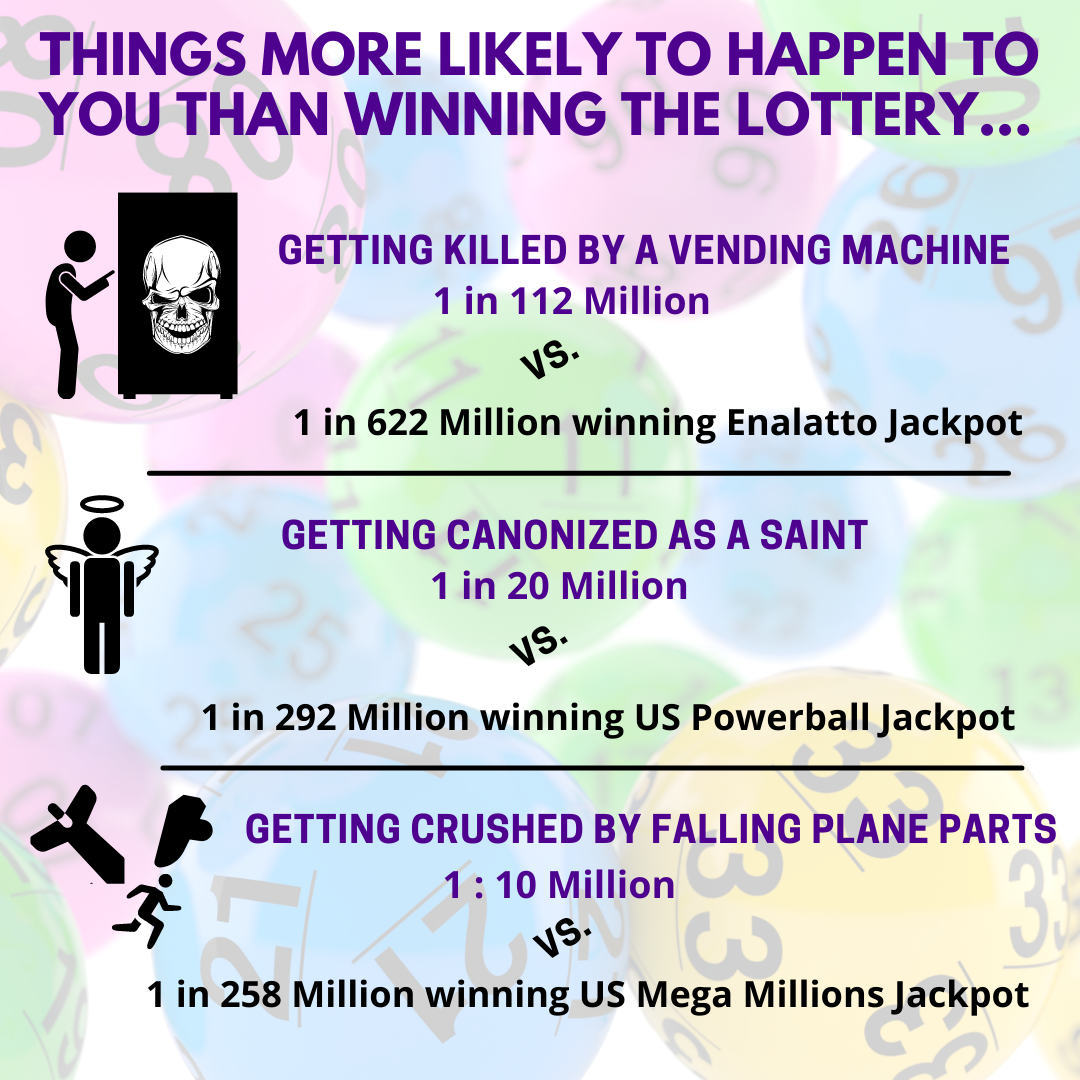
Lotteries in perspective

Relatively unlikely

The Lottery: The Poor are Playing, and the Wealthy are Winning – Focus for Health

Progress?

[W]e tell ourselves that we’re advancing because “grandma gets an iPhone with a smooth surface,” but meanwhile she “gets to eat cat food because food prices have gone up.”

Peter Thiel

Another Percy thought-experiment?

A letter to Dear Abby: I am a twenty-three-year-old liberated woman who has been on the pill for two years. It’s getting pretty expensive and I think my boyfriend should share half the cost, but I don’t know him well enough to discuss money with him.

Walker Percy, Lost in the Cosmos

Remember (or know, if you can’t remember) that Lost in the Cosmos is a very strange book. I don’t know whether this was a real “Dear Abby” letter.

But it should be.

Sex

When biologists claim that sex is binary, we mean something straightforward: There are only two sexes. This is true throughout the plant and animal kingdoms. An organism’s sex is defined by the type of gamete (sperm or ova) it has the function of producing. Males have the function of producing sperm, or small gametes; females, ova, or large ones. Because there is no third gamete type, there are only two sexes. Sex is binary.

For the vast majority of people, their sex is obvious. And our society isn’t experiencing a sudden dramatic surge in people born with ambiguous genitalia. We are experiencing a surge in people who are unambiguously one sex claiming to “identify” as the opposite sex or as something other than male or female.

Colin Wright, A Biologist Explains Why Sex Is Binary

When individualisms clash, who wins?

This short paragraph is dense, but rewarding:

The legislation also demonstrates one of the oddest results of the modern emphasis on the radical freedom of the individual. In such a world, all must theoretically be allowed to have their own narratives of identity. But because some narratives of identity inevitably stand in opposition to others, some identities must therefore be privileged with legitimate status and others treated as cultural cancers. And that means that, in an ironic twist, the individual ceases to be sovereign and the government has to step in as enforcer. The lobby group of the day then decides who is in and who is out, with the result that, in this instance, the gay or trans person who wants to become straight or “cis” (to use the pretentious jargon), cannot be tolerated. His narrative calls into question that of others. We might say that his very existence is a threat. To grant any degree of legitimacy to his desire is to challenge the normative status of the desires of others.

Carl Trueman, Prohibiting Prayer in Australia

Political

Election 2024 Aftermath

[W]e’d be foolish not to see the risk of civil disorder and legal shenanigans as high no matter who loses in 2024. Downtowns were boarded up on the eve of the 2020 race not against angry and aggrieved Trump voters. Rural riots are hardly a thing. It was in deeply blue areas that local officials feared mass violence if the election didn’t turn out the way Democrats wanted.

You can’t analyze realities you refuse to see. Take a recent podcast with the Democratic campaign guru Joe Trippi that borders on the neurotic. He’s alarmed not because 75% of voters say they fear for the future of democracy, but because Republicans are saying this, since in his mind only Democrats are allowed to feel democracy is under threat (from Republicans, of course).

Holman W. Jenkins, Jr., If Trump Wins in 2024, Then Who Threatens Democracy?

A new avatar for populism?

If you are someone who wish Trump would go away, Frank Luntz has some excellent, well-researched advice on what it will take (and thus implies what kind of candidates you should support).

Spoiler alert: populism isn’t going away any time soon, but Trump needn’t be its avatar.

Ennui

A Jules Feiffer cartoon in the Village Voice once depicted a man suffering from liberal ennui. The man shifted uncomfortably in his chair and explained how he was bored all the time, had no appetite, no interest in life, no sense of humor, no capacity even for outrage.

The punch line? “I need Nixon.”

William McGurn, Donald Trump’s Enemies Need Him, of a September 1974 cartoon.

As a grown-up, I’m sure you can imagine the current-world analogy.

Greg Abbott goes beyond jackassery

The law-and-order party has a law-and-order problem.

I’m not talking about the Republican Party’s tolerance for, and even unconditional defense of, Donald Trump’s many legally dubious acts—though that is certainly bad.

I’m talking, instead, about something far broader in the party and the culture from which it derives its political energy. We saw it in the way conservative media outlets and personalities back in 2020 treated 17-year-old Kyle Rittenhouse as some kind of folk hero for shooting three men, killing two, during civil unrest in Kenosha, Wisconsin, after he made a point of driving, heavily armed, to the site of the protests from his home in neighboring Illinois.

We see it in strong support among Republicans, not only for permissive gun regulations, but also for laws allowing private citizens to carry military-grade firearms in public places, whether concealed or not.

And we see it in its most alarming form yet in Texas Governor Greg Abbott’s promise to pardon Army sergeant Daniel Perry, who was convicted of murder last week for killing 28-year-old Garrett Foster at a Black Lives Matter demonstration in Austin in 2020.

Together these trends—but especially Abbott’s stance on Perry’s murder conviction—show us a party staking out a position incompatible with life under the rule of law and within a civil society. In its place, the GOP appears to favor a return to the unlawful disorder of the wild west, where vigilante violence and factional allegiances took the place of establishing justice, ensuring domestic tranquility, and promoting the general welfare.

Damon Linker

The jury’s conviction of Daniel Perry was amply supported by the evidence. No stand your ground law should cover a hot-head going and looking for trouble, then shooting someone dead before it even arrives.

The serial jackassery of Gov. Abbott is one reason why, netting the negatives out from the positives, living in Texas doesn’t appeal to me.

A successful third party

[I]t is worth remembering that there already has been a very successful third party: the Republican Party, which skyrocketed to power very shortly after its founding in 1854, with the first Republican president, Abraham Lincoln, winning the White House in 1860. By contrast, the Libertarian Party, founded in 1971, has topped out at 3.3 percent in presidential elections—and that was in 2016, when the party’s ticket comprised two moderate Republican former governors (Gary Johnson and William Weld) running against two corrupt and contemptible New York Democrats, Hillary Clinton and Donald Trump.

Kevin D. Williamson, Meet the Whigs


For all its piety and fervor, today’s United States needs to be recognized for what it really is: not a Christian country, but a nation of heretics.

Ross Douthat, Bad Religion

You can read most of my more impromptu stuff here (cathartic venting) and here (the only social medium I frequent, because people there are quirky, pleasant and real). Both should work in your RSS aggregator, like Feedly or Reeder, should you want to make a habit of it.

Tuesday 2/21/23

Personal

Last October, I began wearing a continuous glucose monitor (CGM).

My diabetes has never been bad. I’ve never needed insulin. The Family Practitioner who started me on Piaglitazone and Metformin never even uttered the word “diabetes.” He said “I’m going to put you on some meds to control your blood sugar, which is a bit too high.” Soon he dropped the Piaglitazone.

Since my Doc was sort of proactive, I suspect that I never actually made it past “pre-diabetes,” which I think is pretty much the same as “metabolic syndrome.” I’ve known I had metabolic syndrome/pre-diabetes for more than 30 years. And while my doctors (past and present) seemed to consider my A1C of 6.2 pretty good, I looked at it, and at the scale, and eventually said “maybe I put weight on so easily because of what high blood sugar does,” and began thinking that CGM technology might help me control that.

That thought became a reality shortly thereafter when I learned of Levels Health. Through them, I got a Dexcom G6 CGM. This is my personal, subjective report.

First, using a CGM requires some acclimation. Levels didn’t mention that CGM sensors only last about 10 days, and each one measures serum glucose differently. I had to figure that out by looking at the Dexcom app and puzzling over the blank next to “last calibration date.” Yes, you do need to calibrate your CGM sensor unless you want merely to get an idea of the direction your serum glucose is moving twelve times an hour.

Thus, second, the ads for Dexcom that say “no more finger pricks” are exaggerating. You need finger pricks in order to calibrate the new CGM sensor. In my experience, I really need two finger-pricks per sensor: one when glucose is low, another when it’s high. I only calibrated my current sensor at low glucose, and I’m all but positive that it’s exaggerating the rise caused by benign meals that have not been a problem before. Still, two finger-pricks in ten days is much better than what some diabetics experience.

Third, there’s only one good place on my arms to wear a CGM, and if I sleep on that arm with a CGM, it’s apt to disrupt the sensor’s operation. What that means is that my phone is likely to erupt in the dead of night with shrill false alarms (overriding the “off” switch on the phone) of dangerously low blood sugar. Were I frankly diabetic, especially Type I, that no-opt-out alarm might save my life, but for me it’s a definite bug, not a feature.

Fourth, in my experience, the area where I habitually insert the CGM sensor becomes sensitive, giving off stinging sensations and other unpleasant sensations at times.

Fifth, my CGM sensors have intermittent outages where they cease communicating with the app. For that reason, I hesitate to push my luck by swimming or sinking into a hot bathtub, even though that’s supposed to be okay for up to 20 minutes. My hygiene grade is down a bit.

Sixth, it really is interesting, after 30+ years of metabolic syndrome, to watch in more objective terms how a single meal can send my glucose soaring, with all that implies.

Seventh, it worked. I dropped my A1C from 6.2 to 5.7 in four months. I lost a modest amount of weight. Then my new doctor (the old one, younger than me, retired) monkey-wrenched things by saying that he didn’t like diabetics to have A1C that low, for fear of their blood sugar dropping dangerously low. (The likelihood of me ever observing a diet so strictly that I drive my blood sugar too low seems vanishingly low.) I also broke through a weight-loss plateau, though total weight loss with CGM remains modest.

Eighth (and here I pivot), it turns out that controlling serum glucose, for me at least, means eating a low-carbohydrate diet. I know how to do that without a monitor.

Finally, there’s something about CGM that feels to me like biohacking, like quantifying things that really require only generality, like being a control freak. And biohacking seems adjacent to transhumanism, with which I want nothing whatever to do.

So I have told Levels not to ship my next CGM order. I plan to continue a low-carb diet. I plan to do occasional pin-pricks before and after planned binges. If you are pre-diabetic or put weight on too easily, I would recommend giving a look at Levels Health and CGM for a while to get in touch with your very own metabolism.

I haven’t even ruled out returning to CGM during my year-long Levels Health membership. But in a few weeks, I’m done with CGM to give me “metrics” (beyond my weight) on the effects of low-carb eating.

Cultural

Thought fodder

One historical analogy does seem salient to me, though: the drugs [gender clinics] now give to gender-dysphoric teens are very closely related to the drugs they used to “cure” Alan Turing of his gayness. Every time I think of that I shudder.

Andrew Sullivan

Fox civil war

Fox news is supposed to be separate from Fox opinion, and the few times I’ve watched the former, that seems broadly true. But that doesn’t mean that there’s perfect mutual understanding and harmony:

  • On Nov. 9, 2020, host Neil Cavuto cut away from White House press secretary Kayleigh McEnany as she made unsubstantiated claims of a stolen election. “Unless she has more details to back that up, I can’t in good countenance continue to show you this,” Cavuto said on the air. For this, Fox News Senior VP (and former Trump White House press aide) Raj Shah labeled Cavuto a “brand threat” in a message to top corporate brass.
  • Hannity and Carlson tried to get Fox News reporter Jacqui Heinrich fired for fact-checking a Trump tweet about Dominion and noting that there was no evidence of votes being destroyed. “Please get her fired. Seriously… What the fuck?” Carlson texted Ingraham and Hannity on Nov. 12, 2020. “It’s measurably hurting the company. The stock price is down. Not a joke.” Hannity exploded on top execs, including one who panicked and wrote that Heinrich “has serious nerve doing this and if this gets picked up, viewers are going to be further disgusted” with Fox
  • On Nov. 19, 2020, after Fox broadcasted the now-infamous Giuliani and Powell press conference about Dominion, then-White House correspondent Kristen Fisher got in trouble for fact-checking their bogus claims. Per the filing, “Fisher received a call from her boss, Bryan Boughton, immediately after in which he emphasized that higher-ups at Fox News were also unhappy with it, and that Fisher needed to do a better job of, this is a quote, respecting our audience.”

Nick Cattogio, Fox News Hates Its Viewers

White race hucksters — it’s all about the incentives

if you want a job in DEI – especially an enviable senior position like [Rachel Elizabeth] Seidel [a/k/a Raquel Evita Saraswati] enjoys – being a person of color is explicitly an advantage, as those job listings pretty much universally list coming from a minority background as an advantage in the hiring process. If you create an advantage, people are going to pursue that advantage. Whether or not such a pursuit is ethical is not really relevant to the basic question of incentives and behavior. But like so much else in our contemporary racial conversation, there’s an element of unreality here, as every new Dolezal results in a round of shaking heads and “why would somebody do this?” But it’s obvious why they’re doing it. Progressives created the incentives that are provoking the behavior! This is the world we’ve made.

But the incentives are still unmentionable. As I wrote a couple years ago, we’re in this permanently unsettled position regarding efforts to diversify institutions: all right-thinking people are meant to support such efforts, but if you speak directly about the impact of those efforts – if you acknowledge that programs intended to benefit some minorities in a selection process result in some minorities benefitting in that selection process – then that’s an impermissible microaggression that suggests minorities aren’t deserving. I invite you to go into certain circles of Twitter and say “a lot of Black students get into Ivy League schools because of affirmative action.” You’d be pilloried. But the people pillorying you would all be supporters of affirmative action programs… which exist to get more Black students into Ivy League schools. You must support the intent of the programs but deny their effects. You need to advocate for affirmative action that helps Black and Hispanic students get into elite colleges; you are never to say that some Black and Hispanic students got into college because of affirmative action. But the latter statement forbids expressing precisely the condition endorsed by the former. It’s all deeply bizarre and a product of our permanently-enflamed racial discourse.

Freddie deBoer, We’ll Get Dolezals Until the Incentives Change

But Freddie states the other side, too:

With both the Dolezal phenomenon and affirmative action, we’re laboring under an inability to frankly reflect on racial progress and benefits that accrue to being a people of color. The reasons for this are eminently understandable; there’s a fear of taking the focus off of all the work we still have to do to achieve racial equality, and of seeming to suggest that the benefits for people of color I’m talking about are of anything like the same scale or intensity as the challenges they face. They aren’t, of course. But if part of our duty as people opposed to racism is to create social structures that address inequality, some of those structures are going to result in benefits to people of color that could potentially be exploited. The only other alternative is the kind of racial fatalism that’s admittedly quite popular, the belief that we can never create any benefits for people of color at all.

Facebook

More recent Freddie:

Facebook makes me feel the way I feel when I’m in a hospital.

Political

High admiration for the speech I despised

It is the policy of the United States to seek and support the growth of democratic movements and institutions in every nation and culture, with the ultimate goal of ending tyranny in our world.

At those words, spoken by George W. Bush on January 20, 2005 (and penned by the late Michael Gerson), I repudiated my notional membership in the Republican Party. (I call it “notional” because Indiana doesn’t register voters by party, and while I consistently voted Republican primary ballots, I was never a party activist, precinct chairman or such.) I probably also uttered some sort of epithet and commented that Dubya had just declared perpetual war.

I wasn’t wrong, and I don’t regret my independence. But maybe I should have listened attentively to the rest of that second inaugural address:

I remember being startled the moment I heard the words. My ears flinched. I wasn’t sure if I had heard what I thought I had heard. I looked around at the bundled-up men and women shivering on the Mall with me to see if they had heard the same thing I had. They were politely clapping their mittened hands. I thought I caught an undercurrent of murmuring, as if they didn’t know what to make of it.

Some critics called it “messianic” and “extraordinarily ambitious,” and accused Bush of announcing a “crusade.” The conservative columnist and former Reagan speechwriter Peggy Noonan said the speech “left me with a bad feeling, and reluctant dislike,” because it had “no moral modesty,” no “nuance.” The goal of ending tyranny was “somewhere between dreamy and disturbing,” a case of “mission inebriation.” “This world is not heaven,” she chided. 

But, as Gerson later noted, “in the speech, this goal is immediately and carefully qualified.” Bush noted that ending tyranny “is not primarily the task of arms,” that “freedom, by its nature, must be chosen,” and that “when the soul of a nation finally speaks, the institutions that arise may reflect customs and traditions very different from our own.” It was “the concentrated work of generations,” and “America will not impose our own style of government on the unwilling.” Noonan was wrong: Bush was remarkably and explicitly humble and realistic in describing the goal of ending tyranny, which elevated his vision further. 

This was no utopian or imperial mission to conquer the world in the name of saving it. It was a statement of principle, sketching an orienting framework within which to understand who we are and what we stand for. Bush was pointing to a polestar, a single fixed point to help guide the ship of state through the storms and winds that would always come.

The problem with the speech’s legacy is not the presence of moral ambition, which is necessary, but that we failed to take note of the rest of the speech, after the declared goal of ending tyranny. We forget the humility and realism, and we forget that Bush went on to speak of the importance of character, integrity, and family; of community, religion, and service to others with “mercy, and a heart for the weak.” He called on Americans to embrace love for their neighbors and to “abandon all the habits of racism.” Ambition without character does indeed lead to arrogance, moral compromise, and failure, Bush seemed to be saying, even as he warned that character without ambition is too passive in the face of evil.

Paul D. Miller

Bruni on DeSantis

So now Ron DeSantis is wishy-washy. A bit of a wimp. Or at least runs the risk of looking like one.

That’s a fresh sentiment discernible in some recent assessments, as political analysts and journalists marvel at, chew over and second-guess his failure to return Donald Trump’s increasingly ugly jabs.

I wish I agreed. I’m no DeSantis fan. But where those critics spot possible weakness, I see proven discipline. Brawling with Trump doesn’t flex DeSantis’s muscle. It shows he can be baited. And it just covers them both in mud.

Frank Bruni

Supreme Court shortlist

Perry Bacon Jr. said the quiet part out loud in his Washington Post column, titled There is only one way to rein in Republican judges: Shaming them.

So at least in the short term, there is only one real option to rein in America’s overly conservative judiciary: shame.

Democratic politicians, left-leaning activist groups, newspaper editorial boards and other influential people and institutions need to start relentlessly blasting Republican-appointed judges. A sustained campaign of condemnation isn’t going to push these judges to write liberal opinions, but it could chasten them toward more moderate ones.

Bacon names and shames federal judges who halted the student loan cancellation policy (Erickson, Grasz, Pittman, and Shepherd), judges in the CFPB funding case (Engelhardt, Willett, and Wilson), and judges in a recent Second Amendment case involving domestic violence restraining orders (Wilson, Ho, and Jones). We should thank Bacon for helping to assemble the next Supreme Court shortlist.

Josh Blackman

Be it remembered …

Trump’s lying began with the crowd size of the 2017 inaugural and ended with his denial of the 2020 election results. In between these two events, it was, indeed, literally, morning, noon, and night—without ceasing.

Live Not by Lies From Neither the Left Nor Right


Tradition is a bulwark against the power of commerce and the dissolving acid of money, and by removing these, all revolutions in the modern period have ended up accelerating the commercial and technological shift towards the Machine.

Paul Kingsnorth

You can read most of my more impromptu stuff here (cathartic venting) and here (the only social medium I frequent, because people there are quirky, pleasant and real). Both should work in your RSS aggregator, like Feedly or Reeder, should you want to make a habit of it.