An Anniversary

November 16 is the 25th anniversary of my reception into Orthodox Christianity, from a background of Calvinism (proximate) and generic evangelicalism (20 years remote).

This post isn’t meant as an apologetic, though if it convicts someone that they should give Orthodoxy a look, I’d be glad. It’s also not intended to be a comprehensive story of why I didn’t, say, become Roman Catholic, or how all the little things, not just a few big things, pointed toward Orthodoxy. Something closer to a comprehensive story, or at least a complement to this post, is here.

I can’t give a neat connect-the-dots account of going from Christian Reformed Elder to Orthodox layman because I don’t remember everything I read or in what order I read them. But I tend to mention Peter Gilquist’s Becoming Orthodox: A Journey to the Ancient Christian Faith, The Orthodox Church: An Introduction to Eastern Christianity by Timothy Ware (later Metropolitan Kallistos Waare), and the monograph Sola Scriptura by then-Deacon, now Priest John Whiteford.

The first made conversion fairly “thinkable.” The second familiarized me with Orthodoxy at a basic level. The monograph disenthralled me of sola scriptura, the battle cry and foundation of the Protestant Reformation. When pondering why I remain Orthodox, I think of this monograph and say “there are some things you just can’t un-see.”

For some reason, I too rarely mention C.S. Lewis’s The Great Divorce, which played what feels like a very important (if idiosyncratic) role as well — perhaps because it was not a direct apologetic for Orthodoxy.

If you’re not familiar with The Great Divorce, you can fix that in one evening. Summarizing, many in Lewis’s tale of a day trip from hell to heaven, where they were given the option of staying, found that heaven was just a bit too real, or too little about them, or too inhospitable to their petty grudges, and so got back on the bus for hell.

Re-reading it a bit more than 25 years ago, I for the first time saw in myself hellion habits that could lead me back onto that bus, though I was offered heaven and had thought my salvation eternally secure. I asked myself: “What are you doing to become the kind of person who would stay in the hyper-real place, who wouldn’t get back on the bus to the grey city? Are you certain that some post-death miracle is going to eradicate a lifetime of cherished vices and self-regard? Shouldn’t you be starting a bit of self-mortification now?”

So what does that have to do with Orthodoxy? Orthodoxy is, so far as I know, uniquely urgent about the necessity of cooperating with God in our salvation (synergy). Most Protestant traditions I know seem utterly unable to distinguish cooperation with God from “earning salvation,” which they rightly believe is impossible. So they have nothing to offer one who wants to know how merely to cooperate.

It helps that Orthodox worship is distinctively “not about me” — if not uniquely, then at least counter-culturally. Decades before I found Orthodoxy, I was dissatisfied with most of the music we sang (in the whole succession of Churches I attended in my very mobile younger year), the gist of which was how God makes me feel — i.e., they weren’t really about God.

But “[w]e are homo adorans, creatures capable of self-transcendence through worship. Without this ability and capacity for worship, we are not fully human; even in our pomp we are like the beasts that perish (Psalm 49:20).” (Fr. Lawrence Farley)

Not even fully human without worship. That rings so very true to me! Whatever my faults, and they are many, inconstancy in Sunday church attendance has never been one of them. Because I need it — need to worship, and (I now recognize) need this stiff and willful stuff called “me” to be molded into a godlier likeness.

More than rejection of any particular Protestant doctrine, the awareness of the need — in this present life — to grow toward God, to become more Christlike, to work out my salvation with fear and trembling, has guided my past 25 years.

For some reason, I thought you might want to know that.

One more thing, not at all unrelated:

I believe the greatest heresy of all is the belief of some Christians that they are “saved.” If we believe we are categorically and without question already saved, it is a good sign that we have been dominated by demonic pride. St. Paul’s statement, “If you confess with your mouth the Lord Jesus and believe in your heart that God has raised Him from the dead, you will be saved” (Rom. 10:9), must be read in the context of Christ’s words: “Not everyone who says to me, ‘Lord, Lord,’ will enter the kingdom of heaven, but only the one who does the will of my Father who is in heaven.

Vassilios Papavasiliou, Thirty Steps to Heaven


You can read most of my more impromptu stuff here (cathartic venting) and here (the only social medium I frequent, because people there are quirky, pleasant and real). Both should work in your RSS aggregator, like Feedly or Reeder, should you want to make a habit of it.

Sunday fare, 11/13/22

Christians in Partisan Politics

I know of a man from Mississippi who was a conservative Republican and a traditional Presbyterian. He visited the Scottish Highlands and found the churches there as strict and as orthodox as he had hoped. No one so much as turned on a television on a Sunday. Everyone memorized catechisms and Scripture. But one day he discovered that the Scottish Christian friends he admired were (in his view) socialists. Their understanding of government economic policy and the state’s responsibilities was by his lights very left-wing, yet also grounded in their Christian convictions. He returned to the United States not more politically liberal but, in his words, “humbled and chastened.” He realized that thoughtful Christians, all trying to obey God’s call, could reasonably appear at different places on the political spectrum, with loyalties to different political strategies.

Another reason Christians these days cannot allow the church to be fully identified with any particular party is the problem of what the British ethicist James Mumford calls “package-deal ethics.” Increasingly, political parties insist that you cannot work on one issue with them if you don’t embrace all of their approved positions.

Tim Keller, 9/29/18.

Dreams, visions and curious converts

I began to have dreams. I dreamed I was a soldier in the First World War. I was a private, and was with my captain. I had broken my arm. It was all mangled. The captain looked at my arm – I hadn’t noticed it was broken – and he said, “Look at your arm. You’ve done such a good job trying to fix it yourself. I can fix it for you, but if I fix it for you, I’m going to have to break it.” I suddenly knew in the dream who I was in the presence of. I knew. I knew. And I gave him my broken arm. If it hurt, it only hurt for a second.

Mythologist Martin Shaw on his conversion to Christianity.

The whole story is very interesting and boundary-challenging. Martin Shaw learned a lot of truth about reality by sleeping in the Devonian wood and immersing in mythological tales. But Someone wanted him to have more.

My own conversion story is so black and white alongside Shaw’s technicolor!

Orthodoxy is getting some very interesting converts (yes, after searching for a Church, Martin Shaw found Orthodoxy and should be received in January).

But I do fear that we’re too often rushing famous-ish converts into the limelight and looking to them for more insight than they may possess. That’s good neither for us or for them.

Marriage as a natural institution — and more

Christian advocacy for a family-centered society has almost without exception focused on marriage as a natural institution. There have been good reasons of principle and of strategy for doing so. Marriage is a natural institution, and recognizing it as such is a necessary part of restoring the public understanding of the bond: As Pius XI affirmed in his encyclical letter on marriage, Casti connubii, the essential duties of marriage aren’t just applicable to “religious” marriages, but to all properly executed marital covenants.

In an era of secular states and secular politics, focusing on natural marriage has also made sense practically. Arguing that the truth about marriage is accessible and practicable by “public reasons,” to use the Rawlsian term, was essential to campaigns for state recognition of the truth about natural marriage. We’re all acclimated to the idea that only secular arguments are permissible in the public square, and so those are the arguments most Christian advocates make.

As a result, we’ve argued ourselves into assuming that strictly natural marriages—that is, marriages contracted without the benefit of the Sacrament of Matrimony—are sufficient to give society an enduring strength and structure. But this is a semi-Pelagian illusion, another lie of liberalism which only serves to obscure the essential role of divine grace and sacramentality in human life and the social order—one that also leads to the foreclosure of family solidarity to the bankrupt institution of secularism.

Scott Hahn, The Sacrament That Restores Nations

Hahn goes on to reach some illiberal conclusions that I think are unwarranted, but this transcribed address (or address manuscript) is worth your time.

Cowboy Church

The raison d’etre of the cowboy churches is their particular hobby, or fashion preference. In my mind, this has trivialized Christianity down to the point where it cannot go much further.

Two final points and I’ll stop beating this dead horse. American religious groups of all stripes have long adopted casual dress in worship. (I have no problem with this, up to a point, because what bothers me more than casualness is pretense.) I never heard of anyone being turned away from any Protestant church around here for showing up in boots and jeans. It just wasn’t an issue. So there was no real need for any separate churches. And I wonder what my reception would be at the All Around Cowboy Church if I showed up in khakis and loafers? It’s just the same old thing. Finally, the image of the cowboy in American culture is one of lonely, rugged, and individualistic self-reliance. While these traits may serve you well in taming the frontier, I don’t see a single one that should be a characteristic of Life in Christ.

Terry Cowan, Give Me That Rodeo Religion

Pre-Evangelism Today

So many well-meaning Christians believe that the best way for the Church to influence American culture is by imitating as much as possible whatever way of life happens to be fashionable and popular, in the hopes that people will like us and listen to us.

Ken Myers, All God’s Children and Blue Suede Shoes

Repentance today

Are Minnesota Lutherans and other denominations going to sell their church properties to give the money to black and Native Americans? No. Christian repentance, in their eyes, means lobbying the government to tax other people to fund reparations.

R.R. Reno

This is just another twist on an old charge against liberals by conservatives, but it persists for a reason.


[S]ubordinating truth to politics is a game which tyrants and bullies always win.

Jonathan Rauch, The Constitution of Knowledge

The Orthodox "phronema" [roughly, mind-set] cannot be programmitized or reduced to shibboleths.

Fr. Jonathan Tobias

You can read most of my more impromptu stuff here (cathartic venting) and here (the only social medium I frequent, because people there are quirky, pleasant and real). Both should work in your RSS aggregator, like Feedly or Reeder, should you want to make a habit of it.

Happy Birthday to Me

Social Media, Crypto, and such

Trump, Musk, Ye

When Jaron Lanier writes, I read:

I encountered Donald Trump a few times in the pre-social-media era, and he struck me as someone who was in on his own joke. He no longer does. Elon Musk used to be a serious person more concerned with engineering and building businesses than with petty name-calling. He didn’t seem like the kind of person to amplify a preposterous, sordid story about Paul Pelosi. Kanye West was once a thoughtful artist. Now known as Ye, he radiates antisemitism on top of his earlier slavery denialism.

I have observed a change, or really a narrowing, in the public behavior of people who use Twitter or other social media a lot. (“Other social media” sometimes coming into play after ejection from Twitter.) When I compare Mr. Musk, Mr. Trump and Ye, I see a convergence of personalities that were once distinct. The garish celebrity playboy, the obsessive engineer and the young artist, as different from one another as they could be, have all veered not in the direction of becoming grumpy old men, but into being bratty little boys on a schoolyard. Maybe we should look at what social media has done to these men.

…

I believe “Twitter poisoning” is a real thing. It is a side effect that appears when people are acting under an algorithmic system that is designed to engage them to the max. It’s a symptom of being part of a behavior-modification scheme.

The same could be said about any number of other figures, including on the left. Examples are found in the excesses of cancel culture and joyless orthodoxies in fandom, in vain attention competitions and senseless online bullying.

…

Twitter poisoning is a little like alcoholism or gambling addiction, in that the afflicted lose all sense of proportion about their own powers. They can come to believe they have almost supernatural abilities. Little boys fantasize about energy beams shooting from their fingertips.

Jaron Lanier in the New York Times.

Tulip mania

I started to read a story on Sam Bankman-Fried and the collapse of FTX, his cryptocurrency venture. But I stopped when aI realized that I still don’t understand crypto, which I accordingly never trusted, and that I was reading the story mostly for the schadenfreude.

That I mention this, and allude to tulip mania, shows that I, a sinner, still take pleasure in being vindicated.

… an endless stream of content

Instead of facilitating the modest use of existing connections—largely for offline life (to organize a birthday party, say)—social software turned those connections into a latent broadcast channel. All at once, billions of people saw themselves as celebrities, pundits, and tastemakers. A global broadcast network where anyone can say anything to anyone else as often as possible, and where such people have come to think they deserve such a capacity, or even that withholding it amounts to censorship or suppression—that’s just a terrible idea from the outset. And it’s a terrible idea that is entirely and completely bound up with the concept of social media itself: systems erected and used exclusively to deliver an endless stream of content.

Ian Bogost via The Morning Dispatch

What a waste!

The best minds of my generation are thinking about how to make people click ads. That sucks.

Data scientist Jeff Hammerbacher via Nellie Bowles

Please, God, let Twitter live!

The best argument I’ve heard for praying fervently that Twitter survives is this:

Just FYI if Twitter dies, TGIF goes with it. (Nellie Bowles)

Election 2022

The Democrats’ greatest electoral asset

What will Democrats do when Donald Trump isn’t around to lose elections? We have to wonder because on Tuesday Democrats succeeded again in making the former President a central campaign issue, and Mr. Trump helped them do it.

Trumpy Republican candidates failed at the ballot box in states that were clearly winnable …

…

Since his unlikely victory in 2016 against the widely disliked Hillary Clinton, Mr. Trump has a perfect record of electoral defeat. The GOP was pounded in the 2018 midterms owing to his low approval rating. Mr. Trump himself lost in 2020. He then sabotaged Georgia’s 2021 runoffs by blaming party leaders for not somehow overturning his defeat. That gave Democrats control of the Senate …

Now Mr. Trump has botched the 2022 elections, and it could hand Democrats the Senate for two more years. Mr. Trump had policy successes as President, including tax cuts and deregulation, but he has led Republicans into one political fiasco after another.

Wall Street Journal Editorial Board, Trump Is the Republican Party’s Biggest Loser

Smartest political money of 2022

The smartest money spent in this whole election was the tens of millions the Democratic party spent to help ensure Republicans picked the craziest candidates in nine different state primaries. It was a risky, cynical move for Dems to boost the most radical Republicans—and it paid off. The most effective (i.e.: dangerous) Republican candidate is someone reasonable like Virginia governor Glenn Youngkin. Trumpist Republicans reject these types as RINOs, and Dems were only too happy to help. 

Americans also rejected the #resistance stars. Georgia gubernatorial candidate Stacey Abrams lost again. And Texas’s Beto O’Rourke lost, again again. Not that it will deter either of them from running for President (certainly not from fundraising at least). TGIF looks forward to the Abrams-O’Rourke ticket in 2024.

Nellie Bowles

Look for the Republicans to copy “back the Dems’ craziest primary candidates” to their own playbook.

A Teachable Moment

An esteemed Tory political figure summed it up succinctly in London in August: “Donald Trump ruined the Republican Party’s brand.”

It will now stick with him or not. It will live free or die.

If, in 2024, Republicans aren’t serious about policy—about what they claim to stand for—they will pick him as their nominee. And warm themselves in the glow of the fire as he goes down in flames. If they’re serious about the things they claim to care about—crime, wokeness, etc.—they’ll choose someone else and likely win.

…

[Of a Trump rally in Ohio:] What I am seeing is the end of something. I am seeing yesterday. This is a busted jalopy that runs on yesteryear’s resentments. A second term of this would be catastrophic, with him more bitter, less competent, surrounded by collapsed guardrails. He and his people once tried to stop the constitutionally mandated electoral vote certification by violently overrunning the U.S. Capitol. If America lets him back, he will do worse. And America knows.

… All About Me is a losing game, because politics is all about us …

The old saying is there’s no education in the second kick of a mule. This is the third kick, after 2018 and 2020. Maybe they will learn now.

Peggy Noonan

The weakness of our major parties

The election of 2022 marked the moment when America began to put performative populism behind us. Though the results are partial, and Trump acolytes could still help Republicans control Congress, this election we saw the emergence of an anti-Trump majority.

According to a national exit poll, nearly 60 percent of voters said they had an unfavorable view of Trump. Almost half of the voters who said they “somewhat disapprove” of Biden as president still voted for Democrats, presumably because they were not going to vote for Trumpianism.

…

The telling election results were at the secretary of state level. The America First Secretary of State Coalition features candidates who rejected the 2020 election results and who would have been a threat to election integrity if they had won Tuesday. Most either lost or seem on their way to losing. Meanwhile, Brad Raffensperger, the secretary of state of Georgia who stood up to Trump’s bullying, won by a wide margin.

…

There are two large truths I’ll leave you with. The first is that both parties are fundamentally weak. The Democrats are weak because they have become the party of the educated elite. The Republicans are weak because of Trump. The Republican weakness is easier to expunge. If Republicans get rid of Trump, they could become the dominant party in America. If they don’t, they will decline.

Second, the battle to preserve the liberal world order is fully underway. While populist authoritarianism remains a powerful force worldwide, people, from Kyiv to Kalamazoo, have risen up to push us toward a world in which rules matter, practicality matters, stability and character matter.

David Brooks

This is one of Brooks’ best in a while.

Why Biden should announce his 2024 retirement

By saying he would not run again, Mr Biden would not surrender political leverage so much as enhance his chance to reach at least some deals. And he would make any Republican investigations of him and his family seem like malicious irrelevancies.

Joe Biden should not seek re-election | The Economist

Freddie’s not-so-grand conclusions

  • Trumpism continues to define American politics in many ways. Trumpian candidates appeared to do not great – JD Vance won, but he has a relationship to Trump that’s more complicated than Oedipus’s with Jocasta – but every single Republican Senate candidate had to define him- (or her-, but really him-) self in relationship to Trump. He wasn’t on the ballot, but our country’s political gravity sucks toward him at all times. What’s scary about him is knowing that, for him, nothing else matters – I don’t think he gives a single merciful shit about passing a conservative agenda, so long as people are talking about him. Including – especially – the haters!
  • I think people continue to underestimate the downsides of Trump’s influence on American politics. Yes, he served as president for a term, and just about everyone in politics (if speaking honestly) would say that electing your guy to the presidency is worth any cost. But Trump’s benefits are in some tension – he famously refused to put Social Security or Medicare in harm’s way, defying Paul Ryan’s previous stewardship of the GOP; he made just enough substance-free waves at economic populism and trade protectionism to let some people look past the fact that he’s a lunatic who says wild shit about whatever he wants and appears to barely be holding it together, cognitively. That’s one set of advantages. The other advantage is that he’s a lunatic who says wild shit about whatever he wants and appears to barely be holding it together, cognitively. A lot of Republican primary voters loved him because he would say absolutely whatever it took to most insult his enemies.
  • Finally, I continue to think that the outlook can’t look too rosy for Democrats given a basic question: what happens if an actually-competent populist Republican rises out of the morass of the party? What happens if someone takes Trump’s refusal to threaten SS and Medicare, takes his populist feints, and keeps a little bit of the performative rudeness, but isn’t, you know, absolutely fucking nuts? What if we get a Trump that hasn’t admitted to sexual misconduct on video? What if we get a Trump who doesn’t mock disabled reporters? What if we get a Trump who doesn’t have a mountain of oppos sitting out in the open for any reporter to get a hold of? What happens if, instead, we get a Reaganite figure who preaches a small government gospel while being smart enough to leave entitlements for the elderly alone, can give a speech without telling a thousand lies, and who doesn’t appear seriously cognitively compromised? Hypothetically, that figure could win 40 states. I truly believe that.

Freddie deBoer’s modest post-election analysis. Oddly, Freddie doubts that Ron DeSantis is the hypothetical candidate in his third-quoted excerpt.

Attempted extortion

Ron DeSantis, a Republican, won re-election as governor of Florida by a whopping margin. He is now well placed to run for the presidency in 2024. Donald Trump warned “Mr DeSanctimonious” to stay out of that race, hinting that he might dish up dirt on him if he challenges Mr Trump for the Republican nomination.

True Leadership

The voters have spoken, and they’ve said that they want a different leader. And a true leader understands when they have become a liability.

Virginia Lt. Gov. Winsome Sears on why she will not support 45 if he tries to become 47.

Groveling businesses

In the Holy Land and Jordan in late-October, I encountered the occasional pay toilet (usually, an attendant outside).

Considering the direction of American business, and even my big-clinic doctor, I’m almost surprised I haven’t gotten texts asking me to “Rate you experience breaking wind in our loo” — with a followup robocall if I don’t take the original bait.


[S]ubordinating truth to politics is a game which tyrants and bullies always win.

Jonathan Rauch, The Constitution of Knowledge

The Orthodox “phronema” [roughly, mind-set] cannot be programmitized or reduced to shibboleths.

Fr. Jonathan Tobias

You can read most of my more impromptu stuff here (cathartic venting) and here (the only social medium I frequent, because people there are quirky, pleasant and real). Both should work in your RSS aggregator, like Feedly or Reeder, should you want to make a habit of it.

Thursday, 11/10/22

Election 2022

With a little help from their foes

[M]uch of the conversation about the modern Republican Party assumes … that Republican politicians are impossibly bound to the needs and desires of their coalition and unable to resist its demands. Many — too many — political observers speak as if Republican leaders and officials had no choice but to accept Donald Trump into the fold, no choice but to apologize for his every transgression, no choice but to humor his attempt to overturn the result of the 2020 presidential election and now no choice but to embrace election-denying candidates around the country.

But that’s nonsense. For all the pressures of the base, for all the fear of Trump and his gift for ridicule, for all the demands of the donor class, it is also true that at every turn, Republicans in Washington and elsewhere have made an active and affirmative choice to embrace the worst elements of their party — and jettison the norms and values that make democracy work.

Jamelle Bouie, No One Forced Republicans to Do Any of These Things

Nobody forced them, but a sleazy and dangerous Democrat tactic worked:

Democrats’ cynical decisions to boost more extreme Republican primary candidates seem to have paid off last night, as Price reports, with all six of the boosted primary winners losing to Democratic candidates. That’s likely to encourage future Democratic meddling—but operatives say it should also be a wake up call for Republicans supporting extreme candidates.

The Morning Dispatch

Some of these MAGA candidates were so thinly-funded — apart from the boost the Dems cynically gave them — that they were unlikely to win. And in the end (the general election), they didn’t.

For more, see Price St. Clair, Primary Meddling Pays Off for Democrats. Excerpt:

The Democrats meddling in Michigan’s 3rd District generated the most controversy. Incumbent Peter Meijer was one of only 10 Republican House members to vote to impeach Trump in the aftermath of January 6—but he lost his primary to Trump-aligned candidate John Gibbs after the Democratic Congressional Campaign Committee spent $425,000 boosting Gibbs. Pre-election forecasts suggested that the race was likely to end up being the closest of the six “MAGA meddling” races. On Tuesday, Gibbs lost by 8 points to his Democratic opponent Hillary Scholten, who had run an explicitly moderate campaign.

Lashed to the Orange mast as the ship overturns

Mastriano and Lake, meanwhile, successfully navigated their respective primaries by lashing themselves to the former president in essentially every respect. That meant throwing themselves behind stolen-election conspiracy theories, but it also meant disdaining the notion that they had to care about uniting the party. It was their job to wave the MAGA flag, and everyone else’s job to get in line.

This produced bizarre spectacles, like when Lake went out of her way to attack, not just the late Sen. John McCain, but any of her own potential voters who might have liked him. “We don’t have any McCain Republicans in here, do we?” Lake said at a campaign event. “Get the hell out!”

In a wave election, that sort of behavior might pay off as a triumphal assertion of who is in charge around here. With a loss, it ends up as a remarkable display of political hubris.

Andrew Egger, The End of ‘Stop the Steal’?

Voldemorting 45

“What every Republican leader knows, but few dare say out loud, is that 2022 would mark the third consecutive year that Republicans not named or tainted by Trump had a good election,” Jonathan Martin writes for Politico. “For all the affection Trump enjoys from his base, there’s a reason why it’s Democrats who are the most eager to make him the face of the GOP.”

The Morning Dispatch

Dissent

While others suggest this election was a defeat for Trump, Trumpism, and the Big Steal bullshit, the New York Times narrative makes it about America’s love of abortion together with a defense of democracy against its enemies.

I know I’m nowhere near the mainstream in many ways, and I was sufficiently inattentive to the campaign that I unwittingly early-voted for an Indiana candidate who, I learned on Election Day, is under a dark cloud. But despite the success of a few abortion-permissive post-Dobbs referenda, I’m not buying the Times narrative. It’s not absurd, but I don’t find it persuasive, either.

Politics more broadly

The GOP’s Urban failures

Young, educated urbanites in Texas are a lot like their counterparts anywhere else in the country. Imagine yourself as a high-achieving young Texan who wants to attend an elite university, graduate, move to Austin, and work at Apple. What does the Republican Party stand for that makes you feel that you belong there? Parker, the Fort Worth mayor, looks like precisely the kind of voter Republicans have an increasingly hard time reaching: a millennial woman with an elite university education, a graduate degree, and an address in a major city in what will soon be the nation’s third-largest metropolitan area.

…

There is good evidence that conservatives can get good things done in big cities. But, for the most part, big-city voters are not interested in Republicans.

“We’re the old man saying, ‘Get off my lawn!’” says Kevin Robnett of Fort Worth, a businessman, veteran, and longtime Republican activist. “We as a party have become anti-intellectual, and we have become anti-institution,” he continues. This has made it more difficult to connect with college-educated professionals in the cities and suburbs. “Our message is: ‘Something has been broken and you have been robbed, and things were better in the past.’ That’s our mantra now, and it is a losing vision for the entire millennial generation. They want to suck the marrow out of life. That’s why you don’t see them in offices, and they’re hard to employ. But one of the things about that generation that I really like—that we are not appealing to—is the sense that we can fix our problems, that our best days are ahead. I have an optimistic view of that generation, but our party does not.”

Worse than merely failing to sympathize with the values and aspirations of these voters, Republicans often sneer at them, denouncing the cities and the mode of life lived there as corrupt, dismissing the colleges and universities that prepare students for professional life as dens of inequity, and, increasingly, treating those at the commanding heights of business as cultural traitors. “You don’t tell a woman she’s ugly and should have made better choices and then try to get her to go out with you,” Robnett says.

Kevin D. Williamson

It can’t happen here

I didn’t read past this, but I’m inclined to agree with the top-level summary:

A MAGA America Would Be Ugly
Forget Orban’s Hungary. We’d be worse. By Paul Krugman

I’m still on the fence about whether Viktor Orban’s “illiberal democracy” is per se anathema (currently reading Karl Popper’s Open Society and Its Enemies), but I don’t think that today’s dramatis personnae on the American Right could pull it off here — with the possible exception of Ron DeSantis, who is far smarter and more thoughtful than his street-brawler looks suggest.

Culture

Good science not (necessarily) welcome here

Students are often happy to hear that there are genes for sexual orientation, but if you teach that most human personality traits, and even school achievement, have a heritable component, they start to squirm …

[I]t has become taboo in the classroom to note any disparities between groups that are not explained as the result of systemic bias.

…

Some grants focus almost exclusively on identity, as federal agencies, such as the National Science Foundation, now offer a surplus of grants with the purpose of “broadening the participation of members of groups that are . . . currently underrepresented”—instead of funding research to answer scientific questions.

But the field that is most directly affected is research related to humans, especially those dealing with evolution of populations.

As an example: The NIH now puts barriers to access to the important database of “Genotypes and Phenotypes (dbGaP).” The database is an amazing tool that combines genomes (the unique genetic makeup of each individual) and phenotypes (the observable characteristics of each individual) of millions of people. These phenotypes include education, occupation, health and income and, because the dataset connects genetics with phenotype at an individual level, it is essential for scientists who want to understand genes and genetic pathways that are behind those phenotypes.

The NIH now denies scientists access to this data and other related datasets. Researchers report getting permits denied on the grounds that studying their genetic basis is “stigmatizing.” According to one researcher, this happens even if the research has nothing to do with race or sex, but focuses on genetics and education.

Luana Maroja, An Existential Threat to Doing Good Science

Not with a bang but a whimper

Jeffrey Epstein accuser Virginia Giuffre, her lawyer David Boies and the disgraced financier’s former attorney Alan Dershowitz said Tuesday that they have dropped their defamation lawsuits against one another, ending a yearslong feud involving two of the nation’s best-known attorneys.

…

In announcing the resolution of the lawsuits, Ms. Giuffre said in a statement that she now recognizes that she might have made a mistake in identifying Mr. Dershowitz as one of her alleged abusers.

…

Mr. Dershowitz said in a statement Tuesday that he never had sex with Ms. Giuffre.

“I have nevertheless come to believe that at the time she accused me she believed what she said,” Mr. Dershowitz said. He added that he now believed that he was mistaken in accusing Mr. Boies of engaging in misconduct and extortion.

Defamation Lawsuits Dropped in Jeffrey Epstein Saga

Well, I’m glad that’s all — well, “cleared up” seems a bit strong.

Pro tip from someone who practiced law for 37 years and heard many jury verdicts announced: very seldom does either side feel fully vindicated and satisfied after the jury comes back.

Too typical

This is a humiliating moment. Or at least it should have been. The Daily Wire’s Matt Walsh went on Joe Rogan’s podcast and asserted that “millions” of kids have been on hormone blockers. That’s laughably absurd. There has been a spike in students identifying as genderqueer or non-binary, but millions of kids on puberty blockers?

Rogan’s team fact-checked Walsh in real time, and found that the true number of children placed on puberty blockers was less than 1,000 kids per year, out of the more than 70 million children in the United States.

[Embedded Tweet omitted]

I want to be crystal clear on where I stand. I don’t believe minor children should receive “gender-affirming” surgery or be placed on puberty blockers. States have the constitutional authority to block such treatments, and they should.

At the same time, one of the reasons why our politics has become so hysterical is constant exaggeration. Critical race theory is everywhere! Drag queens are overrunning our schools! Millions of kids are on puberty blockers!

Take something that’s bad (there are, in fact, harmful anti-racist training modules, drag shows for children are absurd, and no child should be given life-altering “gender-affirming” medical treatment) and then hype the threat. Make it pervasive. Frighten people. It’s a formula for ratings and clicks, but it’s also a formula for reactionary politics and constitutional violations. It’s a formula that heightens American polarization and contributes to pervasive anger and despair.

Walsh has cast himself as an expert on these matters. He created a documentary attacking radical gender ideology. He should know better.

David French

I am sick to death of implausible, if not outright innumerate, hyperbole from people I basically agree with.

(For what it’s worth, contra French, I’m uneasy with outright bans on “gender-affirming care” of adolescents because, even if “trans” is a social contagion, and there has been profiteering and ideological blinders at gender clinics, I’m not prepared to say that no adolescent needs such a band-aid, if only to cover the deep wound of genuine, persistent and extreme gender dysphoria.)


[S]ubordinating truth to politics is a game which tyrants and bullies always win.

Jonathan Rauch, The Constitution of Knowledge

The Orthodox "phronema" [roughly, mind-set] cannot be programmitized or reduced to shibboleths.

Fr. Jonathan Tobias

You can read most of my more impromptu stuff here (cathartic venting) and here (the only social medium I frequent, because people there are quirky, pleasant and real). Both should work in your RSS aggregator, like Feedly or Reeder, should you want to make a habit of it.

Election Day 2022

I’m going to post this Monday evening though some of it is Tuesday-oriented and some (I am included) have already voted, because much if it is relevant to the impending election.

Election 2022

Worrisome

I’m old enough to remember the Beatles appearing on “The Ed Sullivan Show” and I can’t remember an election in which so many political newcomers had a serious shot at taking out established politicians of the opposite party.

Here’s the short list among the Senate races: J.D. Vance in Ohio, Herschel Walker in Georgia, Mehmet Oz in Pennsylvania, Blake Masters in Arizona, Don Bolduc in New Hampshire, Joe O’Dea in Colorado and Tiffany Smiley in Washington. They are, respectively, a venture capitalist/author, an ex-football star, a doctor/television celebrity, another venture capitalist, a retired Army general, a construction company CEO and a nurse. They’re all complete outsiders with no political experience. Their Democratic opponents, except for Pennsylvania’s John Fetterman, on the other hand are all incumbent senators or representatives. Even so, Mr. Fetterman is no rookie, having served as a small-town mayor before becoming lieutenant governor.

Gregg Opelka, GOP Outsiders Dominate the 2022 Midterms

Not just difference, but menace.

Americans are sorting themselves out by education into two roughly equal camps. As people without a college degree have flocked to the G.O.P., people with one have flocked to the Democrats.

…

“If Democrats can’t win in Nevada,” one Democratic pollster told Politico, “we can complain about the white working class all you want, but we’re really confronting a much broader working-class problem.” Even Black voters without a college degree seem to be shifting away from the Democrats, to some degree.

…

Back in those days I didn’t find a lot of class-war consciousness in my trips through red America. I compared the country to a high school cafeteria. Jocks over here, nerds over there, punks somewhere else. Live and let live.

Now people don’t just see difference, they see menace. People have put up barricades and perceive the other class as a threat to what is beautiful, true and good. I don’t completely understand why this animosity has risen over the past couple of decades, but it makes it very hard to shift the ever more entrenched socio-economic-cultural-political coalitions.

Historians used to believe that while European societies were burdened by ferocious class antagonisms, Americans had relatively little class consciousness. That has changed.

David Brooks, Why Aren’t the Democrats Trouncing the Republicans?.

I find myself in the odd position of fitting the Democrat college-educated, sushi-eating, jazz-listening, foreign-traveling profile, but rejecting both major parties ideologically. This goes back to 2005, as I’ve said before.

What has changed for me since the 2016 election is that I think I’ve apprehended the new Republican zeitgeist, so that the 2016 election of Trump no longer baffles me nearly so much.

This doesn’t mean that all is normal, all is well. The press won’t let us forget that a great many 2022 Republican candidates are unqualified and/or conscious liars about the 2020 election, but the Democrats have a good share of odd-balls, too.

It’s a very unhealthy polarization, elimination of which I’m inclined to effectuate through ranked-choice voting until I hear a better idea.

Is Democracy on the Ballot?

Sure, Americans like to complain about democracy, but they don’t want to get rid of it. Indeed, besides a handful of fringe dorks and radical fantasists, there is literally no significant constituency on the American right or left for getting rid of democracy. There are significant constituencies for bending the rules, working the refs, even rigging the system, and these constituencies should be fought relentlessly. But while often in error, most of these people believe they are on the side of democracy. The people who wildly exaggerate both voter suppression and voter fraud believe what they’re saying. They’re just wrong.

I take a backseat to no one in my contempt for both the grifters and sincere hysterics on the right who take things like Dinesh D’Souza’s 2000 Mules seriously. But even Dinesh’s carefully crafted crackpottery works on the assumption that democracy is good. Even putsch-peddlers like Michael Flynn argued for rerunning the election, because in America we believe that elections confer legitimacy for elected positions.

For all of Donald Trump’s lies about the election being stolen, his mendacious vice pays tribute to the virtue of democracy. He wants people to believe he actually won. His whole bogus pitch is premised on the idea that democracy should be restored.

Now, I should be clear. I don’t think Donald Trump gives a damn about democracy, but he knows deep in his condo salesman brain that the American people do. His attitude toward democracy is indistinguishable from his attitude toward golf and business—he sees nothing wrong with cheating, but he also wants people to believe he won fair and square.

Cheating is terrible. But there’s a difference between stealing a couple bills from the bank when playing Monopoly and saying, “Screw this game, it’s corrupt. I choose Stratego!”

Jonah Goldberg

The GOP as hostage crisis

The conservative world is, right now, largely split between two camps: the Republican establishment and the MAGA populists. Traditional Republicans still understand the importance of character, at least to some extent. Indeed many of them were proud of a perceived contrast between the Bill Clinton–led Democratic Party and a Republican Party that (once) remembered when character was king.

But now, as my Dispatch colleague Nick Catoggio writes, “The modern Republican Party is essentially a hostage crisis in which each wing could kill the party by bolting the coalition but only one wing is willing to do it and both sides know it.” The MAGA wing will stay home if its demands aren’t met. The establishment, by contrast, dutifully marches to the polls, no matter who has the “R” by their name.

David French

Politics generally

Equivalencies can be true

I find that often the equivalence is not quite as false as individuals like to think that it is. For example, we hear claims that Republicans do not support democratic norms. If someone mentions Abrams as a counter-example then one would be hit with the false equivalency charge. But a recent poll shows that resistance to democratic norms among Democrats is not less common than it is for Republicans …

Many commenters on the left state that politically inspired violence is a problem on the right. Pointing out the attack on Scalise only gets you an accusation of false equivalency. Yet this same poll tells a different story. Democrats are more supportive of politically inspired protesting without a permit (36.6% to 31.6%), vandalism (8.1% to 3.6%), assault (3.5% to 1.1%) arson (2.1% to .9%), assault with a deadly weapon (2.1% to .8%) and murder (1.6% to .1%) than Republicans. It is easy to make the case that attitudes supportive of political violence are much more of a problem on the left than on the right.

But let’s admit that there are times when conservatives are more in the wrong than progressives. Is that still justification to run behind a false equivalency argument to ignore the sins on the left? It is not. A society where men are allowed to hit their wives is better than a society where men are allowed to kill their wives. However, they should not hide behind arguments of false equivalency to avoid the obvious problem that they should not be hitting their wives.

George Yancey, The Problem with False Equivalency Claims

The de-Baathification of the GOP

[H]ere’s the thing for Democrats: There will be no de-Baathification of the Republican Party.

The “reckoning” for which many Democrats and some Republicans have yearned for years—the one in which Trump is ruined and all of the toadies who drooled on his golf shoes will either also be ruined or forced to come begging for forgiveness—is not to be. That’s not to say that Trump might not one day be ruined or that many who once sported red hats with pride will quietly abjure their MAGA membership. It’s just that these things don’t happen all at once.

Almost half of the Republicans in the Senate voted against censuring Sen. Joe McCarthy in 1954 after the Wisconsin red baiter drove one of his fellow senators to suicide with blackmail over the senator’s son’s homosexuality. Out of 206 Democrats in the House in 1998, only five could bring themselves to vote to impeach Bill Clinton for lying and obstructing justice to conceal his assignations with a 21-year-old White House intern, offenses he had obviously committed. It took decades in both cases for the parties to come to terms with what partisanship had blinded them to.

If the GOP ever comes back to being interested in governing again, it will come a little bit at a time.

Chris Stirewalt, Dems Face a Test After Tuesday

The wrongness of Roe

If Dobbs has shown us anything, it is the limited usefulness of constitutional theory to the pro-life movement. The future of the cause will require sustained engagement with the questions of biology and metaphysics upon which the anti-abortion position has always depended, questions that lie outside politics in the conventional sense of the word. Legal thinking is by nature unsuited for such efforts — and perhaps even corrosive to them.

Matthew Walther in the New York Times

As an attorney (albeit retired), I will not apologize for long considering the reversal of Roe v. Wade a good to be sought in and of itself, regardless of what state legislatures subsequently would do on the topic of abortion. In this, I’m not so much arguing with Walther as pointing out that there is more than one perspective on the wrongness of Roe.

Claremont Institute’s diagnosis

I listened recently to an episode of the podcast Know Your Enemy, a couple of articulate young lefties putting American conservatism under the microscope, and I think they helped me figure out what the heck has gone wrong with the Claremont Institute.

The Claremont Institute is broadly “Straussian,” but its “West Coast Straussianism” differs from “East Coast Straussianism.” One way it differs is its valorization of Thumos. That may at least partially explain grotesqueries like Michael Anton’s 2016 Flight 93 Election and Claremont’s continuing favorable orientation toward Orange Man.

Twitter

This is Marx on Twitter. Any questions?

Twitter used to be owned by someone from a particular economic class, and should [Elon] Musk get tired of his new toy he’ll sell it to people from that same class. What I’m complaining about in the essay is not that Musk is being criticized but rather that the criticism leaves off the hook the rest of the ownership class that previously owned Twitter, such as the Saudis. (That is, an autocratic theocracy that beheads people for being gay.) The basic contention of the essay is that Marxist class analysis teaches us that the ownership class as a class is our enemy, and that moralizing about individual members of that ownership class is not a Marxist project. That he is the world’s wealthiest person does little to distinguish himself from the rest of the ownership class, and nothing to change the basic class analysis; he’s no better but not particularly any worse.

Freddie deBoer

On leaving Twitter

While a denizen of Twitter, I prided myself on never having retweeted that picture of the shark swimming down the street during a hurricane, or, for the most part, any of its text equivalents. I don’t think my own mind ever got poisoned, in other words, but I did see minds poisoned. (‘Who goes redpill?’ is an article I would like to read someday.) The thing is that on Twitter there’s always a hurricane, and a shark is always swimming toward you through its chum-filled waters. Repeatedly batting it on the nose takes effort, and is that how you want to spend your one and only life?

Caleb Crain via Alan Jacobs

Culture

How we think

[P]erceptual and pictorial shapes are not only translations of thought products but the very flesh and blood of thinking itself.

Rudolf Arnheim, Visual Thinking, via Iain McGilchrist, The Master and His Emissary

The delusions delivered by ideologies

[A]ll ideologies seek to do the impossible. Which is to contain the uncontainable cosmos in rational, propositional thought in order to fix it …

The theoretical models we create can never—will never— actually match the unspeakable and unsayable fullness of reality, no matter how powerful our computers become, or thorough our thinking. The map can never be the territory—it is as simple as that. This is even more true with those aspects of reality that actually matter, that actually means something to us, e.g., Love, Meaning, Beauty, God, etc. Instead, this impulse focuses on simple systems it can somewhat model and reduces everything to that. Yet this simple-minded approach is what humans have been trying to do for some 500 years or more. It has in some ways worked wonders, but in those wonders, it has created disasters—disasters both psychological, political, and ecological.

This habit of control is built into the way we have been taught to think, be and move into the institutions that are supposedly charged with our well-being. As this becomes clearer, however murky, we try to hide from it2. Since this reductive/abstracted way of relating to the world is what we know because it is what we have been taught, the more we seek to swerve from the catastrophe the more we steer into. We are trying to solve the problem by the same means that got us into it in the first place. Even those who see the problem most clearly are hardly immune from this blindness. To engage with reality differently is now a struggle against ourselves, given the current state of affairs. We need to start from a very different kind of beginning.

Jack Leahy, Where Two or Three are Gathered: On the 12-Steps and Forming Anarcho-Contemplative Community

Or more succinctly:

Let me keep my distance, always, from those
who think they have the answers.

Let me keep company always with those who say
“Look!” and laugh in astonishment,
and bow their heads.

Mary Oliver, Evidence: Poems


[S]ubordinating truth to politics is a game which tyrants and bullies always win.

Jonathan Rauch, The Constitution of Knowledge

The Orthodox “phronema” [roughly, mind-set] cannot be programmitized or reduced to shibboleths.

Fr. Jonathan Tobias

You can read most of my more impromptu stuff here (cathartic venting) and here (the only social medium I frequent, because people there are quirky, pleasant and real). Both should work in your RSS aggregator, like Feedly or Reeder, should you want to make a habit of it.

Sunday fare 11/6/22

Christological heretics

Last month, Lifeway Research and Ligonier Ministries published their biannual theological survey of American Evangelicals. The results were sobering. While an overwhelming percentage of Evangelicals believe in traditional Christian sexual morality (for example, 94 percent agree that sex outside of traditional marriage is wrong, and 91 percent say that abortion is a sin), a majority also misunderstand the nature of Jesus Christ himself, believing that he is “the first and greatest being created by God.”

In fact, a surprising 43 percent of Evangelicals say that Jesus was a great teacher, but not God at all. Both of these assertions flatly contradict scripture, which unambiguously states in John 1 that “In the beginning was the Word [Jesus], and the Word was with God, and the Word was God.” The Nicene creed is likewise clear: “We believe in one Lord Jesus Christ, the only Son of God, eternally begotten of the Father; God from God, Light from Light, true God from true God; begotten not made, one in being with the Father. Through Him all things were made.”

David French, How Hypocrisy Drives Unbelief

When you get Christology (doctrine of Jesus) wrong, you’ll sooner rather than later get a lot else wrong. French gives examples.

Mount Athos

I went to Athos in August: my five day trip there was a fiftieth birthday gift from someone I love. I tried not to have any expectations. You’ll often hear Athos – the ‘Christian Tibet’ – described in romantically anachronistic terms. ‘Medieval’ is a word often used, and it’s understandable: the monasteries here are astonishingly ancient and well-preserved, and in some places modernity has barely intruded. It wasn’t so long ago that travel was on foot or by donkey, and there were no telephones anywhere on the peninsula.

But this is the 21st century, and the Machine is relentless. The electric grid is here now. Satellites pass over nightly. The world closes in. Athos has paved roads now, more and more of them, and cars and computers. It’s not unusual to see monks with smartphones in their pockets, and I can’t deny the sinking feeling that came over me when I saw this for the first time. Even here. You can come here to ‘flee the world’ – St Anthony’s instruction to his followers back in the Egyptian desert in the fourth century – and bring the world with you through the screen in your pocket. Comfort, convenience, ease – they are greater threats to our souls by far than poverty or persecution.

Paul Kingsnorth

David Benetly Hart has overstayed his welcome in my wetware

David Bentley Hart, writing in Tradition and Apocalypse: An Essay on the Future of Christian Belief: “Anyone who arrogates to himself the power to say with absolute finality what the one true tradition is will invariably prove something of a fool, and usually something of a thug, and on no account must ever be credited or even countenanced.” The same might be said of anyone who announces with absolute finality that there can never be one true tradition, and who denounces those who seek to discern such a tradition as idiots and propagandists.

R.R. Reno

Might and should be said.

Caveat “Firsts”

Dan Hitchens has identified the following as a contender for Letter of the Year to The Guardian:

_Peter Young writes that Nguyen Thi Phuong Thao will be the first minority woman to have her name on an Oxford college. But two colleges founded in the 14th century were named after a Jewish peasant woman living in Roman-occupied Palestine 2,000 years ago. They are “the House of the Blessed Mary the Virgin in Oxford, commonly called Oriel College, of the Foundation of Edward II of famous memory, sometime King of England” and “St. Mary’s College of Winchester in Oxford,” known as New College to avoid any confusion with Oriel. Among later foundations, St. Anne’s College is named after Mary’s mother, and St. Catherine would probably also fit the criteria.__Stephen Shaw
_Kendal, Cumbria

R.R. Reno

Christian Nationalism

I cannot support any sort of “Christian Nationalism” in the U.S. if only because the dominant American forms of Christianity are seriously defective — one of the defects being the very lust for political power.


[S]ubordinating truth to politics is a game which tyrants and bullies always win.

Jonathan Rauch, The Constitution of Knowledge

The Orthodox "phronema" [roughly, mind-set] cannot be programmitized or reduced to shibboleths.

Fr. Jonathan Tobias

You can read most of my more impromptu stuff here (cathartic venting) and here (the only social medium I frequent, because people there are quirky, pleasant and real). Both should work in your RSS aggregator, like Feedly or Reeder, should you want to make a habit of it.

Friday, 11/4/22

Culture

Doomed, but not gloomy

The Cult of the New rides forward victorious on nearly every front. So, this country I still love is, nevertheless, one that exasperates me. I have no shortage of ideas about just how we have arrived at our present juncture, as well as having some pretty settled notions about where it is all headed. And I do not think there is much we can do about it. Perhaps a different people could do so. Just not us. Things will chug along, until they don’t.

There’s no need to be gloomy about it, however. I agree with John Lukacs, who wrote: So living during the decline of the West—and being much aware of it—is not at all that hopeless and terrible. Indeed, what an exciting time to be alive today! But you have to turn much of the noise off to see this, I think. For example, I tend to avoid any headlines containing the words Arizona, Texas, Florida, Election, or Guns. It should be obvious; these are distractions that keep us from seeing the real story. Accordingly, I no longer worry that half of our citizenry have chosen to believe a fantasy. Over our history, incredibly, we’ve fallen for worse and larger ones. And who can tell what the other half believes, if anything.

Terry Cowan, Another Story to Tell: A Stone for Uncle Charles.

Terry starts roughly where I do, albeit with better academic credentials for doomsaying. For me, it’s less the “cult of the new” and more “how many warnings of divine judgment can we blow off?”, starting most explicitly with 9/11.

His tools for avoiding gloom are exemplary, even if I still indulge too much in ephemera.

Phobias

No … sexism, homophobia, transphobia ….

Some of the rules of a Social Medium I won’t be joining because this -phobia suffix is tribalist contempt disguised as psychological diagnosis. I’m not sure I belong to a tribe, but if I do, it’s not that one.

(It’s not easy running a social medium, though …)

Sells like hotcakes

Nothing sells so well as anger and resentment. Anger moved people to burn other people at the stake, whereas hope is the stuff of Get Well Soon cards that we pitch in the trash. Hope is a cup of chamomile tea; resentment is a double bourbon.

Garrison Keillor

Penguin Random House

You have, no doubt, read about the open letter published by employees of Penguin Random House urging the publisher to rescind its $2 million book contract with Supreme Court Justice Amy Coney Barrett. The employees are “deeply concerned about free speech,” they write, but you can’t use free speech to “destroy . . . rights,” and killing children is an international human right, which makes people like Amy Coney Barrett oh so very bad. The letter has received over 600 signatures so far.

Micah Mattix.

Those 600 signatures include some smart people subscribing some very stupid ideas.

So far, Penguin Random House stands resolute.

Equal Rights for distaff assassins

The two attempted assassinations of Gerald Ford came only 17 days apart, and both would-be assassins were women. Perhaps we should for that reason consider September of 1975 the apex of American feminism, a fortnight and change in which American women finally proved that they had it in them to be as insane and violent as American men.

Kevin D. Williamson

Gaining clarity

I had some thoughts in the cave. Some things settled in me, others clarified themselves. It became clearer what path I was walking, and what it meant. It doesn’t take much time in the woods for clarity to emerge. I have always found this. The peace that passeth all understanding is always available there. The kingdom of God is within us, but the world – the human world – is designed to drown it out. The world and the Earth are not the same thing. God sings in every fibre of the Earth, but we build the world to face in the other direction. We have to die to the world to listen to the Earth. The peace is in the stream running, in the mist wreathing the crags, the growling of the rooks, the squirrel watching from the hazel bough. The voice is in the silence. The silence is easily washed away by what we think we want.

Paul Kingsnorth, having spent the night of his 50th birthday in the cave of a Celtic Saint.

Politics

The battleground of demons

In a piece for The Spectator, David Marcus urges his fellow travelers on the right to be better than unfounded Paul Pelosi conspiracy theories. “Some on the right say that promoting baseless speculation is just fighting fire with fire, that we need to play this game too. Nothing could play more completely into the hands of the far left,” he writes. “This is a battleground of progressives’ choosing. They want a news environment in which nothing is real, everything is partisan and you are free to ignore and even disdain the other side. If conservatives adopt these despicable tactics, they will lose the war for our culture and society before a shot is even fired. You beat conspiracy theories with truth and facts, not by inventing more and more disgusting conspiracy theories of your own.”

The Morning Dispatch.

I’m not onboard with the idea that shit-posting and conspiracy theories are the “battleground of progressives’ choosing.” I’d locate it as in demonic, not progressive, territory.

Our 44th White President

As Obama’s mother was white, it seems to me he has as much claim to being white as to being black. He could be the first black president, but he has equal claim to being the forty-fourth white one. Racial morphology does not matter. That is so nineteenth century. The most radical thing he can do is claim to be white. Or is it that he can only be an authentic black man but an inauthentic white one? What kind of racism is that? Are we still operating under the whites’ ‘one-drop’ rule, still living by the whites’ rules of what we are or what we can be? Why should I jump up and down about that?

Gerald Early in Hedgehog Review, on his response to a white friend who called him the day after President Obama’s election in 2008.

Celebrity losers

In the early 2000s, the Japanese racehorse Haru Urara became something of an international celebrity. This was not because of her prowess on the track. Just the opposite: Haru Urara had never won a race. She was famous not for winning but for losing. And the longer her losing streak stretched, the more famous she grew. She finished her career with a perversely pristine record: zero wins, 113 losses.

American politics doesn’t have anyone quite like Haru Urara. But it does have Beto O’Rourke and Stacey Abrams. The two Democrats are among the country’s best known political figures, better known than almost any sitting governor or U.S. senator. And they have become so well known not by winning big elections but by losing them.

… Abrams and O’Rourke … are perhaps the two greatest exponents of a peculiar phenomenon in American politics: that of the superstar loser.

Jacob Stern, Democrats Keep Falling for ‘Superstar Losers’

Oopsy!

The White House deleted a tweet that attributed the increase in Social Security checks next year to President Biden’s leadership after critics pointed out that the cost-of-living adjustment, the highest in four decades, was a result of high inflation

Wall Street Journal on Twitter.

Barbarian Tribalism

I don’t want to live in a country where it’s normal to ask, even subconsciously, “Was the victim a Democrat?” before deciding whether to be angry, outraged, or compassionate.

Jonah Goldberg

You must vote for me; it’s the only democratic choice

With just days until the midterms, President Joe Biden delivered another speech last night about the state of American democracy, arguing its continuation is on the ballot next week. Josh Barro didn’t like it. “The message makes no sense on its face,” he writes in his latest newsletter. “When Democrats talk about ‘democracy,’ they’re talking about the importance of institutions that ensure the voters get a say among multiple choices and the one they most prefer gets to rule. But they are also saying voters do not get to do that in this election. The message is that there is only one party contesting this election that is committed to democracy—the Democrats—and therefore only one real choice available. If voters reject Democrats’ agenda or their record on issues including inflation, crime, and immigration (or abortion, for that matter), they have no recourse at the ballot box—they simply must vote for Democrats anyway, at least until such time as the Republican Party is run by the likes of Liz Cheney and Adam Kinzinger. This amounts to telling voters that they have already lost their democracy.”

The Morning Dispatch.

This is the sort of incoherence that arises when “democracy” is ill-defined. Mind you, I’m not unsympathetic to Republicans who think this is a year to presume voting Democrat. I’m not even unsympathetic to the idea that the GOP, with its calculated takeover of offices that supervise elections and its pushing the damnable and incoherent “Independent State Legislature” theory, is a genuine threat to Democracy.

I can recall no election in my 74 years when I was less enthused to vote at all.


[S]ubordinating truth to politics is a game which tyrants and bullies always win.

Jonathan Rauch, The Constitution of Knowledge

The Orthodox "phronema" [roughly, mind-set] cannot be programmitized or reduced to shibboleths.

Fr. Jonathan Tobias

You can read most of my more impromptu stuff here (cathartic venting) and here (the only social medium I frequent, because people there are quirky, pleasant and real). Both should work in your RSS aggregator, like Feedly or Reeder, should you want to make a habit of it.

November 1, 2022

Pilgrimage

I’m almost fully readjusted to my home time zone after almost two weeks 7 hours to the East.

My overall “secular” impression of my past two weeks in the Holy Land: if you really want to see a lot of authentic sites, important to the historic (i.e., pre-Reformation) Church, bring good shoes, socks (a pair of Ecco walkers and a second of Mephistos, worn with Wright Socks, kept me blister-free, but didn’t prevent mildly turned ankles), walking stick, and be prepared to walk over a lot of very uneven rubble and pavers that have heaved over 1500-2000 years. Even the Church of Anastasis (a/k/a Holy Sepulchre) isn’t entirely safe for those, like me, of unsteady gait and poor balance.

Also, don’t miss the sacred sites in current Jordan, which astonished me in how successful it has been chasing Mammon. (It feels surprisingly like the U.S., especially in Amman.)

Oh yeah: everybody seems to smoke almost everywhere.

And I’m ready to eat me more pig.

As for the religious impression, words fail me. I got on this trip a strenuous Christian pilgrimage. “Pilgrimage” sadly was not my experience on a prior trip, which had a much different emphasis than vereration of holy places. In contrast, we had an appropriate Gospel reading at site after site. We attended a very early-morning Orthodox Christian liturgy a few feet away from the birthplace of Christ in the crypt of the Church of the Nativity in Bethlehem and a Sunday liturgy at the Tomb of the Theotokos. I venerated the place where Christ’s body lay for three days before He rose from the dead at the Church of the Resurrection (a/k/a Church of the Holy Sepulchre).

An unexpected stunner was an exhibition on the Shroud of Turin. I followed the Shroud just enough to have come around to a presumption that it was authentic. But someone took all the marks on the shroud, showing the multiple flogging/flaying wounds on He whom it had wrapped, and created a bronze figure:


If someone can find words adequate to that, they are better wordsmiths than I am.

I’m glad I went, but I fear that age has caught up with me to the point that I’ll not go again.

I’ll probably post more pictures when I get them sorted out.

Sensible change

England’s National Health Service outlined a new clinical approach earlier this month, issuing an interim service specification that says most pre-pubescent children experiencing gender incongruence—feeling their gender identity doesn’t match their biological sex—are experiencing a phase that “does not persist into adolescence.” The NHS announced plans to close the United Kingdom’s only gender-identity clinic dedicated to children this summer after an independent review found problems including insufficient record-keeping and an “unquestioning affirmative approach.” It will stand up regional centers instead, but reportedly will take a more cautious tack when treating minors’ gender dysphoria and ban the use of puberty blockers in minors outside of clinical trials.

The Morning Dispatch

Attacking with whatever’s handy at the moment

I will first go back to before the Ukrainian crisis to the election of Donald Trump in 2016 as an example of what I mean. Many people recall John McCain saying, “Russia is a gas station masquerading as a country.” President Barack Obama, in his last press conference as President, said Russia could not “change or significantly weaken the U.S..” He said compared to the U.S., “Russia is a smaller and weaker country.” He continued that Russia doesn’t produce anything anyone wants except gas, oil, and arms.

These kinds of statements were what one typically heard about Russia in those days. Russia’s economy was said to be no bigger than that of the state of Texas, and its GDP was miniscule.

Yet, after Donald Trump was elected President, we were told, “Russia did it.” It was as if Putin directed the election of the president of the United States from his Kremlin office. How does a man whom they had said runs a small, weak, “gas station” kind of country control the results of the election of someone to the highest office in the country that claims to be the most powerful on earth? Now, the Mueller Report indicated there was no proof that Russia interfered, but my point is that we had been hearing how weak, small, and economically insignificant Russia was, and then almost all of the mainstream press quickly turned and joined the politicians who said Russia had covertly changed the course of American history. If one holds to both those understandings of Russia some explanation is definitely needed. Otherwise, this is cognitive dissonance on a national level.

Hal Freeman, lightly reformatted.

A marriage that cannot last

[T]here is a fundamental incoherence in an alliance that requires affirmation of the gender binary in the L, the G, and the B whilst emphatically denying it in the T and Q.

Carl Trueman

Affirmative action

The old-style defenders of racial double standards still say they aren’t racist.  Since racial double standards are by definition racist, that’s been a hard line to peddle.  The new line is that they are racist, but in a good way:  Because only racism against whites can remedy the effects of past racism against blacks.

Since this view is relentlessly drummed into the ears of the young – and since few of them have ever been taught the ancient doctrine that justice is giving to each person what is due to him, or the sacred principle that we may never do evil for the sake of good results — perhaps it is not surprising that many of my students find the theory of good racism plausible.

J Budziszewski

Marriage in America

Gay marriage is a luxury good in our society, largely the province of professional men and women. Meanwhile, among Americans without college degrees, marriage is collapsing.

…

Public health officials scratch their heads, trying to explain the extraordinary decline in life expectancy in the United States, a shocking trend for a country so rich. Their captivity to progressive ideology makes them invincibly ignorant. They cannot acknowledge the obvious truth, which is that isolated, disoriented individuals deprived of the norms that would guide them toward marriage and family have dim prospects. They are more likely to stumble through life and engage in self-destructive behavior.

R.R. Reno

Intelligence, thoughtfulness, and the career they foreclose

The woke takeover of the establishment is so complete that “if you are an intelligent and thoughtful young American, you cannot be a progressive public intellectual today, any more than you can be a cavalry officer or silent movie star.” Every thought on the left is scripted, monitored, and policed. As Lyons observes, “In contrast with this oppressive decadence . . . the dialectic of the countercultural Right crackles with irreverence and intellectual possibility.”

N.S. Lyons Lyons citing Michael Lind and quoted by R.R. Reno


[S]ubordinating truth to politics is a game which tyrants and bullies always win.

Jonathan Rauch, The Constitution of Knowledge

The Orthodox "phronema" [roughly, mind-set] cannot be programmitized or reduced to shibboleths.

Fr. Jonathan Tobias

You can read most of my more impromptu stuff here (cathartic venting) and here (the only social medium I frequent, because people there are quirky, pleasant and real). Both should work in your RSS aggregator, like Feedly or Reeder, should you want to make a habit of it.

Going dark for a while.

This blog likely will be silent for two weeks or more as I travel abroad in a guided tour, returning to an intense week of catching up in various ways.

I know that chronicling travels has its appeal, but I doubt I’ll have the flexibility to do that, and I’m not even taking my laptop computer, which is my usual blogging device.

Harking back to my comments about CGM eight days ago, I expect this trip to be a metabolic dream; the Standard American Diet (SAD) is not served where I’m going, and I’ve eaten very well while losing weight traveling in such places before.

If I blog anything, it likely will be short items here OR here.

Be well! Meanwhile, I’ll clear the queue.


Stuff in General

Update (if not repentance)

I’ve shared writings of Hal Freeman, an American expatriate living in Russia, several times. I still think Hal’s honest in what he writes, but I now have reason to think that he’s misled by Russian propaganda to a greater degree than I realized.

My source strikes me as reliable, but I’ll not identify him beyond saying that he lived and worked in Donetsk for an extended period and still keeps up with affairs there and with many Ukrainians. Also, he’s a friend-of-a-friend, not known to me directly.

Freeman’s points that most swayed me involved claims that fall under two rubrics:

  1. Ukraine freely elected a pro-Russian President, but America engineered his ouster in 2014.
  2. Ukraine has cruelly oppressed Russian-leaning people in the Donbas region.

Variously paraphrasing and quoting my source, I pass along his responses to these two rubrics:

  1. “Democratically elected” is debatable. Both his ultimate success and a prior election involving the pro-Russian candidate were highly suspicious (the first was reversed by the Ukrainian Supreme Court), and after the apparent victory in 2014, the president arrested and imprisoned his opponent. [Side note: Anyone who imprisons Yulia Tymoshenko, the world’s most beautiful former head of state, is presumptively a brute.] “The Ukrainian people considered [him] too Russian, not the Americans. There is little truth behind the idea that Americans were behind the Maidan protests. If you tell the Ukrainians that, they will laugh at you.”
  2. Most of the mischief in Donbas is the work of Russian-leaning separatists. They began conscripting promiscuously, and they, not Ukraine, are responsible for the shellings that plague the Donbas. Lay the deaths of children at their feet. As for the supposed edict against speaking Russian, it either never happened or was totally disregarded and went unenforced. It is difficult to find anyone in the Donbas conversing in Ukrainian, and any implication that “Russian-speaking” equates to “Russian-leaning” is ridiculous.

I have no reason to doubt that the United States was happy to see Viktor Yanukovych go in 2014, and may have even worked to make that happen. But it does smack of credulity to speak as if Ukrainians were servile and did nothing except by our engineering.

Thanks to my source and to the unnamed intermediary who brought me his response to my quotes and commentary on Hal Freeman blog.

Speaking of Russia …

While it is true that Putin’s nationalism is in someways more "wholesome" than Western Liberalism in some ways it’s far more rotten. Putin’s anti-sexual-deviancy needs to be balanced by his disregard for the loss of innocent life. His appeal to family values has to be balanced by his blind eye to civic vices. What surprises me is just how many of the right are blind to them, or even worse, how many of them see as justifiable. From my perspective Putin’s "badness" is a different "badness" to the "badness" of the West: But it is still bad.

The Social Pathologist

Sean Hannity misreads the house

Sean Hannity aired a voicemail message from Joe Biden to Hunter Biden when the latter was in the throes of addiction. Hannity’s intent was to hurt the president by airing dirty family laundry but, as Ben Dreyfuss points out, the effect is the opposite. You’d have to have a heart of stone not to be moved by Biden’s message.

Nick Gillespie, filling in for Nellie Bowles

Old amiable America elects a Dementia Caucus

I look at the upcoming midterm election and I see candidates running for Congress who believe that gravity is a hoax and Caesar salad dressing causes strokes and the CIA caused Ian using Infrared Atmospheric Nuclei and the polls show them ahead and come January we may have a House with a large Dementia Caucus, but I am not dismayed. Call me a fool but I believe the old amiable America I’ve known is still functioning.

I believe that if you want to see America clearly, don’t read the paper, go to a state fair ….

Garrison Keillor

The invisible Machine

  • [I]f you walk on concrete all day, and you’re under electric light all day, even at night outside, and you don’t know any of that, and you see nothing that’s real, you can’t even see the stars, then you’ve already become part of this Machine that surrounds us. As more and more of the world gets urban — most of the world is urban now — more of us are living like that.
  • It’s really interesting to me that we talk about climate change as if it were somehow disconnected from all the other things that are happening to the planet. The industrial economy’s assault on the earth, which has been going on for a couple hundred years, has basically wrecked the health of the planet in all sorts of different ways. And there are a lot of things happening — large rates of extinction, soil erosion, ocean pollution, a changing climate, all sorts of smaller, subtler things as well — but it’s climate change that’s just a one-off, almost self-contained phenomenon that has somehow grabbed the headlines and has become this enormous thing that we somehow have to stop. That’s the problem, so what’s the solution? And the solution inevitably is always technological, because nobody can think about anything else. That’s the way we think in our culture: we’ve created the problem with technology, so we must have to solve it with technology. So the issue has boiled down to, the wrong kind of gas is going up into the atmosphere, so we need a fuel technology that doesn’t put it up there, as if that were the problem, rather than the way we’re living our lives, the entirety of the economy, the value system that it’s based on … Is our disconnection okay as long as it doesn’t pollute the atmosphere?
  • [S]ome people when they see a holy man will just be furious. He just has to be walking past, he doesn’t have to be evangelizing them, but the notion of seeing somebody holy, who is living the way we actually know we ought to be living — it just triggers something in a lot of people …

Paul Kingsnorth

Biden Confabulations

“I worry about the corrosive effects on democracy, of making ‘more honest than Donald Trump’ the standard for politicians,” said Michael Blake, a professor of philosophy, public policy and governance at the University of Washington.

…

[A]s he campaigned for the presidency in 2019, Mr. Biden described how he had traveled to Afghanistan to pin a Silver Star on a Navy captain for retrieving the body of a fellow American from a 60-foot ravine.

“This is the God’s truth,” he said, repeating a story he had told many times, “my word as a Biden.”

But as The Washington Post pointed out, it was an Army specialist, not a Navy captain, who had rescued his comrade. Former President Barack Obama, not Mr. Biden, awarded that soldier the Presidential Medal of Honor, not the Silver Star. And the ceremony took place at the White House, not in Afghanistan.

Michael D. Shear, Linda Qiu, Biden’s Folksiness Can Veer Into Folklore, or Falsehoods

Political extremes

Q: If the press labels someone “far right,” can you trust them?

A: No. The press does that regularly to move the Overton Window leftward, consciously or unconsciously.

Q: If the press labels someone “far left,” can you trust them?

A: I think so, because …

Q: Ha! Ha! Ha! Ha! Ha! Trick question. The press never calls anyone “far left.”

(H/T Mary Harrington, How far-Right are you?, for the inspiration)

Rom-Com is dead. Romance, too.

Setting aside the fact that Bros is a gay entry in the genre, the question of whether romantic comedies can be commercially successful today is one worth asking. The promiscuous lifestyles that the sexual revolution has promoted, particularly as manifested among gay men, surely militate against romance. Indeed, the very idea of sex as a lifestyle, rather than as a seal on a unique relationship, the establishment of which has taken time, effort, and self-sacrifice, seems to preclude any notion of romance.

Romance depends upon sex being costly. It was the difficulty of obtaining sex, the need for that delicate, complicated, and unpredictable interpersonal dance between two people, that was the very essence of what it was to be romantic. In a world where sex is not simply casual but remarkably cheap, the notion of romance is dead.

Carl Trueman, Why Bros Failed at the Box Office

Worse than hypocrisy

[P]art of the problem with our obsession with hypocrisy and “authenticity” is that it encourages people to make peace with their sins to avoid the charge of hypocrisy. There are worse things than being a hypocritical ass or racist, namely being a proud ass or racist. I’d rather live in a world where Dick Morris is pelted from the public stage for sucking on hooker toes than a society where we celebrate toe-sucking in order to rationalize keeping the guy around. As Ramesh Ponnuru once put it, “When Hugh Hefner moved out of the Playboy mansion the better to bring up his two young sons, nobody accused him of not living down to his principles.”

Jonah Goldberg

Accountability Culture?

[P]eople disagree about what constitutes accountability! They disagree about what people should be held accountable for, and what an appropriate punishment might be for it. There are profound differences between what different people mean when they speak about accountability. Therefore to call cancel culture “accountability culture” is simply to beg the question, to assume the conclusion that you’re arguing. It’s just a dodge.

I’m sorry to state the obvious, but this is a common maneuver among people who prefer a more vituperative, less forgiving social culture, to simply change the nomenclature in a way that suggests that the very issues of debate are already settled. You might as well call it Good Goodies Culture by People Doing Good. In both cases you’re simply assuming away the actual debatable content and then suggesting that your opponents adopt your frame.

Freddie deBoer, People Disagree About What Constitutes Accountability

An hypothesis

Once again, I’ve committed blog with nothing in it about 45. I note, too, that fine columnists are resorting to columns on truly petty stuff (not to say that every Tweet or “Truth” from 45 was consequential).

Could it be that 45 is laying low for once in the last 7 years?

[I wrote this before Friday, when he who shall not be named promised a response to the January 6 Commission’s subpoena.]

Introverts

Introverts are social, too. We just need a nap afterward.

Anna Havron, an acquaintance at micro.blog, who also blogs here.

Sunday Fare

Marriage

Marriage isn’t a fairytale. It’s a martyrdom.

Stanley Haurwas, paraphrased by Fr. Stephen Freeman, paraphrased by me.

This isn’t just a gimmicky phrase. The Orthodox wedding service uses crowns that bespeak martyrdom, and explicitly mentions St. Procopius:

One day twelve women appeared before his prison window and said to him: “We too are servants of Christ.” Accused of this, they were thrown into that same prison. St. Prokopios taught them the Faith of Christ, and prepared them to receive their “martyr’s crowns.” (This is why St. Procopius, along with the God-crowned Emperor Constantine and Empress Helen, is mentioned in the order of crowning during the wedding ceremony.)

Father Stephen makes the further points:

  • there’s no traditional marriage left to defend (in the West)
  • traditional marriage probably won’t be rebuilt (in the West) for generations
  • modern no-fault divorce was created in 1917 Russia with the explicit purpose of destroying marriage *
  • the “Benedict Option” is the parish and marriage

As if by magic, I soon stumbled across this: Marriage is Increasingly an Institution of the Highly Religious: Why That Might Be a Problem | Institute for Family Studies

(* Not only is war the friend of statism, but no-fault divorce is, too.)

How should we live?

Every ten days, my computer pops up a reminder to read one of three lists of maxims on the Christian life that I’ve picked up over the last quarter-century. This list, which I excerpted from Fr. Stephen Freeman, really got to me today for its brevity and profundity:

  1. First, live as though in the coming of Jesus Christ, the Kingdom of God has been inaugurated into the world and the outcome of history has already been determined. (Quit worrying)
  2. Second, love people as the very image of God and resist the temptation to improve them.
  3. Third, refuse to make economics the basis of your life. Your job is not even of secondary importance.
  4. Fourth, quit arguing about politics as though the political realm were the answer to the world’s problems. It gives it power that is not legitimate and enables a project that is anti-God.
  5. Fifth, learn to love your enemies. God did not place them in the world for us to fix or eliminate. If possible, refrain from violence.
  6. Sixth, raise the taking of human life to a matter of prime importance and refuse to accept violence as a means to peace. Every single life is a vast and irreplaceable treasure.
  7. Seventh, cultivate contentment rather than pleasure. It will help you consume less and free you from slavery to your economic masters.
  8. Eighth, as much as possible, think small. You are not in charge of the world. Love what is local, at hand, personal, intimate, unique, and natural. It’s a preference that matters.
  9. Ninth, learn another language. Very few things are better at teaching you about who you are not.
  10. Tenth, be thankful for everything, remembering that the world we live in and everything in it belongs to God.

Source: The Violence of Modernity

Without Comment
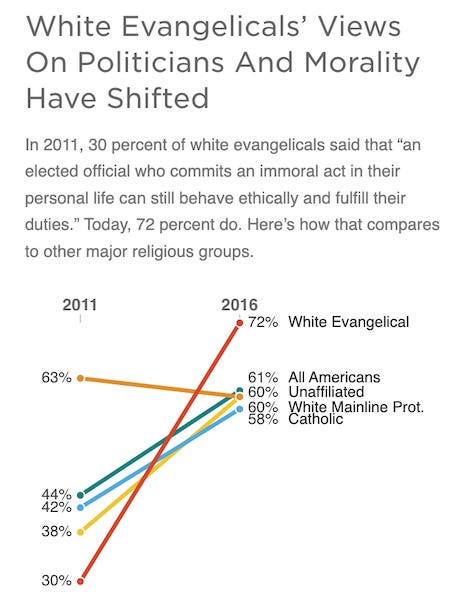
Living counterculturally

I must admit I greatly prefer to live in my current semi-blackout of the news. I might even like to try a full blackout at some point, truth be told. After all my efforts at news gathering, what did being so well-informed actually gain me? Ignorance, while perhaps not always blissful, is certainly far less stressful than the alternative. But that isn’t quite right either.

I can’t say for all my former obsession with keeping up with events—via books, news reports, commentary, youtube videos, commentary on commentary…upon commentary, on and on and on—that I ever actually did poke my head above the deep waters of ignorance. The ignorance of being well–informed by the news was perhaps an even greater ignorance than of not paying it any attention at all. And in not paying attention I am far less likely to be manipulated, which is not nothing.

… [T]here is a very good way to live other than the way we’ve been sold. The alternative is actually a fairly well-laid-out path. This problem isn’t new, and people have been thinking about how to escape toxic civilization since about five minutes after the founding of the first ancient city. It turns out that it is far more achievable than I, for one, have told myself. The real question—the only question—is whether we actually want to live differently. Not whether we want to talk about living differently, or hope someday to live differently, but will we actually choose to so live right here and now? For a very long time, and even as the status quo quickly drained me of the will-to-live, I wasn’t so sure that I did. Funny that.

Jack Leahy, Stillness in the West (footnotes omitted)

A sense of control, safety, certainty

Converts to Orthodoxy are particularly vulnerable to the need to create a sense of control, safety, and certainty. A tendency to define, delineate, and create specific structures and rules is inherent in the Western mentality. This goes hand in hand with the desire to rationally explain and understand. But that attitude distorts the Orthodox phronema ….

Dr. Eugenia Scarvelis Constantinou, Thinking Orthodox.

This was my experience 25 years ago and for some time thereafter.

Mixed messages

The pastors at Thomas Road talked about creating a society apart from the world. But by the “world” they clearly meant the evils of the world as they saw them, not American life in general. In Falwell’s sermons scriptural lessons on how to become a better Christian often segued into practical advice on how to gain the respect of others and achieve success. Material wealth, Falwell once said, “is God’s way of blessing those who put him first.”

Frances Fitzgerald, The Evangelicals.

What (not quite) all evangelicals believe

[E]ven the American diplomats [at a conference in Qatar in the 1980s] assumed that all evangelicals believed that Israel had a biblical right to the Palestinian territories ….

Frances Fitzgerald, The Evangelicals.

What the diplomats assumed turned out not to be true, but the Evangelical dissenters were not the “big names.”

Sainthood

She could never be a saint, but she thought she could be a martyr if they killed her quick.

Flannery O’Connor of one of her characters.

Douthat on Vatican II

[I]n the years of Pope Francis, the liberal interpretation [of Vatican II] has returned — not just in the reopening of moral and theological debates, the establishment of a permanent listening-session style of church governance, but also in the attempt to once again suppress the older Catholic rites, the traditional Latin liturgy as it existed before Vatican II.

…

The work of the French historian Guillaume Cuchet, who has studied Vatican II’s impact on his once deeply Catholic nation, suggests that it was the scale and speed of the council’s reforms, as much as any particular substance, that shattered Catholic loyalty and hastened the church’s decline. Even if the council’s changes did not officially alter doctrine, to rewrite and renovate so many prayers and practices inevitably made ordinary Catholics wonder why an authority that suddenly declared itself to have been misguided across so many different fronts could still be trusted to speak on behalf of Jesus Christ himself.

After such a shock, what kind of synthesis or restoration is possible? Today all Catholics find themselves living with this question, because every one of the church’s factions is in tension with some version of church authority. Traditionalists are in tension with the Vatican’s official policies, progressives with its traditional teachings, conservatives with the liberalizing style of Pope Francis, the pope himself with the conservative emphasis of his immediate predecessors. In this sense all of us are the children of Vatican II, even if we critique or lament the council — or perhaps never more so than when we do.

Ross Douthat, How Catholics Became Prisoners of Vatican II

Q.E.D.

Because from the belief that nothing is nothing it follows that there must be something, Gloria.

From R.S. Thomas, Collected Poems

Competing liberties

To be honest, my husband and I wouldn’t have hired a web designer or a baker who didn’t want to celebrate with us. But that’s not the point. If the law allows same-sex couples to be treated differently from other couples, then our religious freedom to be married is not complete.

Steven Paulikas, Same-Sex Marriage Is a Religious Freedom.

I find unconvincing this insistence that gay couples’ “freedom to be married” outweighs others’ freedom not to “speak” what they consider lies. If that’s how the law shakes out, it’s a betrayal of the Supreme Court’s promises of pluralism in Obergefel.


[S]ubordinating truth to politics is a game which tyrants and bullies always win.

Jonathan Rauch, The Constitution of Knowledge

The Orthodox "phronema" [roughly, mind-set] cannot be programmitized or reduced to shibboleths.

Fr. Jonathan Tobias

You can read most of my more impromptu stuff here (cathartic venting) and here (the only social medium I frequent, because people there are quirky, pleasant and real). Both should work in your RSS aggregator, like Feedly or Reeder, should you want to make a habit of it.