Ss. Peter and Paul

Entrenched myth

The picture of the world as divided among major “religions” offering alternative means to “salvation” or “enlightenment” is thoroughly entrenched in the modern imagination.

Brent Nongbri, ‌ Before Religion

Nationalist Churches

I trust that my Protestant friends will forgive this Puritan-friendly Catholic what might sound at first like a sectarian point, but: While most Protestants today not only accept but also cherish the principle of religious liberty, the entire point of the English Reformation—not merely an unintended consequence—was ending the separation of church and state. English religious history does more than rhyme: They had two kings called Henry (II and VIII) with chancellors called Thomas (Becket and More) who became martyrs (in 1170 and 1535, respectively) because they insisted that there were limits to what a king could do to the church, that altar could not be entirely subordinated to throne. There is a reason so many of the churches of the Reformation became state churches: The Catholic Church was the premier European multinational organization, and it was not only in England that the Reformation was a nationalist project that produced national and nationalist churches. If you ever heard Nigel Farage talking about the European Union in the days before Brexit, you heard a very old and very English voice—and I do not mean only his accent.

… [T]he Henrician line of thinking—that the church and its officers must ultimately bend the knee to the king rather than to the King of Kings—has never quite gone away.

You may have heard these famous lines from Cardinal Francis George, the late archbishop of Chicago, envisioning life under such totalitarian assumptions:

I expect to die in bed. My successor will die in prison. And his successor will die a martyr in the public square. His successor will pick up the shards of a ruined society and slowly help rebuild civilization, as the church has done so often in human history.

Kevin D. Williamson, inveighing against a Washington State law requiring that Catholic priests report certain sexual crimes that might be communicated to them in the confessional.

I would venture an educated guess that the law takes in Orthodox priests as well, and any other priests who hear confessions sacramentally and under seal.

It will not stand.

Philosophy infiltrating theology

[T]hat aspects of the Christian doctrine were now codified in forms which were binding upon, and therefore mentally accessible to, individuals regardless of the capacity of these latter to experience the Truth which they express, exposed the doctrine in a new and dangerous degree to what may be described as the infiltrations of the philosophical mentality.

What this means should, perhaps, be explained more clearly. We have noted that, where Christianity is concerned, there is an intimate connexion between doctrine and method: the Truth of the doctrine, that which doctrinal formulations not only ‘reveal’ but also ‘conceal’, is, in its essential and universal nature, something that can be known only by one who is ‘initiated’ into it through following the discipline of the Christian Way itself. It is not something which man can arrive at through the unaided processes of human thought. It transcends the reason, It transcends logic.

Rational and logical demonstrations are only ‘true’, and this in a relative sense, provided that they begin in, and develop from, an a priori realization of what is in itself supra-rational and supra-logical. If they do not begin in, and develop from, such a realization, but merely in and from some arbitrary fiat of the human mind, what they represent is no more than a blind and unreal operation, lacking all objective validity.

Logic is but the science of mental co-ordination and of arriving at rational conclusions from a given starting-point. If the starting-point is a supra-logical ‘visionary’ knowledge of the Truth attained through initiation, then logic has a positive content in the way we have indicated. But if man merely ‘thinks’ of the Truth with his mind, then all his logic is useless to him because he starts with an initial fallacy, the fallacy that the Truth attained by the unaided processes of human thought.

Philip Sherrard, The Greek East and the Latin West

Secular expressions

Liberalism is a secular expression of the Christian teaching that the individual is sacred and deserving of protection. Socialism is a secular expression of Christian concern for the poor and downtrodden. Globalism is a secular expression of the Christian hope that history is leading to a kingdom of universal peace and justice. … And here we reach the essence of the Christian Question. Christianity denied what antiquity had serenely assumed: that the strong are destined to rule the weak, that we have no obligations to strangers, and that our identities are constituted by our social status.

Matthew Rose, A World After Liberalism

Fullness

I wish everyone would convert to Orthodoxy, not because there is no truth in their own ecclesial communion, but because I believe Orthodoxy has the fullness of the truth.

… I don’t see the Church — Orthodox, Catholic, or Protestant — as an end in itself, but as a means to the end of theosis, or full unity with God.

Rod Dreher


Religious ideas have the fate of melodies, which, once set afloat in the world, are taken up by all sorts of instruments, some woefully coarse, feeble, or out of tune, until people are in danger of crying out that the melody itself is detestable.

George Elliot, Janet’s Repentance, via Alan Jacobs

[N]one of the things that I care about most have ever proven susceptible to systematic exposition.

Alan Jacobs, Breaking Bread With the Dead

You can read most of my more impromptu stuff here and here (both of them cathartic venting, especially political) and here (the only social medium I frequent, because people there are quirky, pleasant and real). All should work in your RSS aggregator, like Feedly or Reeder, should you want to make a habit of it.
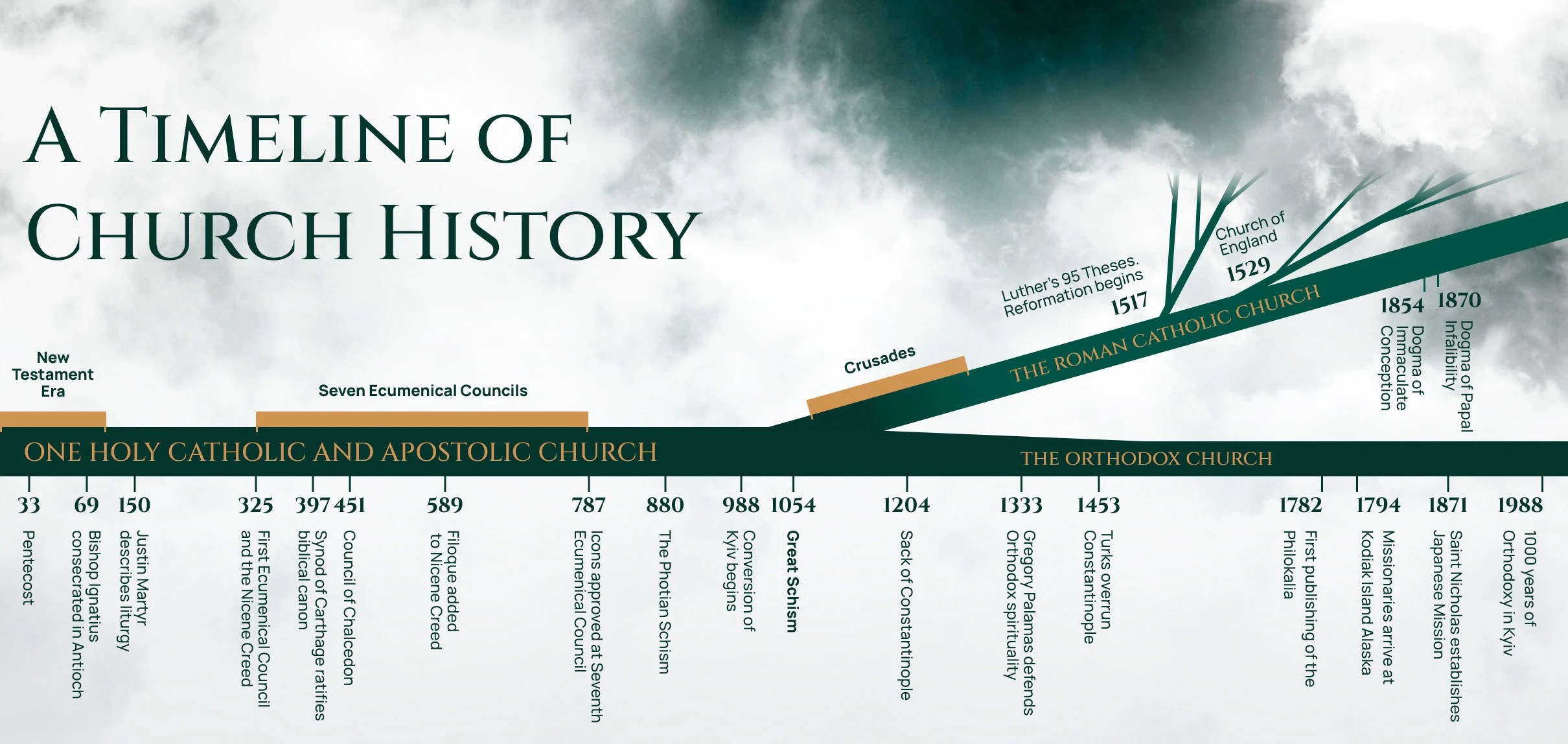
Fanatics and others

Fanaticism

The Minnesota Assassin

The Minnesota political assassin (who I won’t name) had some red flags in initial biographical information. From my perspective (Eastern Orthodox, formerly Evangelical and Calvinist, always active in my faith and never “charismatic”), the biggest one was his invocation of new apostles and prophets as what America needs spiritually — an indication of New Apostolic Reformation beliefs or something adjacent.

(Surprisingly few NAR advocates will own up to it; either it’s so loosely structured that adherence is ambiguous – which I suspect is the case – or they’re told to lie, or something.)

Now Stephanie McCrummen at the Atlantic has dug a little deeper and confirmed my suspicions.

Now comes the hard part: Assuming his guilt (which I’m allowed to do because I’m not a criminal court), dare we blame his assassinations, and the apparent intention to assassinate as many as 70 others, on his NAR ideas, or do we hold open the possibility of insanity or some other explanation?

Blaming NAR is tempting for me because I so detest it. But I have seen no information that NAR actually encourages physical violence, and not just vehement rhetoric. (Their “violent prayer” talk seems, preliminarily, to be a red herring.) The theory of stochastic terrorism has always struck me as plausible, but it’s hard to imagine any forcefully-expressed opinion that has zero chance of pushing some random person over some edge.

So I’m glad Stephanie McCrummen withheld judgment about causation. It’s still the extremely early days in the criminal proceedings, and more, if not all, will be revealed eventually.

Christianity is not an instrument of political power

David French comes closer than McCrummen to linking the assassination effect to the N.A.R. cause, and also had this observation:

Last election cycle I helped create a new Christian curriculum for political engagement …

As I talked about the curriculum in gatherings across the country, I was struck by the extent to which I was asked the same question time and again. “Sure,” people would say, “we need to be kind, but what if that doesn’t work?”

The implication was clear — victory was the imperative, and while kindness was desirable, it was the contingent value, to be discarded when it failed to deliver the desired political results.

David French

A “Christian” who thinks political victory is more important than living as Christ taught (let’s say, in the Beatitudes for instance) is a sorely confused Christian.

I’ve probably said it before, but I’ll say it again. One of the countless blessings I’ve received in Orthodox Christianity is the company of martyrs, many of whom died because they knew that gaining the world wasn’t worth losing one’s soul. If you’re in a “Christian” tradition where leaders or laity act as if that’s a good trade (none of them are wicked enough to actually teach it), get out before it’s too late.

Who are the fanatics?

We know now that the FBI’s infamous Richmond Memo, targeting traditional Catholics as potential terrorists and comparing them with Islamists, was not merely the product of a few rogues in a single field office, as the agency had claimed.  Multiple offices were involved in drafting it, and it was distributed to over a thousand employees.

This post is not going to be a rant against the Biden administration.  What interests me is what was going on in the analysts’ heads.  I credit them with sincerity.  But why did they think traditional Catholicism is comparable to the ideology of radical Islam?

The most generous interpretation which can be placed on the memo is that the analysts thought of fanaticism simply as strong belief, and assumed that any strong belief is potentially violent.

But a sensible definition of fanaticism would emphasize the content of belief, not its strength.  You aren’t a fanatic for believing very strongly that you should “Love your enemies and pray for those who persecute you, that you may be children of your Father in heaven.”  The more strongly you believe that, the less likely you are to be a terrorist.

On the other hand, you really are a fanatic for believing that you should “kill them wherever you find them,” meaning Jews and infidels.  The more strongly you believe that, the more likely you are to be a terrorist.

The content of belief did come into the analysts’ definition in one way.  They plainly believed strongly in their own ideology, yet it seems never to have occurred to them to view themselves as fanatics.  It seems, then, that in their view, the term “fanatic” must have meant not just “anyone who believes strongly,” but rather something like “Anyone who believes strongly enough in God, rather than in progressive dogma, for his belief to influence the rest of his life” – and the full force of the federal government must be used to surveil and suppress all such people.

So by their definition, yes, traditional Catholics are fanatics.  But by a more sensible definition, which ideology is a better candidate for being called by that label?

J Budziszewski

Evangelical Religion

I return to the subject of Evangelicalism so often, I think, because there is some stubborn something within me that believes, against so much journalistic “evidence” (thousands of profiles of self-identified Evangelicals doing bizarre things), that a significant number of Evangelicals are acting and believing in perfect good faith, and that I simply need to find the magic words to help them see what I can’t un-see.

There is some tenderness mixed with my frustration at 28 years of almost complete failure in that regard. And there is some perversity in my rejection of the wisdom of Orthodoxy, which really does not encourage trying to argue people into the Orthodox faith. “Acquire the Holy Spirit and thousands around you will be saved,” said Saint Seraphim of Sarov, but something there is about an American ex-Evangelical that still loves a short-cut.

Over the years, I have cast a lot of shade on the concept of “religion.” I’m starting to think I should have self-critically cast similar shade under the concept of “Evangelicalism.”

Here’s what I think I’ve been doing that’s sorely mistaken:

  1. The “good faith” Evangelicals I’m trying to persuade are basically wealthy white church-going Evangelicals in, or in orbit around, Wheaton, Illinois (and maybe Grand Rapids, Michigan). The former are the kind of people I hung out with for roughly 6 years of my life (five years in school plus one year in my young adulthood), the latter for 15 years. They are the kind of people I see at my Wheaton Academy homecomings every five years. I like them; no, I love them. We don’t talk politics when we get together. I fancy they’re not Trump fans, but I really don’t know and I fear I’d be disappointed if I found out.
  2. The evangelicals I’m yelling about are random self-identified Evangelicals or flakes identified as Evangelical by journalists in mainstream media, who may or may not attend church and who may have adopted the Evangelical label simply because they’re Trump supporters. I have little experience of them. The “good faith” Evangelicals may be as baffled by them as I am.

My impression, which I’ve had but suppressed for rather a long time, is that “Evangelicalism” isn’t coherent, though we seem not to be able to live without it. So when I shout at Evangelicals, it’s like shaking my fist and cursing at the clouds.

It has always been notoriously difficult to define what an Evangelical is. Probably the most widely-accepted attempt is the Bebbington Quadrilateral. But my favorite is from Ken Myers of Mars Hill Audio Journal. I’m not going to take the time to dig it up verbatim, but the gist was that Evangelicals recognize one another not by right doctrine, orthodoxy, but by “right feeling,” orthopathos. They sing the same songs, and pray similar extemporaneous prayers, supported Billy Graham Crusades, and so forth.

I don’t know whether that is even true today of the motley crew that journalists identify as Evangelical.

“Briefly stated, the Gell-Mann Amnesia effect is as follows: You open the newspaper to an article on some subject you know well … Often, the article is so wrong it actually presents the story backward—reversing cause and effect. I call these the ‘wet streets cause rain’ stories. Paper’s full of them.

In any case, you read with exasperation or amusement the multiple errors in a story—and then turn the page to national or international affairs, and read as if the rest of the newspaper was somehow more accurate about Palestine than the baloney you just read. You turn the page, and forget what you know.”

Michael Crichton (via ChatGPT because I couldn’t remember “Gell-Mann Amnesia effect”).

The press tends to garble Eastern Orthodoxy, so why should I believe them about Evangelicalism?

Many of them probably labeled the Minnesota assassin “evangelical.” Was he? Is the evidence that he wasn’t a No True Scotsman fallacy?

I know Orthodoxy; I just really don’t know Evangelicalism or its outer boundaries any more, if ever I did.

So you have my permission to go back to everything I’ve written about Evangelicals and Evangelicalism and say “he doesn’t know what he’s talking about,” because much of the time I’ve been Gell-Mann-ing it.

I’ll try to do better, but old habits die hard.

Sanity (a/k/a The Gospel for people battered by bad religion)

Having dwelt long on some pretty sorry stuff, a very long but infinitely more positive note:

I know that what I’m about to talk about is something I’ve talked about probably even fairly recently on the show, but I find myself in real life — meaning as a priest dealing with a group of parishioners, and trying to help them and guide them and just family members and everybody in general — I find myself having to say this over and over and over again, which tells me that probably if I say it over this microphone to people, there’s probably at least some folks out there who need to hear it again, even if I have talked about it recently.

The Christianity that those of us, at least in the United States — and I can only speak about that experience because I haven’t had any others — the Christianity we grew up around came from one of two categories largely. And people who want to defend those types of Christianity will call this a caricature. I don’t care anymore. But what I’m about to say, even if you think it’s a caricature of what they’re trying to teach, this is what a lot of the people within these traditions have actually received. Right? So it’s very easy to defend some tradition based on what’s in the books, and what we would mean to say, right? But I’m talking about what the people who I encounter, the people who talk to me about spiritual things. come to me and give confessions, what they’ve received from the Christianity they’ve grew up around, how that has shaped them, how they think because of it. And if people, representatives of those groups want to say that’s not what they meant to teach, cool, but maybe some introspection on why that’s not what people are receiving.

Anyway, what people have received comes in two categories. One is sort of the smilin’ Bob Shuler School of, “God loves you just the way you are and you don’t have to do anything. Just don’t worry about it. Just smile and be happy and listen to the hymns of your choice that you enjoy.” … That worked really well with boomers. That seemed to answer something they needed to hear. Maybe they’re a generation who grew up with very dissatisfied perfectionist parents, and so just hearing you’re fine just the way you are was what they needed, right? But that doesn’t work on subsequent generations, because subsequent generations are more realistic or nihilistic depending on your point of view, and know there’s something deeply wrong with themselves and with the world around them. So just telling them over again, “No, no, you’re fine, everything’s fine, it doesn’t work.” That’s why those kind of churches are all empty now.

The other school of thought is pretty much the exact opposite. It’s God doesn’t really love you. Right. In fact He’s pretty angry with you and He’s getting ready to send you to hell. Right? And the only way to avoid that is, depending on your tradition, right, is, for you to love him nonetheless, really sincerely — and there’s a rabbit hole to go down. How sincere am I ever really? — and do that plus live your life at a certain way and follow certain rules. Which will differ based on tradition, and which you will inevitably fail at.

That second one is most of the people who I interact with on spiritual matters, and it’s almost like they’ve been taught and they’ve internalized that. Their life in this world is this sort of really horrible reality show, almost like Squid Games, and like God is about weeding out contestants and narrowing it down to this faithful few and everybody else goes to hell, goes to eternal punishment except for this faithful few who, again, depending on your tradition, he may just pick. Or, you know, they’re the ones who really did it right. They’re the ones who really loved him sincerely, or they’re the ones who really lived their life the right way.

And any way you slice those things, most people again are realistic enough that when they look at their life, they don’t see a lot of evidence in their life and their actions that they’re one of the people God picked, or they don’t see a lot of evidence of their life that they’re really sincere about following God, or they don’t see a lot of evidence of their life that they’re really toeing the line and living the life they know they should be living, meaning most people are walking around — like religious people — walking around thinking they’re probably going to end up in hell. That God is probably mad at the most of the time, and that He’s looking for them to make some missteps so, boom!, they can get nailed.

Also most atheists are walking around doing the same thing they’re protesting constantly that there is no God because they can’t deal with that guilt and stuff that they’ve internalized. They can’t live like that. No one can live like that their route to trying to live like that and deal with the cognitive dissonance is just to deny that any of it’s true, over and over and over again publicly, loudly to everyone who will listen. Right.

Whereas the religious people are just in this kind of quiet desperation of how do I figure this out. Right.

So let me reiterate again, right, and Penal Substitution plays a big part in this. That’s why I’m bringing it up in this context:

God loves you. Jesus said so. St. John’s Gospel, the Father Himself loves you. He is not angry at you. He does not want to destroy you for your sins. There is no power of justice that commands him to do so. No one commands him to do anything. He loves you. He wants you to find salvation, but salvation is a thing you have to actually do. He wants you to do it. The Bible says so. God wills that all men be saved and come to the knowledge of the truth. But you have to do it. He empowers you to do it. He forgives you when you mess up trying to do it. He heals you when you damage yourself trying to do it and failing. He is entirely on your side. The God who created the universe is entirely on your side and the saints are on your side and the church is on your side. Everyone is on your side. Christ is advocating for you. Everything is set up for us.

When Saint Paul says to us, continue to work out your salvation with fear and trembling. You don’t stop them like Kierkegaard did. Read the next verse because it is God who is working in you to will and to do according to his pleasure. We continue on and we work out our salvation because we know that God is on our side and empowering us to do it and loving us and loving other people through us. We need to pray about that. We need to pray it. We need to repeat it. We need to kind of imitate what the atheists are doing. We need to say it out loud. We need to say it to each other. We need to say it to everyone who will listen right? That God loves you and wants you to find salvation, wants you to be healed, wants you to be set free from sin. He wants all these things for you. It doesn’t mean you have nothing to do. That doesn’t mean you’re fine just the way you are. You know you’re not fine just the way you are, right? But it means that He is there to help you to grow to be transformed into the person who you need to be and want to be. The person he created you to be for eternity. That’s the actual message of Christianity. Don’t accept any substitutes for that, ever at all for any reason.

Fr. Stephen De Young.

I probably will publish this from time to time for the rest of my blogging life.


Religious ideas have the fate of melodies, which, once set afloat in the world, are taken up by all sorts of instruments, some woefully coarse, feeble, or out of tune, until people are in danger of crying out that the melody itself is detestable.

George Elliot, Janet’s Repentance, via Alan Jacobs

[N]one of the things that I care about most have ever proven susceptible to systematic exposition.

Alan Jacobs, Breaking Bread With the Dead

You can read most of my more impromptu stuff here and here (both of them cathartic venting, especially political) and here (the only social medium I frequent, because people there are quirky, pleasant and real). All should work in your RSS aggregator, like Feedly or Reeder, should you want to make a habit of it.

Pentecost 2025

AI at Prayer

At a recent Gospel Coalition conference, celebrity pastor John Piper told his audience about a task he had given ChatGPT: Write a prayer informed by the theology of Don Carson. He proceeded to read the resulting text. ChatGPT’s “prayer” seemed to tick all the theological boxes; the crowd murmured, seemingly impressed. But John Piper was not. He declared that such a “prayer” was not a prayer at all, being the product of a soulless machine rather than the expression of a worshipful human heart.

Machine-generated prayers really can sound just like human-generated ones, prone as we are to fall back on generic formulations and common clichés. If an AI prayer isn’t truly prayer, what implications might that have for our own praise and petition, which too often evince our programming in Christianese and other habitual forms?

In the Sermon on the Mount, Jesus warns his disciples not to “heap up empty phrases [“use vain repetitions,” in other translations] as the Gentiles do” (Matt. 6:7, ESV throughout). He then proceeds to teach the disciples the specific words of the Lord’s Prayer.

In the Lord’s Prayer, Jesus addressed the problem of “vain repetitions” not by extolling the authenticity of spontaneous and personally composed—or generated?—prayers but by giving his hearers a specific prayer, with petitions whose depths his followers have meditated on for around 2,000 years.

[Jesus Christ] is forming people as living words. In 2 Corinthians 3:3, the apostle Paul described the Corinthian Christians as a “letter from Christ delivered by us, written not with ink but with the Spirit of the living God, not on tablets of stone but on tablets of human hearts.” Elsewhere, in Colossians 3:16, he spoke of “the word of Christ dwell[ing] in you richly” in the singing of psalms and hymns and spiritual songs. The church is a living message of Christ, a people who are formed as word bearers as Holy Scripture is metabolized into us through memorization, meditation, song, prayer, sermons, reading, and praise.

This, of course, is the purpose of something like the Lord’s Prayer: that in constantly returning to these words, we might be formed by them, becoming the sort of people who can pray them fully. Spontaneity and originality can be worthwhile in their place, but far more important than the words that we produce are the words that go down into our bones and are treasured in our hearts.

Alastair Roberts

It has been a very long time now since I ascribed any value to the “spontaneous” part of “spontaneous prayer” because I long ago picked up on the generic formulations, clichés, and faux fervency.

Contrariwise, when I found the Orthodox faith, the exalted words of its prayer books immediately struck me as (a) better than my own and (b) something that would form me if I continued praying them. They still are the backbone of my daily prayers.

Knowing for the first time

People in American think they know what Christianity is. Some of them intensely dislike it. Some of them dislike it for what it truly is (it was ever so), some for what they mistakenly imagine that it is.

The first of my daily prayers for America is:

Prosper your one holy, catholic and apostolic Church in America, drawing all to your Church and to true repentance and faith in You. May we remember You once more, “knowing You for the first time” in an Orthodox manner.

The quote is from T.S. Eliot’s Little Gidding, part of his famous Four Quartets:

We shall not cease from exploration
And the end of all our exploring
Will be to arrive where we started
And know the place for the first time.

I came across it Saturday as the epigraph for Addison Hart’s Orthodox “conversion story.” He nearly became Orthodox in 1982, but settled for a halfway measure:

Since my “first” conversion during my early twenties, these convictions have remained in me like bedrock, though they were briefly obscured. That earlier conversion consisted in a turn to a richly liturgical, mystically inclined, patristically informed, uncompromisingly traditional Anglo-Catholicism, from out of an anemic liberal Protestant Episcopalianism – a sort of “in-house” conversion since both were nominally Anglican.

Wildernesses don’t come with marked directions, and in recent years my intellectual religious life likewise seemed directionless. I had tried to “come home” to Anglicanism, but it wasn’t home anymore. For one thing, its sheer unrelieved blandness left me at times feeling stultified.

I’m not Orthodox with any other goal than to be within the historical Church (and I emphatically do not believe in an “invisible church” where affiliation is of no matter).

Addison Hodges Hart, How I wandered into Orthodoxy: an uncharacteristically personal reflection

One of the causes I’ve consciously taken on in my 27+ years as an Orthodox Christian is to entice people who are mistaken about Christianity to take a look at Orthodox Christianity. Part of that is to help them see things they “can’t unsee” about other traditions that I think I’m competent to comment on. Another part is to feature winsome things from Orthodoxy — winsome enough to entice them into exposure to the Orthodox Faith.

“I’m the man behind the curtain”

When I first started looking into the Orthodox Church, I was still working as a stagehand. So I worked in theaters. I did big concerts, all this kind of stuff, and I was going, as I said, to the beginnings of a megachurch, and there was one point on Sunday morning that as I looked around me and I saw the people lifting up their hands and clearly having, you know, some kind of experience, I thought to myself — and it was a very cynical thought, but this was the thought that I had — “I can, through my professional skills, make them have this experience — whether I believe in it or not, through the technique of the music and the lights and so forth.”

I went to, professionally, I went to a few Dave Matthews band concerts. And so Dave Matthews band, they had this song called Ants Marching, and there’s this one moment in the song when they always turn on this huge bank of lights towards the audience, and I watched this happens three times. The audience gets very excited, goes crazy, has a big emotional experience. That is pure technique, and you can absolutely press a button and they’re suddenly having an experience. And I realized at that moment, I said to myself, “I’m the man behind the curtain. I can do this.”

Now, I don’t doubt the sincerity of those people. I grew up with those people. They’re my family. Absolutely, and I believe in their sincerity. I believe in their love for God. But at the same time, knowing that I could make that happen myself, and … that disillusioned me in a very real way.

And then my experience of orthodox worship, even a very poor version of it in terms of its its wealth, was the thing that actually overwhelmed me and not in like an emotional way like I didn’t have big emotions there was something there was a sense of being of connecting another world.

Fr. Andrew Stephen Damick to Justin Brierly.

Fr. Andrew wasn’t wrong that he could use rock concert techniques to induce “spiritual” ecstasies. My experiences in Evangelicalism were fairly low-tech, but not low on technique. Tone of voice, shouting and then dropping to a whisper; “Now every head bowed and every eye closed … I see that hand; is there another” when there was no hand raised in the first place (to signify that the sermon had landed, and the fruit was ready for harvest).

I was lucky enough not to be quite good enough to be in the proto- “Praise Band,” on stage, watching the manipulation first-hand. Had I actually participated in such, I might well have lost my faith — as some who did participate lost theirs.

One of those was a friend of mine. He was good enough to be in the band. He saw that there were no hands raised when the bandleader/evangelist asked if there were others. He questioned the bandleader, who shot back angrily “I learned that from Thurlow Spurr! Don’t you dare question it!”

When the genuineness of Christian conversion is gauged by a “born-again experience,” and that experience can be produced on demand by manipulative techniques, how can you keep believing?

As it was, I (who heard the Thurlow Spurr story second-hand) only lost the kind of faith you can gin up with trickery. Instead of losing Christianity, I eventually found what Fr. Andrew found.

Come and see.

Filled with all the fullness of God

For this reason I bow my knees to the Father of our Lord Jesus Christ, from whom the whole family in heaven and earth is named, that He would grant you, according to the riches of His glory, to be strengthened with might through His Spirit in the inner man, that Christ may dwell in your hearts through faith; that you, being rooted and grounded in love, may be able to comprehend with all saints what is the width and length and depth and height—to know the love of Christ which passes knowledge; that you may be filled with all the fullness of God ….

Ephesians 3:17-19 (emphasis added).

This has been a favorite passage of mine for almost 60 years now( I believe I even signed high school yearbooks with the citation). My love of that last phrase in particular, it seems to me, is an anticipation of my almost instant love Orthodox Christianity once I encountered it.

A very, very low bar

What the Fathers decried as schism is now regarded as normal church growth. So long as the new church does not make a point of denying the Trinity, it remains a part of the [one holy church].

Fr. Lawrence Farley

Creation

As Peter Geach puts it, for Aquinas the claim that God made the world “is more like ‘the minstrel made music’ than ‘the blacksmith made a shoe’”; that is to say, creation is an ongoing activity rather than a once-and-for-all event. While the shoe might continue to exist even if the blacksmith dies, the music necessarily stops when the minstrel stops playing, and the world would necessarily go out of existence if God stopped creating it.

Edward Feser, Aquinas

Team Christian

Sometimes people hear about my religious journey and ask me about my “conversion,” but that word is a relic from the rationalist mentality — as if I traded one belief system for another. The process felt more like an inspiration, like someone had breathed life into those old biblical stories so that they now appeared true.

Today, I feel more Jewish than ever, but as I once told some friends, I can’t unread Matthew. For me, the Beatitudes are the part of the Bible where the celestial grandeur most dazzlingly shines through. So these days I’m enchanted by both Judaism and Christianity. I assent to the whole shebang. My Jewish friends, who have been universally generous and forbearing, point out that when you believe in both the Old and New Testaments, you’ve crossed over to Team Christian, which is a fair point.

David Brooks, The Shock of Faith: It’s Nothing Like I Thought It Would Be

Last Meal

I frequent a health club where they post a question on the corkboard daily. A few weeks back, one went like this:

You’re on death row. You’re to be executed tomorrow. What do you want your last meal to be?

I said “the Eucharist.”* It gratified me to hear that my Missouri Synod Lutheran friend who trains in the slot ahead of me had said the same.

I dare say that not one in ten white American evangelical would say that in 2025.

I confess that I struggle to see how “Christian” can meaningfully cover both wanting a last meal of prime rib and wanting a last meal of the body and blood of Christ.

* Confession: “Lobster” flickered in my imagination for about a half-second.


Religious ideas have the fate of melodies, which, once set afloat in the world, are taken up by all sorts of instruments, some woefully coarse, feeble, or out of tune, until people are in danger of crying out that the melody itself is detestable.

George Elliot, Janet’s Repentance, via Alan Jacobs

[N]one of the things that I care about most have ever proven susceptible to systematic exposition.

Alan Jacobs, Breaking Bread With the Dead

You can read most of my more impromptu stuff here and here (both of them cathartic venting, especially political) and here (the only social medium I frequent, because people there are quirky, pleasant and real). All should work in your RSS aggregator, like Feedly or Reeder, should you want to make a habit of it.

Holy Fathers of the First Ecumenical Council, Afterfeast of Ascension

What am I to do?

“Man is in his actions and practice, as well as in his fictions, essentially a story-telling animal.” Ethical questions presuppose narrative questions. As he put it, “I can only answer the question, ‘What am I to do?’ if I can answer the prior question, ‘Of what story or stories do I find myself a part?’”

Alasdair Macintyre, 1929-2025, via Christopher Kaczor

Inoculated

C. S. Lewis once claimed that it was much harder to present the Christian story to a post-Christian culture than to a pre-Christian one, and today we can see how true this claim is. Where I come from, people are largely inoculated against Christianity, or what they imagine Christianity to be. The history, the cultural baggage, the half-formed prejudices: all of these are compounded by a stark lack of understanding of what the Christian Way really is.

Paul Kingsnorth, Prose and Principalities

Not Mincing Words

On Memorial Day, I stumbled onto an Orthodox Priest in Texas who is gung-ho on “masculinity” and other click-baity stuff. I don’t link to indecent material, and this stuff felt indecent, twisted — Mark Driscoll in a cassock.

Since the story was from BBC, it came to the attention of the Russian Orthodox Bishop of London and Western Europe, who felt compelled to speak.

If he was speaking spontaneous, unprepared remarks, then he’s a remarkable man and Bishop. I want to quote every pointed, potent word, because my effort to excerpt it could leave out things that might be just what you need to “hear.”

So I give you a link to the full remarks: ‘Seeking After Worldly Visions of “Masculinity” is Not an Orthodox Pursuit’: A Word From Bishop Irenei.

I cannot deny that growth of the Orthodox Church in North America has been disproportionately from men coming in, and young men particularly. The appeal of Orthodoxy to men had been noted before I entered the Church, but I’m not sure it has ever been explained.

What I can tell you from my own parish (and my personal experience doesn’t extend much further than that) is that it’s not because our Priest obsesses over masculinity, or because the parish has special men’s ministries, or any other gimmick. It seems to be “a God thing,” and I can go no further than that.

Christ, the Life of all

To be Christian, to believe in Christ, means and has always meant this: to know in a transrational and yet absolutely certain way called faith, that Christ is the Life of all life, that He is Life itself and, therefore, my life. “In him was life; and the life was the light of men.” All Christian doctrines—those of the incarnation, redemption, atonement—are explanations, consequences, but not the “cause” of that faith. Only when we believe in Christ do all these affirmations become “valid” and “consistent.” But faith itself is the acceptance not of this or that “proposition” about Christ, but of Christ Himself as the Life and the light of life. “For the life was manifested and we have seen it, and bear witness, and show unto you that eternal life, which was with the Father, and was manifested unto us” (1 Jn. 1:2). In this sense Christian faith is radically different from “religious belief.” Its starting point is not “belief” but love.

Alexander Schmemann, For the Life of the World


Religious ideas have the fate of melodies, which, once set afloat in the world, are taken up by all sorts of instruments, some woefully coarse, feeble, or out of tune, until people are in danger of crying out that the melody itself is detestable.

George Elliot, Janet’s Repentance, via Alan Jacobs

[N]one of the things that I care about most have ever proven susceptible to systematic exposition.

Alan Jacobs, Breaking Bread With the Dead

You can read most of my more impromptu stuff here and here (both of them cathartic venting, especially political) and here (the only social medium I frequent, because people there are quirky, pleasant and real). All should work in your RSS aggregator, like Feedly or Reeder, should you want to make a habit of it.

Great and Holy Race Day

I’m situated geographically in a place so sports- and Indy500-obsessed that in my former Church, men would disappear en masse on “Race Day.” Granted, I lived away from here 20-ish years, but it’s still a point of sinful pride that I’ve never been. Not to the race, not to the trials, not to carburation day.

(I apologize for some funky formatting today. After all these years, I still have trouble dealing with numbered or bulleted lists within block quotes.)

Filioque

As a protestant, I had no idea that the filioque (the words “and from the Son” in the Nicean Creed concerning the procession of the Holy Spirit) was added to the Creed hundreds of years later, nor that it was rejected from the beginning by Christians outside the jurisdiction of the Roman Patriarch, nor even (very distinctly at least) that there were catholic Christians outside the jurisdiction of the Roman Patriarch.

Since becoming Orthodox, I have taken it as a matter of high importance to reject the filioque, but I don’t recall previously seeing all of these reasons for the rejection:

Eastern Europe was converted to Christianity by Byzantine missionaries, the most prominent of whom are Saint Cyril and Saint Methodius. These bonds of religion created a deep sympathy between Bulgar to Byzantine. The Franks attempted to sever these bonds by sending missionaries into Eastern Europe, claiming that the Byzantines had taught them a heterodox version of Christianity and encouraging them to use the filioque.

I know Catholics are tired of Orthodox apologists going on about the Franks. But this really is an important test-case, for the following reasons:

  1. The threat of Arianism was resolved 300 years before the Schism. So, adding the filioque served no pastoral function. On the contrary, it was deeply divisive.  
 2. The underlying theology of the filioque was hotly disputed, especially by the Eastern patriarchs. So, adding the filioque did not express the mind of the universal Church.  
 3. The original Creed had been drafted in Council for a reason: it was supposed to express the *consent* and *concensus* of the orthodox, catholic bishops. So, adding the filioque defeated the whole purpose of the Creed.  
 4. For about six hundred years, Popes had taught the dangers of inserting the filioque into the Creed. So, adding the filioque violated even Rome’s local customs.  
 5. The Ecumenical Councils had ruled that the Creed should not be modified. So, adding the filiioque violated the Holy Canons.  
 6. Rome was advancing the *filioque* for worldly reasons only. So, adding the filioque would have allowed a single bishop to advance his own political and economic interests at the whole Church’s expense.  

The Eastern Patriarchs had every reason to reject the insertion of the filioque, and no reason to accept it—none except, “The pope said so, and we have to do whatever the pope says.”

Michael Warren Davis, ‘Papal Minimalism’ Is Eastern Orthodoxy

Worship

To anyone who has had, be it only once, the true experience of worship, all this is revealed immediately as the ersatz it is. He knows that the secularist’s worship of relevance is simply incompatible with the true relevance of worship. And it is here, in this miserable liturgical failure, whose appalling results we are only beginning to see, that secularism reveals its ultimate religious emptiness and, I will not hesitate to say, its utterly anti-Christian essence.

Alexander Schmemann, For the Life of the World

Protestant, Catholic, Non-Denom

As my readers know, I’ve been an Orthodox Christian ever since I began blogging. The more attentive readers may know that before that I was Reformed (i.e., Calvinist, and specifically Christian Reformed) and before that, I was a generic Wheaton-College type evangelical.

Or maybe I should say “a generic Wheaton-College type evangelical as evangelicalism was configured in the 1950s through the mid-1970s.” Because it has come to my attention more forcefully, and in a way that more painfully implicates and pronounces doom on the kinds of Christian I once was, that things are changing. The evangelicalism I knew is not as powerful as it once was; evangelical denominations are shrinking and dying. So are Calvinist denominations. The Protestantism I knew most closely is increasingly nondenominational, and doesn’t care much about doctrine or sacraments, and increasingly doesn’t even want to be called “evangelical” or even “Protestant.”

This affects me closely because my wife remains Christian Reformed, and I consider it a pretty good penultimate tradition for an Orthodox Christian. And there is a very strong trend toward those denominational Churches dying out in favor of non-denoms.

And it worries me because those nondenominational Churches tend far too much to be personality cults and hotbeds of rampant sexual and other clergy abuse. And God only knows what they’re teaching, insofar as they’re teaching anything other than a mooshy-gooshy relationship with Jesus and a firm commitment to the GOP as a way of gaining power.

Yeah, this means I’ve gained some fresh respect even for the progressive Protestant denominations (which are also dying, even faster than the conservatives). At least there’s some accountability to hierarchies less likely than local parishioners to be mesmerized by Mr. Charisma. And some of them retain a liturgy that will expose worshippers to more scripture and doctrine than Joel Osteen can even imagine.

In any event, I say all that to introduce you to four of the thought-provoking articles (presented in the order in which I encountered them) that brought to my attention how much things are changing in my former haunts. A common thread is that denominational Protestantism is in deep, deep trouble; one goes so far as to suggest that nondenominational Churches are not really Protestant, but a whole new tradition:

  1. Goldilocks Protestantism – First Things
  2. LONG FORM: Does Traditional Protestantism Have a Future?
  3. How ‘Christian’ Overtook the ‘Protestant’ Label – Christianity Today
  4. Low Church in High Places: The Fate and Future of American Protestantism – Public Discourse

Religious ideas have the fate of melodies, which, once set afloat in the world, are taken up by all sorts of instruments, some woefully coarse, feeble, or out of tune, until people are in danger of crying out that the melody itself is detestable.

George Elliot, Janet’s Repentance, via Alan Jacobs

[N]one of the things that I care about most have ever proven susceptible to systematic exposition.

Alan Jacobs, Breaking Bread With the Dead

You can read most of my more impromptu stuff here and here (both of them cathartic venting, especially political) and here (the only social medium I frequent, because people there are quirky, pleasant and real). All should work in your RSS aggregator, like Feedly or Reeder, should you want to make a habit of it.

Sunday of the Samaritan Woman

Sorry to be so much later than usual with this. I had a very busy Saturday and Sunday.

Beauty First

Let me commend to any artistic sorts reading this the video embedded in Beauty First: Envisioning a Civilization Worth Restoring. Jonathan Pageau’s introduction should tell you whether it merits your further attention.

Live the life of the Church

Having largely lost our religion(s), modernity has seen fit to create new ones. If we wonder what constitutes a modern religion (or efforts to create one) we need look no further than our public liturgies. Various months of the year are now designated as holy seasons set-aside to honor various oppressed groups or causes. It is an effort to liturgize the nation as the bringer and guardian of justice in the world, an effort that seeks to renew our sense of mission and to portray our nation as something that we believe in. It must be noted that as a nation, we have not been content to be one among many. We have found it necessary to “believe” in our country. It is a symptom of religious bankruptcy. As often as not, major sports events (Super Bowls) are pressed into duty as bearers of significance and meaning. The pious liturgies that surround them have become pathetic as they try ever-harder to say things that simply are not true or do not matter. This game is not important – it’s just a game.

I am often asked, when writing on this topic, what response Christians should make. What do we do about the state? How do we respond to modernity? For the state – quit “believing” in it. We are commanded in Scripture to pray for those in authority. We are not commanded to make the state better or participate in its projects. We are commanded to serve our neighbors as we fulfill the law of God. However, I think it is important to work at “clearing the fog” of modern propaganda regarding the place of the nation state in the scheme of things. I would frame a response to modernity in this manner: we are not responsible for foreign religions. Though Christian language and carefully selected ideas are often employed in the selling of modernity’s many projects, it is a mistake to honor its false claims. Make no mistake, modernity will offer no credit, in the end, to Christ, the Church, or to people of faith. Its interests lie elsewhere.

The proper response to these things will seem modest. Live the life of the Church. The cure of modernity’s neurasthenia is found not in yet one more successful project, but in the long work of salvation set in our midst in Christ’s death and resurrection. Our faith is not a chaplaincy to the culture, or a mere artifact of an older world. The Church is the Body of Christ into which all things will be gathered, both in heaven and on earth. It is the Way of Life as well as a way of life. It is not given to us to control how we are seen by the world, or whether the world thinks us useful. It is for us to be swallowed up by Christ and to manifest His salvation to the world. We were told from the very beginning that we should be patient, just as we were promised from the beginning that we would suffer with Christ.

I think the sickness that haunts our culture is that we fail to know and see what is good and to give thanks for the grace that permeates all things. When that is forgotten, nothing will satisfy, nothing will transcend. There is no better world to be built, nor are there great wars to be won. There is today, and that is enough.

Fr. Stephen Freeman, When America Got Sick

Astronomical accuracy

I don’t think I’d ever read the tart Orthodox response (from one Patriarch at least) when Pope Gregory invite the Orthodox to adopt his new, more astronomically-accurate calendar:

By the 16th century, concerns about secular or humanistic trends in Catholic theology had become a major theme in Orthodox apologetics. For instance, the dating of Easter was fixed by the First Ecumenical Council imn A.D. 325. At the time, their calculation was made using the Julian Calendar. However, in 1582, Pope Gregory XIII issued his new liturgical calendar—now known as the Gregorian Calendar, which he held to be more scientifically accurate. Gregory wrote to the Orthodox patriarchs inviting them to adopt his new calendar. Patriarch Joachim V of Antioch commissioned a reply from his disciple Metropolitan Athanasius al-Marmariti ibn-al Mujalla, who wrote to Pope Gregory:

Our community, our bishops, our kings and all our people, scattered in the four cardinal directions—Greeks, Russians, Georgians, Vlachs, Serbs, Moldovans, Turks, Arabs, and others . . . from the time of the Holy Apostles and God-bearing fathers of the Seven Ecumenical Councils down to this day recognize one faith, one confession, one Church, and one baptism . . . and all our nations agree in the four corners of the inhabited world with one word and one affair . . . and we did not receive the confession and the holy tradition which is in our hands . . . from unknown people, like other, foreign communities.

But we pray with the Holy Apostles and the 318 fathers [of the Council of Nicaea] whose signs and miracles shine forth from them manifestly. And so how can we change the tradition of such holy fathers and follow after unknown people who have no other trade but to observe the stars and examine the sky?

As with the filioque, we see that there are really two complaints here. (1) The dating of Easter—like the text of the Creed—had been established by an Ecumenical Council. How, then, could it be modified unilaterally by the Pope? (2) Why should the Church prefer “scientific accuracy” to the longstanding custom of the Apostolic Church?

Michael Warren Davis, The Primacy of God.

Eventually, many Orthodox Churches in the West — including my own — adopted the Gregorian Calendar — except for Pascha/Easter and the preceding Lent and following Pentecost. For those, we stuck with the dating from the Ecumenical Council.

Departure from tradition

…as Nathan Hatch, Mark Noll, and E. Brooks Holifield argue, departure from tradition explains much of the growth, influence, and shortcomings of American Christianity—including the failure of the nation’s theologians and churches to resolve the question of slavery.

Paul J. Gutacker, The Old Faith in a New Nation

Spontaneity is not authenticity

In our desire to be real we start thinking that authenticity is another word for spontaneity, as if everything we say at the spur of the moment is more true, more sincere than words we craft carefully. For many, the Freudian slip is considered more authentic than the measured reply. Indeed, sometimes what we blurt out thoughtlessly is actually what we mean and feel. But more often than not, what we blurt out is ill-considered and something we either need to qualify or apologize for.

Mark Galli, Beyond Smells and Bells. I have not read this book, but appreciate Readwise suggesting it.

Homo liturgicus

[I]n Augustine’s view; we are homo liturgicus, and the basic human need to worship God can be diverted and misdirected, but it cannot be eliminated.

William T. Cavanaugh, The Uses of Idolatry

Miscellany

Religion’s closest cousin is not rigid logic but art.

David Tracy, who died April 29. I like that, but from what I read in his obituary, there’s a lot I would dislike.

The biblical significance of the modern state of Israel is exactly the same as the biblical significance of Finland.

Fr. Andrew Stephen Damick

  • Really great art should have a secret in it that the artist knows nothing about.
  • In each experience of beauty, we’re being prepared for eternity.

Martin Shaw


Religious ideas have the fate of melodies, which, once set afloat in the world, are taken up by all sorts of instruments, some woefully coarse, feeble, or out of tune, until people are in danger of crying out that the melody itself is detestable.

George Elliot, Janet’s Repentance, via Alan Jacobs

[N]one of the things that I care about most have ever proven susceptible to systematic exposition.

Alan Jacobs, Breaking Bread With the Dead

You can read most of my more impromptu stuff here and here (both of them cathartic venting, especially political) and here (the only social medium I frequent, because people there are quirky, pleasant and real). All should work in your RSS aggregator, like Feedly or Reeder, should you want to make a habit of it.

Thomas Sunday

Pope Francis

Friend of the Orthodox

  • In the Orthodox Churches they preserve that pristine liturgy. So beautiful. We have lost a bit the sense of adoration. They preserve it. They praise God, they adore God, singing. Time stops. The center is God. . . . Once, speaking about the western Church, of western Europe, above all the grown-up Church, they told me this phrase: Lux ex oriente, ex occidente luxus. [“Light comes from the East, luxury from the West.”] Consumerism, well-being, have done much harm. Instead, you preserve this beauty of God at the center, the point of reference. When reading Dostoyevsky, I believe that for all of us he must be an author to read and reread, because he has wisdom. One perceives the Russian soul, the Eastern soul. It is something that will do us all good. We need this renewal, this fresh air from the East, of this light from the Orient. . . . Too often, the luxus of the West causes us to lose the horizon. I don’t know. This is what I’m moved to say.
  • During the first millennium, the universal communion of the Churches in the ordinary course of events was maintained through fraternal relations between the bishops.
  • The bishop of Rome did not exercise canonical authority over the churches of the East.

Pope Francis via Michael Warren Davis

These are important concessions by a Pope. Much more remains to be done to heal the Great Schism. Meanwhile, against my initial gut reaction, I now pray for the soul of God’s servant, Francis.

The worst of all possible Christian worlds

Not everyone feels as kindly toward Francis as does Michael Warren Davis:

Francis was thus my own worst Protestant nightmare: an authoritarian Roman pope driving a liberal Protestant agenda, a leader who embodied the worst of all possible Christian worlds.

Time will tell whether the next pope will follow in Francis’s footstep and permit the continuation of liberal Protestant policies. It’s up to the men who will be gathering in the Sistine Chapel in the coming weeks. As a Catholic friend once said to me about the last papal election, the Holy Spirit never errs. But, he added, the same cannot be said for the College of Cardinals.

Carl Trueman

Prompted by Francis’ death

I’m not claiming to be a good Catholic. I’m far from it. I’m a terrible one in many ways. I honestly, sincerely believe the church is wrong in some — but by no means all — of its teachings on sexuality. Lust has undoubtedly mastered me at times the way it has many men, and always will. But I also know my soul has far deeper problems than my love for other men, however muddied with desire; and that the world has lost its way so much more profoundly in other parts of life: in our materialism, our selfishness, our wealth and comfort, our smugness and distraction, and our abuse of our sacred planet.

Andrew Sullivan, Why I Loved Pope Francis (italics added).

The italicized portion of the block-quote bespeaks a genuine Christian faith, and I don’t have to agree with the rest to view it so.

A bitter pill

for every advance, there was an asterisk, and for every proclamation of love, a delineation of limits, so that Francis — who died on Monday at the age of 88 — personified the indelible tension in the church’s official teaching about homosexuality, which he never squarely renounced. That teaching holds that being gay isn’t a sin but that acting on those feelings is “intrinsically disordered.”

That’s tough to get your head around in the abstract. It’s even more difficult if you’ve spent much time in the church and with its clergy ….

Frank Bruni (italics added)

I’ve never seen how Rome’s position is all that tough to get your head around. “A bitter pill to swallow” is what I think Bruni may intend.

Be it remembered

What’s church good for?

[O]ur religious institutions are most important not for reasons of civic utility, such as running soup kitchens or cleaning up after natural disasters. No, their highest function is offering us access to the fullest truth about our world.

Yuval Levin via Joshua T. Katz. I encountered this quote for the first time this week, and I love it because it defies every effort to instrumentalize Church (or Synagogue, as in Levin’s case, or Mosque).

God does not have an anger problem

It is sinful to ascribe to God the characteristic features of fallen man by alleging, for example, that God is angry and vengeful, and therefore He must be propitiated and appeased. Such an attitude wants to make it appear that it is God Who needs curing, and not man. But this is sacrilegious. The sinful man, who is characterized by egoism and arrogance, is offended. We cannot say that God is offended. . . . Consequently, sin is not an insult to God, Who must be cured, but our own illness, and therefore we need to be cured

Dr. Eugenia Scarvelis Constantinou, Thinking Orthodox

Other stuff

The Gramscian Heresy

The Protestant integralists belonging the New Apostolic Reformation school, with their Seven-Mountain Mandate, certainly look Gramscian, don’t they? They want the power that comes from control of key institutions.

That’s not necessarily a mike-drop observation. We have an overabundance of Gramscians trying to march through our institutions these days, but few who are Gramscian as part of an explicitly “religious” movement.

Orthodox hagiographies are full of Saints who had to be dragged kicking and screaming (as it were) to accept ordination to the Priesthood, or elevation to a Bishopric. I’ll drive my stake in the ground here: A Christian may legitimatly be led to office, but hunger for power over others is anti-Christian.

An old truth that we keep forgetting

Reason is an absolute—all is in ruins. Yet those who ask me to believe this world picture also ask me to believe that Reason is simply the unforeseen and unintended by-product of mindless matter at one stage of its endless and aimless becoming. Here is flat contradiction. They ask me at the same moment to accept a conclusion and to discredit the only testimony on which that conclusion can be based. The difficulty is to me a fatal one; and the fact that when you put it to many scientists, far from having an answer, they seem not even to understand what the difficulty is, assures me that I have not found a mare’s nest but detected a radical disease in their whole mode of thought from the very beginning.

C.S. Lewis, Weight of Glory

A surprising possibility

What’s driving young people to Christianity? In UnHerd, Niall Gooch argued the answer may lie in the strict moral demands of modern secularism. “At its best, Christianity is not a moralistic religion — in other words, it does not place the expectation of perfect behaviour at its core. It is repentance and reconciliation, not respectability, that are central to the internal logic of the faith. The Christian moral system is also coherent and predictable,” he wrote. “Modern secular morality, by contrast, is extremely censorious and has a strongly arbitrary element, as we have seen in the last decade or so of ‘cancel culture.’ People have been subjected to storms of anonymous criticism, resulting in lost jobs and lost livelihoods, with no clear limiting principle and no real interest in proportionality. To make matters worse, this is all highly impersonal and offers no clear pathway for restoration and forgiveness.”

The Morning Dispatch

Mystery, not random

To call the unknown “random” is to plant the flag by which to colonize and exploit the known. . . . To call the unknown by its right name, “mystery,” is to suggest that we had better respect the possibility of a larger, unseen pattern that can be damaged or destroyed and, with it, the smaller patterns. . . . But if we are up against mystery, then knowledge is relatively small, and the ancient program is the right one: Act on the basis of ignorance.

Mark Mitchell and Nathan Schlueter , The Humane Vision of Wendell Berry


Religious ideas have the fate of melodies, which, once set afloat in the world, are taken up by all sorts of instruments, some woefully coarse, feeble, or out of tune, until people are in danger of crying out that the melody itself is detestable.

George Elliot, Janet’s Repentance, via Alan Jacobs

[N]one of the things that I care about most have ever proven susceptible to systematic exposition.

Alan Jacobs, Breaking Bread With the Dead

You can read most of my more impromptu stuff here and here (both of them cathartic venting, especially political) and here (the only social medium I frequent, because people there are quirky, pleasant and real). All should work in your RSS aggregator, like Feedly or Reeder, should you want to make a habit of it.

Pascha 2025

I put the final touches on this as I waited for our Paschal/Easter Vigil. When it posts, I should be fat, happy — and sound asleep in a “meat coma.”

Fr. Stephen Freeman says “I can think of at least two times in my life that the failures of Church, or its hierarchy, drove me from the ranks of the Church, or what passed for Church at the time.” I can think of only one, but heightened apprehension of the Resurrection kept me from leaving what passed for Church at the time. So it seems personally fitting that this is Orthodoxy’s “Feast of Feasts,” surpassing even Christ’s Nativity (which seems more prominent in the West — forgive me if I err).

All around the world tonight and tomorrow, Orthodox priests will be spared writing an “Easter Sermon” because it’s customary to read this one from a master preacher. We even do a bit of call and response, shouting “It was embittered!”

Christ is Risen!

One more Easter thought

[Saint John] Chrysostom commented on this reality: I, for instance, feel differently about these subjects than an unbeliever. I hear, “Christ was crucified” and immediately I admire His loving-kindness to men. The other hears and esteems it as weakness. I hear, “He became a servant” and I wonder at his care for us. The other hears and counts it as dishonor. I hear, “He died” and I am astonished at His might, that He was not held in death, but even broke the bands of death. The other hears and surmises it to be helplessness. He, on hearing of the resurrection, says the thing is a legend. I, aware of the facts which demonstrate it, fall down and worship the dispensation of God. . . . For not by the sight do I judge the things that appear, but by the eyes of the mind. I hear of the “Body of Christ.” In one sense I understand the expression, in another sense the unbeliever.

Dr. Eugenia Scarvelis Constantinou, Thinking Orthodox

Heresy, not secularism

Ten years ago I published a book called “Bad Religion: How We Became a Nation of Heretics,” which offered an interpretation of the country’s shifting religious landscape, the sharp post-1960s decline of institutional faith. Before the book’s anniversary slips away, I thought I would revisit the argument, to see how it holds up as a guide to our now more de-Christianized society.

What the book proposed was that secularization wasn’t a useful label for the American religious transformation. Instead, I wrote, American culture seems “as God-besotted today as ever” — still fascinated with the figure of Jesus of Nazareth, still in search of divine favor and transcendence. But these interests and obsessions are much less likely to be channeled through churches, Protestant and Catholic, that maintain some connection to historical Christian orthodoxies. Instead, our longtime national impulse toward heresy — toward personalized revisions of Christian doctrine, Americanized updates of the Gospel — has finally completed its victory over older Christian institutions and traditions.

Ross Douthat, The Americanization of Religion – The New York Times

Redemption (a venerable poem)

Having been tenant long to a rich lord,
Not thriving, I resolvèd to be bold,
And make a suit unto him, to afford
A new small-rented lease, and cancel th’ old.

In heaven at his manor I him sought;
They told me there that he was lately gone
About some land, which he had dearly bought
Long since on earth, to take possessiòn.

I straight returned, and knowing his great birth,
Sought him accordingly in great resorts;
In cities, theaters, gardens, parks, and courts;
At length I heard a ragged noise and mirth

Of thieves and murderers; there I him espied,
Who straight, Your suit is granted, said, and died.

(George Herbert, Redemption, via Sally Thomas at Today’s Poem).

I’m sorry that this won’t format exactly like the original I saw without using some coding that ends up rendering an ugly post.

The search for certainty

The Reformation is the first great expression of the search for certainty in modern times. As Schleiermacher put it, the Reformation and the Enlightenment have this in common, that ‘everything mysterious and marvellous is proscribed. Imagination is not to be filled with [what are now thought of as] airy images.’ In their search for the one truth, both movements attempted to do away with the visual image, the vehicle par excellence of the right hemisphere, particularly in its mythical and metaphoric function, in favour of the word, the stronghold of the left hemisphere, in pursuit of unambiguous certainty. … What is so compelling here is that the motive force behind the Reformation was the urge to regain authenticity, with which one can only be profoundly sympathetic. The path it soon took was that of the destruction of all means whereby the authentic could have been recaptured.

Iain McGilchrist, The Master and His Emissary

Pecking Order Ecclesiology

It isn’t strange to learn that Prestigious Scholar X on the law/econ/poli-sci faculty at Ivy League School Y is Roman Catholic. It is a bit of a surprise to learn that he’s an evangelical. The moment you hear it, though, you wonder (or ask) whether he’s an evangelical Anglican or some such.

Brad East, Conversions, Protestantism, and a New Mainline

Misinterpreting the Bible

Both the fundamentalist and the higher critic assume that it is possible to understand the biblical text without training, without moral transformation, without the confession and forgiveness that come about within the church. Unconsciously, both means of interpretation try to make everyone religious (that is, able to understand and appropriate scripture) without everyone’s being a member of the community for which the Bible is Scripture.

Stanley Hauerwas, Resident Aliens

It’s not just the “higher critics.” Lots of lazy unbelievers have their little proof-texts to illustrate that absurdity or barbarity of the Bible. But they read them as fundamentalists do, not as the historic Church does.

Balancing Rites

The campaign for same-sex marriage has triumphed, and I can’t imagine a successful counter-offensive (Maybe some day when I’m long dead and gone?). Meanwhile:

Maybe the prospective customers, like many Americans, do not see transcendent meaning in the ceremonial commencement of matrimony, because they associate a wedding as admittance to an institutional legal fiction that allows one access to nothing more than a cluster of political and social privileges not available to other friendships. So, given this understanding, it is not surprising that the customers see the provider’s refusal as a negative judgment on the public legitimacy of their union. Thus, it’s easy to see why the customers would be offended by the provider’s refusal and subsequently seek legal redress. But what the customers fail to see is that their demand that the courts force the providers to rescind their denial and be punished for it is really a demand that the state force the providers not to exercise their freedom of worship, the liberty not to participate in, or not provide assistance to, ceremonies that one believes have sacramental significance.

Francis J. Beckwith, Taking Rites Seriously

Convert shock

Steve Robinson on his initial experience in an Antiochian (f/k/a Syrian) Orthodox parish back when they weren’t really used to Protestant converts:

I can summarize the mutual culture shock, ours and theirs, over the next few years pretty succinctly: They didn’t know why we were so serious about Orthodoxy and we didn’t know why they weren’t. We had zeal with a little knowledge and no experience, they had some knowledge, a lifetime of experience, and little zeal (at least for the things WE thought “real Christians” should be zealous about). And for all of our decades of zealous “Christianity” we brought to the table, we didn’t know what love looked like.

This is one of the sorts of culture clashes that make Fr. Stephen De Young think that there will be no single “American Orthodox Church,” independent of traditional Orthodox lands, for a very long time — and a good thing it is! We converts (e.g., Steve Robinson, Fr. Stephen, me) are good for the Church, but we don’t have everything right. We might well push the “cradle Orthodox” aside in our arrogance and create something syncretistic under the “Orthodox” name.

More:

I came to the Church for respite and healing of my evangelical battle scars. After all, it is “the hospital for sinners” originally founded by The Great Physician, who organized and staffed it with his own hand picked specialists who were guided by an inspired Mission Statement.

I think of all I have learned in twenty six years, perhaps this is the most important: The Hospital is also The Arena. It is a place of a brutal, to the death cage fight with my demons and I will not finish the battle un-scarred. The Hospital treats my wounds with the sacramental medicine of immortality and arms me with the gifts of the Holy Spirit, sometimes in spite of the attending physician. I cannot pick only one wing of the building, they co-exist in the same place.

Standing, Still

Evangelical political theology

Though it feels rather remote now, it is important to recall that back in the 2000s and 2010s, popular level evangelical political theology basically did not exist. The two dominant paradigms on offer were a kind of lazy baptizing of conservative fusionism that was shockingly indifferent to historic Christian reflection or a watered down evangelical Hauerwasianism that attempted to locate Christian political witness within the church, all while being mostly unaware of how impoverished evangelical ecclesiology had become.

Jake Meador, Anti-Wokeness and the Evangelical Fracturing


Religious ideas have the fate of melodies, which, once set afloat in the world, are taken up by all sorts of instruments, some woefully coarse, feeble, or out of tune, until people are in danger of crying out that the melody itself is detestable.

George Elliot, Janet’s Repentance, via Alan Jacobs

[N]one of the things that I care about most have ever proven susceptible to systematic exposition.

Alan Jacobs, Breaking Bread With the Dead

You can read most of my more impromptu stuff here and here (both of them cathartic venting, especially political) and here (the only social medium I frequent, because people there are quirky, pleasant and real). All should work in your RSS aggregator, like Feedly or Reeder, should you want to make a habit of it.

Balm for Those Battered and Bruised by Bad Religion

From early adolescence to age forty-nine, my life as a Christian (which started when I was very young) was very American, in Evangelical and Calvinist modes. I got into it pretty deeply, as I have a compulsion to figure things out, and that involved reading lots of stern explanations (“theology”).

Then, twenty-eight or so years ago, I stumbled into an Orthodox Christian Church:

Having settled in for a few decades, what have I found uniquely true about the Orthodox Church?

It’s hard to put into words. That’s why Orthodox evangelism tends to consist of “come and see.”

Harder still for me personally, I need to find words for feelings and tendencies that an intellectualoid has trouble trusting — things that may be true but approach ineffability. I have a Dostoyevsky “Beauty Will Save the World” sticker on my office window, but long habit and self-image keep pulling me back toward “Spock-like logic … will save the world.”

(A life in a string of epiphanies)

Yesterday, though, I heard something that can serve as a decent summary that I suspect that a lot of American Christians need to hear:

God loves you. Jesus said so. St. John’s Gospel, the Father Himself loves you. He is not angry at you. He does not want to destroy you for your sins. There is no power of justice that commands Him to do so. No one commands Him to do anything. He loves you. He wants you to find salvation, but salvation is a thing you have to actually do. He wants you to do it. The Bible says so. God wills that all men be saved and come to the knowledge of the truth. But you have to do it. He empowers you to do it. He forgives you when you mess up trying to do it. He heals you when you damage yourself trying to do it and failing. He is entirely on your side. The God who created the universe is entirely on your side and the saints are on your side and the church is on your side. Everyone is on your side. Christ is advocating for you. Everything is set up for us.

When Saint Paul says to us, “continue to work out your salvation with fear and trembling,” you don’t stop there like Kierkegaard did. Read the next verse because it is God who is working in you to will and to do according to His pleasure. We continue on and we work out our salvation because we know that God is on our side and empowering us to do it and loving us and loving other people through us. We need to pray about that. We need to pray it. We need to repeat it. … We need to say it out loud. We need to say it to each other. We need to say it to everyone who will listen right? That God loves you and wants you to find salvation, wants you to be healed, wants you to be set free from sin. He wants all these things for you. It doesn’t mean you have nothing to do. That doesn’t mean you’re fine just the way you are. You know you’re not fine just the way you are, right? But it means that He is there to help you to grow to be transformed into the person who you need to be and want to be. The person He created you to be for eternity. That’s the actual message of Christianity. Don’t accept any substitutes for that, ever at all, for any reason.

Fr. Stephen De Young

This Great and Holy Friday, I would add that the Son loves us, too, and is entirely on our side. We die with Him, and are raised with Him.

St. John Climacus, 2025

Denying our ancestry

Just as the Bishop of Oxford refused to consider that he might be descended from an ape, so now are many in the West reluctant to contemplate that their values, and even their very lack of belief, might be traceable back to Christian origins.

Tom Holland, Dominion

The virtue of essays

I write here not as a teacher to students but rather as a reader to other readers, a citizen to other citizens. I write because I think I have learned a few things in my teaching life that are relevant to our common life. You will see what those are if you read on.

My approach here is anything but systematic. Of all the literary genres, I am fondest of the essay, with its meandering course that (we hope) faithfully represents the meanderings of the human mind … certain images in advance and people will recur throughout this book, returning perhaps when you think we’re done with them. I write this way because none of the things that I care about most have ever proven susceptible to systematic exposition.

Alan Jacobs, Breaking Bread with the Dead. That last sentence is a gem.

Notional Evangelical Bibicism

As a public relations stunt, Trump’s Bible photo might seem unserious, but the president certainly understood the importance of Christian scripture to a significant voting bloc. Evangelicals are biblicists, and the extent to which American religiosity has been dominated by evangelical Protestantism correlates to the degree to which American culture has been shaped by the Bible.

Paul J. Gutacker, The Old Faith in a New Nation

I would be remiss were I not to recommend Brad East’s ‌Biblicist churches that don’t read the Bible — Brad East. Historian Gutaker may be missing something contemporary.

The one, true meaning of the text

When I try to explain to people why we need to recover patristic interpretation, the biggest obstacle I face is the desire of my interlocutors to establish the one, true meaning of the text. When I assert that there is no such thing, I provoke raised eyebrows: I must be playing fast and loose with the biblical text, making it echo my preconceptions. My insistence that biblical texts have multiple, even innumerable meanings contradicts our modern objectivism. My defense of patristic allegorizing likewise elicits fears of arbitrariness and subjectivism.

Hans Boersma, No Method but Christ

Whither the magisterial Reformation?

Nearly two decades ago, Bruce McCormack, professor of systematic theology at Princeton ­Seminary, wrote: “The situation in which Christian theology is done in the United States today is shaped most dramatically by the slow death of the Protestant churches.” He went on:

if current rates of decline in membership continue, all that will be left by mid-century will be Roman Catholic, Eastern Orthodox and non-denominational evangelical churches. . . . The churches of the Reformation will have passed from the scene—and with their demise, there will be no obvious institutional bearers of the message of the Reformation. What all of this means in practice is that it will become more and more necessary, for the sake of the future of Christianity, to establish stronger ecumenical relations with the Catholics and the ­Orthodox.

This is a grave prediction, but its sobriety makes it not just prescient but practical. Non-catholic varieties of Christendom are here for good, but Goldilocks Protestantism was always doomed to fail. It presumed too much, relying on a common inheritance—patristic, medieval, and cultural—that was bound to be called into question by future reformers in search of their own style of biblical renewal.

In any case, McCormack is right: Whether, in the coming decades, magisterial Christians look “up” or “down” for friendship and cooperation, they will be living in a world without Protestantism. In truth, they already are.

Brad East, Goldilocks Protestantism

Martyrdom

Many a man will live and die upon a dogma: no man will be a martyr for a conclusion.

John Henry Newman


Religious ideas have the fate of melodies, which, once set afloat in the world, are taken up by all sorts of instruments, some woefully coarse, feeble, or out of tune, until people are in danger of crying out that the melody itself is detestable.

George Elliot, Janet’s Repentance, via Alan Jacobs

You can read most of my more impromptu stuff here and here (both of them cathartic venting, especially political) and here (the only social medium I frequent, because people there are quirky, pleasant and real). All should work in your RSS aggregator, like Feedly or Reeder, should you want to make a habit of it.