Monday, June 1

I recently used AI to generate a title for a blog post. Today, none of its proffers seemed any better than my anodyne offering.

Sportsball

The greatest threat to ethical hooping, if the discourse is any indication, are the Oklahoma City Thunder. On the weaponized shoulders of their star and two-time MVP Shai Gilgeous-Alexander, the defending NBA champions have mastered a maximally efficient and spiritually corrosive style of basketball predicated, at least in part, on baiting credulous referees into calling fouls on the opposing team. One way they do this is by flopping, the umbrella term for the parade of pratfalls and head-jerks intended to exaggerate the appearance of defensive contact when shooting. The floppers of yore had the luxury of degrading the sport in an era of less intense scrutiny. Not so with SGA, whose antics have become the cause célèbre of basketball fans everywhere, from the court-side seats in San Antonio, where one Spurs fan was seen brandishing a miniature Academy Award, to the pick-up courts of China, where TikTokers are going viral with videos demonstrating their best SGA imitations.

Why the Oklahoma City Thunder Are a Deserving Villain

I don’t watch the NBA much, but playoffs tend to get my attention. I watched the Thunder win the title last year and didn’t like them. I didn’t like SGA in particular, despite respecting his skills.

So when I saw that San Antonio and OKC were tied at three games each, I watched the end of game seven. I’d say Victor Wembanyama is an upgrade from SGA. Next, I’m keen to see how San Antonio stacks up against the Knicks.

And speaking of the Knicks, Brian Rivel has, over 35 years of his team’s struggles, upgraded his nose-bleed-section Knicks tickets into really choice seats, center-court. Now, he’s got some tough choices to make:

Due to a prior commitment, Rivel will sell his tickets to the Knicks’ first home Finals game. Tickets in his section for that game are going for more than $40,000 on resale markets. Although he plans to attend at least one game in the series with his wife — two, if the series goes to six games — Rivel conceded that the staggering prices might change his calculus. “I could list them at a very high number and get life-changing money, where I could send one of my daughters to college,” he said. “It just all depends on how much somebody is willing to offer for those tickets.”

For a potential game six, which may present a title-clinching scenario for the Knicks, some tickets in Rivel’s section have already been listed in the low six-figures. “I gotta go if there’s a game six, right?” he said, before considering some of the more lucrative scenarios. “Unless somebody offers me $100,000 a ticket. Then I have to make a serious decision.”

Tim Kludt, Knicks Die-hards Wrestle With Attending Finals or Cashing In.

Of course, I would sell those tickets, but then again I never would have bought them in the first place, right?

En masse

The law of group polarization at work

In 2024, I taught an undergraduate class with a catchy title, “Why American Politics Went Insane.” At the risk of shortening a semester to a sentence, the devolution proceeded in three stages, from victory to separation to radicalization.

When the Cold War ended, the United States, for the first time since the wars against Nazi Germany and Imperial Japan, faced no external challenges to its prosperity and power. We were, in the words of the former French foreign minister Hubert Védrine, the “hyperpower.”

I began with “The End of History,” to borrow a term from Francis Fukuyama’s misunderstood book, but I began with his prescient warning near the end:

If men cannot struggle on behalf of a just cause because that just cause was victorious in an earlier generation, then they will struggle against the just cause. They will struggle for the sake of struggle. They will struggle, in other words, out of a certain boredom: for they cannot imagine living in a world without struggle. And if the greater part of the world in which they live is characterized by peaceful and prosperous liberal democracy, then they will struggle against that peace and prosperity, and against democracy.

That is exactly what we are doing. We are struggling against each other. Some of us are struggling against democracy itself. America is the only nation out of 25 comparable countries in which a majority of people believe that their fellow citizens are morally bad. It should be no surprise, then, that negative partisanship (when you support your party primarily because of your disdain for its opponents) is a central factor in American politics.

This drives us apart. Ever increasing numbers of American citizens live in one-party states or so-called blowout counties, where one side or the other wins presidential elections by 50 points or more.

And what happens when people of like mind gather together? The law of group polarization, first applied to political decision making by the law professor and author Cass Sunstein in 1999, teaches us that when like-minded people deliberate, they become more extreme.

Create a monoculture, and red becomes deep red. Blue becomes deep blue. And as the two sides move farther apart, both geographically and ideologically, we lose even the capacity to understand each other’s lives and thoughts.

If I taught the class over again, though, I’d add a fourth stage: amnesia. The problem isn’t just that we’re at each other’s throats; it’s that we’re turning to the worst of recent history’s alternative ideas in response.

It’s no coincidence that this is happening at a time when a generation of world leaders has no experience with world wars and rising millions of young people have no experience with real fascism and actual communism.

We have to know that the world as it is, with all its inefficiencies and injustices, is better than the world that was.

David French. I quoted so much I felt obliged to use one of June’s ten gift links for this one.

Plausible deniability

He knew how to dabble in race-baiting without quite ever going full George Wallace. He had the great skill of propounding absurd or evil things and adding “It’s what I’ve heard” or “People are saying,” so that there was always enough room for The Wall Street Journal’s editorial page to sigh wearily rather than face up to what his words meant.

Eliot A. Cohen, Trump the Genius, Trump the Incompetent, Trump the Bogeyman, writing Trump’s premature epitaph after the 2020 election (which, be it noted, Trump lost).

Gender

How the Gender Fever Finally Broke

Disagreeable contrarians who resisted gender fever are the real oddballs. Some combination of personality quirk and conviction that occasionally makes us obnoxious employees and intolerable cocktail-party guests also inoculated us against gender madness. There is no reforming us.

But we served a vital function: Together, a ragtag crew of truculent journalists and outcast researchers stopped the entire herd from running off the cliff. None of us ever expected to be welcomed back into the same elite circles that, only recently, had cheered or looked away as a generation of tormented girls took themselves apart.

Abigail Shrier, How the Gender Fever Finally Broke.

Gender identity is meaningless

Sex therapist Jackie Golob put it the way one most often hears it described: “Gender identity is how you feel about yourself and the ways you express your gender and biological sex. … Biological sex is physical, while gender is feeling.” That is a common view, and it seems to me that it gets it about right. But if gender is a feeling, then there are as many genders as there are people—human beings are unique, individualistic, and idiosyncratic in how they understand themselves as members of sexes—and, hence, meaningless: Words that describe everything describe nothing.

Kevin D. Williamson, The Forgotten Word: Sex Why the Discourse on Sex and Gender Is So Toxic

We know so much better now

“[F]or longtime ultra conservative activists, CRT is the opportunity of a lifetime.” CRT, she explains, is not a threat at all, and there is no proof that it is even being taught. It’s “just a catch-all term repurposed as a conservative boogeyman.”

Andrew Sullivan, Don’t Ban CRT. Expose It. (2021).

CRT is sooooo 2021! Don’t they know that DEI is the real threat to God, Mom, apple pie, the flag and the 4th of July? (Well, maybe Freedom 250 is the real threat to the 4th of July, but that’s a whole nuther kettle of fish.)

Yeah! That’s the ticket! Opposing DEI!

The real “corruption” of SCOTUS

Democrats are free to dislike the Court’s decisions, yet they aren’t helpless. If Democrats abhor gerrymandering, they can argue for a bill to limit how, or how often, states draw House maps. But what really angers Democrats is that the Supreme Court is no longer a second progressive legislature that can impose policies they can’t get through Congress.

Wall Street Journal Editorial Board, Application error: a client-side exception has occurred.

Sorry, guys, but nothing is more important this Fall than breaking this corrupt — no, not Supreme Court — this corrupt MAGAfied Republican Party. I’m not going to let even the threat of court-packing deter me.

Where there is no vision, the people perish

What makes our culture modern is that despite the explicit beliefs by many citizens, our public institutions—education, government, the arts, entertainment, journalism, science and technology, commerce—all function without any necessary direction from any teleological vision. They operate without working toward any purpose beyond material benefit and the maximizing of choices for individuals.

Ken Myers, All God’s Children and Blue Suede Shoes

Shorts

  • I am, somehow, less interested in the weight and convolutions of Einstein’s brain than in the near certainty that people of equal talent have lived and died in cotton fields and sweatshops. (Stephen Jay Gould via Maria Popova)
  • In rural Texas pretty much everyone has a gun cabinet. Unless they’re gay. Then they have gun armoires. (Jenny Lawson, Let’s Pretend This Never Happened)

Elsewhere in Tipsyworld


Your enemies are not demonic, and they are not all-powerful and the right hasn’t always lost and the left hasn’t always won. But if you convince yourself of that, you give yourselves all sorts of permission to do a lot of stupid and terrible things under the rubric of “Do you know what time it is?”

Jonah Goldberg

I don’t do any of the major social media, but I have two sub-domains of the domain you’re currently reading: (a) You can read most of my reflexive stuff, especially political here. (b) I also post some things on my favorite no-algorithm social medium.

Saturday, 8/23/25

Public Affairs

Ted Cruz knows better

[Ted] Cruz was an intellectually serious politician of the kind who would quote Hayek and reference Milton Friedman off-the-cuff in private conversation until he discovered—and this is a thing with Texas politicians—that there was more juice to be had from pretending to be the good ol’ boy that he is not than in simply being the Ivy League lawyer he is. Cruz’s current position in American public life is that of a piteous and contemptible figure. … [F]or the moment, he is still a senator caught between the fringeward push of his radicalizing party and the centerward pull of his state’s urbanizing electorate. 

Cruz is (or should be) smart enough to have figured out by now that he is never going to be president, and he ought to allow himself to be liberated by this and take on a new role—one that the genuine Ted Cruz, if there is anything left of him inside the chrysalis of grotesque opportunism and self-degradation in which he has enveloped himself, would be well-suited to undertake: defending the Constitution and the American order from a sustained assault that is coming from within his own party.

It would not take very much: “No, Mr. President, you may not willy-nilly create a new national sales-tax regime with rates based on how you’re feeling that day, even if you call it a tariff; no, you may not federalize the Philadelphia police department or deploy troops in U.S. cities based on whatever phony emergency pretext occurs to you in between social media posts; no, the states are not your ‘agents,’ and they most certainly do not have to do ‘whatever the president of the United States tells them’ to do, even if you put ‘FOR THE GOOD OF OUR COUNTRY’ in capital letters. And if you refuse to honor the constitutional limits on your office, then you can be removed from that office—with my vote, if necessary, though I would regret it and would probably lose my Senate seat as a result. But there are things more important than winning the next election.” 

No, I do not think Cruz has it in him. 

But he is starting to reach the stage of life when, to borrow David Brooks’ formulation, it is time to stop thinking about one’s résumé and start thinking about one’s eulogy.

Kevin D. Williamson, Ted Cruz Knows Better.

In which I reveal an unpopular opinion

Almost everything I knew about him, and particularly his professional accomplishments and opinions, made me think that Brett Kavanagh would be a good Supreme Court justice, and I haven’t been disappointed.

Why “almost”? It wasn’t really the Christine Ford Blasey accusations, but it was related to them: Brett Kavanaugh was an underage, binge-drinking party boy.

That was never in dispute. And I hate that. From him, there wasn’t so much as a “when I was young and foolish, I was young and foolish” acknowledgment. I don’t care if his parents winked at it or even bought the beer.

Now I don’t recall anyone else who was bothered enough even to shrug it off with “boys will be boys.” I seemingly stood alone in thinking underage binge drinking a blot on his character and fitness to uphold the law — all of it, including the parts that inconvenience him.

It’s not okay, and if that makes me a prig, so be it.

There is no possible religious neutrality in schools. So there!

J Budziszewski wants to make Catholic education more widely available without the governmental “strings attached” of Charter School (or presumably vouchers):

Please let’s not blather about religious “neutrality.”  So called secular education is not neutral, but reflects a bias against faith in favor of irreligion.

In fact, even that way of putting it is not precisely accurate. It isn’t that public schools have no god; in fact they place many gods before God. Superficial thinkers suppose that unconditional loyalties – whether of the “woke” or another variety — don’t count as religion just because they don’t use the word “god” for their gods. But the crux of the matter does not lie in the words they use.

I take a different minor issue with the first paragraph quoted than Budziszewski himself does. What “secular education” does is inculcate indifference. Purporting to teach children what they need to know without telling them anything about religion tacitly tells them that they need not know anything about it.

And this is not a straw man. The two-hundred-page course guide for Advanced Placement (AP) course in U.S. government and politics “doesn’t mention Christianity or the Bible—not once, even though it professes to cover ‘the intellectual traditions that animated our founding.’” (Mark Bauerlein)

But that’s not the same as teaching hostility toward religion (“irreligion”).

On the point about unconditional loyalties I couldn’t agree more. I just don’t know what we do about it. Deschooling Society?

DOGE

I have had a faint hope that we would discover that DOGE has begun modernization of software and strategic use of AI in the agencies they blitzkrieged immediately after our latest Presidential inauguration.

But they appears at this point to have been engaged in pure, nihilistic destruction — a style that, along with vengeance-destruction, appears to be what this 47th Presidency is all about.

Capitalist Economy

Pay no heed to the man in the management handcuffs

Ted Gioia was writing a book and looking for a publisher:

This person ran a legendary publishing house, and was also a jazz lover. He was a fan of my writing. We exchanged some emails, and then had a phone conversation.

“Ted, I love the book you’re writing,” he told me. “The sample chapters you sent are outstanding. You’re a special writer, and I’d love to sign you a contract. But…”

My head was already spinning. These people typically pay out big advances. I could finish the book and pay all my bills—no sweat! But before I could pursue these daydreams any further, this famous editor went on:

“I’d love to sign you to a contract. But I can’t.”

“Why not?” I asked—and even I could hear the plaintive note in my voice.

“Well, I’m sure your book would sell. But we evaluate books on their projected sales during the three years following release. If a book doesn’t have a three-year payback, we don’t do it.”

“I don’t think I understand this,” I whimpered in reply. “What are you saying?”

“It’s simple. Your book will probably sell for the next ten years or more. But I can only consider the first three years in making an offer—that’s why I have to turn you down.”

Okay, I understood discounted cash flow even better than this editor. I could give you a lecture on the Capital Asset Pricing Model in my sleep. In my early days, I made a living doing this kind of analysis.

But this way of thinking is wrong in the world of arts and culture.

When I tell editors that my books demonstrably sell for 25-50 years and longer, this is a turn-off. They actually hate it when I say it.

They won’t be around that long—editors constantly change jobs. They don’t give a hoot what sales will be like in the year 2050. They want something with cocktail party buzz for the six weeks following publication.

That’s the world they live in. But I don’t—and I refuse to move there.

How I Learned to Stop Worrying About Short-Term Results in My Career (bold added)

There’s a lot more where that came from because Ted Gioia is a freakin’ polymath. His has become (probably) my favorite Substack that doesn’t focus on religious subjects.

Work-life balance

I’m 22 and I’ve built two companies that together are valued at more than $20 million. I’ve signed up my alma mater as a client, connected with billionaire mentors and secured deferred admission to Stanford’s M.B.A. program. When people ask how I did it, the answer isn’t what they expect—or want—to hear. I eliminated work-life balance entirely and just worked. When you front-load success early, you buy the luxury of choice for the rest of your life.

… I averaged 3½ hours of sleep a night and had about 12½ hours every day to focus on business. The physical and mental toll was brutal: I gained 80 pounds, lived on Red Bull and struggled with anxiety. But this level of intensity was the only way to build a multimillion-dollar company.

Emil Barr, ‘Work-Life Balance’ Will Keep You Mediocre

So that’s the world he lives in. I don’t, never have, and I refuse to move there — or to recommend it to anyone I care about.

Culture

Gay race communism

Now, Cracker Barrel is updating its décor and branding—slightly. The bulk of the update is a brighter, less cluttered interior design, but the “controversial” decision is to change its logo. The company removed the old white guy in overalls sitting by a barrel, and now just has a text-only sign that reads “Cracker Barrel.” 

And people are losing their minds, claiming that it has gone “woke.” What seems to have sparked this brouhaha is a tweet saying that the store has “scrapped a beloved American aesthetic and replaced it with sterile, soulless branding.” 

This prompted an outraged “WTF is wrong with @CrackerBarrel??!” tweet from Donald Trump Jr., that loyal guardian of all that is homey and traditional in American life. The very popular End Wokeness Twitter account proclaimed: “Cracker Barrel CEO Julie Masino should face charges for this crime against humanity.”

Chris Rufo then came out with a Cracker Barrel delenda Est pronunciamiento:

Alright, I’m hearing chatter from behind the scenes about the Cracker Barrel campaign and, on second thought: we must break the Barrel. It’s not about this particular restaurant chain—who cares—but about creating massive pressure against companies that are considering any move that might appear to be “wokification.” The implicit promise: Go woke, watch your stock price drop 20 percent, which is exactly what is happening now. I was wrong. The Barrel must be broken.

Now, it’s true that Cracker Barrel has done some LGBT marketing stuff, probably as a result of being criticized for alleged discriminatory policies in the 1990s. But maybe also because gay people—and people who aren’t particularly horrified by gay people—might like good, affordable breakfasts, too. They’ve also tried to cultivate Hispanic customers. I’m not sure this means they’ve been taken over by the Latinx reconquista

I am also, shall we say, skeptical that a few old website screenshots of these efforts are proof that, in the words of Federalist co-founder Sean Davis, “Cracker Barrel’s CEO and leadership clearly hate the company’s customers and see their mission as re-educating them with the principles of gay race communism.”

Jonah Goldberg. It’s enough to make me want to try to remember that I keep forgetting to eat at Cracker Barrel.

What nihilists can’t believe

It’s hard enough to get people to believe something, but it’s really hard to get people to believe in belief — to persuade a nihilist that some things are true, beautiful and good.

David Brooks, The Rise of Right-Wing Nihilism (gift link)

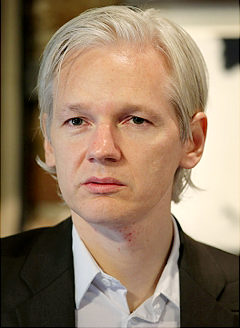
I just can’t root for a guy who looks like Caligula

My libertarian and anti-state impulses incline me to be favorable toward Julian Assange, but I’ve never been able to shake how much he looks like John Hurt’s Caligula.

Technology

The technologies we use to try to “get on top of everything” always fail us, in the end, because they increase the size of the “everything” of which we’re trying to get on top.

Oliver Burkeman, Four Thousand Weeks

Brought to you by the letter “D”

Dust and decay,
ditherers upon the doorstep
of death itself; dried-
up ghosts of daisy-chain
days that were once dappled
with dew and delight.

R.S. Thomas, Anybody’s Alphabet, Collected Later Poems 1988-2000.

The Los Alamos Sin

As Freeman Dyson put it, the “sin” of the scientists at Los Alamos was not that they made the bomb but that they enjoyed it so much.

Walker Percy, Lost in the Cosmos


I don’t do any of the major social media, but I have two sub-domains of the domain you’re currently reading: (a) You can read most of my reflexive stuff, especially political here. (b) I also post some things on my favorite social medium.