Saturday, 2/15/25

Conservatives versus Nihilists

Trump really seems not to give a crap about the working class. Trump is not a populist. He campaigns as a populist, but once he has power, he is the betrayer of populism.

What’s going on here is not a working-class revolt against the elites. All I see is one section of the educated elite going after another section of the educated elite. This is like a civil war in a fancy prep school in which the sleazy kids are going after the pretentious kids.

Conservatives believe in constant and incremental change. Nihilists believe in sudden and chaotic disruption. Conservatism came into being opposing the arrogant radicalism of the French Revolution. The Trump people are basically the French revolutionaries in red hats — there are the same crude distinctions between good and evil, the same contempt for existing arrangements, the same descent into fanaticism, the same tendency to let the revolution devour its own.

David Brooks (emphasis added; unlocked).

The evils of revolutions almost invariably outweigh the goods. We’re getting what we voted for good and hard.

What’s radical about Trump?

[Trump]’s simply not as radical a departure from his predecessors’ worst policy instincts as we’d like to believe. But he is a radical departure in cultivating fear as a tool of leverage, right out in the open. And not just fear of political repercussions either.

In his earliest days as a Republican candidate for president, he half-joked with fans that he’d pay their legal bills if they punched protesters at his rallies. As he moved toward the GOP nomination in 2016, he warned there’d be riots if conservatives tried to block him at the convention. … It flatters his ego to know that his fans might be willing to kill for him and it pleases him to have an extra lever most politicians lack to pressure others into giving him what he wants. His amoral willingness and charismatic ability to intimidate is the molten core of his strongman persona.

January 6 is the supreme illustration … More than one Republican member of Congress has claimed that fear of rabid Trump supporters harming their families led some of their GOP colleagues to oppose his impeachment and removal after the insurrection. 

Encouraging unrest if he doesn’t get his way isn’t the only tool he uses to intimidate opponents, though.

He yanked federal protection details from John Bolton, Mike Pompeo, Mark Milley, and Anthony Fauci, placing them in danger for no better reason than that they criticized him in the past.

If you cross the president, you should expect your career, your finances, or even your life to be imperiled if it’s within his power to facilitate that. And rather than obscure that horrifying fact, Trump seems eager to advertise it: Freeing the thugs who broke into the Capitol on January 6 hoping to hang Mike Pence was his way of showing opponents that there’s no sin he won’t countenance if it’s committed in service to him.

Nick Catoggio (emphasis added)

Trump will never forgive Ukraine

Trump is no friend of Ukraine. Earlier this week he dipped into his stream of consciousness to pronounce that Ukraine “might be Russian someday” as J.D. Vance, the poor man’s Tucker Carlson, prepared to meet with Ukrainian leader Volodymyr Zelensky. He is surrounded by people who derive some weird kind of jollies from smearing and vilifying the Ukrainians—the vice president and other so-called nationalists who are all too happy to see a nationality exterminated if that pleases Vladimir Putin—as well as by people such as Kash Patel, the Kremlin stooge (on the cheap, no less) whom Trump has nominated to run the FBI. Trump will simply never forgive Ukraine for its government’s failure to help him manufacture a phony scandal (entirely superfluous, given the real ones) involving corrupt business practices and the Biden family.

Kevin D. Williamson

Softening, a little, on Trump

[Howard] Kurtz: It’s been reported, and feel free to push back on this, that when Trump won in 2016, you were at The Wall Street Journal and you were sobbing at your desk. . . . Has your view of him evolved since then?

[Bari] Weiss: It’s a good question. I mean, look, I’m the first to admit that I was a sufferer of what conservatives at the time would have called TDS, Trump Derangement Syndrome. . . . I’m someone that believes, call me old-fashioned, that everything is sort of downstream of character. And the kinds of things that he had said, and the way that he talked, and the way I felt he would coarsen our public discourse, those are all real. . . .

There were two things, I think, that I didn’t know in that moment when I was crying at my desk. One would be the sort of overzealous, out-of-touch, hysterical reaction to him, and the kind of illiberalism that was born out of the reaction to him that calls itself democratic, that calls itself progressive, but is actually extraordinarily authoritarian and totalitarian in its impulses. . . .

The other thing that I didn’t see was that Trump was going to do a lot of policies that I agreed with. I thought the Abraham Accords were historic and excellent. I thought his policy vis-à-vis Iran was excellent. The economy was better.

Howard Kurtz interviewing Bari Weiss of the Free Press on Fox News Channel’s “Media Buzz,” Feb. 9, via Wall Street Journal.

That’s a fair summary of longer comments, which you can view in less than 5 minutes via the “interviewing” link. The character issue remains.

J.D. Vance

A Trump presidency would have been completely unbelievable to me when I wrote my book about the G.O.P. and younger voters, so I approach political prediction with humility. Republicans do not have a robust modern record of vice presidents becoming their party’s presidential nominee — just ask Dan Quayle, Dick Cheney and Mike Pence. And those working under Mr. Trump do not always emerge from the experience unscathed. Four years is an eternity in politics, and if America ultimately concludes that the Trump-Vance administration was a failure, the Republican Party could look to turn the page.

But so far a good many voters like the direction this administration is going in, and Mr. Vance is finding his own moments, as at the A.I. conference, to show how he’s different from our recent generation of presidents. Mr. Trump may think it’s too soon to anoint successors, but he finds himself with a vice president who is better aligned with the spirit of what he is trying to achieve than virtually any other Republican.

Kristen Soltis Anderson. a Republican pollster

Clarity achieved

Imagine what they might have done. Trump could have announced that Musk and his minions were going in to audit the federal government. Within a few months, they’d bring a report, outlining every insane piece of waste or DEI excess or fraud they could find. Trump would then urge Congress to vote on these reforms. Win, win, win. It’s a great idea to shake up the joint with an outsider! But nah. They are busy ensuring that any cuts they make are brutal, dumb, and destined to expire.

Last year, a ton of readers who agreed with me on immigration, DEI, the transing of children, and the need for a more restrained foreign policy asked, in frustration, why I still couldn’t endorse Trump.

I hope that’s clearer now.

Andrew Sullivan.

I fear that for tribalist Trump-supporters, anything that owns the libs is just fine; they will not see more clearly now.

I shoulda listened

A binary system dictates binary choices. The Democrats were out for me. Donald Trump was the alternative.

Hunter Baker, When Pragmatic Politics Goes Bad: An Apology to the Never-Trumpers

Unlike Andrew Sullivan, Baker did vote for Trump and regrets it.

Ordo Amoris

I’m not personally going to enter into the little debate that has been going on about J.D. Vance’s characterization of Ordo Amoris, the ordering of loves, in Christian ethics. Here’s where the debate seems to stand:

Last month in a Fox News interview Vice President JD Vance articulated a … vision of a Catholic doctrine, ordo amoris. He said, “You love your family, and then you love your neighbor, and then you love your community, and then you love your fellow citizens in your own country. And then after that, you can focus and prioritize the rest of the world.”

While there were Catholics who agreed with Vance and defended his argument, Pope Francis was not among them.

On Tuesday the pope published a letter attacking Trump’s policy of mass deportations that appeared to directly address Vance’s argument. “Christian love is not a concentric expansion of interests that little by little extend to other persons and groups,” Francis wrote.

“The true ordo amoris that must be promoted,” he said, is “love that builds a fraternity open to all, without exception.”

David French

Make of that what you will, but don’t make too much of it because it’s a red herring:

Even if you agree with Vance’s formulation of ordo amoris, it strains credulity to argue that the United States isn’t prioritizing its own citizens when it spends such a small fraction of its budget on foreign aid — and when that aid provides concrete strategic benefits to the United States.

It’s also just bizarre to argue that describing the consequences of a policy is somehow emotionally manipulative when avoiding those consequences was the purpose of the program that’s being frozen or cut.

So, yes, you say that children might die without a certain program when the very purpose of the program is to prevent children from dying. That’s not manipulation. It’s confronting individuals with facts. It’s making them understand exactly what they are choosing to do.

There are few things more symbolic of the decline of the Republican Party than this radical turn against humanitarian aid ….

David French again (bold added).

I got a real punch-in-the-face reminder just days ago of how out of touch I am on today’s Evangelicalism. So all I’ll say on French’s perception that “Trump is influencing the evangelical church more than the church is influencing him” is that:

  1. It’s plausible: American evangelicalism has always been “plastic” (H/T Mark Noll, America’s God).
  2. I appreciate French’s tacit acknowledgement that there’s more to the Church than its distorted-but-prominent evangelical presentation.

The waning of family

“Like the waning of Christianity, the waning of the traditional family means that all of us in the modern West lead lives our ancestors could not have imagined. We are less fettered than they in innumerable ways; we are perhaps the freest people in the history of all humanity. At the same time, we are also more deprived of the consolations of tight bonds of family and faith known to most of the men and women coming before us—and this fact, it will be argued, has had wider repercussions than have yet been understood.”

Mary Eberstadt, How the West Really Lost God (Disclaimer: This book has long been in my queue because of quotes like this, but I have not read it.)

Colluding on the narrative

When, on a single day in 2018, more than 300 newspapers ran synchronized editorials against the president’s claim that the news media were the enemy of the American people, they sent a message about journalism’s independence.

Jonathan Rauch, The Constitution of Knowledge

I like Jonathan Rauch, but it seems to me that the message was that the media collude to set the narrative.

Most of the time, it’s not so patent.

A new form of ideological aggression

Dugin is extremely critical of modern Western society, and has written that “the entirety of Russian history is a dialectical argument with the West and against Western culture, the struggle for upholding our own (often only intuitively grasped) Russian truth.” But he also says: I am not anti-Western. I am anti-liberal. In fact, I love the West.… … I simply cannot accept the West in its current condition, at the end of modernity.… … He complains that “spiritually, globalization is the creation of a grand parody, the kingdom of the Antichrist.… American values pretend to be ‘universal’ ones. In reality, they are a new form of ideological aggression against the multiplicity of cultures and traditions still existing in the rest of the world.”

Paul Robinson, Russian Conservatism

This is one respect in which Trump may well be better than the Democrats.


I suffer more from the humiliations inflicted by my country than from those inflicted on her.

Simone Weil, from a letter to Georges Bernanos.

[N]one of the things that I care about most have ever proven susceptible to systematic exposition.

Alan Jacobs, Breaking Bread With the Dead

I don’t do any of the major social media, but I have two sub-domains of the domain you’re currently reading: (a) You can read most of my reflexive stuff, especially political here. (b) I also post some things on the only social medium I frequent, because people there are quirky, pleasant and real.
Enduring Wisdom for Any Year

In 1991, Russell Kirk (venerated especially among traditional conservatives; I don’t know what neocons think of him) gave a speech to the Heritage Foundation, large portions of which are too good not to pass along at the start of a new year:

It is possible to describe certain attitudes that make up America’s conservative mentality, even though not all Americans could express coherently their belief in such general principles, and although some conservatives would dissent from one or more of the general assumptions or principles I now mention.

First, belief in some transcendent order in the universe, some law that is more than human: a religious understanding of the human condition, if you will; a belief in enduring moral norms. As the national pledge of allegiance puts it, “One nation under God…. ”

Second, opposition to totalist ideology and the totalist political order. The American conservative rejects the notion of a future earthly paradise — which the ideologue promises to attain.

Third, confidence in the American Constitution — both the written national Constitution and the intricate fabric of custom, belief, and habit that makes up the underlying “unwritten” constitution of a nation-state. Many decisions of the Supreme Court in recent decades are bitterly resented; nevertheless, attachment to the Constitution itself remains strong.

Fourth, maintenance of the rights of private property and of a free or competitive economy, as contrasted with a directed or socialist economy. This healthy prejudice persists despite the increasing consolidation of business and industry into large conglomerations or oligopolies.

Fifth, suspicion of central political direction, and preference for state and local powers: insistence upon private rights.

Sixth, a deep-rooted patriotism, joined to uneasiness at “entangling alliances”; this latter attitude, nevertheless, modified by determination to resist totalist powers that menace the American national interest.

Seventh, an awareness that change is not identical with healthy improvement; a relish for the American past; a genuine preference for the old and tried.

Such is the consensus of that very large body of Americans who choose to call themselves conservative in their politics. Within this crowd of conservative citizens exist various factions, each emphasizing some aspect or another of the general conservative attitude. There exists no “party line” to which conservatives of one persuasion or another are compelled to conform.

There have been ages when custom and inertia have lain insufferably upon humankind; and such an age may come to pass again; but such is not our age. Ours is an era when the moral and social heritage of many centuries of civilization stands in imminent peril from the forces of vertiginous indiscriminate change. Resistance to the folly of such change is the primary duty of the … conservative.

The critic Eliseo Vivas wrote once that “It is one of the marks of human decency to be ashamed of having been born into the twentieth century.” Spiritually and politically, the twentieth century has been a time of decadence. Yet, as that century draws near to its close, we may remind ourselves that ages of decadence often have been followed by ages of renewal.

The Roman Stoics taught that some things in life are good, and some are evil; but that the great majority of life’s happenings are neither good nor evil, but indifferent merely. Wealth is a thing indifferent, and so is poverty; fame is a thing indifferent, and so is obscurity. Shrug your shoulders at things indifferent; set your face against the things evil; and by doing God’s will, said the Stoics, find that peace which passes all understanding.

I am heartened from time to time by a stanza from Chesterton’s long poem, The Ballad of the White Horse. Chesterton is describing the prophets of doom, who tell us that nothing in life is permanent; that all is lost, or is being lost, in our culture; that we totter on the brink of an abyss. Such prophets of doom think themselves wise. Chesterton has in mind the typical intellectuals of the twentieth century, but he calls them the wise men of the East. Here I give you Chesterton’s lines:

The wise men know what wicked things
Are written on the sky,
They trim sad lamps, they touch sad strings
Hearing the heavy purple wings,
Where the forgotten seraph kings
Still plot how God shall die.

Such despairing souls, though possessed perhaps of much intelligence, in truth are not wise.

[T]he best way to insure a[nother] Generation of intelligent young conservatives is to beget children, and rear them well: the wise parent is the conservator of ancient truths. As Edmund Burke put it, “We learn to love the little platoon we belong to in society.” The institution most essential to conserve is the family.

I conclude with an exhortation which Orestes Brownson, that redoubtable conservative reformer, scholar, and journalist, delivered at Dartmouth College in 1843. His topic was “The Scholar’s Mission.” He concluded, as follows, his charge to the rising generation:

Ask not what your age wants, but what it needs, not what it will reward, but what, without which, it cannot be saved; and that go and do; and find your reward in the consciousness of having done your duty, and above all in the reflection, that you have been accounted to suffer somewhat for mankind.

You may find even brighter gems should you wish to read it all.

Happy New Year.

* * * * *

Some succinct standing advice on recurring themes.

The War Party

One of the reasons I’m burned out on the two major parties is that, to a disgusting extent, they are one party, The War Party. That party’s going to be the death of this nation, as giddy, thoughtless, hubristic wars make us odious in the eyes of the world and eventually bankrupt us.

This is not conservatism. This is not Christian. This sure as hell is not “Christian conservatism.” No amount of drum-beating about Radical Islamic Terrorist Hoards can make it so.

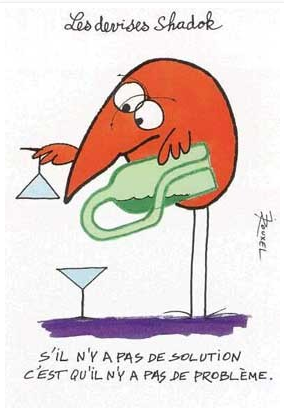
The best conservative response to terrorism, it seems to me, is what I first heard from Pat Buchanan: If there’s no solution, there’s no problem.

Terrorism is an evil, not a problem. We will not eradicate it (Hatfield probably said something like Bush’s second inaugural before he set out to end McCoy terrorism – or was it McCoy ending Hatfield terrorism?), and I personally – call me silly – don’t didn’t want to give up the Republic trying to eradicate it.

And while my individual position may shade into “isolationism” (due to personality quirks and a history of conscientious objection and borderline pacifism), the historic Christian conservative mainstream position is not isolationist.

That’s all I need to say to introduce and commend to you a great current piece by Winston Elliott III at The Imaginative Conservative. The author is appreciably more hawkish than I am, despite his having a son in the Army, but far less adventurist, interventionist and lunatic than either Dubya or Obama or anyone who’s taken seriously for President next year (Ron Paul, the favorite of active military people, not being taken seriously).

Excerpts:

Every conservative concerned about American foreign policy should read Foreign Policy for Conservatives on this site. This brilliant description of a conservative foreign policy is excerpted from Russell Kirk’s book The Political Principles of Robert A. Taft …

Those who wish to use the American military to effect regime change in foreign lands are sensitive to terms like “war party.” They say this is an exaggeration of their position. Poppycock. Let’s go ahead and add “interventionist” and “lover of foreign adventure” for good measure. They do not like it because it accurately describes their approach to using the military might of the American Republic. They are open to spending American blood and treasure whenever they feel that people in a foreign country are “oppressed” or their leader is a “tyrant” or “dictator.”…Before they start calling me an “isolationist” again let me state my position clearly (as I have before on this site). I don’t believe in “isolationism.” However, I do believe that prudence demands we count the costs of our actions, especially so that we learn from the past and may make better decisions in the future. Certainly 6,000 U.S. dead, 33,000 wounded, and $1.3 trillion is a very high cost indeed. 
Is it not legitimate to ask was it worth it?…Russell Kirk and Robert Nisbet, and other notable conservatives, have expressed great concern that centralization and militarization have been the greatest threats to preservation of the principles of the American Republic. They were not isolationists. They were true patriots who wished to guard against taking actions to destroy the enemy that may simultaneously lead to undermining the ordered liberty we claim to fight to preserve.I am for taking military action against those that clear evidence indicates threaten the safety of our Republic and its citizens. But, does this necessitate a permanent military presence in Iraq and Afghanistan? How about Germany, South Korea and Japan? Is there no end to this? If not, I fear that we must (as Brad Birzer has suggested on this site) admit that the Republic is lost and that we fight to defend a democratic empire … 

My policy … is simple: I say kill the enemy and come home. Don’t move into his house and call it defense….

I will say this again. When the real interests of Americans are threatened then to use military force is permitted. Kill those who plan to kill us. Destroy their bases. When necessary, go back and do it again. That is prudent application of military force against the enemy. It is not pacifism or isolationism. 

Don’t occupy foreign nations for decades, longer than WWI and WWII combined. This is foolishness. And it is not conservative.

All I ask for, beg for, is a prudent use of our military. Never one drop of blood for an American empire. Kill our enemies, destroy their bases and bring our boys home. I believe it is conservative to choose protecting American lives over a goal of changing the culture and politics of foreign nations.

Foreign Policy for Conservatives is itself a collection of excerpts, but I’ll be so bold as to pull one of them:

The statesman not concerned primarily with the national interest is tossed about by every wind of doctrine; he pursues with imprudent passion vague ideological objectives, and soon finds himself mired in diplomatic and military quicksands….

Finally, one more personal observation. I alluded to my conscientious objection which, if you know me, you’ll know was Vietnam era, shortly before the abolition of the loathed military draft. But I fear that the abolition of the draft, replaced by a “volunteer army,” has deprived our ruling class from having any flesh, blood or skin in the game of military adventurism. How many of our bellicose GOP hopefuls have a child in uniform? How many served themselves? Do you think there’s a snowball’s chance in hell that the Obama girls will go into the Army from Sidwell Friends School, rather than to University of Chicago, Stanford or one of the Ivy League schools?

No, I’m afraid that to our rulers, the flesh and blood of soldiers is just a “human resource,” to be squandered as freely as monetary resources.

We now return to lamestream programming. Look! Kim Kardashian! Chaz Bono! American Idol! Shiny! (HT Mark Shea)

* * * * *

View this in a browser instead of an RSS feeder to see Tweets at upper right, or subscribe on Twitter.

Standing advice on enduring themes.

Does economic growth rot the culture?

Georgetown political theorist Patrick Deneen thinks genuine conservatism is incompatible with global capitalism and that confusion of the two is a cold war artifact. I’ll not equivocate about this one: I very strongly suspect he’s right.

Other stimulating excerpts:

My goal has been (I hope) in particular to deepen some of our political understanding and vocabulary, to make visible to more readers some of the deepest presuppositions of modern politics and even the deeper philosophical ideas that inform discrete political issues.  By enlarging the view and elongating the perspective, I also hoped that some other overlooked possibilities might be entertained – particularly beyond the worn and largely unproductive contemporary political positions adopted by the Right and the Left.

[M]any modern proponents of democracy believe that true democracy will only be achieved when we have overcome all “particularity.”  The root of the contradiction of modern democratic theory is the idea that there are only two justifiable and desirable conditions of humankind – the radically individuated monad and the globalized world community.  Any intermediate grouping or belonging is seen as arbitrary and the locus of limitations – hence, unjust.

Technology aids and abets the modern project of eviscerating attachments to local places and cultures.  Not long ago, thinkers like Emerson and Dewey praised the liberating and transformative potential of the railroads and telegraph; today, it is the internet and Facebook. [No, the irony is not lost on me.]

I think there is great systemic danger in the not-distant future due to a coming (or already arrived) energy crisis.  This will be a traumatic experience for a civilization that has been built around the assumption of permanently cheap energy.  I would submit that our economic crisis, our debt crisis, and our moral crisis are all pieces of this larger energy crisis.  Because our way of thinking treats problems as separate and discrete, we tend not to see their deeper connections.  I would be happy to elaborate on this, but won’t presume to take up the space to lay this out in this venue.  The thinker who has best articulated the contemporary tendency to treat all problems as “parts” while ignoring the whole is Wendell Berry.

(I found the interview linked above through Deneen’s own summary at Front Porch Republic, which also reminds me that he was interviewed by Ken Myers at Mars Hill Audio Journal, an excellent resource for commuters or people who like something other than frenetic music on the iPod when they work out, walk, bike or whatever.)