
I’m publishing this a bit later than most Sundays because I don’t want you to lose my points in morning worship or, worse, lose morning worship because you’re agitated about something I said.
Russophobia
I may be living dangerously by saying or citing some of these things. I really don’t know because I don’t get some of what’s going on, but there are questions that need to be asked, challenges that need to be made.
"My favorite (Russian) things
[P]eople can be excused for reacting viscerally to a powerful nation attacking a smaller, weaker neighbor, with all the human misery that entails. Still, there’s something especially insipid about today’s social-media-led, H.R.-department-backed anti-Russian drive. Yesterday, it was anti-maskers and Black Lives Matter skeptics getting un-personed; today it’s anyone and anything associated with the Bad Country.
Sohrab Ahmari, These Are a Few of My Favorite (Russian) Things.
Note that title, and read the whole thing for a reminder of Russian contributions to our musical, literary, philosophical and cinematic cultures.
I’m increasingly convinced, however (as I jumped the gun on Ahmari’s advice to learn more about Russian culture), that Russia and the modern West are always going to be at least somewhat adversarial. There is a deep vein of Russian conservatism (in contrast to a shallow vein in the West) that spurns our commercialization and our other unacknowledged and unflattering novelty values. As Aleksandr Solzhenitsyn said in his epochal (I will not call it "notorious") Harvard Commencement address, "these worlds are not at all evolving toward each other and … neither one can be transformed into the other without violence. Besides, convergence inevitably means acceptance of the other side’s defects, too, and this can hardly suit anyone."
Russian teens
Ken Lima-Coelho is on the board of Canada’s Honens International Piano Competition, and he’s “proud” of the organization’s decision to ban Russian teenagers from the 2022 competition just for being Russian. Honens’s statement reads: “Honens abhors and condemns any form of violence and is deeply disturbed by the Russian government’s unprovoked attack on Ukraine. Such blatant acts of aggression and greed have no place in our world.” Are these bans of Russian artists motivated by principle or rather by anger at the fact that “aggression and greed” are inescapable parts of the world we live in, as Putin’s invasion shows, no matter how much we might like to deny it? I wonder.
Micah Mattix, Prufrock
Lima-Coelho explains and justifies nothing. I’m not sure he’s smart enough to suspect that acts of aggression and greed are inescapable, or whether he’s smart enough, but prefers that they remain concealed rather than "blatant."
Malicious and inconsistent, but the herd demands it
Boycott of all things Russian picks up pace: To paraphrase a joke, all the people who decried the lab leak theory as SO RACIST! are now doing something actually xenophobic: Boycotting anything and everything Russian they can find. They are boycotting Russian music and restaurants, never mind that these spots are often owned by Ukrainians, or that most of the musicians now banned from stage have decried the war. All Russians have to suffer for the sins of Putin. “Russian society is to blame” is an actual argument made quite often.
Some headlines for you:
“Montreal Symphony Orchestra drops Russian piano prodigy from concerts amid backlash”
“Cardiff Philharmonic removes Tchaikovsky from programme in light of Russian invasion of Ukraine”
“War in Ukraine: Netflix shelves Tolstoy adaptation after criticism”
Collective guilt is bad, un-American and it simply doesn’t help the cause of Ukraine to boycott Russian cats. Yes, the International Cat Federation actually did this.
These are the signs that maybe, sometimes, "Democracy" needs to be unresponsive to the fickle and foolish will of the people.
Facebook’s supreme morality oligarch
Meanwhile, Facebook and Instagram have suspended their terms of service to allow calls for violence against Russian soldiers, though they claim this would not extend to prisoners of war. I’m no pacifist. I believe Ukrainian soldiers have a right to defend themselves violently. But I dislike this sort of elaborate tech puppetry. I dislike the implied presumption of control over which people groups we are allowed to hate. Since when did Mark Zuckerberg become our supreme morality oligarch? I missed that memo, just like I missed the memo that all things Russian have been suddenly and mysteriously tainted. Yet here we are, in a timeline where we will literally cancel Tchaikovsky before entertaining the possibility that perhaps all men are “tainted,” not just the ones who are part of the hated group du jour.
Bethel McGrew, Russians, who also links to (and quotes) a Wendell Berry poem from a time when writing sanely wouldn’t get you side-eyed by the neo-McCarthyites.
Declaring victory
Minute by minute the collapse of Russian capitalism is coming through in Telegram alerts. Apple leaves Russia, Netflix suspends operations, so has Louis Vuitton, brand after brand after brand pulling out until, even though my job is to analyse this stuff, I can barely make sense of the sanctions and capital controls that have cut Russia off from the world.
Ben Judah, The Russia we have lost
This may sound cryptic, but it feels like an interesting hypothetical as I learn the Russian mind: With most of the American woke corporations pulling out of Russia, why doesn’t Putin could close the doors to their return, declare victory, withdraw from Ukraine, and win plaudits of tens of millions of a certain kind of Russian conservative?
(Don’t ask me the mechanics of how Putin could pull this off or even if he’d want to do it to his kleptocrat pals.)
If you want to get a taste of what I’m talking about, listen to this unusually riveting episode of the GetReligion podcast, where Terry Mattingly expatiates on ordinary Russians’ ambivalence about the West.
Conclusion
… canceling Russian culture only confirms Putin’s claim that the West despises not simply the Russian regime but Russia itself; targeted sanctions on Putin enablers could be more effective.
Gladden Pappin, You Are Entering the American Sector
Other stuff
City Journal
The libertarian-leaning City Journal has lots of plaudits to its name, but its continued employment of Christopher Rufo, who wrote these brazen declarations of dishonest intent, made me skeptical:
- We have successfully frozen their brand—“critical race theory”—into the public conversation and are steadily driving up negative perceptions. We will eventually turn it toxic, as we put all of the various cultural insanities under the brand category.
- The goal is to have the public read something crazy in the newspaper and immediately think “critical race theory.” We have decodified the term and will recodify it to annex the entire range of cultural constructions that are unpopular with Americans.
I’m not a fan of cancel culture, but to my mind Rufo pissed away all credibility on CRT with those boasts, yet City Journal continues to publish his CRT stuff.
(Required disclaimer: I’ve got problems with what schools are doing with CRT-inspired concepts, probably overlapping with some of Rufo’s problems; misdirection only works if you’ve got a truthful core, after all.)
Now they published a hatchet-job on a New York Times deep dive into W.H. Auden’s poem Musée des Beaux Arts.
It’s not that City Journal‘s Lee Siegel disagrees with New York Times‘ Elisa Gabbert about the poem; it’s that he blatantly misrepresents Gabbert’s wonderful (and wonderfully web-formatted) analysis.
In short, he lies, particularly when he makes claims like this:
Gabbert tells us that Auden’s poem is a straightforward exposure of people who let bad things happen …
I’ve given you the links should you want to check out my claim; just don’t be distracted by a few plausible but peripheral points Siegel makes toward the end.
Downsides
If I were still working, I think I’d love the opportunities for telecommuting that have been mainstreamed by Covidtide. But those opportunities can be used destructively:
North Georgia … was always something to behold. Small, narrow valleys defined by creeks and rich bottom land, low ridges rising a few hundred feet on either side. Old farms and barns dotting the tidy and loved landscape. …
…
The ridges filled in with outsized monstrosities for undersized households. Even then the farm valleys remained somehow inviolate, left in a hopeful time. Until inevitably, with land prices, property taxes, or death, and no ridges left to colonize, the valleys filled in with clusters of behemoths to accommodate the malignancy that is Atlanta.
… This economy at rising tide doesn’t lift communities; it washes over them, destroying countryside and culture in its wake. And when it ebbs, what remains is a fractured landscape instead of topsoil. A debris field of trash and eroded gullies where once flourished fields, crops, and a rural people.
The South Roane Agrarian, Building on the Heights
"I know a guy …"
One of the problems with screaming “How could you be so stupid?” at people who behave stupidly is that we too often think of the question as rhetorical when it isn’t. Though vaccine hesitancy is often seen as purely political, that’s not necessarily the case. It also correlates to lack of health care, which means that when public-health officials urge the unvaccinated to consult their family doctors (on the assumption that they might be more persuasive than government agencies), they’re assuming facts not in evidence. If you can’t afford health insurance, you probably can’t afford a doctor either, and if this is how you’ve been living for the past decade, chances are good that surviving without sound medical advice has become part of your behavioral DNA. Your strategy will be much like my father’s: keep working, save what you can (not much) for the rainy day you know is coming, and hope for the best. Maybe you’ll get lucky and know a guy.
… He tells you where to go and what to do when you get there. He lets you in on the secret handshake. Knock three times. Tell them Jimmy sent you.
Richard Russo, How I Found Sympathy for Covid Skeptics. Excellent, empathetic and humane.
Are we secularizing?
…if secularization is taken to refer to some kind of “decline of religion,” then we need to figure out what we mean by “religion.” “If one identifies this with the great historic faiths, or even with explicit belief in supernatural beings, then it seems to have declined. But if you include a wide range of spiritual and semi-spiritual beliefs; or if you cast your net even wider and think of someone’s religion as the shape of their ultimate concern, then indeed, one can make a case that religion is as present as ever”
James K.A. Smith, How (Not) to Be Secular
Material boy
What I needed was to touch the real world. I needed an antidote for the idiotic pixelated simulacrum we live in. We are not even materialists anymore. We are a post-materialistic society — whatever that means — where even materials are simulated and virtual. What I am going to do with this I do not know. What I do know is that it’s impossible for me to reenter the Machine.
Hephaestus. Ever wondered why a trade would have its own god? With blacksmithing I have come the closest to the Eye of Contemplation — or to what I think it is — I have ever been. Writing about it kills it, obviously. We, the Moderns and especially the Westerners write. We rationalize things by writing. We use words as sharp weapons that blind the Eye of Contemplation.
A friend of Rod Dreher, who lost his white collar job and took up apprenticeship with a blacksmith.
Algorithm failure
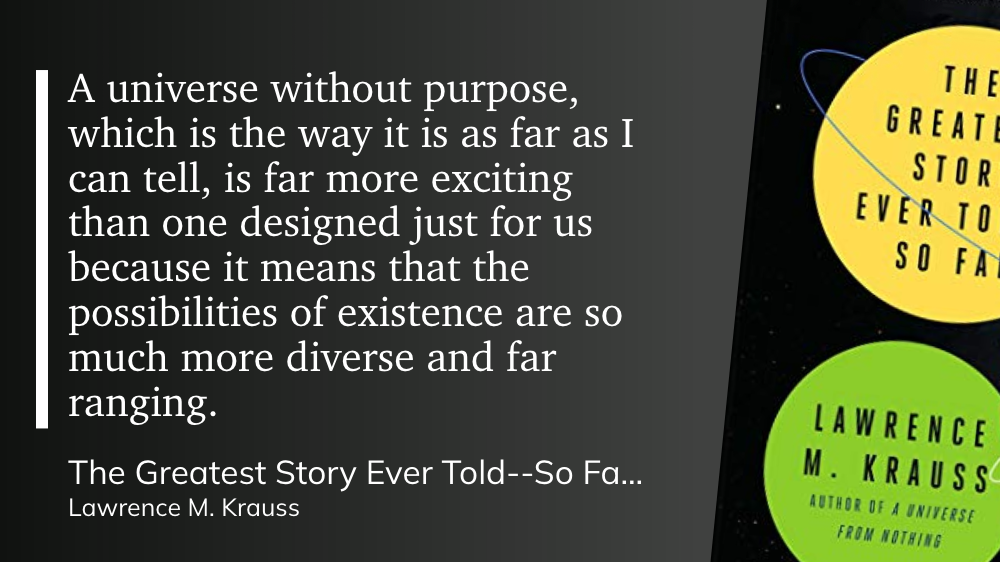
Readwise opined that "Based on your highlights, we think you’ll love this book recommendation …". Readwise is almost certainly wrong.
Heterodox Podcasts: the New NPR
William Deresiewicz apparently kept on listening to NPR long after I’d stopped, but ended up "hate-listening" to the new, cocksure and woke version. His Escaping American tribalism tells the story, and how he discovered heterodox podcasts as an alternative to his unfaithful first love.
I was already listening to several of those podcasts; I’ll soon sample the others.
What I hadn’t done was to make the mental connection that podcasts like this were my unacknowledged substitute for an NPR that wasn’t yet even as bad as what Deresiewicz endured.
Wordplay
Ectopic: One kind of pregnancy the abortion of which would become a class A felony under a pending Bill in Missouri (see lines 14 & 15 on the first page).
Potlatch: a ceremonial feast of the American Indians of the northwest coast marked by the host’s lavish distribution of gifts or sometimes destruction of property to demonstrate wealth and generosity with the expectation of eventual reciprocation.
Use in a sentence: "Corporate cancellation culture has quickly become a type of potlatch." (Gladden Pappin)
Kinetic military action: The American-troops-over-Libya equivalent of Russian-troops-in-Ukraine’s "Special Military Operation."
Eternal stuff
Undue confidence
Only the Christian Church can offer any rational objection to a complete confidence in the rich. For she has maintained from the beginning that the danger was not in man’s environment, but in man.
G.K. Chesterton, Orthodoxy
It also can rationally object to confidence in the "diverse and far-ranging possibilities" of denying teleology.
Wisdom
The future in its entirety cannot give you so much as a kernel of good, unless it borrows it from Me.
The One born of the Virgin, speaking in Prayers by the Lake LVII
You can read most of my more impromptu stuff here (cathartic venting) and here (the only social medium I frequent, because people there are quirky, pleasant and real). Both should work in your RSS aggregator, like Feedly or Reeder, should you want to make a habit of it.
 Tipsy Teetotaler ن