
Thanks to fellow-Orthodox blogger John, I discovered this Mormon version of Church history, for which I explicitly claim “fair use” and provide the obligatory link to the original.
The basic storyline is this: “Regardless of the valiant efforts of Christ’s apostles and their faithful followers, the original church that Christ restored began to fade away.” Then along came Joseph Smith. Woohoo. (Italics are in the original. My comments are not italicized.)
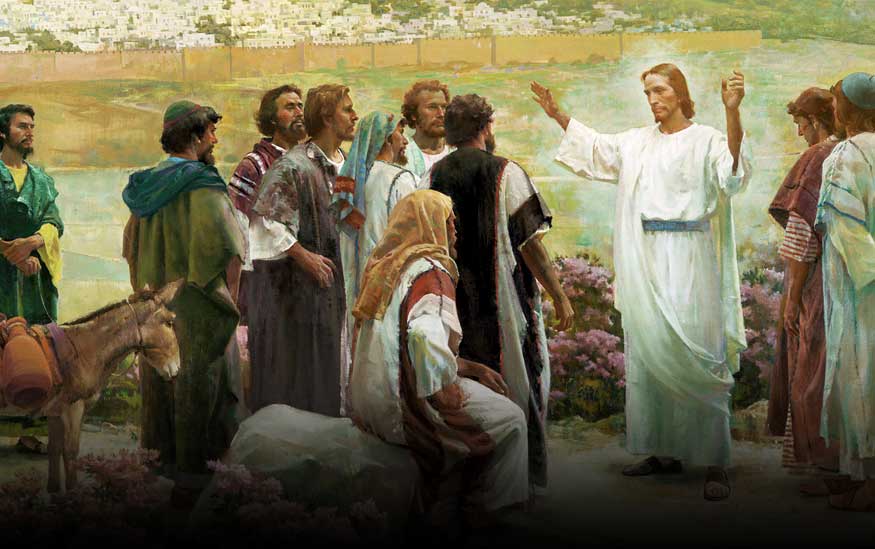
[A.D. 32] Christ organized His church during His brief life on earth (Luke 9:1). He chose Twelve Apostles and gave them authority to govern His church. This authority is called the priesthood.
No particular problem worth mentioning here.
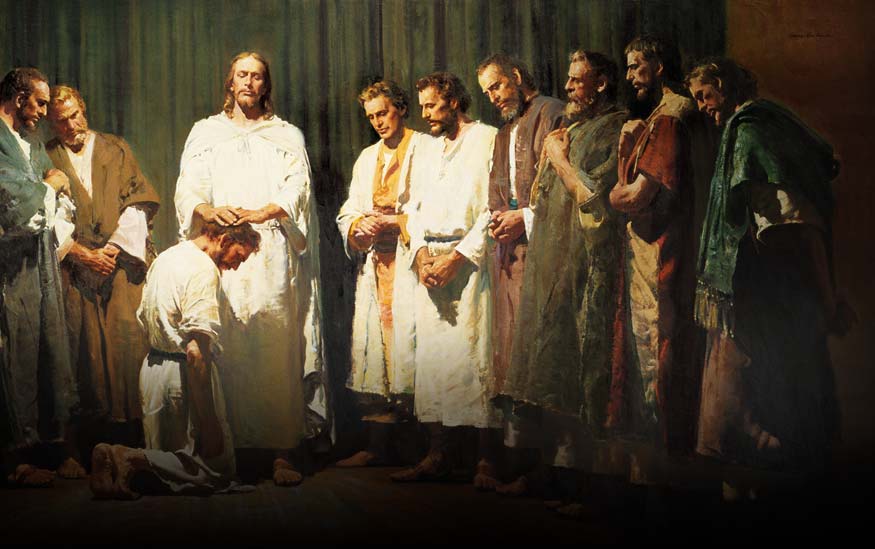
[A.D. 33] After Christ’s death and ascension to heaven, the Savior left the Church in the hands of Peter, the chief Apostle. Peter and the other apostles traveled to many lands to proclaim the gospel of Jesus Christ and organized churches.
No particular problem here, though the meaning of Peter’s primacy is at the heart of The Great Schism.
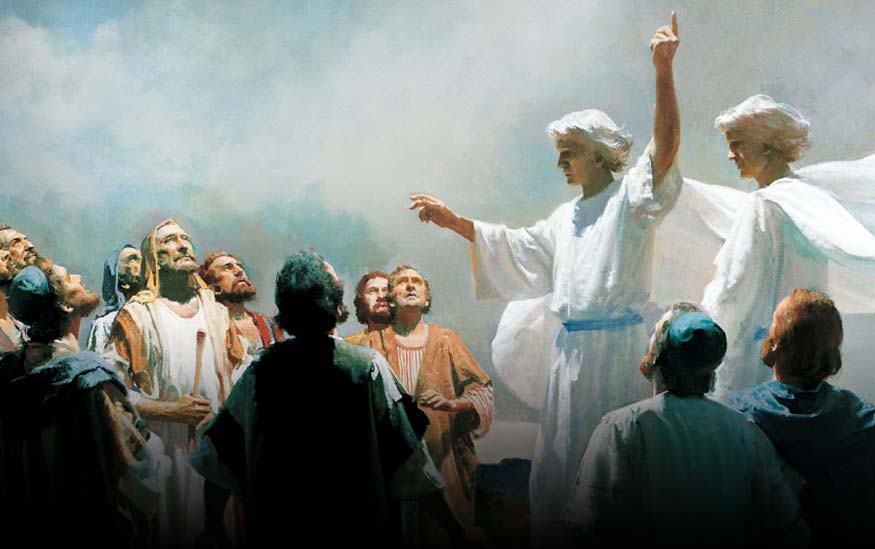
[A.D. 70] Because of intense persecution, the Apostles were all martyred except for John, who was taken away by the Lord. The churches were left without the leadership of the apostles and this authority to govern His church and conduct needed ordinances were lost. This “falling away” as prophesied by Paul to the Thessalonian saints (2 Thes 2:3) is called the Great Apostasy.
Okay, folks, here’s where my blood starts boiling. The Churches were not left without apostolic leadership. Christ was not so careless as to allow that, and the Apostles wre not so stupid as to think they were immortal. They appointed Bishops, their successors (many of whom suffered and were martyred as well), entrusting these faithful men with the Apostolic teaching and authority as well as with administration of the sacraments.
Nothing in II Thessalonians 2 prophesies any universal falling away. Nothing in the Bible suggests that John … was taken away by the Lord, although he suffered exile to the Island of Patmos where, near the end of the first century A.D., he wrote the last book of the New Testament canon. I’m not sure what Mormons are up to with that story about John.
In A.D. 325, the Roman emperor Constantine gathered Christian bishops to address official doctrines of the Church. By this time opinions on basic doctrines of the gospel were diverse and conflicting. Decisions were made by majority vote rather than receiving instructions from chosen apostles of the Lord, who had been martyred or taken away many years earlier. Plain and precious teachings continued to disintegrate over the centuries and this period came to be known as the Dark Ages.
This is Dan Brown level delusion and mythology. But it fits the bigotries of America from Joseph Smith’s time to our own.
“They” were not an effete bunch of Machievellian careerists or court sycophants, but were Bishops, successors to Apostolic authority, and confessors of the Christian faith who bore in their very bodies the marks of torture and dismemberment which had ended not long before. They did not gather to “address official doctrines” by “majority vote” (wheeling and dealing: “I’ll vote for Christ’s deity if you’ll vote to fund the new bridge in Mesopotamia”) because they had time on their hands and liked to get together on their expense accounts for 3-Martini lunches. They gathered officially and after long provocation to deal with the heretic Arius, a clergyman who was leading people astray in large numbers (by heresy persisting today at your local “Kingdom Hall”).
The Bishops were, and are, united in apostolic faith. The Nicene Creed, formulated then and revisited in 381 A.D., particularly for its Christological affirmations, did not create a confining and exclusive little doctrinal pen, but merely put a fence near some doctrinal cliffs to keep the faithful flock from falling over them.
Meanwhile, Mormons, Methodists, Presbyterians, Episcopalians, Pentecostals, Baptists, Calvary Chapels, Emergents, undifferentiated “Community Churches,” Vineyard Fellowships, and countless other groups continue to hold opinions on basic doctrines of the gospel [that are] diverse and conflicting Joseph Smith’s Excellent Adventure notwithstanding.
Establishment and Imperial favor certainly introduced some new problems, but the gates of hell never prevailed. If you want to read all about it, I recommend the late Jaroslav Pelikan‘s 5-volume The Christian Tradition. (Pelikan, Lutheran when he wrote these from his aerie at Yale, was received into the Orthodox Church later.)
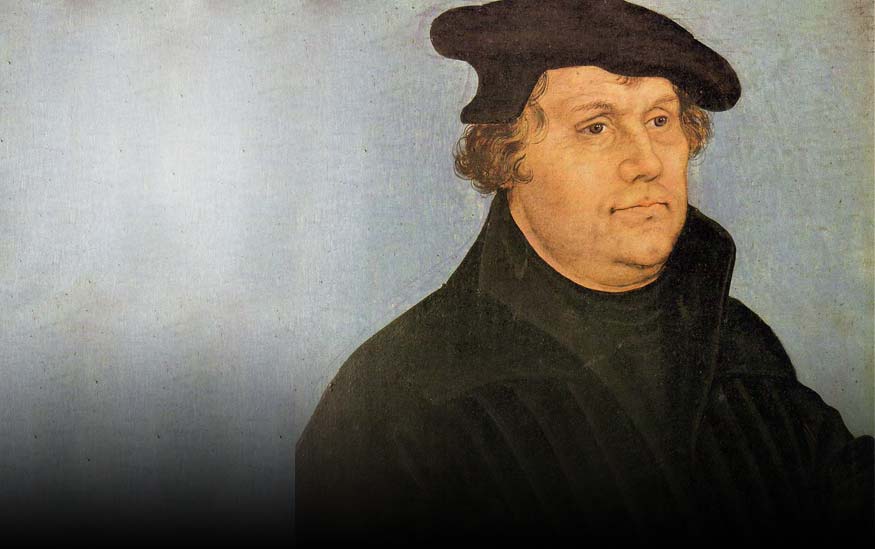
[A.D. 1517] Reformers like Luther, Zwingli, Huss, Calvin, Tyndale, and Wycliffe were disturbed by how far the Christian church had strayed from the gospel as taught in the Bible by Jesus Christ. Others followed this Reformation movement. This created a religious climate that allowed religious tolerance for the restoration of the gospel.
The “Christian church” that the Reformers were disturbed by was the (Western) Roman Catholic Church, one Patriarchate of five, which had broken from the rest of the Church some 500 or so years earlier. (The conventional date is 1054, but history’s rarely that neat.) But the Reformers blew their chance to mend fences with the rest of the Church – what now is know as the (Eastern) Orthodox Church, the four other Patriarchates – instead planting the seeds of today’s denomination chaos by misappropriating the Bible as a free-floating ultimate authority, untethered to the visible, historic Church.
The “religious climate that allowed religious tolerance,” in other words, means “a religious climate that spawned so many schisms that an American frontiersman would have no time to kill Indians and make money unless he became a bit blasé about his neighbor’s religious errors.”
(Tolerant John Calvin, by the way, probably would have had Joseph Smith beheaded after torture for the Mormon fantasies about God the Father having a body, Jesus having been conceived by a literal act of coitus, and the rest of us being capable of becoming as fully and ontologically God as the Father and Jesus are.)
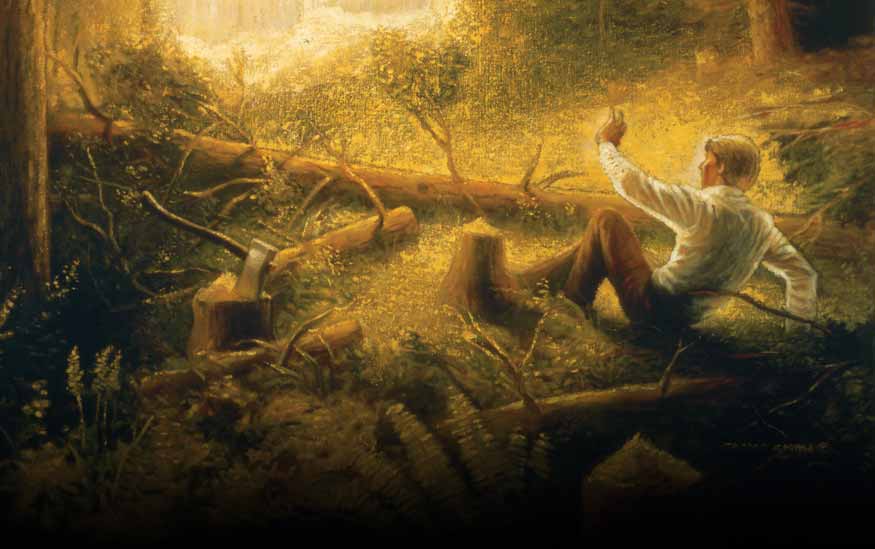
By the year 1820, as religious awakening was sweeping across America, a young man named Joseph Smith, was deciding which church to join. After reading a passage in the Bible, he decided that he would ask God regarding this question. He went to a grove of trees near his home and put his prayer to test. While praying, the heavens opened and the Father and His Son Jesus Christ appear to Joseph Smith.
Yeah, yeah, yeah, yawn. Except for claims of literal visitations from God (and from an Angel, and the supposed vouchsafing of supplemental scripture), that’s what they were all saying during this time of “religious awakening,” the Second Great Awakening which gave birth to lots of theopreneurs “restoring” the Church. Indeed, the Mormon story line is so similar to that of so many Evangelicals that it’s no wonder Mormon missionaries find such easy pickin’s.
These days, when Mormon missionaries come around, I greet them politely, tell them I am in the Orthodox Church, which never fell away, never apostasized, never lost apostolic authority, never deviated doctrinally, and thus never needed to be restored. Those calamaties never befell the Church because its Lord built it and never abandoned it.
I’m not saying it’s perfect – it includes me, after all – but I’m simply not interested in chatting about a religion – whether they want to call it “Christian” or the “4th Abrahamic faith” – built on a pernicious and fundamental historic lie.
* * * * *
View this in a browser instead of an RSS feeder to see Tweets at upper right, or subscribe on Twitter.
 Tipsy Teetotaler ن