
- What is is about “no false witness” you don’t understand?
- Not just a silly misunderstanding.
- We’re all Catholics now.
- Sad songs.
There has been a lot of mockery, especially from the Right, of media “fact-checkers” with their rating systems, like “Pants on Fire” at PolitiFact. Having just come through a convention full of whoppers (which frankly offend me less than the threats that are simply unmentionable) it’s understandable if the GOP should think everybody does it and the media’s making too big a deal of it.
Next week, the shoe will be on the other foot as Democrat claims come under scrutiny.
As the great Christian funk band Adam Again sang:
The trouble with lies
is when you tell ’em
you’ve still got the sell ’em
with the look in your eyes.
(I just had to get that in.)
But let’s go back to basics: “Thou shalt not bear false witness against thy neighbor.”
Do you see exceptions for love, for war, or for politics?
The magisterial catechetical treatments of that commandment make it clear that careless and credulous gossip is a violation of the commandments, too. See sections 2477-2479 of the Catechism of the Catholic Church or Q & A 112 of the Heidelberg Catechism, for instance.
Our e-mail boxes, Twitter feeds and Facebook walls, in these terms, are full of false political witnesses. The rankest, most credulous speculation is circulated about the secret intentions of candidates.
I am ardently prolife. But I call out a prolife “news” source for violating, or coming perilously close to violating, the commandment against false witness.
It tells the sad story of Zach, a Texas boy who suffered a severe gunshot wound and wound up with a Do Not Resuscitated Order in his medical chart, put there behind his parents’ backs at Cook Children’s Medical Center in Fort Worth. The story opens with a dubious line: “Until last week, a 12-year-old gunshot victim’s life was endangered more by his doctor than his injury.”
Really? Seriously? Then there’s the real whopper:
Just a week later, the hospital convened a death panel — called an “ethics committee” — to review Zach’s case. Under Texas law, if the panel members agree among themselves that a patient’s care would be “futile” in order to improve or save the patient’s life, then the hospital reserves the right to terminate all care — including food and water — after 10 days.
In the panel’s opinion, Zach’s case was futile.
(Emphasis added.) What do you think of when you hear “death panel”? Yeah. Me too. Barack Obama obviously set the stage to kill Zach through Obamacare. He put lipstick on the death panel pig by calling it an (begin scare quotes) ethics committee (end scare quotes).
Except he didn’t. Hospitals have had ethics committees for decades. They deal with lots of things other than death. I’ve served on one (nursing home, not hospital). They not infrequently, especially in Roman Catholic institutions, may advocate against death when family members are too quick to accept it or even seek subtly to bring it about. There’s is a longstanding dispute about what constitutes “futile” treatment. It’s nothing new, and it’s not caused by the President or his healthcare plan.
That’s not to say that Obamacare won’t make the problem worse. A good faith argument can be made that it will. Fine: make the argument, making clear that it’s an opinion.
“Death panels” initially may even have been a defensible political hyperbole (and maybe not; how are we going to decide who gets medical treatment, a limited resource with near-infinite demand?).
But in this social and political context, Life News’ use of death panel and suggesting that “ethics committee” was a euphemism, was putting a big, fat, mendacious, anti-Obama-and-Obamacare thumb on the scale in the guise of reporting a legitimate news story. I can’t see it otherwise. Am I missing something?
When even the “good guys” are liars, it really makes me want to go crawl in a cave somewhere and spend the rest of my days praying Maranatha (or in Trekkie talk, “Beam me up, Lord; there’s no truthful life down here.”).
I blogged Friday on Fr. Stephen Freeman’s excellent piece on God’s justice. I closed with an allusion to the commonplace that every serious monotheist is, in a sense, an “atheist” toward other people’s gods, and that atheists probably are rejecting a particular idea about god that has harmed, grieved, or become simply comically incredible to them.
We, I can’t claim credit for having predicted it, but the comboxes on Fr. Stephen’s blog have included one such atheist (and not one who you really could call a “recovering fundamentalist,” which is the species I tend to think of) who finds Fr. Stephen’s God congenial, but who is still struggling.
I am not saying that atheism is just a silly misunderstanding, and that if introduced to the true God, atheists would all embrace Him. First, the atheist in Fr. Stephen’s comboxes has something more sophisticated than that going on. Second, those of us who do embrace God generally do so gingerly – approach, withdrawal, distraction, approach, distraction, lust … on and on and on. It ain’t easy.
But I do think that some heterodox misrepresentations of God by His purported followers are especially off-putting for a sensitive soul.
Peggy Noonan on when the GOP Convention came alive at last:
It started with Mike Huckabee. He is a performer, he knows how to do this, and he made the audience listen. But he is also a policy person and a veteran campaigner who knows the base. He addressed the Mormon issue without ever saying “the Mormon issue,” and he hit hard on cultural issues. President Obama, he said, is the only “self-professed evangelical” in the race, yet “he tells people of faith that they have to bow their knees to the god of government and violate their faith and conscience in order to comply with what he calls health care. Friends . . . let me say it as clearly as possible, that the attack on my Catholic brothers and sisters is an attack on me.”
A lot of good, smart, godly and conservative people get the creeps from Mike Huckabee. I happen not to be one of them, though I don’t lament his departure from electoral politics for the commentariat.
But this one, he nailed. I hope my “he-usually-creeps-me-out” friends can agree.
I didn’t watch one second of live convention coverage, by the way, nor did I stream more than a tantalizing clip or two someone else pointed out (e.g., Clint Eastwood).
I suppose I could watch some Democrat coverage this week, but if I did, it would be to look for outrageous confirmation of the extent to which the main Democrat appeal now is “vote your vice” (as the late Joseph Sobran put it).
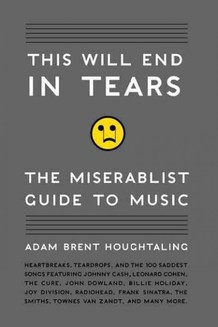
Weekend Edition Saturday had an interview with the author of This Will End In Tears: The Miserablist Guide to Music:
My favorite sad song may be a little too cosmic to fit this mold entirely. It’s Bruce Cockburn’s 1981 “The Strong One:”
Isn’t it hard
To be the one who has to give advice?
Isn’t it hard
To be the strong one?I see the skyline blurred through the plastic on your back screen door
Not unlike the faces of the people who keep turning up in the places we go
The ones we’d never see if things weren’t going so well
When I was a torn jacket hanging on the barbed wire
You cut me free
And sewed me up and here I amIsn’t it hard
To be the one whose phone rings all day everyday?
Isn’t it hard
To be the strong one?Mouths move without vision — without regard for consequences
Eyes fill with memories poisoned by intimate knowledge of failure to love
Sometimes, sometimes, doesn’t the light seem to move so far away?
You help your sisters, you help your old lovers,
you help me but who do you cry to?‘Cause isn’t it hard
To be the one who gathers everybody’s tears?
Isn’t it hard
To be the strong one?
Wish I had audio for it, but I can’t find it and won’t share my own copyrighted material.
* * * * *
 Tipsy Teetotaler ن